
Reviewed · BRAN CASTLE & DRACULA TOURS
10 h Ceausescu Communism Private Tour in Bucharest plus Dracula’s Grave
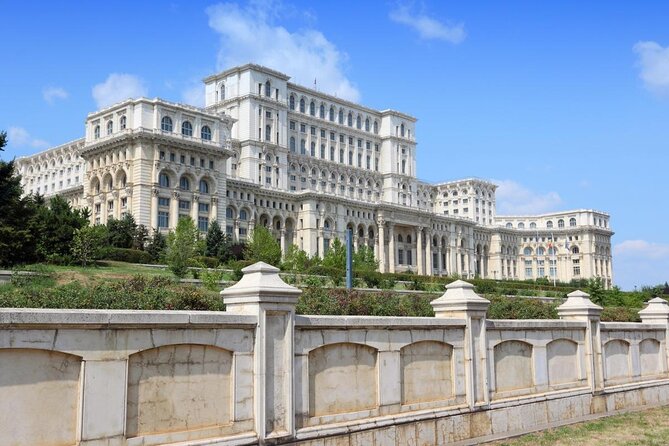
The most striking part of this full-day tour is the sharp turn from Ceausescu’s oversized Palace of Parliament to a small island monastery linked with Dracula. You get Bucharest’s political past, royal avenues, Orthodox landmarks, village traditions, and one famous bit of vampire lore in one private outing.
I like the private vehicle and flexible schedule, since your guide can adjust the day to your interests instead of moving a large group like a parade. I also like the broad historical sweep, from traditional Romanian homes to the 1989 Revolution and the Ceausescu family residence. The main drawback is the pace: seven stops in about 10 hours can feel packed, and admission fees are extra.
Key points to know
- Palace of Parliament: Allow about two hours for Bucharest’s vast symbol of communist power, with admission charged separately.
- Snagov Monastery: Travel roughly 40 minutes outside the city to an island site associated with Dracula’s grave.
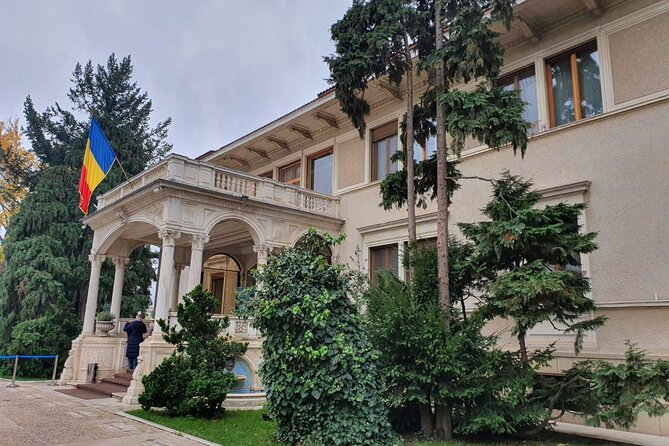
- Ceausescu Mansion: See the private home used by Nicolae and Elena Ceausescu and their children from 1965 to 1989.
- Flexible private format: Your group has its own air-conditioned car or minibus, guide, and driver.
- History beyond communism: The route also includes the National Village Museum, Victory Avenue, Revolution Square, and Patriarchate Hill.
- Practical value: Hotel pickup and drop-off, fuel, parking, road tolls, and taxes are included, but food and entry charges are not.
A Bucharest day built around contrasts
This is not a tour that treats Bucharest as a string of pretty façades. Its main idea is contrast. You move from a monumental government building created by a dictator to modest wooden and adobe homes gathered from rural Romania. You pass the former center of communist authority, then visit the Orthodox heart of the capital and a monastery tied to Vlad the Impaler.
That mix gives you a useful way to understand the city. Bucharest can feel grand, battered, elegant, religious, modern, and politically scarred within a few blocks. A private guide can connect those pieces as you go, rather than leaving you to work out the story from isolated sights.
The tour lasts about 10 hours and includes hotel pickup and drop-off. You ride in a private air-conditioned vehicle reserved for your group, with a licensed English-speaking guide and driver available throughout the day. Fuel, parking, road tolls, and taxes are included.
The day is ambitious. The listed stops add up to more than eight hours before allowing for driving, meals, traffic, or time at entrances. That is not a flaw by itself, but you should expect a full day rather than a relaxed city stroll. If you want to study every room at every site, ask about priorities before setting off.
More Bran Castle and Dracula trips:
- Bucharest: Dracula’s Castle, Peles Castle, & Brasov Old Town
★ 4.5 · 17,858 reviews - Bucharest: Dracula Castle, Peles Castle & Brasov Old Town
★ 4.6 · 10,891 reviews - Bucharest: Dracula’s Castle, Peleș Castle & Brașov Day Trip
★ 4.5 · 5,919 reviews
Inside the Palace of Parliament
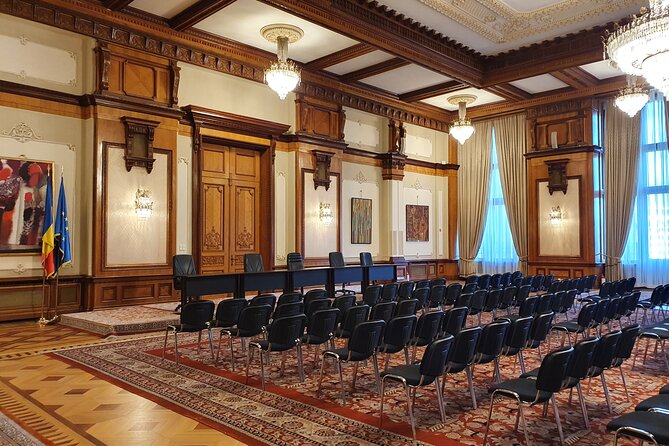
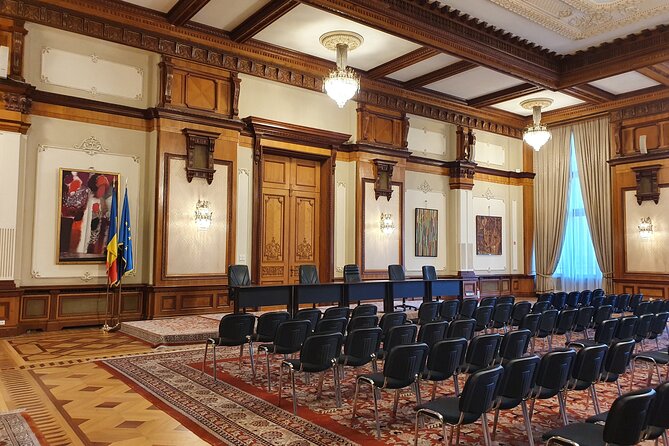
The Palace of Parliament, also called the People’s House, is the emotional center of the communist portion of the tour. The building is described as the second-largest administrative building in the world after the Pentagon, and its size is the point. It was built as a display of authority, wealth, and control at a time when ordinary Romanian life was marked by scarcity and hardship.
You will spend about two hours here, though the entrance ticket is not included. The building can make you feel physically small, which is exactly why it works so well as a lesson in totalitarian power. Vast rooms and costly materials were used to project the idea that the state, and especially its leader, was almost beyond question.
I would give this stop your full attention. It is easy to focus on the building’s scale and forget the human cost behind it. The guide’s role matters here, since the architecture alone cannot explain why this place remains such a loaded symbol for Romania.
Admission costs are extra, and the information supplied also lists entrance tickets at 18 euros per person, with the Palace of Parliament fee separately excluded. Confirm the current amount when booking, since the wording suggests that the Palace may have its own charge.
Traditional Romania at the National Village Museum
After the concrete and political weight of the People’s House, the National Village Museum offers a very different view of the country. The Dimitrie Gusti museum brings together traditional houses from different parts of Romania, built with materials such as wood, adobe, and stone.
You will see examples of rural homes along with features such as mills and a wooden church. The purpose is not simply to admire old buildings. The collection shows how Romanian families built practical homes and communities around local materials, work, faith, and the natural setting around them.
This is one of the most useful stops for anyone who wants more than a communist-era tour. It gives you a glimpse of ordinary life and traditional building methods, rather than focusing only on rulers and political events. The planned visit lasts about one hour, and admission is not included.
The contrast with the Palace is unusually effective. At one stop, architecture serves a dictator’s image. At the other, it reflects modest daily life and local adaptation. If you are interested in houses, crafts, social customs, or the countryside, this may be the quietest and most rewarding part of the day.
Walking Bucharest through Victory Avenue
Calea Victoriei, or Victory Avenue, introduces the capital’s changing public face. The route brings together royal buildings, museums, churches, shops, restaurants, theaters, and other city landmarks. You may see the Royal Palace on one side and buildings connected with the communist government and Revolution Square on the other.
The scheduled time is about 45 minutes, with no admission charge. That makes it a short orientation stop rather than a detailed tour of every building. Your guide can point out the Romanian Athenaeum, the CEC Palace, the National History Museum, old Orthodox churches, and other features along the avenue.
This is where the city’s contradictions become visible. Bucharest is not presented as a perfectly preserved old capital. It is a place where royal, religious, communist, commercial, and cultural layers sit close together. A music store, casino, café, tea shop, museum, or gift shop may appear beside a building tied to national power.
You will probably want to ask your guide which sights can be seen from outside and which are worth returning to later. Forty-five minutes is enough to grasp the avenue’s character, but not enough for serious interior visits.
More communist-era Bucharest walks:
- The Real tour of Communism
★ 5.0 · 666 reviews - Life under Communism
★ 5.0 · 358 reviews - 3-Hour Guided Tour of Communist Bucharest
★ 4.9 · 303 reviews - Bucharest Essential Tour: Old Town, Calea Victoriei & Communism
★ 5.0 · 142 reviews
Revolution Square and the fall of Ceausescu
Revolution Square is the key stop for understanding how Nicolae Ceausescu lost power. The route includes the former Central Committee building, now associated with the Senate Palace, where the December 1989 Revolution began.
This is not just another central plaza. It is the place connected with the moment when public resistance broke the communist leadership. The tour explains how Ceausescu fled by helicopter after being removed from power, leaving behind questions about his wealth, the state security service, and financial dealings outside Romania.
You will spend about 30 minutes here, and there is no admission fee. That short visit can still carry considerable weight if the guide explains the sequence of events clearly. Look at the buildings as political evidence, not merely as city scenery.
I find this stop especially valuable because it connects the huge Palace of Parliament with the collapse of the system that produced it. The two sites are not separate stories. One shows communist ambition at its height; the other marks the moment when that authority failed.
Patriarchate Hill and Romanian Orthodoxy
Dealul Mitropoliei, or Patriarchate Hill, offers a religious and architectural counterpoint to the political sites. The hill is home to the headquarters of the Romanian Patriarchy and the residence of the Patriarch, making it one of the central places of Romanian Orthodoxy.
The planned visit lasts about 45 minutes, with no admission fee listed. You can expect a look at an important religious center as well as a historic part of the capital. This stop helps prevent the day from becoming a single-track account of communism and dictatorship.
Romania’s national story includes Orthodox faith, royal government, rural traditions, and communist rule. Patriarchate Hill gives you a chance to see how religion fits into that story. Ask your guide to explain the site’s role rather than treating it as a quick photo stop.
The visit also slows the political rhythm a little. After the Palace and Revolution Square, the hill offers a different kind of public authority, rooted in religious institutions rather than state ideology.
Crossing to Snagov Monastery and Dracula’s grave
The biggest change of scene comes at Snagov Monastery, about 40 minutes outside Bucharest. The monastery is on an island, and the visit lasts about one hour. Entrance is not included.
This is the tour’s most playful stop, but it is not only a Dracula add-on. The site combines a small religious setting, a short trip beyond the capital, and the story of Vlad the Impaler, the historical figure linked with the Dracula legend. The tour identifies the monastery as the place of Dracula’s tomb.
You should keep your expectations sensible. This is not a large castle complex or a full day in Transylvania. It is a compact monastery visit tied to a famous story. Its appeal comes from the setting and the connection, not from a long list of rooms or displays.
The journey matters, too. After several urban stops, the trip to Snagov gives you a sense of Bucharest’s wider setting. Since the vehicle and driver remain with your group, you avoid arranging a separate excursion or figuring out the route yourself.
If Dracula is your main reason for booking, check what is open on the day and what the entrance charge covers. The supplied details confirm the location and the extra admission cost, but they do not promise a particular exhibit, ceremony, or interior presentation.
The Ceausescu family home
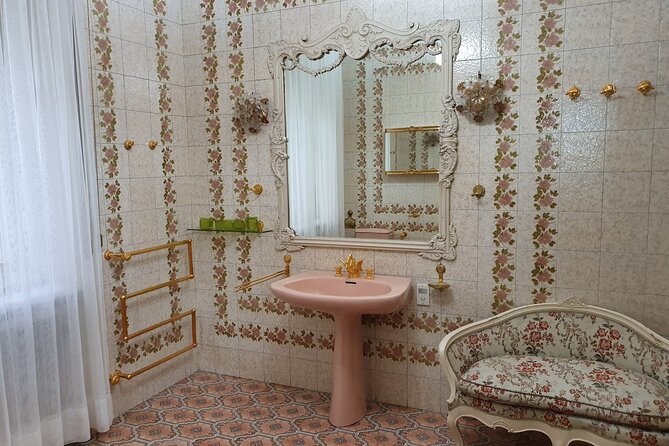
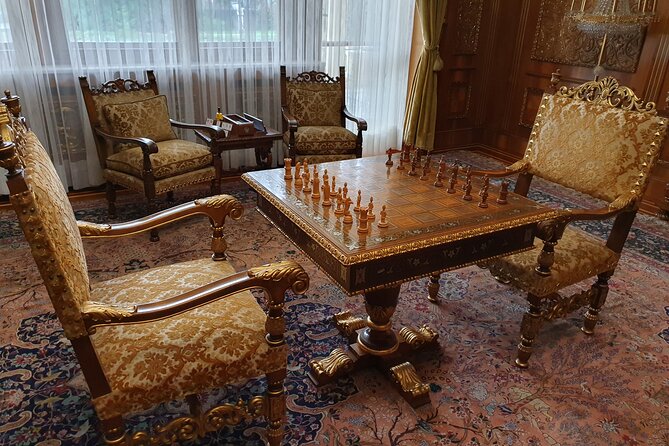
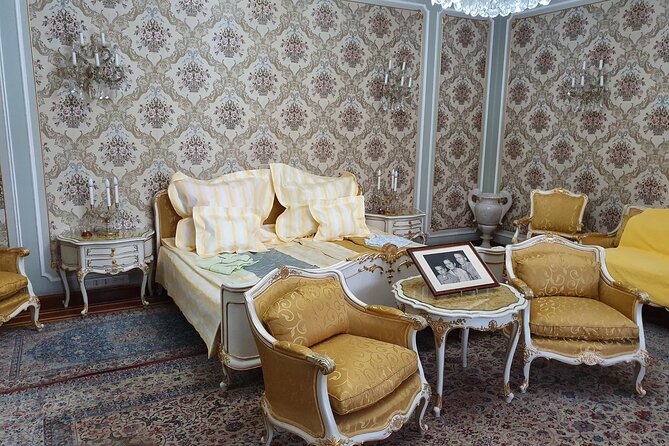
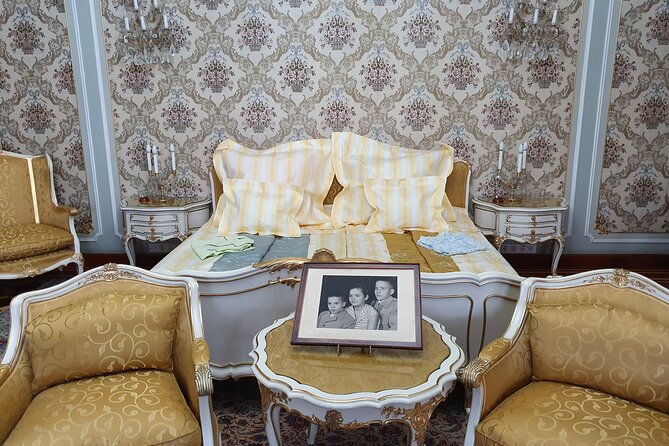
The final major stop is the Ceausescu Mansion, the private residence of Nicolae and Elena Ceausescu and their children, Nicu, Zoia, and Valentin. The family lived there from 1965 until 1989, for about a quarter of a century.
The visit lasts around 90 minutes, with admission charged separately. This stop gives you a more personal view of the ruling family than the Palace of Parliament can provide. The Palace expresses public power. The mansion shows where that power was lived out in private.
That difference makes the mansion an important companion to the People’s House. You can compare official grandeur with domestic surroundings and consider how a leader’s public image related to family life. The tour description does not specify which rooms or objects are on display, so you should treat the visit as a guided look at the residence rather than assume a particular collection.
For me, this is one of the strongest stops for putting a human scale on the communist era. The Revolution Square visit explains how the regime ended. The mansion helps you picture the people at the center of it.
How the private format affects the day
A private tour changes the feel of a long itinerary. You are not sharing the vehicle with strangers, and the car or minibus is reserved for your friends or family. Your licensed English-speaking guide and driver are with you throughout the day.
The stated flexibility is a real advantage. You can ask to spend more time at the Palace, shorten a stop that does not interest you, or adjust the order of the day after it begins. Still, flexibility is not unlimited time. With seven stops and a trip to Snagov, adding major unscheduled visits could make the day tiring.
The private format is particularly useful if your group has mixed interests. One person can focus on communist history, another on churches and architecture, and another on Dracula. You can discuss those priorities before pickup and use the guide’s time where it helps most.
The tour has received a 4.7 rating from three published ratings, with one detailed four-star account from a group of 11 friends whose average age was 60. The praise centered on Bucharest’s background, buildings, differences between city districts, and the story from Romania’s founding through the present. That is a helpful clue about the tour’s strength: it is best suited to people who want context, not only quick photographs.
Is the $255.98 price good value?
At $255.98 per person, this is not a budget city tour. The value depends heavily on your group size and how much you would otherwise spend arranging separate transport, a city guide, and a trip to Snagov.
The price includes a private car or minibus, a private guide and driver, fuel, parking, road tolls, and taxes. Hotel pickup and drop-off are also included. For a small group that wants a full day without handling driving or route planning, those inclusions make the cost easier to justify.
You still need to budget for entrance fees. The information provided lists entrance tickets at 18 euros per person and separately excludes the Palace of Parliament entrance fee. Food and drinks are also your responsibility. Because the exact admission breakdown is not fully clear, ask for the current total before paying.
The tour offers group discounts, which could improve the per-person value for families or friends. It is less compelling if you only want central Bucharest, since several city sights can be visited without committing to a 10-hour private vehicle. Its price makes the most sense when you want Bucharest and Snagov in one day.
Who should book this experience?
I would recommend it to first-time visitors who want a strong introduction to Bucharest’s political, religious, architectural, and rural sides. It also fits history-minded visitors who want the Palace of Parliament, Revolution Square, and the Ceausescu Mansion explained in one connected story.
Families and older adults may appreciate hotel pickup, private transport, and the ability to control the pace. A group of friends can also split the cost and make good use of the flexible format.
It is less suited to someone who prefers slow museum visits, long meals, or free time in cafés. The schedule is dense. It also may not satisfy a visitor seeking a full Dracula experience, since Snagov is a short monastery visit rather than a broad tour of Romania’s vampire-related sites.
Free cancellation is available if you cancel at least 24 hours before the start time. Changes or cancellations within 24 hours are not accepted for a refund.
Should you book the Bucharest and Snagov tour?
Book this tour if you want one private day that explains Bucharest’s major contrasts and takes care of transport beyond the city. The combination of the People’s House, Revolution Square, Ceausescu Mansion, the Village Museum, Patriarchate Hill, and Snagov gives you far more context than a basic sightseeing loop.
Think twice if your priority is a slow, inexpensive city walk or a dedicated Dracula trip. The schedule is long, entry charges are extra, and the historical content may feel heavy at times. For a group that values comfort, a personal guide, and a broad first look at Romania’s capital, the price can be reasonable, especially with a group discount.
FAQ
Is hotel pickup included?
Yes. Hotel pickup and drop-off are included in the private tour.
Is this a private activity?
Yes. Only your group participates, and the private car or minibus is reserved for you, your friends, or your family.
Is an English-speaking guide included?
Yes. A private licensed English-speaking guide and driver are available throughout the tour.
Are entrance tickets included?
No. Entrance tickets are not included. The supplied information lists entrance tickets at 18 euros per person and also states that the Palace of Parliament entrance fee is separate.
Is food included?
No. Food and drinks are not included in the tour price.
How long is the tour?
The tour lasts approximately 10 hours.
Can the itinerary be changed?
Yes. The tour includes flexibility to adjust the daily itinerary, even after the tour has started.
Just added around Bucharest
- Bucharest in a nutshell – half day private walking tour★ 5.0 · 3 reviews
- Dracula’s Castle, Follow the legend in Transylvania, private tour from Bucharest★ 5.0 · 3 reviews
- Bucharest Private Airport Transfer★ 4.5 · 3 reviews
- RiverCruise Exclusive – Private Transfer from or to Giurgiu Port/Bucharest Hotel★ 3.5 · 3 reviews
- One Day Private Tour into Transylvania★ 5.0 · 3 reviews
- Bucharest Private City Tour 4h with Hotel Pickup & Drop-Off★ 5.0 · 3 reviews
- Private Wine Tasting at Bucharest’s First Wine Bar★ 5.0 · 3 reviews
- Airport Private Transfer – to or from any Bucharest hotel★ 5.0 · 3 reviews
Bran Castle & Dracula Tours, compared.
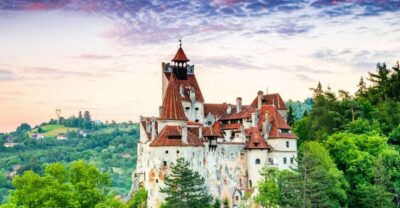
Dracula’s Castle, Peles Castle, & Brasov Old Town
Read our review →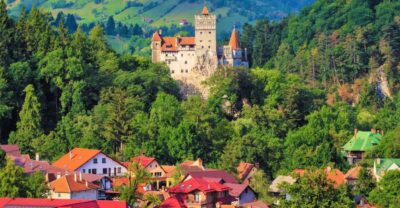
Dracula Castle, Peles Castle & Brasov Old Town
Read our review →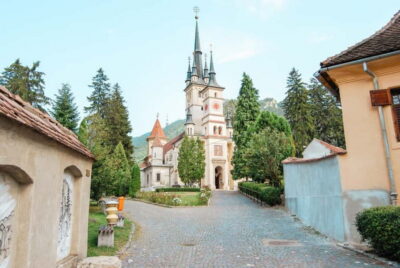
Dracula’s Castle, Peleș Castle & Brașov Day Trip
Read our review →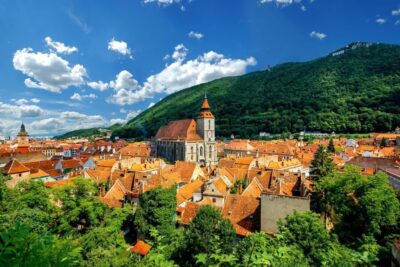
Day Trip to Dracula Castle, Peles Castle & Brașov
Read our review →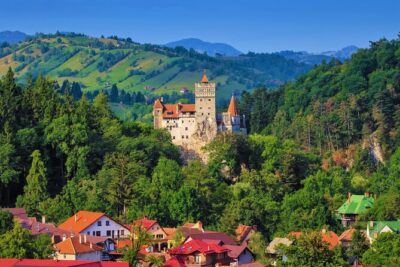
Bucharest to Dracula Castle, Peles Castle and Brasov Guided Tour
Read our review →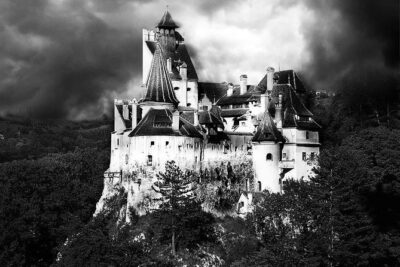
Dracula’s Castle, Peles Castle and Brasov Day Trip from Bucharest
Read our review →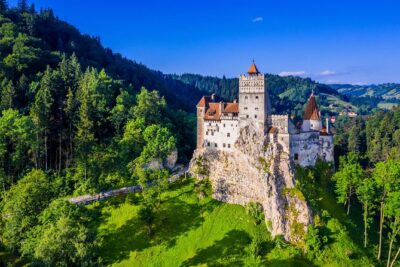
Transylvania and Dracula Castle Full Day Tour from Bucharest
Read our review →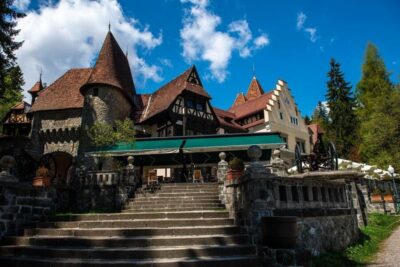
Browse the lists this tour appears in