
Reviewed · TRANSYLVANIA DAY TRIPS
7-Day Romania Tour -Transylvania and Painted Churches
Romania’s best story unfolds across this long loop: royal castles, Orthodox monasteries covered in frescoes, Saxon towns, and the medieval citadel where Vlad Tepes was born. The route also reaches Red Lake, Bicaz Gorge, Bucovina, and the mud volcanoes mentioned in the tour description, giving you much more than a Dracula-themed holiday.
I like the private format, since your group travels with its own guide-driver rather than following a large coach. I also like the range of places included: Peles Castle and Sighisoara are crowd-pleasers, while Agapia, Moldovita, Sucevita, Biertan, and Curtea de Arges bring you closer to Romania’s religious and regional traditions.
The main caution is distance. One traveler specifically suggested making the long stretches by car clearer, and that is sound advice. You will spend several days on winding mountain roads, so this tour suits you best if you prefer seeing many regions in one trip rather than settling into one town.
Key points to know before booking
- Painted monasteries in Bucovina: Visit Voronet, Moldovita, and Sucevita, with frescoes covering church exteriors and stories drawn from Orthodox tradition.
- Sighisoara after dark and in the morning: Stay in or near the medieval citadel, then explore the Clock Tower, Church on the Hill, and Vlad Tepes’s birthplace.
- A private seven-day loop: Your guide-driver handles transport, fuel, and parking in an air-conditioned car, minivan, or minibus.
- Royal Romania at Peles: See the former royal residence in Sinaia, known for ornate woodwork, paintings, and Neo-Renaissance design.
- Saxon Transylvania: Biertan and Sibiu show the German influence that shaped fortified churches, guild towers, and old town streets.
- Budget needs planning: Six nights and transport are included, but meals, drinks, and most admission tickets cost extra.
A long Romanian loop with real variety
This tour is built around contrast. In one week, you move from Bucharest’s grand government buildings to mountain passes, village monasteries, royal interiors, fortified churches, and medieval lanes.
That variety is the strongest reason to choose it. Romania is not a country you understand from one base. Bucharest feels modern and imposing, Sinaia feels royal, Bucovina feels deeply Orthodox, and Transylvania brings German, Hungarian, and Romanian influences together.
The price is $1,708.12 per person. That is not a shoestring trip, but the value improves if you want door-to-door transport and private guiding without arranging six hotel nights, fuel, parking, and complicated regional connections yourself. Food and drinks are not included, and admission fees are generally extra, so keep a separate allowance for castles, towers, museums, and monasteries.
The tour is described as seven days, with six nights of accommodation. The overview also calls it a six-day tour, so confirm the exact arrival and departure schedule before paying. Day one begins with airport pickup at Bucharest Henri Coanda Airport, and the final day drives back to Bucharest.
More Transylvania day trips:
- Transylvania and Dracula Castle Full Day Tour from Bucharest
★ 4.5 · 1,589 reviews - Castles of Transylvania: Private Day Trip from Bucharest
★ 4.5 · 248 reviews - 2-Day Medieval Transylvania with Brasov,Sibiu and Sighisoara Tour from Bucharest
★ 4.5 · 145 reviews
Day one in Bucharest, with airport pickup
Your guide-driver meets you at the airport and, depending on your arrival time, may begin with Bucharest’s major sights. The Palace of Parliament is the named stop, with about three hours set aside for the capital.
The building is an imposing introduction to Romania’s 20th-century past. Admission is not included, and the schedule depends on when your flight arrives, so do not assume you will receive a full city tour on day one. A late arrival may mean a short orientation before the countryside portion begins.
The airport pickup is useful after a flight, especially when you are carrying luggage and unfamiliar with Romanian roads. Since this is a private tour, the start can be more personal than joining a fixed coach departure, though the exact flexibility depends on your arrival time and availability.
Day two, Peles Castle and Bran Castle
The route crosses the Southern Carpathians to Sinaia, a mountain settlement that grew around the famous Sinaia Monastery, founded in 1695. The star attraction is Peles Castle, a former royal residence and one of Eastern Europe’s best-preserved royal palaces.
Allow about two hours here. The appeal is not just the exterior. Inside, you can expect elaborate wood sculpture, ornate decoration, and paintings connected with scenes from the works of Richard Wagner. It is a lavish place, and it helps explain how Romania’s royal family presented itself in the late 19th century.
Peles is a strong stop for anyone who likes architecture and interiors. The practical catch is that admission is extra, and opening arrangements can affect your time. Your guide can explain the setting and history, but you should not treat the two-hour stop as unlimited time inside every room.
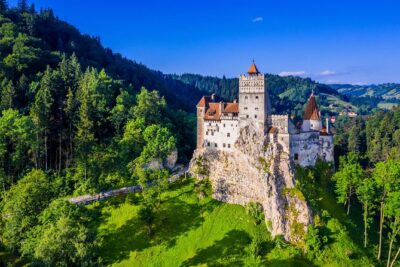
From Sinaia, you continue to Bran Village for Bran Castle, commonly called Dracula’s Castle. Its hilltop profile helped fuel the legends, but the visit works best when you separate the building’s real history from Bram Stoker’s fictional vampire.
You have about two hours at Bran, with admission again not included. I like the pairing of Peles and Bran because they offer two very different castle experiences: Peles is polished and royal, while Bran is atmospheric and tied to folklore. If Dracula is your main reason for coming, Bran will satisfy the mood, but Sighisoara later in the week offers the more direct connection to Vlad Tepes.
Day three, Brasov and Agapia’s working convent
Brasov gives you a proper Transylvanian city break. The old center is well preserved, and the city is surrounded by the Southern Carpathians. The schedule allows about two hours, enough for a focused walk through the historic center and perhaps a look toward Tâmpa Mountain.
The cable car to the top of Tâmpa is described as a way to see the city from above, but the ride is not listed as included. If the timing works, the viewpoint can add a useful sense of Brasov’s setting. If not, the old streets still provide the main reward.
The tour then pushes northeast toward Agapia Monastery, one of Romania’s largest nunneries. More than 300 nuns work in different workshops, including painted icons and handmade carpets.
This is one of the more meaningful stops because it presents a living religious community, not just an old monument. You can spend about an hour here. Be ready for a quieter, more respectful visit than at a castle, and remember that Orthodox religious sites may require appropriate behavior and clothing.
The itinerary is ambitious on this day. Brasov and Agapia are not next-door stops, so the road time matters. This is another day when a private vehicle helps, but it is still a full schedule.
A few more Bucharest day trips to weigh up
- 4×4 Driving Experience at Flying Altitudes – 7 Days
★ 5.0 · 13 reviews - 7-Day Private Tour of Transylvania from Bucharest
★ 5.0 · 13 reviews - Amazing Romania – Seven day private tour from Bucharest
★ 5.0 · 7 reviews - Transylvanian week
★ 5.0 · 7 reviews
Day four, Bucovina’s painted churches
Day four is the artistic heart of the trip. Voronet Monastery dates to 1488 and combines Byzantine, Gothic, and local elements. Its famous exterior murals include a Last Judgment scene on the western wall, a feature that has made Voronet one of Romania’s best-known painted churches.
Two hours are planned here, with admission extra. Take time to look closely at the wall paintings rather than treating the church as a quick photo stop. The point is not only the color. The frescoes were a way to communicate religious stories to communities in which many people could not read.
Moldovita Monastery follows along one of Bucovina’s scenic mountain roads. The route crosses the Ciumarna Pass and reaches a fortified enclosure with a tower, gates, lawns, and a painted church built in 1532.
The church’s frescoes date from 1537 and include a depiction of the Siege of Constantinople in 626. The scene shows how religious art could also speak to contemporary fears. The figures attacking the city are shown in Turkish dress, linking the old story to the threats people recognized at the time.
The stop lasts about an hour, and admission is extra. You will want comfortable shoes for moving around the grounds, though no special equipment is listed as necessary.
Sucevita Monastery completes the day. Its major image is the Virtue Staircase, a dramatic scene contrasting the ordered side of the angels with the disorder of the devils.
You have about an hour here. Three monasteries in one day can feel repetitive if you are not interested in religious art, but the differences in design, setting, and painted scenes make the sequence worthwhile. This is the portion of the tour where a good guide-driver matters most. The supplied information identifies the guide as English-speaking and well informed, but does not provide a name, so you should confirm who will lead your departure.
Day five, from Red Lake to Sighisoara
The road crosses the Eastern Carpathians through Bicaz Gorge before reaching Red Lake. The area is associated in the tour material with the mountain world described in Dracula, and it also brings you into a part of Transylvania inhabited largely by the Hungarian Szekler community.
Red Lake receives about an hour. The stop is free, which makes it a pleasant change from the castle and monastery visits that require tickets. The road itself is an important part of the day. Bicaz Gorge and the mountain route offer a strong sense of Romania’s terrain, but winding roads may be tiring if you are prone to motion sickness.
You reach Sighisoara in the evening and stay for the night. This timing is smart. The citadel is still inhabited, and arriving in the evening gives you a chance to see its cobbled streets and old houses without trying to fit every sight into one rushed afternoon.
Sighisoara is a UNESCO World Heritage Site and is described as Europe’s only still inhabited medieval fortress. That claim is one reason the overnight stop matters. You are not simply passing through a museum district. People still live within the historic walls.
Day six, Vlad Tepes, Biertan, and Sibiu
The morning walk through Sighisoara covers the Clock Tower, Church on the Hill, and the house where Vlad Tepes was born in 1431. Admission is extra for the named sights.
The Dracula connection here is more specific than at Bran. Vlad Tepes was a real ruler, while Dracula is a fictional creation shaped partly by his reputation. I would give Sighisoara priority if you want the historical side of the legend.
After Sighisoara, the route reaches Biertan, one of the German settlements founded by Transylvanian Saxons. Its fortified church is surrounded by three rows of defenses and served as the residence of the Transylvanian Archbishop for nearly 300 years.
Biertan’s reconciliation room is a memorable detail. Couples facing divorce were kept there together for a period, with the aim of repairing the marriage. Your guide can explain the full local story on site, and the stop offers something different from the painted monasteries: Lutheran Saxon architecture and fortified village life rather than Romanian Orthodox practice.
The day ends in Sibiu, the main city of the Transylvanian Saxons. A walk around the old defenses and surviving guild towers helps you read the city as a place shaped by trades and civic organization.
Sibiu is given a full day across the schedule, but the exact division between arrival day and the following morning should be confirmed. That matters if you hope to enter the Brukenthal Museum or see every church and passage at an easy pace.
Day seven, Sibiu and the road back to Bucharest
Sibiu’s sights include the Brukenthal Museum, assembled by Baron Brukenthal, who governed Transylvania in the late 18th century. The Evangelical Cathedral reached its present form in 1520, and its choir contains a Crucifixion fresco dating to 1445.
You can also see the Passage of Stairs between the Upper and Lower Town, the 1859 Liar’s Bridge, and the Byzantine-style Orthodox Cathedral, modeled on Hagia Sophia in Constantinople. Admission is not included, and the two-hour visit is best treated as a guided orientation rather than a full museum day.
The final major stop is Curtea de Arges Monastery, reached on the drive toward Bucharest. Curtea de Arges was the first capital of Wallachia, and its monastery is the burial place of three of the four Romanian kings from the Hohenzollern dynasty.
This is a fitting final stop because it brings together royal and religious themes seen throughout the week. You have about an hour before continuing to Bucharest. The tour ends with the drive back, so consider your departure flight time carefully.
Lodging, transport, and the real cost
Six nights of B&B-style accommodation are included on a bed-and-breakfast basis. The properties are described as hand-picked inns, but specific names and room standards are not provided, so ask for those details if lodging quality is central to your choice.
Transport is by air-conditioned car, minivan, or minibus. Fuel and parking are included. Since only your group participates, you avoid the fixed pace and passenger count of a large group tour.
The tradeoff is that private touring does not eliminate road time. It simply makes the road time easier to manage. You can ask questions, stop according to the agreed plan, and travel with people you know, but the itinerary still covers a large portion of Romania.
At $1,708.12, the tour makes the most sense if you value convenience, a private vehicle, and a guide-driver who handles navigation and parking. It is less attractive if you prefer to choose every meal, hotel, and museum on your own or if you want long, unplanned afternoons in each town.
Meals and drinks are not included. Most admissions are also extra, including Peles Castle, Bran Castle, the painted monasteries, Sighisoara sights, Biertan, Sibiu attractions, and Curtea de Arges. Budget for those costs before comparing the total price with other Romanian tours.
Who should book this Romania tour?
I would choose this trip if you want a broad first look at Romania and do not want to rent a car. It suits couples, families, and small private groups that value a dedicated vehicle and want both famous stops and less familiar religious sites.
It is especially good for you if you enjoy:
- Medieval towns and fortified churches
- Orthodox art and painted exteriors
- Castles, royal history, and folklore
- Mountain roads and scenic passes
- Small inns rather than standardized chain hotels
- A full schedule with little need to plan transport
I would hesitate if long drives make you uncomfortable, if you need slow mornings, or if your main goal is to relax in one region. The itinerary is ambitious, and the combination of mountain roads, repeated monastery visits, and extra admission costs requires both energy and planning.
The 4.9 rating from seven reviews supports the strongest practical point: the guide-driver is described as speaking very good English and explaining the trip well. Just make sure the length of the driving days is clear before you commit.
Should you book it?
Book this tour if you want Romania’s major first-time sights in one private circuit, especially Peles, Bran, Sighisoara, Bucovina’s painted monasteries, Biertan, and Sibiu. The route offers real variety and takes care of the hardest part, getting between far-flung regions.
Skip it if you want a slow cultural stay or dislike spending several hours in a vehicle. Before booking, confirm the exact seven-day schedule, accommodation names, guide assignment, entrance costs, and airport timing. With those details settled, this is a strong choice for an active week that mixes legends with the real Romania behind them.
FAQ
Where does the tour start and finish?
The tour begins in Bucharest, with pickup at Bucharest Henri Coanda Airport, and ends with the drive back to Bucharest.
How long is the experience?
The tour lasts approximately seven days and includes six nights of accommodation. The overview also describes it as a six-day tour, so confirm the exact schedule before booking.
Is this a private tour?
Yes. Only your group participates, and transport is provided by air-conditioned car, minivan, or minibus.
What is included in the price?
The price includes six nights of bed-and-breakfast accommodation, a driver-guide, transport, fuel, and parking fees.
Are meals and attraction tickets included?
Food and drinks are not included unless specifically stated. Most admission tickets are also not included, including tickets for several castles, monasteries, museums, and historic sights.
Does the tour visit Dracula-related places?
Yes. You visit Bran Castle, known as Dracula’s Castle, and Sighisoara, where Vlad Tepes was born in 1431.
What is the cancellation policy?
You can receive a full refund if you cancel at least six full days before the start time. Cancelling two to six full days ahead allows a 50 percent refund, while cancellations less than two full days before the start time are nonrefundable.
Just added around Bucharest
- 2 days Transylvania Tour with Brasov, Sibiu and Sighisoara★ 5.0 · 6 reviews
- Bucharest Rooftop Tour★ 5.0 · 6 reviews
- Bucharest City Tour 2 hours – by Car with a Private Guide★ 5.0 · 6 reviews
- 7 days Private Romania Grand Tour from Bucharest★ 5.0 · 6 reviews
- Day Trip to Transfagarasan★ 4.6 · 6 reviews
- Explore Transylvania Tour 4 days★ 5.0 · 7 reviews
- Bucharest Discovery morning tour★ 5.0 · 7 reviews
- Day Trip to Bulgaria and Veliko Tarnovo from Bucharest★ 5.0 · 7 reviews
Transylvania Day Trips, compared.
Transylvania and Dracula Castle Full Day Tour from Bucharest
Read our review →
Castles of Transylvania: Private Day Trip from Bucharest
Read our review →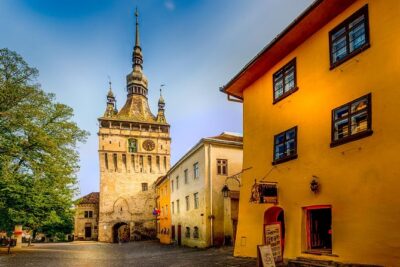
2-Day Medieval Transylvania with Brasov,Sibiu and Sighisoara Tour from Bucharest
Read our review →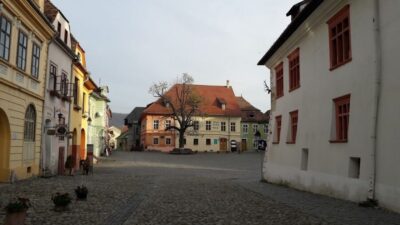
SB01 – City Tour Sibiu: Exploring the Heart of Transylvania
Read our review →
Day trips and excursions in nature, cities in Transylvania, Brasov!
Read our review →
2-Day Transylvania from Bucharest: Brasov, Bran, Sighisoara
Read our review →
Browse the lists this tour appears in