
Reviewed · BRAN CASTLE & DRACULA TOURS
8h Bucharest Communism Tour – Best of Bucharest with Dracula’s Tomb
The most striking part of this Bucharest day is the clash between communist excess and ordinary Romanian life. You move from Ceaușescu’s enormous Palace of Parliament and private mansion to wooden village homes, then follow the streets where the 1989 revolution toppled his regime. The final stop, Snagov Monastery, adds a dose of Dracula legend on an island outside the city.
I like the way this tour joins political history with everyday culture, rather than treating communism as a parade of grand buildings. I also like the private format: guides such as Nicolas and Răzvan can adjust the pace, explain details in plain language, and point you toward useful ideas for the rest of your stay. The main drawback is cost. At $297.38 per person, it is a serious outlay unless you are traveling with enough people to share the private vehicle and guide.
Key points to know before booking
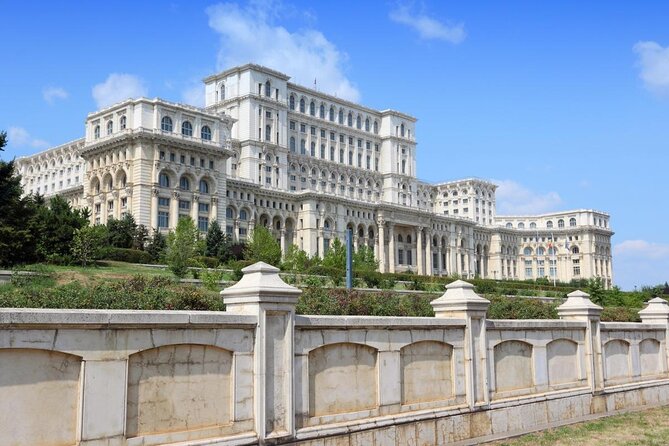
- The Palace of Parliament takes center stage, with about two hours devoted to Bucharest’s vast symbol of Ceaușescu’s rule.
- Snagov Monastery adds the Dracula connection, located about 40 minutes from Bucharest on an island.
- The private vehicle matters, since the day covers city sights, a mansion, and an out-of-town monastery.
- Calea Victoriei and Revolution Square connect architecture to the 1989 uprising, not just sightseeing.
- Ceausescu Mansion shows private life behind public austerity, with the family residence preserved for inspection.
- Admission tickets, food, and drinks are extra, so your final cost will be higher than the tour price.
Why this route works for understanding Bucharest
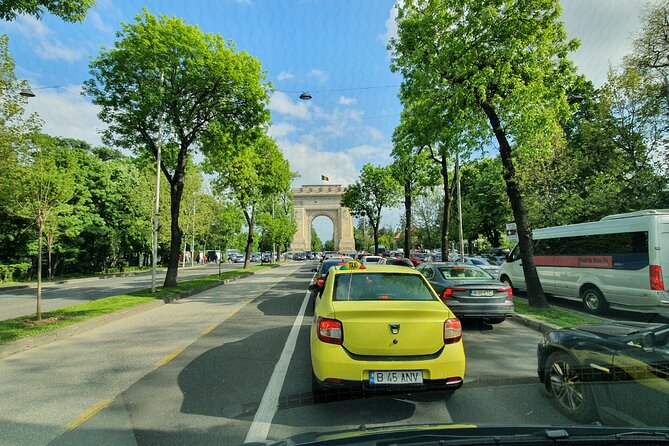
This is not simply a city highlights drive. It is a day built around contrasts. You see how the communist state presented power, how Romanian traditions survived outside that system, and how ordinary streets became the setting for revolution.
The route also avoids a common problem with themed tours: too much theory and too little place. Here, the buildings do much of the talking. The Palace of Parliament shows official power on a giant scale. The National Village Museum shows homes and tools shaped by local needs. Revolution Square gives the story a human setting, while the Ceausescu Mansion reveals how the ruling family lived away from public view.
Because you travel in a private vehicle, you do not have to manage city transport between these separate areas. Hotel pickup and drop-off are included, along with fuel and facility fees. The day is still long, and the itinerary has several substantial stops, but the arrangement is far easier than assembling the same route yourself.
The tour is offered as a private activity, so only your group participates. That is especially useful if you want to ask questions about the communist period, spend longer at one site, or keep the pace moving when a stop is less interesting to you.
More Bran Castle and Dracula trips:
- Bucharest: Dracula’s Castle, Peles Castle, & Brasov Old Town
★ 4.5 · 17,858 reviews - Bucharest: Dracula Castle, Peles Castle & Brasov Old Town
★ 4.6 · 10,891 reviews - Bucharest: Dracula’s Castle, Peleș Castle & Brașov Day Trip
★ 4.5 · 5,919 reviews
The Palace of Parliament: power built in concrete
Allow about two hours here, making it the longest scheduled stop. The building, also called the People’s House, is presented as the second-largest administrative building in the world after the Pentagon. Its scale is the point. You are meant to feel how a dictatorship can turn national resources into a monument to one leader and his system.
The experience works best when you look beyond the size. The building represents the damage caused by totalitarian rule: forced urban change, wasteful construction, and an obsession with grandeur while much of the country lived under hardship. Your guide can place the architecture within that political story instead of leaving you with a collection of big rooms and impressive measurements.
Admission is not included, so check the current entry arrangements and price when booking. The tour provides the vehicle and guide, but you should budget separately for this ticket. Since the visit takes about two hours, it is worth treating the Palace as the main historical appointment of the day rather than a quick photo stop.
I would also keep your expectations clear. This is not a delicate or intimate sight. It is a huge, imposing building, and some people find the scale fascinating while others find the repeated displays of luxury tiring. If you want to understand why Bucharest is marked by such a building, though, this is the essential stop.
Village Museum: Romania beyond the capital
The National Village Museum shifts the mood. Instead of state power, you see traditional homes brought together from different parts of Romania. The collection includes houses made from wood, adobe, stone, and other local materials, along with national symbols such as mills and wooden churches.
This stop gives the communist story a needed human frame. Romania was not created by the buildings of Bucharest’s rulers. It was also shaped by village life, practical construction, local customs, and a close relationship with the surrounding environment.
You can expect to learn how Romanian villagers organized a modest, sustainable way of life around their homes. The museum presents more than an assortment of old structures. It shows how people used available materials and connected domestic, social, and spiritual life.
The supplied schedule does not give a precise duration for this visit, so the actual time may depend on the day and your group. That flexibility is useful in a private tour, but it also means you should ask your guide how the stops will be timed. After the Palace of Parliament, this museum provides welcome variety and helps prevent the day from becoming a single-theme examination of Ceaușescu.
Calea Victoriei: Bucharest’s street of contrasts
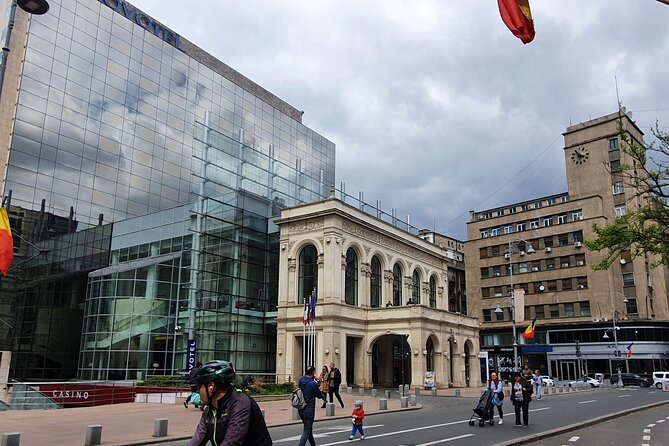
The scheduled visit to Calea Victoriei lasts about 45 minutes, with no separate admission charge. This central avenue brings several layers of Bucharest together in a compact stretch.
Your guide points out the Royal Palace on one side and the former Central Committee of the Romanian Communist Party near Revolution Square on the other. That contrast is one of the strongest details in the entire route. One building represents monarchy and older state tradition. The other is tied directly to the communist government that ruled Romania until 1989.
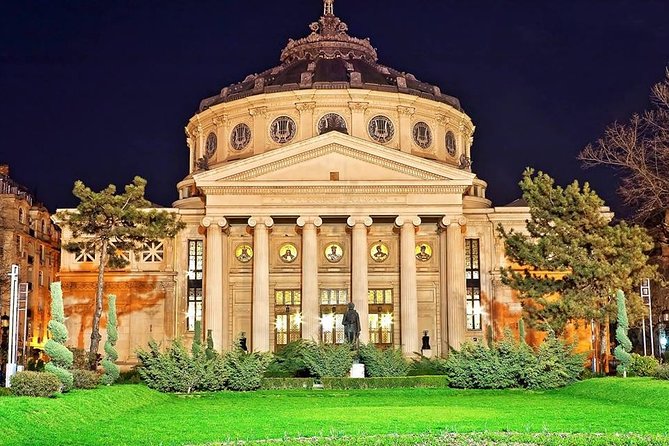
The avenue also includes old Orthodox churches, the Romanian Athenaeum, the CEC Palace, museums, theatres, restaurants, shops, tea rooms, casinos, and a music store. You get a sense of Bucharest as a city with several personalities at once: royal, religious, cultural, commercial, and political.
Forty-five minutes is enough for an introduction, not a thorough walk through every landmark. I would use this section to listen closely to the guide’s explanation, note places you may want to revisit, and keep your camera ready. The street is valuable less for one single building than for the way its sights show Romania’s changing public life.
More communist-era Bucharest walks:
- The Real tour of Communism
★ 5.0 · 666 reviews - Life under Communism
★ 5.0 · 358 reviews - 3-Hour Guided Tour of Communist Bucharest
★ 4.9 · 303 reviews - Bucharest Essential Tour: Old Town, Calea Victoriei & Communism
★ 5.0 · 142 reviews
Revolution Square and the fall of Ceaușescu
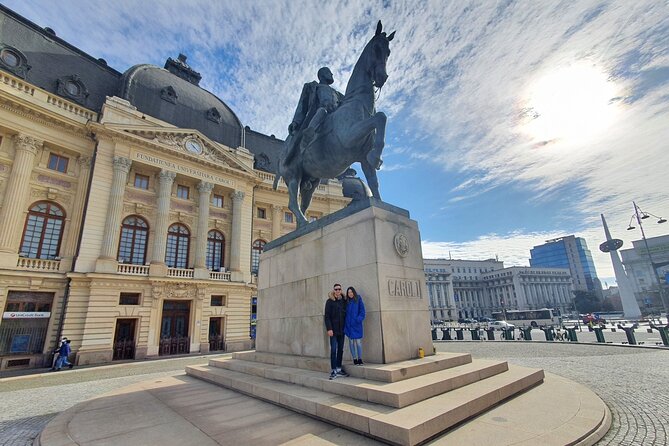
Revolution Square receives about 30 minutes. The former Senate Palace and the building that once housed the Central Committee of the Romanian Communist Party are central to the story.
This is where the tour shifts from the symbolism of communist power to its collapse. The December 1989 revolution began here, and Ceaușescu eventually fled by helicopter. The site gives physical shape to a national turning point that can otherwise feel like a distant chapter in a textbook.
Your guide also addresses the questions surrounding Ceaușescu’s fortune, the state security service, and alleged offshore accounts. Those subjects add complexity. The fall of a dictator did not erase every uncertainty about how the old system worked or where its wealth went.
Do not expect Revolution Square to function like a museum with a long indoor visit. Its value comes from standing in the location and hearing how the events unfolded around the surrounding buildings. The half-hour schedule is brief, but it fits well after Calea Victoriei, since the two stops are closely linked in the tour’s story.
Snagov Monastery and the Dracula connection
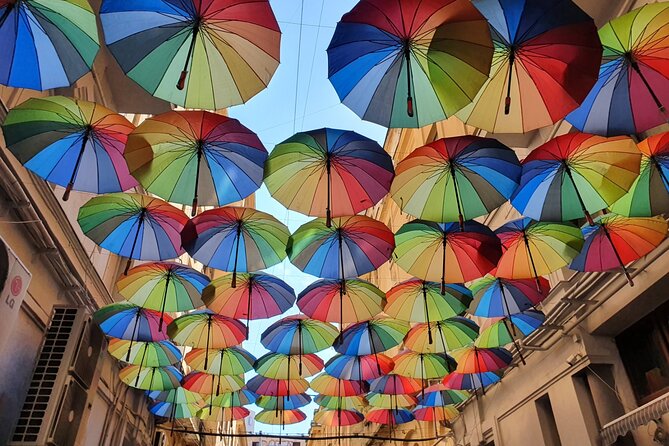
Snagov Monastery is the surprise in this otherwise strongly political itinerary. It is about 40 minutes outside Bucharest, located on an island, and is identified as the place of Dracula’s tomb.
The excursion gives the day a change of pace and connects Bucharest with the enduring Romanian Dracula story. You are not simply seeing another city monument. You are leaving the capital, crossing to an island setting, and visiting a religious site associated with one of the country’s most famous legends.
About an hour is allotted here. Admission is not included, so set aside money for the monastery ticket. The tour description does not provide details about the crossing or the exact entry procedure, so ask the operator about current conditions before departure.
This is a good stop for you if you enjoy the meeting point between documented history and popular legend. It may feel less satisfying if you want every part of the day to stay tightly focused on twentieth-century communism. Still, the contrast helps. After several hours of political buildings and revolution sites, Snagov offers a smaller and more atmospheric place.
Ceausescu Mansion: private comfort behind public slogans
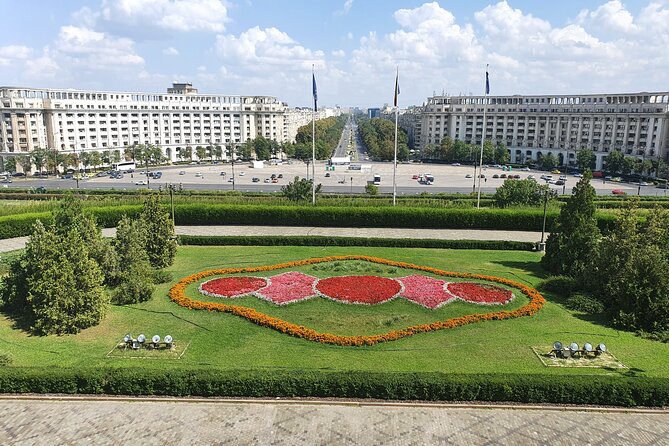
The former Ceausescu residence, known at the time as the Spring Palace, was the private home of Nicolae and Elena Ceaușescu and their children from 1965 to 1989. The scheduled visit lasts about one hour and 20 minutes, and admission is extra.
This stop may tell you more about the ruling family than a public office ever could. The Palace of Parliament shows the scale of the regime’s public ambitions. The mansion shows the private setting in which the family lived for a quarter of a century.
The house was built in the mid-1960s and expanded between 1970 and 1972. Aron Grimberg-Solari designed the residence, while architect Robert Woll worked on the furnishings and garden design with landscape engineer Teodosiu. Those details matter because they show that the mansion was not an improvised hideaway. It was planned, enlarged, and furnished as a long-term family residence.
Allow time to look closely at the domestic setting rather than rushing through it as another political monument. The mansion can make the period feel more personal. You see the difference between the public language of equality and the private environment reserved for Romania’s leaders.
As with the other paid sites, the entry ticket is not part of the $297.38 price. If you plan to visit every attraction on the route, calculate the added admissions before deciding if the package fits your budget.
The guide and vehicle can shape the day

The tour includes a driver-guide and a local guide, with private transport in a clean, air-conditioned vehicle. The vehicle has been described as comfortable, with large windows and comfortable seats, details that matter during an eight-hour outing with a drive beyond Bucharest.
Nicolas is identified in the supplied material as a guide who combines historical explanation with humor. Răzvan is also praised for being flexible and well prepared. Booking information may assign a different guide, so treat those names as examples rather than a guarantee, but they indicate the kind of personal service the operator aims to provide.
The guide’s role is especially important here. The Palace, Revolution Square, and the mansion all need context. Without explanation, you might see only grand architecture, a public square, and a well-appointed house. With a good guide, the route becomes a connected account of power, privilege, protest, and change.
Spanish-speaking service is not explicitly promised, though one published account was written in Spanish. Do not assume a particular language unless you confirm it at booking.
Is $297.38 per person good value?
The price is high for a Bucharest day, especially since entrance tickets and meals are not included. The value depends heavily on group size and your priorities.
For one person or a couple, the cost may feel steep. You are paying for a private vehicle, hotel pickup and drop-off, a driver-guide, a local guide, fuel, and facility fees, but you still need to add admission charges and food.
For a larger private group, the calculation improves because the transport and guiding costs are shared. The tour also covers a lot in one day: major communist sites, traditional Romanian architecture, a former dictator’s home, and an out-of-town monastery. Recreating that route independently would require planning transport and timing across several locations.
I would book it for convenience and depth, not as the cheapest way to see Bucharest. If your goal is a quick orientation, a shorter city tour will likely be enough. If you want the communist story explained while also seeing places that are difficult to combine on your own, the private format has a clearer case.
Who should choose this Bucharest day?
This experience suits you if you want history tied to real places and prefer a guide who can answer questions as they arise. It is also a strong fit for first-time visitors who want a broad introduction to Bucharest without spending several days arranging separate excursions.
Families and small groups may appreciate the private setup, since the day belongs only to your party. The vehicle and hotel pickup reduce the need to navigate between distant stops.
You should think twice if you dislike long sightseeing days, have no interest in communist history, or want to keep costs low. The tour is also not a pure Dracula excursion. Snagov is one stop in a full Bucharest program, not the central theme.
Most people can participate, and service animals are allowed. Confirmation is received when booking. Free cancellation is available up to 24 hours before the start time, while changes or cancellations inside that window are not accepted for a refund.
Should you book it?
Book this tour if you want Bucharest’s communist past explained through buildings, streets, and personal spaces, with the added bonus of traditional village architecture and Dracula’s reputed tomb. The strongest parts are the Palace of Parliament, Revolution Square, and Ceausescu Mansion, while the Village Museum keeps the day from becoming too politically narrow.
The decision comes down to price and pace. A larger group will get better value from the private vehicle and guide. Before paying, confirm the guide language, the exact entry fees, and how the Village Museum fits into the eight-hour schedule. If those details work for you, this is an efficient, thoughtful way to connect Bucharest’s grandest sights with the people and events behind them.
FAQ
How long does the tour last?
The tour lasts approximately eight hours.
Is hotel pickup included?
Yes. Hotel pickup and drop-off are included.
Is this a private tour?
Yes. Only your group participates in the private activity.
What transport is provided?
Transport is provided by private vehicle, with a driver-guide. Fuel surcharge and facility fees are included.
Is the Palace of Parliament admission included?
No. The entrance ticket for the Palace of Parliament is not included.
Is admission to Snagov Monastery included?
No. Admission to Snagov Monastery is not included.
Is admission to Ceausescu Mansion included?
No. The ticket for Ceausescu Mansion is not included.
Are food and drinks included?
No. Food and drinks are not included.
Can service animals participate?
Yes. Service animals are allowed.
Can I cancel for a full refund?
Yes, if you cancel at least 24 hours before the experience start time. Cancellations or changes made less than 24 hours in advance are not accepted for a refund.
Just added around Bucharest
- Private Full Day Tour of Bucharest★ 5.0 · 3 reviews
- Veliko Tarnovo and Medieval Bulgaria Private Day Trip from Bucharest★ 5.0 · 3 reviews
- Bucharest VIP Bar Crawl in Lipscani ‘Old Town’★ 5.0 · 3 reviews
- Bucharest Private City Tour★ 5.0 · 3 reviews
- Muddy Volcanoes and Salt Mine Private Tour★ 5.0 · 3 reviews
- Legends & Stories from Transylvania -2 Castles & Brasov Old Town★ 5.0 · 3 reviews
- Transfagarasan Private Tour from Bucharest – 2 Days★ 5.0 · 3 reviews
- 7-Day Dracula Tour in Romania from Bucharest including ‘The Ritual of Killing of a Living Dead’★ 5.0 · 3 reviews
Bran Castle & Dracula Tours, compared.
Dracula’s Castle, Peles Castle, & Brasov Old Town
Read our review →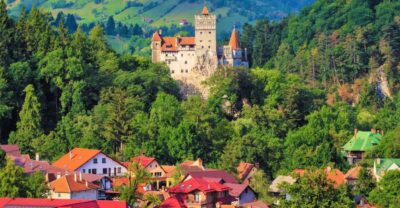
Dracula Castle, Peles Castle & Brasov Old Town
Read our review →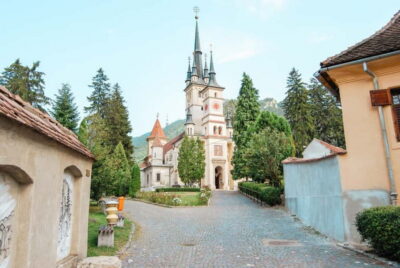
Dracula’s Castle, Peleș Castle & Brașov Day Trip
Read our review →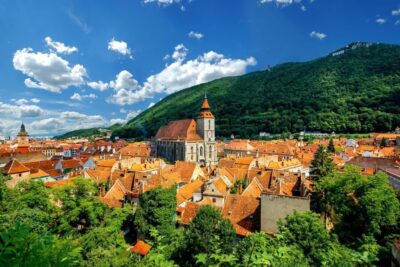
Day Trip to Dracula Castle, Peles Castle & Brașov
Read our review →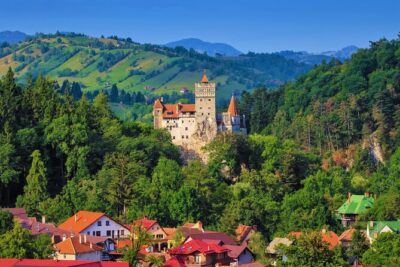
Bucharest to Dracula Castle, Peles Castle and Brasov Guided Tour
Read our review →
Dracula’s Castle, Peles Castle and Brasov Day Trip from Bucharest
Read our review →
Transylvania and Dracula Castle Full Day Tour from Bucharest
Read our review →
Browse the lists this tour appears in