Reviewed · BUCHAREST TOURS
Constanta and the Black Sea Coast – Private Tour from Bucharest
Constanța gives you Romania’s past and seaside present in one long day. You can look across the Black Sea from the battered Art Nouveau casino, walk over ancient Roman mosaics, and finish with seafood or beach time. The private format lets you shape the day instead of following a fixed group schedule.
I like the hotel pickup and private car, which takes the strain out of a long outing from Bucharest. I also like the choice between culture and coast: spend longer in the museums, stop for lunch, or trade some sightseeing for time by the water.
The drawback is the length. At about 11 hours, this is a full day with a lot of road time, and the listed stops are brief. Some entrance fees are extra, and the casino itself is viewed from outside because the building is currently abandoned.
Key points to know before you book
- Constanța in one day: Combine Roman Tomis, Ottoman-era sights, modern Romania, and the Black Sea in a single trip from Bucharest.
- Private travel: Ride in an air-conditioned car or van with hotel pickup and drop-off, rather than arranging trains, taxis, and local transport yourself.
- Flexible pacing: Guides such as Alin and Vlad have adjusted the day for families, beach time, food stops, and different interests.
- Best historic stop: The National History and Archaeology Museum gives you the clearest look at the ancient city and Dobrogea’s past.
- Useful seaside finish: Tomis Harbor offers waterfront walking, restaurants, yachts, and a route toward Constanța’s modern beach.
- Budget to allow: The tour costs about $177.64 per person, with lunch and several admission fees paid separately.
Why Constanța makes a good day trip from Bucharest
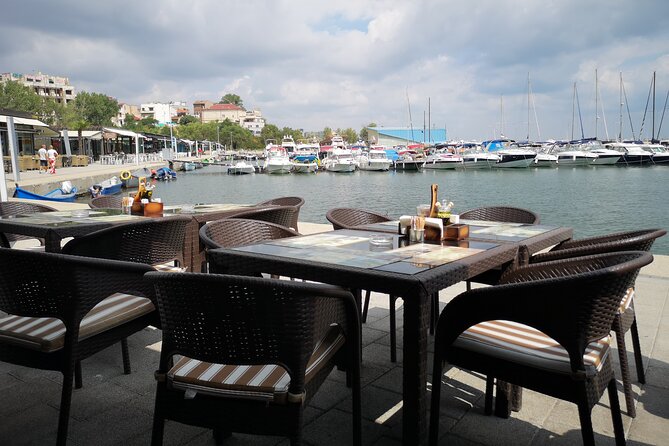
Constanța is Romania’s main Black Sea city, but it feels quite different from Bucharest. The capital is inland and grand in a political, urban way. Constanța looks outward, toward trade, ships, beaches, and the long memory of the ancient port of Tomis.
That mix gives this tour its appeal. In the morning, you can focus on archaeology and architecture. Later, you can slow down beside the water, eat fish, or walk on the beach. I find that contrast more rewarding than a day made up only of museum rooms.
The tour lasts about 11 hours, so you should treat it as a proper day trip, not a quick excursion. The private vehicle matters here. You get hotel pickup, air conditioning, and a direct ride with your own party. You also avoid the work of figuring out connections and local taxis once you reach the coast.
The price is listed at $177.64 per person. That is not the cheapest way to reach Constanța, especially for one person, but the value improves for couples, families, or small groups who want a guide and private transport. Group discounts are available, and only your party takes part.
The tour is often reserved well ahead, around 66 days in advance on average. If your Bucharest stay falls during a busy season, I would not leave this to the last minute.
A few more Bucharest day trips to weigh up
- Bucharest: Dracula’s Castle, Peles Castle, & Brasov Old Town
★ 4.5 · 17,858 reviews - Bucharest: Dracula Castle, Peles Castle & Brasov Old Town
★ 4.6 · 10,891 reviews - Bucharest: Dracula’s Castle, Peleș Castle & Brașov Day Trip
★ 4.5 · 5,919 reviews
The casino and Constanța’s sea-facing identity
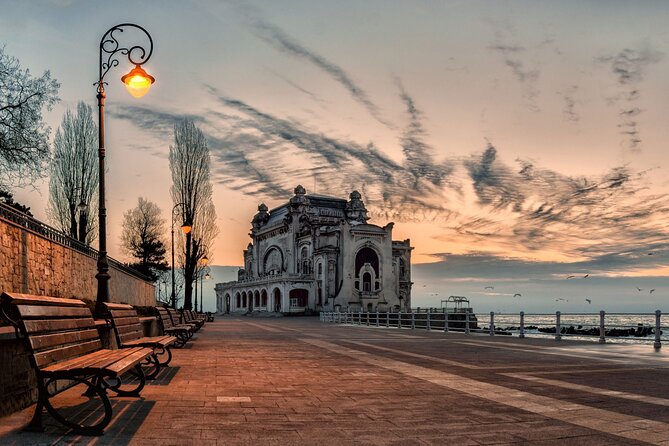
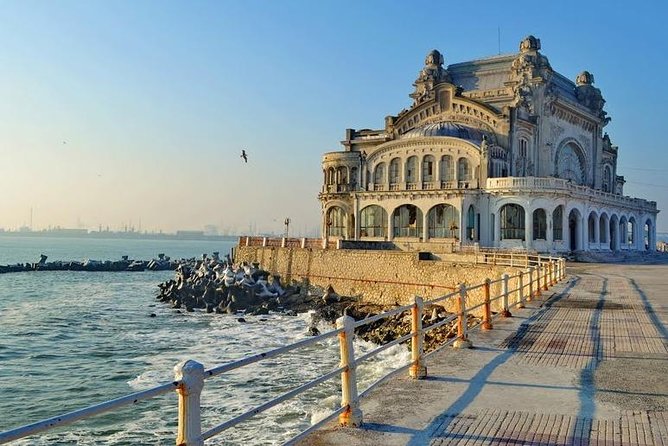
Your first stop is the Constanța Casino, one of the city’s most recognizable buildings. It sits on the waterfront at 2 Elisabeta Boulevard, in the historic Peninsulă district, with the Black Sea directly beside it.
The present building was designed by Daniel Renard in Art Nouveau style and opened in 1910. Its curved forms and decorative details once represented a glamorous seaside city, a place sometimes compared with Monte Carlo. The casino had a short and troubled life, interrupted by both world wars, bombing, wartime damage, and a period as a makeshift hospital.
You get about 10 minutes here, with no admission fee. That is enough for photographs and a look at the building’s setting, but not enough for a long architectural study. Since the casino is abandoned, you should not expect an interior visit or a functioning attraction.
I still consider it an essential stop because the building tells you a great deal about Constanța at a glance. It reflects the city’s ambition, its European connections, and the damage left by war and political change. Bring your camera, but also take a moment to look beyond the facade at the sea and the boardwalk.
Roman mosaics beside the old port
The Roman Edifice with Mosaic offers the clearest physical link to ancient Tomis. The site was uncovered during construction work in 1959 in Constanța’s historic center. Its mosaic floor covers nearly 2,000 square meters, a remarkable amount of surviving Roman decoration.
The building dates from the 4th century BC according to the supplied information, with major work associated with the period of Constantine the Great. It replaced earlier harbor buildings and was repaired in stages until the early 7th century. The site’s end came when the ancient city was abandoned after major invasions.
You spend about 10 minutes here, and the admission fee is not included. That short time can work if you mainly want an introduction, but it may feel rushed if ancient art is a priority for you. I would tell your guide if you want to give archaeology more attention, since this is one of the stops where the private format can help.
The mosaics also explain Constanța’s location. This was not simply a resort town that appeared in modern times. It grew from a port with centuries of trade, repair work, political change, and contact between cultures.
A small lighthouse with a long memory
The Genoese Lighthouse is close to the casino, near statues centered on a bust of the Romanian poet Mihai Eminescu. It is a compact monument, about eight meters high, with a rectangular lower section and an octagonal upper section.
The lighthouse has a cylindrical interior and a stone spiral stairway. Its lantern room rests above decorative brackets and a two-step pedestal. You see it from outside, and there is no admission fee.
This is a short stop, around 10 minutes, so it works best as part of a walk between the casino and the old city. Do not expect a large lighthouse complex or a climb to a viewing platform. Its value is in the setting and in the way it adds another layer to Constanța’s port story.
I like this kind of modest sight on a private tour. It does not consume much time, yet it gives your guide a chance to explain the city’s maritime connections before you continue to the larger museum.
Same corner of the country, a completely different day out:
- Bucharest: Palace of Parliament Tickets and Guide
★ 4.3 · 3,182 reviews - Bucharest: Day Trip to Dracula Castle, Peles Castle & Brașov
★ 4.4 · 3,049 reviews - Bucharest to Dracula Castle, Peles Castle and Brasov Guided Tour
★ 4.5 · 2,933 reviews - Bucharest: Palace of Parliament Tickets and Guided Tour
★ 4.4 · 1,877 reviews
The National History and Archaeology Museum
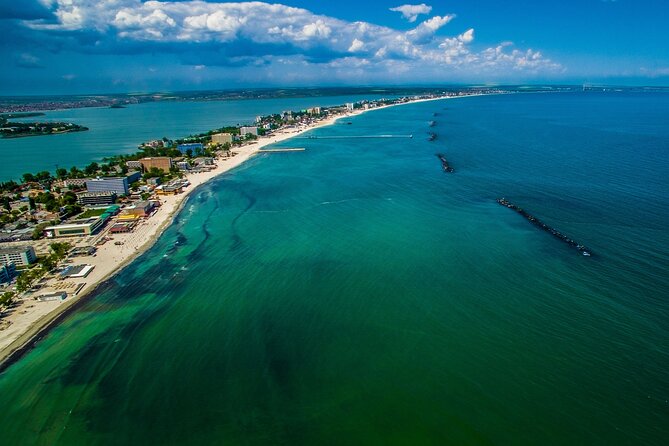
The museum on Ovidiu Square is the main cultural stop, with about an hour allotted to it. The building dates from the early 20th century and was originally used as Constanța’s town hall until 1921. The museum’s current home became permanent in 1977.
Its collection is among the strongest in Romania and is described as the country’s second-largest museum institution after the National History Museum in Bucharest. The museum began in 1879 under Remus Opreanu, the first prefect of Romanian-administered Dobrogea. One reason for its creation was to prevent antiquities from being smuggled out of archaeological sites around Constanța.
This is where I would spend extra attention if you want context. The Roman mosaic is impressive on its own, but the museum helps connect it to the wider story of Tomis, Dobrogea, and the people who lived along this coast.
Admission is not included, so keep money available for the ticket. The one-hour visit provides a useful overview, though it will not allow you to study everything in detail. If you are traveling with a child or someone who prefers beaches to museums, the private arrangement helps you keep the visit focused.
The square itself also helps you get your bearings. After the museum, the mosque and harbor are close enough to make the historic center feel manageable rather than scattered.
The Carol I Mosque and Constanța’s Muslim heritage
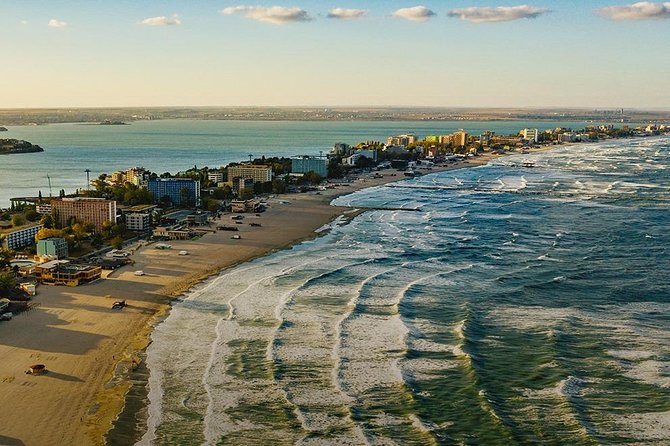
The Carol I Mosque is one of the city’s most important religious buildings. It was built between 1910 and 1913 on the site of an earlier Mahmudia Mosque dating from 1822. The earlier mosque was named for Ottoman Sultan Mahmud II.
The new mosque was commissioned by King Carol I, with construction beginning in June 1910. Its first cornerstone ceremony included Romanian, Ottoman, and local officials, a useful reminder that Constanța’s identity has long crossed national and religious lines.
The Muslim community also calls it the King’s Mosque. The entrance fee is listed at €5 per person, and that cost is not included. You should dress and behave respectfully at the site, and follow your guide’s instructions about entering and viewing the interior.
Only about 10 minutes are allocated here, so the visit is brief. The mosque is still worthwhile for its place in the city’s story, but this is not a long architectural tour. If religious buildings and local communities interest you, ask your guide whether the schedule allows a little more time.
I particularly like the way this stop broadens the day. Constanța is not presented only as a Roman or Romanian city. The mosque points to the Ottoman past and to the continuing presence of Muslim culture on the Black Sea coast.
Tomis Harbor and time beside the water
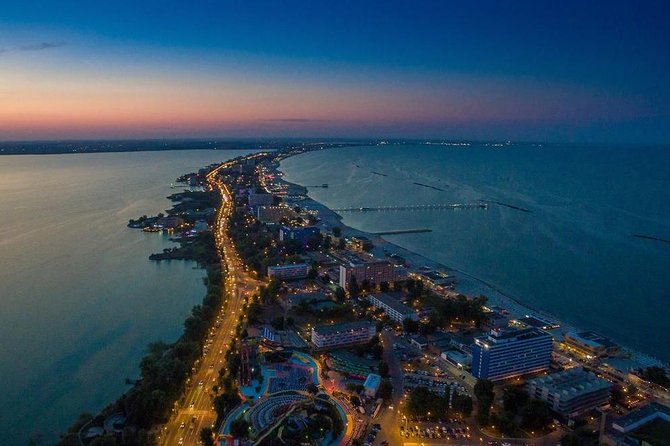
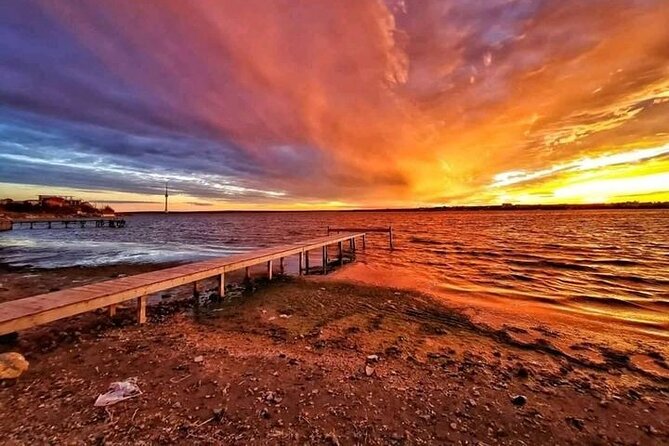
Tomis Harbor is the tour’s natural pause. You get about 15 minutes at the port, though the flexible schedule may allow more time depending on the day’s plan and your group’s wishes.
The harbor has terraces and restaurants near the water, with fish dishes a natural choice for lunch. Yachts and sailing boats sit in the bay, and a narrow waterfront route leads toward Constanța’s modern beach. The port is used by locals as well as visitors, so it gives you a less formal look at the city after the museum and monuments.
The harbor is also a good place to decide how you want to use the rest of your time. You might prefer lunch at a seafood restaurant, a walk along the shore, or a change of scene at the beach. The tour description notes that dolphins sometimes visit the bay during summer, though you should treat that as a possibility, not a promised sight.
Lunch costs about €10 per person and is separate from the tour price. One guide, Alin, has taken groups to a well-regarded seafood restaurant before a beach walk. That does not guarantee a specific restaurant, but it shows why a private guide can be useful when you want help choosing where to eat.
Making room for the beach
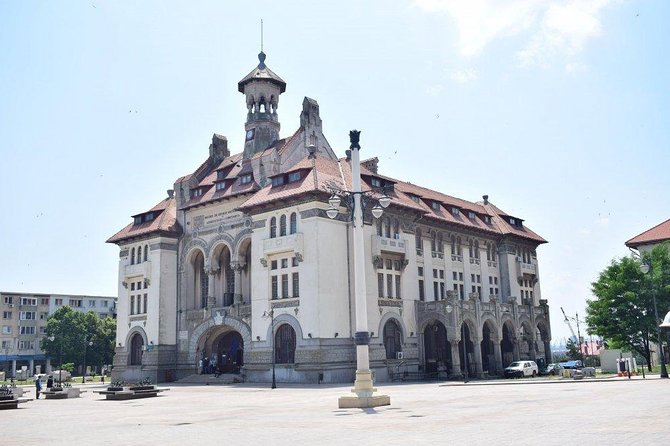
The main sightseeing schedule is compact, but the experience is designed to include beach time. That is important because Constanța is not only an archaeological destination. If you spend the entire day indoors, you miss the reason many people make the trip from Bucharest.
The private format gives you room to state your priorities. You might want more time at the coast if the weather is good, or more museum time if you are interested in Roman and local history. Guides Alin and Vlad have been praised for being flexible, answering questions, and offering different options during the day.
Vlad has also discussed Romania’s changes from the Ceaușescu era to the present, which can add useful modern context to the older monuments. I would tell your guide early if your group includes a serious history fan, a child, or someone who mainly wants the beach.
Weather matters. A sunny September day can make the coast especially pleasant, while a gray day may shift the balance toward museums, the harbor, and a longer meal. The tour works in both cases, but it is strongest when you think of it as a flexible city-and-sea day rather than a fixed checklist.
The private vehicle and guide style
Pickup and drop-off at your hotel make the day simple. You ride in a private air-conditioned car or van, and an English-speaking guide accompanies you throughout the experience.
That setup is useful for families and small groups. One guide, Alin, contacted a group the evening before pickup and helped when a child became motion sick, including going to a pharmacy. You should not assume every detail will be repeated for your group, but the example shows the practical benefit of having a dedicated person rather than a distant driver or a large coach leader.
The private setting also makes questions easier. You can ask about Bucharest, Constanța, Romanian politics, archaeology, food, or the coast without worrying about slowing down a bus full of strangers.
The tradeoff is that the quality of the day depends partly on the individual guide and on traffic. An 11-hour outing can feel long, especially if you want a relaxed beach day. I would book it for a day when you are comfortable giving most of your daylight hours to Constanța.
What the price includes, and what it does not
At $177.64 per person, the cost covers the English-speaking guide, private air-conditioned transportation, assistance during the tour, and hotel pickup and drop-off. Those inclusions remove several expenses and planning tasks that can add up on an independent visit.
You still pay for lunch and selected admissions. The Carol I Mosque costs €5 per person, and the Roman Edifice with Mosaic and National History and Archaeology Museum also list admission fees separately. The casino, Genoese Lighthouse, and Tomis Harbor do not require an admission ticket.
For two people, the price buys comfort, door-to-door service, and a tailored day. For a larger group, discounts may improve the calculation. For a solo visitor on a tight budget, public transport could cost less, but it would not give you the same guide access or flexibility.
I see the best value here for families, couples, and small groups who want Constanța explained rather than simply photographed. You are paying for time saved, local help, and control over the pace.
Who should book this day trip
I would choose this tour if you have several days in Bucharest and want to see a very different part of Romania without arranging the journey yourself. It suits first-time visitors who want a broad introduction, families who may need schedule changes, and history fans who want both ancient sites and modern political context.
It also works for people who do not want to choose between culture and the beach. The day gives you Roman remains, a historic mosque, a famous casino, harbor views, and a chance to sit beside the Black Sea.
I would hesitate if your main goal is a long, slow beach day. The drive and sightseeing make this a packed outing, and the scheduled visits to several monuments are short. I would also compare the price carefully if you are traveling alone.
Free cancellation is available if you cancel at least 24 hours before the start time. Changes or cancellations made inside that window are not refunded, and local cut-off times apply.
Should you book Constanța and the Black Sea Coast?
Book it if you want the coast explained through its Roman, Ottoman, Romanian, and modern stories, with private transport from Bucharest and room to adjust the day. The strongest parts are the museum, the casino setting, the harbor, and the chance to add beach time without managing the logistics yourself.
Skip it if you want a low-cost transfer or several uninterrupted hours on the sand. For most people with limited time in Bucharest, though, this is a useful way to reach Constanța and see more than the resort side of the Black Sea.
FAQ
How long does the Constanța private tour take?
The tour lasts approximately 11 hours, including the journey from Bucharest and the sightseeing schedule in Constanța.
Is hotel pickup and drop-off included?
Yes. Hotel pickup and drop-off are included, along with transportation in a comfortable air-conditioned car or van.
Is this a private group tour?
Yes. Only your group participates in the activity.
Is the tour offered in English?
Yes. An English-speaking guide is included.
Are lunch and entrance fees included?
No. Lunch costs approximately €10 per person. The Carol I Mosque has a listed entrance fee of €5 per person, and admission to the Roman Edifice with Mosaic and National History and Archaeology Museum is also not included.
Can I cancel for a full refund?
Yes, if you cancel at least 24 hours before the experience start time. Cancellations or changes made less than 24 hours in advance are not refunded or accepted.
Just added around Bucharest
- Private Full Day Tour of Bucharest★ 5.0 · 3 reviews
- Veliko Tarnovo and Medieval Bulgaria Private Day Trip from Bucharest★ 5.0 · 3 reviews
- Bucharest VIP Bar Crawl in Lipscani ‘Old Town’★ 5.0 · 3 reviews
- Bucharest Private City Tour★ 5.0 · 3 reviews
- Muddy Volcanoes and Salt Mine Private Tour★ 5.0 · 3 reviews
- Legends & Stories from Transylvania -2 Castles & Brasov Old Town★ 5.0 · 3 reviews
- Transfagarasan Private Tour from Bucharest – 2 Days★ 5.0 · 3 reviews
- 7-Day Dracula Tour in Romania from Bucharest including ‘The Ritual of Killing of a Living Dead’★ 5.0 · 3 reviews
Bucharest Tours, compared.
Dracula’s Castle, Peles Castle, & Brasov Old Town
Read our review →
Dracula Castle, Peles Castle & Brasov Old Town
Read our review →
Dracula’s Castle, Peleș Castle & Brașov Day Trip
Read our review →
Day Trip to Dracula Castle, Peles Castle & Brașov
Read our review →
Bucharest to Dracula Castle, Peles Castle and Brasov Guided Tour
Read our review →