
Reviewed · BRAN CASTLE & DRACULA TOURS
Bucharest Private Tour with Dracula’s Grave and Ceaușescu Mansion
The most unusual part of this Bucharest private tour is the trip to Snagov Monastery, an island monastery about 40 minutes outside the city that is linked to Dracula’s grave. You also get a sharp look at modern Romanian history at the Ceaușescu Mansion and Revolution Square.
I like the private car, since it lets you adjust the day instead of following a fixed group schedule. I also like the mix of village life, royal Bucharest, communist-era power, and the 1989 revolution. The main drawback is that six hours is tight, and entrance fees are not included in the $174.53 price.
Key points to know
- Snagov Monastery adds a real sense of adventure: You leave central Bucharest for an island setting connected with Dracula’s tomb.
- The Ceaușescu Mansion gives you a close look at dictatorship-era privilege: The former family residence is far more personal than a standard city sightseeing stop.
- Your group gets a private vehicle and guide: You are not sharing the car with strangers, and the route can be adjusted during the day.
- The tour covers several sides of Bucharest: Expect traditional Romanian homes, royal monuments, communist power, and the Revolution of December 1989.
- Guides such as Dan and Nicu have been praised for their good company and clear information: The exact guide assigned to you may differ.
- The price is easier to justify for a small group: It includes transport, fuel, parking, road tolls, and a private licensed English-speaking guide, but not admission tickets or food.
A six-hour route through Bucharest’s many faces
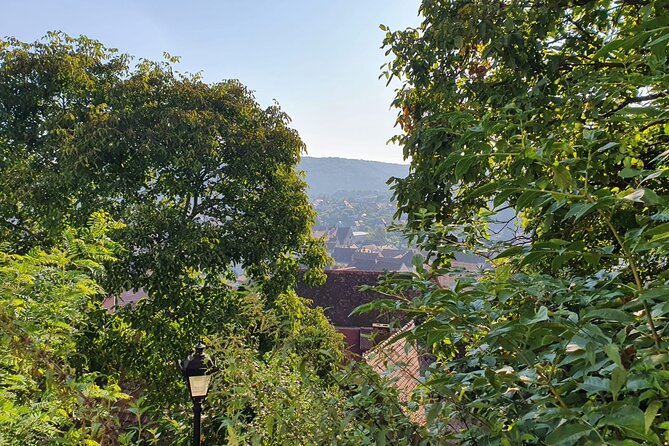
Bucharest can feel hard to read at first. Grand buildings sit beside worn facades, elegant avenues run past reminders of dictatorship, and a short drive can take you from the capital to a quiet island monastery.
This tour works because it does not treat the city as one single story. You see rural traditions at the National Village Museum, royal and civic architecture along Calea Victoriei, the fall of communism at Revolution Square, and the private world of the Ceaușescu family.
The private format matters here. You travel by car or minibus with only your own group, and the guide remains available throughout the outing. That gives you more room to ask questions or adjust the pace than you would have on a large coach tour.
The listed price is $174.53 per person. That is not a budget city tour, but it covers more than a simple walk through central Bucharest. You are paying for a private vehicle, fuel, parking, road tolls, and a licensed English-speaking guide or driver. For two people, the total cost is substantial. For a larger group, the private arrangement can make better financial sense, especially since group discounts are available.
Keep extra money aside for entrance tickets. Admission to the National Village Museum, Snagov Monastery, and Ceaușescu Mansion is not included. Food and drinks are also separate.
More Bran Castle and Dracula trips:
- Bucharest: Dracula’s Castle, Peles Castle, & Brasov Old Town
★ 4.5 · 17,858 reviews - Bucharest: Dracula Castle, Peles Castle & Brasov Old Town
★ 4.6 · 10,891 reviews - Bucharest: Dracula’s Castle, Peleș Castle & Brașov Day Trip
★ 4.5 · 5,919 reviews
Romanian village life at the National Village Museum
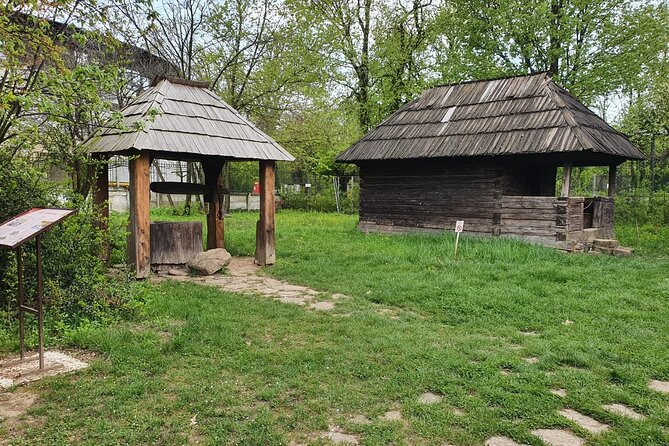
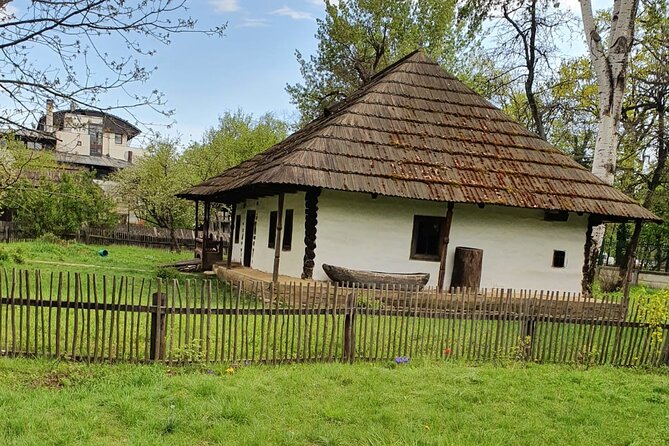
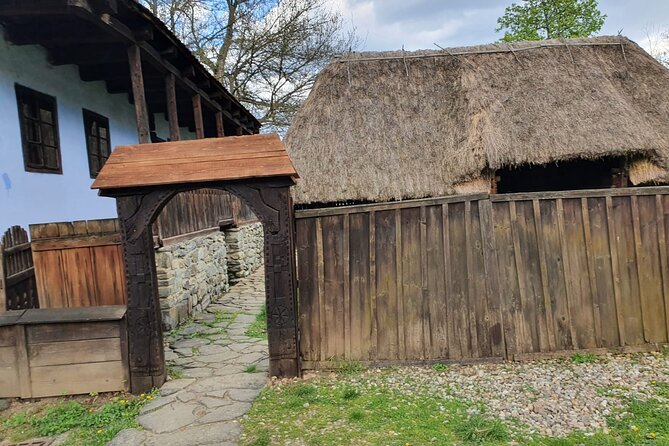
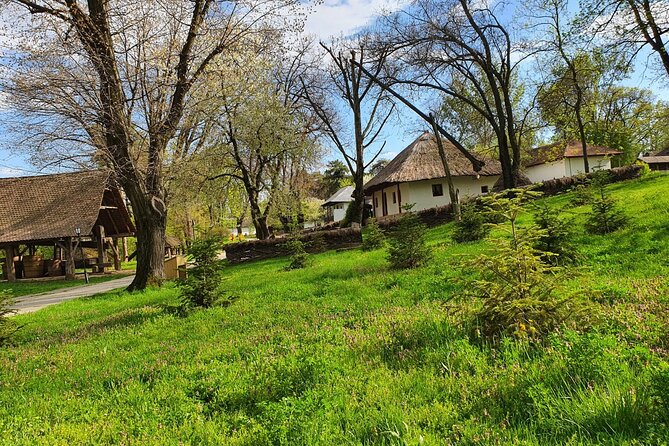
The first stop takes you away from the city’s stone and traffic and into a collection of traditional Romanian homes. The National Village Museum, also called Muzeul Național al Satului Dimitrie Gusti, brings houses from different parts of Romania together in one open-air setting.
You can expect to see buildings made from wood, adobe, stone, and other local materials. The point is not only to admire old houses. You get a picture of how Romanian villagers organized daily life, built with materials at hand, and shaped their homes around work, family, faith, and the natural surroundings.
Look for the traditional mill and wooden church. These structures help explain the wider village system, not just domestic life. A guide can add meaning to details that might otherwise look like simple decoration or old construction.
The stop lasts about one hour. That is enough for a useful introduction, though not enough to study every building at length. If traditional architecture is a major interest for you, ask the guide how much time can be given to this stop before the day begins.
Admission is not included. The tour provides the vehicle and guide, but you should expect to pay the museum entrance fee yourself.
I like this stop because it gives you a Romanian story that is easy to miss in the capital. Bucharest is often presented through grand avenues and political events. The museum shows the modest homes and practical traditions that shaped life far beyond the city.
Snagov Monastery and the Dracula connection
Snagov Monastery is the day’s most unusual stop. It sits on an island about 40 minutes outside Bucharest, and the site is associated with the tomb of Dracula.
That setting gives the visit a stronger sense of place than a simple roadside memorial. You travel out of the capital, reach an island monastery, and connect the story of Vlad the Impaler with one of Romania’s most famous legends.
It is worth keeping the story in proportion. The attraction is presented as Dracula’s grave, but the Dracula connection is part of a long historical and popular tradition. Your guide can help separate the known history of Vlad the Impaler from the later Dracula legend.
The stop is allocated about two hours, including the journey beyond Bucharest and time at the monastery. That is a large part of a six-hour tour, but the drive is what makes Snagov feel different from the city portion.
Admission is not included. Check the current entrance arrangements when you book, since the supplied tour details do not give a ticket price or explain precisely what access is available on the day.
This stop will suit you if you enjoy unusual places, local legends, and a little theatrical mystery. It may be less satisfying if you want to spend the whole day inside Bucharest, since the return trip takes time from the city sightseeing.
Inside the Ceaușescu Mansion
The Ceaușescu Mansion offers a close look at the private residence of Nicolae and Elena Ceaușescu and their children, Nicu, Zoia, and Valentin. The family lived there for a quarter of a century, from 1965 until 1989.
The residence was first built in the mid-1960s and later enlarged between 1970 and 1972. At the time, it was known as the Spring Palace. The design was associated with Aron Grimberg-Solari, while architect Robert Woll worked on the furnishings and the grounds with landscape engineer Teodosiu.
The mansion matters because it makes political power personal. Revolution Square and the former Central Committee building show where decisions were made. This house helps you consider how the ruling family lived behind the public slogans and official ceremonies.
You are given about one hour and 30 minutes here. That is a generous portion of the tour and gives the visit room to feel more than a quick photo stop. Entrance is not included, so budget for the ticket.
I would pay close attention to the contrast between the public image of austerity and the private setting of a powerful family. The tour description does not promise a particular room-by-room display, so you should avoid expecting a specific exhibit. Still, the mansion is a strong choice for anyone interested in twentieth-century politics, architecture, or the daily life of Romania’s former ruling family.
More communist-era Bucharest walks:
- The Real tour of Communism
★ 5.0 · 666 reviews - Life under Communism
★ 5.0 · 358 reviews - 3-Hour Guided Tour of Communist Bucharest
★ 4.9 · 303 reviews - Bucharest Essential Tour: Old Town, Calea Victoriei & Communism
★ 5.0 · 142 reviews
Calea Victoriei, from royal court to city street
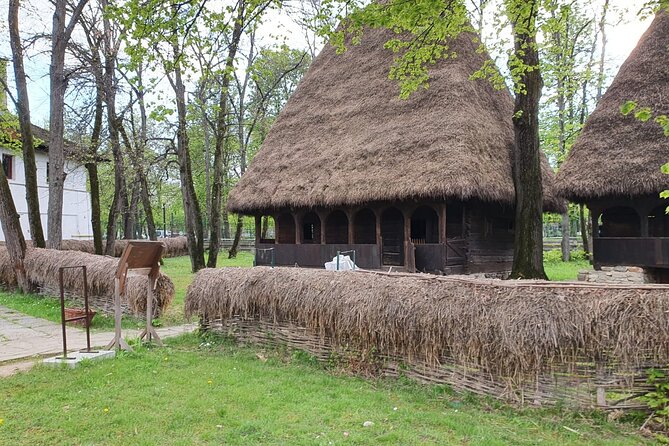
Calea Victoriei is one of Bucharest’s key central avenues. Here, the guide points out an unusual collision of political eras and city life.
On one side, you find the Royal Palace. Nearby are the Romanian Athenaeum, the CEC Palace, the National History Museum, old Orthodox churches, theatres, museums, shops, restaurants, tea rooms, casinos, and a music store. The route gives you a chance to see how Bucharest combines formal architecture with ordinary urban life.
The avenue also places royal Romania beside communist power. The old Central Committee of the Romanian Communist Party and Revolution Square are close by, making the street a useful introduction to the events that changed the country in December 1989.
The scheduled time is about 45 minutes, and admission is free for this portion. You will not have time to tour every museum or enter each landmark. Think of it as a guided overview, with the chance to identify places you may want to revisit later.
I like the way this stop gives the city texture. You are not only ticking off monuments. You can see how a major avenue serves as a record of royal ambition, communist rule, religion, commerce, and present-day city life.
Revolution Square and the end of Ceaușescu’s rule
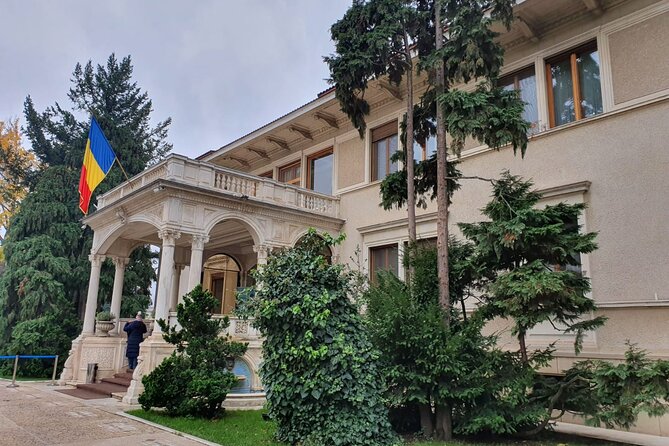
Revolution Square is the clearest political stop on the route. The former Central Committee building, now associated with the Senate, is where the Revolution of December 1989 began.
This is also the place tied to Ceaușescu’s final public crisis. From here, he fled by helicopter after losing control of the country. The square carries the memory of the uprising, the human cost of political change, and the questions that followed about wealth, state security, and offshore accounts.
The stop lasts about 30 minutes and is free. That may sound brief, but a focused explanation can make the square meaningful. Ask your guide to place the main buildings and events in order, since the setting can be confusing if you only see it from a car.
The square works especially well after the Ceaușescu Mansion. At the mansion, you see the private world of the ruling family. Here, you see the public space where that rule broke apart. Putting the two stops on the same day gives the tour a clear line through Romania’s recent past.
How the private format changes the day
A private car or minibus is the main practical advantage. You do not join a large group, and only your own party participates. That can make a major difference if you have limited time in Bucharest or want to ask questions without holding up a busload of people.
The guide and driver are described as licensed and English-speaking. Guides named in the supplied feedback include Dan and Nicu. Dan was described as congenial and well informed, while Nicu was praised for arriving on time and making a last-minute six-hour booking work well. Those comments suggest a friendly, flexible style, though you should not assume one of those guides will be assigned to your group.
The itinerary can be changed even after the tour has started. That is useful if you have already seen part of central Bucharest, are more interested in communist history than traditional architecture, or need to adjust the pace. It is still wise to discuss your priorities at pickup, because the day has a lot packed into it.
The tour is offered with pickup, and it is also near public transportation. The exact pickup arrangement is not specified in the supplied details, so confirm the meeting point or pickup area before the day.
Is $174.53 per person good value?
The answer depends on your group size and what you would otherwise need to arrange.
For one person, $174.53 is a high price for six hours, especially once you add entrance tickets and any meal. For a couple, it remains a significant spend. For a family or small group, the cost can be more reasonable because you share one private vehicle and guide rather than buying several separate transport arrangements.
The included items have real value:
- Private car or minibus for your group
- Licensed English-speaking guide and driver
- Fuel
- Parking
- Road tolls
- Flexibility to change the route
The tour also saves you the trouble of arranging transport to Snagov Monastery. That is important because the monastery lies outside Bucharest and is not simply another central walking stop.
The weak point is the number of paid extras left out. You pay separately for all entrance fees, food, and drinks. Ask for the current ticket costs before booking if your budget is tight.
I see the strongest value in the time saved and the private service. This is not the cheapest way to see Bucharest. It is a practical way to combine a city tour with a rural and legendary site in one half-day outing.
Who should book this Bucharest tour?
I would recommend it for a first visit when you want a broad overview but do not have time for a 12-hour excursion. One person who booked a six-hour tour instead of a longer option was happy with that choice, which points to the usefulness of the shorter format for visitors with limited stamina or a packed schedule.
It also suits people who want history explained in English rather than simply photographed. The route covers traditional rural life, royal architecture, communism, the 1989 revolution, and the Dracula story.
Families and small groups may value the private vehicle most. You can keep the day together, ask for changes, and avoid the fixed pace of a large group.
I would think twice if your main goal is a slow museum day. The tour visits several places, and the six-hour limit means you cannot linger everywhere. Also reconsider it if you dislike paying entrance fees separately or have no interest in Snagov Monastery and the Dracula connection.
Booking and cancellation details
Confirmation is provided at the time of booking, and free cancellation is available up to 24 hours before the experience begins. Cancel at least 24 hours in advance for a full refund. Cancellations or changes made within 24 hours are not accepted for a refund, and the cutoff uses local time.
Most people can participate, and the activity is listed near public transportation. The tour is private, so only your group takes part.
Should you book it?
Book this tour if you want one flexible half-day with several distinct stories and prefer private transport to a large coach. The combination of Snagov Monastery, the Ceaușescu Mansion, and Revolution Square gives the day more substance than a basic Bucharest city drive.
The best match is a small group that values convenience, an English-speaking guide, and the ability to adjust the route. Before paying, ask about pickup, current entrance fees, and which guide will lead your group.
Skip it if you want a low-cost walk through central Bucharest, or if six hours feels too rushed for your interests. For the right group, though, this is a smart way to connect Bucharest’s traditional life, royal past, communist era, and Dracula legend without committing to a full-day tour.
FAQ
How long is the Bucharest private tour?
The tour lasts approximately six hours.
What places are visited?
The route includes the National Village Museum, Snagov Monastery, the Ceaușescu Mansion, Calea Victoriei, and Revolution Square.
Is Dracula’s grave included?
The tour visits Snagov Monastery, an island monastery outside Bucharest that is identified with Dracula’s tomb.
How far is Snagov Monastery from Bucharest?
The tour information describes Snagov Monastery as about 40 minutes outside Bucharest.
Is transportation included?
Yes. A private car or minibus is provided for your group, along with fuel, parking, and road tolls.
Is the guide included?
Yes. The tour includes a private licensed English-speaking guide and driver.
Are entrance fees included?
No. Entrance fees for the listed attractions are not included in the tour price.
Are food and drinks included?
No. Food and drinks are not included.
Can the itinerary be changed?
Yes. The tour provides flexibility for changes to the daily route, including after the tour has started.
Is the tour suitable for a private group?
Yes. Only your group participates in the activity.
What is the cancellation policy?
You can cancel at least 24 hours before the start time for a full refund. Cancellations or changes made less than 24 hours before the start time are not accepted for a refund.
Just added around Bucharest
- Bucharest City Tour: Private Guided Experience★ 4.0 · 4 reviews
- Discover Transylvania: Peles, Bran, Sighisoara in 2 days★ 5.0 · 4 reviews
- Bucharest: Dracula and Peles Castles For Private★ 5.0 · 4 reviews
- Bucharest to Airport – Private Transfer – Personal Driver to OTP Henri Coanda★ 5.0 · 4 reviews
- Bucharest Panoramic City Tour & Street Food★ 5.0 · 4 reviews
- Dracula Experience In Transylvania★ 5.0 · 4 reviews
- LiBEARty Brown Bear Sanctuary and the most important castles from Romania★ 5.0 · 4 reviews
- In Search of Dracula and the Teutons in Transylvania Full-Day Private Tour★ 5.0 · 4 reviews
Bran Castle & Dracula Tours, compared.
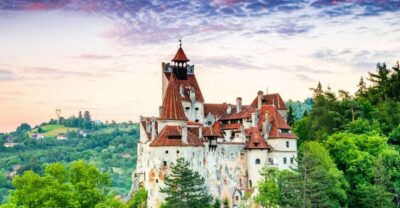
Dracula’s Castle, Peles Castle, & Brasov Old Town
Read our review →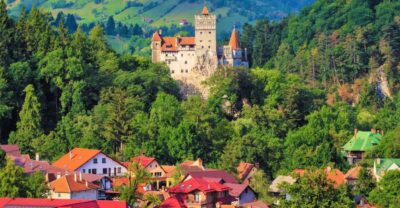
Dracula Castle, Peles Castle & Brasov Old Town
Read our review →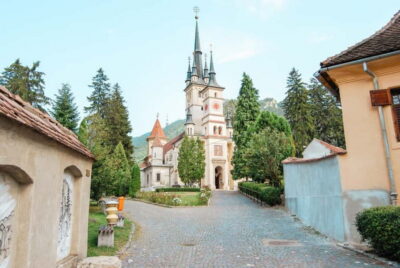
Dracula’s Castle, Peleș Castle & Brașov Day Trip
Read our review →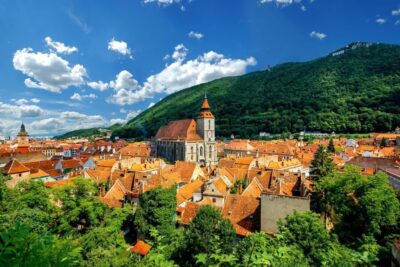
Day Trip to Dracula Castle, Peles Castle & Brașov
Read our review →
Bucharest to Dracula Castle, Peles Castle and Brasov Guided Tour
Read our review →
Dracula’s Castle, Peles Castle and Brasov Day Trip from Bucharest
Read our review →
Transylvania and Dracula Castle Full Day Tour from Bucharest
Read our review →
Browse the lists this tour appears in