Reviewed · BUCHAREST TOURS
Unique Tour of Hidden Bucharest
Bucharest’s most revealing streets are often just behind its grand avenues. This walk leads you through old mahallas, Belle Epoque mansions, Armenian and Jewish quarters, quiet gardens, and buildings scarred by earthquakes, war, communism, and neglect. The city’s mixed architectural past becomes much easier to read with a local guide beside you.
I especially like two things here. First, the route focuses on ordinary streets and overlooked buildings rather than only the headline sights. Second, guides such as Andreea, Ioana, Lala, Mircea, Roxana, Tudor, Anita, Elena, Irina, and Alex have tailored walks to questions, photo stops, mobility needs, and food interests. The main consideration is that this is a walking tour with a flexible route, so you need moderate fitness and should not expect a tightly timed parade from one major monument to the next.
Key points at a glance
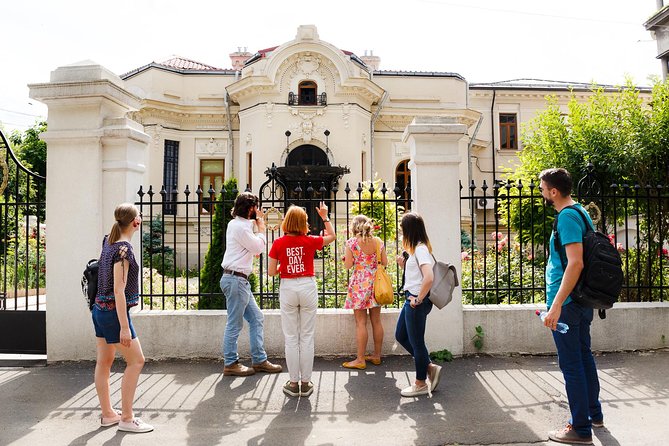
- Quiet central neighborhoods: Explore Batiștei, Armenian, Mantuleasa, Olari, Icoanei, and Ioanid areas, all close to central Bucharest but easy to miss alone.
- Architecture with a backstory: Learn to spot Ottoman influence, French and German touches, Armenian and Jewish connections, Belle Epoque villas, Orthodox churches, and communist-era changes.
- A small group format: The maximum is 12 people, and some departures have operated as private walks when bookings were light.
- A useful first-day orientation: The tour helps you understand Bucharest before visiting its better-known attractions.
- Refreshments along the way: Snacks are included, while alcoholic drinks and other food or drinks cost extra.
- Good local advice: Guides have offered restaurant suggestions and café stops, making this useful for planning the rest of your stay.
Why Bucharest’s side streets tell the better story
Bucharest can feel confusing at first. Big boulevards, grand government buildings, communist blocks, restored mansions, empty lots, and ornate old houses all sit close together. A casual walk can show you the contrast, but it may not explain it.
This tour gives that contrast a human scale. Instead of treating the city as a collection of dates and monuments, your guide explains how small quarters formed around religious buildings and how people of similar ethnic, social, or religious backgrounds once lived near one another. These quarters were known as mahallas, a pattern linked to Bucharest’s long relationship with the Ottoman world.
Bucharest was not an Ottoman town, but it shared some features with towns in the Ottoman sphere. That detail helps explain why the city developed through compact neighborhood communities rather than one uniform plan. As the capital expanded, the mahallas blended into larger districts. Later, modernization, earthquakes, two world wars, communist demolition projects, and the shift to a market economy changed them again.
I find this context useful because it makes the city’s uneven appearance easier to understand. A crumbling villa is not simply an unattractive building. It may reflect disputed ownership, decades of neglect, political upheaval, or the cost of restoring an old structure. A renovated house beside it can show how Bucharest is slowly reclaiming parts of its past.
A few more Bucharest day trips to weigh up
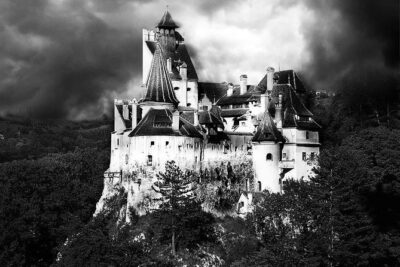
- Bucharest: Dracula’s Castle, Peles Castle, & Brasov Old Town
★ 4.5 · 17,858 reviews - Bucharest: Dracula Castle, Peles Castle & Brasov Old Town
★ 4.6 · 10,891 reviews - Bucharest: Dracula’s Castle, Peleș Castle & Brașov Day Trip
★ 4.5 · 5,919 reviews
Starting at the National Theatre
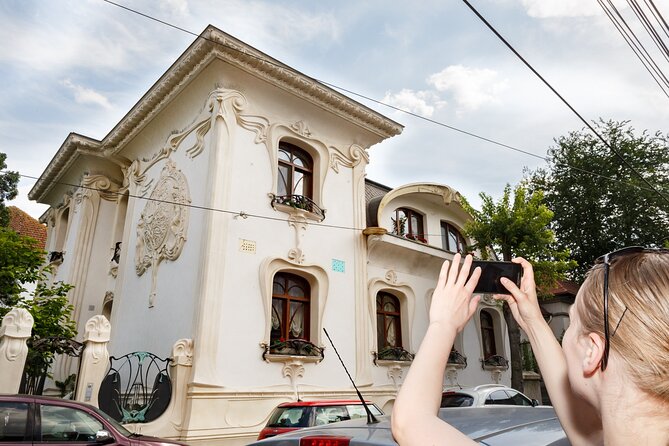
The tour begins at the Ion Luca Caragiale National Theatre on Bulevardul Nicolae Bălcescu 2 at 10:00 a.m. This is a practical meeting point near public transportation and close to the center.
The first section introduces Bucharest’s architectural and political story. You will look at how the city changed over time and how outside influence shaped local life without turning Bucharest into a copy of another capital. The theatre provides a central reference point before the route moves into quieter streets.
This opening is valuable if you have just arrived. Several guides have helped new arrivals get their bearings before they tackle the city’s larger sights. The walk gives you a basic framework for understanding why Bucharest can look French, German, Armenian, Ottoman-influenced, Orthodox, and communist within a short distance.
Do not expect a long interior visit at the theatre. The stop is listed as about 30 minutes with no admission charge, and the focus is on history, architecture, and the city around it. The real reward comes as the group leaves the main avenue.
Batiștei and the old neighborhood pattern
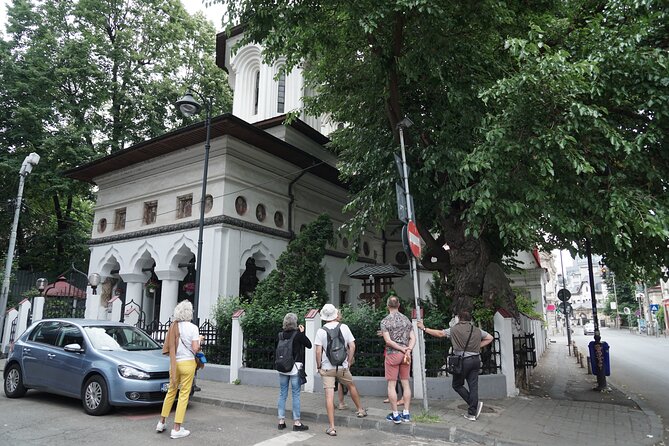
The Batiștei section lasts about 35 minutes and is where the idea of the mahalla becomes more concrete. Rather than hearing only about districts in the abstract, you begin to see how local streets, religious life, architecture, and community identity connected.
The route may also include nearby Armenian, Mantuleasa, Old Jewish, and Batiștei areas. These neighborhoods have different stories, but they share a history of change. Guides explain how cultures, architectural styles, and food traditions met in central Bucharest.
This is also the part of the tour where the city’s condition becomes impossible to ignore. Some old homes are restored or being repaired. Others are abandoned, deteriorating, or tied up in disputes about ownership. That mixture can be frustrating, but it is also one of the most honest features of the walk. You see Bucharest as a city still working out what to preserve and how to pay for it.
A guide can point out details you might pass without a thought: unusual façades, old homes behind walls, changes in building style, and traces of communities that are no longer as visible. One former participant who loved photographing abandoned places received extra stops tailored to that interest. That flexibility is a real strength, though it also explains why the route can feel less fixed than a standard city walk.
Parcul Ion Voicu and Belle Epoque Bucharest
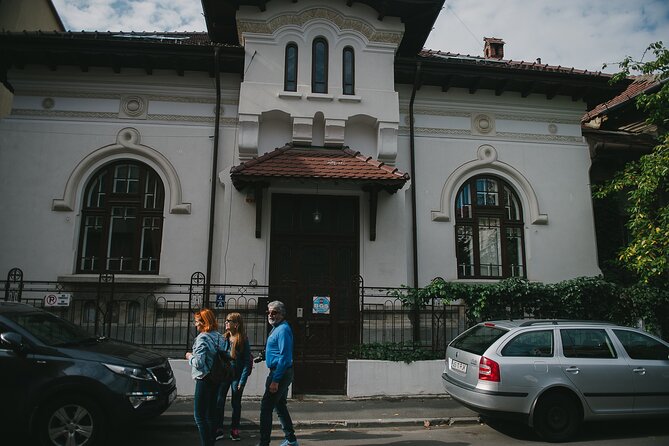
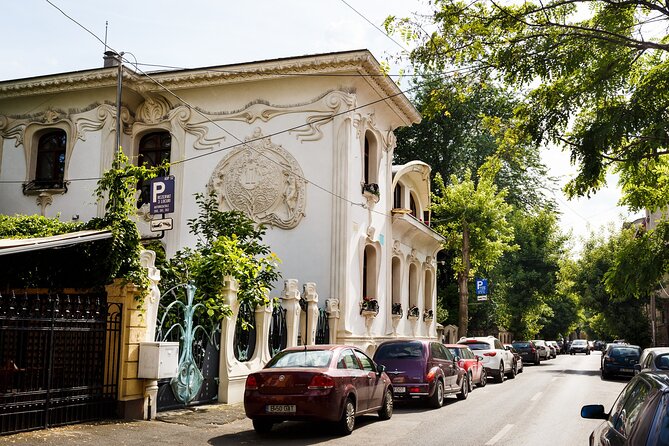
The third named stop is Parcul Ion Voicu, a green setting among elegant late-19th-century mansions. This section lasts about 40 minutes and shifts the mood from neighborhood history to the visual appeal of Belle Epoque Bucharest.
The mansions here help you picture the city before the damage caused by war, dictatorship, earthquakes, and hurried redevelopment. Their details can be impressive even when the buildings are worn. You may see restored properties beside neglected ones, which gives the area an unusual mix of beauty and melancholy.
The park also offers a break from the traffic and hard surfaces of the central avenues. The route is not presented as a museum visit, so you should expect to view buildings from the street rather than tour a long list of interiors. In some cases, guides have arranged brief looks inside churches or taken participants into renovated buildings now used as restaurants, but these details can depend on the day and the guide.
If architecture interests you, this is likely one of the strongest parts of the outing. The explanations connect style with history instead of asking you to admire façades without context. French, German, Armenian, Orthodox, and communist influences can appear side by side, and your guide helps you separate them.
Same corner of the country, a completely different day out:
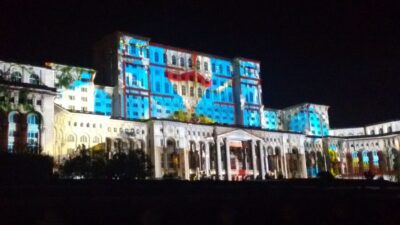
- Bucharest: Palace of Parliament Tickets and Guide
★ 4.3 · 3,182 reviews - Bucharest: Day Trip to Dracula Castle, Peles Castle & Brașov
★ 4.4 · 3,049 reviews - Bucharest to Dracula Castle, Peles Castle and Brasov Guided Tour
★ 4.5 · 2,933 reviews - Bucharest: Palace of Parliament Tickets and Guided Tour
★ 4.4 · 1,877 reviews
Cafés, gardens, and the flavor of the walk
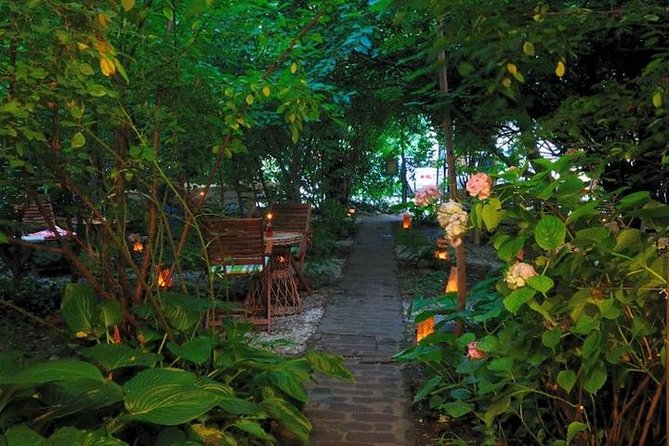
Refreshments are part of the experience, but you should read the wording carefully. Snacks are included. Alcoholic drinks are not, and food or drinks beyond what is specified are also extra.
The exact stop may vary. Guides have taken people to summer gardens, historic tea houses, cafés, and small restaurants. Past routes have included café stops for smoothies, hot chocolate, lemonade, or coffee, and some guides have suggested lunch places at the end. A gluten-free lunch recommendation and a stop at Share Café were especially useful examples of the kind of local help you can receive.
These breaks matter because they turn the outing into more than a lecture while walking. You have time to ask questions, compare neighborhoods, and get practical suggestions for later meals. Guides have also recommended restaurants suited to particular interests and helped with reservations.
Still, do not book this as a food tour. Meals are not part of the standard price, and the café or restaurant is not guaranteed to be the same each time. Think of refreshments as a pleasant addition and the food advice as a useful bonus.
What the guides add
The guide is the heart of this experience. The company has used several local guides, including Andreea, Ioana, Lala, Mircea Constantin, Roxana, Tudor, Anita, Elena, Irina, and Alex. Their styles may differ, but the strongest pattern is clear: the tour works best when you ask questions and show the guide what interests you.
Lala, described as Bucharest-born and raised, has welcomed people with a traditional pastry and explained the city with warmth and humor. Mircea has looked after people carefully during extreme summer heat and adjusted a route when someone could not walk the final hour, arranging a car ride so the tour could continue. Roxana has focused on the small neighborhoods known as mahallas and explained unusual architectural details with care.
These examples point to an important advantage. This is not simply an audio script delivered at a fixed pace. Guides have stopped for photographs, explained abandoned homes, offered restaurant advice, and adapted the route to the group. If you want a particular emphasis, such as architecture, religious buildings, food, or photography, say so early.
There is one tradeoff. A flexible walk may not feel as neat as a route with a strict beginning, middle, and end. One account found the path somewhat random, even while finding the information useful and the walk enjoyable. I would treat that as a feature if you like discovery, but a drawback if you want exact timing and a rigid plan.
Group size, walking pace, and practical comfort
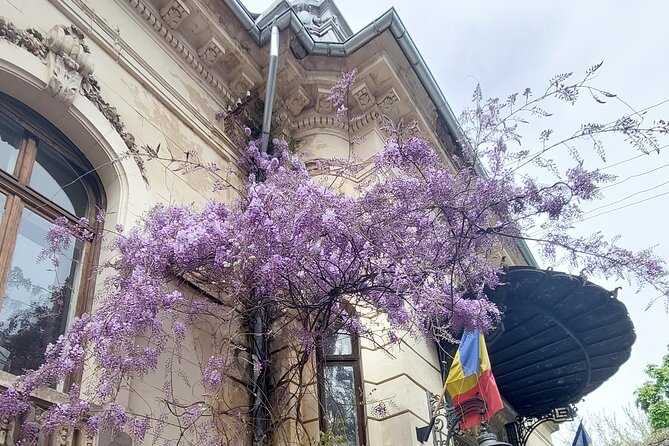
The maximum group size is 12 people, which is small enough for conversation and questions. When demand is low, the experience may become a private or nearly private walk. That can be excellent value, though one booking arrangement required payment for two people when only one person attended.
The advertised duration is approximately two hours and 30 minutes, while the tour description also refers to it as a three-hour walk. Actual accounts range from a little over two hours to around three hours. Build some flexibility into your day rather than scheduling a museum reservation immediately afterward.
You need moderate physical fitness. Expect a city walk through several neighborhoods, with time on streets and stops for explanations. Good footwear is sensible. In hot weather, bring water and sun protection, even though guides have helped keep people hydrated during difficult conditions.
The meeting point is at the National Theatre. The listed endpoint is the KFC on Bulevardul General Gheorghe Magheru 28-30. Hotel pickup and drop-off are not included, so you will make your own way to the start and continue independently afterward.
Is $46.86 a fair price?
At $46.86 per person, this sits in a reasonable range for a small-group, English-language walking tour of roughly two and a half to three hours. The value depends less on the number of sights than on the access to local interpretation.
You are paying for a guide who can explain why Bucharest’s districts look the way they do, identify architectural influences, answer questions, and point you toward places you could easily miss. Snacks are included, and the group limit of 12 keeps the format personal.
The price is less compelling if you only want the main landmarks or prefer to explore at your own pace with a map. It is also worth remembering that café visits, alcohol, extra food, transport, and hotel transfers are not covered.
For a first or second day in Bucharest, I think the value is strong. The walk can shape how you see the rest of the city, and the restaurant tips may save you time later. Booking is commonly done well ahead, with an average lead time of 37 days, so reserve early if your dates are fixed.
Who should book this walk?
I would recommend it most strongly to you if you enjoy architecture, urban history, photography, local food advice, or overlooked residential streets. It is also a good choice if the main avenues and communist-era sights have left you wanting a quieter, more personal look at the capital.
It suits solo visitors particularly well. A small group or private departure gives you more room to ask questions and adjust the pace. Couples and small groups of friends should also find the format easy to manage.
Families with young children may find the history-heavy discussion and walking pace less engaging. Anyone with limited mobility should contact the provider before booking, since a moderate fitness level is required, though one guide did arrange car support when a participant could not continue on foot.
Final verdict: book it for the city behind the avenues
Book this tour if you want Bucharest explained through its neighborhoods rather than reduced to a list of famous buildings. The best parts are the mahalla context, the Belle Epoque houses around Parcul Ion Voicu, the mix of Armenian, Jewish, French, German, Orthodox, and communist influences, and the chance to ask a local guide where to eat or what to see next.
Skip it if you want a tightly scheduled sightseeing circuit or a substantial food itinerary. For most curious first-time visitors, though, this is a smart way to get oriented, see central streets that are easy to miss, and understand why Bucharest can feel both worn and wonderfully layered. Free cancellation is available up to 24 hours before the start time, which gives you some protection when planning ahead.
FAQ
Where does the Unique Tour of Hidden Bucharest begin?
It begins outside the Ion Luca Caragiale National Theatre at Bulevardul Nicolae Bălcescu 2 in Bucharest.
What time does the tour start?
The scheduled start time is 10:00 a.m.
Where does the tour end?
The listed endpoint is the KFC at Bulevardul General Gheorghe Magheru 28-30, Bucharest.
How long does the tour last?
The experience is listed as approximately two hours and 30 minutes, while the description also calls it a three-hour tour. Allow roughly two and a half to three hours.
What language is the tour offered in?
The tour is offered in English.
How much does the tour cost?
The listed price is $46.86 per person.
What is the maximum group size?
The tour can have a maximum of 12 travelers.
Are snacks included?
Yes. Snacks are included. Other food and drinks are not included unless specified.
Are alcoholic drinks included?
No. Alcoholic drinks are available to purchase but are not included in the tour price.
Is hotel pickup included?
No. Hotel pickup and drop-off are not included.
Do I need to be physically fit?
You should have a moderate level of physical fitness because this is a walking tour through several central neighborhoods.
Can I cancel for a full refund?
Yes. You can cancel at least 24 hours before the experience start time for a full refund. Changes or cancellations made less than 24 hours before the start time are not accepted for a refund.
Just added around Bucharest
- Private Full Day Tour of Bucharest★ 5.0 · 3 reviews
- Veliko Tarnovo and Medieval Bulgaria Private Day Trip from Bucharest★ 5.0 · 3 reviews
- Bucharest VIP Bar Crawl in Lipscani ‘Old Town’★ 5.0 · 3 reviews
- Bucharest Private City Tour★ 5.0 · 3 reviews
- Muddy Volcanoes and Salt Mine Private Tour★ 5.0 · 3 reviews
- Legends & Stories from Transylvania -2 Castles & Brasov Old Town★ 5.0 · 3 reviews
- 7-Day Dracula Tour in Romania from Bucharest including ‘The Ritual of Killing of a Living Dead’★ 5.0 · 3 reviews
- Transfagarasan Private Tour from Bucharest – 2 Days★ 5.0 · 3 reviews
Bucharest Tours, compared.
Dracula’s Castle, Peles Castle, & Brasov Old Town
Read our review →
Dracula Castle, Peles Castle & Brasov Old Town
Read our review →
Dracula’s Castle, Peleș Castle & Brașov Day Trip
Read our review →
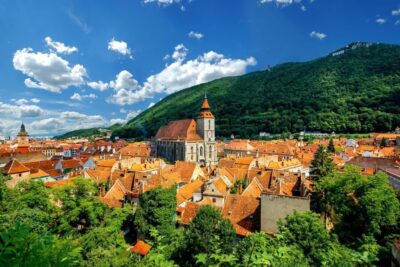
Day Trip to Dracula Castle, Peles Castle & Brașov
Read our review →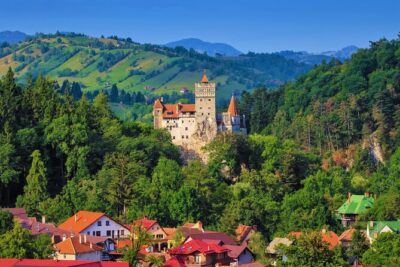
Bucharest to Dracula Castle, Peles Castle and Brasov Guided Tour
Read our review →