
Reviewed · TRANSYLVANIA DAY TRIPS
Bucovina Painted Monasteries & Transylvania Tour: 4-Day Private
The frescoes are the star here: entire monastery walls glow with scenes painted centuries ago, with Voronet’s famous blue often stealing the show. I like the private transport and the chance to travel at your group’s pace, and I like having guides such as Toni or Marius nearby to explain Orthodox art, local customs, and Romania’s complicated past.
I also like the route’s variety. In four days you move from quiet nunneries in Neamt County to Saxon citadels and royal rooms in the Carpathians. The catch is distance: this is a full four-day circuit, not a slow village holiday, and the admission information needs checking because some sections say tickets are included while the general terms say interior visits cost extra.
Key points to know before booking
- Three major painted monasteries in Bucovina: Sucevita, Moldovita, and Voronet each have a different visual style and setting.
- Private guiding with Toni or Marius: You get one-on-one attention rather than a large coach-group routine.
- A wide route from Bucharest: The tour links northern Moldavia with Sighisoara, Viscri, Brasov, and Sinaia.
- Three nights in three-star hotels: Breakfast is included, but lunch, dinner, drinks, and snacks are not.
- Some admissions may be extra: The stop details mark several tickets included, yet the general conditions list interior entrance fees at about €25 to €30 per person.
- Church dress matters: Trousers or a long skirt are required for access to the monastery grounds.
Why the painted monasteries deserve the long drive
Northern Romania’s painted monasteries are not simply pretty churches placed along a sightseeing route. Their walls carry large religious scenes, painted inside and out, so the buildings themselves become storybooks. You will see biblical episodes from the Old and New Testament, along with a blend of Byzantine and Gothic details.
The value of a private guide becomes clear here. Without context, you may notice colors and figures but miss how the churches differ in age, artistic style, and purpose. Toni and Marius are both named as guides connected with this tour, and the strongest praise centers on their ability to explain the art, faith, and local history in a clear, personal way.
The route also gives you a look at living monastic communities. Agapia and Văratec are large Orthodox nunneries, not abandoned monuments. Hundreds of nuns live at Văratec, and Agapia has roughly 300 to 400 residents. That adds a human dimension, but it also means you should behave quietly and dress respectfully.
More Transylvania day trips:
- Transylvania and Dracula Castle Full Day Tour from Bucharest
★ 4.5 · 1,589 reviews - Castles of Transylvania: Private Day Trip from Bucharest
★ 4.5 · 248 reviews - 2-Day Medieval Transylvania with Brasov,Sibiu and Sighisoara Tour from Bucharest
★ 4.5 · 145 reviews
Day 1: Agapia and Văratec, two working nunneries
The first day begins with pickup anywhere in Bucharest at about 9:00 a.m. You then head toward Neamt County and the two monasteries around Agapia. The private vehicle matters on a route like this, since you are not tied to a fixed public transport schedule or a large group’s pace.
Agapia Monastery was built between 1641 and 1643 by Gavriil Coci, the brother of Vasile Lupu. The church was later painted by Nicolae Grigorescu between 1858 and 1861. His work gives the interior a different character from the medieval exterior frescoes you will see farther north.
Plan about an hour at Agapia. That is enough time for a guided look and some quiet observation, though anyone who likes religious art may want longer. Photography rules can vary, and the supplied details specifically note a small charge for outdoor photographs at one monastery, with indoor photography prohibited there.
Văratec is also allotted an hour. It is described as the largest nun monastery in Romania, with more than 400 nuns. You are seeing a functioning religious settlement, so the appeal is less about ticking off a monument and more about noticing the calm rhythm of the place.
A practical point: the tour requires trousers or a long skirt for access to the grounds. A covered head was not required in the information provided, but modest clothing remains the sensible choice. The first day is a gentle introduction to Orthodox Romania, though the transfer from Bucharest makes it a substantial opening day.
Day 2: three frescoed churches and the famous Voronet blue
Day 2 is the visual high point. You visit Sucevita, Moldovita, and Voronet, with about two hours assigned to each. That generous timing helps, since rushing through painted churches can reduce them to a blur of saints, ladders, angels, and blue walls.
Sucevita combines Byzantine and Gothic features with local Moldavian design. Its interior and exterior murals cover the church in biblical scenes and are considered important works of religious art. Give yourself time to step back from the details. The larger compositions make more sense when you first take in the whole wall, then study individual figures.
Moldovita was built in 1532 by Petru Rares, the son of Stephen the Great. It was founded partly as a protective religious and cultural barrier against Ottoman expansion from the east. That background helps explain why the monasteries are more than places of worship. They also carried the identity and political memory of medieval Moldavia.
Voronet is often called the Sistine Chapel of the East, but its own identity is stronger than the nickname. Stephen the Great built it in 1488 after his victory at the Battle of Vaslui, and its frescoes are famous for an intense shade of blue known locally as Voronet blue.
You should expect a lot of visual information in one day. Sucevita, Moldovita, and Voronet are similar enough to form a clear theme, yet different enough to reward comparison. Marius is praised for explaining the differences between the artists and periods, including the contrast between old work, restoration, and a newer monastery freshly painted.
That kind of explanation is one reason I would choose a private tour here. You can ask why a scene appears on an exterior wall, how restoration is handled, or why one church feels more Gothic than another. A large group often gives you less room for those questions.
The schedule is full, and the tour does not list meals beyond breakfast. You will need to pay for lunch and dinner yourself, along with drinks and snacks. Since the day includes several visits, keep water and a simple snack handy, especially if you prefer not to rely on finding food at a precise time.
Day 3: Sighisoara, Viscri, and Brasov
The route shifts from painted churches to Transylvania on Day 3. Sighisoara’s historic center is a well-preserved medieval citadel and a UNESCO World Heritage Site. Two hours lets you walk through the old town, study the defensive setting, and hear how the settlement fits into the story of the Transylvanian Saxons.
Sighisoara is one of the tour’s best changes of pace. After two days of church interiors and monastery courtyards, you get narrow medieval streets and a fortified urban center. The private guide can help connect the architecture to the trade routes and communities that shaped Transylvania.
Viscri takes about an hour. Its fortified church is also a UNESCO World Heritage Site and offers a more rural view of Saxon architecture. The church was built to withstand danger, so the fortifications are part of the story, not a decorative extra.
Admission to Viscri is not included according to the stop details. The same applies to the Black Church and Peles Castle on Day 4. Since the general terms also mention interior tickets of about €25 to €30 per person, you should ask the operator for the current total before departure. The supplied information is inconsistent, with some stops labeled as having included admission and the general conditions saying inside visits are extra.
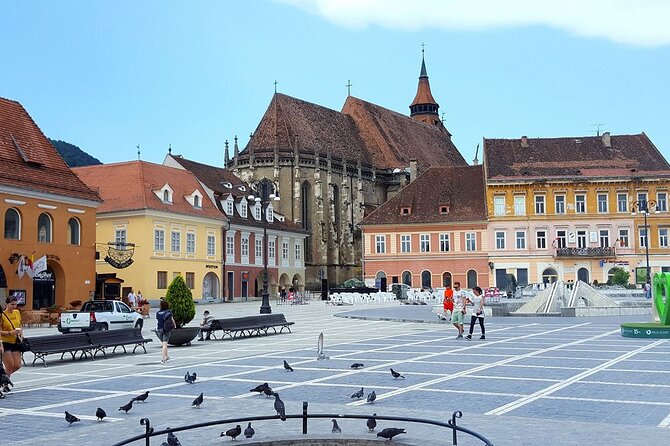
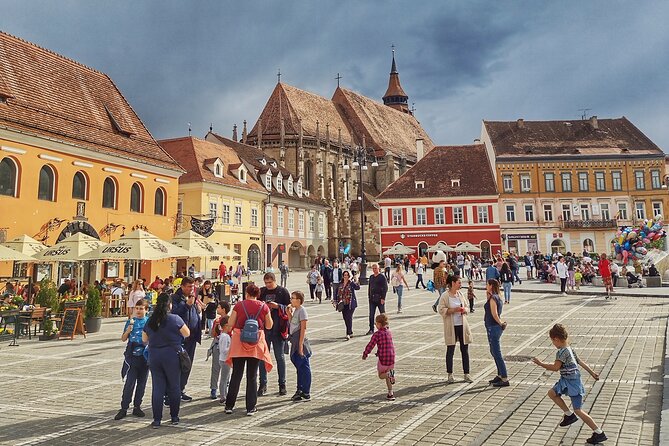
Brasov receives two hours. It was an important center for the Transylvanian Saxons and a major commercial point between East and West. The historic center is compact enough to enjoy on foot, and it gives you time to absorb the city rather than seeing it only through a vehicle window.
This is also a good day for asking your guide about Romania’s changing communities. The route moves through Orthodox, Saxon, and Lutheran settings, showing that Transylvania is not one single cultural story. The tour’s greatest strength is this contrast between religious art, fortified villages, medieval towns, and royal architecture.
A few more Bucharest day trips to weigh up
- 4-Day Private Tour in Transylvania from Bucharest
★ 5.0 · 48 reviews - Transylvania Castles 4-day tour from Bucharest
★ 5.0 · 31 reviews - 4 Days Private Tour in Transylvania: Sibiu, Sighisoara and Brasov
★ 5.0 · 18 reviews - 4-Day Private Tour of Transylvania from Bucharest
★ 5.0 · 16 reviews
Day 4: Gothic Brasov and royal Peles Castle
The final day begins with the Black Church in Brasov. Built by the city’s German community, it is Romania’s main Gothic monument and one of the region’s most important Lutheran churches. Its admission is listed as extra, so budget for that separately unless the operator confirms otherwise.
The church also gives you a useful final look at the region’s religious variety. The monasteries of Bucovina are Orthodox and heavily covered in painted scenes. The Black Church belongs to the Evangelical Lutheran tradition and expresses a different architectural and cultural world.
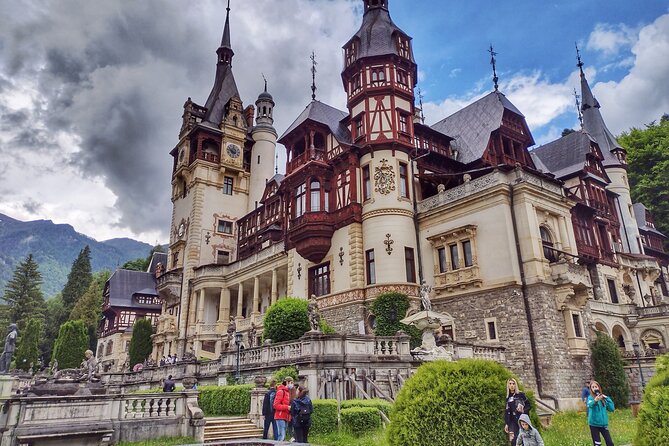
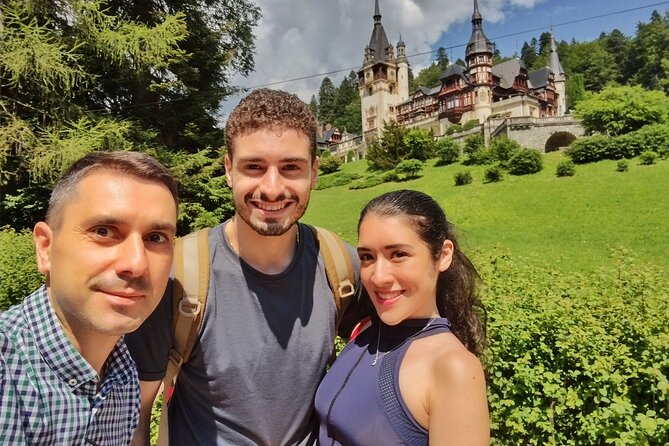
The last major stop is Peles Castle near Sinaia. Built between 1873 and 1914 for King Carol I, it served as the royal summer residence. Its Neo-Renaissance design reflects Romania’s royal ambitions during a period of national development and closer European connections.
You are allotted about an hour at Peles Castle. That is enough for a focused visit, but it may feel short if you want to study every room or spend time around the grounds. Interior admission is not included in the stated stop details, so confirm the current fee and which areas your ticket covers.
Peles also gives the tour a polished final note after the rugged religious sites and medieval towns. It sits in the Carpathian Mountains near an old route linking Transylvania and Wallachia, so the setting is part of the experience. After the castle, the private vehicle returns you to Bucharest.
Private transport and the pace of the route
This is a private activity for your group only, with pickup and drop-off anywhere in Bucharest. The listing does not give a vehicle model or exact daily driving times, but the route itself covers a large part of Romania. You should expect long stretches between major stops.
That is not necessarily a flaw. Private transport lets you avoid changing buses and gives you direct access to places that are awkward to connect by public transportation. You can also speak with the guide throughout the drive, ask for breaks, and adjust the rhythm within the day.
The vehicle is described in the experience feedback as spacious, air-conditioned, comfortable, and new. One group specifically appreciated the comfortable van, while another praised the guide’s help during a respiratory illness. Marius reportedly helped with finding an emergency room, parking, and navigating the medical system, then continued supporting the group afterward.
You should not book this expecting a lazy four-day retreat. The route is ambitious, and the physical requirement is listed as moderate. The walking itself is not presented as extreme, but monastery grounds, historic centers, and castle visits can mean standing and walking over uneven surfaces.
Hotels, meals, and the real value of $1,356.43
The listed price is $1,356.43 per person. That is a serious price, but it covers a private four-day circuit, hotel pickup and return, three nights in three-star hotels, private guiding, and three breakfasts. Group discounts are offered, which could improve the value for couples, families, or friends booking together.
The hotel category is three-star, though the available feedback describes the accommodation as lovely and very comfortable, with one person calling it closer to five-star quality. I would treat that as encouraging but not a promise. Hotel standards and room assignments can vary, so ask for the names of the properties before booking if the overnight experience matters greatly to you.
Meals are only partly covered. You receive breakfast on three mornings, but other meals, drinks, and snacks are excluded. This gives you some freedom to choose local restaurants, yet it means the final cost will be higher than the headline price.
The clearest value comes from the guide. Toni is praised for warmth, careful planning, and bringing Romania’s past to life. Marius is praised for his enthusiasm for the monasteries and for taking care of a sick passenger during a difficult night.
For a private tour, those personal qualities matter. You are paying not only for a vehicle and hotel beds, but also for the ability to ask questions, receive help when plans change, and see the sites through someone who knows how to connect art, faith, and politics.
Who will get the most from this tour?
I would recommend this trip to someone visiting Romania for the first time who wants a strong overview of Moldavia and Transylvania without arranging several separate excursions. It suits people who care about religious art, medieval towns, fortified churches, royal buildings, and cultural context.
It also suits families or small groups that value privacy and flexibility. If one person needs extra help, or if your group wants to linger at a particular monastery, a private guide is more useful than a fixed coach schedule.
You may want a slower trip if your main goal is rest. Three monasteries in one day and several historic centers across the next two days create a packed program. The route is rewarding because it covers so much, but you will spend a fair amount of time in the vehicle.
The tour may also be a good fit for visitors who prefer practical support. The guides are described as kind, attentive, and ready to help with problems beyond ordinary sightseeing. That is especially valuable on an international trip where language and medical systems can become difficult.
Booking details worth checking first
Pickup begins at 9:00 a.m., and collection can be arranged anywhere in Bucharest. Confirmation is provided at booking, and the tour ends back in Bucharest.
Ask two questions before paying: which hotels will be used, and exactly which entrance fees are included. The information lists admission as included at Agapia, Văratec, Sucevita, Moldovita, Sighisoara, and Brasov, but the broader terms say interior visits are not included and quote approximately €25 to €30 per person. Get the answer in writing.
Cancellation is generous if you act early. A full refund is available when you cancel at least six full days before the start time. Cancelling two to six days ahead brings a 50 percent refund, while cancelling less than two full days ahead brings no refund. Poor weather can lead to a different date or a full refund.
Should you book it?
Book this tour if you want Romania’s painted monasteries to be more than a quick photo stop. The combination of Agapia and Văratec, the three major Bucovina churches, Sighisoara, Viscri, Brasov, and Peles Castle gives you an unusually broad four-day introduction.
I would be most comfortable booking it as a small private group that enjoys full days and values a reliable guide. Toni and Marius add a personal side to the trip, and the private vehicle makes a demanding route easier to manage.
Skip it if you want extensive free time, guaranteed luxury hotels, or a short list of nearby attractions. Also clarify the entrance-fee contradiction before booking. With that point settled, this is a strong choice for seeing Romania’s art, faith, medieval towns, and royal past in one well-packed journey.
FAQ
Where does the tour begin and end?
The tour begins in Bucharest and returns to Bucharest at the end of Day 4.
What time does pickup begin?
The listed start time is 9:00 a.m.
Can pickup be arranged at my Bucharest hotel?
Pickup can be arranged anywhere in Bucharest.
Is this a private tour?
Yes. Only your group participates in the activity.
How many nights of accommodation are included?
Three nights in three-star hotels are included.
Is breakfast included?
Yes. Three breakfasts are included.
Are lunch and dinner included?
No. Other meals, drinks, and snacks are not included.
Are entrance fees included?
The information is inconsistent. Several stop descriptions mark admission as included, while the general terms say interior visits are not included and list an estimated cost of €25 to €30 per person. Confirm the current policy before booking.
What clothing is needed at the monasteries?
Trousers or a long skirt are required to access the monastery grounds.
What level of fitness is required?
A moderate level of physical fitness is recommended.
What is the cancellation policy?
Cancel at least six full days before the start time for a full refund. Cancelling two to six full days ahead allows a 50 percent refund. Less than two full days ahead is nonrefundable. Poor-weather cancellations may result in another date or a full refund.
Just added around Bucharest
- Private Full Day Tour of Bucharest★ 5.0 · 3 reviews
- Veliko Tarnovo and Medieval Bulgaria Private Day Trip from Bucharest★ 5.0 · 3 reviews
- Bucharest VIP Bar Crawl in Lipscani ‘Old Town’★ 5.0 · 3 reviews
- Muddy Volcanoes and Salt Mine Private Tour★ 5.0 · 3 reviews
- Bucharest Private City Tour★ 5.0 · 3 reviews
- Legends & Stories from Transylvania -2 Castles & Brasov Old Town★ 5.0 · 3 reviews
- 7-Day Dracula Tour in Romania from Bucharest including ‘The Ritual of Killing of a Living Dead’★ 5.0 · 3 reviews
- Transfagarasan Private Tour from Bucharest – 2 Days★ 5.0 · 3 reviews
Transylvania Day Trips, compared.
Transylvania and Dracula Castle Full Day Tour from Bucharest
Read our review →
Castles of Transylvania: Private Day Trip from Bucharest
Read our review →
2-Day Medieval Transylvania with Brasov,Sibiu and Sighisoara Tour from Bucharest
Read our review →
SB01 – City Tour Sibiu: Exploring the Heart of Transylvania
Read our review →
Day trips and excursions in nature, cities in Transylvania, Brasov!
Read our review →
2-Day Transylvania from Bucharest: Brasov, Bran, Sighisoara
Read our review →
Browse the lists this tour appears in