Reviewed · BUCHAREST TOURS
Private: RedPatrol Bucharest Contrasts Tour in a Vintage Car
Bucharest makes more sense when you see its sharp changes street by street. This private tour carries you from royal villas and belle époque Cotroceni to working-class apartment blocks, abandoned factories, Ferentari, and the vast cleared zone around the Palace of Parliament, all from the back seat of a restored Dacia 1300 or 1310.
I like two things here: the route shows parts of Bucharest that a standard center-city walk skips, and the old car turns the ride itself into part of the story. Guides such as Mihai and Ivan Crinu have brought plenty of local detail, humor, and personal explanation to the trip.
The main drawback is comfort. These 1970s and 1980s cars have no air-conditioning, ABS, GPS, power steering, or automatic transmission. The tour is also not open to children under 10 or pets, so check those limits before booking.
Key things to know before booking
- A private route across social history: You move from the former royal quarter to communist housing and a post-socialist district marked by poverty and neglect.
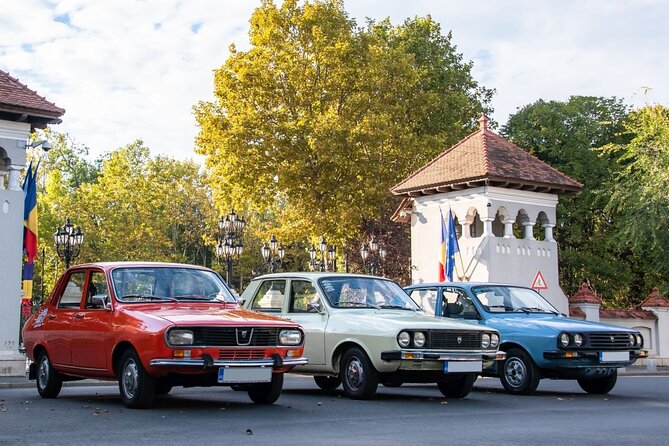
- The Dacia is part of the attraction: You ride in a fully restored Romanian classic, but you do not drive it.
- Hotel pickup is included: Red Patrol collects and returns you at addresses in Bucharest.
- Expect about three to four hours: The stops are short, focused visits rather than long museum sessions.
- The tour favors real neighborhoods: Markets, apartment blocks, former factories, and unfinished or abandoned sites matter as much as grand buildings.
- Bring an open mind: Ferentari and the old industrial areas are presented as places shaped by economic hardship, not as polished sightseeing districts.
Why the old Dacia changes the Bucharest experience
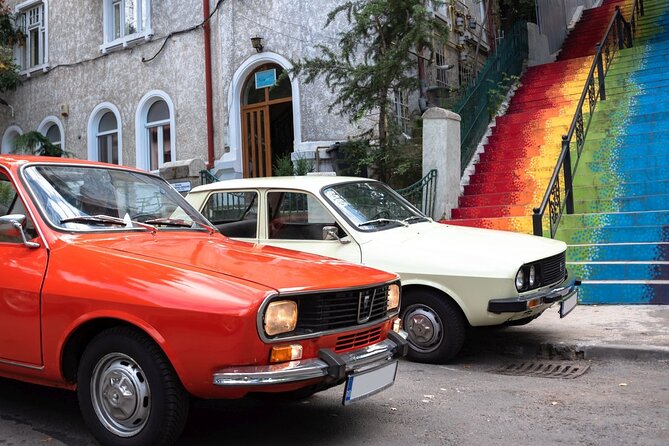
The Dacia 1300 and 1310 were familiar cars during Romania’s communist period. Riding in one gives the tour a physical link to the decades being discussed. You are not simply hearing about the socialist era from a modern minivan. You are moving through the city in a carefully restored object from that time.
Red Patrol’s cars meet current traffic safety rules, but they remain old-fashioned in useful and less useful ways. You will not have air-conditioning, ABS, GPS navigation, power steering, or automatic gears. In winter, the cars are heated, which helps. In warm weather, the lack of air-conditioning may matter, especially during a three- to four-hour outing.
This is a private activity, so your group gets the guide’s attention rather than sharing a vehicle with strangers. That matters on a route with sensitive subjects. You can ask why a neighborhood changed, how communist planning affected daily life, or what happened after the factories closed.
Hotel pickup and drop-off from Bucharest are included. Water is provided in the car, and you receive a small tour gift. Food, drinks beyond the water, and personal purchases are not included.
A few more Bucharest day trips to weigh up
- Bucharest: Dracula’s Castle, Peles Castle, & Brasov Old Town
★ 4.5 · 17,858 reviews - Bucharest: Dracula Castle, Peles Castle & Brasov Old Town
★ 4.6 · 10,891 reviews - Bucharest: Dracula’s Castle, Peleș Castle & Brașov Day Trip
★ 4.5 · 5,919 reviews
Uranus and the unfinished communist demolition
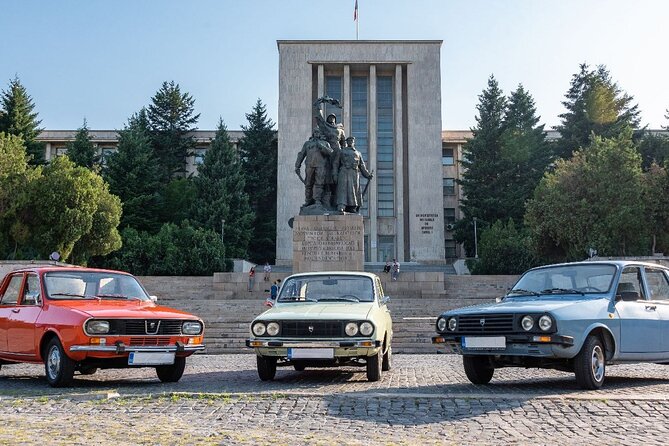
The first major stop is near Academia Română in Uranus, an area tied to one of Bucharest’s most sweeping urban projects. In the 1980s, Nicolae Ceaușescu ordered a huge section of the city cleared for a new political and administrative center. Homes, churches, streets, and older buildings disappeared as the work moved forward.
The demolition stopped when the Romanian Revolution began in 1989. That unfinished break is central to understanding modern Bucharest. You see what happens when a government decides that a city’s older fabric can simply be erased, then loses the power to finish the job.
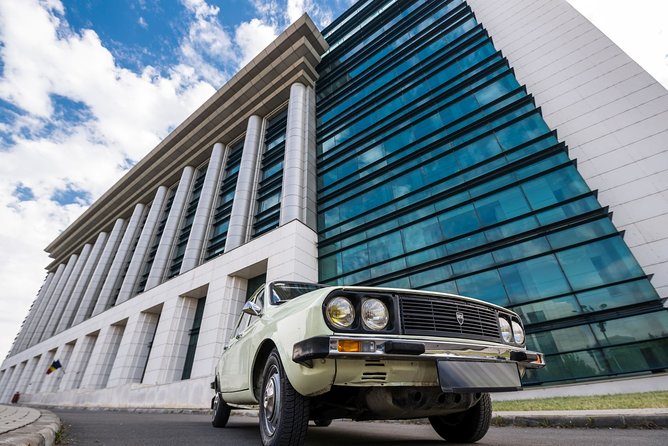
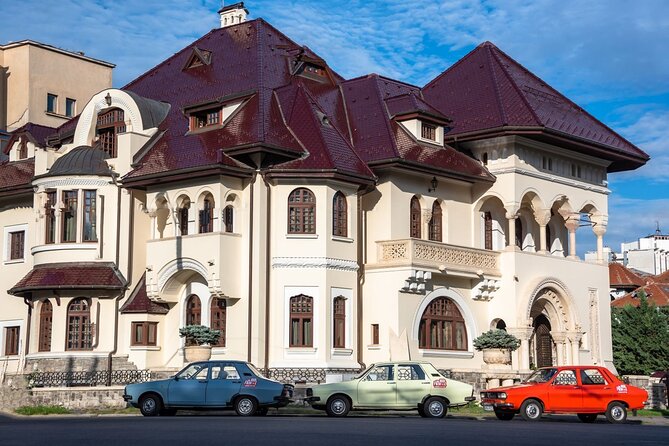
The route also brings in the contrast between the communist project and the older commercial city. One especially useful point is the comparison between the Academia Română building, associated with the Ceaușescu era, and nearby Bragadiru Palace, built by the capitalist industrialist Dumitru Bragadiru. The buildings represent very different ideas of power and public life, yet they sit within the same broad urban story.
The stop is about 20 minutes, and admission is not included. Do not expect a long indoor visit. The value comes from standing in the area and having the guide explain what was removed, what survived, and why the revolution changed the result.
The first royal quarter at Fântână
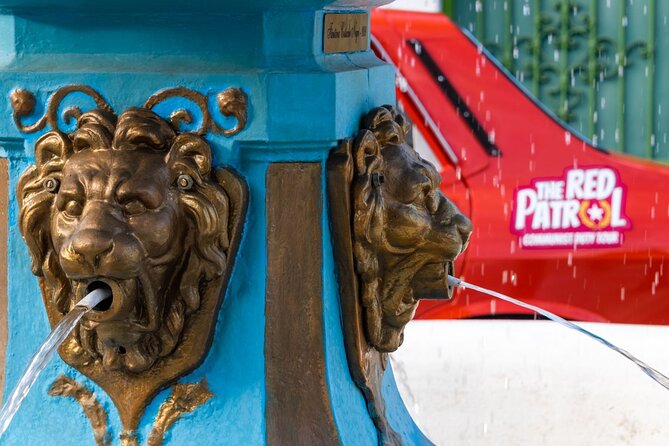
At Fântână, the tour shifts to the bourgeois district that grew in the 19th century around Romania’s first Royal Palace. The stop lasts about 15 minutes and is free.
This is a quick orientation rather than a full architectural tour. Your guide gives you a short presentation on the neighborhood and the growth of Bucharest under the monarchy. After the stark story of Uranus, this section helps you see the city before communist planning reshaped it.
I find this contrast important because Bucharest is not only a communist city, even though that period dominates many first impressions. The older capital had royal institutions, private wealth, villas, and a different sense of scale. Seeing those areas alongside later apartment districts keeps the story from becoming too simple.
Cotroceni and the city’s belle époque
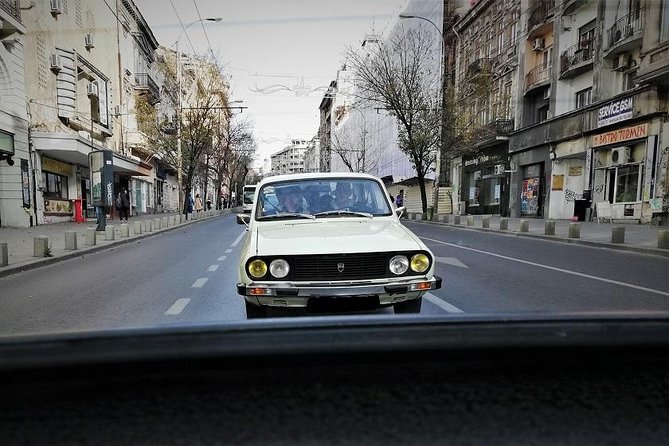
The next stop is the gardens of Cotroceni Palace, the first royal palace of Romania, built during the modern monarchy. The visit lasts about 30 minutes, with admission not included.
The focus is a brief presentation of belle époque Bucharest. Cotroceni helps explain the city’s pre-communist ambitions and its connection to the monarchy. Compared with the broad avenues and uniform blocks seen later, the area offers a more refined picture of Bucharest’s earlier public and private life.
Because the tour is built around contrasts, this stop works best when you remember what came before and what follows. You are not spending half a day inside a palace. Instead, you get a short historical frame before moving into districts created for very different reasons.
Check the admission arrangements when you book if you want to go inside any site. The advertised price does not include tickets at every stop, and several visits are primarily exterior presentations.
Same corner of the country, a completely different day out:
- Bucharest: Palace of Parliament Tickets and Guide
★ 4.3 · 3,182 reviews - Bucharest: Day Trip to Dracula Castle, Peles Castle & Brașov
★ 4.4 · 3,049 reviews - Bucharest to Dracula Castle, Peles Castle and Brasov Guided Tour
★ 4.5 · 2,933 reviews - Bucharest: Palace of Parliament Tickets and Guided Tour
★ 4.4 · 1,877 reviews
Drumul Taberei and everyday communist housing
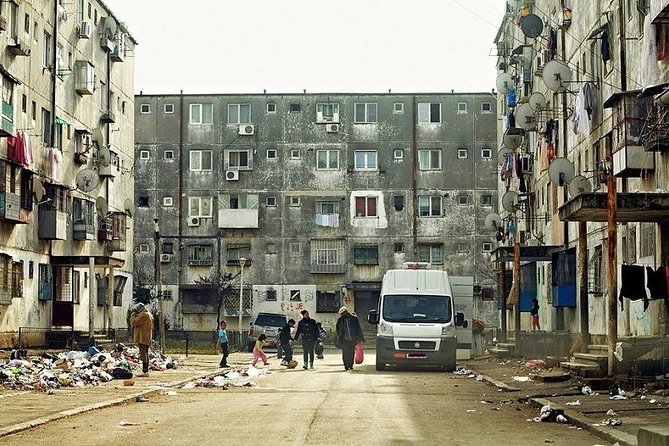
At Parcul Drumul Taberei, the guide presents a working-class communist district known for its large apartment blocks. The stop takes about 20 minutes and includes time for photographs and stories.
This is where the tour moves away from elite buildings and political monuments. You see the kind of housing built for ordinary workers and families during Romania’s socialist period. The blocks were practical responses to a growing city, but they also produced repetitive neighborhoods with limited space and a strong sense of central planning.
One detail gives the area a clear post-communist twist: a shopping mall was built on the ruins of a former communist canteen. That single change says a great deal about the shift from state-run provision to private retail. The building may be gone, but the site still tells you how daily life was reorganized after 1989.
The stop is useful for photos, but the stories matter more than the view. Ask your guide about how these districts worked and how the neighborhood changed after the end of socialism. You will get more from this part if you look beyond the concrete and think about the people who lived in these blocks.
Ferentari and Piața Rahova: the tour’s hardest contrast
The route then enters Ferentari, including the area around Piața Rahova. This is one of the most difficult and revealing parts of the outing. Ferentari was developed as an industrial and working-class area under communism, then suffered heavily when factories collapsed after socialism.
The district became associated with poverty, neglected apartment blocks, and a reputation for crime. The tour does not present it as a picturesque stop. Instead, it explains how an area built around work changed when the work disappeared, and how the economic shocks of the 1990s left some communities behind.
At Piața Rahova, you visit a peasant market for about 30 minutes. This gives the stop a more human scale. Markets can show how people shop, sell, and maintain everyday routines even in districts facing serious problems. You may also see Orthodox churches that reflect the continuing role of religion in local life.
You should bring care and respect here. This is a living neighborhood, not a film set, and the subject is poverty rather than novelty. Photography should be handled thoughtfully, especially around market sellers and residents. The tour’s strength is its willingness to discuss uncomfortable subjects without pretending that Bucharest’s economic growth has solved every problem.
For many people, this becomes the most memorable section because it connects political decisions with present-day streets. The route does not ask you to judge the district from a car window. It gives you background for understanding why the buildings, empty spaces, and local economy look the way they do.
The former Rocar factory and the cost of collapse
The stop at the former Rocar factory lasts about 20 minutes. This is an abandoned industrial area left behind after the collapse of socialist factories, and admission is included.
Rocar was part of the industrial world that supported working neighborhoods during communism. When factories closed, the effect was not limited to lost jobs. Shops, transport patterns, housing demand, and local identity all changed with them.
A ruined factory can be easy to dismiss as an empty building. The guide’s explanation gives it a place in the wider story. You learn about the rise of the surrounding area, the role of industry, and its decline after the political and economic system changed.
This stop also helps explain Ferentari. The poverty seen in parts of the district did not appear out of nowhere. It is tied in part to the collapse of the industrial system and the uneven results of the transition that followed.
Do not expect a polished attraction with displays or a formal visitor center. The appeal is the directness of the place. You are looking at the remains of a working system, with the guide supplying the context.
Broscuțe Park and the first Soviet-era housing
Broscuțe Park takes you to the Colonel’s Quarter, described as Bucharest’s first neighborhood from the Soviet occupation era. The stop lasts about 20 minutes and admission is included.
This section focuses on daily life during the Stalinist years. It adds another layer to the communist story because not all socialist architecture or planning belonged to the same period. The early Soviet influence had its own political mood, building style, and expectations for urban life.
The park and surrounding quarter give the guide a place to explain how Bucharest changed after the Second World War. You hear about the first years of Soviet influence and how the new political order affected housing and neighborhoods.
This stop is brief, so you should think of it as a focused history lesson rather than a full walking tour. Still, it helps break up the larger story into periods. The Romania of the early Stalinist years was not identical to the Romania of Ceaușescu’s massive rebuilding campaigns.
The Palace of Parliament and a city cleared for power
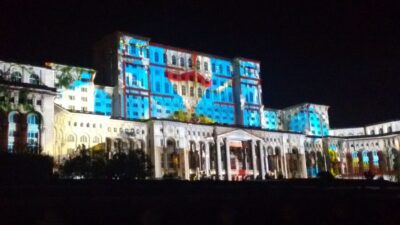
The final major stop is the Palace of Parliament, one of the world’s largest civilian buildings. The presentation lasts about 20 minutes, and admission is not included.
The building is only part of the story. The surrounding district, covering about 20 square kilometers, was radically rebuilt after widespread demolition. Entire neighborhoods were cleared to create a monumental political center, leaving a huge urban scar and changing the shape of Bucharest for generations.
A short stop cannot cover every detail of the building or its construction. What it can do is connect the palace to Uranus, where you began. At the start, you saw where Ceaușescu’s demolition project was interrupted. At the end, you see the enormous result of the parts that were completed.
That structure gives the tour a strong arc. You start with a city being erased, pass through royal, working-class, industrial, and post-socialist districts, then finish at the monument that drove much of the destruction.
If you want to tour the interior of the Palace of Parliament, plan for a separate visit and check ticket requirements. This experience provides a presentation and exterior stop, not an included interior admission.
What the $126.43 price means
At $126.43 per person, this is not the cheapest way to see Bucharest. The price makes more sense for a small group that values a private guide, hotel transportation, and a route built around interpretation rather than simple photo stops.
You are paying for three to four hours of private transport, a local guide and driver, a restored classic car, water, pickup, drop-off, and a route that would be difficult to assemble on your own. Group discounts may improve the value if several people book together.
The car is a major part of the appeal, but it should not disguise the tour’s real value. You are buying access to an organized explanation of how royal Bucharest, communist Bucharest, and post-socialist Bucharest fit together.
If your goal is only to see the old town and take standard city photos, this may feel expensive and too specialized. If you want to understand why Bucharest looks so uneven from one district to the next, the private format is easier to justify.
Practical comfort and who should book
Most people can participate, but the provider does not allow children under 10 or pets. You do not drive the Dacia. The guide handles the vehicle throughout the circuit.
The lack of modern car equipment is worth taking seriously. There is no air-conditioning, ABS, GPS navigation, power steering, or automatic transmission. The cars are fully restored and meet traffic safety rules, but restoration does not turn them into modern vehicles.
I would choose this tour early in a Bucharest stay. It gives you a citywide framework that can make later independent exploring more meaningful. The experience is especially suited to people interested in architecture, political history, post-socialist change, old cars, and neighborhoods beyond the usual center.
You should also be comfortable with serious material. Ferentari, abandoned factories, forced demolition, and poverty are not light sightseeing topics. The guides bring humor and warmth, but the tour still asks you to look at parts of the city that are often ignored.
Free cancellation is available if you cancel at least 24 hours before the start time. Changes or cancellations made later are not accepted for a refund.
Should you book the Red Patrol Contrasts Tour?
Book it if you want Bucharest explained through its contrasts, not reduced to a few central monuments. The restored Dacia is fun, but the strongest reason to go is the route: royal Cotroceni, Drumul Taberei blocks, former industrial districts, Ferentari, and the Palace of Parliament all become chapters in one connected story.
Skip it if you need a modern, air-conditioned vehicle, want extensive time inside museums, or prefer a gentle sightseeing loop. For most curious adults, especially those visiting Bucharest for several days, this private half-day outing offers a useful and unusual view of Romania’s capital.
FAQ
How long does the Bucharest Contrasts Tour last?
The tour lasts approximately three to four hours.
Is hotel pickup included?
Yes. Pickup and drop-off are included from addresses in Bucharest.
Is this a private tour?
Yes. Only your group participates in the activity.
What kind of car is used?
You ride in a restored Dacia 1300 or Dacia 1310, classic Romanian cars from the 1970s and 1980s.
Will I drive the Dacia?
No. You will not drive the car. A professional local guide also serves as the driver.
Does the Dacia have air-conditioning or modern driving features?
No. The cars do not include air-conditioning, ABS, GPS navigation, power steering, or automatic transmission. During winter, the cars are heated.
Are children and pets allowed?
Pets are not allowed, and children under 10 years old cannot participate.
What is included in the price?
The experience includes Bucharest hotel pickup and drop-off, private transport, a professional local guide and driver, water in the car, and a personalized tour gift. Food, drinks beyond those provided, admission fees where listed, and personal shopping are not included.
Just added around Bucharest
- Private Full Day Tour of Bucharest★ 5.0 · 3 reviews
- Veliko Tarnovo and Medieval Bulgaria Private Day Trip from Bucharest★ 5.0 · 3 reviews
- Bucharest VIP Bar Crawl in Lipscani ‘Old Town’★ 5.0 · 3 reviews
- Muddy Volcanoes and Salt Mine Private Tour★ 5.0 · 3 reviews
- Bucharest Private City Tour★ 5.0 · 3 reviews
- Legends & Stories from Transylvania -2 Castles & Brasov Old Town★ 5.0 · 3 reviews
- 7-Day Dracula Tour in Romania from Bucharest including ‘The Ritual of Killing of a Living Dead’★ 5.0 · 3 reviews
- Transfagarasan Private Tour from Bucharest – 2 Days★ 5.0 · 3 reviews
Bucharest Tours, compared.
Dracula’s Castle, Peles Castle, & Brasov Old Town
Read our review →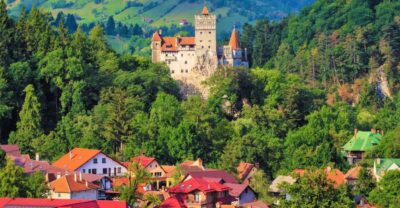
Dracula Castle, Peles Castle & Brasov Old Town
Read our review →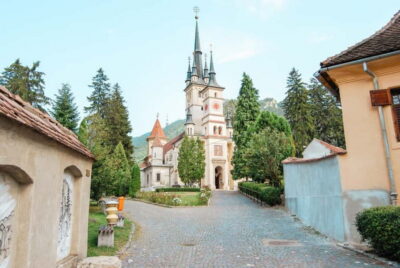
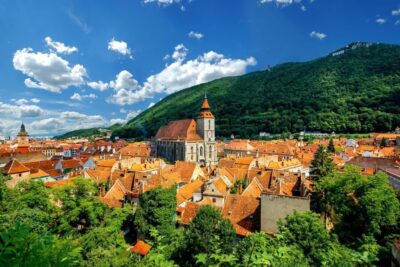
Dracula’s Castle, Peleș Castle & Brașov Day Trip
Read our review →
Day Trip to Dracula Castle, Peles Castle & Brașov
Read our review →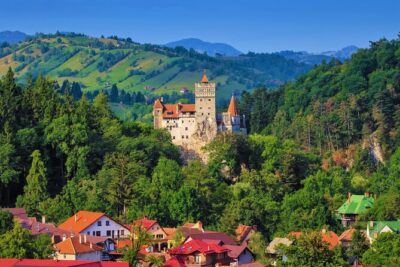
Bucharest to Dracula Castle, Peles Castle and Brasov Guided Tour
Read our review →