Reviewed · BUCHAREST TOURS
Slavery in Romania Myths and Truths About Gypsies
Bucharest’s grand buildings tell only part of its story. This three-hour walk uses the Romanian Athenaeum, old princely homes, political statues, and the Holocaust Memorial to explain Roma slavery, discrimination, wartime persecution, and the place of Roma culture in modern Romania. The final stop, Mesteshukar ButiQ, brings the subject into the present through hand-crafted work made by Roma artisans.
I like the compact group size of 15 people maximum, which should make a serious subject easier to discuss. I also like the route’s mix of open-air history, a park walk, and a real Roma craft shop rather than a tour made up only of speeches. The main drawback is that much of the three hours is spent walking between stops, and the price of $127.37 per person is considerable for a tour with no paid admissions.
Key points at a glance
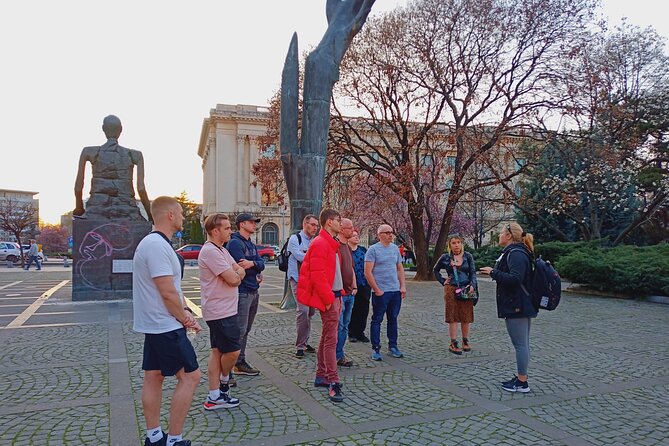
- Guide Mihai’s historical focus: The tour connects Roma history with Romanian political figures, education, slavery, and World War II.
- Eight stops across central Bucharest: Expect the Athenaeum, Cismigiu Park, the Holocaust Memorial, and several places tied to national history.
- A difficult subject handled outdoors: The route covers Roma slavery and the Forgotten Holocaust at sites around the city.
- A practical look at living culture: Mesteshukar ButiQ displays hand-crafted pieces made by Roma artisans.
- Three hours on foot: You need a moderate level of fitness, with walking time between every scheduled stop.
- Small-group format: No more than 15 people can join, and the tour is offered in English.
Why this Bucharest walk matters
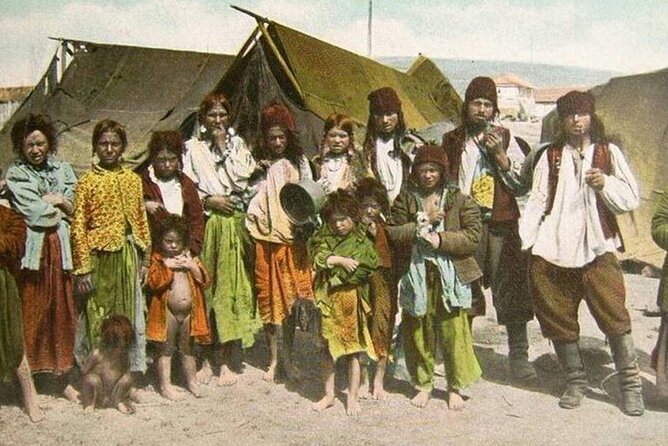
The title points to a subject that is often reduced to stereotypes. This tour takes a different route. It places the history of Roma people within the larger story of Romania, using familiar Bucharest sights as reference points.
That structure is useful because you are not simply being led to one memorial and given a short explanation. You move from art and politics to aristocratic power, education, wartime persecution, and present-day craftsmanship. Each stop gives the guide a new way to explain how Roma communities were treated and how their culture continues.
Guide Mihai is specifically identified in the available tour feedback, and his strong command of Romanian Roma history was singled out as a major reason the experience worked well. The same feedback also describes the route as filled with interesting places around Bucharest and says the three hours passed quickly. That is a good sign for a walking tour built around difficult material, though the evidence is based on only eight ratings.
The tour uses the word Gypsies in its title, while Roma is the term used throughout the route description for the people and culture being discussed. If terminology matters to you, ask Mihai at the start how the tour handles the language and the myths in its title. A thoughtful conversation about words is part of approaching this subject responsibly.
A few more Bucharest day trips to weigh up
- Bucharest: Dracula’s Castle, Peles Castle, & Brasov Old Town
★ 4.5 · 17,858 reviews - Bucharest: Dracula Castle, Peles Castle & Brasov Old Town
★ 4.6 · 10,891 reviews - Bucharest: Dracula’s Castle, Peleș Castle & Brașov Day Trip
★ 4.5 · 5,919 reviews
Starting at the Romanian Athenaeum
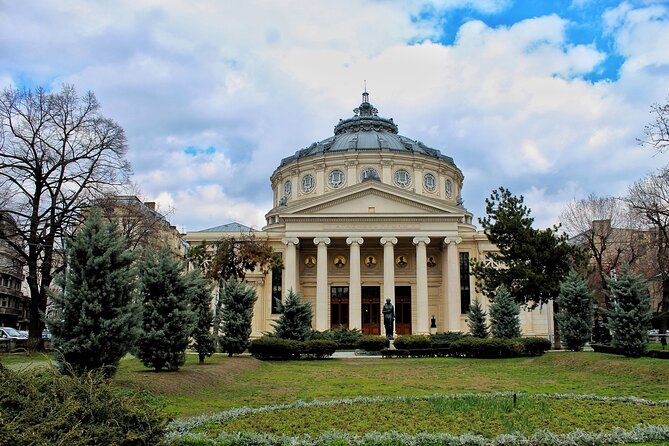
The meeting point is Teatrul Ion Creangă, Sala Mare, at Strada Piața Amzei 13. The tour begins at 10:00 a.m. and then heads to the Romanian Athenaeum, one of Bucharest’s best-known cultural buildings.
The Athenaeum houses the National Romanian Philharmonic and is often called Romania’s house of art. Here, the tour’s first task is to show that history is not only a list of laws and rulers. Art, public culture, and national identity also shape the way a country tells its own story.
You should not expect a concert or an interior visit as part of this experience. The stop lasts about 20 minutes, and admission is listed as free. The value is in the guide’s explanation and in the setting itself, not in a ticketed attraction.
This is a smart opening point. The building gives you a polished, familiar image of Romania before the route moves into harder questions about who was included in the national story, who was pushed aside, and how those choices affected Roma people.
Iuliu Maniu and the politics of modern Romania
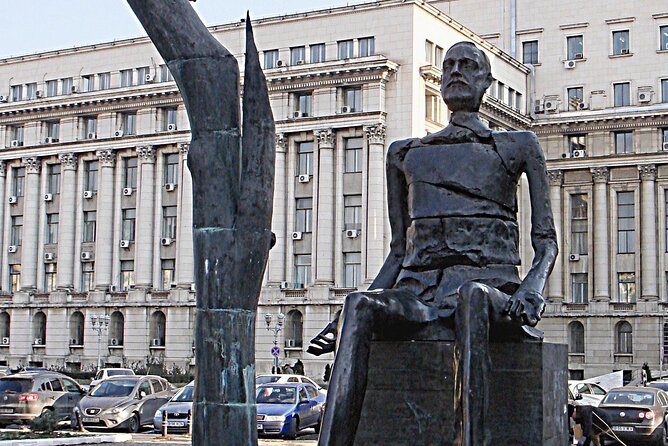
The next stop is the statue of Iuliu Maniu, another 20-minute visit without an admission fee. Maniu was an important figure in Romanian political life, and the tour places him in relation to both Roma history and the growth of modern Romania.
This stop is not meant to turn the walk into a general biography of Maniu. Instead, it gives you a political lens. You begin to see that the position of Roma people was shaped not only by private prejudice, but also by public decisions and the changing institutions of the Romanian state.
For you, the key benefit is connection. A statue can be easy to photograph and forget. With a guide explaining why the person matters to the subject of the walk, it becomes a prompt for discussing power, citizenship, and national development.
As with several stops on this route, the experience depends heavily on the guide. There is no museum display or formal presentation here. If you prefer a tour packed with indoor exhibits, this format may feel light. If you like using the city itself as a classroom, the stop should work well.
Palatul Stirbei and the era of Wallachian rulers
At Palatul Stirbei, the tour turns toward the 19th century. The building was the home of Barbu Stirbey, one of the rulers of Wallachia and an important person in the story being told.
The stop lasts around 20 minutes. It is another exterior historical point, so you should think of it as a short lesson in place rather than a palace tour. The connection to Wallachian rule is important because the history of Roma slavery cannot be separated from the institutions and elites that controlled land, labor, and social status.
This part may be especially useful if your knowledge of Romanian history begins with the modern country rather than the older principalities. Wallachia provides the political setting for understanding how power worked before modern Romania took shape.
You will not be moving through a preserved royal interior on this tour. The attraction is the context. Barbu Stirbey’s home becomes a way to discuss who held authority and how that authority affected people who lacked freedom.
Same corner of the country, a completely different day out:
- Bucharest: Palace of Parliament Tickets and Guide
★ 4.3 · 3,182 reviews - Bucharest: Day Trip to Dracula Castle, Peles Castle & Brașov
★ 4.4 · 3,049 reviews - Bucharest to Dracula Castle, Peles Castle and Brasov Guided Tour
★ 4.5 · 2,933 reviews - Bucharest: Palace of Parliament Tickets and Guided Tour
★ 4.4 · 1,877 reviews
Cismigiu Park, education, and a slower pace
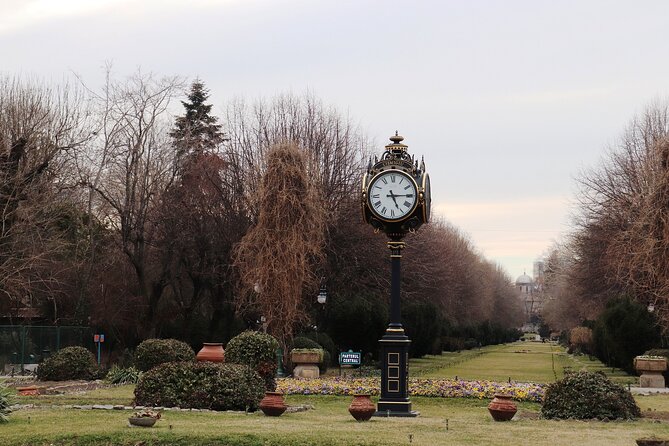
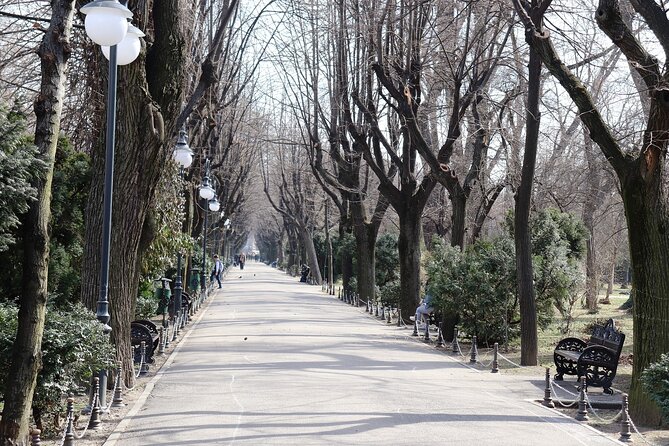
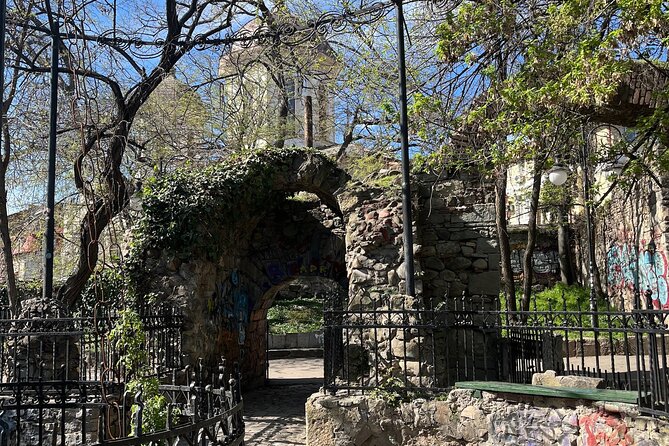
Cismigiu Park gives the route a welcome change of rhythm. The walk through the garden lasts about 30 minutes and includes several stops, including a view over the park, the ruins of an old monastery, and a well-known high school.
This is the longest scheduled stop, but it is not a rest break in the usual sense. The park is used to connect landscape, education, religion, and city life to the main subject. You get a chance to walk at a gentler pace while still following the historical thread.
The park setting also prevents the tour from becoming a chain of statues and plaques. You see a more ordinary part of Bucharest, with public space and daily life in the background. That helps keep the subject grounded in the city rather than sealed away in memorials.
At the entrance is Gheorghe Lazăr National College, visited for about 15 minutes. Education is presented as a key to social progress, and the school is described as the best-known high school in the city. The point is clear: access to education can affect opportunity, status, and the ability of communities to shape their own future.
The itinerary does not promise a school visit or entry inside the building. You should expect an outdoor explanation connected to the site. It is a short stop, but it adds an important idea to the route. Roma history is not only about suffering and exclusion. It is also about access, ambition, skills, and the means to change social conditions.
The Holocaust Memorial and the Forgotten Holocaust
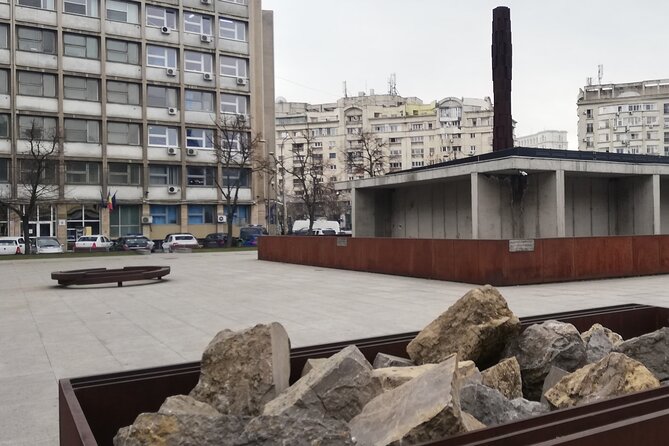
The Holocaust Memorial is the most emotionally serious stop. You spend about 15 minutes learning about the persecution of Roma people during World War II and what is described as the Forgotten Holocaust.
The memorial is presented as the most impressive monument in Romania dedicated to Holocaust victims. That makes this more than a passing historical reference. The site gives the guide a place to explain the wartime experience of Romanian Roma and why it has received less public attention than other parts of Holocaust history.
You should allow yourself time to take in the memorial without rushing. Fifteen minutes is not long for such a subject, but the stop is part of a larger route and not intended to be a full museum program. Mihai’s role is to provide the historical frame, connect it to Romania, and make sure this part of the story is not skipped.
This may be the strongest reason to choose the tour if you want more than a general Bucharest sightseeing walk. The subject is difficult, yet the route treats it as a central part of Romanian history rather than a footnote.
It is also the point where the tour’s title becomes most serious. The walk is not built around folklore or colorful anecdotes. It asks you to look at slavery, racism, wartime violence, and the way historical memory can leave some victims less remembered than others.
Mihail Kogălniceanu and the written record
The stop at Piața Mihail Kogălniceanu is short, about 10 minutes. Mihail Kogălniceanu was a major Romanian politician and writer, and the tour presents him as the first Romanian to write about Romanian Gypsies.
Because this is a brief stop, it functions as a bridge between political history and the written record. What officials and writers chose to describe, ignore, or criticize helped shape public ideas about Roma people.
This is a good place to listen closely to the language used in historical sources. Written accounts are never neutral simply because they are old. They reflect the author’s position, purpose, and assumptions. The tour’s theme of myths and truths depends on examining those assumptions rather than accepting every old description at face value.
The square itself is not a ticketed attraction. The value comes from how Mihai links the person, the place, and the broader subject. If you enjoy historical interpretation more than landmark collecting, this short stop should have more weight than its 10-minute timing suggests.
Finishing at Mesteshukar ButiQ
The tour ends at Mesteshukar ButiQ, or MBQ, at Bulevardul Mihail Kogălniceanu 12. You spend about 20 minutes in the shop, which sells authentic hand-crafted pieces made by Roma artisans.
This is one of the route’s best choices. After several stops focused on oppression and loss, the shop gives you a direct look at Roma skill and tradition in the present day. It also keeps the experience from presenting Roma culture only as something that happened in the past.
The shop carries hand-crafted pieces, including jewelry, according to the available feedback. A handcrafted jewelry store was described as a highlight, and that detail is useful when deciding how much time to allow at the end. You may find something worth buying, but the tour information does not state that a purchase is required or included.
The stop is not just a shopping detour. It gives the story a human, practical ending. You see work made by Roma craftspeople and have a chance to consider culture as a living practice rather than a museum label.
The tour ends here, not back at its starting point. That matters when planning the rest of your day. The shop is on Bulevardul Mihail Kogălniceanu, and the route has already taken you through several central Bucharest locations.
What the $127.37 price includes
At $127.37 per person, this is an expensive three-hour walking tour by ordinary sightseeing standards. There are no admission charges listed for the eight stops, so most of the price pays for the guide, the small-group format, and the specialist subject.
You do receive a professional English-speaking guide and a cake snack. Coffee and tea are not included, though the group makes a short stop where you can buy them at your own expense.
The value depends on what you want from Bucharest. If you are looking for the cheapest way to see the Athenaeum and Cismigiu Park, this is not it. You can visit public places on your own. But researching the links between Wallachian rulers, Roma slavery, political figures, wartime persecution, and present-day craft would take time, and a guide can place those pieces together as you walk.
The small group helps justify some of the cost. A maximum of 15 people is more manageable than a large city group, especially when the topic calls for questions. Still, the tour does not include meals, attraction tickets, or transportation, so set your expectations accordingly.
Walking, timing, and what to bring
Plan for roughly three hours, with the remaining time used to walk between stops. The schedule lists about 150 minutes of stop time, leaving the rest for movement through Bucharest. You need a moderate level of physical fitness.
Wear comfortable shoes and dress for a walking tour. The information does not specify indoor access at the historical buildings, and many stops take place outside, including the park and memorial. A mobile ticket makes booking simple, but it does not change the physical nature of the experience.
The tour operates in English. Service animals are allowed, and the route is near public transportation. The group starts at 10:00 a.m., so you should arrive with enough time to locate the theater meeting point at Piața Amzei.
Free cancellation is available if you cancel at least 24 hours before the start time. Changes or cancellations made inside that period are not accepted for a refund. That is worth noting because the tour has a fixed morning start and a small capacity.
Who will get the most from this experience
I would choose this walk if you want Bucharest history that moves beyond royal buildings, communist-era sights, and standard city highlights. It is particularly suited to you if you want to understand Roma history as part of Romania’s political and social story.
It also fits travelers who prefer a guide-led discussion to a large museum. You will see public monuments, streets, a park, a school, and a craft shop. The route feels connected to the city rather than separated from it.
Families with older children may find the subject useful, but the serious wartime and slavery material requires maturity. The walking level is not extreme based on the listed requirement of moderate fitness, yet you should not book it if you want a seated activity.
You might skip it if your time in Bucharest is very short and you want only the city’s most famous sights. You might also skip it if $127.37 feels too high for a walking tour without paid admissions. The price is easier to defend when the specialist subject and small group matter more to you than a long list of included tickets.
Should you book this Roma history tour?
Book it if you want a focused, thoughtful introduction to Roma history in Romania and value a guide who can connect places that otherwise seem unrelated. Mihai’s role, the small group, the Holocaust Memorial, and the final visit to Mesteshukar ButiQ give the walk a clear purpose.
The craft shop is an especially useful finish because it shows Roma culture in the present, not only through slavery and persecution. Go prepared to walk, listen, and consider difficult material. If that is the kind of city experience you seek, this tour offers more substance than a routine sightseeing circuit. If you mainly want famous buildings and low-cost exploration, spend your money elsewhere.
FAQ
Where does the tour begin?
The tour begins at Teatrul Ion Creangă, Sala Mare, at Strada Piața Amzei 13 in Bucharest.
What time does the tour start?
The start time is 10:00 a.m.
Where does the tour end?
The tour ends at Mesteshukar ButiQ, at Bulevardul Mihail Kogălniceanu 12 in Bucharest.
How long does the experience last?
The tour lasts approximately three hours, including the time spent walking between stops.
Is the tour offered in English?
Yes. It includes a professional English-speaking guide.
How many people can join the tour?
The tour has a maximum group size of 15 travelers.
Are admission tickets included?
The listed stops have no admission ticket charge. The tour includes the guide and a cake snack, but it does not list paid attraction admissions.
Is coffee or tea included?
No. The group makes a short stop for coffee or tea, but those drinks are paid for separately.
What happens if I need to cancel?
You can receive a full refund if you cancel at least 24 hours before the experience start time. Cancellations or changes made less than 24 hours in advance are not accepted for a refund.
Just added around Bucharest
- Private Full Day Tour of Bucharest★ 5.0 · 3 reviews
- Veliko Tarnovo and Medieval Bulgaria Private Day Trip from Bucharest★ 5.0 · 3 reviews
- Bucharest VIP Bar Crawl in Lipscani ‘Old Town’★ 5.0 · 3 reviews
- Muddy Volcanoes and Salt Mine Private Tour★ 5.0 · 3 reviews
- Bucharest Private City Tour★ 5.0 · 3 reviews
- Legends & Stories from Transylvania -2 Castles & Brasov Old Town★ 5.0 · 3 reviews
- 7-Day Dracula Tour in Romania from Bucharest including ‘The Ritual of Killing of a Living Dead’★ 5.0 · 3 reviews
- Transfagarasan Private Tour from Bucharest – 2 Days★ 5.0 · 3 reviews
Bucharest Tours, compared.
Dracula’s Castle, Peles Castle, & Brasov Old Town
Read our review →
Dracula Castle, Peles Castle & Brasov Old Town
Read our review →
Dracula’s Castle, Peleș Castle & Brașov Day Trip
Read our review →
Day Trip to Dracula Castle, Peles Castle & Brașov
Read our review →
Bucharest to Dracula Castle, Peles Castle and Brasov Guided Tour
Read our review →