Reviewed · BUCHAREST TOURS
One-Day Vlad the Impaler Royal Court Private Tour from Bucharest
The most compelling part of this 10 to 11-hour private tour is its focus on the real places tied to Vlad the Impaler, not just the Dracula legend. You visit his former court at Targoviste, see the Chindia Tower he commissioned, and face the steep climb toward Poienari Castle, a rugged fortress linked more directly to Vlad than the famous castles used in popular fiction.
I like the door-to-door pickup and the freedom of having your own car and guide. I also like the mix of royal ruins, churches, a mountain dam, and a castle approach that requires 1,480 steps. Guides such as Dan and Nicu have been praised for careful driving, clear explanations, and the ability to adjust the day around changing conditions.
The main drawback is the length. This is a very full day, with long road stretches and extra entry costs for most sights. Poienari Castle has also been closed to tourism at times, so confirm its status before departure and be ready for a replacement stop.
Key points to know before you book
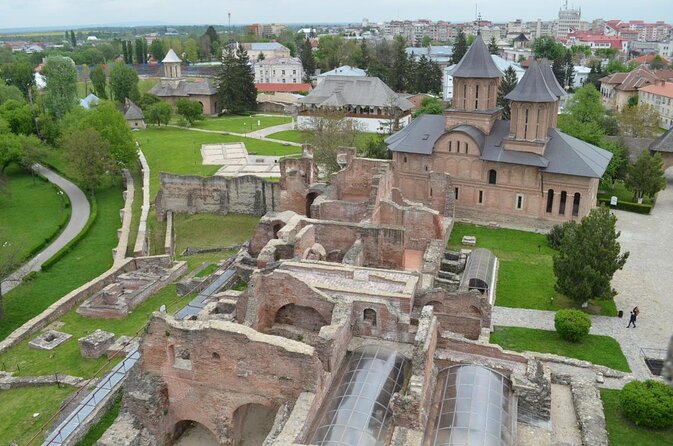
- Targoviste puts Vlad’s court at the center of the day: See the Chindia Tower, palace ruins, and old churches at the former capital of Wallachia.
- Poienari requires real effort: The route includes 1,480 stairs, and the castle’s operating status can change.
- Private transport makes the schedule workable: Hotel, rental, or vacation-rental pickup is offered in a private car or minibus.
- The tour is easy to adjust: The guide can alter the plan after the day begins, subject to practical conditions.
- The price covers transport, not sightseeing costs: Gasoline, parking, and road tolls are included, but food and admission tickets are extra.
- Vidraru Dam adds a modern Romanian landmark: The final major stop brings a striking engineering site before the long ride back to Bucharest.
Why Vlad’s real court matters more than a Dracula photo stop
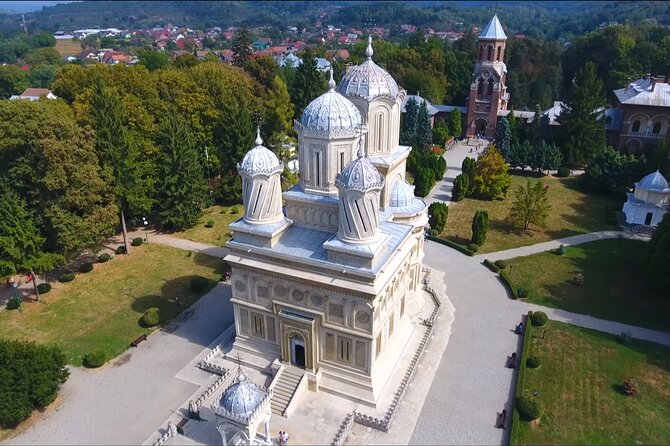
If your interest is Vlad the Impaler, Targoviste is the strongest reason to book this outing. Before Bucharest became the capital of Southern Romania, Targoviste served as an important political center for Wallachian princes.
The princely court traces its documented beginnings to 1417 or 1418. Mircea the Old built a church here in 1415, while Vlad Dracul later expanded and modernized the court, giving it stronger defenses and a more fitting setting for a ruling prince.
This helps put Vlad in a more useful historical frame. He was not simply a fictional vampire figure. He was a medieval ruler operating in a difficult border region, and the court shows the political and military setting in which he governed.
You spend about two hours exploring the princely complex. The remains are not a polished palace, so you need to approach them as an archaeological site rather than a grand intact castle. That is part of the appeal. The worn walls, foundations, churches, and tower give you a better sense of time than a reconstructed attraction would.
A few more Bucharest day trips to weigh up
- Bucharest: Dracula’s Castle, Peles Castle, & Brasov Old Town
★ 4.5 · 17,858 reviews - Bucharest: Dracula Castle, Peles Castle & Brasov Old Town
★ 4.6 · 10,891 reviews - Bucharest: Dracula’s Castle, Peleș Castle & Brașov Day Trip
★ 4.5 · 5,919 reviews
Climbing Chindia Tower above the old court
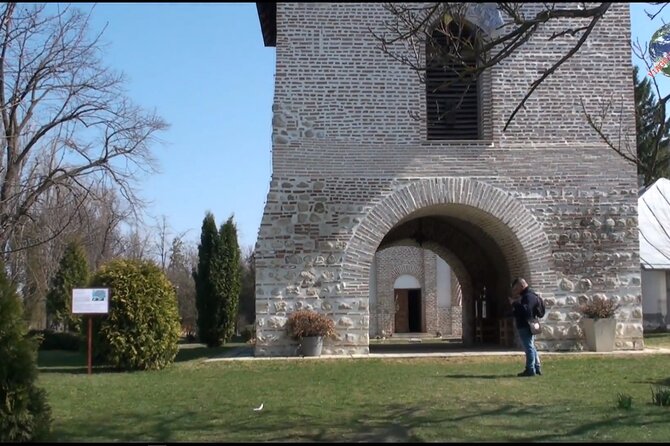
The Chindia Tower is the symbol of Targoviste’s princely court and the clearest structure connected with Vlad in this part of the trip. The name is sometimes translated as Sunset Tower, and the climb gives you a broad view over the old court.
From the balcony, you can look down toward the ruins of two princely palaces, one from the 16th century and another from the 17th century. You can also trace the outline of the church built in 1415.
Allow about 30 minutes for the tower and nearby buildings, though your private format gives you some room to linger. After the tower, the route includes two surviving churches. The small Holy Friday Church is less imposing than the Great Princely Church, but it has special value because it is described as the only 15th-century monument in Southern Romania still preserved in its original form.
I would pay attention here to the contrast between scale and age. The Great Princely Church may make the larger visual impression, but the smaller church offers the more unusual connection to the medieval town.
Curtea de Arges brings a different royal story
Curtea de Arges was the first capital of Romania, and it changes the mood of the day. Targoviste feels like a fortified princely center. Curtea de Arges combines old royal remains, religious buildings, and a story shaped by sacrifice.
The visit lasts about 45 minutes. You see the ruins of the Wallachian princely court, the 13th-century Royal Church, and the famous Curtea de Arges Monastery.
The monastery is one of Romania’s best-known historic religious monuments, but its appeal is not only architectural. Your guide is expected to explain the old story connected with its construction, including the sad sacrifice at the heart of the tale. That local legend gives the building an emotional edge that you will miss if you rush in, take a picture, and leave.
This stop is shorter than Targoviste and Poienari, so expectations matter. You are not getting a long guided visit through every corner of the town. Instead, you are adding an important former capital and a major religious monument to a day already packed with Vlad-related sites.
Poienari Castle is the day’s physical challenge
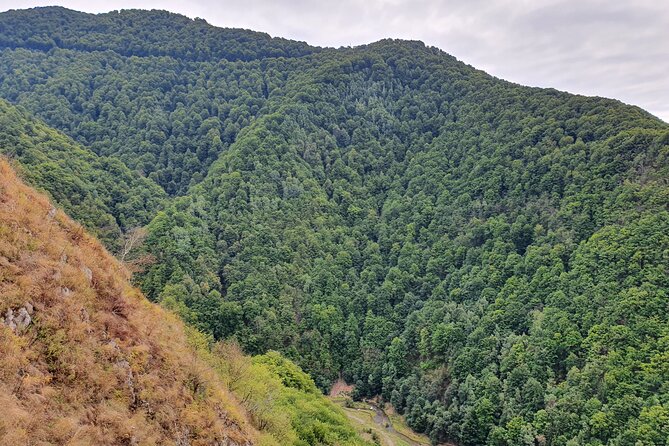
Poienari Castle is the stop most likely to appeal to serious Vlad enthusiasts and hikers. It is not the easy castle visit some people imagine. Reaching the fortress means climbing 1,480 stairs, so comfortable shoes, water, and a realistic view of your fitness are essential.
The climb is the point. You follow the route toward a mountain fortress tied directly to Vlad the Impaler, rather than visiting a later castle that mainly benefits from the Dracula name. The reward is the feeling of reaching a defensive stronghold in a remote setting, along with views over the surrounding area.
The tour description allows about two hours here, but that time includes the climb and the visit. Your pace will matter. A private guide can make the stop more manageable because you are not tied to a large group moving at one speed.
There is one important warning. Poienari Castle has not always been open for tourism. At times, access has been restricted, leaving only a distant view. Confirm the current status before you set out. If the castle is closed, the tour can be changed. One successful alternative used a visit to the National Military Museum in Bucharest, followed by a meal and a short city drive.
That flexibility is valuable, but you should not book this trip assuming every listed stop will operate exactly as planned. Ask the operator about Poienari before departure.
Same corner of the country, a completely different day out:
- Bucharest: Palace of Parliament Tickets and Guide
★ 4.3 · 3,182 reviews - Bucharest: Day Trip to Dracula Castle, Peles Castle & Brașov
★ 4.4 · 3,049 reviews - Bucharest to Dracula Castle, Peles Castle and Brasov Guided Tour
★ 4.5 · 2,933 reviews - Bucharest: Palace of Parliament Tickets and Guided Tour
★ 4.4 · 1,877 reviews
Vidraru Dam adds scale after the medieval sites
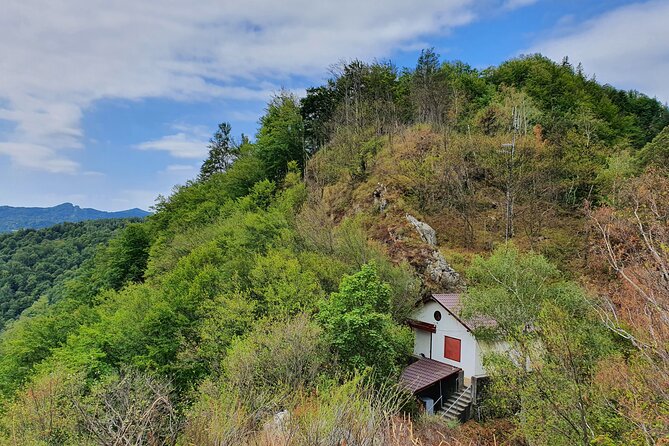
Vidraru Dam gives the day a sharp change of subject. Completed in 1966 on the Arges River, the dam creates Lake Vidraru and produces hydroelectric power.
The structure is 166 meters high, has an arch length of 305 meters, and holds up to 465 million cubic meters of water. The reservoir’s shoreline extends for 28 kilometers.
You spend about three hours around this part of the route, including the onward drive. The dam is not connected to Vlad, but it adds a major Romanian engineering site and breaks up the sequence of courts, churches, and ruins.
This is also where the long return becomes clear. From Vidraru Dam, the drive back to Bucharest takes about two and a half hours. After a full day on foot, that final ride may feel tiring, though private transport lets you rest instead of handling Romania’s roads yourself.
A private car is the real convenience
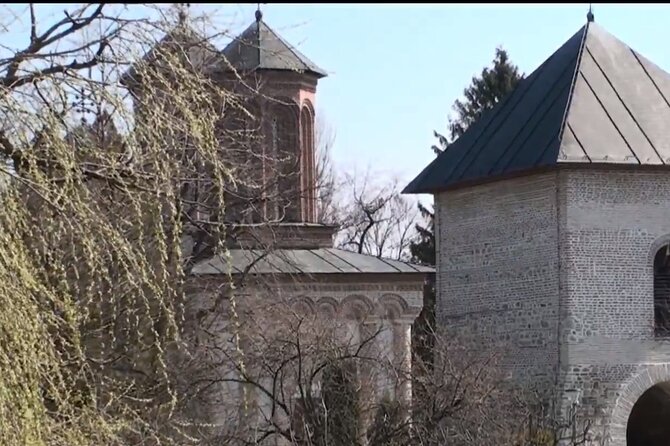
The transport arrangement is one of the tour’s strongest features. Pickup is available from hotels, vacation rentals, and points of interest, and the vehicle is reserved for your group. Depending on party size, transport is by private car or minibus.
That matters because the route covers several widely separated locations. You are not piecing together regional buses, dealing with parking, or trying to keep track of several departure times. Gasoline, parking, and road tolls are included in the price.
An English-speaking licensed driver-guide is available throughout the day. The guide handles the driving while explaining the historical sites, which removes a major language barrier and lets you focus on the scenery and monuments.
The quality of the guide can shape this experience. Dan has been praised for careful driving, useful explanations, patience, and a helpful manner. Nicu has also been praised for punctuality, professional conduct, historical explanations, and safe driving. You cannot assume which guide you will receive, but you can ask about guide availability when booking.
Flexible departure times are offered, another advantage over a fixed group excursion. Still, flexibility does not erase the distances involved. You are fitting five major stops into one day, so a late start could make the return very late or shorten visits.
What the $307.61 price really buys
At $307.61 per person, this is not a budget day trip, especially for one person or a couple. The value improves as your group grows because the vehicle, driver-guide, fuel, parking, and tolls are shared across the party. Group discounts may also be available.
I would judge the price against the route rather than against the number of hours. You are paying for a private vehicle across a long circuit, an English-speaking guide, pickup at your chosen address, and the ability to alter the day when a site is closed or your group needs a change.
Admission tickets are not included at Targoviste, Chindia Tower, Curtea de Arges Monastery, or Poienari Castle. Food and drinks are also extra. Keep a separate budget for tickets and lunch, and ask the operator for current entrance prices before leaving.
A useful example of the private-tour value came when Poienari was unavailable. Instead of wasting hours driving to a closed fortress, the guide redirected the group to the National Military Museum. That visit included historical explanations, and the group later stopped at a restaurant before taking a short Bucharest sightseeing drive.
The replacement will not suit everyone. If Poienari is your main reason for booking, no alternative can fully replace the climb. But if you want a flexible day with several layers of Romanian history, the ability to adapt protects your time.
Who will enjoy this long day most
I would choose this tour if you have a strong interest in Vlad the Impaler, Wallachian history, medieval churches, or Romanian royal sites. It also suits anyone who prefers a private setting and wants to ask questions without holding up a bus group.
It is a good match for families or friends who can share the cost and agree on the pace. A private minibus may be available for larger groups, while a smaller party can travel by private car.
The day is less suitable if you want a relaxed castle holiday. The route is ambitious, the road time is substantial, and Poienari demands a steep stair climb. You should also think carefully about the 1,480 steps if mobility or stamina is a concern.
The tour is offered in English, and confirmation is provided at booking. Most people can participate, but the information does not promise that every stop or physical section will suit every ability. Ask specific questions before paying if the stairs or long driving day could be a problem.
Practical ways to make the day better
Wear shoes with a good grip for Poienari and plan to carry water. The 1,480 stairs are not a decorative detail. They are a central part of the visit.
Keep lunch simple and flexible. Since food is not included, you can either bring something or stop during the day, depending on timing and the guide’s plan. One group was taken to a restaurant after a museum substitution, with very large portions, so you may want to avoid ordering more than you need.
Confirm three points before departure:
- Is Poienari Castle open for entry on your date?
- Which entrance fees should you budget for?
- What departure time best balances the stops and the return to Bucharest?
If Poienari is closed, ask what replacement is available. A museum, extra Bucharest sightseeing, or another historical stop can make the day worthwhile, but you should know the plan before setting off.
The cancellation terms are straightforward: you can receive a full refund if you cancel at least 24 hours before the start time. Changes or cancellations inside that window are not accepted for a refund.
Should you book the Vlad the Impaler Royal Court tour?
Book it if you want a private, history-focused day that reaches beyond the usual Dracula stops. Targoviste is the heart of the experience, while Curtea de Arges and Vidraru Dam give the route more variety. The private driver-guide format is especially useful here because the circuit is long and site conditions can change.
Before booking, confirm Poienari’s status and accept that the day will involve substantial driving. If the castle is open and you are ready for the stairs, this is one of the more direct ways to follow Vlad’s trail from Bucharest. If it is closed, book only if you are comfortable with a flexible substitute.
FAQ
How long does the tour last?
The tour takes approximately 10 to 11 hours.
Where does pickup take place?
Pickup is available from hotels, vacation rentals, and points of interest. You provide the address when arranging the tour.
Is this a private tour?
Yes. Only your group participates, and the vehicle is reserved for you and your friends or family.
Is an English-speaking guide included?
Yes. A licensed English-speaking driver-guide is available throughout the tour.
Is transportation included?
Yes. A private car or minibus is included, along with gasoline, parking, and road tolls.
Are entry tickets included?
No. Admission tickets for the listed attractions are not included.
Are food and drinks included?
No. Food and drinks are not included in the tour price.
How many stairs lead to Poienari Castle?
The approach to Poienari Castle includes 1,480 stairs.
Can the itinerary change during the day?
Yes. The private format allows flexibility for changes, including adjustments when site conditions require a different plan.
Just added around Bucharest
- Private Full Day Tour of Bucharest★ 5.0 · 3 reviews
- Veliko Tarnovo and Medieval Bulgaria Private Day Trip from Bucharest★ 5.0 · 3 reviews
- Bucharest VIP Bar Crawl in Lipscani ‘Old Town’★ 5.0 · 3 reviews
- Muddy Volcanoes and Salt Mine Private Tour★ 5.0 · 3 reviews
- Bucharest Private City Tour★ 5.0 · 3 reviews
- Legends & Stories from Transylvania -2 Castles & Brasov Old Town★ 5.0 · 3 reviews
- 7-Day Dracula Tour in Romania from Bucharest including ‘The Ritual of Killing of a Living Dead’★ 5.0 · 3 reviews
- Transfagarasan Private Tour from Bucharest – 2 Days★ 5.0 · 3 reviews
Bucharest Tours, compared.
Dracula’s Castle, Peles Castle, & Brasov Old Town
Read our review →
Dracula Castle, Peles Castle & Brasov Old Town
Read our review →
Dracula’s Castle, Peleș Castle & Brașov Day Trip
Read our review →
Day Trip to Dracula Castle, Peles Castle & Brașov
Read our review →
Bucharest to Dracula Castle, Peles Castle and Brasov Guided Tour
Read our review →