
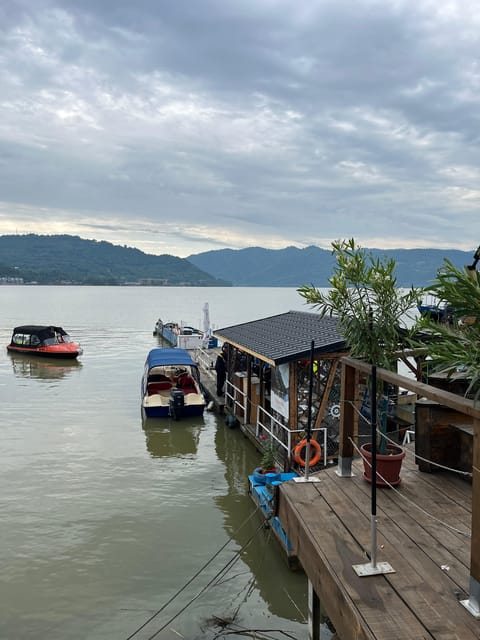
Reviewed · SELF-GUIDED TOURS
Orsova: Danube’s Cauldrons Boat Tours with Audio Guide
The most striking part of this Orșova boat trip is the sudden change from open river to the narrow, mountain-framed Danube Cauldrons. You’ll pass a giant modern carving of King Decebalus, Roman stonework more than 2,000 years old, caves, a monastery, and the submerged site of Ada Kaleh. I like the small 14-seat boat and the chance to stop for photos instead of simply watching the sights slide past. I also like the private-group format, which makes the $277 price sensible for up to six people.
The main caution is the ride itself. This is a smaller motorboat, not a slow river cruiser, and one person found the engine noise made the audio difficult to hear. If you have back problems, recent surgery, or want a very gentle ride, choose a larger boat or allow more time. The cave visit costs extra, and its guide is arranged separately.
Key points to know before you book
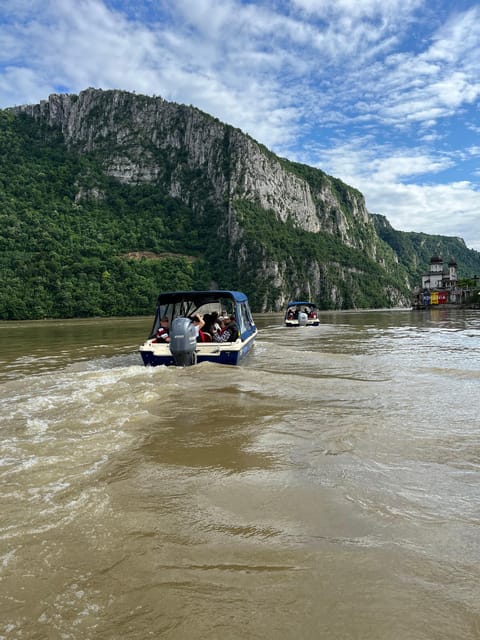
- Decebalus Rock is the visual highlight: The enormous face carved into the cliff is best seen from the water, where its scale becomes clear.
- The route packs in a lot: In about 110 minutes, you see Tabula Traiana, Mraconia Monastery, two caves, the Széchenyi Plate, Ada Kaleh, and the Iron Gates.
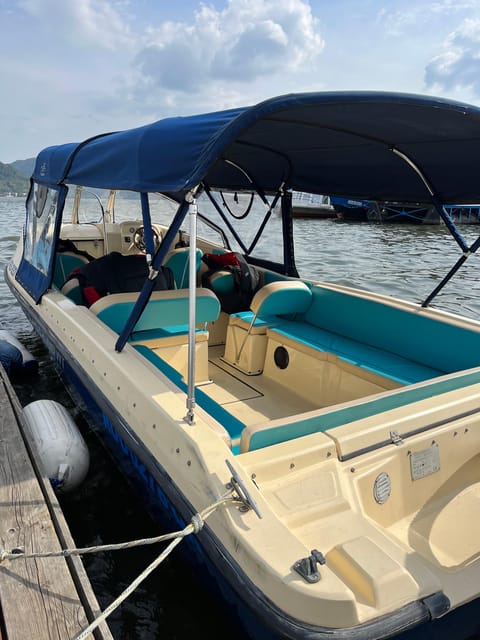
- The boat is intimate but lively: It carries 14 people and has a sunroof, but the engine can make recorded commentary hard to hear.
- Veterani Cave costs about $2 extra: The cave stop lasts about 20 minutes and uses a local guide rather than the boat company’s guide.
- The price works best for a group: At the full six-person limit, $277 comes to about $46 per person for a private booking.
- Bring practical gear: Wear comfortable shoes and clothes, pack sunglasses, sunscreen, cash, and headphones, and leave large luggage behind.
Setting out from Orșova and Cerna Bay
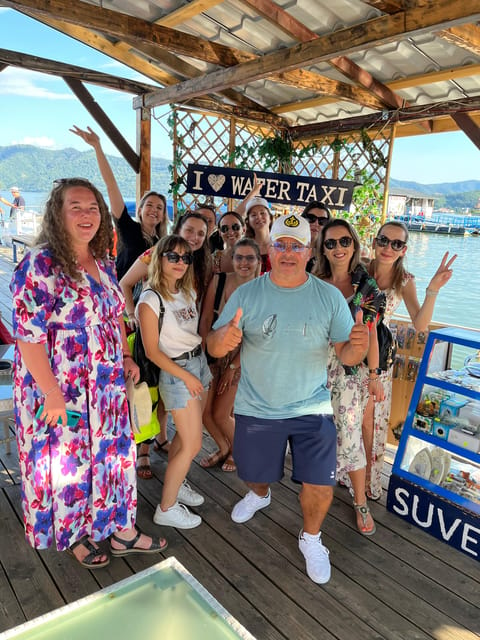
Your meeting point is the WT deck on Orșova’s waterfront walking path. Look for a black-roofed pontoon and two banners with the company logo, a short walk from Hotel Apolodor. This is a useful landmark because the departure point is not described as a conventional terminal with a large sign.
Orșova makes a fitting starting point. The town sits beside Cerna Bay, whose present shape dates from the Iron Gates I Dam project completed in the early 1970s. The river here is not just a transport route. It is a broad reservoir, a borderland corridor, and a place where Roman remains, modern engineering, mountain cliffs, and drowned settlements meet.
The boat tour lasts 110 minutes, which is close to two hours. You return to the same deck. The route includes several short viewing stops, so you get a moving panorama plus time to point your camera at the important places.
Life jackets are provided for everyone. The boat has a sunroof, a welcome feature on bright days, though you should still bring sunscreen and sunglasses. The sunroof does not mean you will be protected from all weather, so comfortable clothing is the sensible choice.
A few more Romania day trips to weigh up
- Danube Delta – Private Tour with Boat Trip & Traditional Lunch
★ 4.5 · 24 reviews - Boat Trip to Caraorman Forest – Danube Delta (6–7 hours)
★ 4.8 · 21 reviews - Danube Delta: Boat Tour Through the Water Lily Reserve
★ 5.0 · 19 reviews
Why the small boat changes the experience
The 14-seat motorboat gives the trip a more personal feel than a large sightseeing vessel. A smaller group usually makes boarding easier, and the boat can focus on the main landmarks without the scale of a big cruise operation.
That intimacy comes with a tradeoff. A motorboat produces more engine noise than a larger, slower vessel. One passenger had trouble hearing the English recording over the sound of the boat, while another found the trip pleasant and well organized. I would treat the audio guide as helpful background rather than the sole reason to book.
The host or greeter speaks English and Romanian. Recorded commentary is available in English, Hungarian, Spanish, and German. Bring headphones if you have them. They are specifically recommended, and your own pair may make the commentary easier to follow.
The boat’s pace is useful for a short outing, but this is not a quiet, leisurely cruise. You are covering several points in a limited time. If your priority is to sit on the river and watch the cliffs pass slowly, ask about a larger boat. If you want a compact sightseeing route with plenty of landmarks, the speed works in your favor.
Trajan’s Plaque and the Roman frontier
The first major sight is Trajan’s Plaque, also called Tabula Traiana. The stone inscription dates back more than 2,000 years and is tied to the Roman presence along the Danube.
From the boat, the plaque gives you a direct connection to the river’s military past. This was a frontier zone, and the Danube helped define the edge of Roman power. Your stop is mainly for viewing, photography, and recorded explanation rather than an extended archaeological visit.
Keep your camera ready as the boat approaches. The value of this stop comes from seeing the ancient carving in its original cliffside setting, not from spending a long time ashore. The changing angle from the water helps you frame the plaque, surrounding rock, and river together.
Decebalus Rock, the river’s signature view
The Decebalus Rock Sculpture is likely to be the tour’s most memorable stop. Carved into the rock above the Danube, it depicts Decebalus, the Dacian king who fought the Romans. The monument is described as Europe’s tallest rock sculpture and the world’s third-largest rock monument.
The scale is hard to judge in a photograph, which is why the boat viewpoint matters. As you draw near, the face fills the cliff and gives the surrounding gorge a human focus. You get a dedicated photo stop and guided information, so this is the place to keep your camera accessible and listen for the main facts.
The monument is modern, but its subject reaches back to the Roman-Dacian conflicts. That contrast is part of the appeal. You are looking at a recent carving in a setting shaped by ancient politics, geological forces, and modern river engineering.
If you are choosing only one picture to bring home, make it this one. The boat gives you a clear angle that is difficult to match from the road.
Same corner of the country, a completely different day out:
- Bucharest: Dracula’s Castle, Peles Castle, & Brasov Old Town
★ 4.5 · 17,858 reviews - Bucharest: Dracula Castle, Peles Castle & Brasov Old Town
★ 4.6 · 10,891 reviews - Bucharest: Dracula’s Castle, Peleș Castle & Brașov Day Trip
★ 4.5 · 5,919 reviews - Bucharest: Palace of Parliament Tickets and Guide
★ 4.3 · 3,182 reviews
Mraconia Monastery beside the water
Mraconia Monastery adds a quieter note to the route. The monastery sits close to the Danube and is viewed during a photo and sightseeing stop.
Its appeal is partly visual. After the imposing rock sculpture and ancient plaque, the monastery offers a smaller human landmark framed by water and cliffs. The stop also shows how religious sites remain part of daily life in this river region rather than existing apart from it.
Do not expect a long religious or architectural visit. The tour format gives you time to see the building, take photographs, and hear the main explanation from the audio guide. If you want to enter and study the monastery at length, this boat trip is not designed for that.
Veterani Cave and the separate cave guide
Veterani Cave has a different character from the open-air stops. It was used as a strategic military hideout, making it one of the route’s more unusual places.
The cave visit lasts about 20 minutes, but it requires an extra entrance payment of approximately $2. The cave’s own guides conduct the visit, not the Water Taxi Orsova staff. Whether the boat can stop at the cave pontoon depends on current security measures, and everyone in your group must agree to visit.
That arrangement is worth understanding before you board. If you skip the cave, you remain with the boat and use the audio guide instead. If you go inside, you pay at the entrance and join a separate cave tour.
Bring cash for this stop. You should also wear shoes with a secure sole, since comfortable footwear is specifically recommended and a cave visit is not the place for slippery sandals. The extra charge is small, but the added procedure means this is not as simple as stepping off the boat for a quick look.
Ponicova Cave and the through-and-through passage
Ponicova Cave is known for its unusual formation, with the river passing through the cave system. The tour includes a visit and a photo stop at the western section, known as Peștera Ponicova, Vest.
This is another place where the boat route adds something. You approach the cave from the Danube, seeing how water and rock have shaped the passage. The setting is less about a polished attraction and more about the physical character of the gorge.
The stop is shorter than a full cave expedition. You get the main view and an explanation, then continue along the river. That makes it a good fit for you if you want variety in a single outing. If caves are your main interest, you may want to ask how much time is available and whether the optional Veterani visit will affect the schedule.
The Széchenyi Plate and river engineering
Tabula Széchenyi, or the Széchenyi Plate, brings the route back to engineering and the practical work of navigating the Danube. The stop recognizes efforts connected with improving passage along this difficult river section.
It is not as instantly dramatic as Decebalus Rock, but it helps explain why the Danube Cauldrons have mattered to transport and regional development. The cliffs are beautiful, yet they also created real problems for boats and river traffic.
This is a useful stop for putting the scenery into context. You are not simply passing through a pretty gorge. You are following a waterway that people have worked to control, mark, and use for centuries.
Ada Kaleh beneath the reservoir
The route also includes Ada Kaleh, an island that now lies about 30 meters underwater after the Iron Gates project. You will not see the former island itself. Instead, the boat provides historical information about the place and the changes brought by the reservoir.
This part of the trip gives the river a sense of absence. The water hides a former settlement, reminding you that dam construction changed more than the shape of the shoreline. It also changed the map of the Danube and erased places that once had their own communities and stories.
The supplied tour information describes an additional 40-minute downstream section near the Iron Gates, with views and historical information connected to Ada Kaleh. Confirm the timing and cost of this extra section when booking, since it is described separately from the core 110-minute outing.
Iron Gates views and the ride back
The Iron Gates section places the tour within one of Europe’s best-known river corridors. You see the waterway shaped by the dam system and the dramatic mountain walls around it.
The boat then returns to the WT deck in Orșova. Because the outing is round trip, you do not need to arrange a second pickup point. The return ride is a good chance to take any photographs you missed on the way out, though the exact viewing angle will change.
A 110-minute schedule keeps the tour manageable for families, couples, and anyone fitting the Danube into a larger Romania itinerary. It also means the stops are focused. You will see many highlights, but you should not expect long independent visits at each location.
What the $277 price really buys you
The cost is $277 per group of up to six people. At six passengers, that is roughly $46 per person. For a private group, that is a fair price if you value having your own booking and a compact route with a boat, captain, life jackets, audio guide, and return passage included.
For only one or two people, the per-person cost becomes much higher. In that case, compare it with any shared boat option available in Orșova. The private format makes the most financial sense for a family or a small group of friends.
Food and drinks are not included, and there is no mention of onboard catering. Bring what you need for a short ride, but avoid large bags and oversize luggage. Alcohol and drugs are not permitted.
The booking terms are flexible: you can cancel up to 24 hours ahead for a full refund, and you can reserve now and pay later. The meeting point is close to Hotel Apolodor, but transportation to the deck is not included, so arrange your own way to Orșova’s waterfront.
Who should choose this Danube Cauldrons tour?
I would choose this trip if you want to see the area’s main sights in one well-packed outing. It suits you especially well if you are traveling with up to five companions, enjoy taking photographs, and like a mix of nature, archaeology, military history, religious sites, and engineering.
Families may appreciate the short duration and variety. Couples get a scenic ride without committing to a full-day program. History-minded visitors will value Trajan’s Plaque, the Dacian sculpture, Veterani Cave, and Ada Kaleh.
I would hesitate if you have chronic back trouble, limited mobility, are pregnant, or recently had surgery. The experience is not suitable for wheelchair users, and the smaller motorboat may be less comfortable than a larger vessel.
You should also think about language. The audio guide covers four languages, but the live host speaks English and Romanian. If clear spoken commentary is essential, bring headphones and sit where you can best hear the recording. The engine noise may still be noticeable.
FAQ
How long does the Orșova boat tour last?
The core tour lasts 110 minutes, or just under two hours. An additional 40-minute downstream section near the Iron Gates and Ada Kaleh is described separately, so confirm whether it applies to your booking.
Where does the boat leave from?
The meeting point is the WT deck on the waterfront walking path in Orșova. Look for a black-roofed pontoon with two company banners, a short distance from Hotel Apolodor.
Is the tour private?
Yes. The activity is offered as a private group, with the price covering up to six people. The boat itself can accommodate 14 passengers.
What languages are available for the audio guide?
The audio guide is available in English, Hungarian, Spanish, and German. The host or greeter speaks English and Romanian.
Does the Veterani Cave visit cost extra?
Yes. Entry to Veterani Cave costs approximately $2. The cave visit lasts about 20 minutes, and a separate local guide conducts it. The stop also depends on security measures, and everyone in the group must agree to visit.
What should I bring?
Bring comfortable shoes, sunglasses, sunscreen, comfortable clothing, headphones, and cash. Large bags, oversize luggage, alcohol, and drugs are not allowed. Life jackets are supplied on the boat.
Should you book it?
Book this tour if you want a compact, private look at the Danube Cauldrons with the region’s major sights packed into one boat ride. The strongest reasons are the close view of Decebalus Rock, the unusual caves, the underwater story of Ada Kaleh, and the price value for a group of six.
Skip it if you need a quiet cruise, have back or mobility concerns, or want long visits at each site. For the best experience, bring headphones, cash for Veterani Cave, light clothing, and a camera you can reach quickly. The route moves fast, but it gives you a clear and memorable introduction to one of Romania’s most dramatic stretches of the Danube.
More Self-Guided Tours in Romania
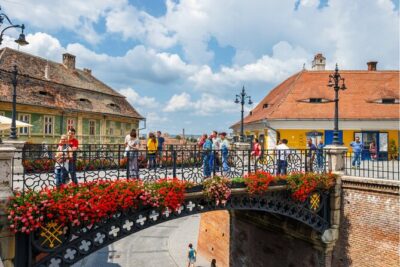
- Sibiu Old Town Exploration Game and Self-Guided Tour
★ 4.5 · 82 reviews - Sighisoara Fortress Quest: Exploration Game and Tour
★ 4.5 · 33 reviews - King Matia Secret Treasure Exploration Game in Cluj-Napoca
★ 4.5 · 30 reviews - Orsova: Entire Area Boat Tours with Audio Guide
★ 4.7 · 11 reviews
Just added around Romania
- Private Full Day Tour of Bucharest★ 5.0 · 3 reviews
- Bear Sanctuary Zarnesti,Bran Castle,Rasnov Fortres w/Hotel pickup★ 5.0 · 3 reviews
- Count Dracula & Peles Castle in One Day from Bucharest★ 5.0 · 3 reviews
- Veliko Tarnovo and Medieval Bulgaria Private Day Trip from Bucharest★ 5.0 · 3 reviews
- Bucharest VIP Bar Crawl in Lipscani ‘Old Town’★ 5.0 · 3 reviews
- Private Transfagarasan&Balea Lake★ 5.0 · 3 reviews
- Muddy Volcanoes and Salt Mine Private Tour★ 5.0 · 3 reviews
- Bucharest Private City Tour★ 5.0 · 3 reviews
Self-Guided Tours, compared.
Sibiu Old Town Exploration Game and Self-Guided Tour
Read our review →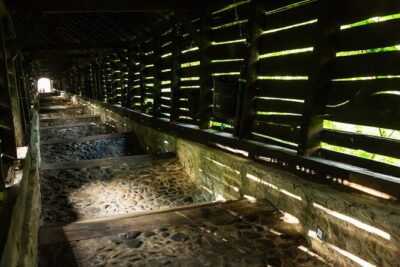
Sighisoara Fortress Quest: Exploration Game and Tour
Read our review →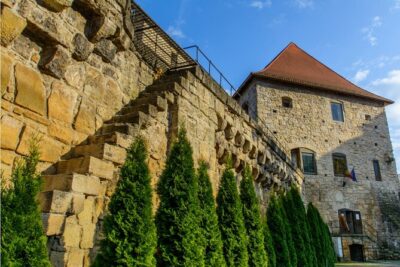
King Matia Secret Treasure Exploration Game in Cluj-Napoca
Read our review →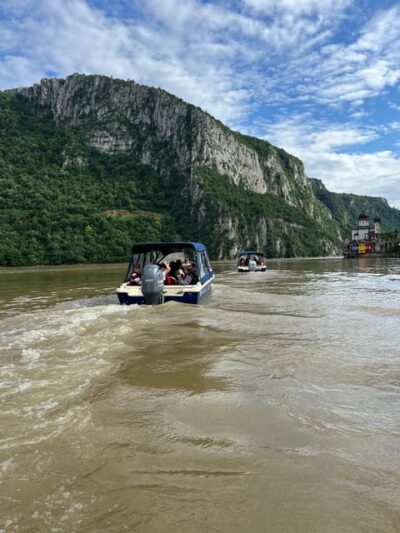

Life in Communist Bucharest: Self-Guided Puzzle Quest
Read our review →
Bucharest 1989 Revolution Walking Tour with Smartphone App
Read our review →Browse the lists this tour appears in