
Reviewed · BRAȘOV TOURS
Brasov: Candlelight Tour of Medieval Architecture
Brașov after dark has a different character. Streetlights pick out the old stonework, alleys grow quieter, and the city’s medieval gates and churches take on a slightly spooky air. This 1.5-hour walk begins in Piața Sfatului and follows a compact route through the old town, with history, architecture, and a little vampire folklore along the way.
I like the local point of view. Guides such as Dan, who was born and raised in Brașov, add family memories, schoolday stories, and thoughts on how the city has changed. I also like the route’s variety: you see major landmarks such as the Black Church, then slip into narrower corners including Rope Street and the old gates.
The main consideration is the candlelight promise. The tour takes place at night, but a candle may not actually be used, and darkness means some details are harder to see. If you want to enter churches or inspect architectural details, a daytime walk may suit you better.
Key points before you book
- A local guide shapes the evening: Dan is frequently mentioned by name, while Tibi and Silvio have also led this walk.
- The route covers major Brașov sights: Expect the Black Church, Katherine’s Gate, Schei Gate, St. Nicholas’ Cathedral, Weaver’s Bastion, the synagogue, and Rope Street.
- The mood is nocturnal, not necessarily candlelit: The buildings are lit at night, but there is no firm promise of a handheld candle.
- The storytelling is personal: Alongside medieval history, you may hear local anecdotes and stories from the guide’s own life.
- It costs $47 per person: That is fair if you value a live guide and a focused introduction to Brașov, but less attractive if you only want to see the streets illuminated.
- Wear proper shoes and warm layers: The tour runs in rain or shine, and Brașov can feel cold after sunset.
Starting in Piața Sfatului, Brașov’s old heart
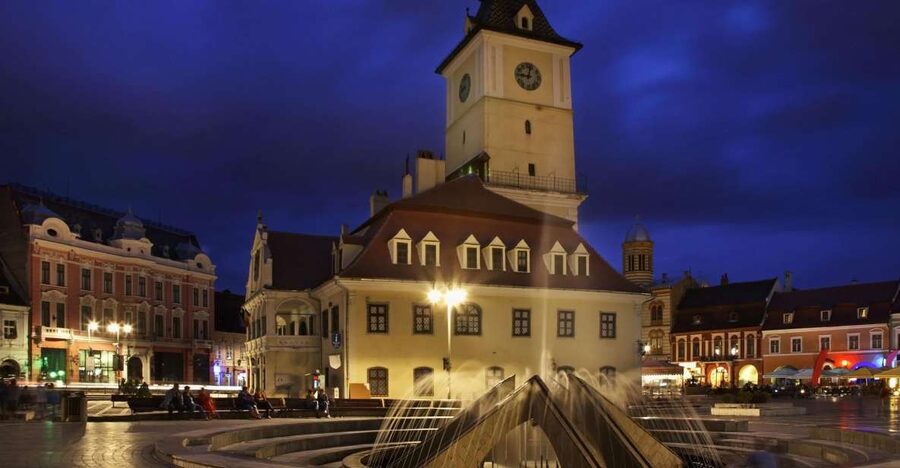
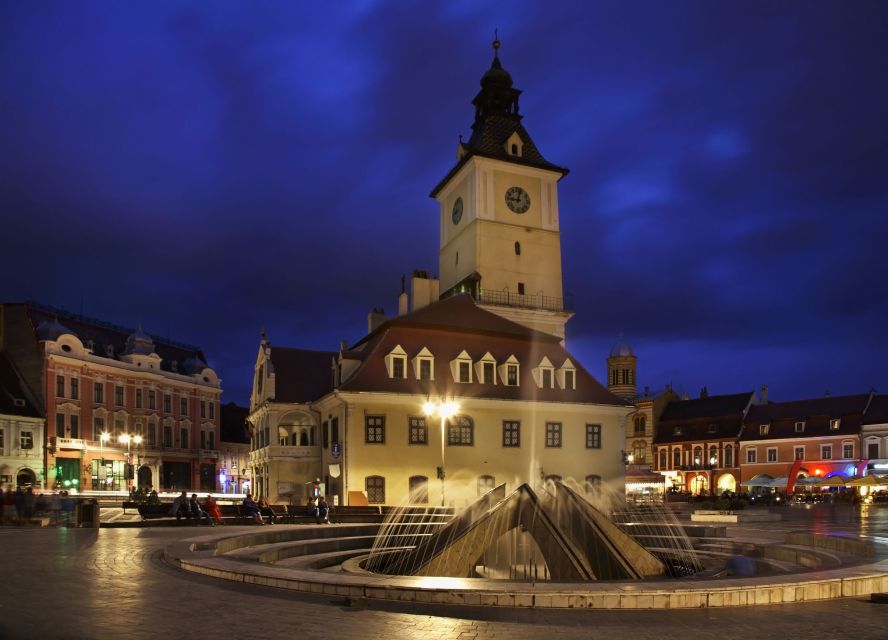
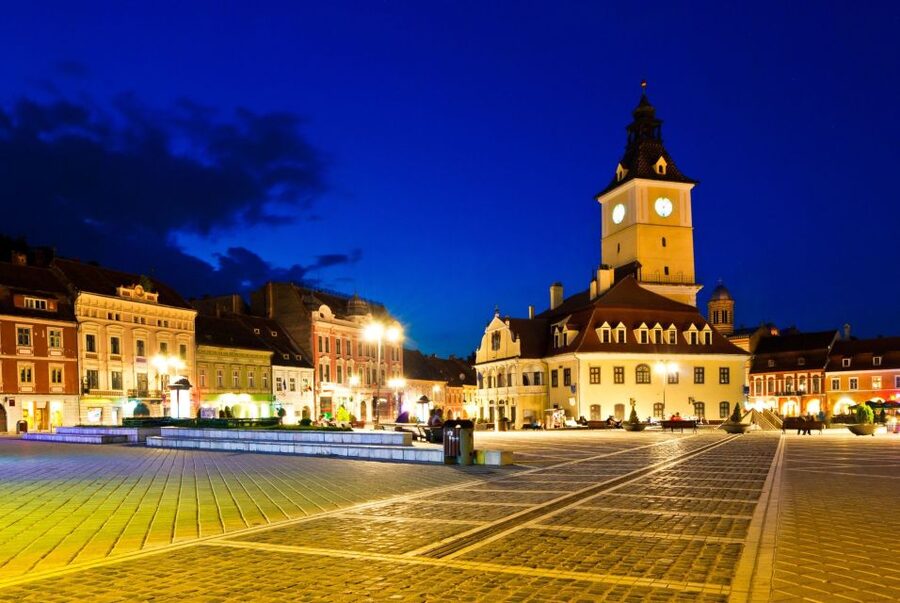
Meet at Piața Sfatului, in front of the History Museum at Piata Sfatuli nr. 30. This is a useful starting point because you are already in the middle of Brașov’s old town, surrounded by historic façades and the civic buildings that frame the square.
Your guide begins with the city’s story before leading you into the streets. That opening matters. Brașov is easier to understand once you know that its identity was shaped by several communities, changing rulers, trade, religion, and the long division between the fortified Saxon town and the Romanian district of Șchei.
I would arrive a few minutes early and use the square as a fixed landmark. One guest had a minor issue finding the meeting place, although the meeting point itself is described as easy to locate. Keep your phone charged, especially if you are relying on a digital map to reach the square after dinner.
The group size can vary. Some departures have included only a few people, and one evening became a private walk when just two participants attended. That can make it easier to ask questions and steer the conversation toward architecture, local life, or Romanian history.
A few more Brasov day trips to weigh up
- From Brasov: Small-group tour Bran, Rasnov, and Peles Castles
★ 5.0 · 949 reviews - Carpathian Wilderness: A Wildlife Experience from Brașov
★ 5.0 · 398 reviews - From Brasov: Tour of Castles and Surrounding Area
★ 5.0 · 363 reviews
The Black Church and Brașov’s medieval center
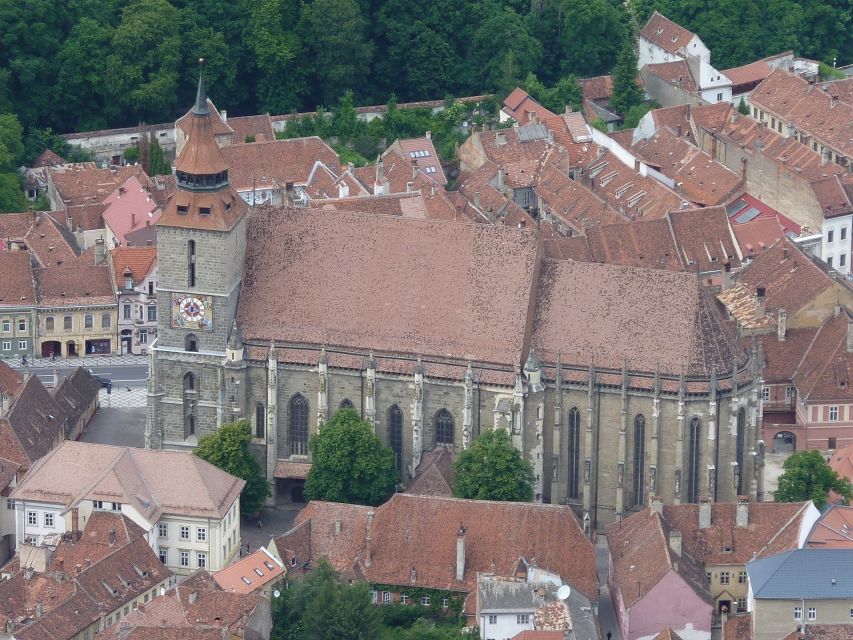
The walk continues to the Black Church, one of Europe’s largest Gothic-Baroque churches. Its darkened stone exterior and scale make it an especially fitting stop after sunset, though the nighttime setting is better for atmosphere than close study of carvings or interior details.
The church is one of the city’s essential landmarks, so seeing it early in your stay helps you recognize Brașov’s visual language. Your guide can place it within the wider story of the old town rather than treating it as an isolated photo stop.
Do not expect a standard church visit unless the schedule specifically allows it. The supplied details describe a walking tour and an exterior stop, not guaranteed admission inside. If the church interior is high on your list, return during opening hours on another day.
The strongest guides connect the building to the city’s changes over time. Dan is often praised for linking different historical periods clearly and for using visual material when helpful. That sort of explanation is valuable here because Brașov’s architecture can otherwise look like a pleasant collection of old buildings without a clear story tying them together.
Narrow lanes, old gates, and the city’s defenses
From the central streets, the route follows narrower paths through the historic quarters. Katherine’s Gate dates from the 14th century and offers a direct reminder that entry into the medieval city was once controlled and carefully defended.
The tour also visits Schei Gate, built almost 200 years ago. The two gates help you see that Brașov was not simply one uniform old town. They point to different periods of construction and to the relationship between the fortified center and the Șchei district.
This is where comfortable footwear matters. The walk is only 1.5 hours, but old lanes can be uneven, and you are out after dark. The route is described as wheelchair accessible, though the practical ease of every narrow pathway can depend on conditions and the group’s exact route.
I like this part because the city’s history becomes physical. Instead of hearing only about walls and boundaries, you walk through the points where people once entered, left, worked, and moved between districts.
St. Nicholas’ Cathedral and the Șchei district
St. Nicholas’ Cathedral is presented as Brașov’s most important Orthodox cathedral. Its inclusion broadens the tour beyond the familiar Gothic center and gives you a chance to consider the city’s Orthodox Romanian heritage.
That balance is one of the route’s strengths. The Black Church represents one part of Brașov’s past, while St. Nicholas’ Cathedral helps explain another. You get a better sense of the city when both are included in the same evening rather than visiting only the postcard center.
Again, the tour information does not promise entry into the cathedral. Treat this as a guided look at the site and its place in Brașov’s story, not as a formal religious visit.
Guides may also discuss religion, culture, Transylvania, and Romania as a whole. Tibi, in particular, is praised for connecting those subjects with detailed stories. If you enjoy asking questions, this is a good stretch of the walk to do it.
Same corner of the country, a completely different day out:
- Free walking tour of Brasov in English
★ 4.9 · 302 reviews - Save King’s Landing – In search of Wildfire | Escape Room Brasov
★ 5.0 · 297 reviews - 3-Castle: Peles,Bran,Rasnov,Sinaia Monastery from Brasov w pickup
★ 5.0 · 274 reviews - Brasov: Peles Castle, Bran Castle & Rasnov Fortress Day Tour
★ 4.8 · 238 reviews
Weaver’s Bastion and the practical side of medieval Brașov
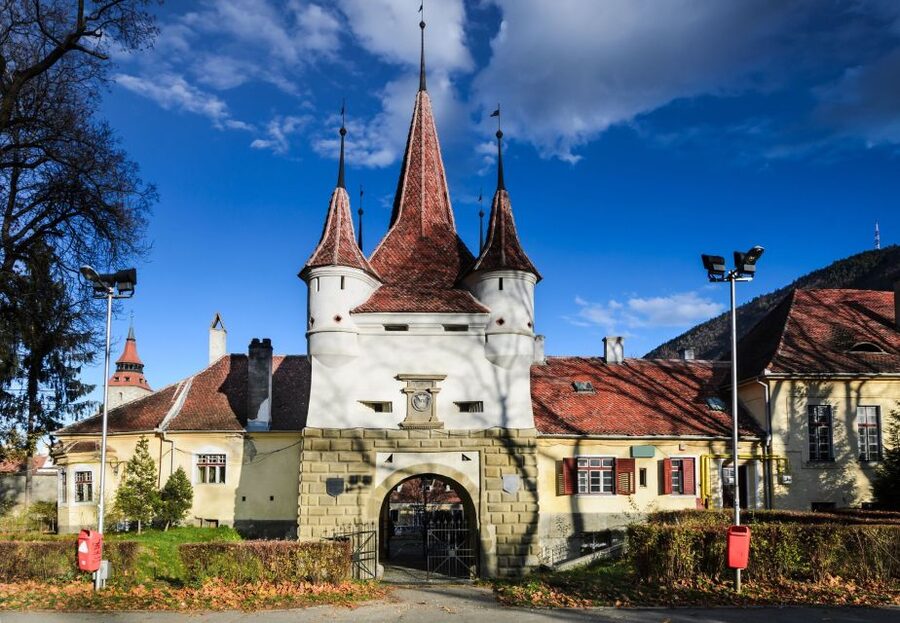
Weaver’s Bastion is described as one of the biggest 14th-century buildings in the city. Its heavy construction and defensive purpose show a less decorative side of Brașov, where walls and towers were built for protection as much as for civic pride.
A stop here gives useful context to the gates and narrow streets you have already seen. Brașov’s medieval center was not preserved by accident. It was shaped by defense, trade, and the need to control movement through a strategically important town.
At night, lighting can make the bastion particularly atmospheric. The tradeoff is detail. You might find that the illumination highlights broad shapes while leaving smaller features in shadow. I would treat the stop as a story-led introduction and return in daylight if fortified architecture is a major interest.
The route works best when the guide explains what you are looking at rather than simply naming it. Dan’s personal connection to the city is a real advantage here. A guide who has lived in Brașov all his life can add a sense of continuity between the medieval structure and the modern city around it.
Ghost stories, vampire lore, and a clear sense of proportion
The evening theme includes ghost and vampire stories connected with Brașov. These tales add fun after dark, especially in quiet lanes and beside old stone buildings, but you should not book this expecting a nonstop horror show.
One guest specifically felt the tour did not deliver the promised ghost stories, though the personal anecdotes still made the walk worthwhile. That is useful to know. The folklore element may be present, but the balance can lean more toward history, culture, and the guide’s own stories.
I prefer that balance. Brașov is often marketed through Dracula and nearby Bran Castle, but the city itself deserves more than a vampire label. The best use of the theme is as a doorway into local legends, not as a substitute for the city’s real past.
If you have already visited Bran Castle, this walk can work as a good evening follow-up. It brings you back to Brașov and gives the old town a setting that feels different from a daytime castle visit.
The 1901 Jewish Synagogue and Brașov’s layered past
The route includes the Jewish Synagogue, built in 1901. This stop adds another important strand to the city’s cultural story and keeps the tour from focusing only on the most famous Christian landmarks.
You may not spend long at every stop, so listen for the guide’s explanation of how different communities shaped Brașov. The value here is not just the building itself. It is the reminder that the old town has been home to people with different languages, faiths, and traditions.
The available information does not promise an interior visit. At night, you will mainly appreciate the building as part of the streetscape and hear the guide explain its place in local history.
For me, this is one of the details that makes the route more worthwhile than a simple pretty-lights walk. It encourages you to see the city as a place where several histories overlap.
Rope Street, one of Europe’s narrowest passages
Rope Street is identified as Europe’s third-narrowest street. Its tight width makes it an easy place to remember, and at night it can feel theatrical without any special staging.
This is a quick visual lesson in the practical shape of old cities. Medieval streets were not laid out for cars or tour buses. Rope Street is narrow enough to make you rethink scale, movement, and privacy in the historic center.
The passage is also a good example of why a walking tour helps. You could find it independently, but a guide explains why it matters and links it to the surrounding streets. Your guide may also point out how sound carries in the narrow space. One private tour even included a spontaneous aria from The Marriage of Figaro in an alley because of the acoustics, a reminder that small moments can become part of the evening.
That sort of improvisation is not guaranteed, but the personal style is a recurring feature of the experience. Dan is described as warm, funny, and willing to engage with the people in his group rather than delivering a fixed speech.
What the $47 price really buys you
At $47 per person, this is not a budget free walk. The price pays for a live English-speaking guide, a planned route, and local interpretation over roughly 90 minutes.
I think the value is strongest for a first visit, especially if you want a quick orientation before exploring Brașov on your own. A good guide can help you understand which streets, churches, gates, and districts deserve a second look during daylight.
The value is also better when the group is small. A three-person walk can feel personal, and a very small departure may allow plenty of questions. With a larger group, the experience may feel more like a conventional city tour, though the route still covers a lot in a short time.
The price is harder to justify if you mainly want night photography or a romantic stroll. The tour does not guarantee candle use, church entry, or a large number of ghost stories. You are paying for explanation and company, not just access to the streets.
Free cancellation up to 24 hours before the start and the reserve-now, pay-later option reduce the financial risk. The activity is wheelchair accessible, but you should still consider the old lanes and ask for practical details if mobility is a concern.
Weather, clothing, and the best person for this walk
Dress for the forecast, not the season on the calendar. The tour runs in rain or shine, and several comments point out that Brașov can be cold at night. A warm jacket is especially important in the cooler months.
Wear shoes you can trust on historic streets. You do not need specialist hiking gear, but thin soles and dress shoes are poor choices for a walking route through old lanes.
I would recommend this experience to:
- First-time visitors who want a clear introduction to Brașov
- People interested in architecture, local history, and city legends
- Visitors who prefer a personal guide to a large scripted group
- Families and older children who enjoy stories and a manageable walk
- Anyone who has visited Bran Castle and wants Brașov to be more than a base for day trips
I would think twice if your main goal is entering historic buildings, seeing fine architectural details, or getting a full ghost-tour experience. A daytime city tour may show more detail, while an evening folklore walk with a stronger horror focus may better match those expectations.
Should you book the Brașov candlelight tour?
Book it if you want a compact evening introduction led by someone who can connect Brașov’s landmarks with everyday local life. The best part is not the candle itself. It is the chance to walk from the main square to gates, churches, bastions, a synagogue, and Rope Street while hearing the city explained by a guide such as Dan or Tibi.
Skip it if you need guaranteed candlelight, indoor visits, or a heavily supernatural program. For most first-time visitors, though, the combination of night lighting, medieval streets, and personal storytelling makes $47 a reasonable spend, especially when the group is small and you want to get your bearings before exploring the city independently.
FAQ
How long does the Brașov candlelight tour last?
The tour lasts 1.5 hours.
What is the price?
The listed price is $47 per person.
Where does the tour meet?
Meet at Piata Sfatuli nr. 30 in Brașov, in front of the History Museum in Piața Sfatului.
Is the tour conducted in English?
Yes. The tour includes a live English-speaking guide.
Which landmarks are included?
The route includes the Black Church, Katherine’s Gate, Schei Gate, St. Nicholas’ Cathedral, Weaver’s Bastion, the 1901 Jewish Synagogue, and Rope Street.
Will I hear ghost and vampire stories?
Ghost and vampire stories are part of the theme, but the exact balance can vary. The walk also focuses on Brașov’s history, architecture, culture, and local anecdotes.
Is the tour wheelchair accessible?
Yes, the activity is listed as wheelchair accessible.
What should I wear?
Wear comfortable shoes and dress appropriately for the weather. The tour runs in rain or shine, and Brașov can be cold at night.
Just added around Brasov
- Bear Sanctuary Zarnesti,Bran Castle,Rasnov Fortres w/Hotel pickup★ 5.0 · 3 reviews
- Count Dracula & Peles Castle in One Day from Bucharest★ 5.0 · 3 reviews
- Expedition in Fagaras Mountains from Brasov (Private Tour!)★ 5.0 · 3 reviews
- Private Day Tour Sighisoara and Viscri from Brasov with Hotel Pick Up/ Drop Off★ 5.0 · 3 reviews
- PRIVATE Day tour to Sibiu – European Capital of Culture 2007★ 3.5 · 3 reviews
- Brasov (:) Tandem Paragliding Experience★ 5.0 · 3 reviews
- Brasov: Bran Castle, Bear Sanctuary, Rasnov (Peles Optional)★ 3.1 · 3 reviews
- Brasov to Bucharest – Private Guided Transfer – Car and Driver★ 5.0 · 3 reviews
Brașov Tours, compared.
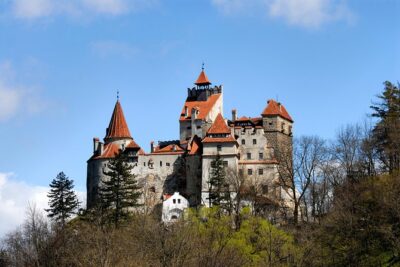
Small-group tour Bran, Rasnov, and Peles Castles
Read our review →
Carpathian Wilderness: A Wildlife Experience from Brașov
Read our review →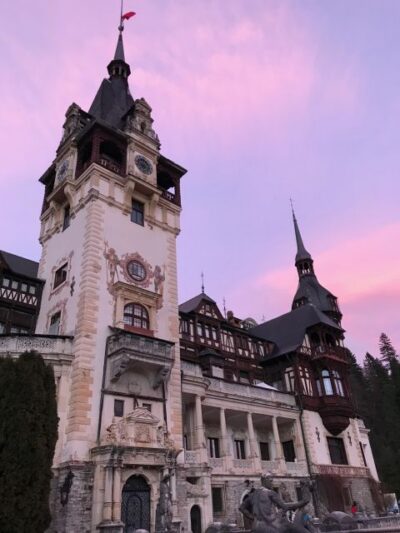
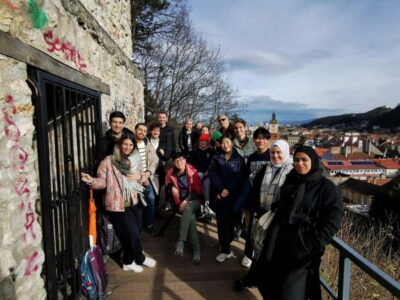
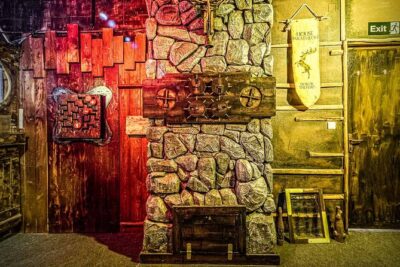
Save King’s Landing – In search of Wildfire | Escape Room Brasov
Read our review →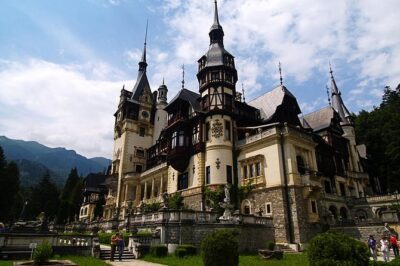
3-Castle: Peles,Bran,Rasnov,Sinaia Monastery from Brasov w pickup
Read our review →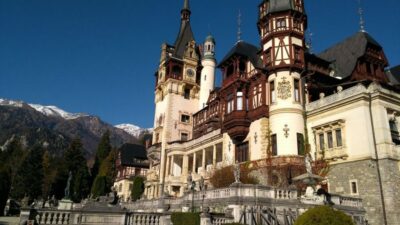
Peles Castle, Bran Castle & Rasnov Fortress Day Tour
Read our review →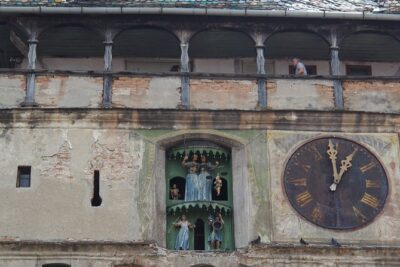
Small Group Tour to Viscri Church Sighisoara Town Rupea Fortress
Read our review →Browse the lists this tour appears in