
Reviewed · BUCHAREST TOURS
Bucharest: City Highlights Guided Walking Tour
Bucharest makes the most sense when you walk through its sharp changes: medieval courtyards, grand royal buildings, leafy parks, and the vast Communist-era Palace of Parliament. This $21 introduction covers that whole sweep in 2.5 hours. I like the mix of famous sights and small clues, especially the three surviving caravanserais and the personal food and café tips often shared by guides such as Ed, Dan, Lucia, and Eduard.
I also like that the route gives you both Cismigiu Gardens and the city center’s busy streets, so you get a break from stone and traffic. The main consideration is the pace and distance: this is a substantial walk, and it goes ahead in rain, snow, or freezing weather. Wear proper shoes and dress for the forecast.
Key points at a glance
- Start at Manuc’s Inn: Meet outside Hanu’ Lui Manuc, one of Bucharest’s most atmospheric historic inns.
- See three surviving caravanserais: Learn how old roadside inns shaped the city’s trade and growth.
- Follow Calea Victoriei: Walk past the National Military Circle, Telephone Palace, Royal Palace, and Romanian Atheneum.
- Pause in Bucharest’s oldest park: Cismigiu Gardens offers shade, fresh air, and a calmer stretch of the route.
- Connect monarchy and Communism: Revolution Square, Union Boulevard, and Ceaușescu’s Palace show the city’s turbulent modern story.
- Finish at a giant landmark: The Palace of Parliament is described as the world’s second-largest and heaviest building.
Why this Bucharest walking tour works as a first day
I would take this tour early in a Bucharest visit. It gives you a useful mental map, moving from the old city center toward the Palace of Parliament while connecting buildings to the political periods that produced them.
The route is not just a parade of façades. You hear about Bucharest’s beginnings, royal ambition, the Communist period, and the fall of Communism. That helps you make sense of a city where ornate 19th-century buildings can sit near blunt concrete blocks and broad avenues built for political spectacle.
The local guide matters here. Ed, Dan, Lucia, and Eduard are the guides named in recent tour experiences, and the strongest pattern is their ability to explain difficult history in plain English. Ed is often praised for humor, personal stories, and clear accounts of architecture. Dan has used photographs, videos, Romanian music, and practical suggestions about food and cafés. Lucia is known for checking on the group in bad weather and offering advice for the rest of your stay.
That human touch turns a basic sightseeing walk into a useful orientation. You can ask about Romanian food, daily life, politics, or which places deserve a second look. Several guides also send recommendations through WhatsApp after the walk, which is a handy bonus if you are still deciding where to eat or what to do that evening.
More Walking Tours in Bucharest
- Bucharest Highlights Walking Tour
★ 5.0 · 469 reviews - Bucharest: Ghost Stories & Romanian Mythology Walking Tour
★ 4.9 · 287 reviews - Bucharest: Guided Walking Tour with Romanian Snack
★ 4.9 · 228 reviews
Manuc’s Inn and Bucharest’s early beginnings
The meeting point is in front of Hanu’ Lui Manuc restaurant. This is a smart place to begin because Manuc’s Inn is not simply a convenient landmark. It is one of the old inns that helped Bucharest grow as a trading center.
These caravanserais offered lodging and storage for merchants, horses, and goods. Only three remain in Bucharest, so the stop gives you a tangible link to the city before its boulevards and monumental public buildings appeared.
You then move toward the Old Princely Court, one of the oldest witnesses to Bucharest’s development. This is where the city’s early political story begins. The court connects the modern capital to the rulers who shaped Wallachia, including the era associated with Vlad Țepeș.
The value of having a guide here is scale. On your own, old walls and foundations can be easy to pass without much thought. A guide can explain what the remains meant and place them within the broader growth of Bucharest.
The route also includes Stavropoleos Church, one of the city’s best-preserved monasteries. Its architecture and religious setting provide a quiet contrast to the surrounding streets. You should expect this part of the tour to focus on the building’s age, design, and role in Bucharest’s cultural life.
There is one practical point to keep in mind: a walking tour cannot promise long visits inside every sight. Churches may be open, and some people have been able to step inside certain buildings or shops, but the exact access can depend on conditions on the day. The main experience is guided city walking, not a series of extended indoor visits.
Old Town streets, courtyards, and the surviving inns
Bucharest’s Old Town is lively, uneven, and full of visual contrasts. The tour uses it as a starting point for understanding how the city developed from a trading settlement into Romania’s capital.
Walking with a local helps you notice details that a map does not explain. You may hear about the purpose of old commercial buildings, the daily life of earlier residents, and the way Bucharest’s streets changed over time. The guide also helps you separate genuine historic fabric from newer restoration and modern nightlife venues.
The three remaining caravanserais are especially useful stops because they make economic history easier to picture. Merchants needed safe places for people, animals, and cargo, and these inns helped link Bucharest to wider trade routes. Manuc’s Inn is the one you see at the meeting point, while the tour presents the broader story of the three surviving examples.
This section is also where the local character of the experience comes through most clearly. You are not only looking at grand landmarks. You are walking through the places where people shop, eat, meet friends, and move through the city today.
If you dislike crowded streets, keep your expectations realistic. The Old Town can be busy, and a group walking together needs to stay alert around traffic and other pedestrians. One guide managed a group of about 30 people well, but a larger group can make it harder to hear or ask questions. Staying near the guide is worthwhile.
Calea Victoriei and Bucharest’s royal ambition
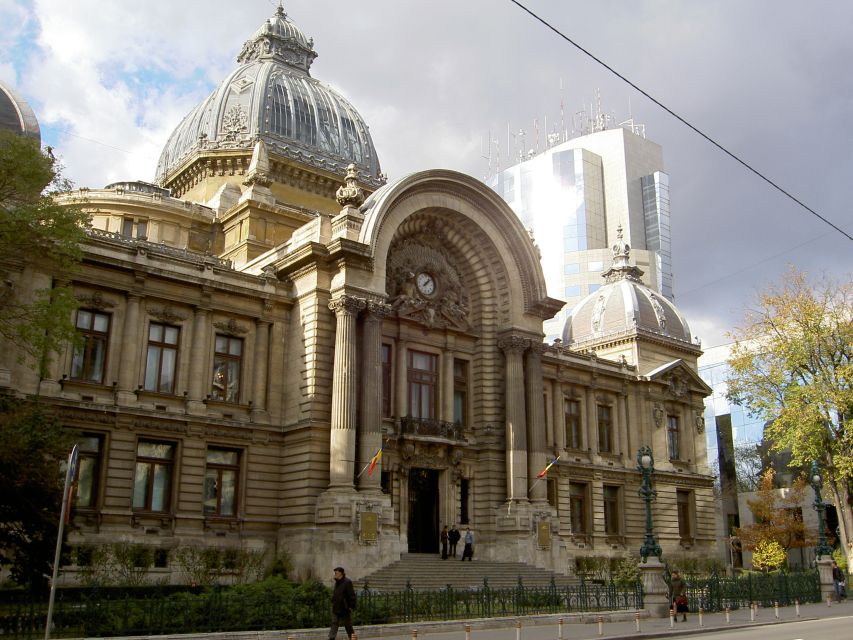
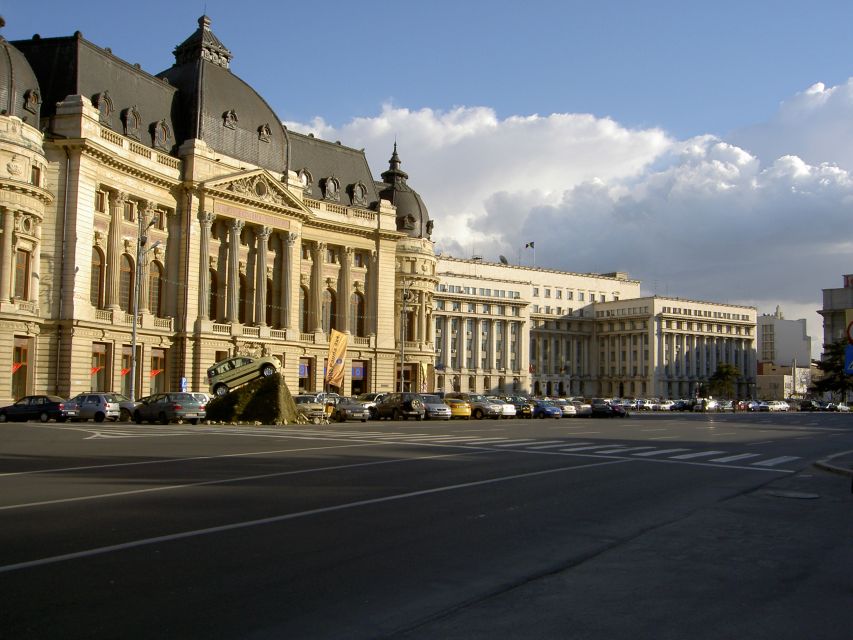
From the old center, the walk reaches Calea Victoriei, Bucharest’s most famous boulevard. This is the architectural heart of the tour, with a string of buildings that reflect the city’s effort to present itself as a modern European capital.
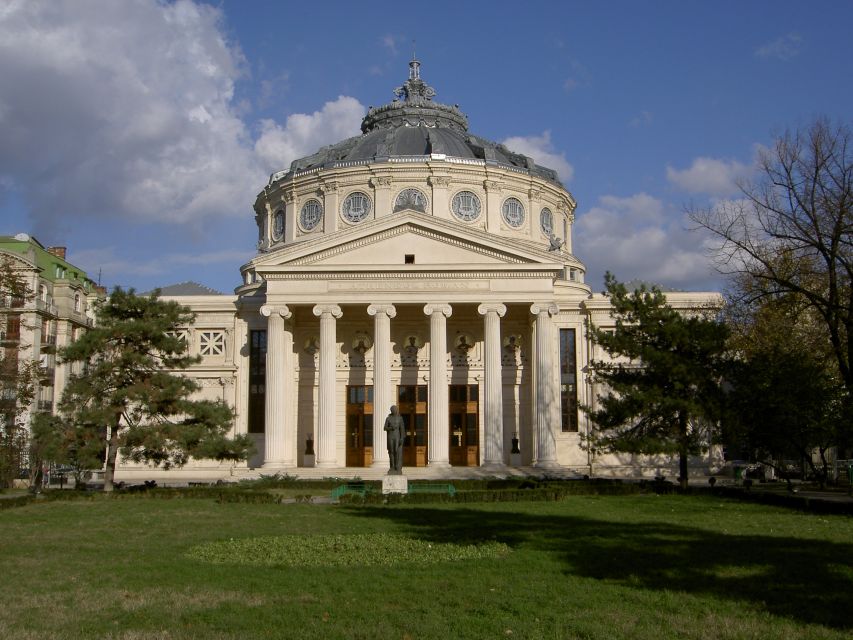
You pass the National Military Circle, the Telephone Palace, the Royal Palace of Bucharest, and the Romanian Atheneum. Each building points to a different part of the city’s development, from military power and communications to monarchy, music, and national culture.
The Romanian Atheneum is particularly rewarding from the outside. Its grand form captures the confidence of the late 19th and early 20th centuries, when Bucharest was often described through its French-inspired architecture and ambitions. The tour does not reduce the city to that nickname. Instead, you get a chance to see how imported styles were adapted to Romanian needs and politics.
The Telephone Palace gives you a different architectural lesson. Its presence on Calea Victoriei shows how modern technology became part of the capital’s public face. The Royal Palace adds another layer, linking the boulevard to Romania’s monarchy and state ceremonies.
I like this stretch because it gives you buildings worth revisiting later. You can return with a camera, visit a museum if one is open, or simply walk the avenue at your own speed after you understand what you are seeing.
The drawback is that architecture-heavy stops can feel information-packed. The quality of the experience depends on the guide’s delivery, and the named guides have different personalities. Ed is described as humorous and energetic, Dan as creative and conversational, and Lucia as warm and attentive. All three styles can work, but you may prefer one approach over another.
Same corner of the country, a completely different day out:
- Bucharest: Dracula’s Castle, Peles Castle, & Brasov Old Town
★ 4.5 · 17,858 reviews - Bucharest: Dracula Castle, Peles Castle & Brasov Old Town
★ 4.6 · 10,891 reviews - Bucharest: Dracula’s Castle, Peleș Castle & Brașov Day Trip
★ 4.5 · 5,919 reviews - Bucharest: Palace of Parliament Tickets and Guide
★ 4.3 · 3,182 reviews
Revolution Square and the end of Communist rule
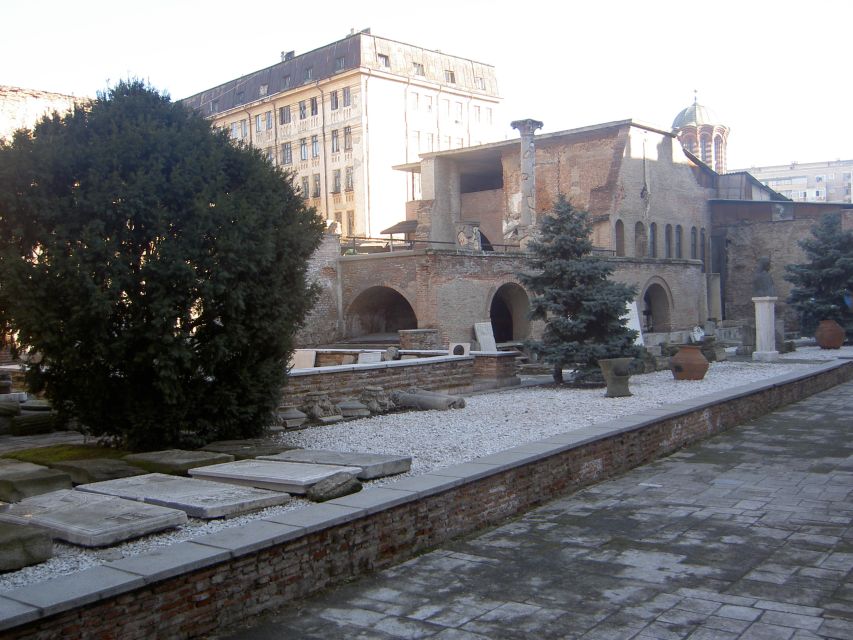
The tour also takes you through Revolution Square, a key place for understanding Romania’s break with Communist rule. This is where the route moves from old princes and royal architecture into the events that shaped present-day Romania.
The fall of Communism is not treated as a distant footnote. Guides have used personal stories, photographs, and clear explanations to show how the period affected Bucharest and its people. That makes the history easier to grasp than a simple date-and-name presentation.
You can expect attention to the relationship between political power and public space. A square can be a ceremonial setting, a place for speeches, or a gathering point during a crisis. In Bucharest, those roles overlap, and the buildings around the square help tell the story.
This is one of the most valuable parts of the walk if you know little about Romanian history. Several people have arrived with only a loose idea of the Communist period and left with a clearer understanding of how the past still shapes the city.
The guide’s style matters again. A good explanation keeps the story focused rather than burying you in dates. Recent experiences with Ed, Dan, Lucia, and Eduard describe a useful balance of facts, humor, and time for questions. You should have room to ask how the past connects to everyday life now.
Cismigiu Gardens, Bucharest’s oldest park

After the urban intensity of Calea Victoriei and Revolution Square, the route turns into Cismigiu Gardens. This is Bucharest’s oldest park and one of the tour’s best changes of pace.
The park gives you fresh air, trees, paths, and a chance to cool down or warm up, depending on the season. It is not a major monument in the usual sense, but it adds something important: a glimpse of how Bucharest residents use public space away from the traffic and formal avenues.
I appreciate this pause because a 2.5-hour city walk can become tiring when every stop is a building. Cismigiu lets your eyes rest while the guide continues the story of Bucharest’s growth and urban planning.
Bucharest City Hall is found at the end of the gardens, providing a useful link back to civic architecture. The route does not simply abandon the city’s political story for a park. It shows how public administration, grand avenues, and green space fit together.
In winter, the park may be cold, wet, or snowy. One tour continued during deep snow, another during freezing fog, and another in temperatures as low as minus 14 degrees. Guides offered breaks, hot drinks, and checks on comfort in those conditions, but you should still bring warm layers. The tour runs rain or shine, so Cismigiu is not a substitute for weatherproof clothing.
Union Boulevard and the enormous Palace of Parliament
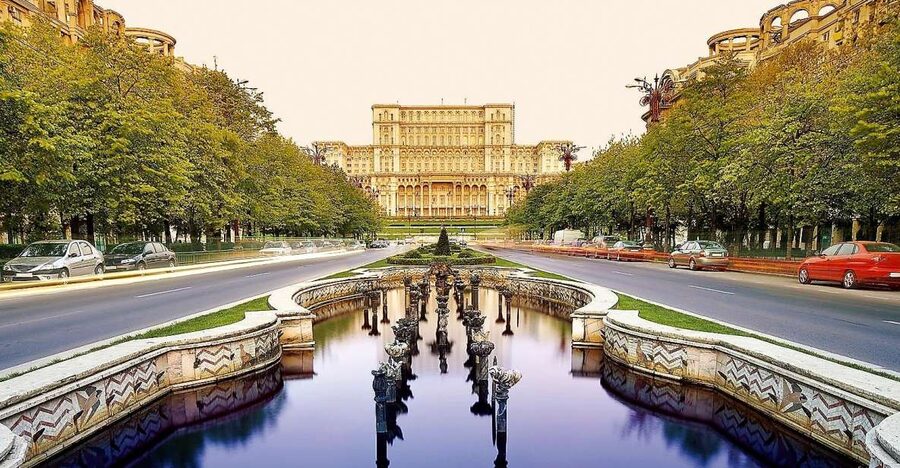
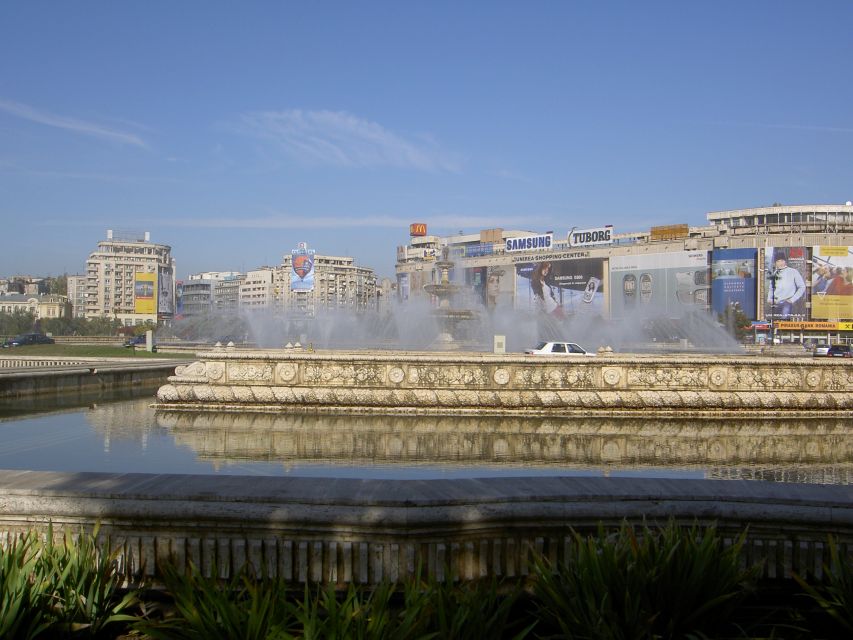
The final section reaches the Communist-era side of Bucharest. You see Union Boulevard, designed to be longer and wider than the Champs-Élysées, and then continue toward Ceaușescu’s Palace, now known as the Palace of Parliament.
The scale changes quickly here. Earlier parts of the walk deal with churches, inns, palaces, and streets. Union Boulevard and the Palace of Parliament use width and mass to make a political point. The design was meant to project authority, control, and national grandeur.
The Palace of Parliament is the dramatic finish. It is described as the second-largest and heaviest building in the world, and its size is hard to understand from photographs alone. Even from outside, you get a sense of the huge resources and forced urban changes tied to its construction.
This is also where the tour’s historical arc comes together. You begin with the Old Princely Court and medieval trade, pass through monarchy and modernization, examine the fall of Communism, and end with the physical legacy of Ceaușescu’s rule.
Do not assume the tour includes an interior visit to the Palace of Parliament. The supplied details describe seeing the building as the endpoint of the walking route, not a scheduled indoor tour. If you want to go inside, check separately for entry arrangements and available times.
The walk toward the palace can feel long, especially after two hours on foot. That is part of the point, since the boulevard’s scale is something you experience with your body, but it also means the final stretch may be tiring for anyone with limited stamina.
Price, pace, and practical value at $21
At $21 per person, this is strong value if you want a city overview rather than a single attraction. You get 2.5 hours with an English-speaking local guide, a route covering the Old Town, Calea Victoriei, Cismigiu Gardens, Revolution Square, Union Boulevard, and the Palace of Parliament, plus context that would take time to assemble on your own.
The price does not include food or drinks. That is worth noting because the walk may include a coffee or hot chocolate break in cold weather, but you should expect to pay for anything you order.
The tour is wheelchair accessible, though the route includes city streets and a substantial amount of walking. If you use a wheelchair or have mobility concerns, confirm that the planned route on your date suits your needs. Comfortable shoes are essential for everyone.
Cancellation is free up to 24 hours before departure, and you can reserve now and pay later. Those terms help if your Bucharest plans are still shifting.
The biggest value is timing. In one morning or afternoon, you see enough of the city to decide what deserves a longer visit. You can return to the Romanian Atheneum, spend more time in Cismigiu Gardens, explore the Old Town at night, or book a separate visit to the Palace of Parliament.
Who should book this walk
I would recommend it most strongly for a first visit to Bucharest, especially if you want history explained without a formal lecture. Solo visitors can also benefit because the group gives you an easy social start, and the guides help with practical questions about food, coffee, nightlife, and getting around.
Families may find the storytelling useful too. One guide kept a 10-year-old engaged, which suggests that the tour can work for children who enjoy stories and big buildings, though the distance and weather remain factors.
It is less suitable if you want a slow photography walk, long museum visits, or a detailed architectural study of one neighborhood. The route covers a lot of ground, so you see many highlights rather than spending 30 minutes at each one.
Guide assignment is not guaranteed, but Ed, Dan, Lucia, and Eduard have all led this experience. If you are lucky enough to get Ed, expect lively storytelling and humor. Dan’s approach includes personal material and visual aids, while Lucia is especially attentive to comfort and local recommendations.
Should you book the Bucharest City Highlights Walking Tour?
Book it if you want to get your bearings quickly, understand Bucharest’s difficult 20th-century story, and see the city’s main historic zones in one affordable walk. The mix of Old Town, Calea Victoriei, Cismigiu Gardens, Revolution Square, and the Palace of Parliament gives you a useful first-day framework.
Skip it if bad weather would ruin your trip or if a long outdoor walk is not comfortable for you. For most people, though, the $21 price, local guidance, and broad route make this a sensible beginning to Bucharest. Bring shoes you trust, dress for rain or cold, and save room afterward for one of the guide’s restaurant recommendations.
FAQ
How long does the Bucharest City Highlights Walking Tour last?
The tour lasts 2.5 hours.
Where do I meet the guide?
Meet your guide in front of Hanu’ Lui Manuc restaurant.
What language is the tour conducted in?
The live guided tour is conducted in English.
Is the tour wheelchair accessible?
Yes, the activity is listed as wheelchair accessible.
Does the tour run in bad weather?
Yes. The tour takes place rain or shine, so bring suitable clothing and comfortable shoes.
Are food and drinks included?
No. Food and drinks are not included in the $21 price.
Just added around Bucharest
- Private Full Day Tour of Bucharest★ 5.0 · 3 reviews
- Veliko Tarnovo and Medieval Bulgaria Private Day Trip from Bucharest★ 5.0 · 3 reviews
- Bucharest VIP Bar Crawl in Lipscani ‘Old Town’★ 5.0 · 3 reviews
- Bucharest Private City Tour★ 5.0 · 3 reviews
- Muddy Volcanoes and Salt Mine Private Tour★ 5.0 · 3 reviews
- Legends & Stories from Transylvania -2 Castles & Brasov Old Town★ 5.0 · 3 reviews
- Transfagarasan Private Tour from Bucharest – 2 Days★ 5.0 · 3 reviews
- 7-Day Dracula Tour in Romania from Bucharest including ‘The Ritual of Killing of a Living Dead’★ 5.0 · 3 reviews
Bucharest Tours, compared.
Dracula’s Castle, Peles Castle, & Brasov Old Town
Read our review →
Dracula Castle, Peles Castle & Brasov Old Town
Read our review →
Dracula’s Castle, Peleș Castle & Brașov Day Trip
Read our review →
Day Trip to Dracula Castle, Peles Castle & Brașov
Read our review →
Bucharest to Dracula Castle, Peles Castle and Brasov Guided Tour
Read our review →
Dracula’s Castle, Peles Castle and Brasov Day Trip from Bucharest
Read our review →Browse the lists this tour appears in