Reviewed · BUCHAREST TOURS
Bucharest Old Centre Tour
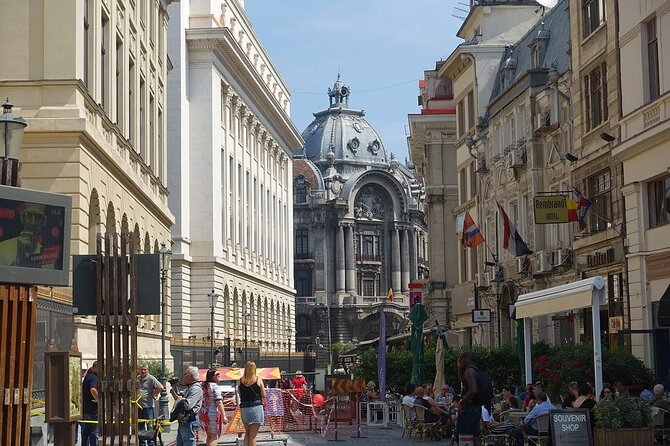
Bucharest’s Old Centre packs five centuries into a short walk. You’ll pass the ruins of Vlad the Impaler’s former court, Orthodox churches, old inns, the National Bank, and the narrow streets of Lipscani while a local guide explains how the city changed around them. The tour’s strongest point is its compact route: in about an hour, you get a useful first look at the city’s historic core.
I like the choice of morning or afternoon departure, which makes this easy to fit around a wider Bucharest visit. I also like that it is a private activity, so your group can ask questions without trying to keep up with a large crowd. Guide Alina is especially good at bringing local detail to the walk, having grown up in the area.
The main drawback is the short running time. You will see many places, but several are explained from the street rather than visited at length. Wear sturdy shoes, since parts of the Old Centre have uneven flagstones, and remember that the walk depends on good weather.
Key points at a glance
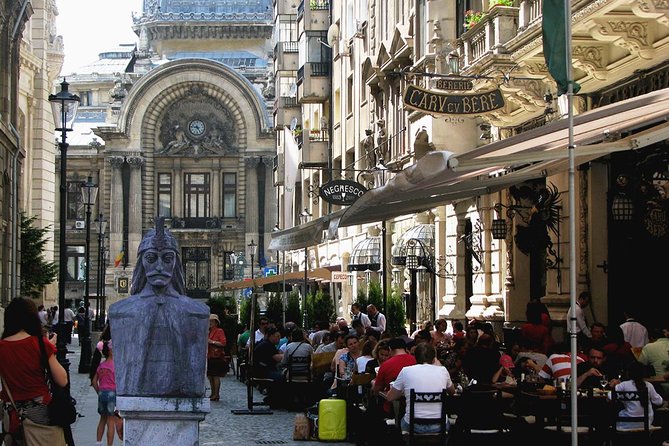
- A one-hour introduction to Bucharest’s oldest quarter: The route links the Princely Old Court, St Anthony Church, Lipscani Street, old inns, the National Bank, and Stavropoleos Monastery.
- A local perspective: Guides explain both the city’s past and its present, with Alina bringing personal familiarity with the Old Centre.
- Private touring: Only your group participates, giving you a more personal pace and a better chance to ask questions.
- Convenient scheduling: You can choose a morning or afternoon departure, with pickup and drop-off offered from selected central hotels.
- A low-cost orientation walk: At $16.77 per person, it can be good value if you want context before exploring Bucharest on your own.
- Bring proper footwear: Flagstones can be hard on thin soles, especially if you are not used to walking on old streets.
Why this short walk works well in Bucharest
Bucharest is not a city you understand from a single grand monument. Its story is scattered across courtyards, churches, rebuilt facades, former inns, and fragments of older buildings. That can make a self-guided walk feel like a puzzle with several pieces missing.
This tour gives you the basic map. Starting at the National Museum of Romanian History on Calea Victoriei, you move into the Old Centre and connect places that might otherwise seem unrelated. The guide explains where the medieval court sat, why inns mattered, how rulers used the churches, and how commercial Bucharest grew around the old streets.
I see this as an orientation tour rather than a full museum visit. In one hour, you will not spend long inside each site, and the details will come quickly. But you will finish with a clearer sense of how the Old Centre fits together, which is exactly what you need before returning later at your own pace.
The private format helps here. Instead of following a fixed large-group script, you can ask about a building that catches your eye or request a little more detail on a period that interests you. The available information does not promise a customized route, so do not expect a private history seminar, but the setup is more personal than a standard group outing.
A few more Bucharest day trips to weigh up
- Bucharest: Dracula’s Castle, Peles Castle, & Brasov Old Town
★ 4.5 · 17,858 reviews - Bucharest: Dracula Castle, Peles Castle & Brasov Old Town
★ 4.6 · 10,891 reviews - Bucharest: Dracula’s Castle, Peleș Castle & Brașov Day Trip
★ 4.5 · 5,919 reviews
Starting at the National Museum of Romanian History
The meeting point is the National Museum of Romanian History, at Calea Victoriei 12. The building itself is the former Post Office, and that fact gives the tour an immediate connection to Bucharest’s changing civic life.
Your guide explains the museum and its past before leading you toward the Old Centre. This is a sensible starting place because it puts you near several major sights without wasting time on a long transfer. If you are staying at one of the selected central hotels, pickup and drop-off are offered, which makes the beginning easier, but you should check that your hotel qualifies.
The tour ends back at the meeting point. That matters if you are planning another activity afterward, since you will not be left in an unfamiliar part of the city. It also means you can return to the Old Centre after the walk and explore a church, cafe, or museum in greater detail.
Entering the Princely Old Court
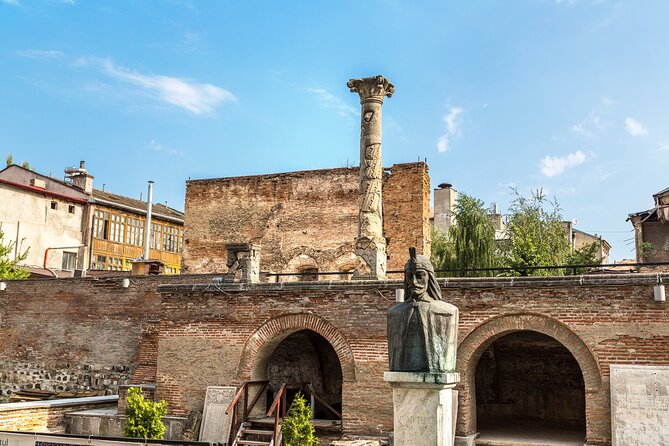
The Princely Old Court is the historical anchor of the walk. You see the ruins of one of Bucharest’s oldest buildings and learn about its connection with Vlad the Impaler, the Wallachian ruler whose name has traveled far beyond Romania.
The value here is not just the ruin itself. A fragment of wall can be easy to overlook when you are walking alone, especially in a city where newer buildings crowd around older remains. The guide gives the site a place in the story of Wallachian power and explains why this area became the center of Bucharest.
Expect to view the ruins as part of the walking route rather than spend a long period on an archaeological visit. If you want an extended look at the Old Court, you may need to return independently. The one-hour format gives you the essential background, then keeps moving.
I find this stop especially useful early in a Bucharest stay. It helps you read the city with better eyes. Later, when you pass another old wall or church, you have a sense of the political world that shaped the center.
St Anthony Church and the rulers of Wallachia
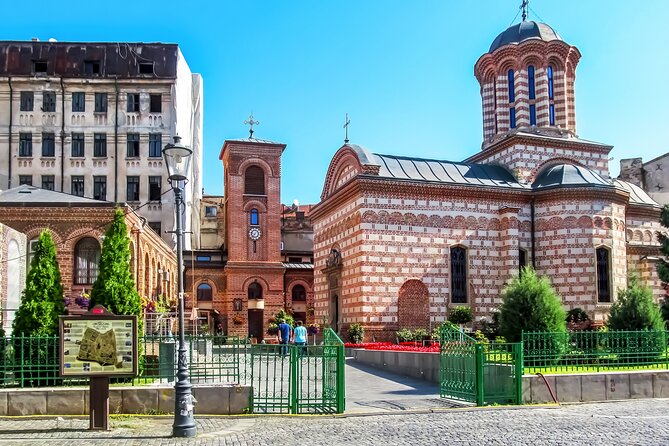
St Anthony Orthodox Church sits in the heart of the Old Centre and is presented as the church of Wallachian rulers. Its location makes it a natural part of the Old Court story, linking religious life with the authority of the princes.
You will hear about the church’s place in Bucharest rather than simply stopping for a quick photograph. That distinction matters. Orthodox churches can look small from the street, yet their role in the city’s past can be far larger than their size suggests.
The tour information does not guarantee an interior visit, so plan on receiving the main explanation from the guide and viewing the church as part of the street walk. If entering churches is important to you, ask your guide at the start what the day’s access allows.
This stop also gives the walk some variety. The Old Court presents power through stone and ruins. St Anthony Church shows how that power was tied to worship and ceremony. In a short route, those two sites make a useful pair.
Same corner of the country, a completely different day out:
- Bucharest: Palace of Parliament Tickets and Guide
★ 4.3 · 3,182 reviews - Bucharest: Day Trip to Dracula Castle, Peles Castle & Brașov
★ 4.4 · 3,049 reviews - Bucharest to Dracula Castle, Peles Castle and Brasov Guided Tour
★ 4.5 · 2,933 reviews - Bucharest: Palace of Parliament Tickets and Guided Tour
★ 4.4 · 1,877 reviews
Bucharest’s old inns and the life of the streets

Several stops focus on the inns that once served the Old Centre: the Old Coffee House, Gabroveni Inn, Linden Tree Inn, the city’s oldest and best-known inn, and the ruins of Șerban Voda Inn.
These names can blur together if you are not given context. The guide’s job is to explain how the inns fit into the older commercial city. They were not simply places to sleep. They belonged to a street culture shaped by trade, food, lodging, and movement through the center.
The Old Coffee House and the old inns help you picture a Bucharest that worked at a slower pace, with merchants and local people meeting around central streets. The remaining structures and ruins are valuable because they show how much of the earlier city has survived in pieces rather than as one untouched district.
You should keep your expectations practical. The tour does not include food or drinks, and there is no stated tasting stop. You hear the stories and see the sites from the walking route. If you want a coffee or meal in one of the historic parts of the center, save time after the tour.
The ruined Șerban Voda Inn is a good example of why a guide helps. A modern city block can hide the meaning of a small remnant. With an explanation, the ruin becomes evidence of an older commercial center rather than just another weathered wall.
Lipscani Street and the center of modern Old Bucharest
Strada Lipscani is the heart of the Old Centre and one of the most useful places to understand how the district functions today. The tour places it alongside the older court, churches, and inns, showing the link between Bucharest’s past and its current social life.
You can expect a walking stop rather than a long pause. The route is designed to keep you moving through the area, so you get an overview of the street and its role in the center. The guide’s comments help you notice the layers around you instead of treating Lipscani as just a restaurant and nightlife zone.
This is also the point where the short length becomes most apparent. The Old Centre has enough streets and buildings to fill several hours. In about an hour, you receive a framework, not an exhaustive tour of every lane.
I would use this section as a preview. Note the streets that interest you, then return later when you have time to look more closely. The tour gives you the background needed to make that second visit more meaningful.
The National Bank and the Șerban Voda Inn ruins
The National Bank of Romania adds a different kind of history to the route. Its grand appearance contrasts with the older churches and inns, and the guide explains its interesting past while pointing out the nearby ruins of the former Șerban Voda Inn.
This pairing shows Bucharest as a city that kept rebuilding itself. You move from medieval and early modern remains to an institution tied to the country’s financial life, then back to a fragment of the older commercial district.
The National Bank is best appreciated as an exterior landmark on this experience. There is no indication that the tour includes entry, an interior visit, or a banking exhibit. The benefit is the guide’s explanation of why the building matters and how it relates to the surrounding streets.
For me, this is one of the better details in the route because it prevents the walk from becoming a procession of old religious buildings. You see political power, worship, trade, and finance in a small area. That mix gives Bucharest’s center its character.
Stavropoleos Monastery, built in 1724
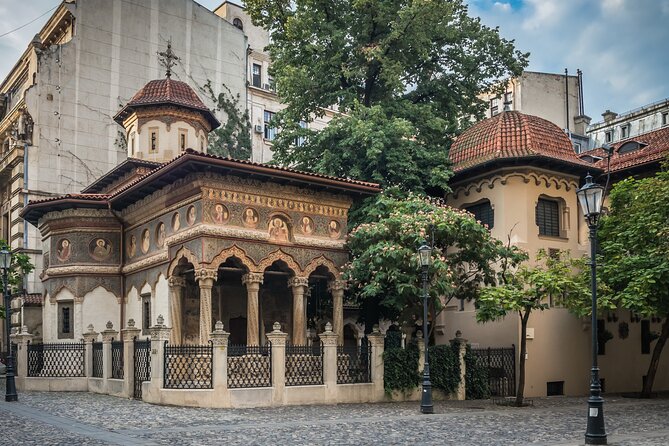
The final major stop is Stavropoleos Monastery, built in 1724. Its age and location make it an important closing point for the walk, bringing together the religious and architectural story you have been following.
You learn about the monastery’s past and see it as part of the Old Centre. The tour details do not promise a long interior visit, so ask your guide about access if that is a priority. Even when viewed briefly, it gives the route a strong final landmark.
The monastery also helps you understand why Bucharest’s center rewards slow walking. The most memorable places are not always huge. Some are courtyards, carved details, small churches, and surviving pieces of older buildings that only make sense when someone points them out.
After the monastery, the activity returns to the meeting point at the National Museum of Romanian History. You can then decide if you want to continue on your own or move to the next part of your day.
What the $16.77 price really buys you
At $16.77 per person, this is priced as an affordable introduction rather than a long, specialized tour. You are paying for a local professional guide, a private group format, and roughly an hour of explanation across several important sites.
The value is strongest if you are new to Bucharest. A good orientation can save time later because you will know which streets and landmarks deserve another look. It can also help you avoid walking past significant places without realizing what you are seeing.
The value is less clear if you already know the Old Centre well or want extended time inside museums and churches. The tour does not include food or drinks, and its short duration limits the amount of detail possible at each stop.
Pickup from selected central hotels adds convenience, but it is not a reason by itself to book. Confirm that your hotel is included before relying on it. If not, the stated meeting point at the National Museum of Romanian History is clear and central.
Timing, walking comfort, and weather
You can choose a morning or afternoon departure. The morning may suit you if you want to use the rest of the day for museums and independent sightseeing. The afternoon can work well if you prefer a slower start or are fitting the walk around another morning plan.
The activity lasts about one hour, though you should allow a little extra time for meeting your guide and returning to the starting point. The route is on foot, with uneven flagstones in the Old Centre. Sturdy shoes are a practical choice, not an optional extra.
Good weather is required. If poor weather causes cancellation, you are offered another date or a full refund. You can also cancel for a full refund up to 24 hours before the start time. Changes or cancellations made less than 24 hours before the start are not accepted for a refund, and the cut-off follows local time.
Most people can take part, but children must be accompanied by an adult. The private format means only your group participates, which is useful for families and small parties that want to keep the walk together.
Who will get the most from this Bucharest walk
I would recommend this tour most strongly to first-time visitors, couples, families with older children, and anyone who wants a quick introduction before exploring alone. It is also useful if your Bucharest schedule is tight and you want to see the Old Centre without committing to a half-day activity.
The local guide is the main reason to choose it over a self-led walk. Alina, who grew up in the area, brings a personal connection to the streets and knows how to point out places you might otherwise pass. Her style is described as funny, passionate, and attentive to the different eras of Bucharest.
That kind of guide can change the feel of a short tour. You are not just collecting names. You are being shown how the area developed and why the same few streets contain royal ruins, churches, inns, banks, and modern meeting places.
I would hesitate if your priority is a long architectural tour, museum admission, or a food experience. The route is brief, food and drinks are excluded, and several sights are explained from outside. Think of it as a well-priced first chapter, not the whole Bucharest story.
Should you book the Bucharest Old Centre Tour?
Book it if you want a short, private orientation led by a local guide, especially during your first day or two in Bucharest. The route covers the city’s key historic center in a logical way, and the price is modest for personal guiding and the option of hotel pickup from selected central hotels.
Skip it if you already know the Old Centre or want to spend serious time inside each monument. In that case, explore independently with a longer schedule.
For most first-time visitors, the tour earns its place because it gives meaning to the details: Vlad the Impaler’s old court, St Anthony Church, the old inns, Lipscani Street, the National Bank, and Stavropoleos Monastery. Wear good shoes, choose the time that fits your day, and use the remaining hours to revisit the places that catch your interest.
FAQ
How long does the Bucharest Old Centre Tour last?
The tour lasts approximately one hour.
Where does the tour start?
It starts at the National Museum of Romanian History, Calea Victoriei 12, Bucharest 030026, Romania.
Where does the tour end?
The activity ends back at the meeting point, the National Museum of Romanian History.
Is hotel pickup available?
Pickup and drop-off are offered from selected central hotels only. Confirm that your hotel is included when booking.
Is this a private tour?
Yes. Only your group participates in the activity.
Can I choose a morning or afternoon departure?
Yes. The tour offers a choice of morning or afternoon departure.
What places does the tour visit?
The route includes the Princely Old Court, St Anthony Orthodox Church, old inns, Lipscani Street, the National Bank of Romania, the ruins of Șerban Voda Inn, and Stavropoleos Monastery.
Are food and drinks included?
No. Food and drinks are not included.
What happens if I need to cancel?
You can cancel up to 24 hours before the experience start time for a full refund. Cancellations or changes made less than 24 hours before the start are not accepted for a refund. If poor weather causes cancellation, you are offered a different date or a full refund.
Just added around Bucharest
- Private Full Day Tour of Bucharest★ 5.0 · 3 reviews
- Veliko Tarnovo and Medieval Bulgaria Private Day Trip from Bucharest★ 5.0 · 3 reviews
- Bucharest VIP Bar Crawl in Lipscani ‘Old Town’★ 5.0 · 3 reviews
- Muddy Volcanoes and Salt Mine Private Tour★ 5.0 · 3 reviews
- Bucharest Private City Tour★ 5.0 · 3 reviews
- Legends & Stories from Transylvania -2 Castles & Brasov Old Town★ 5.0 · 3 reviews
- 7-Day Dracula Tour in Romania from Bucharest including ‘The Ritual of Killing of a Living Dead’★ 5.0 · 3 reviews
- Transfagarasan Private Tour from Bucharest – 2 Days★ 5.0 · 3 reviews
Bucharest Tours, compared.
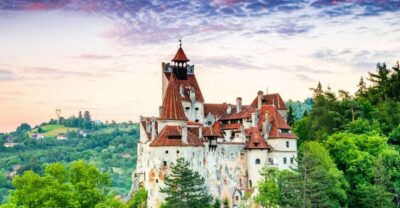
Dracula’s Castle, Peles Castle, & Brasov Old Town
Read our review →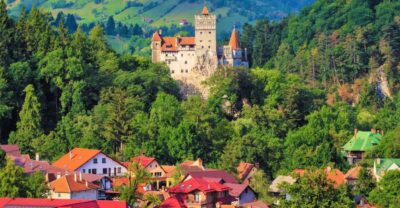
Dracula Castle, Peles Castle & Brasov Old Town
Read our review →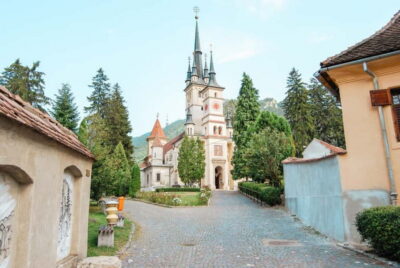
Dracula’s Castle, Peleș Castle & Brașov Day Trip
Read our review →
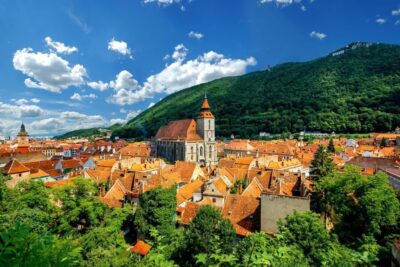
Day Trip to Dracula Castle, Peles Castle & Brașov
Read our review →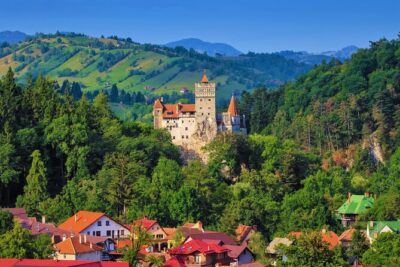
Bucharest to Dracula Castle, Peles Castle and Brasov Guided Tour
Read our review →