
Reviewed · BUCHAREST TOURS
Eastern Orthodox Church Art in Bucharest
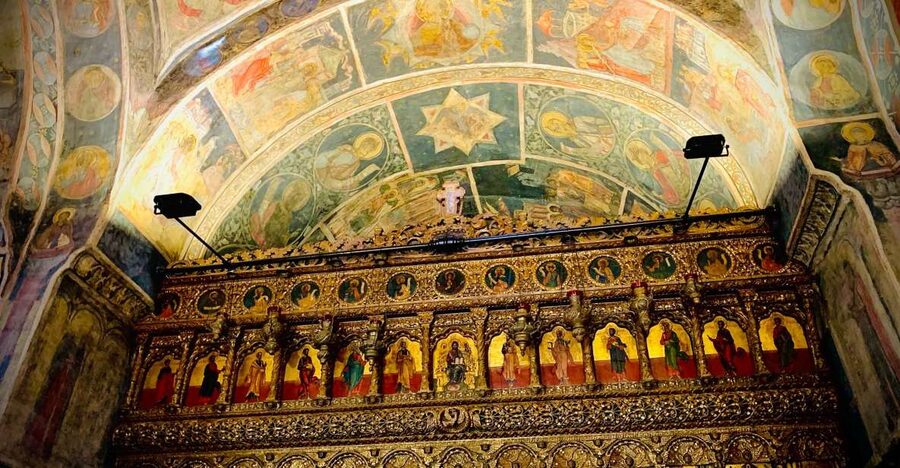
Bucharest’s church art is easy to miss. Behind busy streets and plain façades, you find painted interiors tied to the Wallachian Middle Ages, Byzantine tradition, and daily Orthodox worship. This 2.5-hour walk takes you from the Old Princely Court through the historic center, with six churches and monasteries on the route.
I like the small group size, capped at 10, and the focus on active churches rather than museum displays. I also like that guide Helen can adjust the experience to the group. One tour was adapted for a person using crutches and another with a walking stick, and the guide helped them return to their hotel afterward.
The main consideration is that these are working places of worship, not arranged exhibits. You need modest clothing and respectful behavior, and one booking account describes an uncomfortable exchange when the guide learned the participant was Catholic. Also, the supplied details name Saint Demetrios as the final stop in one place and Saint Cyprian in another, so confirm the exact final church before booking.
Key points to know before you book
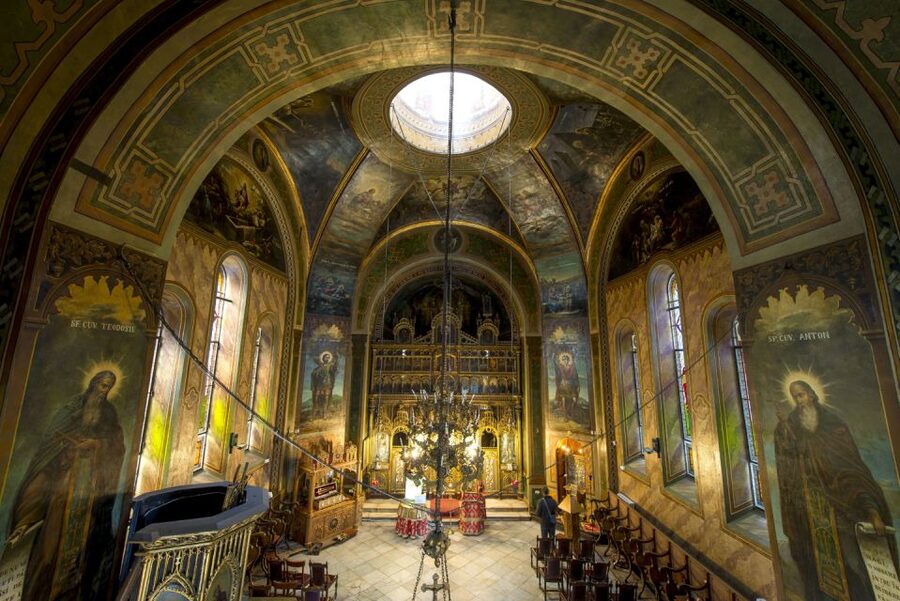
- Six central Orthodox churches: The route includes Saint Anton, Saint George Km0, Saint Elijah, the Lady’s Church, Stavropoleos Monastery, and either Saint Cyprian or Saint Demetrios depending on the confirmed route.
- Painted art in living churches: You see frescoes and icons in places still used for prayer, baptisms, and other services.
- A guide-led history lesson: Helen explains Romanian Orthodox tradition, Byzantine art, and the country’s religious past in English, Spanish, or Romanian.
- Small groups help with questions: No more than 10 people are accepted, though a private-feeling tour can happen if numbers are low.
- Plan for respectful dress: Avoid short skirts, sleeveless shirts, tight or ripped clothing, and strong fragrances.
- Good value for art fans: At $57 per person, the price makes most sense if you want interpretation, not just quick church visits.
Why Bucharest’s churches reward a closer look
Bucharest can seem short on grand medieval monuments at first glance. Much of the historic center was altered, rebuilt, or covered by later city growth. The churches provide another way to read the city. Their painted walls, icons, plans, and surviving details preserve stories that are easy to overlook from the street.
This tour begins near the Old Princely Court, a useful place to think about Wallachian rulers and the old center of power. From there, you move through the Lipscani area and visit churches from different periods and styles. The result is not one single type of Orthodox building. You see older frescoes, Byzantine influence, an Orthodox basilica, a decorative monastery, and a 19th-century church described as neo-Baroque.
I like this approach because it connects art with use. You are not simply asked to admire a painted wall. You also learn that the church remains part of local life. That difference matters. A museum gives you space and labels. An active church asks you to pay attention to your clothing, your voice, and the people worshipping around you.
A few more Bucharest day trips to weigh up
- Bucharest: Dracula’s Castle, Peles Castle, & Brasov Old Town
★ 4.5 · 17,858 reviews - Bucharest: Dracula Castle, Peles Castle & Brasov Old Town
★ 4.6 · 10,891 reviews - Bucharest: Dracula’s Castle, Peleș Castle & Brașov Day Trip
★ 4.5 · 5,919 reviews
Saint Anton and the old princely quarter
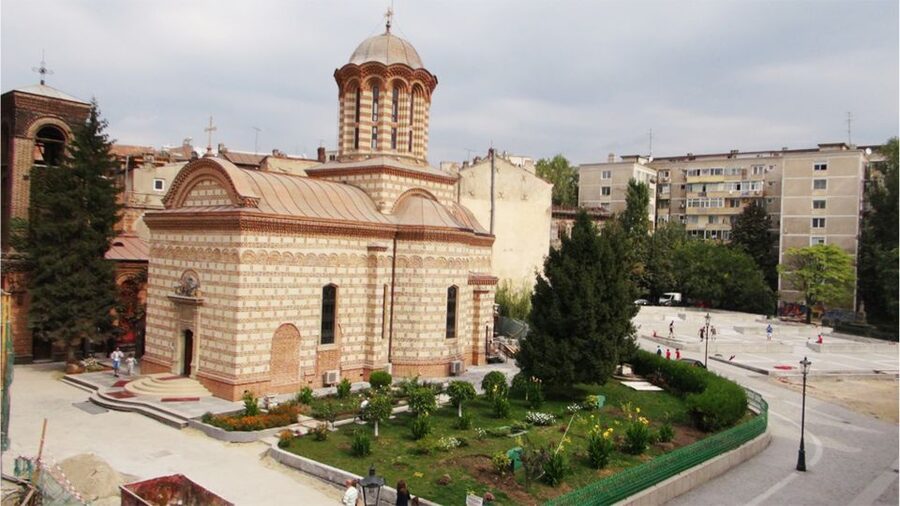
The meeting point is in front of the Anton icon shop, near the Old Princely Court. This is a practical start because you are already close to one of the most historic parts of central Bucharest. Look for the guide at the shop rather than expecting a large tour bus or a formal visitor center.
Saint Anton Church is the first stop. It is presented as a magnificent church with links to the old Wallachian setting. Here, the guide sets up the basic themes of the tour: Orthodox worship, painted decoration, and the way Romanian religious buildings developed over time.
The value of this first stop is context. If you arrive at a church without knowing what to look for, you may notice only the broad shapes and bright colors. With an explanation of Orthodox art, you can pay closer attention to the arrangement of images, the role of icons, and the difference between an old church and a later restoration.
Do not expect a long museum-style visit with every object displayed behind glass. Saint Anton is an active place of worship. Keep your voice low, follow local instructions, and allow services or personal prayer to take priority.
Saint George Km0 and a major Romanian fresco painter
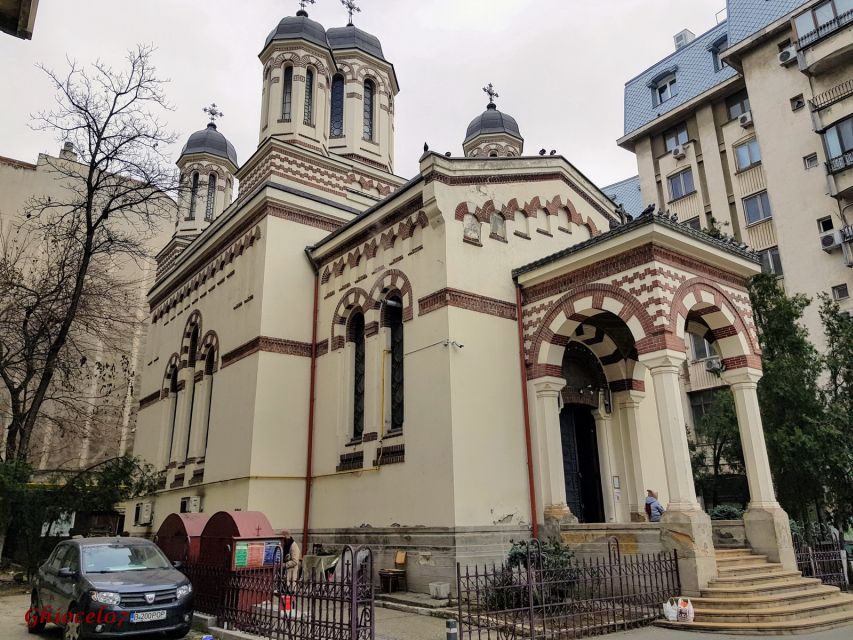
The route then continues along Lipscani Street to Saint George Km0 Church. Its name points to the central place it holds in Bucharest’s urban story, while the church itself provides one of the tour’s main art moments.
You see a fresco made by one of Romania’s greatest church painters. The supplied details do not name the painter, so ask Helen for that information during the visit. That is a useful question because the identity, period, and technique of the artist can change how you understand the work.
This stop should appeal to anyone who wants more than a list of dates. A good guide can show you how a fresco works as both image and instruction, especially in an Orthodox setting where painted scenes help communicate religious ideas. You also get a chance to compare Saint George with the first church instead of treating every painted interior as the same.
Lipscani Street can be lively, so the short move between sites may feel more urban than devotional. That contrast is part of the experience. Bucharest’s religious buildings are not isolated monuments in a quiet historic quarter. They share space with shops, cafés, bars, and restaurants.
Saint Elijah and the challenge of finding smaller churches
Saint Elijah is described as one of only two Orthodox basilicas in Bucharest. That makes it a particularly useful stop for visitors who want to understand that Romanian Orthodox architecture is not limited to the familiar small church form.
The church is also said to be difficult to find, even for locals. That detail gives the guided format real value. You are not paying only for someone to open a door or repeat a label. You are paying for local orientation and for a route that includes places you might easily pass by.
At Saint Elijah, ask how the basilica form differs from the other buildings on the walk. The supplied information does not provide detailed architectural features, so the guide’s explanation will be important. You might find that this stop makes more sense after Saint Anton and Saint George, when you have already begun to notice changes in scale, design, and decoration.
The route does require attention to your footing and clothing. Comfortable shoes are specifically recommended, and the experience is built around several church visits in the city center. If you have limited mobility, tell the provider in advance. One group received thoughtful adjustments for crutches and a walking stick, but that does not mean every route or entrance will suit every mobility need.
Same corner of the country, a completely different day out:
- Bucharest: Palace of Parliament Tickets and Guide
★ 4.3 · 3,182 reviews - Bucharest: Day Trip to Dracula Castle, Peles Castle & Brașov
★ 4.4 · 3,049 reviews - Bucharest to Dracula Castle, Peles Castle and Brasov Guided Tour
★ 4.5 · 2,933 reviews - Bucharest: Palace of Parliament Tickets and Guided Tour
★ 4.4 · 1,877 reviews
The Lady’s Church and old surviving frescoes
The Lady’s Church brings the focus back to age and survival. It contains some of the oldest preserved original frescoes in Bucharest, making it one of the most important stops for anyone interested in the city’s early religious art.
Old frescoes are valuable partly because they show what has lasted. Paint can fade, buildings can change, and later work can cover earlier decoration. Here, you have a chance to see original material that remains in place rather than only a modern reconstruction.
I would take this stop slowly. Ask which parts are original, how the paintings have been preserved, and what changes the church has seen. Those questions are more useful than trying to memorize every date. The supplied details do not explain the condition or exact age of each painting, so the guide’s comments will determine how much technical detail you receive.
This church may be especially rewarding if you enjoy quiet, close looking. It may be less satisfying if you want large interiors, extensive signage, or a predictable museum route. The building is active, and the setting may change if worship is taking place.
Stavropoleos Monastery, the tour’s decorative change of pace
Stavropoleos Monastery is the most widely recognizable name on the route, but it still benefits from explanation. The monastery is described as eclectic, which signals a different visual character from the older fresco-focused churches.
Expect a decorative stop with a strong sense of contrast. By this point, you have looked at Wallachian and Byzantine influences, basilica design, and old surviving paintings. Stavropoleos gives you another way to see Romanian religious architecture, with a style that brings several influences together.
Its location next to the final church also makes the end of the route efficient. You do not waste time crossing the city between every stop. Instead, the churches form a compact lesson in the historic center, with the streets themselves linking the buildings.
Because Stavropoleos is an active monastery, the same rules apply. Dress modestly, avoid strong fragrance, and behave as you would in any place of worship. You can stop for food or a drink at a nearby café, bar, or restaurant, but nothing is served as part of the tour.
Saint Demetrios or Saint Cyprian: confirm the final stop
There is an important detail to check before paying. The main route description names Saint Demetrios as the last stop, calling it a 19th-century neo-Baroque church. The included-stops section names Saint Cyprian instead. Those are not interchangeable names, so ask Bucharest Break which church is currently included.
If the final stop is Saint Demetrios, you finish with a later architectural style. That gives the walk a clear period contrast, moving from older Orthodox art toward a 19th-century neo-Baroque expression. It sounds like a strong closing point for a tour that compares different eras.
If the final stop is Saint Cyprian, the experience may differ from the written description. The available information does not explain its art or architecture, so you should not assume it offers the same neo-Baroque focus. This is the one practical uncertainty I would settle before booking, especially if the final church is a major reason you want the tour.
What the guide adds to the experience
The guide is central here. Helen is praised in the supplied feedback for her explanations of Romanian Orthodox art, Byzantine art, Romanian history, and the Orthodox Church more generally. One person had a private-feeling experience because they were the only participant, and Helen also took time to visit an icon shop with them.
That kind of flexibility can change the value of a small-group tour. With up to 10 people, you can usually ask questions without holding up a large crowd. If your group is tiny, you may get more room to shape the discussion around art, architecture, local history, or religious practice.
The languages offered are English, Spanish, and Romanian. Feedback includes positive comments in Spanish and Italian, but the stated tour languages are the three above. Do not assume Italian service unless the provider confirms it.
I also want to note the one serious caution. One participant described the guide as condescending after revealing they were Catholic. That is a direct concern for anyone from another Christian tradition or anyone who wants a strictly neutral religious discussion. Other accounts describe the guide as personable, professional, flexible, and helpful, so the overall picture is favorable but not perfect. If respectful interfaith conversation matters to you, ask about the guide’s approach before booking.
Is $57 a fair price for 2.5 hours?
At $57 per person, this is not the cheapest way to look at Bucharest churches. You can often see religious buildings independently for little or no cost, though entrance arrangements and opening access can vary. The price makes sense when you want the stories, the route planning, and the art explained in context.
You are paying for a live guide, a small group limited to 10, and visits to churches that can be hard to locate. The inclusion of Saint Elijah and the Lady’s Church is especially important because less obvious sites are where a guide can add more than a standard city walk.
The value is weaker if you already have a strong background in Orthodox iconography or prefer to explore alone. It is also less attractive if you are mainly looking for food, shopping, or general sightseeing. No meal or drink is included, though you can stop at one of the nearby cafés, bars, or restaurants.
Free cancellation up to 24 hours before the tour and the option to reserve now and pay later reduce the risk of booking. Still, check the final stop and any accessibility needs before committing.
Who will enjoy this church art walk?
I would choose this tour if you:
- Want to understand Byzantine and Romanian Orthodox art rather than simply photograph church interiors
- Enjoy older buildings that remain part of daily life
- Prefer a small group and the chance to ask questions
- Are curious about Wallachian history and Bucharest’s old center
- Need a guide to locate less obvious churches
- Can walk comfortably in city shoes and follow modest dress rules
I would think twice if you want a relaxed sightseeing route with few stops, dislike religious settings, or expect museum-style access. This is also not a good fit for anyone unwilling to dress conservatively or respect an active service.
For clothing, wear a longer skirt or trousers, a top with sleeves, and comfortable shoes. Avoid tight or ripped clothing, short skirts, and strong fragrances. Even if you are not Orthodox, you can enjoy the art, but you need to treat each church as a functioning place of worship.
My call: book it for context, not just church photos
Book this tour if you want Bucharest’s Orthodox churches explained as part of the city’s past and present. Saint George’s fresco, the old paintings at the Lady’s Church, Saint Elijah’s unusual basilica status, and Stavropoleos’s eclectic character give the walk a useful range.
I would be more cautious about booking without first confirming the Saint Demetrios and Saint Cyprian discrepancy. I would also contact Bucharest Break if you have mobility concerns or if you want assurance that the discussion will be respectful of different Christian backgrounds.
For the right visitor, $57 buys more than a church checklist. It gives you a compact history lesson, access to places you may not find alone, and a guide who has shown real flexibility in some groups. Just arrive dressed for worship, ready to walk, and prepared to look closely.
FAQ
How long does the Eastern Orthodox Church Art tour last?
The tour lasts 2.5 hours.
How much does the tour cost?
The listed price is $57 per person.
Where is the meeting point?
Meet in front of the Anton icon shop, near Saint Anton Church and the Old Princely Court.
Which languages are available?
The live guide can conduct the tour in English, Spanish, or Romanian.
How large is the group?
The tour is limited to 10 participants.
What should I wear and bring?
Bring comfortable shoes. Since the churches are active places of worship, wear modest clothing. Short skirts, sleeveless shirts, tight clothing, ripped clothing, and strong fragrances are not allowed.
Just added around Bucharest
- Bucharest: Transylvania and Dracula’s Castle 2-Day Tour★ 3.8 · 13 reviews
- Off Road Adventures in Wild Carpathians – 5 Days★ 5.0 · 13 reviews
- Bucharest: Therme Bucharest Spa Day with Luxury Transfer★ 4.7 · 13 reviews
- 2-Day Transylvania Break From Bucharest★ 4.5 · 14 reviews
- Bucharest Private Airports Transfer★ 5.0 · 14 reviews
- Mogosoaia Palace & Snagov Monastery: Private tour from Bucharest★ 4.5 · 14 reviews
- PRIVATE day-trip – Peles Castle, Bran Castle, Brasov★ 5.0 · 14 reviews
- The Castles from the Carpathian Mountains! The Fixers Private Tour★ 5.0 · 14 reviews
Bucharest Tours, compared.
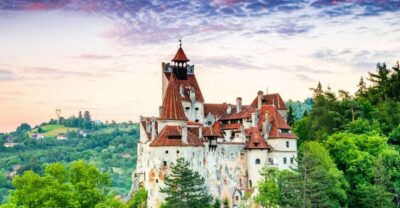
Dracula’s Castle, Peles Castle, & Brasov Old Town
Read our review →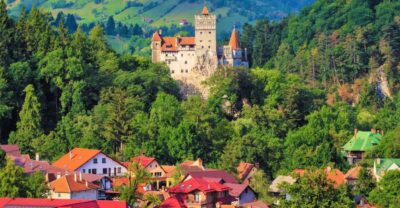
Dracula Castle, Peles Castle & Brasov Old Town
Read our review →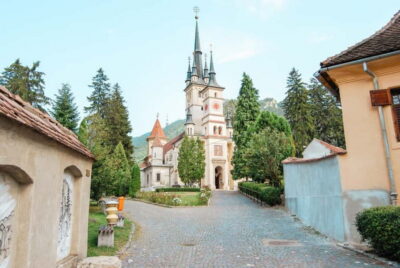
Dracula’s Castle, Peleș Castle & Brașov Day Trip
Read our review →
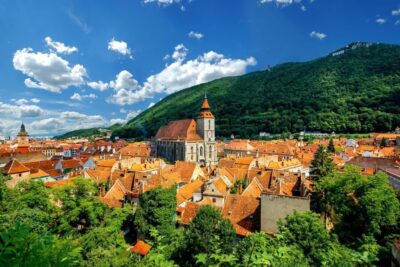
Day Trip to Dracula Castle, Peles Castle & Brașov
Read our review →
Bucharest to Dracula Castle, Peles Castle and Brasov Guided Tour
Read our review →
Dracula’s Castle, Peles Castle and Brasov Day Trip from Bucharest
Read our review →Browse the lists this tour appears in