

Reviewed · ROMANIA
Maramures in a nutshell
Merry Cemetery is the star here, but the real pleasure is how the day links unusual tombstones, old wooden churches, working craftspeople, and a home-style meal into one clear picture of rural Maramures. You visit places that are hard to connect by public transport, then meet the people keeping local skills alive.
I like the private pickup from your accommodation, which saves time and lets the day begin at your own pace. I also like the human side: guide Ioana brings local knowledge, answers questions about life in Romania, and helps turn a string of stops into a meaningful day.
The main drawback is the pace. Six stops in about nine hours means some visits are brief, and the route is best for someone who wants variety rather than long, quiet time at each church or museum.
Key points before you book
- Merry Cemetery gives the day its most unusual start, with time to read its distinctive tombstones and possibly meet the family connected with their creation.
- Ioana is the guide to request or expect, bringing useful insight into both the sights and everyday life in Romania.
- The private format means only your group participates, with pickup from accommodation in Sighetu Marmatiei and the nearby area.
- Three wooden churches and Barsana Monastery give you a strong introduction to Maramures religious architecture and local stories.
- Sârbi adds real human contact, with artisans weaving carpets, making clothing and hats, and distilling fruit.
- Traditional clothing and lunch make this more than a sightseeing drive, though the schedule leaves limited time at each stop.
Why this Maramures day works
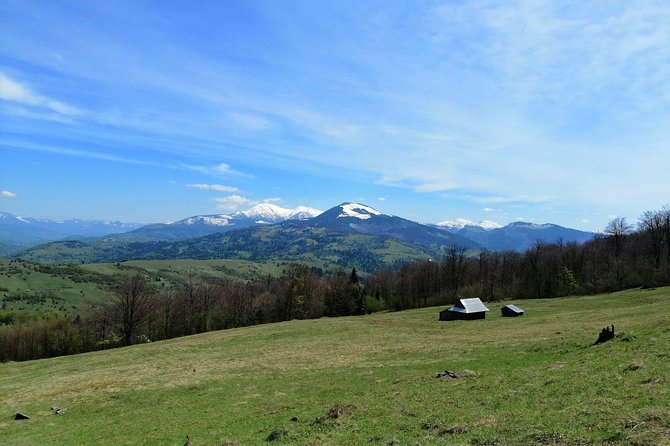
Maramures is easy to admire from a car window and surprisingly hard to understand without local help. Villages are spread out, churches sit away from major transport links, and craft traditions are often found in homes or small workshops rather than formal attractions.
This tour solves that problem in a practical way. It starts at 9:00 a.m. from your accommodation in Sighetu Marmatiei or the nearby area, then carries you through several cultural sites without asking you to arrange separate taxis or figure out rural connections.
The tour lasts about nine hours. That is a full day, but the route has a useful rhythm: cemetery, monastery, church, church, church, then artisans and food. You are not spending the whole day in museums. You are seeing the region through faith, family memory, buildings, clothing, food, and work.
The private setup matters most if you have limited time or specific interests. You can ask questions as they come up, and Ioana can explain local customs in context. The tradeoff is price. At $180.44 per person, this is not a budget group outing, but the cost includes a private experience, pickup, an English-speaking guide, and access to places that are awkward to combine independently. Group discounts are offered, so the value improves when shared among a larger private party.
Other Romania trips people book alongside this one:
- Bucharest: Dracula’s Castle, Peles Castle, & Brasov Old Town
★ 4.5 · 17,858 reviews - Bucharest: Dracula Castle, Peles Castle & Brasov Old Town
★ 4.6 · 10,891 reviews - Bucharest: Dracula’s Castle, Peleș Castle & Brașov Day Trip
★ 4.5 · 5,919 reviews
Merry Cemetery and its storytelling tombstones
Your first stop is Merry Cemetery in Săpânța, with about 30 minutes to walk around and read the tombstones. The cemetery is famous for treating death with a direct, personal, and sometimes humorous style, but you do not need a long lecture to see why it feels different from a standard European cemetery.
The short visit is enough to get the idea and read several examples. I would use this time carefully rather than trying to inspect every marker. Look for the way ordinary lives are presented through words and images, and pay attention to how family, work, and personality become part of a public memorial.
One especially good detail from this experience is the chance to meet the family who creates the tombstones. That changes the visit from simply looking at finished objects to understanding the craft behind them. If this meeting is part of your timing on the day, it may be one of the most memorable moments of the route.
Thirty minutes is also a limitation. If you want to read every inscription slowly, you may feel rushed. Still, as an opening stop, the cemetery is effective: it is immediately distinctive and gives you a reason to ask how local traditions developed.
Barsana Monastery and old religious artifacts
The next visit lasts about an hour at Barsana Monastery. Here, Ioana explains the church legends and stories, then you have time to see the old religious artifacts museum.
This is a useful counterpoint to Merry Cemetery. The cemetery speaks through individual lives and handmade memorials, while Barsana brings you into the region’s religious world. The legends matter because they give the buildings a human setting. You are not only looking at a church. You are hearing how local people understand it.
The museum adds substance to the stop. Old religious objects can be easy to overlook when you are moving from one impressive building to another, so an hour gives this place more breathing room than the shorter church visits later in the day.
You should expect a cultural visit rather than a performance or long formal tour. The value comes from the explanation and the chance to connect artifacts with the traditions around them. If you are not especially interested in religious history, this may be the point where Ioana’s storytelling makes the biggest difference.
Sapanta-Peri and the 70-meter wooden church
At Sapanta-Peri Monastery, you spend about 20 minutes seeing a wooden church that rises more than 70 meters. The scale is the point. After the intimate tombstones at Merry Cemetery, this stop gives you a quick look at Maramures woodwork on a much larger vertical scale.
The visit is brief and admission is free. That makes it an easy stop, but do not expect a long guided exploration. You will have time to take in the church and hear the key context before continuing.
For photographers, the height should be the main subject. For everyone else, it is a compact reminder that local timber construction can be both practical and grand. Since the stop takes only 20 minutes, it works well in a packed day, though anyone hoping to sit quietly or examine every detail will want more time.
Same corner of the country, a completely different day out:
- Bucharest: Palace of Parliament Tickets and Guide
★ 4.3 · 3,182 reviews - Bucharest: Day Trip to Dracula Castle, Peles Castle & Brașov
★ 4.4 · 3,049 reviews - Bucharest to Dracula Castle, Peles Castle and Brasov Guided Tour
★ 4.5 · 2,933 reviews - Bucharest: Palace of Parliament Tickets and Guided Tour
★ 4.4 · 1,877 reviews
Desesti and Budesti, two UNESCO wooden churches
The route then visits the wooden church at Desesti for about 30 minutes, followed by St Nicholas Church in Budesti Josani for another 30 minutes. Both are UNESCO-listed wooden churches, and seeing them together lets you compare two examples instead of treating one building as an isolated curiosity.
The appeal is not only age or construction. These churches show how local religious buildings were shaped by available materials and village life. Their wooden form feels closely tied to the region, especially when set beside the larger monastery visit.
At Desesti, admission is free. At Budesti, admission is included. Those details are minor, but they reinforce the practical strength of a guided route: you do not need to manage several small payments or wonder which church is open to visitors.
Half an hour at each church is enough for an introduction. You can look at the structure, listen to the stories, and take photographs if permitted. It is not enough for a slow architectural study. If wooden churches are your main reason for visiting Maramures, tell Ioana early in the day that you would like as much explanation as possible at these stops.
The two churches also prevent the day from becoming too dependent on one major attraction. If one site feels crowded, quiet, or less accessible than expected, another follows soon after. That variety is useful, though some visitors may find the repeated church visits blend together without close attention.
Sârbi, where local craft becomes personal
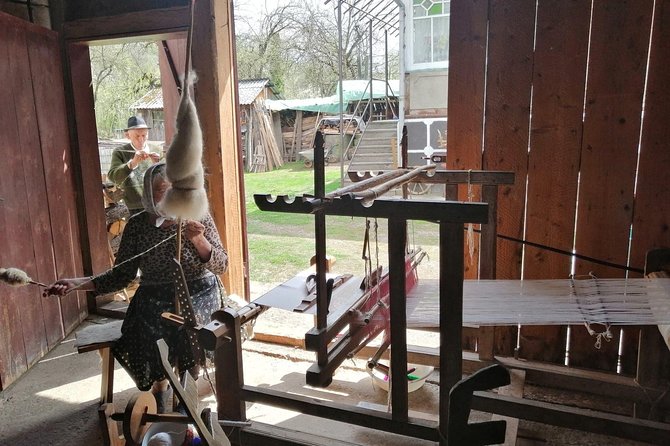
Sârbi is the most hands-on part of the day. You meet local artisans, including women weaving carpets or dresses and men weaving hats or distilling fruit.
This is the sort of stop that makes a rural tour worthwhile. A display in a museum can show you an object, but meeting the person who makes it helps you understand the time and skill involved. You can ask questions, watch the work, and see that these traditions are not simply frozen for visitors.
The visit lasts about an hour and admission is free. That is a sensible amount of time. You get more than a quick photo stop, but the schedule still leaves room for the other villages and churches.
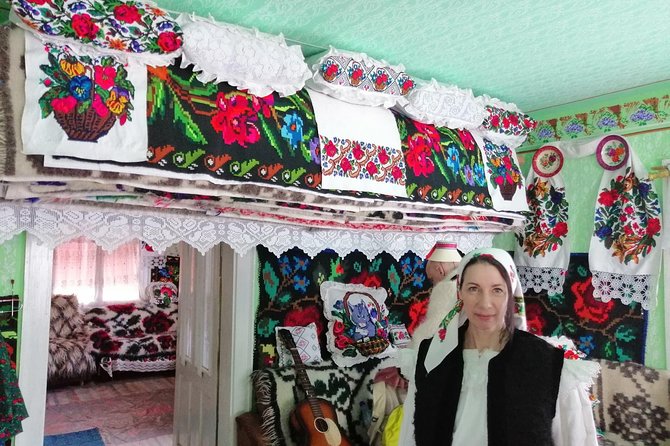
The craft demonstrations also connect well with the traditional clothing offered during the experience. Trying on local clothing gives you a playful moment, but it has a cultural use too: it helps you see textiles, hats, and dress as part of daily identity rather than as objects behind glass.
A note of realism is useful here. Artisan visits can vary in mood and pace because they involve real people and working homes or workshops. You should come ready to listen and ask respectful questions, not expect a staged show with a fixed script.
Traditional lunch, local flavor, and time to ask questions
The tour includes a traditional lunch, and the strongest details point to a meal at a local inn in Breb. That setting matters. A meal in an ordinary local place gives you a break from the road and a chance to experience the region through food rather than another monument.
Lunch is also when the private format pays off. You can ask Ioana about what you are eating, local customs, and daily life in Romania. One particularly useful strength of her guiding is that she explains more than the listed sights. She can speak about living in Romania, not only about church dates and village names.
A related part of the day includes the whirlpool carpet washing experience in Breb. This is exactly the kind of working tradition that is difficult to find on a standard city tour. It shows how a finished carpet connects to the labor and practical methods behind it.
The supplied schedule does not give a fixed lunch duration or a detailed menu, so you should not book this expecting a specific dish list. You can expect a traditional meal and a local setting, which is the more important part of the experience.
Guide style and the value of a private group
Ioana is a major part of the tour’s appeal. Her role is not limited to driving you from one pin on a map to another. She explains legends, answers questions, and adds insight about life in Romania. That broad style suits this route because the stops cover different subjects and need connecting.
A private tour is especially helpful in Maramures. You begin at your own accommodation in Sighetu Marmatiei or close by, and only your group participates. There is no need to wait for a large coach group or follow a fixed public meeting point.
You should still understand what private means here. It gives you a more personal guide and pickup, but it does not turn a nine-hour route into a slow custom tour with unlimited time everywhere. Six stops, lunch, and village driving create a firm structure.
The experience is offered in English. Confirmation arrives at booking, and service animals are allowed. Most people can participate, and the pickup area is near public transportation, though the tour itself is designed around private transport rather than public connections.
Price, timing, and who gets the best value
The price is $180.44 per person. That figure deserves context. You are paying for a full-day private outing, accommodation pickup, an English-language guide, several included admissions, artisan access, traditional clothing, and lunch. It is a better fit for a couple, family, or small group that values convenience and local interpretation than for a solo budget visitor.
Group discounts are available, which can shift the calculation. If you are already traveling with friends or family, compare the total against the cost of arranging separate transport, entrance fees, meals, and local guiding. The tour also saves planning time, which is valuable when your stay in northern Romania is short.
The route is booked, on average, about 90 days ahead. That does not guarantee that every date will sell out, but it is a useful planning signal. If you have fixed dates in Sighetu Marmatiei, booking early makes sense.
Free cancellation is available when you cancel at least 24 hours before the local start time. Changes or cancellations made within 24 hours are not accepted for a refund, so keep that cutoff in mind.
Who should book Maramures in a nutshell
I would choose this tour if you want a broad introduction to Maramures without renting a car or building a village route yourself. It suits curious first-time visitors, families, couples, and small groups who want culture with real people in the mix.
It is also a good choice if you care about the story behind what you see. Merry Cemetery, Barsana’s artifacts, the wooden churches, and Sârbi’s artisans are more rewarding when someone can explain how they fit together.
I would hesitate if you prefer one-site-at-a-time travel. The pace is steady, and the church visits are short. Travelers with a very narrow focus on architecture, photography, or religious art may want a custom private day with fewer stops.
Should you book this tour?
Book it if you want the most varied one-day introduction to rural Maramures from Sighetu Marmatiei. The strongest reasons are the private pickup, Ioana’s personal style, the chance to meet craftspeople, and the balance of unusual sights with a proper local meal.
Before paying, check your group size and use the group discount to judge the price fairly. Also ask yourself how much time you want at each church. If you accept a brisk route, this experience gives you a practical and memorable look at a part of Romania many visitors miss.
FAQ
Where does the tour start?
Pickup is from your accommodation in Sighetu Marmatiei and the nearby area.
What time does the tour begin?
The tour starts at 9:00 a.m.
How long does the tour last?
The experience lasts approximately nine hours.
Is this a private tour?
Yes. Only your group participates.
Is the tour offered in English?
Yes. The tour is offered in English.
What is the price?
The listed price is $180.44 per person. Group discounts are offered.
Is lunch included?
Yes. The experience includes a traditional lunch, with the tour details and direct feedback placing it at a local inn in Breb.
Are entrance tickets included?
Admission is included at Merry Cemetery, Barsana Monastery, and St Nicholas Church in Budesti Josani. Admission to Sapanta-Peri Monastery and Desesti wooden church is free.
Can I cancel for a full refund?
Yes, if you cancel at least 24 hours before the experience start time. Cancellations or changes made less than 24 hours before the start are not refunded or accepted.
Just added around Romania
- Private Full Day Tour of Bucharest★ 5.0 · 3 reviews
- Bear Sanctuary Zarnesti,Bran Castle,Rasnov Fortres w/Hotel pickup★ 5.0 · 3 reviews
- Count Dracula & Peles Castle in One Day from Bucharest★ 5.0 · 3 reviews
- Veliko Tarnovo and Medieval Bulgaria Private Day Trip from Bucharest★ 5.0 · 3 reviews
- Bucharest VIP Bar Crawl in Lipscani ‘Old Town’★ 5.0 · 3 reviews
- Private Transfagarasan&Balea Lake★ 5.0 · 3 reviews
- Muddy Volcanoes and Salt Mine Private Tour★ 5.0 · 3 reviews
- Bucharest Private City Tour★ 5.0 · 3 reviews