Reviewed · BUCHAREST TOURS
Private 8 Day Romania UNESCO Tour
Romania’s best sights arrive in a wonderfully varied order here: Saxon medieval towns, wooden churches, painted monasteries, royal castles, and mountain roads all fit into one private eight-day circuit from Bucharest. You also spend nights in rural villages, where a horse-drawn wagon ride, home cooking, weaving, wood carving, and sheep farming bring the country’s traditions closer than a quick city tour can.
I like the private format, which lets your guide adjust the pace and explain the history as you go. I also like the two countryside stays in Sibiel and Botiza, since they give you more than a parade of famous buildings. The main catch is the amount of time on the road, plus entrance tickets that cost about 85 euros extra.
Key points to know before booking
- Romania’s major UNESCO sights in one circuit: See Sighisoara, the Maramures wooden churches, Bucovina’s painted monasteries, the Merry Cemetery, Prejmer, and more.
- Private guide and vehicle: Your own guide accompanies the group from Bucharest, with transport by car or minibus.
- Two traditional village stays: Sleep in Sibiel and Botiza, with home cooking, local customs, and a closer look at rural life.
- Strong mix of culture and scenery: The route crosses the Carpathians, passes through Transylvanian villages, and follows the dramatic Bicaz Gorges.
- Castles with different personalities: Compare medieval Corvin Castle and Bran Castle with the elegant royal rooms of Peles Castle.
- Budget for admissions: About 85 euros in entrance fees are not included, along with most lunches, dinners, and tips.
Why this route gives you a real feel for Romania
This is not simply a Bucharest to Dracula Castle outing with a few photo stops. It is a long loop through several Romanian regions, each with its own architecture, food, crafts, and customs.
You begin among royal buildings and communist-era history in Bucharest, then move west into Transylvania. From there, the route heads north to Maramures, east to Bucovina, and back across the Carpathians toward Sighisoara, Brasov, Sinaia, and Bucharest.
That geography matters. You see how Romania changes from region to region. The fortified towns of Transylvania feel Central European, the wooden churches of Maramures feel tied to local village life, and the painted monasteries of Bucovina offer an artistic tradition found nowhere else on this route.
The private setup is especially helpful on such a wide-ranging trip. You do not have to manage several separate transfers or work around a large group’s pace. Your guide is with you throughout, offering background on Romania and answering questions as the route unfolds. The strongest praise focuses on guides who were friendly, flexible, and willing to go beyond the basic schedule, qualities that matter on a trip with long drives and many short visits.
A few more Bucharest day trips to weigh up
- Bucharest: Dracula’s Castle, Peles Castle, & Brasov Old Town
★ 4.5 · 17,858 reviews - Bucharest: Dracula Castle, Peles Castle & Brasov Old Town
★ 4.6 · 10,891 reviews - Bucharest: Dracula’s Castle, Peleș Castle & Brașov Day Trip
★ 4.5 · 5,919 reviews
Day 1: Bucharest, Cozia Monastery, and medieval Sibiu
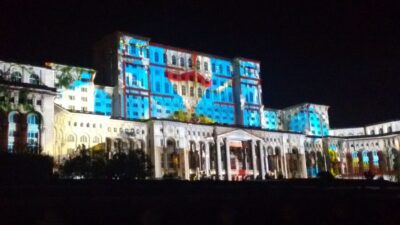
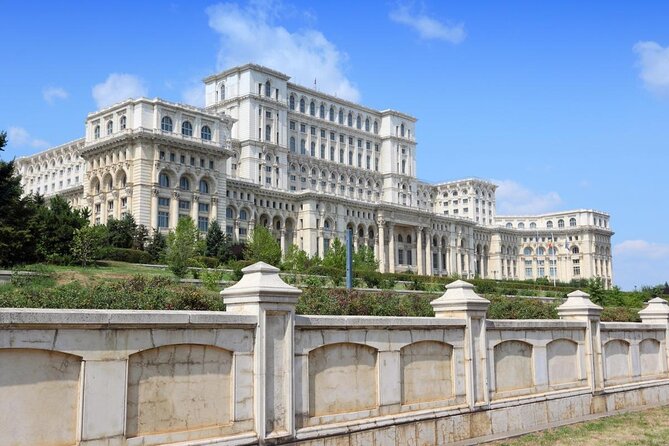
The morning starts at 9:00 at your Bucharest hotel with a panoramic city tour. You pass the Parliament Palace, Revolution Square, the Romanian Athenaeum, the former Royal Palace, Victory Avenue, and the Triumph Arch.
The city introduction is brief rather than museum-heavy, but it gives you useful bearings. Revolution Square is particularly important because the anti-communist revolution began there in 1989. The former Royal Palace now houses the National Art Museum, while the Athenaeum remains one of Bucharest’s best-known landmarks.
You then leave the capital for Cozia Monastery, built in the late 14th century. It is an early example of Romanian church architecture and the burial place of Mircea the Old, a major Wallachian ruler. The stop lasts about 45 minutes, so expect a focused visit rather than a long religious-history lesson.
Sibiu is the first major city walk. Founded in 1190 by Transylvanian Saxons, it has a Central European look, with the Big Square, Small Square, medieval walls, fortified towers, churches, and narrow passages. You see the Liar’s Bridge and the staircase tower, along with Catholic, Orthodox, and Evangelical churches.
The Orthodox Cathedral deserves its own look. Built in the early 20th century, it is known for its large interior frescoes and impressive architecture. The Roman Catholic Church of the Holy Trinity is also part of the walking route.
Your first night is in Sibiel, a village outside Sibiu. A horse-drawn wagon ride through the old village adds a pleasant change after the city walking tour. Dinner is homemade and based on traditional products, and the local guesthouse setting gives you an early taste of rural Romania.
Day 2: Corvin Castle and Alba Iulia’s fortified past
Corvin Castle, near Hunedoara, is one of the day’s big visual rewards. Dating from the 15th century, it was the residence of Transylvanian governors and is described as Romania’s largest medieval castle.
Allow about an hour inside. Towers, walls, and Gothic details make it a strong stop for anyone who likes castles, though the visit is more about atmosphere and architecture than a full day of exhibits. The admission fee is extra.
Alba Iulia adds a different kind of history. The city reaches back to ancient times, and Roman ruins remain part of the visit. Its later importance comes from its role in Romanian national history, earning it the name city of the Union.
You see the Orthodox Cathedral, the Catholic Cathedral, the Roman remains, and the Vauban-style fortifications. The defensive layout makes Alba Iulia feel broad and formal, unlike the tighter medieval streets of Sibiu.
The day ends in Cluj-Napoca, with accommodation at the four-star Napoca Hotel or a similar property. This is one of the more modern urban nights of the trip, a useful contrast to the village pension stays later on.
Day 3: Cluj-Napoca and the wooden churches of Maramures
Cluj-Napoca gets a two-hour walking tour in the morning. The route includes Union Square, St. Michael’s Cathedral, Museum Square, the Orthodox Cathedral, the National Theatre, and the statue of Matei Corvin.
St. Michael’s is the main architectural stop. Built in the 15th century, it is the city’s largest cathedral and gives you a strong sense of Cluj’s medieval importance. The city itself feels younger and more urban than Sibiu, so this walk works best as a compact introduction before heading north.
The drive to Maramures is long, but the destination earns the effort. This northern region is known for wooden churches, village traditions, folk clothing, craftsmen, and old household customs.
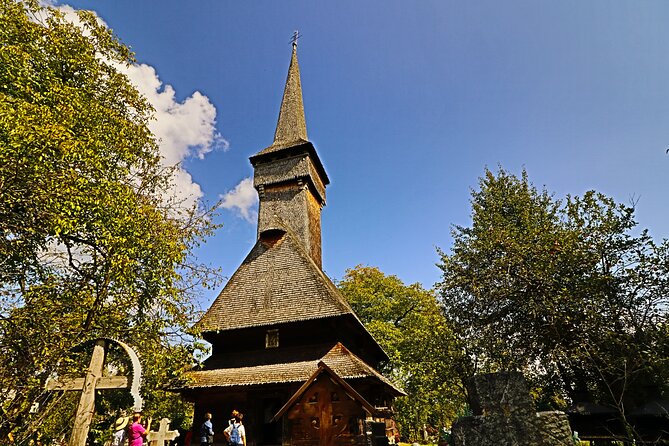
At Surdesti, you visit a UNESCO-listed wooden church built in 1766. Its 54-meter tower is considered the tallest old wooden church in Europe. The construction is striking because the building achieves great height with a wood structure, and the church remains part of a living local tradition.
Desesti brings another UNESCO wooden church, the Church of the Holy Paraskeva. The visit also opens the door to the region’s crafts. Depending on the route and timing, you can see a traditional weaver, wood carver, water mill, or household.
You spend the night in Botiza at a local pension. A visit to a household helps explain how village life works, and a sheepyard may be included depending on the season. Dinner is provided, making this one of the tour’s most useful nights for tasting local food without having to choose a restaurant on your own.
Same corner of the country, a completely different day out:
- Bucharest: Palace of Parliament Tickets and Guide
★ 4.3 · 3,182 reviews - Bucharest: Day Trip to Dracula Castle, Peles Castle & Brașov
★ 4.4 · 3,049 reviews - Bucharest to Dracula Castle, Peles Castle and Brasov Guided Tour
★ 4.5 · 2,933 reviews - Bucharest: Palace of Parliament Tickets and Guided Tour
★ 4.4 · 1,877 reviews
Day 4: The Merry Cemetery and Maramures traditions
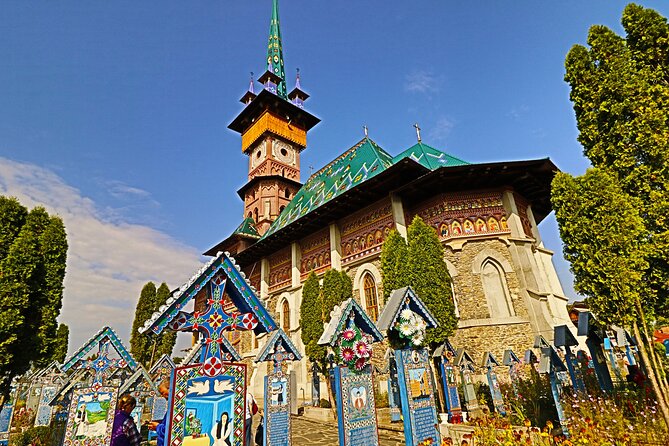
The Merry Cemetery in Sapanta is one of Romania’s most unusual cultural stops. Its blue-painted tombstones use simple pictures and humorous poems to describe the lives and deaths of the people buried there.
The tone is lighter than you might expect from a cemetery, but the place is not just a novelty. It shows how local art, storytelling, and memory can come together in a very personal way. The visit takes about 30 minutes.
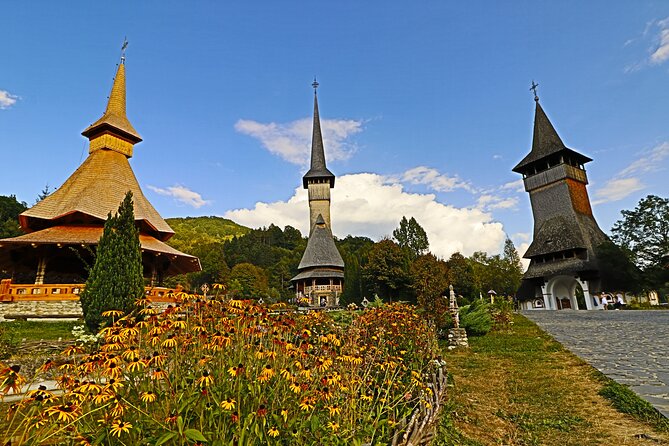
Nearby, Sapanta-Peri Monastery has a huge wooden tower. The current monastery was founded in 1997 to revive the tradition of an older monastery whose site is now in Ukraine. Its tower reaches about 78 meters and is listed as the tallest wooden church in the world.
You pass through Sighet, the largest town in the area. The Communist Prison Museum is an optional stop, so ask your guide if this part of Romania’s 20th-century past interests you. It would add a more somber note to a day otherwise focused on village traditions.
At Dragomiresti, the Maramures Woman Museum offers a small but focused look at local customs and daily life. Pay attention to the carved wooden gate at the entrance. Its symbols give your guide a natural way to explain the meaning of Maramuresean gate designs.
Bogdan Voda’s wooden church dates from the early 18th century and contains frescoes painted on wood by local artists. It is a short stop, but the combination of wood construction and painted decoration helps connect the Maramures visits into a larger picture.
You return to Botiza for another night at the local pension. That second rural night is useful. You are not constantly packing and unpacking, and you have time for a walk or a quiet afternoon in the village.
Day 5: Crossing the Carpathians into Bucovina
The road from Maramures to Bucovina crosses the Carpathian Mountains and offers some of the tour’s best scenery. The drive can be tiring, but it is also one of the moments when the private vehicle pays off. You can stop in Ciocanesti, a village known for decorated houses and painted-egg traditions.
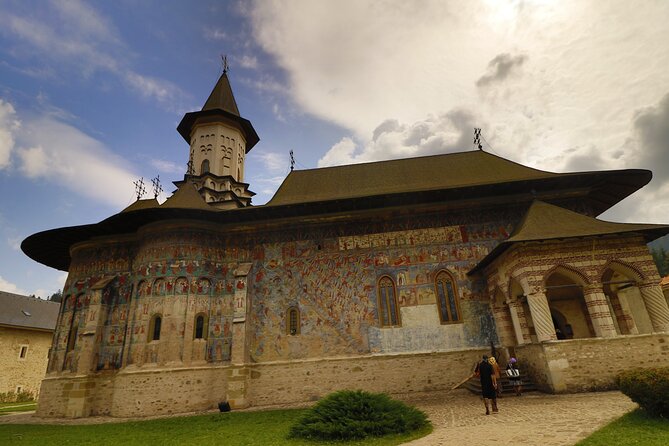
Bucovina is famous for its painted monasteries, built mainly in the 15th and 16th centuries. Their exterior frescoes are the main attraction, with scenes painted across walls that were designed to be seen from outside.
Moldovita Monastery dates from 1532 and was founded under the rule of Petru Rares. Its walls and towers give it a fortified appearance, while the frescoes preserve a remarkable range of religious scenes and colors. The admission fee is extra.
The Lucia Condrea International Egg Museum provides a more specialized cultural stop. You learn about painted-egg designs, techniques, and traditions. It is a good addition because it connects a decorative craft with the wider artistic culture of Bucovina.
Sucevita Monastery is often considered the most imposing of the painted monasteries. Towers, buttresses, thick walls, and watch roads make it look like a military stronghold, while the painted surfaces give it a more refined character.
At Marginea, a family workshop demonstrates black pottery made with old methods. This is the sort of stop that benefits from a private guide, since you can ask questions and spend enough time looking at the work rather than treating the workshop as a quick sales stop.
Day 6: Voronet, Bicaz Gorges, and Sighisoara
Voronet Monastery is the artistic high point for many people. Founded in 1488 by Stephen the Great, it is famous for its blue background color and its especially well-preserved Last Judgment fresco.
The blue is the detail you will hear about first, but the full exterior program is what makes the church memorable. You should allow an hour and remember that admission is not included.
The return toward Transylvania passes through the Carpathians, with stops at Red Lake and the Bicaz Gorges. Red Lake is a natural stop of about 30 minutes. The gorge is more dramatic, with steep rock walls and a narrow route through the mountains.
These stops break up another substantial driving day. The route is scenic, but you should not book this tour expecting relaxed mornings and short transfers. The reward is the range of places you reach without changing trains, renting a car, or arranging separate guides.
The day ends in Sighisoara, one of Romania’s most attractive medieval towns. The first evening stop is brief, with the main walking tour scheduled for the next day.
Day 7: Sighisoara, Saschiz, Prejmer, and Brasov
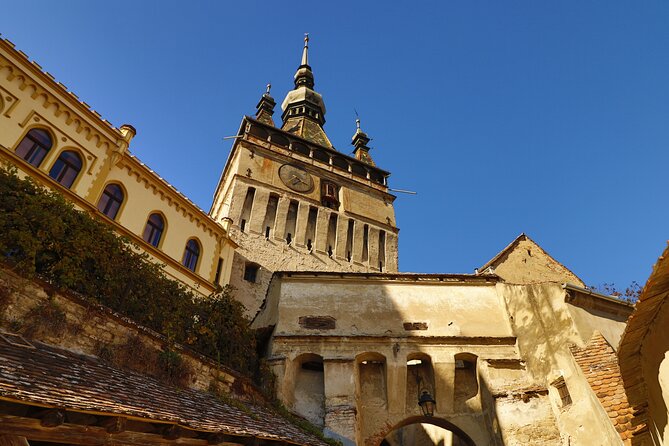
Sighisoara’s citadel is one of the best-preserved medieval towns in Europe. Founded in the 13th century by German Saxon settlers, it retains its walls, towers, steep lanes, and colored houses.
The two-hour walk includes the historic center and gives you time to appreciate the medieval character rather than simply taking a photograph from the main square. The town is also called the Pearl of Transylvania, a nickname that fits its compact old center.
At Saschiz, you stop for homemade jam, chutney, and syrup tasting. This is a small but worthwhile food experience, especially after several days focused on churches and fortifications. It also shows how village producers turn local ingredients into something visitors can taste and take home.
Prejmer’s fortified church is a UNESCO site dating from the 13th century. It combines worship and defense in one unusual complex. The thick walls and defensive design show how religious buildings once served as places of refuge during attacks.
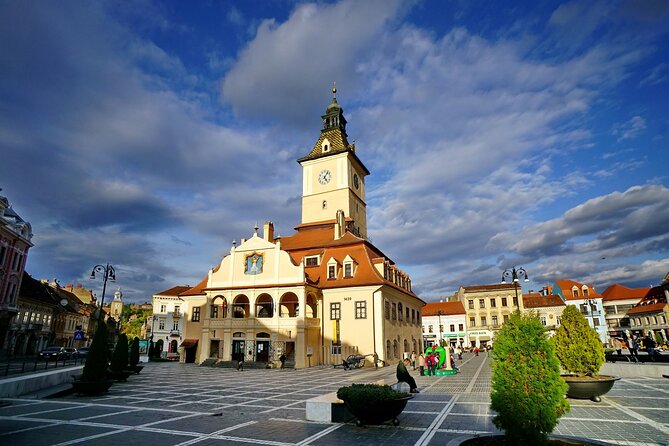
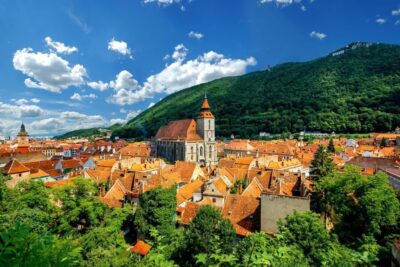
Brasov is the final major Transylvanian city. Its historic center includes Council Square, the Black Church, the White and Black Towers, Weaver’s Bastion, and Catherine’s Gate.
The Black Church is Romania’s largest Gothic cathedral. It is an extra-admission stop, as is Weaver’s Bastion, and both help explain how Brasov functioned as a fortified medieval town. The two-hour walking tour covers plenty of ground, so comfortable shoes are useful.
Day 8: Bran Castle, Peles Castle, and the return to Bucharest
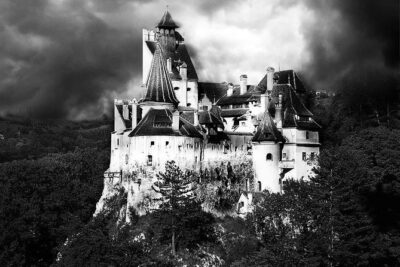
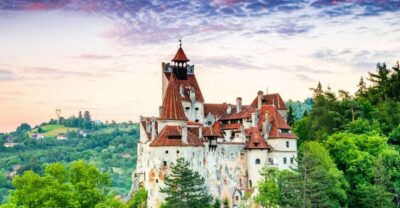
Bran Castle is the famous Dracula stop, but its original role was practical. Built in the 14th century, it controlled access into Transylvania and has the Gothic appearance that helped connect it to the Dracula legend.
The visit lasts about 90 minutes. Go for the medieval setting and the popular legend, but keep your expectations grounded. The castle’s Dracula fame is stronger than its direct historical connection to the fictional character.
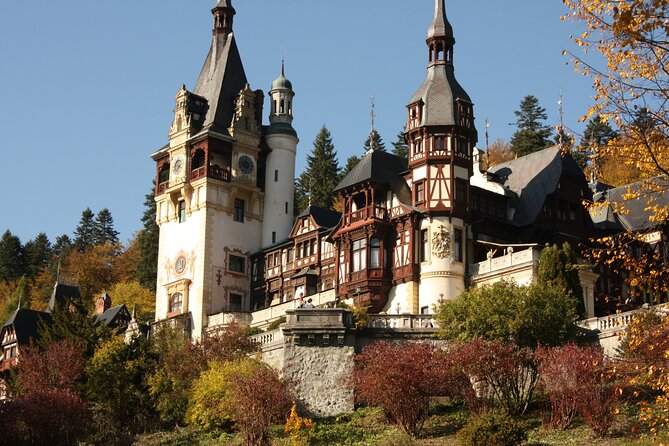
Peles Castle in Sinaia offers a sharp contrast. It was a summer residence of Romania’s kings and is one of the country’s most elegant royal buildings. The visit also lasts about 90 minutes, and the admission fee is extra.
You return to Bucharest at about 4:00 p.m., with drop-off at a Bucharest hotel or the airport. If you are flying that day, confirm your departure time carefully and allow a generous margin, since the final drive can be affected by traffic.
What the $2,315.49 price delivers
At $2,315.49 per person, this is not a budget bus tour. It includes seven nights in double or twin rooms, private guiding, transport by car or minibus, seven breakfasts, three dinners, the Sibiel horse-drawn wagon ride, crafts visits, and the jam, chutney, and syrup tasting.
The value comes from the scale of the route and the private support. You cover Bucharest, Transylvania, Maramures, Bucovina, the Carpathians, and the southern return route without having to arrange hotels, long-distance transport, or local introductions yourself.
You still need to budget for about 85 euros in entrance tickets. Most lunches, other dinners, drinks, and tips are also extra. Single-room pricing is not provided, so ask about that before booking if you are not sharing.
This tour makes more financial sense for two or more people sharing a private vehicle than for someone seeking the lowest possible daily cost. Group discounts are offered, which may improve the price for a larger private party.
Who should book this Romania tour?
I would choose this trip if you want Romania’s main cultural sights but also care about villages, crafts, food, and local customs. The route suits people who like medieval towns, castles, churches, and mountain scenery, and who are comfortable with long driving days.
It is also a strong choice if you prefer private guiding. You get direct access to one guide, rather than trying to piece together explanations at each stop.
I would think twice if you want a slow holiday with free afternoons. Several days include long transfers and a string of short visits. The route is full, and that is both its strength and its limitation.
Pickup is offered, the tour begins at 9:00 a.m., and most people can participate. Confirmation is subject to availability and is received within 48 hours of booking. Cancellation is free when made at least three full days before the start time. The activity is private, so only your own group takes part.
FAQ
Where does the Romania UNESCO tour start and finish?
The tour starts and ends in Bucharest. Pickup is offered from your Bucharest hotel, and the final drop-off can be at a Bucharest hotel or the airport.
How long is the tour?
The tour lasts approximately eight days and includes seven nights of accommodation.
Is the tour private?
Yes. Only your group participates, and a private guide accompanies you throughout the tour. Transport is by car or minibus.
Are entrance tickets included?
Most entrance tickets are not included. The total cost for admissions is estimated at about 85 euros.
What meals are included?
Seven breakfasts and three dinners are included. Other meals and services not specifically listed are extra.
Does the tour include village and craft experiences?
Yes. The program includes a horse-drawn wagon ride near Sibiel, visits to local craftsmen, a household visit in Botiza, and a tasting of homemade jam, chutney, and syrup. Seasonal sheepyard visits may also be possible.
Can I cancel for a full refund?
You can receive a full refund if you cancel at least three full days before the experience start time. Cancellations or changes made less than three full days before the start time are not accepted.
Should you book it?
Book this tour if you want a well-organized first look at Romania that reaches far beyond Bucharest and Bran Castle. Its best feature is the balance between famous places and ordinary village life: painted monasteries and royal castles on one day, a local pension, household visit, or working craft shop on another.
The private format, cultural range, and strong guide support justify the price for many people. Just plan for extra admissions, several long road days, and a busy schedule. If those tradeoffs suit you, this is a practical way to see a remarkably wide slice of Romania in eight days.
Just added around Bucharest
- Bucharest: Charm of the Belle Époque Private Tour★ 5.0 · 3 reviews
- 4-Day Inside Transylvania & Transfagarasan Tour from Bucharest★ 5.0 · 3 reviews
- Bucharest: VIP Dining, Limo ride & Clubbing★ 4.7 · 3 reviews
- 10-Day Private Tour of Romania with Pick Up★ 5.0 · 3 reviews
- Bucharest 1989 Revolution Walking Tour with Smartphone App★ 3.9 · 3 reviews
- Bucharest Highlights Half-Day City Tour with Pickup★ 5.0 · 3 reviews
- 3 Days Private Tour Wallachia and Transylvania from Bucharest★ 5.0 · 3 reviews
- Probably the Best Restaurant and Wine Cellar near Bucharest★ 4.5 · 3 reviews
Bucharest Tours, compared.
Dracula’s Castle, Peles Castle, & Brasov Old Town
Read our review →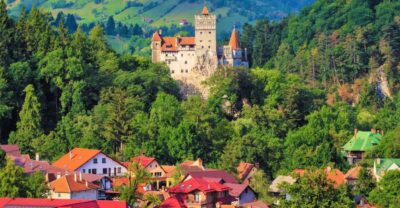
Dracula Castle, Peles Castle & Brasov Old Town
Read our review →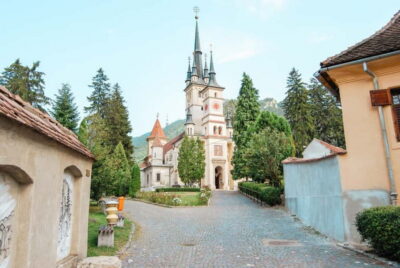
Dracula’s Castle, Peleș Castle & Brașov Day Trip
Read our review →
Day Trip to Dracula Castle, Peles Castle & Brașov
Read our review →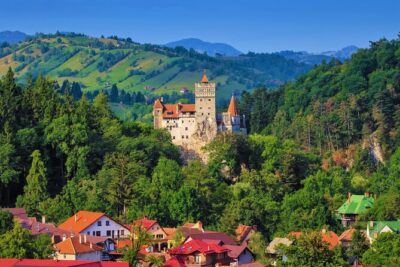
Bucharest to Dracula Castle, Peles Castle and Brasov Guided Tour
Read our review →