Reviewed · BUCHAREST TOURS
Private -RedPatrol Tour of Bucharest with a Romanian Vintage Car
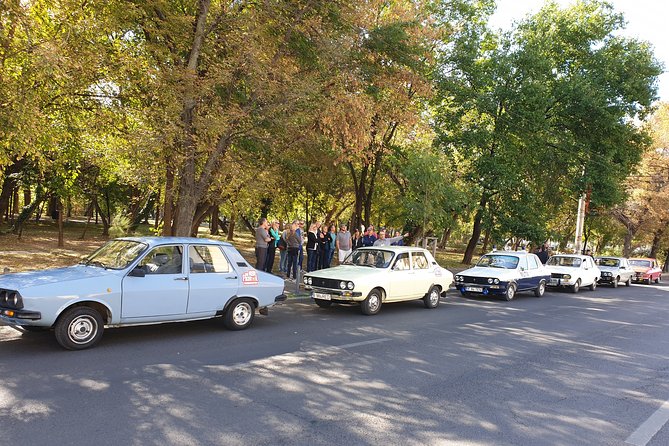
Bucharest makes more sense from the back seat of a 1970s or 1980s Dacia. This private Red Patrol tour links Revolution Square, Ceaușescu’s former home, Communist-era housing, and the huge Palace of Parliament with the unusual pleasure of driving a restored Romanian car. I especially like the personal guide and the chance to hear about Communism from someone with personal experience of it. The tour also includes hotel pickup, a small tour newspaper, a gift, and water, which keeps the three-hour outing simple.
The main catch is the car itself. A Dacia 1300 or 1310 is a genuine classic, not a modern comfort vehicle. There is no air-conditioning, ABS, GPS, power steering, or automatic transmission, and you need a valid driving license and ID if you plan to drive. For some people, that is the whole point. For others, riding as a passenger with the private driver will be wiser.
Key points to know before booking
- You can drive a restored Communist-era Dacia: Bring your driving license if you want hands-on time behind the wheel.
- The tour puts 1989 at the center: Revolution Square provides the clearest link between Romania’s Communist period and its sudden end.
- You get a private route and flexible start time: Hotel pickup is available from addresses across Bucharest.
- The guide adds personal context: Commentary includes everyday life under Communism, not only dates and building names.
- The car has real limitations: No air-conditioning, ABS, GPS, power steering, or automatic gearbox.
- The route mixes famous sights with oddities: Expect grand government buildings, unfinished projects, housing blocks, and a former dictator’s home.
Why a Dacia is the right way to see Communist Bucharest
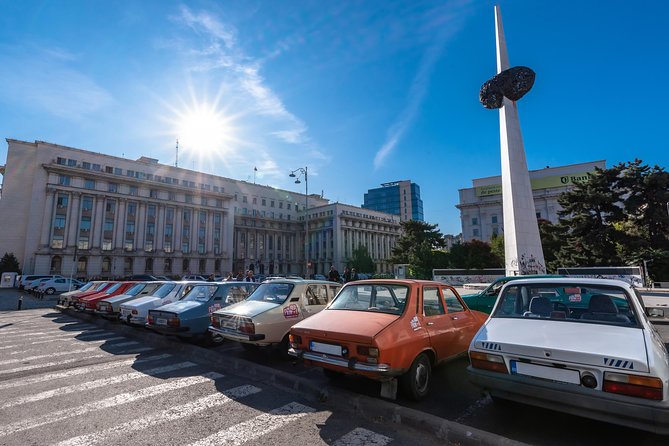
The car is not a prop added after the fact. It is part of the lesson.
The Dacia 1300 and 1310 were common Romanian cars during the Communist years. On this tour, you use a fully restored classic from the 1970s or 1980s to move through places shaped by that same period. The effect is more direct than riding in a standard minibus. The modest interior, older controls, and manual gearbox connect the machine to the streets and buildings outside.
You can choose to drive, provided you bring a valid license on the day of the tour. If you prefer to watch the city, a private driver can handle the car. I would choose driving only if you are comfortable with an older manual vehicle and are happy to give up some attention to the scenery. You will not have power steering, automatic transmission, GPS, or ABS to help you.
The lack of air-conditioning matters in warm weather. Dress comfortably for driving, and remember that the car is heated during winter. The vehicles meet current traffic safety rules, but they remain classics. That means charm, noise, and old-fashioned handling rather than modern polish.
A few more Bucharest day trips to weigh up
- Bucharest: Dracula’s Castle, Peles Castle, & Brasov Old Town
★ 4.5 · 17,858 reviews - Bucharest: Dracula Castle, Peles Castle & Brasov Old Town
★ 4.6 · 10,891 reviews - Bucharest: Dracula’s Castle, Peleș Castle & Brașov Day Trip
★ 4.5 · 5,919 reviews
Revolution Square and the story of 1989
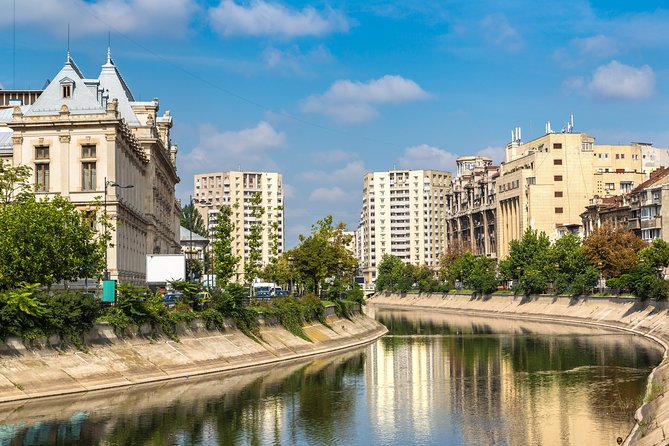
The tour begins at Revolution Square, with about 30 minutes for the site and its story. This is the emotional center of the route because it links the beginning and end of Communism in Romania.
Your guide explains the political events that unfolded here and places the square within the larger fall of Nicolae Ceaușescu’s regime. The value is not just the monument or the open space. It is the chance to connect a visible Bucharest location with the country’s sharp political break in 1989.
This stop works best if you want context before seeing the later Communist buildings. The rest of the tour becomes easier to follow once you understand how the regime ended and why its architecture still fills so much of the city.
Admission is free. The stop lasts long enough for a short explanation, photographs, and questions without taking over the whole outing.
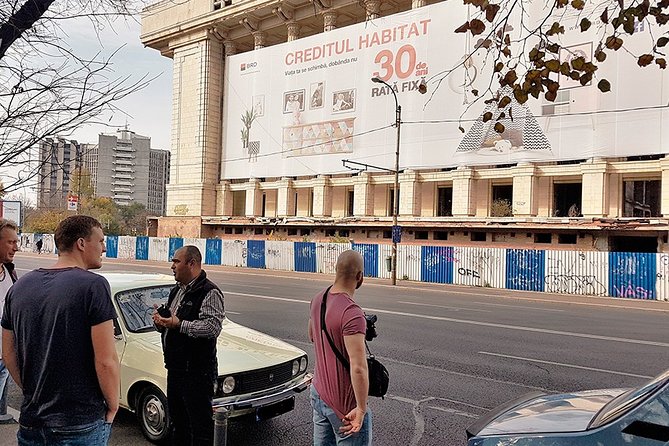
Casa Radio, an unfinished palace by the river
Casa Radio receives about 20 minutes. It is presented as one of Bucharest’s Communist ghost palaces, a large project that never reached the purpose or finish its planners intended.
This is one of the more unusual stops because it shows failure rather than official triumph. Communist architecture often aimed to project order, strength, and progress. An incomplete or underused building tells a different story. It shows the cost of grand plans and the gap between state ambition and practical results.
You stop for stories and photographs. Admission is not included, and the visit is mainly an exterior exploration with commentary. Do not expect a polished museum visit or a long indoor tour. The appeal lies in seeing a strange piece of the city and understanding why it remains such a potent symbol.
Academia Română and the unfinished Socialist Academy
The former Socialist Academy receives a shorter 10-minute stop. Your guide gives a brief presentation and time for pictures.
Like Casa Radio, this building helps explain how Communist-era projects were meant to communicate authority. The short visit keeps the route moving, but it also means you should treat it as a visual and historical pause rather than a full attraction.
I like this part of the tour because it widens the story beyond Ceaușescu’s personal residence and the better-known Palace of Parliament. You see the system’s institutional side, including the buildings created for political and intellectual control.
Same corner of the country, a completely different day out:
- Bucharest: Palace of Parliament Tickets and Guide
★ 4.3 · 3,182 reviews - Bucharest: Day Trip to Dracula Castle, Peles Castle & Brașov
★ 4.4 · 3,049 reviews - Bucharest to Dracula Castle, Peles Castle and Brasov Guided Tour
★ 4.5 · 2,933 reviews - Bucharest: Palace of Parliament Tickets and Guided Tour
★ 4.4 · 1,877 reviews
The Palace of Parliament and the scale of power
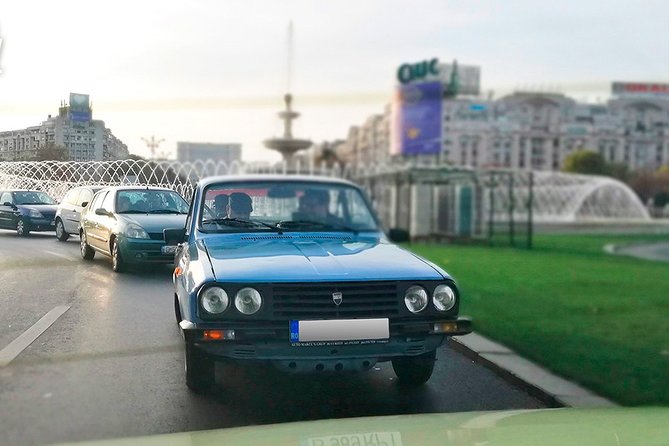
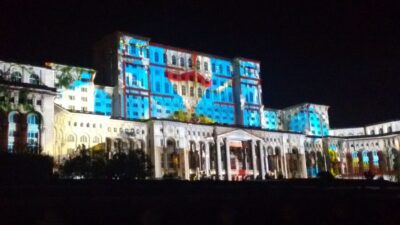
The Palace of Parliament gets about 30 minutes. It is described as the second-largest administrative building in the world, and its scale is difficult to ignore even from outside.
The building is the clearest expression of Ceaușescu’s taste for monumental projects. It also gives your guide a chance to explain how the Communist government reshaped central Bucharest to create a grand political quarter. The building is impressive, but the human cost and disruption behind that construction are just as important.
Admission is not included, so this tour does not promise a full interior visit. The stop is better understood as an exterior presentation and photo opportunity within a wider driving route. If you specifically want to explore the interior rooms, you should check separate entry arrangements before booking.
A half-hour is enough to see the building in context without turning the day into an architectural-only excursion. You also get a useful contrast between the monumental government center and the ordinary residential blocks that follow.
Housing blocks and the city built for ordinary life
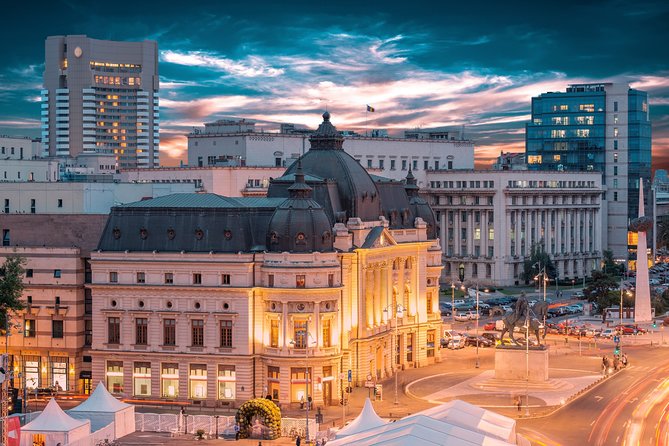
The route continues through Communist apartment blocks and residential quarters. These sections may be less famous than the Palace of Parliament, but they are central to understanding how Bucharest changed.
The buildings show the practical side of the era: large numbers of people housed in standardized apartment blocks, planned neighborhoods, and broad routes designed around a growing capital. Your guide can connect these streets to daily life under Communism, including the experience of living in a system where private choices were limited and the state shaped so much of the built environment.
This is where the Dacia adds real value. You are not only stopping at official monuments. You are riding through the city fabric, looking at the neighborhoods where ordinary residents lived. The tour also passes the Romanian Government’s residential quarter, giving you another view of how political and domestic space were organized.
Some passengers may find these driving sections less visually dramatic than the major monuments. I would still keep them in the experience. They supply the missing middle of the story and prevent the tour from becoming a parade of famous buildings without context.
Early 20th-century Bucharest and a change of mood
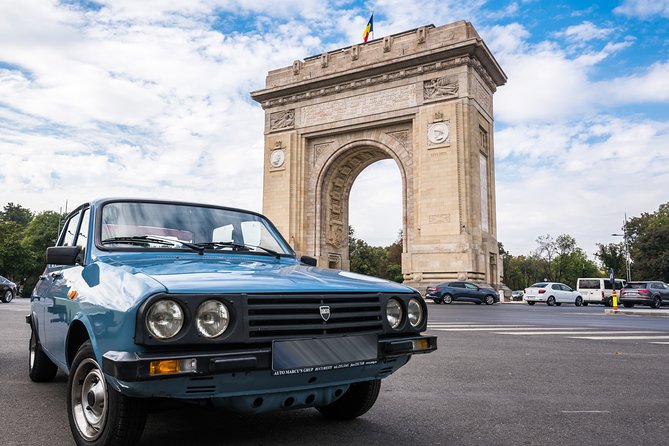
The route also includes a panoramic drive through an area built in the early 20th century. This gives you a break from the Socialist period and lets you compare older Bucharest with the later city imposed by the Communist government.
The contrast is useful. You see how the capital developed before the large-scale Communist rebuilding, then how later political decisions altered its streets and neighborhoods. Because this portion is panoramic, the emphasis is on seeing the area from the car rather than stopping at every building.
There is also a full car ride along one of Bucharest’s oldest boulevards. That stretch makes good use of the vehicle. Instead of rushing from one ticketed attraction to another, you get time to watch the city pass at street level.
Ceaușescu’s private residence
The former private home of Nicolae Ceaușescu receives about 15 minutes. Your guide gives a short presentation about the residence and its former occupants.
This stop brings the political story into a domestic setting. The Palace of Parliament shows public power on a vast scale. The house offers a more personal angle, helping you consider how the ruling family lived while much of the country faced restrictions and shortages.
The visit is described as a brief presentation, and admission is not included. You should not book this tour expecting an extended house museum visit. Its purpose is to add another piece to the portrait of Ceaușescu and the world around him.
The unification monument and the House of the Free Press
The tour includes a presentation of Romania’s unification monument, then continues to the House of the Free Press for about 20 minutes. The press building is included in the tour and gives you another strong example of Communist-era public architecture.
The House of the Free Press was tied to the Communist press system, so it offers a direct way to discuss media control and official messaging. The stop is not just about an oversized facade. It helps show how the regime used institutions, buildings, and public information to shape what people saw and believed.
The nearby area also supports the broader discussion of Bucharest’s Communist planning. With the guide’s explanations, the route moves from government power to housing, from private life to media, without losing its central theme.
A guide who explains more than dates
The guide is a major part of the value. The experience is led by a professional local guide in your private car, and the commentary includes personal experiences of Communism. One guide praised for the tour is Serban, whose storytelling and explanation of the Dacia helped make the outing memorable.
Personal testimony can change the tone of a history tour. Instead of hearing only when buildings were constructed, you get a sense of how the political system affected ordinary routines and expectations. That kind of explanation is especially useful in Bucharest, where Communist structures can otherwise look like disconnected concrete monuments.
I would use the private format to ask direct questions. You can pause over subjects that interest you, ask about a building, or request more explanation about daily life. A larger group would make that harder. The private setup also means the tour can begin at a time that suits your schedule.
What the $120.68 price means
At $120.68 per person, this is not a bargain sightseeing bus. The price makes more sense when you count what is included: hotel pickup and drop-off in Bucharest, a private guide, a private driver if needed, the restored Dacia, bottled water, a tour newspaper, and a personalized gift.
The key value is privacy. You are paying for a specialized route, a classic car, and one-on-one access to a local guide rather than a standard city circuit. Group discounts may improve the price for a larger party, but the per-person cost still needs to fit your interest in Communist history and unusual transport.
I would book it if you want a focused historical experience and enjoy vehicles with character. I would not choose it as your only Bucharest tour if you mainly want churches, museums, cafes, or a broad introduction to the whole city. The route is tightly centered on Communism and its physical remains.
Timing, weather, and practical comfort
Plan on three to three and a half hours. Pickup is available from all addresses in Bucharest, which saves you the trouble of finding a meeting point and makes the tour easy to fit into a busy city break.
The experience requires good weather. If poor weather forces a cancellation, you are offered another date or a full refund. For your part, wear comfortable clothes suitable for driving and bring your ID card and driving license.
The tour is not suitable for children under 10 or pets. Most people can participate, but the driving requirements and older car controls are worth taking seriously. If you have doubts about driving a classic manual car, take the passenger seat and let the private driver do the work.
You can cancel for a full refund up to 24 hours before the start time. Changes or cancellations made inside that window are not accepted for a refund.
Who should book this Bucharest tour?
I recommend it most strongly for:
- People interested in Nicolae Ceaușescu and Romania’s Communist period
- Couples or small private groups wanting a flexible start time
- Visitors who enjoy classic cars and would like to drive one
- First-time visitors who want hotel pickup and a guide-led route
- Anyone who values personal stories over a standard monument checklist
I would think twice if you dislike old cars, need air-conditioning, or want a full interior visit at the Palace of Parliament and Ceaușescu’s house. This is also not the best fit for families with children under 10, since they cannot participate.
Should you book the Red Patrol Dacia tour?
Book it if the idea of seeing Bucharest from a restored Communist-era Dacia sounds as interesting as the monuments themselves. The car, the private format, and the guide’s personal stories give the tour a clear identity. The small newspaper and personalized gift are thoughtful extras, but the real value is the combination of access, context, and unusual transport.
Skip it if you want a general city tour or modern vehicle comfort. The Dacia has no air-conditioning, ABS, GPS, power steering, or automatic gearbox. For the right person, those limits make the experience feel authentic. For everyone else, they are a warning to ride as a passenger.
FAQ
How long does the Red Patrol tour last?
The tour lasts approximately three to three and a half hours.
Is hotel pickup available in Bucharest?
Yes. Pickup and drop-off are available from all addresses in Bucharest.
Can I drive the Dacia myself?
Yes, you can drive if you bring a valid driving license on the tour date. You should also bring your ID card. A private driver is included if you prefer not to drive.
Does the Dacia have air-conditioning or an automatic gearbox?
No. The classic Dacia cars do not have air-conditioning, ABS, GPS navigation, power steering, or automatic transmission. The cars are heated during winter.
Are children and pets allowed?
Children under 10 years old and pets are not allowed to participate.
What happens if the weather is poor?
The experience requires good weather. If it is canceled because of poor weather, you are offered a different date or a full refund.
Just added around Bucharest
- Private Full Day Tour of Bucharest★ 5.0 · 3 reviews
- Veliko Tarnovo and Medieval Bulgaria Private Day Trip from Bucharest★ 5.0 · 3 reviews
- Bucharest VIP Bar Crawl in Lipscani ‘Old Town’★ 5.0 · 3 reviews
- Bucharest Private City Tour★ 5.0 · 3 reviews
- Muddy Volcanoes and Salt Mine Private Tour★ 5.0 · 3 reviews
- Legends & Stories from Transylvania -2 Castles & Brasov Old Town★ 5.0 · 3 reviews
- Transfagarasan Private Tour from Bucharest – 2 Days★ 5.0 · 3 reviews
- 7-Day Dracula Tour in Romania from Bucharest including ‘The Ritual of Killing of a Living Dead’★ 5.0 · 3 reviews
Bucharest Tours, compared.
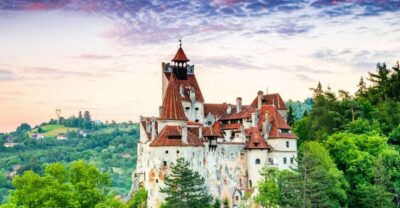
Dracula’s Castle, Peles Castle, & Brasov Old Town
Read our review →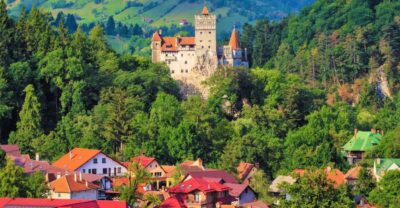
Dracula Castle, Peles Castle & Brasov Old Town
Read our review →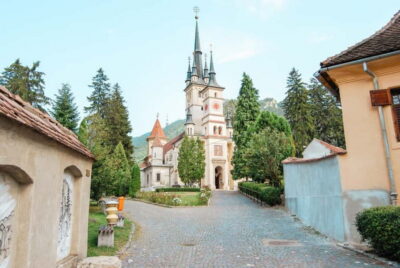
Dracula’s Castle, Peleș Castle & Brașov Day Trip
Read our review →
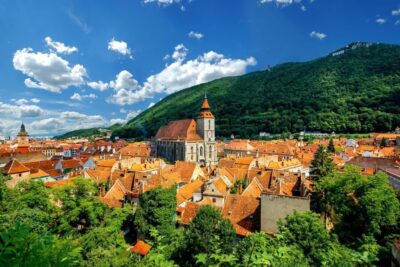
Day Trip to Dracula Castle, Peles Castle & Brașov
Read our review →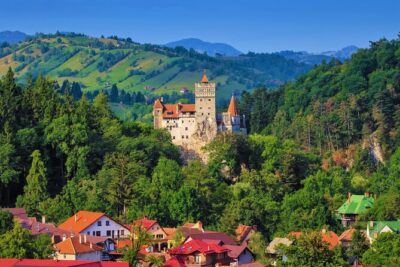
Bucharest to Dracula Castle, Peles Castle and Brasov Guided Tour
Read our review →