
Reviewed · PARLIAMENT PALACE TOURS
Skip the Line Ticket of the Palace of Parliament in Bucharest
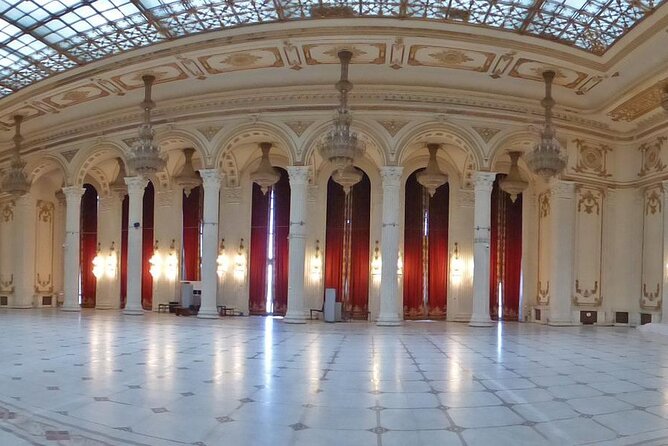
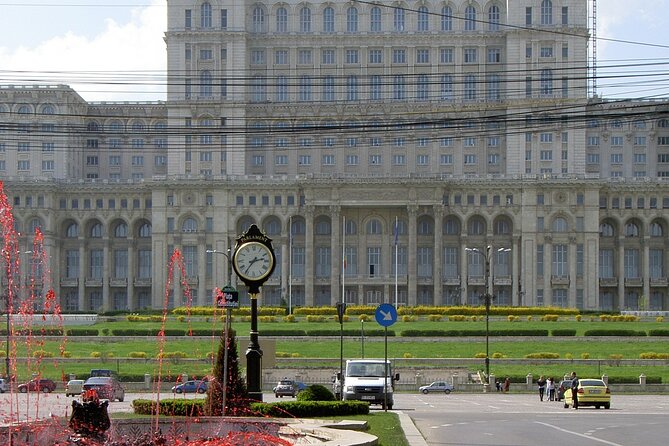
Bucharest’s Palace of Parliament is less a normal sight than a giant political relic. Built from 1984 under Nicolae Ceaușescu, it was planned for Communist ministries, party offices, and elite apartments. Inside, you’ll see marble, crystal, carpets, carved decoration, and broad empty halls made from Romanian materials. The scale is the main event.
I like the English-speaking guides, especially Francisc, who has been praised for clear explanations, humor, and frank discussion of the building’s human cost. I also like that the ticket saves you from arranging admission at the building yourself. The catch is simple: you see only a small part of this enormous complex, and the changing entrance rules can cause real confusion.
Key points to know before booking
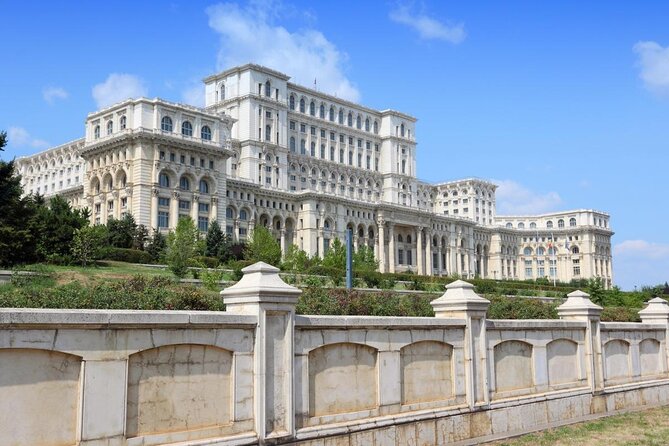
- The building began in 1984: It was created as a symbol of Communist power, not as a public house for ordinary citizens.
- Expect about one hour inside: The route includes grand halls, conference rooms, staircases, galleries, and some parliamentary spaces.
- The balcony is currently unavailable: Do not book this visit expecting the famous view over the main square.
- Security is airport-style: Large luggage, dangerous objects, and bottles containing liquids are prohibited.
- The entrance changes by day: Weekdays use A3S2 near Izvor Park. Weekends generally use A1 at the Romanian Senate on Calea 13 Septembrie.
- Bring the right identification: A passport or EU identity card is required. Copies and driving licences are not accepted.
Why the Palace of Parliament matters
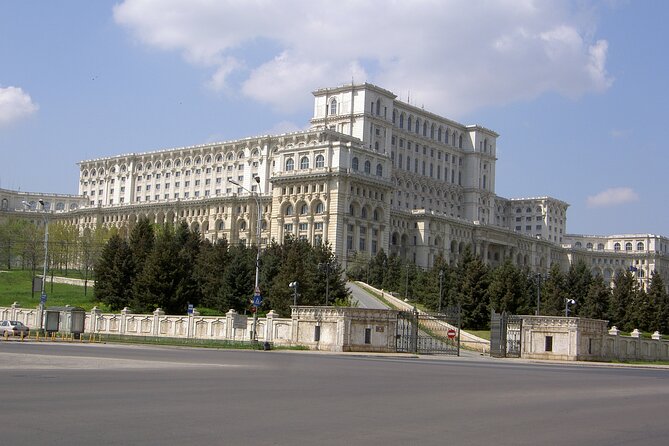
The Palace of Parliament tells two stories at once. One is about engineering and decoration: an immense building raised in the center of Bucharest, filled with local marble, crystal, carpets, curtains, stucco, and hand-finished work. The other is about power, forced change, and the priorities of a dictatorship.
The building was first called Casa Republicii, then the House of the People. The second name carries a sharp irony. It was built to serve the Communist state and its senior officials, while large sections of Bucharest were cleared to make room for it. The lavish interior was meant to project strength and permanence.
You do not need to be an architecture specialist to understand the message. Wide corridors, huge rooms, heavy materials, and repeated grand staircases all work together to make you feel small. Some rooms are decorated almost to excess. Others are so large and lightly furnished that they can feel cold.
That contrast is worth paying attention to. The tour is not simply a parade of pretty interiors. A good guide connects the building’s marble and crystal to the political system that ordered it into existence. The most praised guides, including Francisc, appear to do this with a mix of facts, humor, and direct discussion of the damage caused by construction.
More Palace of Parliament visits:
- Bucharest: Palace of Parliament Tickets and Guide
★ 4.3 · 3,182 reviews - Bucharest: Palace of Parliament Tickets and Guided Tour
★ 4.4 · 1,877 reviews - Bucharest: Parliament Palace Skip-the-line Ticket
★ 4.2 · 1,518 reviews
What you see during the one-hour route
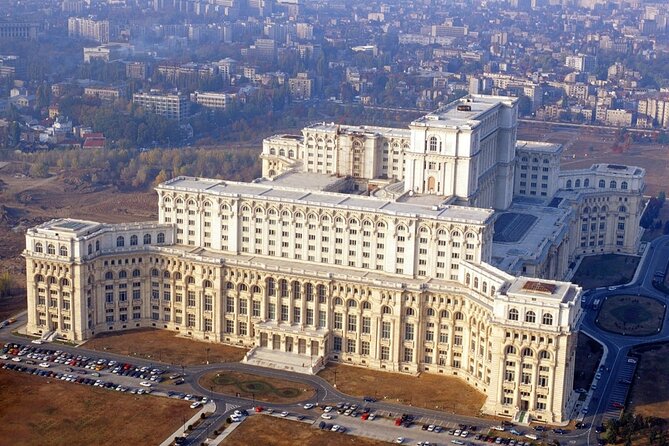
The route is designed as an introduction rather than a full exploration. This is an enormous complex with twelve stories and four underground levels, including a nuclear bunker. The public visit does not take you through every level, office, basement, technical room, or restricted area.
You can expect the main staircases, large hallways, galleries, conference halls, and selected parliamentary rooms. The Senate chambers can be especially impressive when they are included in the route. Marble floors and columns give the interiors their strongest visual impact, while carpets, curtains, crystal fittings, and stucco add layers of decoration.
The exact number of rooms can vary. On one visit, the route may include two large halls and three conference rooms. On another, an active parliamentary area or a different group of rooms may be available. Events and official business inside the building can limit access.
That matters because some people arrive expecting a tour of the whole palace. You will not get that. The visit offers a carefully controlled glimpse of the building, enough to grasp its scale and design, but not enough to satisfy someone determined to inspect every wing.
The main balcony, which would provide a memorable view across the square, is not currently available. Treat this as an important planning detail, not a minor footnote. If the balcony is the reason you want to go, this particular visit may disappoint.
The guide makes the difference
The building can easily become a procession of empty rooms. Without context, you may notice the marble and grand proportions but miss the meaning behind them. The guide’s job is to turn the palace from a cold collection of halls into a readable piece of Romanian history.
Francisc has been praised for being polite, funny, clear, and well prepared. Another guide was described as open to questions and friendly while explaining the construction process and the decisions behind the design. Those qualities matter here because the building itself does not explain much.
You should expect information about how the palace was planned, why it was built, and how it affected the surrounding city. The strongest part of the experience is likely to be the explanation of the contradiction between the official name House of the People and the building’s actual purpose.
English is offered, making this a practical choice if you want more than a silent walk through monumental rooms. The guide or representative also helps the group manage the arrival process, security check, and ticket validation.
Still, keep expectations realistic. This is not a private architecture seminar. The tour lasts about an hour, access is controlled, and the guide cannot open areas that are closed for security or official events.
Getting to the correct entrance
The biggest practical weakness is not the palace itself. It is finding the correct door.
On weekdays, from Monday through Friday, you are instructed to go to the A3S2 entrance, accessed from 2 to 4 Izvor Street beside Izvor Park. After passing security, look for the coffee shop area inside the building, near Constantin Brancusi Hall. The representative should wear a CT&T badge.
On Saturdays and Sundays, access is generally from Calea 13 Septembrie, at the A1 entrance of the Romanian Senate. This is a different side of the building. Do not assume that the weekday address applies at the weekend.
Give yourself extra time. The palace is huge, the entry points are not interchangeable, and local drivers may not recognize the precise entrance from a general address. Use the map and entrance name sent with your booking. Read any reminder message the day before, then check it again before leaving your hotel.
Arrive well before the stated start time. The representative is expected to meet the group before security and help with the process. If you arrive after the group has gone inside, the ticket may not be usable, and a refund may not be available.
The confusing entrance system has caused missed tours. In some cases, visitors were offered a later visit, but that is not something you should count on. The safest approach is to treat the entrance instructions as essential, not optional.
A few more Bucharest day trips to weigh up
- Peles Castle Skip-The-Line Guided Tour
★ 5.0 · 13 reviews
Security is part of the timetable
Entry involves an airport-style security check. This can mean queues, bag inspection, and delays before you reach the public rooms. A family with young children or a slow-moving group can add more time, so do not schedule another activity immediately afterward.
The restrictions are firm. Large luggage, dangerous objects, and bottles containing liquids are prohibited. Bring only what you need for the visit. A small personal bag may be subject to inspection, but the supplied information does not promise storage, so avoid arriving with anything bulky.
Identification is mandatory. Bring your passport or an EU identity card. Copies are not accepted, and neither is a driving licence. This rule applies to entry into the building, so checking your documents before leaving is one of the simplest ways to avoid a wasted booking.
The security procedure also explains why the representative may spend more time with you before the tour than you expect. The meeting is not just a ticket handoff. It helps gather the group, confirm access, and get everyone through the control point.
Is $28.91 a fair price?
At $28.91 per person, this is not the cheapest way to spend an hour in Bucharest. The value depends on what you want from the visit.
You are paying for an admission ticket, an English-language guided route, and help navigating a complicated government building. If you tried to arrange entry alone and ended up at the wrong entrance or missed an official tour time, the saving would quickly disappear.
The price is easier to justify if you care about modern Romanian history, political architecture, or unusual civic buildings. You get a close look at a place that is difficult to understand from the outside. The guide adds the essential background, and the interior materials are genuinely impressive.
The value drops if you want broad access. You may see only a handful of rooms, no basement, no technical areas, and no private sections. The balcony is currently closed. If your main goal is to explore a large number of rooms, the ticket may feel expensive for the amount of space covered.
I would compare it with the cost of other guided attractions in Bucharest, but I would not judge it by room count alone. The palace is so large that even a small official route gives you a useful sense of its scale. Just know that you are buying a focused introduction, not a complete building tour.
Who will enjoy this visit most?
This experience suits you if you want a clear introduction to Ceaușescu-era Bucharest and prefer an English guide to explain what you are seeing. It is also a good fit for first-time visitors who want one major sight that is difficult to arrange without assistance.
Architecture fans will appreciate the local marble, crystal, carpets, curtains, staircases, and monumental proportions. History-minded visitors will get more from the political context and the discussion of how the palace changed the city.
You should think twice if you dislike queues, security checks, strict identification rules, or controlled access. The visit may also feel slow for toddlers, especially during the wait to enter. A moderate level of physical fitness is advised, so you should be comfortable walking through large public interiors and standing during the entry process.
This is not the best choice for anyone seeking a relaxed, flexible visit. The timing matters, the entrance matters, and the route cannot be adjusted around your interests.
How to make the most of the experience
Before booking, save the exact entrance details on your phone. Write down the meeting time, street, entrance code, and nearby landmark. For a weekday visit, remember A3S2 and Izvor Park. For a weekend visit, remember A1, the Romanian Senate, and Calea 13 Septembrie.
Arrive early enough to find the building without rushing. Fifteen minutes may not feel excessive here, especially if you are unfamiliar with Bucharest. Do not rely on a taxi driver to solve the final approach.
Bring your passport or valid EU identity card. Leave large bags and liquids elsewhere. Since the balcony is unavailable, plan to enjoy the building for its interiors rather than for a promised city view.
Once inside, listen for the details that explain why each room exists. Look at the materials, but also ask what they were meant to communicate. Notice the scale of the corridors and the lack of ordinary domestic warmth in many spaces. The best visit combines the visual shock of the palace with an understanding of the system that built it.
You may also want to leave room in your Bucharest schedule after the tour for a walk around the exterior and surrounding streets. The ticket itself focuses on the interior, while the building’s position and size are easier to grasp from outside.
Cancellation and booking timing
The tour is often reserved around 16 days ahead, so booking early is sensible if your Bucharest dates are fixed. The stated price is $28.91 per person, and confirmation is provided at booking.
Free cancellation is available until 24 hours before the experience begins. Cancellations made less than 24 hours before the start time are not refunded, and changes within that period are not accepted.
The operator can cancel in unusual circumstances, including official restrictions linked to an unstable political situation. If that happens, you should receive notice, but the possibility is another reason not to build an entire weekend around this one timed visit.
Should you book the Palace of Parliament ticket?
I would book it if you want to understand Bucharest through one enormous, unsettling, visually powerful building. The English guide, included admission, and assistance with entry make the $28.91 price reasonable for a first visit, especially if you appreciate political history and grand architecture.
I would skip it if you expect to see the basements, nuclear bunker, technical rooms, private areas, or the full palace. You should also skip it if you cannot bring the required identification or if a complicated entrance and airport-style security would sour the day.
For the best chance of a smooth visit, book ahead, read the meeting instructions carefully, arrive early, and confirm the correct entrance for your day of the week. Go for the scale, the craftsmanship, and the story behind the building, not for the number of rooms or the unavailable balcony.
FAQ
How long does the Palace of Parliament tour last?
The visit lasts approximately one hour.
How much does the ticket cost?
The listed price is $28.91 per person.
Is the tour offered in English?
Yes. English-language guiding is offered.
Where do I meet on a weekday?
From Monday to Friday, meet at the coffee shop area inside the building after security, near Constantin Brancusi Hall. Access is through the A3S2 entrance from 2 to 4 Izvor Street, beside Izvor Park. Look for a CT&T representative wearing a badge.
Where do I meet on a Saturday or Sunday?
Weekend access is generally from Calea 13 Septembrie through the A1 entrance at the Romanian Senate, unless different instructions are provided in advance.
What identification do I need?
You must bring a passport or an EU identity card. Copies and driving licences are not accepted.
Can I bring luggage or bottles?
Large luggage, dangerous objects, and bottles containing liquids are prohibited because entry includes an airport-style security check.
Just added around Bucharest
- Private Full Day Tour of Bucharest★ 5.0 · 3 reviews
- Veliko Tarnovo and Medieval Bulgaria Private Day Trip from Bucharest★ 5.0 · 3 reviews
- Bucharest VIP Bar Crawl in Lipscani ‘Old Town’★ 5.0 · 3 reviews
- Muddy Volcanoes and Salt Mine Private Tour★ 5.0 · 3 reviews
- Bucharest Private City Tour★ 5.0 · 3 reviews
- Legends & Stories from Transylvania -2 Castles & Brasov Old Town★ 5.0 · 3 reviews
- 7-Day Dracula Tour in Romania from Bucharest including ‘The Ritual of Killing of a Living Dead’★ 5.0 · 3 reviews
- Transfagarasan Private Tour from Bucharest – 2 Days★ 5.0 · 3 reviews
Parliament Palace Tours, compared.
Palace of Parliament in Bucharest – fast-track tickets and guide
Read our review →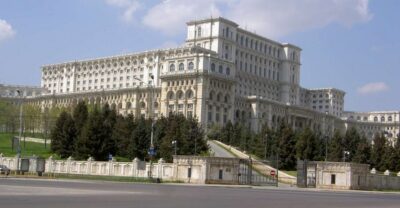
Parliament Senate Entry Tickets and Guided Tour
Read our review →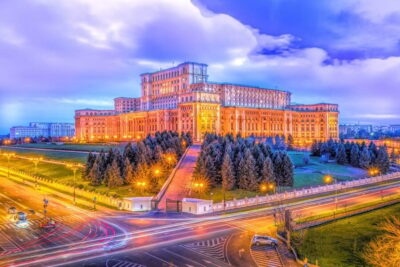
Palace of the Parliament, Village Museum & Ceaușescu Mansion
Read our review →
tour in the Parliament in Italian+exterior visit with guide
Read our review →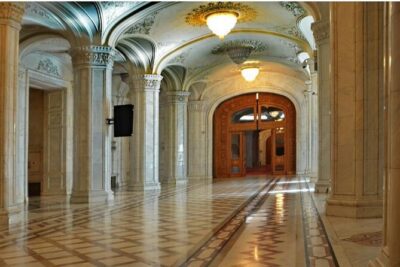
Bucharest Private Tour, Parliament Palace, Ceausescu House Visit
Read our review →Browse the lists this tour appears in