Reviewed · BUCHAREST TOURS
Troubled – Notorious Neighborhood – area known for social issues
Bucharest has a polished center, grand boulevards, and handsome old buildings. This private tour takes you somewhere very different: Ferentari, Rahova, and Sintești, places marked by poverty, social tension, and Roma communities living at very different economic levels. You travel mainly by vehicle, with walks through local markets and selected residential areas.
I like the access and the strong guide presence. Guides including Sebastian, Bogdan, Cătălin, Matthew, and Valerica explain what you are seeing, set limits on photography, and help you behave with care. I also like the range of stops, from low-income streets and markets to the ornate Roma houses of Sintești. The drawback is clear: this is not a light sightseeing outing. Some areas may feel uncomfortable, and the tour’s subject can easily become voyeuristic if you do not listen, ask politely, and keep your camera away when told.
Key points at a glance
- Three sharply different settings: See Ferentari and Rahova in Bucharest, then visit Sintești village for its large Roma houses.
- Mostly vehicle-based: The 3-hour-30-minute experience includes short walks through markets and neighborhood areas.
- Private group format: Only your party takes part, allowing more direct questions and a calmer pace.
- Guides set the ground rules: Sebastian, Cătălin, Valerica, Bogdan, and Matthew are among the guides named for this experience.
- Dress for discretion: Wear plain clothing and leave jewelry and expensive items behind.
- A serious social subject: You learn about poverty, Roma life, local codes of conduct, and the gap between hardship and wealth.
Why this Bucharest tour is different
Many city tours stay inside Bucharest’s historic core. This one heads toward districts that most first-time visitors would not find on their own, including addresses around Strada Zăbrăuţului, Aleea Iacob Andrei, Aleea Livezilor, Strada Pucheni, and Strada Amurgului.
The point is not simply to look at poor streets. A good part of the experience is the explanation around them: how local people shop, how Roma communities are viewed, what daily hardship can look like, and how some Roma families have built lavish homes while others live with very little. That contrast gives the outing more substance than a drive past run-down buildings.
The tour also includes local markets, including a flower market and a grocery market. You may have a chance to buy something yourself, but the larger value is seeing ordinary commerce and neighborhood life away from Bucharest’s visitor circuit.
I would approach this as a guided social-history outing, not as entertainment. The title uses sensational language, but the strongest parts of the experience come from respectful explanation and direct observation.
A few more Bucharest day trips to weigh up
- Bucharest: Dracula’s Castle, Peles Castle, & Brasov Old Town
★ 4.5 · 17,858 reviews - Bucharest: Dracula Castle, Peles Castle & Brasov Old Town
★ 4.6 · 10,891 reviews - Bucharest: Dracula’s Castle, Peleș Castle & Brașov Day Trip
★ 4.5 · 5,919 reviews
Ferentari: Bucharest’s hardest-edged stop
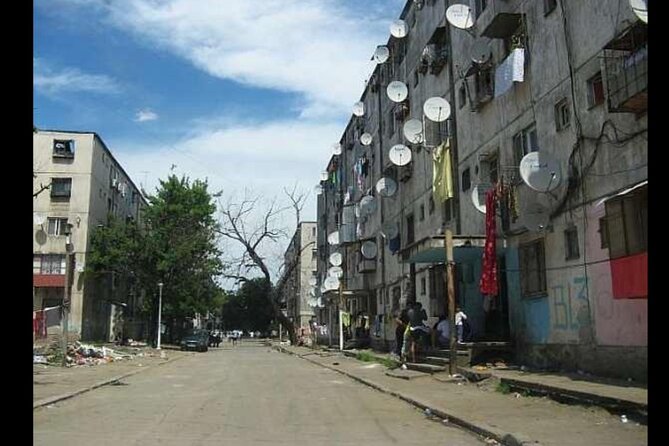
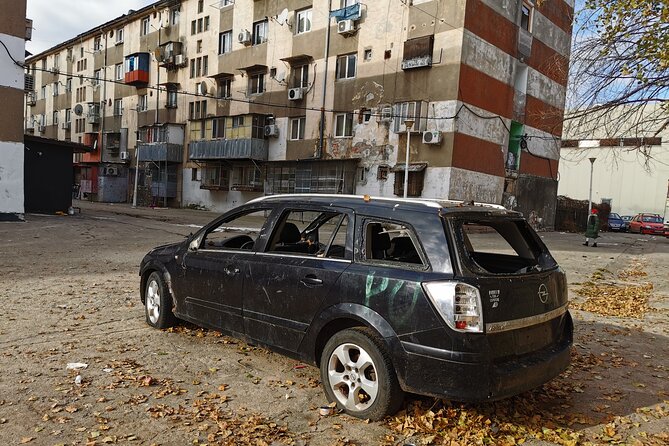
The first section lasts about 1 hour and 10 minutes and focuses on Ferentari, widely known as one of Bucharest’s poorest and most troubled neighborhoods. The tour presents it as an area with the lowest standard of living in the Romanian capital.
You are not simply dropped off and left to figure things out. The guide leads the visit, usually using the vehicle to move through the area and choosing where a short walk makes sense. That matters here. You need context for what you see, and you need someone who understands when a street, market, or residential area is appropriate for a brief stop.
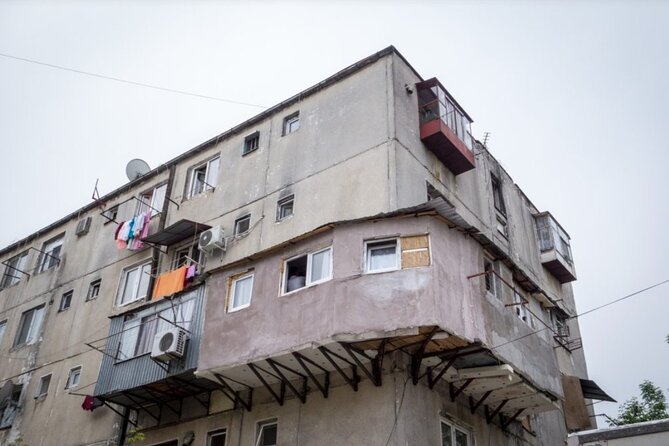
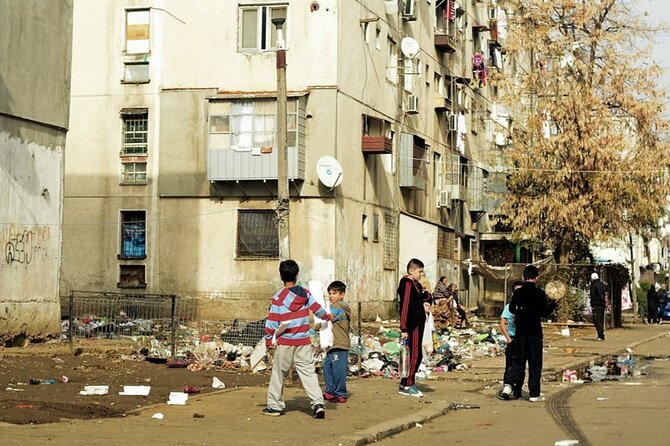
Ferentari can be confronting. You might see aging buildings, neglected public spaces, and signs of economic hardship. You may also notice the normal parts of local life that poverty does not erase: people shopping, talking, working, and moving through their neighborhood.
The guide’s role is especially important at this stop. Sebastian is described as good-humored and clear in his explanations, while Valerica is noted for being disciplined and careful about conduct. That combination is useful. You get information without turning the area into a stage.
Keep your phone in your pocket unless the guide says a photograph is acceptable. Do not point a camera at people, homes, or children. The tour’s own advice to dress simply and avoid jewelry is practical, not theatrical. Plain clothing reduces attention and helps signal that you are trying to pass through respectfully.
Rahova: markets, memories, and a former prison
The second 1-hour-and-10-minute section moves to Rahova, another Bucharest neighborhood with a large Roma population and a difficult reputation. The route includes areas around Aleea Livezilor and Strada Pucheni, as well as the former Rahova Penitentiary at Strada Adrian 4.
Rahova gives the tour room to show more than deprivation. The market stops are important because they bring you closer to daily routines. You may walk through a local food or flower market, watch people buy groceries, and, if the guide considers it suitable, make a purchase. These moments can feel more natural than a formal landmark visit because you are seeing a place used for practical reasons, not prepared for an audience.
The penitentiary adds another layer. The tour identifies Rahova as a district associated with a feared prison, and the guide explains its place in the neighborhood’s story. Do not expect a full prison tour or a museum visit. The attraction here is the setting and the account that connects it to local history.
Some of the walking takes place in areas where you would not be welcome alone. That is one reason the private format and guide supervision matter. A private group can ask direct questions, stop when needed, and avoid the noisy, detached feeling of a large coach tour.
Still, access is not permission to act casually. Cătălin is described as clear about what is and is not possible, and that is exactly the kind of guidance you need. If you are asked not to photograph, do not bargain. If a resident does not want to speak, move on.
Sintești and the Roma palaces
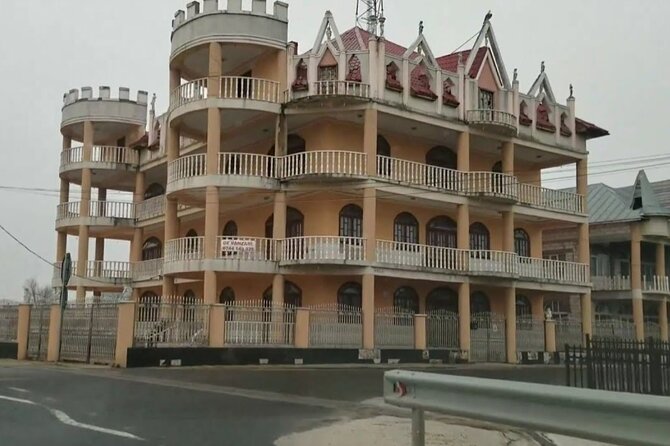
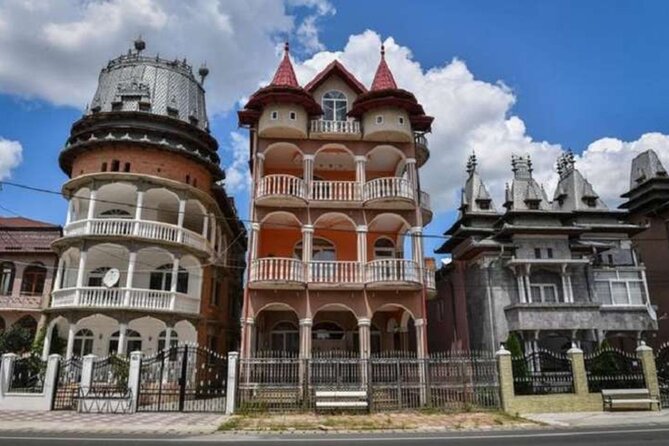
The final section takes you outside Bucharest to Sintești village, listed at Strada Principală Nr. 353A. It lasts about 1 hour and 10 minutes and changes the visual tone of the tour.
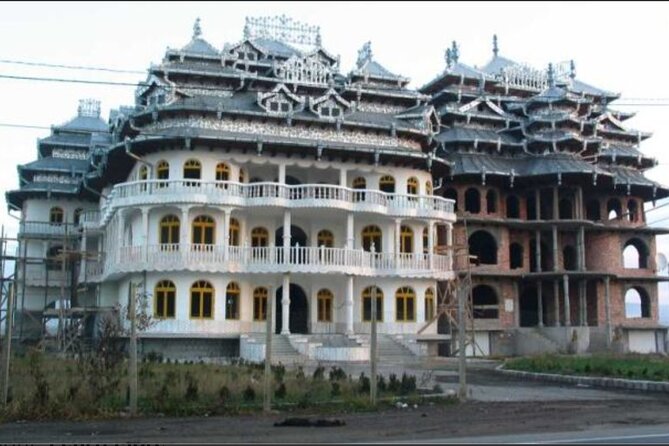
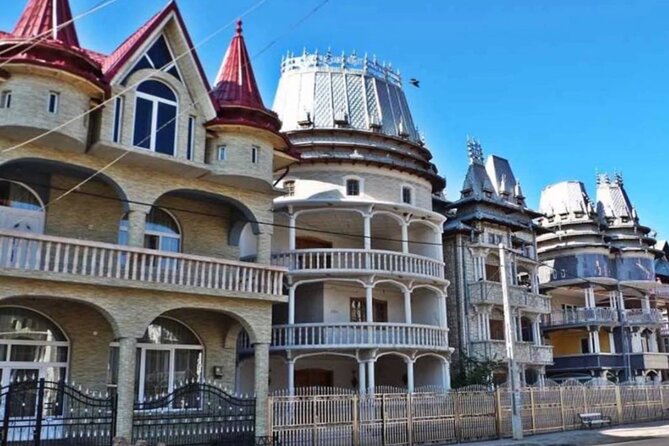
Sintești is known for its large Roma houses, often called Roma palaces. Their size and decoration can be striking, especially after seeing the poorer streets of Ferentari and Rahova. The contrast is central to the experience. Roma communities are not economically uniform, and this stop helps break the lazy idea that every family lives in the same way.
The guide discusses the gap between extreme poverty and visible wealth, along with the social and economic forces behind it. The information provided for the tour even points to questions about how some wealthy Roma families make their money. Treat that subject with care. The tour can raise difficult issues, but you should not assume that a grand house proves anything illegal or that one family represents an entire community.
Sintești is also a reminder that this is not only a Bucharest neighborhood tour. The drive adds a rural stop and widens the story beyond the capital. You see how the same broad community can have very different living conditions in different places.
The palaces are worth seeing, but this section should not become a parade of houses. Pay attention to the explanations, the social contrast, and the guide’s instructions about where you may stand and what you may photograph.
Same corner of the country, a completely different day out:
- Bucharest: Palace of Parliament Tickets and Guide
★ 4.3 · 3,182 reviews - Bucharest: Day Trip to Dracula Castle, Peles Castle & Brașov
★ 4.4 · 3,049 reviews - Bucharest to Dracula Castle, Peles Castle and Brasov Guided Tour
★ 4.5 · 2,933 reviews - Bucharest: Palace of Parliament Tickets and Guided Tour
★ 4.4 · 1,877 reviews
The guides make or break the experience
The named guides include Sebastian, Matthew, Bogdan, Cătălin, and Valerica. Their reported strengths differ slightly, but the useful pattern is clear: you need a guide who can explain sensitive subjects, keep the group safe, and know when humor is appropriate.
Sebastian is described as engaging, well informed, and able to add some city history to the neighborhood visit. Bogdan is noted for his friendly manner and explanations of Bucharest’s past. Cătălin is praised for clearly explaining the history of Roma communities and for setting practical boundaries. Valerica is described as careful, disciplined, and willing to spend time on Roma customs, daily life, and hardship.
That range matters because this tour can become uncomfortable if the guide treats poverty as a spectacle. The best approach is calm and direct. You should hear about local life while also being reminded that real people live in the streets you are visiting.
The guides also add small touches that make the outing less grim. A joke at the right moment can ease tension, and some guides add pieces of general Bucharest history along the way. But do not expect a polished scripted show. This is a conversation-led experience, and the quality will depend partly on the guide assigned to your group.
Safety, clothing, and respectful conduct
The operator advises you to dress as simply as possible, without jewelry or expensive items. Follow that advice. Choose plain, comfortable clothes, keep valuables out of sight, and bring only what you need.
The tour is private, so only your group participates. That is a real advantage in sensitive areas. You can stay close to your guide rather than being separated in a large crowd, and the guide can adjust the discussion to your questions.
Most people can participate, and the meeting points are near public transportation. Pickup is offered, which makes the logistics easier, though the supplied information does not specify the pickup area or whether every Bucharest address qualifies. Confirm that detail when booking if it affects your plans.
Photography deserves special attention. The experience includes places where residents may object to pictures or filming. Ask first, follow the guide’s instructions, and never treat people as scenery. You may find opportunities to speak briefly with local residents, but conversation should be invited, not forced.
This is also a poor choice if you want a relaxed morning of famous sights. The subject includes poverty, prejudice, prison history, social exclusion, and uncertain living conditions. Go with curiosity and restraint.
What the $130.83 price means
At $130.83 per person, this is expensive compared with a standard group walking tour of central Bucharest. The price needs to be judged by what you are buying: about three and a half hours, a private group, pickup availability, transportation between several separated locations, and access that would be difficult to arrange responsibly on your own.
The private format is the biggest value point. You are not paying only to look at streets. You are paying for a guide who knows where to go, how long to stop, and how to handle sensitive encounters. That has practical value in districts where wandering with a camera could be intrusive or unsafe.
The price makes less sense if you only want unusual photographs or a quick look at poor neighborhoods. You can find cheaper ways to see Bucharest’s outskirts, but they would not offer the same structure or local explanation. Group discounts may improve the cost for larger parties, so check the final rate if you are booking with friends or family.
The tour is often reserved well ahead of time, with an average booking point about 48 days before the date. That suggests you should not leave it until the last minute if the schedule is important to you.
Who should book this experience
I would recommend it to you if you have already seen central Bucharest and want to understand the city’s social divisions. It also suits people interested in Roma history and present-day life, urban poverty, local markets, or the parts of a capital that official sightseeing often leaves out.
It works best for adults and older children who can listen, avoid intrusive behavior, and handle difficult scenes. The private setting is helpful for people who prefer asking questions without a large group around them.
I would skip it if you want grand architecture, easy photo opportunities, or a cheerful introduction to Bucharest. I would also think twice if you are mainly interested in seeing poverty as a visual experience. Without respect, the tour can feel exploitative rather than useful.
The strongest version of this outing is educational. You see several levels of Roma life, hear about the pressures facing poor communities, and learn that Bucharest is not one tidy story.
Should you book Troubled, Notorious Neighborhood?
Book it if you want a serious look beyond the tourist center and are willing to follow strict guidance about clothing, photography, and personal conduct. The combination of Ferentari, Rahova, and Sintești gives you a broad three-part picture: severe poverty, working neighborhood life and prison history, then highly visible wealth.
The private format, pickup option, and named guides add real value to an unusual route. The high price is easier to accept when you want access and explanation, not just transportation.
Skip it if the subject feels uncomfortable or if you want a conventional city tour. For the right person, this is an eye-opening way to understand another side of Bucharest. For the wrong person, it will feel too raw. Know which kind of trip you are choosing before you reserve.
Free cancellation is available if you cancel at least 24 hours before the local start time. Cancellations or changes made inside that window are not refunded or accepted.
FAQ
How long does the Bucharest neighborhood tour last?
The experience lasts approximately 3 hours and 30 minutes. Each of the three main stops is scheduled for about 1 hour and 10 minutes.
Which places does the tour visit?
The route includes Ferentari and Rahova in Bucharest, followed by Sintești village, known for its Roma palaces. Listed locations include streets around Aleea Livezilor, Strada Pucheni, Rahova Penitentiary, and Strada Principală in Sintești.
Is transportation included during the experience?
A large part of the tour is done by vehicle, with walking sections at places such as local markets and selected neighborhood areas. Pickup is offered.
Is this a private tour?
Yes. Only your group participates in the activity.
What should I wear?
Wear simple clothing and avoid jewelry or expensive items. You should also follow the guide’s instructions about photography and conduct in each area.
Is the tour offered in English?
Yes. The experience is offered in English, and a mobile ticket is available.
Just added around Bucharest
- Private Full Day Tour of Bucharest★ 5.0 · 3 reviews
- Veliko Tarnovo and Medieval Bulgaria Private Day Trip from Bucharest★ 5.0 · 3 reviews
- Bucharest VIP Bar Crawl in Lipscani ‘Old Town’★ 5.0 · 3 reviews
- Bucharest Private City Tour★ 5.0 · 3 reviews
- Muddy Volcanoes and Salt Mine Private Tour★ 5.0 · 3 reviews
- Legends & Stories from Transylvania -2 Castles & Brasov Old Town★ 5.0 · 3 reviews
- Transfagarasan Private Tour from Bucharest – 2 Days★ 5.0 · 3 reviews
- 7-Day Dracula Tour in Romania from Bucharest including ‘The Ritual of Killing of a Living Dead’★ 5.0 · 3 reviews
Bucharest Tours, compared.
Dracula’s Castle, Peles Castle, & Brasov Old Town
Read our review →
Dracula Castle, Peles Castle & Brasov Old Town
Read our review →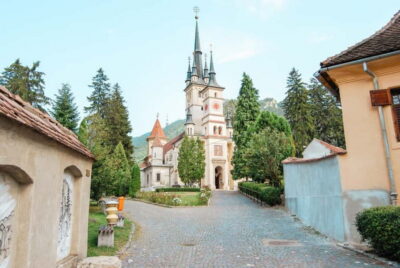
Dracula’s Castle, Peleș Castle & Brașov Day Trip
Read our review →
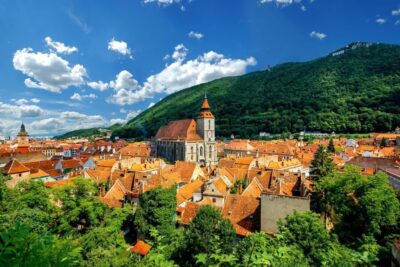
Day Trip to Dracula Castle, Peles Castle & Brașov
Read our review →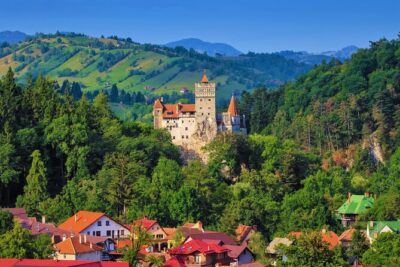
Bucharest to Dracula Castle, Peles Castle and Brasov Guided Tour
Read our review →