Reviewed · BUCHAREST TOURS
10 Days Private Tour in Romania from Bucharest
Romania reveals itself in sharp contrasts on this 10-day private journey: the colossal Palace of Parliament, tiny wooden churches, painted monasteries, Dacian ruins, and the mountain road made famous by Top Gear. You travel from Bucharest through Transylvania, Maramures, Bukovina, and back toward Brasov with a local guide-driver, Nicolas.
I like the freedom of having a private car or minibus, since Nicolas can adjust the day for your family or friends. I also like the unusual mix of major sights and small cultural stops, from the Merry Cemetery and Ciocanesti’s painted houses to the Popa Museum and Densus Church.
The main drawback is pace. Ten days cover a large part of Romania, so you will spend plenty of time on the road. At $3,472.81 per person, the price also requires careful checking, since your accommodation, meals, beverages, and entrance fees are not included.
Key points to know before booking
- Bucharest begins with big political history: The Palace of Parliament and Revolution Square explain Romania’s communist past in a direct, memorable way.
- The route reaches far beyond Dracula: You visit Dacian fortresses, Saxon towns, wooden churches, painted monasteries, and former communist prisons.
- The Transfagarasan is seasonal: The high road and Balea Lake section are fully open only from June through October.
- Private transport changes the experience: Your group travels alone, with room for itinerary changes after the tour begins.
- The cultural stops are unusually varied: Expect embroidered eggs, naive sculpture, humorous tombstones, traditional houses, and monastery frescoes.
- The price is not all-inclusive: The vehicle, driver-guide, fuel, parking, tolls, guide costs, and guide’s lodging and meals are covered, but your own lodging and admissions are extra.
Bucharest, from communist power to old inns
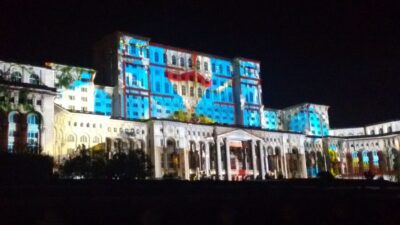
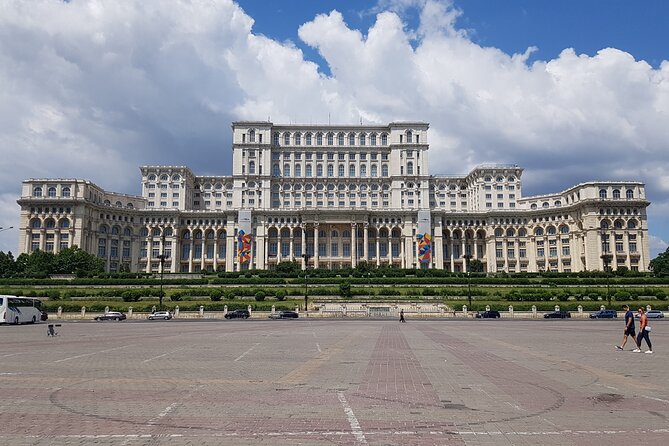
Your first day gives you a useful introduction to modern Romania before the tour moves into the mountains. At the Palace of Parliament, you confront the scale of Nicolae Ceausescu’s building project. It is the second-largest administrative building in the world after the Pentagon, and its size makes the political point without much help from a guide.
Allow two hours here. The building is not just a grand photo stop. It offers a clear lesson in how a totalitarian government can spend vast resources on a seat of power while ordinary people face shortages and repression. The experience is heavy, but important.
The National Village Museum provides a welcome change of scale. In an hour, you see traditional homes, churches, and farm buildings gathered beside Herastrau Park. The displays help you understand how rural communities used local materials and organized daily life around work, family, and faith.
At the Romanian Athenaeum, you pause for about 45 minutes to see one of Bucharest’s key cultural landmarks. The ornate concert hall is part of the European Heritage list and gives the day a more refined counterpoint to the Palace of Parliament.
Revolution Square brings the communist story into the open air. Here, the former Central Committee building recalls the December 1989 uprising that ended Ceausescu’s rule. You also see the Senate Palace and the place where the revolution began. I recommend listening closely to Nicolas here, since the meaning of the square is more compelling than its appearance alone.
The day ends in the Old Town, where the mood changes again. Hanul lui Manuc, built around 1806, was a fortified inn and a meeting place for merchants moving through Bucharest. The historic center mixes old courtyards, restaurants, and streets with a modern city atmosphere.
A few more Bucharest day trips to weigh up
- Bucharest: Dracula’s Castle, Peles Castle, & Brasov Old Town
★ 4.5 · 17,858 reviews - Bucharest: Dracula Castle, Peles Castle & Brasov Old Town
★ 4.6 · 10,891 reviews - Bucharest: Dracula’s Castle, Peleș Castle & Brașov Day Trip
★ 4.5 · 5,919 reviews
Curtea de Arges and the high road to Sibiu
Day two moves into Wallachian history. Curtea de Arges Monastery is known for its royal tombs and its connection to an old sacrifice legend. Nearby, you see the ruins of the princely court and the 13th-century Royal Church. The 45-minute visit is short, so this is a stop where a clear explanation from Nicolas matters.
Poienari Fortress is a different sort of castle. It is a ruined stronghold high above the Arges River, linked closely with Vlad the Impaler. You have about two hours here, including the effort involved in reaching a fortress built on a steep mountain site. The ruins are less polished than Bran Castle, but they offer a stronger sense of a defensive outpost.
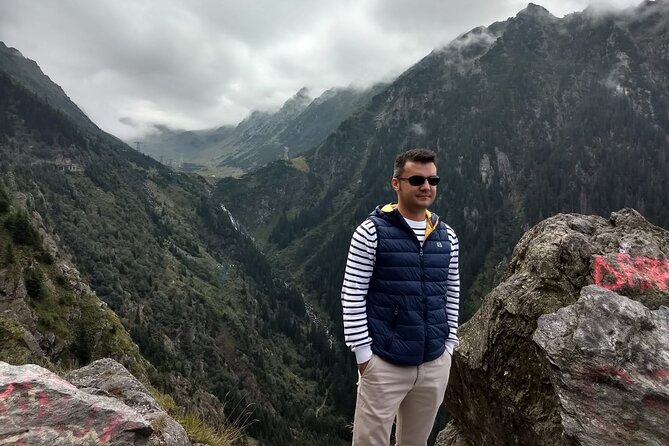
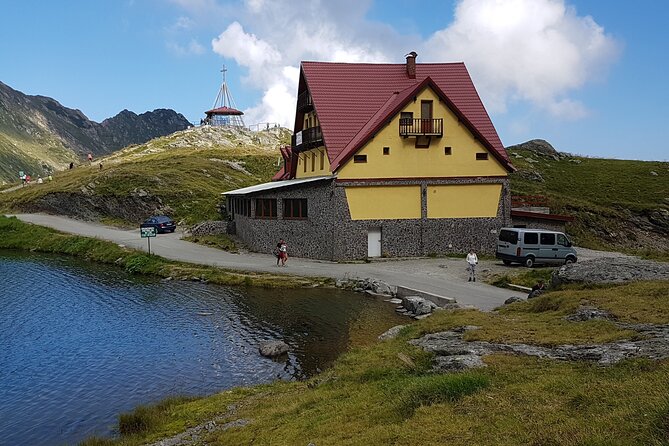
The Transfagarasan Highway is the day’s great scenic feature. It runs for more than 150 kilometers and reaches 2,042 meters at the tunnel near Balea Lake. The road is fully open only from June through October, so confirm that the timing of your tour matches the road conditions. Outside that period, this portion may not be available in its intended form.
You finish in Sibiu, whose Big Square and old center reflect nine centuries of urban life. The Evangelical Cathedral and surrounding buildings show the city’s Transylvanian Saxon character. Sibiu was European Capital of Culture, and it rewards a slower walk, but the schedule allows only about an hour at the main square. You may want to use free time later, if the day’s driving allows it.
Gothic stone, Roman fragments, and Dacian ruins
Day three has a strong archaeological and architectural focus. Corvin Castle in Hunedoara is a large Gothic-Renaissance fortress with towers, courtyards, and a dramatic profile. Two hours lets you see more than the exterior and gives the castle enough time to feel substantial rather than rushed.
Densus Church is one of the tour’s most unusual stops. Its present form dates to the 13th century, and it was built on the site of a 2nd-century Roman temple using stone from the Dacian fortress at Sarmizegetusa. Inside, 15th-century murals show Jesus in Romanian traditional clothing. The church is small, old, and visually unlike the better-known castles.
Sarmizegetusa Regia takes you into the Orastie Mountains. This was the Dacians’ main political, military, and religious center before the Roman wars. The site sits at about 1,200 meters and includes the remains of six citadels. Three hours is a sensible allowance, but you should expect an outdoor visit in mountain terrain rather than a museum-style attraction.
These three stops work well together. Corvin Castle gives you medieval Europe, Densus preserves a layered religious site, and Sarmizegetusa Regia reaches back to the civilization that preceded Roman rule in the region.
Turda Salt Mine and the wooden churches of Maramures
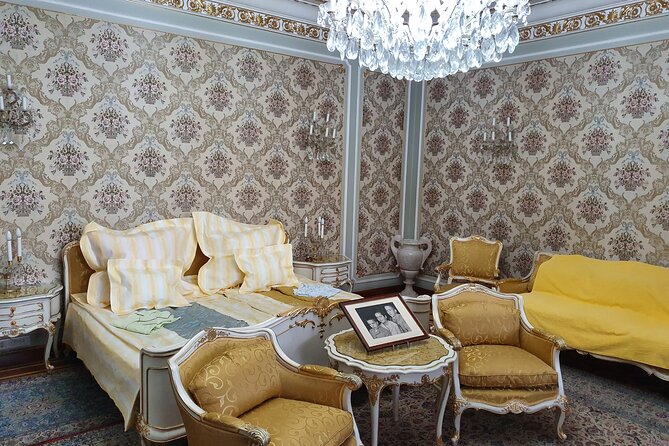
Salina Turda is one of Romania’s most surprising attractions. Two hours underground takes you through a former salt mine with vast chambers and a cool saline atmosphere. The air is often considered helpful for people with allergies or asthma, but you should treat that as a feature of the environment, not a medical promise.
Cluj-Napoca follows with a one-hour visit connected to the Alexandru Borza Botanical Garden and the city’s historic center. The area includes Baroque, Renaissance, and Gothic buildings, some dating to the 17th century. The schedule is brief, so you will get an introduction rather than a full city visit.
Surdesti Wooden Church is a quick but memorable stop. Its tower reaches 54 meters, an astonishing height for a wooden building constructed in 1721. The church shows the skill of local builders and gives you a sense of the craftsmanship found in northern Romania.
Day five is devoted to Maramures. The Merry Cemetery in Sapanta uses bright carved crosses and humorous poems to describe the lives and deaths of local people. The tone is unusual, but not merely comic. It reflects a local way of facing death with storytelling, personality, and a touch of mischief.
The Memorial of the Victims of Communism and of the Resistance in Sighet is much darker. Allow two hours to understand the imprisonment, suffering, and political repression endured under communism. Together, the cemetery and memorial show two very different ways a community preserves memory.
Same corner of the country, a completely different day out:
- Bucharest: Palace of Parliament Tickets and Guide
★ 4.3 · 3,182 reviews - Bucharest: Day Trip to Dracula Castle, Peles Castle & Brașov
★ 4.4 · 3,049 reviews - Bucharest to Dracula Castle, Peles Castle and Brasov Guided Tour
★ 4.5 · 2,933 reviews - Bucharest: Palace of Parliament Tickets and Guided Tour
★ 4.4 · 1,877 reviews
Barsana, the Borgo Pass, and painted village life
Barsana Monastery is one of the visual highlights of Maramures. Its wooden church rises about 57 meters, and the complex has a calm, carefully kept setting. You have 45 minutes, enough to see the main features and appreciate the tall timber construction.
The drive then reaches Tihuta Pass, also called the Borgo Pass. Bram Stoker used the name Borgo Pass in Dracula, although he never visited the area. The modern Hotel Castel Dracula, built in 1976 at an elevation of 1,116 meters, plays on that literary connection.
This is a good place to keep expectations sensible. Tihuta Pass is a real mountain crossing with a Dracula association, not a medieval vampire site. The appeal comes from the scenery, the folklore, and the way a modern hotel has adopted a famous fictional name.
Ciocanesti offers another change in mood. The village is known for houses decorated with painted traditional motifs, set along the Golden Bistrita River among spruce forests and meadows. You have an hour here, enough to look closely at the house designs and see how local identity has become part of the village itself.
Bukovina’s blue frescoes and fortified monasteries
Day seven is devoted to the painted monasteries of southern Bukovina. At Voronet, you see the famous blue frescoes commissioned by Stephen the Great in 1488 after his victory at Vaslui. The 45-minute visit is short, but the intense blue and exterior biblical scenes make an immediate impression.
Humor Monastery adds a different style and mood. Its fortified design reflects the need to protect religious communities and their treasures during unsettled times. The church was built roughly 500 years ago after an earlier church on the site had been destroyed.
Sucevita is one of the largest and most fortified monasteries on the route. Defensive walls, bastions, and extensive painted scenes make it feel like both a church and a protected settlement. It is recognized as a UNESCO World Heritage cultural site.
Moldovita, founded in 1532, completes the day. Its murals combine Byzantine, Gothic, and Moldavian elements, with artwork inside and outside the church. Each monastery deserves more than a quick photograph, so take time to study the scenes and compare the shades, layouts, and defensive structures.
Painted eggs, folk sculpture, and the Bicaz Gorges
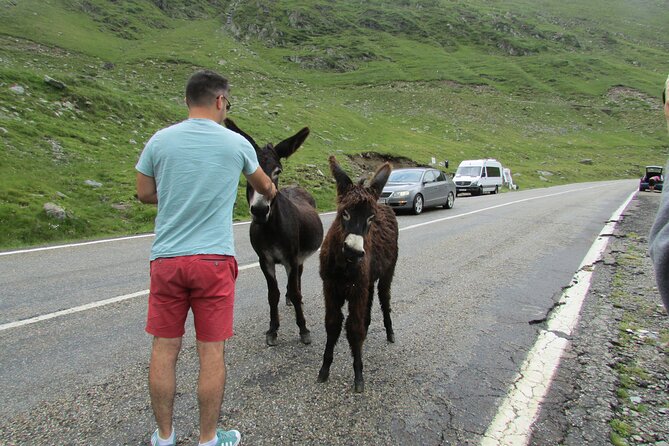
The Lucia Condrea International Egg Museum is a small but highly specific cultural stop. It contains more than 5,500 decorated eggs arranged across two floors and 56 display cases. One hour is enough for a focused visit, especially if you enjoy folk art and close detail.
The Popa Museum in Tarpezti gives you a personal story as well as objects to see. Nicolae Popa founded the museum in his own home in the 1970s. After being wounded in the Second World War and imprisoned by the communist government for opposing the regime, he devoted himself to Romanian folk values through sculpture and handmade work.
This stop adds an important human scale to the political history seen earlier in Bucharest and Sighet. You are not only seeing official monuments. You are also seeing how one artist preserved local culture through his own labor.
The Bicaz Gorges provide two hours outdoors beside a river that cuts through the mountains. The route brings back the natural side of Romania after several days of churches and museums. The gorge is also a reminder that this tour is not only a heritage circuit. It includes forests, rock walls, and mountain air.
Sighisoara and the Saxon towns of Transylvania
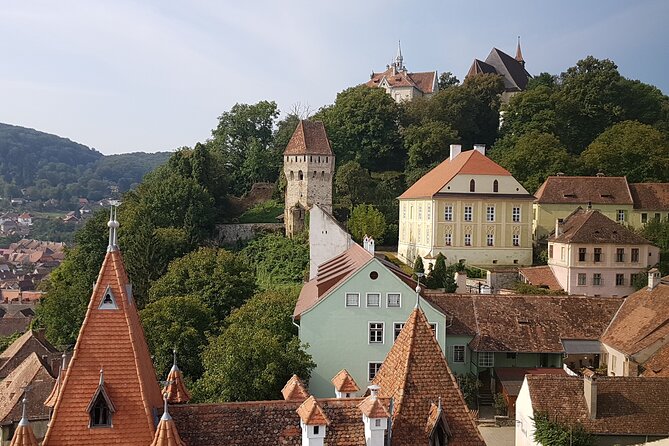
Sighisoara is one of the best medieval stops on the tour. Its citadel has remained inhabited for more than 700 years, and the Clock Tower gives you a strong starting point for the old town. The two-hour visit also includes the Arms Museum.
The town is closely linked with Vlad the Impaler, who was born here, but Sighisoara is more than a Dracula footnote. Its value is the preserved urban setting: walls, towers, streets, and homes that still function as part of a living town.
Biertan Fortified Church follows with another two-hour visit. The settlement dates to 1224, and the church sits on a hill surrounded by three defensive walls and seven bastions. It is a UNESCO World Heritage site and one of the clearest examples of the fortified church communities created by Transylvanian Saxons.
The day works best for people who enjoy walking and architectural detail. The schedule does not center on entertainment or shopping. It asks you to look at how towns were built, defended, and used over centuries.
Brasov, Bran Castle, and royal Peles
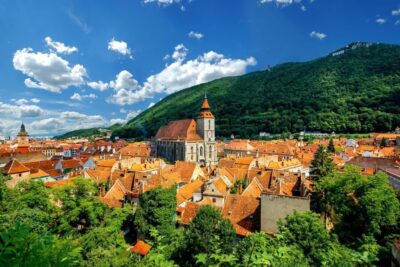
The final day packs three major sights into one route. In Brasov, you tour the Old Town, the Black Church, the main square, and sections of the medieval walls. Two hours includes walking and some free time for a cafe, although you may want to keep your pace steady because Bran and Peles still lie ahead.
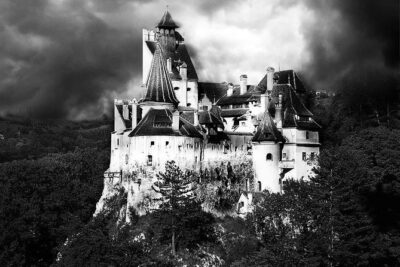
Bran Castle is the tour’s biggest popular-culture stop. Its connection to Dracula comes mainly from its resemblance to the fictional castle in Bram Stoker’s novel, not from a strong historical link to Vlad the Impaler. The castle is still worth seeing for its hilltop setting, rooms, and legends, but I would approach it as a blend of history and storytelling.
Outside Bran, you can try handmade cheeses, palinca made from plum or pear, ham, and sausages. This is one of the better opportunities to connect the sightseeing with Romanian food traditions, though the cost of food is not included.
Peles Castle provides a grand finish. The former summer residence of the Romanian royal family is known for its elaborate design and interiors. Two hours gives you time to appreciate it after the darker communist and medieval themes earlier in the trip.
What the $3,472.81 price really covers
At $3,472.81 per person, this is a major purchase. Its value depends heavily on how many people share the private vehicle and what accommodation you arrange. You are paying for a private car or minibus, a private licensed English-speaking guide-driver, wireless internet in the vehicle, fuel, parking, and road tolls.
The tour also covers Nicolas’s accommodation, meals, and admission fees. Your own hotel, meals, beverages, and entrance tickets are extra. That distinction matters, since this route includes many paid attractions, including castles, museums, monasteries, and the salt mine.
The strongest value is flexibility. You travel only with your own family or friends, and the daily plan can be changed even after the tour begins. Group discounts are offered, so ask how the per-person price changes for your exact party size.
Nicolas is identified in the service details and past customer responses as the guide-driver. Those responses repeatedly emphasize personal care, enjoyable interaction, centrally chosen hotels, and a willingness to help throughout the trip. Since the available comments are only three and some are automatically translated, I would treat them as encouraging but limited evidence rather than a complete picture.
Who will enjoy this route most
I would recommend this tour to a small group that wants Romania in broad strokes and does not want to manage a complicated self-drive route. It suits families, couples, and friends who value private transport and can share decisions about pace.
You should enjoy it most if you like:
- Medieval towns, castles, and fortified churches
- Communist history and memorial museums
- Rural architecture and folk art
- Mountain roads and outdoor scenery
- Religious art and painted frescoes
- A flexible private guide rather than a fixed group schedule
It is less suitable if you want long stays in each city, relaxed mornings, or several free days. The itinerary is ambitious, and some visits last only 45 minutes. The route also depends on long transfers between regions, even though exact daily driving times are not provided.
Confirmation is given at booking, pickup is offered, and the tour is near public transportation. Most people can participate, but you should ask Nicolas about the physical demands of Poienari Fortress, Sarmizegetusa Regia, and the walking portions before booking.
Should you book this 10-day Romania tour?
Book it if your priority is variety and private help. In ten days, you see Bucharest, Wallachia, Transylvania, Maramures, Bukovina, the Carpathians, and the major Dracula-related sites, along with places most short visits leave out.
I would book it for a group of several people who can share the cost and agree on the pace. Before paying, confirm the hotel plan, the total expected admission costs, the number of people in your vehicle, the Transfagarasan operating dates, and the exact pickup and return arrangements.
If your ideal holiday is slow and unstructured, choose a shorter regional trip instead. If you want a sweeping first look at Romania with Nicolas as your private guide-driver, this route offers an unusually broad and memorable introduction.
FAQ
How long is the tour?
The private tour lasts approximately 10 days.
Where does the tour begin?
The tour is based in Bucharest, Romania, and pickup is offered.
Is the tour private?
Yes. Only your own group participates, using a private car or minibus.
Is an English-speaking guide included?
Yes. A private licensed English-speaking guide-driver is available throughout the tour. The guide is identified as Nicolas from Nicolas Experience Tours.
Are hotels and meals included for me?
No. Your accommodation, meals, beverages, and entrance fees are not included. The tour does cover accommodation, meals, and entrance fees for the guide.
Is the Transfagarasan Highway open all year?
The highway is fully open only from June through October. Its highest point is 2,042 meters at the tunnel near Balea Lake.
Can the itinerary be changed after the tour starts?
Yes. The tour allows substantial flexibility, including changes to the daily itinerary after the tour begins.
Can I cancel for a full refund?
Yes, if you cancel at least 24 hours before the experience start time. Cancellations made less than 24 hours in advance are not refunded, and late changes are not accepted.
Just added around Bucharest
- Bucharest in a nutshell – half day private walking tour★ 5.0 · 3 reviews
- Dracula’s Castle, Follow the legend in Transylvania, private tour from Bucharest★ 5.0 · 3 reviews
- Bucharest Private Airport Transfer★ 4.5 · 3 reviews
- RiverCruise Exclusive – Private Transfer from or to Giurgiu Port/Bucharest Hotel★ 3.5 · 3 reviews
- 10 h Ceausescu Communism Private Tour in Bucharest plus Dracula’s Grave★ 4.5 · 3 reviews
- One Day Private Tour into Transylvania★ 5.0 · 3 reviews
- Bucharest Private City Tour 4h with Hotel Pickup & Drop-Off★ 5.0 · 3 reviews
- Private Wine Tasting at Bucharest’s First Wine Bar★ 5.0 · 3 reviews
Bucharest Tours, compared.
Dracula’s Castle, Peles Castle, & Brasov Old Town
Read our review →
Dracula Castle, Peles Castle & Brasov Old Town
Read our review →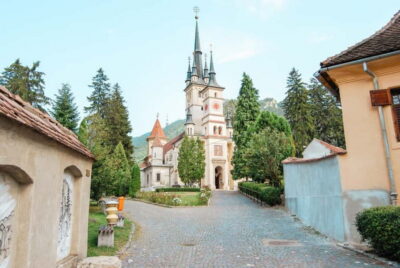
Dracula’s Castle, Peleș Castle & Brașov Day Trip
Read our review →
Day Trip to Dracula Castle, Peles Castle & Brașov
Read our review →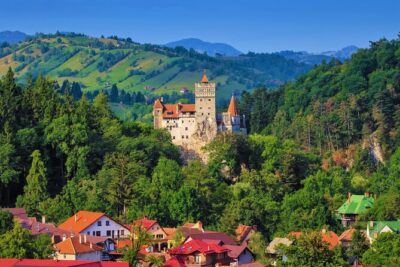
Bucharest to Dracula Castle, Peles Castle and Brasov Guided Tour
Read our review →