
Reviewed · TRANSYLVANIA DAY TRIPS
6 Days Transylvania and Bukovina Small Group Tour from Bucharest
Romania packs a lot into six days here: Saxon citadels, Orthodox monasteries, dramatic mountain roads, and two very different castles. You move from Sibiu and Sighisoara to Bucovina’s painted churches, then back through Brasov, Bran, Sinaia, and Bucharest without having to arrange each hotel or long transfer yourself.
I like the small maximum of seven people, which should keep the minivan more personal than a big coach. I also like the guide-driver setup, especially with George, whose enthusiasm for Romania comes through strongly and who has been able to help guests move through busy lines. The main drawback is the pace: several days involve long drives and short stops, while entrance fees, lunches, and the single-room supplement cost extra.
Key points to know before you book
- Six days, seven people maximum: This is a compact route with many major sights and a more personal feel than a large bus tour.
- George may be your guide-driver: His excitement about Romania and strong storytelling are a major part of the experience.
- Painted monasteries are the cultural high point: Moldovita, Sucevita, and Voronet give Bucovina a character you will not find in the castle towns.
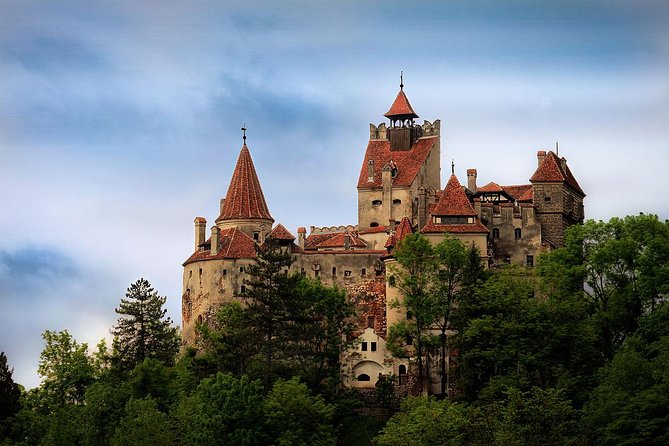
- Bran Castle is only part of the Dracula story: The fortress has a real defensive past, while its vampire fame is largely a later association.
- Five breakfasts are included: Hotels, air-conditioned transport, and guiding are covered, but admissions and most meals are not.
- Pack for churches: Knees and shoulders must be covered at monasteries, churches, and selected museums.
Why this route works for a first look at Romania
The tour is built around contrast. In Sibiu and Sighisoara, you see Central European town planning and German Saxon influence. In Bucovina, the focus shifts to Orthodox faith and painted walls. Around Bicaz and the Red Lake, the towns give way to steep mountain scenery. Then the route returns to the best-known Transylvanian names: Brasov, Bran, and Peles.
That variety is the strongest reason to choose this trip. You are not spending six days looking at one kind of monument. You get medieval streets, royal rooms, local craft, religious art, and mountain roads in one organized loop from Bucharest.
The guide matters here. Romania’s past crosses Wallachian, Saxon, Hungarian, Romanian, German, Orthodox, Catholic, Lutheran, and Protestant traditions. A guide can connect those threads while you are looking at a church, gate, palace, or citadel. George is specifically praised for his enthusiasm and pride in explaining Romania, and that warmth seems well suited to a route where context makes the sights more meaningful.
Still, you should set the right expectations. This is not a slow village holiday. The schedule reaches far north into Bucovina, then turns south again. Some stops are only 15 or 30 minutes, and even the longer visits may feel brief if you want time for museums, photographs, or an unhurried meal.
One detail needs checking before payment: the product title and itinerary describe six days, while the general overview refers to an eight-day tour. Use the six-day schedule above as the working plan, but confirm the exact duration and hotel nights with Trip2Ro.
More Transylvania day trips:
- Transylvania and Dracula Castle Full Day Tour from Bucharest
★ 4.5 · 1,589 reviews - Castles of Transylvania: Private Day Trip from Bucharest
★ 4.5 · 248 reviews - 2-Day Medieval Transylvania with Brasov,Sibiu and Sighisoara Tour from Bucharest
★ 4.5 · 145 reviews
Day 1: Cozia Monastery and Sibiu’s three squares
The first stop is Cozia Monastery in the Olt Valley, a short visit of about 30 minutes. Founded in the fourteenth century by Mircea the Old, it is one of the early Wallachian monuments on the route. Its facade includes Armenian decorative touches, and the interior is covered with frescoes.
Thirty minutes is enough to see the main details with a guide, but not enough for a long, quiet visit. Think of Cozia as an opening glimpse into medieval Wallachia rather than the day’s main event.
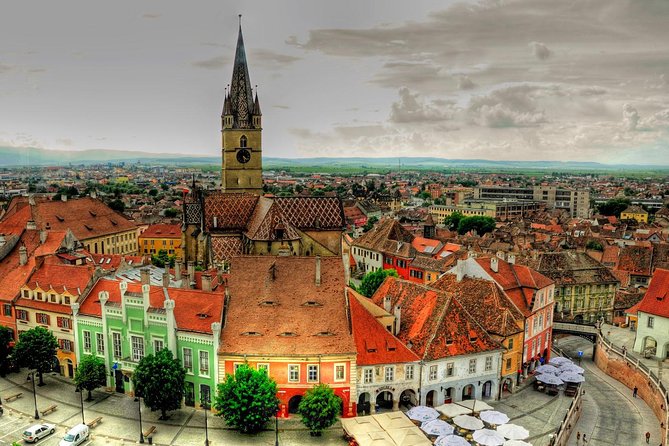
Sibiu receives about three hours, giving you time to walk through the Big Square, Small Square, and Huet Square. These connected spaces form the heart of the old town, with towers, former fortifications, museums, and the famous houses with eyes, whose roof windows seem to watch the streets.
Sibiu’s appeal is not only its architecture. Catholic, Orthodox, and Protestant buildings sit within a city shaped by centuries of Romanian and Saxon life. The large Gothic evangelical church is one of the key sights, and the city’s position as European Capital of Culture in 2007 reflects its continuing role in Romania’s arts scene.
I would use the free time here for a steady walk rather than trying to enter every museum. Three hours passes quickly, especially if you want a meal. The organized schedule removes the hassle of parking and navigation, but it also means you cannot decide to stay until evening.
Day 2: Sighisoara, Targu Mures, and Bistrita
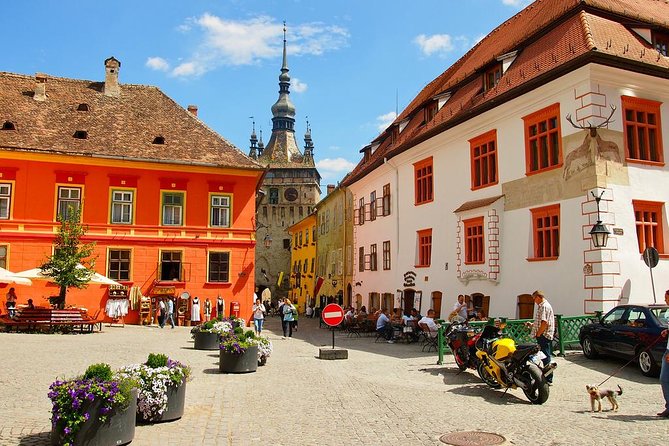
Sighisoara is one of the trip’s most satisfying stops. Its historic center is a UNESCO-listed citadel that remains inhabited, which gives the place more life than a preserved monument with empty streets.
The Clock Tower is the landmark you will notice first. Inside the citadel, look for the covered wooden staircase known as the schoolchildren’s ladder, which leads toward the church on the hill. The route also includes the Shoemakers’ Tower, the Catholic church associated with the Hungarian community, and a statue of Hungarian poet Petofi Sandor.
You have about two hours here. That allows a useful walk through the citadel, though the hill and staircase may make the visit feel hurried for anyone who wants to explore the upper church at length. Lunch at the house associated with Vlad the Impaler is possible, but it is not included, so budget separately.
Sighisoara is where the Dracula theme is most directly tied to a historical person. Vlad the Impaler was born here, but the atmospheric citadel is more interesting than simply treating it as a vampire stop. The guide can help separate medieval politics from later folklore.
Targu Mures is a short 30-minute stop centered on the Palace of Culture. Its baroque design reflects the strong Hungarian influence in the city, both in its architecture and in the community that still lives there. Half an hour is enough for a look and a few photographs, not a full museum visit.
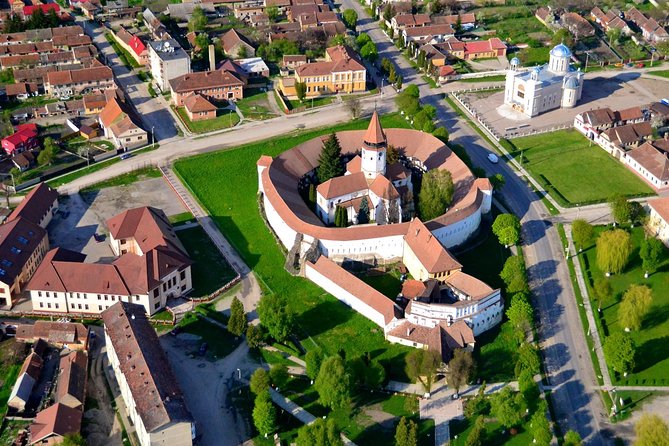
Bistrita receives about an hour for a walking tour. The Lutheran church is the main monument, first built in the fourteenth century in Gothic style and later changed with Renaissance features. This stop adds another piece to the Saxon story of Transylvania before the route heads toward Bucovina.
Day 3: Bucovina’s painted monasteries and Marginea pottery
Day three is the cultural center of the tour. Moldovita, Sucevita, and Voronet are not interchangeable church stops. Each monastery has its own setting, painting program, and architectural character.
Moldovita was founded by Petru Rares in the sixteenth century. Its interior and exterior frescoes cover the building with religious scenes and color. You have about an hour, which should let you see the main paintings without turning the visit into a rushed photo stop.
Sucevita dates from the seventeenth century and combines Gothic and Byzantine elements in the Moldavian style. Its northern facade is especially important because protective walls helped preserve the frescoes there. This is a good place to pay attention to how the monastery buildings are designed as fortified religious compounds, not just isolated churches.
The visit to Marginea offers a change of pace. Local artisans make the area’s distinctive black pottery, and you can watch the work in a workshop for about 15 minutes. There is also a chance to buy black ceramic vessels and decorated eggs made with a traditional Romanian technique.
Fifteen minutes is short, so do not expect a full craft class. The value is in seeing a local practice placed alongside the grand monuments. If you want to purchase something, keep your choice practical and allow for space in your luggage.
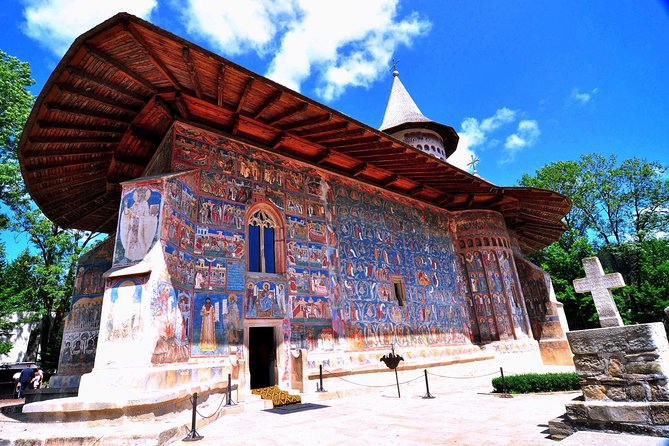
Voronet is the day’s final monastery and is often called the Sistine Chapel of the Carpathians. Its famous blue exterior color is the reason many people remember it. The monastery was founded by Stephen the Great, and the combination of vivid frescoes and wooded surroundings makes this one of the route’s most memorable stops.
Entrance fees apply at all three monasteries. They are not included in the tour price, so keep cash or a payment card available. Modest clothing is required: your knees and shoulders must be covered, for both men and women.
A few more Bucharest day trips to weigh up
- 6 Days Private Tour in Romania Spectacular Places from Bucharest
★ 5.0 · 9 reviews - Private 6-Day Dracula Tour in Transylvania from Bucharest
★ 5.0 · 4 reviews - Transylvania & Bucovina Private Tour – 6 days
★ 5.0 · 3 reviews
Day 4: Bicaz Gorges, Red Lake, and the road to Miercurea Ciuc
Day four shifts from buildings to mountain scenery. There is a brief stop in Piatra Neamt, a mountain resort with a fifteenth-century citadel and an eighteenth-century synagogue. At 15 minutes, this is a quick orientation stop rather than a city visit.
The road through Bicaz Gorges is the main event. Cliffs rise close to the road, with a stream running through the gorge. The route feels dramatic because the road is narrow and the rock walls press in around it. A one-hour stop gives you time to take in the setting and browse the roadside market selling handicrafts and souvenirs.
The Red Lake has a different mood. It formed when part of a mountain slipped and created a natural barrier, leaving tree trunks visible in the water. The lake’s name is tied to local legends, which the guide explains during the visit.
You then continue toward Miercurea Ciuc on a scenic mountain road. The area is known for very low temperatures and is sometimes called the Siberia of Romania. This is another day when the transport is as important as the stops. You will spend substantial time in the vehicle, but the route links places that are difficult to combine by public transport in a short holiday.
Day 5: Brasov and the Dracula stop at Bran
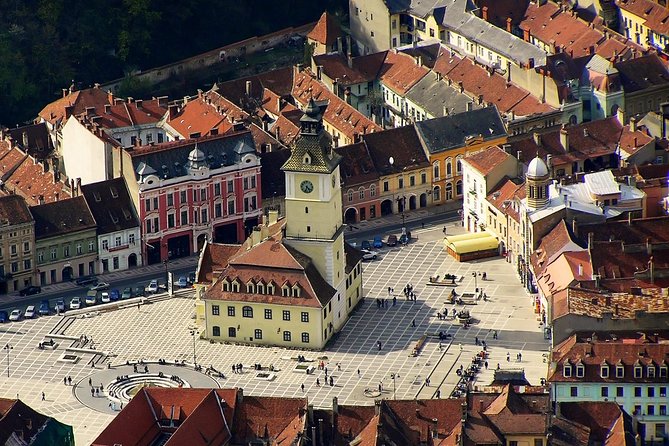
Brasov gets about two hours, enough to see the old center and its main landmarks. The city once had a full defensive ring, and German architectural influence remains clear in the Gothic, Baroque, and Renaissance buildings.
The visit includes the Schei district, historically associated with the Romanian population, and the old Catherine’s and Schei gates. The First Romanian School is also part of the tour. The Black Church is the major Gothic landmark, though admission is not included.
Brasov is one of the places where I would gladly have more time. Two hours lets you follow the guide through the important sights, but you may have to choose between lingering in the church, walking the streets, and sitting down for a proper lunch. If you value independent wandering, note that the schedule is organized around coverage rather than long free periods.
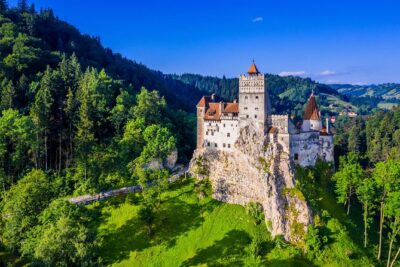
Bran Castle follows, with about two hours. The fortress guarded the medieval border between Wallachia and Transylvania and was important to Brasov’s defenses. Its popular name, Dracula’s Castle, draws the crowds, but the actual building is best understood first as a border stronghold.
The Dracula connection is more folklore than a simple record of Vlad the Impaler living there. That distinction is useful, and a good guide can explain why the castle became linked with the fictional vampire. Entrance is extra, so the final cost will rise beyond the advertised price.
You arrive in Sinaia late in the evening. That late arrival is worth considering if you dislike long days, but it is also part of how the tour fits so many major locations into six days.
Day 6: Peles Castle and a Bucharest farewell
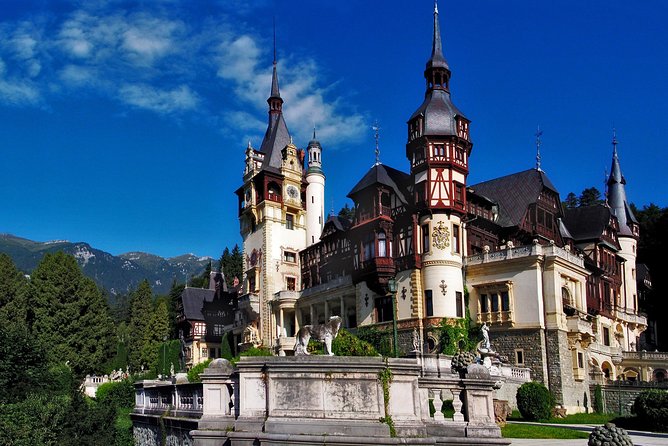
Peles Castle is a strong final sight. Built between the nineteenth and twentieth centuries as the summer home of Romania’s first king, Carol I of Hohenzollern, it reflects Romania’s royal ambitions and its European connections.
The castle was designed by a Czech architect and was considered highly modern for its time. Inside, rooms use different decorative styles, and the Florentine room brings a strong Renaissance and Italian feel. You have about two hours, enough to appreciate the main rooms if the visit runs on schedule.
Peles is a useful counterpoint to Bran. Bran is a medieval fortress with a powerful modern legend. Peles is a royal residence built for comfort, ceremony, and display. Seeing both helps you understand that Romania’s castle story is not one single thing.
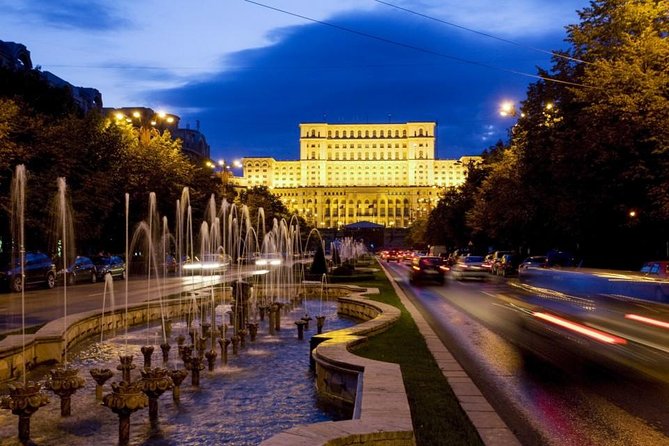
The final drive returns to Bucharest for a panoramic tour. The route includes the Triumph Arch, Romanian Athenaeum, Revolution Square, and Parliament Palace. This is a city overview rather than a full Bucharest sightseeing day, so it works best if you plan to spend extra time in the capital before or after the tour.
What the $1,163.56 price really covers
At $1,163.56 per person, the package works out to about $194 per day before extra costs. That is not a budget independent trip, but it includes several items that become expensive and time-consuming when arranged separately: an air-conditioned vehicle, a licensed guide-driver, five breakfasts, and five nights of three- or four-star accommodation if the six-day schedule is followed.
The small group is important to the value. With a maximum of seven people, you are paying for a more intimate road trip rather than simply buying a seat on a large coach. The guide-driver arrangement also means the person explaining the country is involved in the practical running of the route.
You still need to add entrance fees, lunches, dinners, tips, and the single-room supplement. The single supplement is 120 euros, payable locally by cash or card. If you are traveling alone, ask how room sharing is handled before booking, since the supplement can change the total considerably.
Group discounts are offered, which may improve the price for couples or small parties. The tour requires at least two participants. If that minimum is not met, a different date or experience, or a full refund, is offered.
The cancellation rule is strict: the experience is non-refundable and cannot be changed for any reason. Poor weather is an exception only if the operator cancels the tour, in which case you can receive a different date or a full refund.
Who will enjoy this route most
I would recommend this tour to you if you want Romania’s major highlights but do not want to plan a complicated multi-city route. It suits first-time visitors who value a guide’s explanations, couples who prefer a small group, and solo bookers who like organized transport and the chance to meet a few fellow passengers.
It is also a good fit if you care about more than Dracula. The painted monasteries, Saxon towns, Hungarian cultural traces, and Orthodox sites give the trip substance beyond castle photographs.
I would hesitate if you want long stays in each place, frequent café breaks, or full control over meal times. The road distances are substantial, and some stops are brief. You should also be comfortable with changing hotels and spending long stretches in a vehicle.
Wear shoes suited to cobbled streets and stairs. Pack a scarf or light layer that can cover your shoulders, and trousers or a long skirt that covers your knees. That simple preparation can prevent refused entry at churches, monasteries, and selected museums.
Should you book the six-day Transylvania and Bukovina tour?
Book it if you want a well-packed introduction to Romania with a small group, a guide-driver, and the major stops handled for you. The strongest reasons are the mix of Transylvania and Bucovina, the intimate group size, and the chance to hear Romania explained by a guide such as George, whose enthusiasm is a clear part of the experience.
Skip it if your ideal trip is slow and flexible. You will pay extra for admissions and most meals, and the schedule has several long driving days. Before booking, confirm the six-day duration, the exact hotel plan, and the expected entrance fees. If those details suit you, this is a practical way to see a wide sweep of Romania in less than a week.
FAQ
How long is the tour?
The stated tour duration is six days. The general description also refers to eight days, so confirm the exact duration with Trip2Ro before booking.
Where does the tour start?
The tour starts in Bucharest. Pickup is offered, and the listed start time is 8:00 am.
What is the maximum group size?
The tour has a maximum of seven participants.
Who guides and drives the tour?
A professional licensed tour guide also serves as the driver. George is one guide associated with this experience.
What accommodation is included?
Accommodation in three- or four-star hotels is included.
Are meals included?
Five breakfasts are included. Lunches and dinners are not included.
Are attraction entrance fees included?
No. Entrance fees for places such as the monasteries, Black Church, Bran Castle, and Peles Castle are not included.
Is there a single-room supplement?
Yes. The single-room supplement is 120 euros, payable locally by cash or credit card.
What clothing is required?
You must cover your knees and shoulders when entering places of worship and selected museums. Shorts and sleeveless tops are not allowed.
What happens if the tour is canceled?
If poor weather causes the operator to cancel, you can receive a different date or a full refund. If the minimum of two participants is not reached, you can also be offered a different date or experience, or receive a full refund.
Just added around Bucharest
- Private Full Day Tour of Bucharest★ 5.0 · 3 reviews
- Veliko Tarnovo and Medieval Bulgaria Private Day Trip from Bucharest★ 5.0 · 3 reviews
- Bucharest VIP Bar Crawl in Lipscani ‘Old Town’★ 5.0 · 3 reviews
- Muddy Volcanoes and Salt Mine Private Tour★ 5.0 · 3 reviews
- Bucharest Private City Tour★ 5.0 · 3 reviews
- Legends & Stories from Transylvania -2 Castles & Brasov Old Town★ 5.0 · 3 reviews
- 7-Day Dracula Tour in Romania from Bucharest including ‘The Ritual of Killing of a Living Dead’★ 5.0 · 3 reviews
- Transfagarasan Private Tour from Bucharest – 2 Days★ 5.0 · 3 reviews
Transylvania Day Trips, compared.
Transylvania and Dracula Castle Full Day Tour from Bucharest
Read our review →
Castles of Transylvania: Private Day Trip from Bucharest
Read our review →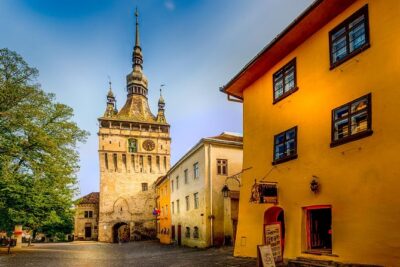
2-Day Medieval Transylvania with Brasov,Sibiu and Sighisoara Tour from Bucharest
Read our review →
SB01 – City Tour Sibiu: Exploring the Heart of Transylvania
Read our review →
Day trips and excursions in nature, cities in Transylvania, Brasov!
Read our review →
2-Day Transylvania from Bucharest: Brasov, Bran, Sighisoara
Read our review →
Browse the lists this tour appears in