
Reviewed · BRAN CASTLE & DRACULA TOURS
Private 6-Day Dracula Tour in Transylvania from Bucharest
The best part of this six-day trip is that it treats Dracula as a doorway into Romania, not the whole house. You follow Vlad the Impaler from Poienari Fortress and Snagov Monastery to Bran Castle, then move through Saxon towns, fortified churches, royal palaces, and the high Fagaras Mountains.
I like the private format, which gives you a flexible driver-guide and a comfortable air-conditioned vehicle. I also like the village stay in Sibiel, where two home-cooked dinners, wine, and plum brandy bring you closer to everyday Romanian hospitality. The main drawback is the long driving time, plus the remote and somewhat kitschy Dracula Castle Hotel at Borgo Pass.
Key points to know before booking
- Poienari requires 1,480 steps: You can see Vlad’s fortress from below when it is closed for renovation, but the climb is a serious part of the plan when access returns.
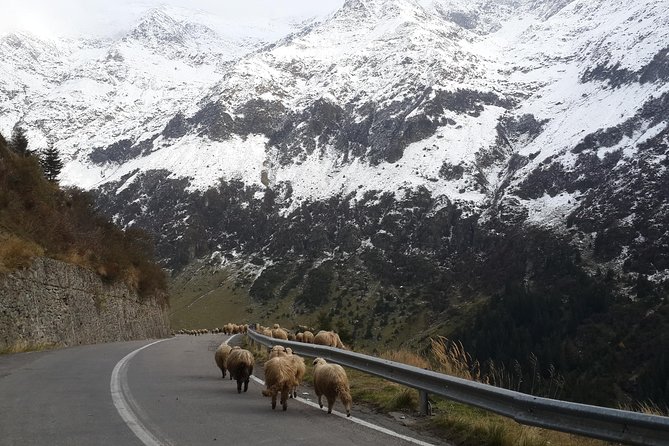
- The Transfagarasan is seasonal: The famous mountain road normally operates from July through October. Outside that window, the route changes to the Olt Valley.
- Sibiel is the food highlight: Two nights and two included three-course dinners make this more than a quick roadside stop.
- Bran Castle is not the whole Dracula story: Snagov Monastery and Sighisoara connect the tour to Vlad’s life and legends.
- Entrance fees are extra: Hotels, five breakfasts, two dinners, transport, and guiding are included, but attraction tickets and most lunches are not.
- The price buys privacy: At $2,078.18 per person, this is a premium trip, best suited to people who value a private vehicle, door-to-door service, and a tightly arranged route.
From Bucharest to Curtea de Arges and Vlad’s mountain fortress
Your 9 a.m. pickup starts in Bucharest, either at your hotel or at OTP Airport. As you leave the city, you get a quick look at the center before heading toward Curtea de Arges, one of Romania’s important religious sites.
Curtea de Arges Monastery dates from the reign of voivode Neagoe Basarab, between 1512 and 1517. It is tied to the Romanian story of Master Manole, a builder whose work carries a tragic price. The stop is only about 30 minutes, so think of it as an introduction rather than a full visit.
Next comes Poienari Citadel, the fortress most directly linked to Vlad the Impaler. It sits high above the Arges Valley at the foot of the Fagaras Mountains. The original plan calls for climbing 1,480 stairs, so sturdy shoes and honest self-assessment matter.
Poienari is not a polished castle with furnished rooms. Its appeal is the rough setting and the connection to Vlad himself. The view across the valley is part of the reward. At present, the fortress is under renovation, and the tour may only stop at the bottom of the mountain. Confirm the current condition before you pay for the trip.
The route then reaches the Transfagarasan Highway, one of Romania’s great road experiences. Sharp hairpin turns, tunnels, viaducts, mountain slopes, waterfalls, Lake Vidraru, and Balea Lake fill this section of the day.
At Vidraru Dam, you stop for photos over the lake and Fagaras Mountains. Capra Waterfall gets a shorter pause, about 15 minutes. Balea Glacier Lake is the grand finale, sitting at 2,042 meters, with coffee available at Balea Chalet when conditions allow.
This is a long first day. The mountain road is spectacular, but weather and road access control the experience. From November through June, the Transfagarasan is not normally available, and the route changes to the Olt Valley. You still reach Transylvania, but you should not book expecting the famous high road outside its operating season.
More Bran Castle and Dracula trips:
- Bucharest: Dracula’s Castle, Peles Castle, & Brasov Old Town
★ 4.5 · 17,858 reviews - Bucharest: Dracula Castle, Peles Castle & Brasov Old Town
★ 4.6 · 10,891 reviews - Bucharest: Dracula’s Castle, Peleș Castle & Brașov Day Trip
★ 4.5 · 5,919 reviews
Sibiel hospitality and the first two nights
You spend the night in Sibiel at Ramona House or a similar home-stay-style pension. The accommodation has en-suite rooms, but the real reason to value this stop is the food and personal setting.
Two dinners are included in Sibiel. Each includes three courses, wine, and Romanian plum brandy. The home-cooked meals were one of the strongest parts of the trip for past customers, and the host Adriana received particular praise for making the pension feel like a real home rather than a standard hotel.
That distinction matters. A hotel room gives you a bed. A village pension can give you a better sense of how rural Romania works, especially when dinner is prepared locally and your guide helps explain dishes or order food. Vegetarian meals are available if you request them at booking.
The accommodation plan says two nights in Sibiel, though the day-by-day schedule is not perfectly clear about every overnight location. Ask the operator for the exact hotel list before booking, especially if room style and location matter to you.
Corvin Castle and Alba Iulia’s star-shaped citadel
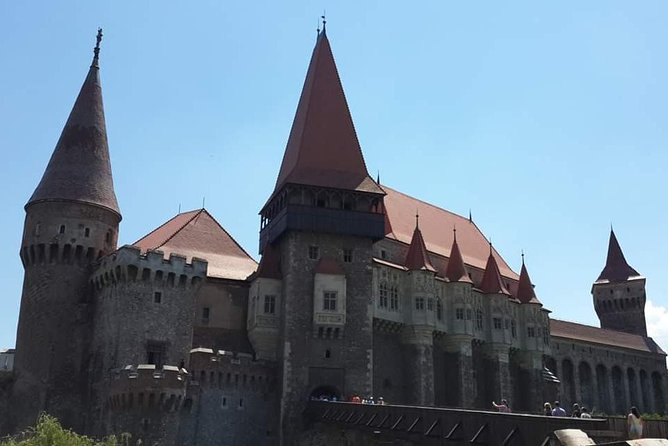
Day two brings two of Transylvania’s strongest historic sites. Hunyadi Castle, also called Corvin Castle, is a dramatic Gothic fortress with towers, bridges, courtyards, and plenty of dark stories.
The castle is linked to the Hunyadi family and is often presented as one of Romania’s great fortresses. The tour also points out the Bear Pit, where prisoners were reportedly thrown to animals after they were no longer useful. Some of the castle’s darker tales are difficult to separate from later legend, but that is part of the atmosphere.
You have about 1 hour and 15 minutes here. That gives you a useful visit, though not an exhaustive one. If you like architecture and fortress details, you may want to ask your guide to focus on the castle’s construction and political role rather than only the ghost stories.
Alba Iulia follows. Its citadel has a star-shaped plan and encloses churches, museums, monuments, archaeological remains, and broad defensive walls. It is one of the easiest places on the route to appreciate Transylvania as a meeting point of Romanian, Hungarian, German, and imperial traditions.
The two sites make a good pair. Corvin Castle is theatrical and vertical. Alba Iulia is spacious, formal, and planned around military defense. Admission fees are not included, so budget separately for both.
Sibiu, Medias, and the road to Borgo Pass
Day three turns from fortresses to towns. Sibiu was founded by German Saxon colonists, who called it Hermannstadt. Its old center grew inside several rings of walls, and surviving towers, stairs, squares, and churches give it a clear medieval shape.
Your walking route includes Big Square, Little Square, Huet Square, the Council Tower, the Bridge of Liars, the Evangelical Cathedral, and the oldest house in town. Big Square began as a market area and was documented in the early 1400s. Little Square is more intimate, with a strong sense of old civic Sibiu.
Sibiu is a place where a guide adds real value. The streets are easy to walk, but the story of Saxon settlement, fortified trade towns, and changing rule can otherwise blur into a series of pretty facades. Guides named Bogdan, Dan, Adriana, and Mimi have led this route, and the strongest descriptions of the service emphasize clear explanations, safe driving, and an easy pace.
Medias is a shorter stop, about an hour. Its fortified church of St. Margaret formed the center of a walled town protected by 33 craft guilds. The old center still has narrow lanes, colorful houses, and a pedestrian square.
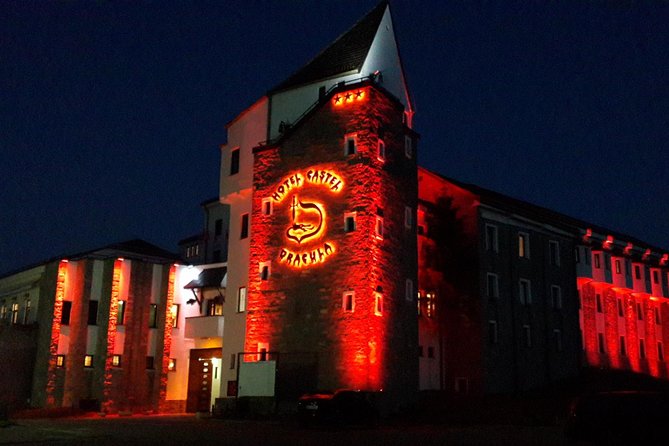
After Medias, you drive toward Borgo Pass, the place associated with Dracula in Bram Stoker’s novel. The overnight is planned at Hotel Castle Dracula, with en-suite rooms.
Here the tour’s mood changes. The hotel is remote, and there is little to do nearby apart from the hotel itself. Its Dracula theme is kitschy, and past descriptions also call it somewhat rundown. If you enjoy novelty hotels and want the literary connection, this may be fun. If you prefer a handsome medieval town with restaurants and evening walks, ask if the operator can substitute another pension.
The hotel may also be closed outside its operating period. In that case, the overnight can move to Bistrita, or the route may change to include Turda Salt Mine and an overnight around Cluj-Napoca or Turda. This is one of the most important seasonal details to confirm.
More Transylvania day trips:
- Transylvania and Dracula Castle Full Day Tour from Bucharest
★ 4.5 · 1,589 reviews - Castles of Transylvania: Private Day Trip from Bucharest
★ 4.5 · 248 reviews - 2-Day Medieval Transylvania with Brasov,Sibiu and Sighisoara Tour from Bucharest
★ 4.5 · 145 reviews - 2-Day Transylvania from Bucharest: Brasov, Bran, Sighisoara
★ 5.0 · 60 reviews
Biertan and the pastel streets of Sighisoara
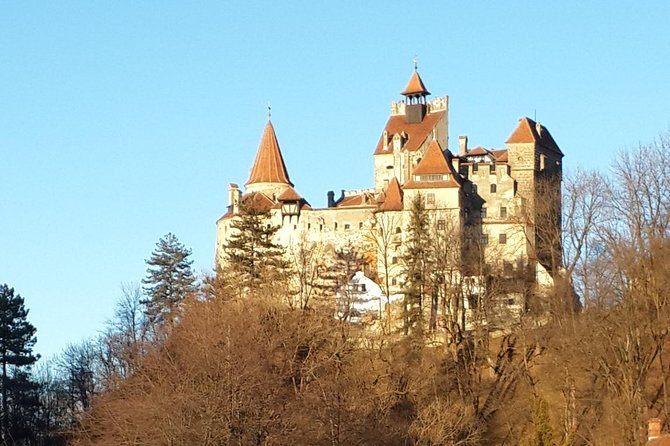
Biertan Fortified Church is one of the route’s finest stops. The church rises above a cluster of Saxon-style houses, pastel facades, and small inns. Its defensive walls reflect a time when a place of worship also needed to protect the local population.
You have about an hour here. The visit is compact, but Biertan rewards slow looking. Pay attention to the relationship between the church, the walls, and the village below. It feels less like a single monument and more like a complete medieval settlement.
Sighisoara is the day’s big event. The citadel is a UNESCO World Heritage Site, enclosed by walls and filled with merchant houses, towers, cafes, craft shops, and steep stone lanes. The Clock Tower is the clearest landmark, while the Church on the Hill gives the upper town its strong profile.
The town is also linked to Vlad the Impaler. You can see the house where he was born, which gives the Dracula theme a firm historical anchor. This is one of the best places to understand the gap between Vlad, a fifteenth-century ruler known for brutal warfare, and Dracula, the fictional vampire created centuries later.
The walking tour lasts about 1 hour and 20 minutes, followed by free time. Lunch can be arranged at Dracula House Restaurant, but lunch is not part of the included meals. Take advantage of the free period if you want time for photographs, a café, or a second look at the citadel’s towers.
The old town has slopes and stone surfaces. You do not need to be an athlete, but comfortable shoes will help. The private format also means you can ask your guide to slow down or adjust the balance between formal history and Dracula stories.
Prejmer, Bran Castle, and the best mountain views
Day five begins at Prejmer Fortified Church, one of Eastern Europe’s best-preserved fortified churches. Its defensive walls are about 4.5 meters thick, and the complex contains roughly 270 storage rooms. In wartime, local families retreated into assigned rooms inside the fortress.
Prejmer makes the region’s past feel practical. These were not decorative walls built for tourists. They were part of village survival, with food, shelter, and defense arranged inside a religious complex. You have about 50 minutes, enough to understand the design and walk through the defensive passages.
The route continues through Prahova Valley toward Bran Castle. Along the way, the Bucegi Mountains provide the strongest views around Busteni. The scenery is a major part of this leg, so keep your camera ready during the drive and stops.
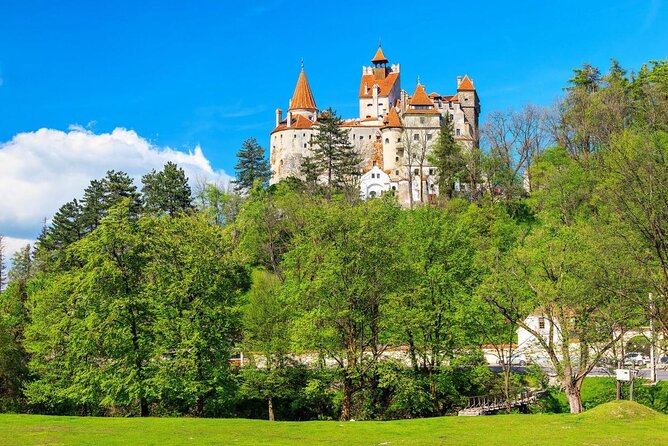
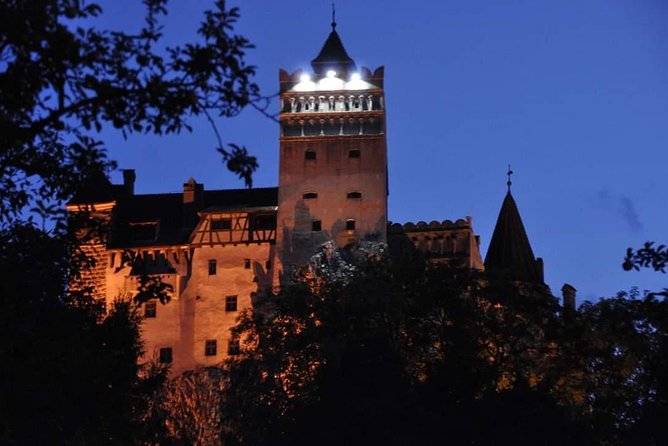
Bran Castle is the famous Dracula stop, but the historical connection needs careful handling. The castle is associated with the vampire legend because of its appearance and later tourism, not because it was Vlad’s main residence. The guide’s job is to explain that difference without taking the fun out of the visit.
Inside, you can expect a castle visit focused on rooms, staircases, objects, and the Dracula story. You have about 1 hour and 15 minutes. A traditional lunch can be arranged in Bran village, but it is extra.
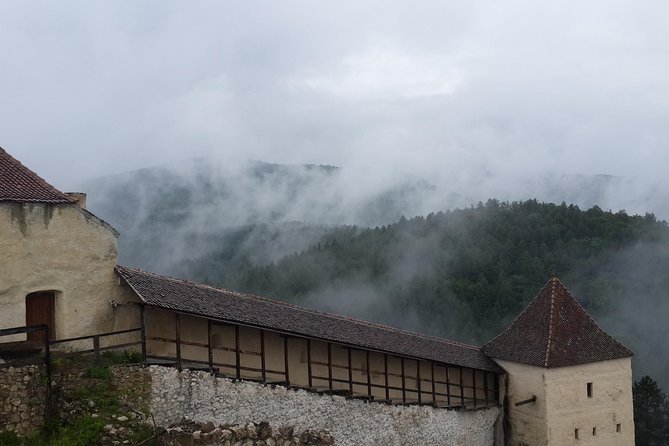
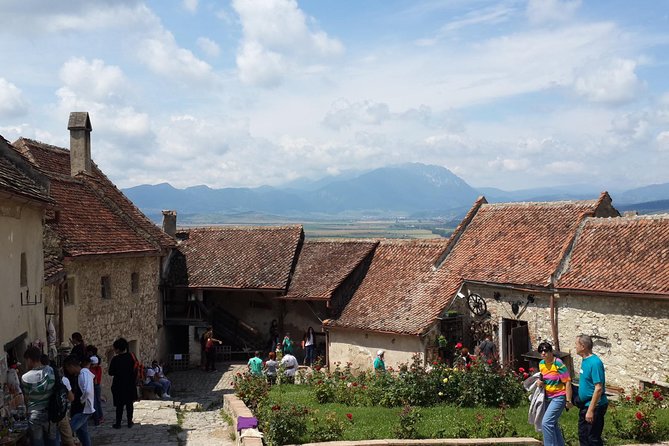
Rasnov Citadel follows. This peasant fortress is one of the best-preserved in Transylvania, and the top offers a broad view over Tara Barsei. The town below has medieval-style houses and orderly streets, but the fortress panorama is the main reason to stop.
The day ends in Brasov around 6 p.m., with a night at Casa Timar Pension or a similar property and breakfast included. Brasov is one of the more appealing bases on the route, though one past customer found the accommodation farther from the center than ideal. If you are traveling alone and want evening access to the old town, ask exactly where the replacement hotel sits.
Peles Castle and the uncertain tomb at Snagov
The final day starts at Peles Castle in Sinaia. Built over nearly 40 years as the summer residence of Romania’s royal family, Peles is very different from the medieval fortresses. It has the polish and ceremony of a royal retreat, set against the Bucegi Mountains.
The visit lasts about 1 hour and 15 minutes. You should expect an attractive museum experience rather than another Dracula site. That contrast helps the trip, giving you architecture, monarchy, and mountain scenery alongside castles and legends.
The last stop is Snagov Monastery, reached near Bucharest. The site is linked to the disputed burial place of Vlad the Impaler. One tradition says monks brought his body here after he was killed in 1476. Another claims his remains were buried elsewhere.
The monastery’s stories are grim. They include secret burials, torture rooms, hidden treasure, floods, earthquakes, and a church that local tradition says sank into the lake. Some claims are legend rather than established fact, so treat the site as a place where history and folklore overlap.
You can pay respects at the supposed tomb near the altar and see frescoes dating as far back as the fifteenth century. Snagov was also once a center of monastic and cultural activity, with a printing shop and a mint. It is a fitting final stop because it brings you back to the real Vlad, rather than ending with a souvenir-shop version of Count Dracula.
After Snagov, you return to your Bucharest hotel or the original meeting point. The listed transfer from Snagov to Bucharest takes about 40 minutes, though total timing depends on road conditions and the day’s schedule.
What the $2,078.18 price includes
At $2,078.18 per person, this is not a budget coach tour. It is a private six-day service with hotel pickup and return, a private vehicle, a driver-guide, five nights of accommodation, five breakfasts, and two included dinners.
You also get the convenience of one arranged route through a large part of Romania. That route covers mountain roads, royal architecture, fortified churches, major citadels, medieval towns, and Dracula-related sites. Organizing all of this yourself would require several hotel bookings and careful driving plans.
The price looks strongest for two or more people who value privacy and personal attention. A driver-guide can adjust stops, help with food choices, explain local stories, and handle the roads. The guiding has also been praised for safe driving, clear communication, and checking that the vehicle temperature and sightseeing pace suit the group.
The cost is less attractive if you mainly want cheap transport between towns. Most entrance fees are extra, as are lunches and other meals. You should also allow for the fact that two nights in a village pension and one night at a themed hotel may not match the comfort level of a conventional city hotel.
Ask for a current breakdown of entrance fees, hotel names, and meal arrangements. The published accommodation plan has some variation, and replacement hotels may be used depending on availability.
Who will enjoy this private route
I would choose this tour if you want Romania explained as you go, rather than simply photographed from a bus window. It suits couples, families, and small private groups who want a set route with room for questions and personal attention.
It is especially good for you if you like:
- Castles with both fact and folklore
- Medieval towns and fortified churches
- Mountain roads and scenic photo stops
- Local meals in a family-run pension
- A guide who handles driving and translation
- A broad first look at Transylvania
You should think twice if you dislike long drives, steep climbs, remote hotels, or changes caused by weather. The 1,480 steps at Poienari may be too much for some people, and the Transfagarasan schedule depends on the season.
The tour operates in all weather conditions, so pack for changing mountain conditions. A vegetarian option is available if requested in advance. The activity is private, and most participants can take part, but the physical demands of Poienari and the uneven surfaces at fortresses deserve attention.
Should you book the Dracula tour?
Book it if you want the full Transylvania circuit in one private trip, with a strong mix of Vlad legends, Saxon towns, mountain scenery, and Romanian food. The best moments are likely to be the Transfagarasan, Sibiel dinners, Sighisoara, Biertan, Prejmer, and the chance to compare Bran’s famous story with the more uncertain history at Snagov.
I would book early and ask three questions first: Is the Transfagarasan open on my dates? Where will I sleep if Hotel Castle Dracula is closed? Can the Brasov and Bucharest hotels be placed near the historic centers?
If the answers work for you, the tour offers a very efficient and personal way to see Romania. If you want polished hotels, short driving days, or a central city base every night, build your own route instead.
FAQ
Where does the Dracula tour start and end?
The tour starts in Bucharest at 9 a.m. Pickup is available from your Bucharest hotel or OTP Bucharest Airport. The activity ends back at the meeting point in Bucharest.
How long does the tour last?
The experience lasts approximately six days and includes five nights of accommodation.
Is the tour private?
Yes. Only your group participates, and transport is provided by private vehicle or air-conditioned minivan with a driver-guide.
Which meals are included?
Five breakfasts and two dinners are included. The dinners are three-course meals with wine and Romanian plum brandy in Sibiel on days one and two. Other meals, including most lunches, are not included.
Are attraction entrance fees included?
No. Entrance fees are not included, so you should budget separately for sites such as castles, monasteries, fortified churches, and citadels.
Can I take the Transfagarasan Highway all year?
No. The Transfagarasan is normally open only from July through October. Outside that period, the tour crosses the mountains via the Olt Valley.
What happens if Hotel Castle Dracula is closed?
The overnight may move to Bistrita, or the route may change to include Turda Salt Mine with accommodation around Cluj-Napoca or Turda.
Is a vegetarian meal available?
Yes. A vegetarian option is available, but you should request it when booking.
More 6-Day Experiences in Bucharest
- 6 Days Private Tour in Romania Spectacular Places from Bucharest
★ 5.0 · 9 reviews - 6 Days Transylvania and Bukovina Small Group Tour from Bucharest
★ 4.5 · 3 reviews - Transylvania & Bucovina Private Tour – 6 days
★ 5.0 · 3 reviews
Just added around Bucharest
- Private Full Day Tour of Bucharest★ 5.0 · 3 reviews
- Veliko Tarnovo and Medieval Bulgaria Private Day Trip from Bucharest★ 5.0 · 3 reviews
- Bucharest VIP Bar Crawl in Lipscani ‘Old Town’★ 5.0 · 3 reviews
- Muddy Volcanoes and Salt Mine Private Tour★ 5.0 · 3 reviews
- Bucharest Private City Tour★ 5.0 · 3 reviews
- Legends & Stories from Transylvania -2 Castles & Brasov Old Town★ 5.0 · 3 reviews
- Transfagarasan Private Tour from Bucharest – 2 Days★ 5.0 · 3 reviews
- 7-Day Dracula Tour in Romania from Bucharest including ‘The Ritual of Killing of a Living Dead’★ 5.0 · 3 reviews
Bran Castle & Dracula Tours, compared.
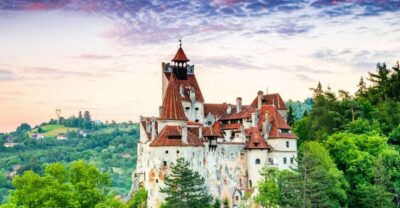
Dracula’s Castle, Peles Castle, & Brasov Old Town
Read our review →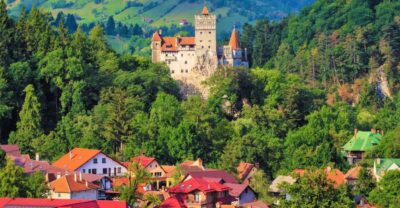
Dracula Castle, Peles Castle & Brasov Old Town
Read our review →
Dracula’s Castle, Peleș Castle & Brașov Day Trip
Read our review →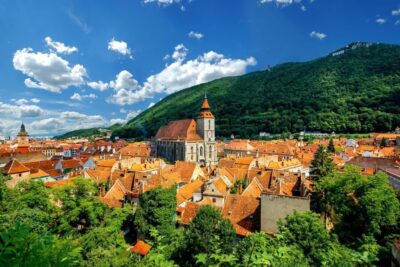
Day Trip to Dracula Castle, Peles Castle & Brașov
Read our review →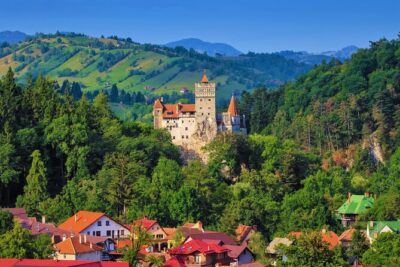
Bucharest to Dracula Castle, Peles Castle and Brasov Guided Tour
Read our review →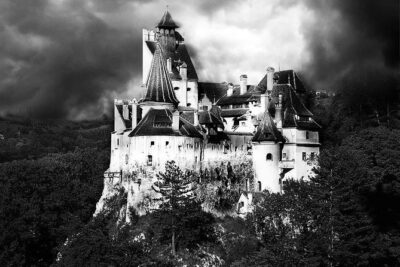
Dracula’s Castle, Peles Castle and Brasov Day Trip from Bucharest
Read our review →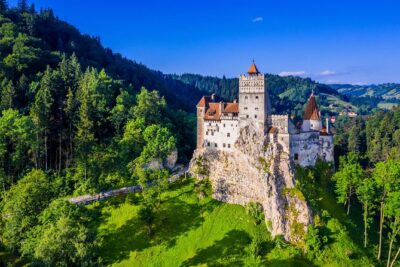
Transylvania and Dracula Castle Full Day Tour from Bucharest
Read our review →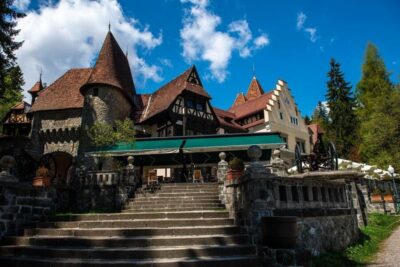
Browse the lists this tour appears in