
Reviewed · BUCHAREST TOURS
Walking Tour of Bucharest City Center – Private Tour
Bucharest makes the most sense when you walk from royal concert halls to revolution sites, then into the medieval lanes of Old Town. This private tour links those pieces in one compact route, with a local guide explaining how monarchy, commerce, religion, and communism shaped the city.
I like the private format, since your guide can adjust the pace and answer your questions instead of following a fixed group script. I also like the mix of major sights and smaller details, including Old Town passages, Manuc’s Inn, and the story behind the buildings along Calea Victoriei.
The main consideration is price: at $112.29 per person, this costs more than a group walk. It makes better value for couples, families, or friends who want their own guide and hotel transfers. The tour also requires a moderate level of fitness and packs a lot into three hours.
Key points to know before booking
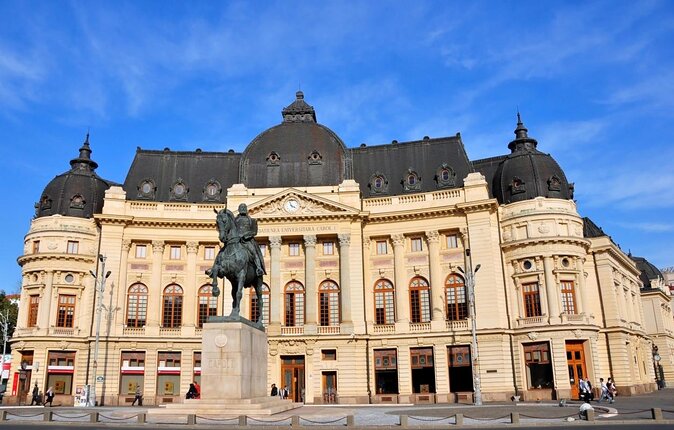
- The Romanian Athenaeum may include an interior visit, where painted scenes around the Great Hall introduce you to Romanian history.
- A private guide gives your group the full attention, useful if you want to focus on architecture, communism, royal Romania, or local recommendations.
- Revolution Square explains the 1989 uprising, one of the most important modern chapters in Bucharest’s story.
- Old Town combines several eras in one hour, from the 16th-century Princely Court to Lipscani Street and Manuc’s Inn.
- The Palace of Parliament is viewed from outside, with the guide explaining its construction and political meaning.
- Hotel pickup and drop-off are included, along with bottled water and a licensed English-speaking guide.
Why this route works for a first look at Bucharest
Bucharest can feel scattered at first. Its grand 19th-century buildings sit beside communist blocks, Orthodox churches, royal landmarks, and lively Old Town streets. This tour is useful because it gives you a clear route through those contrasts instead of leaving you to connect them on your own.
The pace is brisk but sensible on paper: about 30 minutes at most stops, one hour in Old Town, and roughly three hours overall. You will not have time for a full museum visit or a slow meal, but you will get a strong introduction and a list of places to return to later.
The private setup matters here. Bucharest’s story includes political changes that can be hard to understand from plaques alone. Your guide can explain what you are seeing, take questions, and spend more time on the parts that interest you. A previous experience praised the guide’s answers and the detailed explanation of church artwork, so you can reasonably expect the tour to benefit from an engaged conversation rather than a simple recitation of dates.
The guide’s name is not provided, so you should not choose this experience based on a particular person. Instead, choose it for the private arrangement, English-language guiding, and broad city coverage.
More Walking Tours in Bucharest
- Bucharest: City Highlights Guided Walking Tour
★ 4.9 · 1,482 reviews - Bucharest Highlights Walking Tour
★ 5.0 · 469 reviews - Bucharest: Ghost Stories & Romanian Mythology Walking Tour
★ 4.9 · 287 reviews
The Romanian Athenaeum and the opening lesson in national identity
The tour begins at the Ateneul Român, usually called the Romanian Athenaeum. This is Bucharest’s famous concert hall and one of its most recognizable buildings. The stop lasts about 30 minutes, and admission is included when an interior visit is available.
That last condition is important. You should treat the interior as a welcome possibility, not a guarantee. If access is open, your guide will point out the paintings around the Great Hall and use them to explain Romanian history. This gives the building more meaning than a quick photograph from the front steps.
The Athenaeum is a good first stop because it introduces the city’s cultural and national ambitions before the tour moves toward politics and revolution. If you care about architecture, art, or music, this may become one of the most rewarding parts of the morning.
The schedule allows only half an hour, so do not expect a long concert-hall visit. Still, the chance to see the interior, when available, adds real value to a walking tour that otherwise focuses mainly on outdoor landmarks.
Calea Victoriei, Bucharest’s grand urban corridor
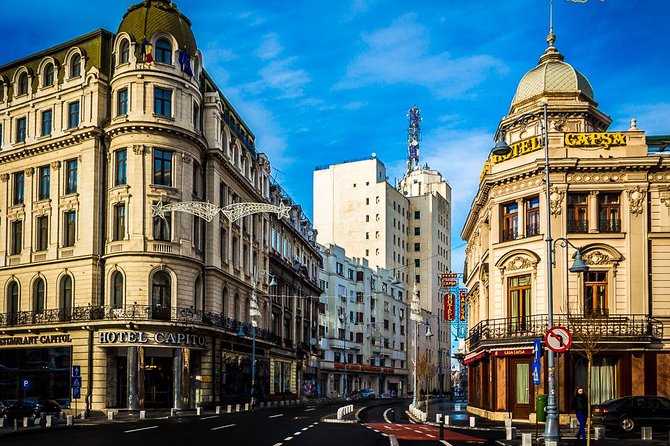
From the Athenaeum, you stroll along Calea Victoriei, or Victory Avenue. It was the first street in Bucharest to be paved, and its importance drew wealthy merchants and other residents who built impressive homes and palaces along the route.
This is not simply a walk between two points. The guide uses the avenue to explain the buildings that shaped Bucharest’s public life. Look for the CEC building, the Palace of the National Military Circle, Capsa House, the Athenaeum, and the Telephone Palace.
You will also hear about the passages connecting the avenue with nearby streets. These details are useful because they encourage you to look beyond the main facades. Bucharest often rewards a slow glance at side entrances, narrow lanes, and unexpected architectural changes.
Thirty minutes is enough for an overview, but the time may feel short if you want to photograph every building. The tour favors context and movement over extended stops. If you enjoy city architecture, take notes on places you want to revisit after the guided walk.
Revolution Square and the end of communist rule
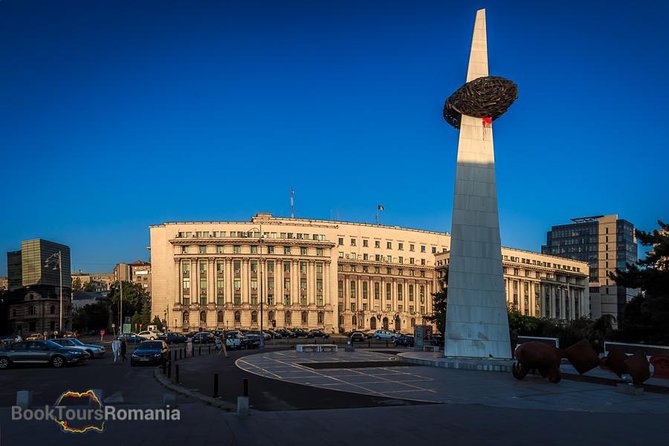
At Piața Revoluției, the focus changes sharply. This is where you learn about communist influence in Romania and the anti-communist revolution that began in December 1989.
The stop is valuable because it gives the later Palace of Parliament visit a human and political frame. You are not just looking at imposing buildings. You are learning how the country’s government affected daily life, public space, and the city’s shape.
A guide who can explain the period in clear terms adds a lot here. The tour promises local perspective on the effects of communism on Romanian people, and the private format gives you room to ask direct questions. This may be especially useful if you know little about Romania’s 20th-century politics.
Allow about 30 minutes. The stop is primarily an outdoor explanation, so the quality of the visit depends on the conversation and the guide’s ability to connect the location to the events of 1989. Bring questions if this is a subject you want to understand better.
Same corner of the country, a completely different day out:
- Bucharest: Dracula’s Castle, Peles Castle, & Brasov Old Town
★ 4.5 · 17,858 reviews - Bucharest: Dracula Castle, Peles Castle & Brasov Old Town
★ 4.6 · 10,891 reviews - Bucharest: Dracula’s Castle, Peleș Castle & Brașov Day Trip
★ 4.5 · 5,919 reviews - Bucharest: Palace of Parliament Tickets and Guide
★ 4.3 · 3,182 reviews
The Royal Palace and Romania’s monarchy
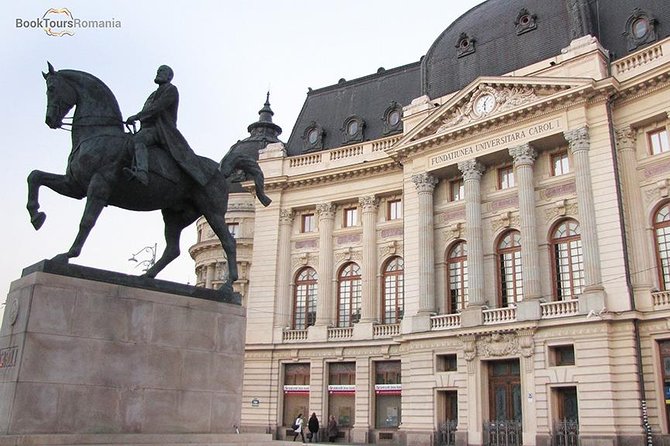
The nearby Royal Palace shifts the story again, this time toward the Romanian monarchy. You will learn how the royal family influenced the direction of modern Romania.
This stop helps prevent the tour from reducing Bucharest to a communist-era city. The capital’s identity also comes from the monarchy, royal institutions, cultural projects, and the grand buildings that followed. Seeing the Royal Palace after Calea Victoriei and Revolution Square creates a useful timeline.
The visit lasts about 30 minutes and is listed as an exterior stop. You should expect historical explanation and views of the building rather than a long indoor palace tour. That is still worthwhile if you want to understand why Bucharest has so many formal avenues and monumental public buildings.
The private format is helpful here because royal history can raise basic questions about political change, national identity, and the transition into modern Romania. You can ask for the level of detail you need.
Old Town, from the Princely Court to Lipscani Street
Old Town receives the longest portion of the tour, about one hour, and that is a good choice. This district brings together some of Bucharest’s oldest surviving stories and its most enjoyable street-level atmosphere.
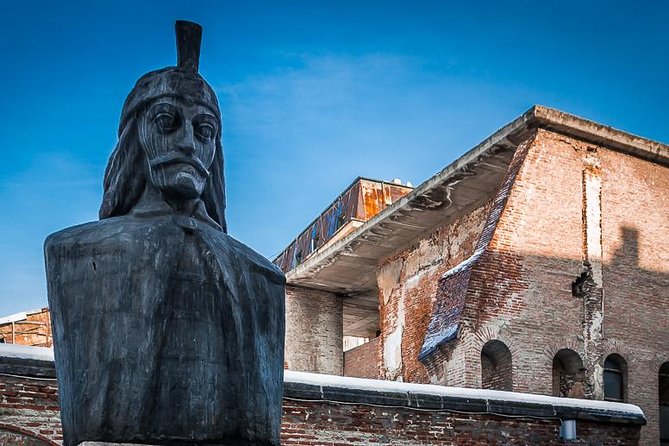
The route begins with the Princely Court, parts of which date to the 16th century and can still be visited. You will also hear why Dracula’s statue guards the site. The reference points to Vlad the Impaler, the historical figure linked to the Dracula legend, but the tour presents the subject through Bucharest’s own past rather than treating it as a theme-park story.
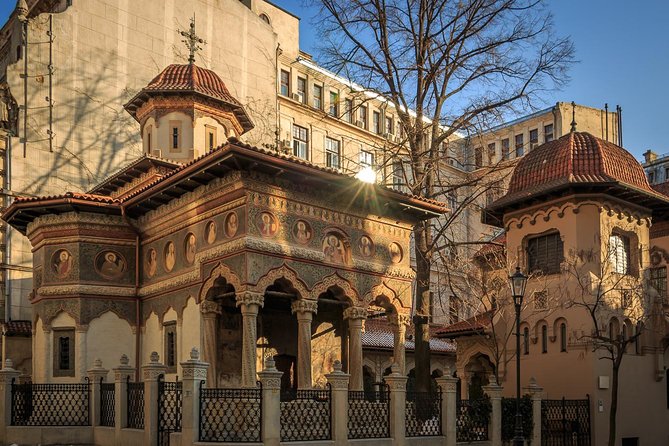
Next comes Manuc’s Inn, described as the last caravanserai in southeastern Europe. Its courtyard and building design offer a strong reminder that Bucharest once served merchants moving goods and people across the region. This is one of the tour’s most distinctive stops because it feels different from the formal avenues and state buildings visited earlier.
The route then continues along Lipscani Street, once one of the city’s main commercial streets and districts from the Middle Ages into the early 19th century. The name is tied to the merchants and trade that shaped this part of town. The area begins near a small square marked by the Capitoline Wolf, the statue of a she-wolf feeding Romulus and Remus.
You will also stop at Caru cu Bere, described as one of Bucharest’s most beautiful restaurants. The tour does not include a meal, so you should think of this as an architectural and cultural stop, not a dining reservation. If the restaurant interests you, ask your guide for practical advice about returning later.
Old Town is the most flexible part of the route. You can look closely at the facades, ask about churches or historic buildings, and get suggestions for where to eat after the tour. One particularly useful detail from the tour experience is the attention given to churches and their artwork. If religious art interests you, say so early and ask your guide to point out the most important examples along the way.
The drawback is that one hour passes quickly. Old Town contains enough history, restaurants, churches, and side streets to fill half a day. This tour gives you orientation, not a complete exploration.
Palace of Parliament and the physical scale of communism
The final listed stop is the Palace of Parliament, also called the House of Parliament. The guide explains how communism reshaped Bucharest and Romania while you look at this enormous building.
The building is often described as the heaviest in the world, and its size is difficult to grasp from photographs. On this tour, the important point is not only its scale. You will hear about the construction project, Nicolae Ceaușescu, and the effect of the communist era on Romanian people.
This is an exterior stop with no admission fee included. Do not expect the tour to take you inside the building. If an interior visit is a priority, you will need to arrange that separately, and the supplied tour details do not state that such an arrangement is part of this experience.
Ending here makes sense. The tour has moved from royal and cultural Bucharest through the 1989 revolution, then into the old commercial center. The Palace of Parliament gives the final chapter a powerful physical image: an immense state project that changed the city around it.
The subject can feel heavy, especially after a busy morning. Still, it gives you useful context for other parts of Bucharest. You will better understand why the city has such strong contrasts between older neighborhoods and large-scale communist planning.
What the private format adds to the $112.29 price
At $112.29 per person, this is not the cheapest way to see Bucharest. The value depends on how many people are in your booking and how much you value privacy.
For two people, the total cost is significant, but you receive a private guide, hotel pickup and drop-off, bottled water, and a focused three-hour route. For a family or small group, group discounts may make the price easier to justify. The key benefit is not a special ticket or a meal. It is time saved and attention received.
I would compare the cost with the price of arranging separate transport, a self-guided route, and several admission tickets. The Athenaeum interior is included when available, but the main stops are outdoor visits without admission charges. That means the price is mainly paying for the guide’s time, planning, transfers, and interpretation.
This is a good use of money if you have only one day in Bucharest, are staying outside the central area, or want a guide to explain the communist period. It is less attractive if you enjoy researching on your own, prefer a slow pace, or plan to spend hours inside museums and historic buildings.
Because the experience is private, choose the option that matches your group size. The schedule runs daily from 8:00 a.m. to 4:00 p.m. during the stated operating period. Confirmation is issued within 48 hours, subject to availability, so do not leave the booking until the last moment if your sightseeing schedule is tight.
Hotel pickup and drop-off are included, though the meeting information also describes the activity as ending back at the meeting point. Confirm the exact pickup details when you book. Bottled water is included, but meals, travel insurance, and photo or video fees are not.
Pace, clothing, and practical planning
You will be on foot for about three hours, with stops divided between 30-minute explanations and a longer Old Town visit. A moderate level of physical fitness is required. Wear comfortable shoes, since the experience is a walking route rather than a series of short vehicle stops.
The tour runs outdoors for much of the time. Check the weather before leaving and dress for a morning or afternoon outside. Keep your camera ready for the Athenaeum, Calea Victoriei, Revolution Square, the Royal Palace, Old Town, and the Palace of Parliament, but remember that photo or video fees are not included where they apply.
If you want food, plan it before or after the tour. Meals are not included, though the Old Town portion brings you near well-known restaurants such as Caru cu Bere. Your guide can also provide recommendations for the rest of your stay, one of the most useful benefits of taking a private tour early in your visit.
The tour is offered in English with a licensed guide. It is suitable for your own group only, not a mixed public group. Free cancellation is available up to 24 hours before the start time. Changes or cancellations inside that window are not accepted for a refund.
Who should book this Bucharest walk?
I would recommend it to first-time visitors who want a strong overview without spending a full day on organized sightseeing. It is also a good fit for couples, families, and small groups who want to ask questions freely and adjust the conversation to their interests.
History-minded visitors should find plenty to discuss, especially at Revolution Square, the Royal Palace, and the Palace of Parliament. Architecture fans will appreciate the Athenaeum, Calea Victoriei, Old Town buildings, and Manuc’s Inn. If churches and religious artwork matter to you, mention that early, since the guide has addressed church art and its meaning in detail.
I would hesitate if your main goal is entering the Palace of Parliament, spending a long time inside museums, or eating during the tour. Those are not part of the stated program. I would also think twice if you dislike walking or want an unhurried Old Town visit.
For most short stays, the tour earns its price through the private guide and the way it connects Bucharest’s major eras. Book it if you want context, convenience, and a concentrated first look. Skip it if you already know the city well or prefer to set your own walking route.
FAQ
How long does the Bucharest walking tour last?
The tour lasts approximately three hours.
Is this a private tour?
Yes. Only your group participates in the activity.
Is hotel pickup and drop-off included?
Yes. Hotel pickup and drop-off are included. The meeting information also says the activity ends back at the meeting point, so confirm the exact arrangements when booking.
Is the tour conducted in English?
Yes. A licensed English-speaking guide is included.
What sights are included?
The route includes the Romanian Athenaeum, Calea Victoriei, Revolution Square, the Royal Palace, Bucharest Old Town, and the Palace of Parliament.
Can you visit the interior of the Romanian Athenaeum?
An interior visit is included when available. Availability is not guaranteed.
Is entry inside the Palace of Parliament included?
No. The listed stop is an exterior visit, and no admission ticket is included for the Palace of Parliament.
Are meals included?
No. Meals are not included. Bottled water is included.
What is the cancellation policy?
You can cancel up to 24 hours before the start time for a full refund. Cancellations or changes made less than 24 hours before the start time are not accepted for a refund.
Just added around Bucharest
- Private Full Day Tour of Bucharest★ 5.0 · 3 reviews
- Veliko Tarnovo and Medieval Bulgaria Private Day Trip from Bucharest★ 5.0 · 3 reviews
- Bucharest VIP Bar Crawl in Lipscani ‘Old Town’★ 5.0 · 3 reviews
- Muddy Volcanoes and Salt Mine Private Tour★ 5.0 · 3 reviews
- Bucharest Private City Tour★ 5.0 · 3 reviews
- Legends & Stories from Transylvania -2 Castles & Brasov Old Town★ 5.0 · 3 reviews
- Transfagarasan Private Tour from Bucharest – 2 Days★ 5.0 · 3 reviews
- 7-Day Dracula Tour in Romania from Bucharest including ‘The Ritual of Killing of a Living Dead’★ 5.0 · 3 reviews
Bucharest Tours, compared.
Dracula’s Castle, Peles Castle, & Brasov Old Town
Read our review →
Dracula Castle, Peles Castle & Brasov Old Town
Read our review →
Dracula’s Castle, Peleș Castle & Brașov Day Trip
Read our review →
Day Trip to Dracula Castle, Peles Castle & Brașov
Read our review →
Bucharest to Dracula Castle, Peles Castle and Brasov Guided Tour
Read our review →
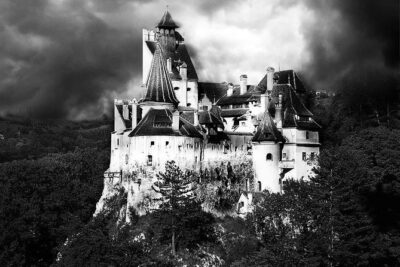
Dracula’s Castle, Peles Castle and Brasov Day Trip from Bucharest
Read our review →Browse the lists this tour appears in