
Reviewed · SIBIU TOURS
From Sibiu: day trip to Dacian Fortress, Hunyadi Castle and Alba Iulia Citadel
The most striking part of this full-day trip is the way it links three very different chapters of Romanian history: the Dacian stronghold at Sarmizegetusa, the Gothic bulk of Hunyadi Castle, and Alba Iulia’s carefully planned citadel. You move from ancient ritual grounds to medieval power to the political story of modern Romania, all in one day from Sibiu.
I like the private vehicle and front-door pickup, since this is a long outing and you avoid the limits of a big bus group. I also like the chance to ask questions throughout the day. Guide Ion Dima is described as a friendly English speaker with a good sense of humor, useful local advice, and a gift for making history easier to follow.
The main drawback is the pace. Three major sites spread across Transylvania make for a demanding day, and the tour requires a moderate level of fitness. Food and drinks are not included, so you will need to plan for meals during a full day on the road.
Key points to know before booking
- Sarmizegetusa begins the historical journey, with Dacian ruins, a sacred area, and a look at Romania before Roman rule.
- Hunyadi Castle is the visual star, a 15th-century fortress and former Hunyadi residence with military features and a reputation for ghost stories.
- Alba Iulia brings several eras together, including Roman remains, medieval walls, Vauban-style defenses, and two important cathedrals.
- The private format keeps the day personal, with only your group in the vehicle and time for questions.
- Ion Dima may be your guide, offering English commentary, humor, and suggestions for further experiences in Romania.
- The $191 price reflects private transport and guiding, but food, drinks, and any costs not listed as included are extra.
Three chapters of Transylvania in one day
This excursion leaves Sibiu at 8:00 in the morning and returns after a full day of sightseeing. The route is built around contrasts rather than one single type of attraction. You begin with archaeology, move into medieval castle drama, then finish inside a monumental citadel shaped by Roman, medieval, and modern history.
That variety is the tour’s real strength. If you only want castles, another excursion may suit you better. If you want a broad introduction to Transylvania’s past, this route gives you far more range than a single-site outing.
The private arrangement matters here. You are not joining a large group with a fixed pace and one-way commentary from the front of a coach. You travel in an air-conditioned minivan or other private vehicle, with hotel pickup and drop-off in Sibiu. Your guide can explain a point again, spend more time where your interest is strongest, or keep things moving if you have had enough.
The tradeoff is simple: a private day trip is more expensive than a shared excursion, and the itinerary is ambitious. At $191 per person, the value improves for couples, families, or friends who want personal transport and guiding without organizing several separate journeys.
A few more Sibiu day trips to weigh up
- Bucharest: Dracula’s Castle, Peleș Castle & Brașov Day Trip
★ 4.5 · 5,919 reviews - Bucharest: Day Trip to Dracula Castle, Peles Castle & Brașov
★ 4.4 · 3,049 reviews - Dracula’s Castle, Peles Castle and Brasov Day Trip from Bucharest
★ 4.5 · 1,804 reviews
Sarmizegetusa and the world before Rome
The first major stop is the archaeological site associated with Sarmizegetusa, described as the former capital of the Dacian state. This is the part of the day that gives the rest of the tour its context. Before Roman armies reshaped the region, the Dacians had their own political center, religious practices, and defensive system.
You will see the remains of the fortress area and the sacred zone, where the interpretation includes the subject of human sacrifice. That detail gives the visit an unsettling edge, but it also helps you understand why Dacian sites are tied to so many myths and legends.
The excursion presents the Sarmizegetusa visit as a way to understand Romanian origins before the Roman conquest. That is a useful frame, as long as you are ready for archaeology rather than a restored monument. Ancient stone foundations and remains require imagination. Your guide’s explanation is especially important here because the site itself cannot tell the whole story at a glance.
The itinerary uses both Sarmizegetusa Ulpia Traiana and Sarmizegetusa Fortress in its description. Those names refer to different historical settings connected with the Roman and Dacian periods, so it is sensible to ask your guide to clarify exactly which remains you are seeing and how they relate to one another.
This stop will suit you if you enjoy ancient sites, uncertain stories, and the chance to see a less polished side of Romania. If you prefer intact buildings and easy visual drama, the castle later in the day may make a faster impression.
Wear practical shoes and expect some walking. The tour requires moderate physical fitness, and ancient archaeological grounds are not the same as a paved city-center attraction. Since food and drinks are not included, carry what you need for the morning portion of the trip.
Hunyadi Castle, Romania’s great medieval set piece
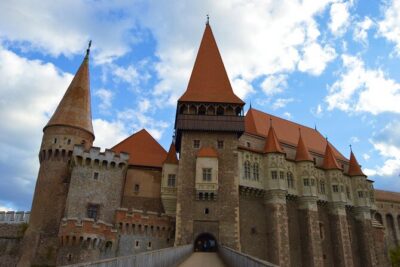
After the Dacian and Roman material, the tour shifts sharply to Hunyadi Castle, also called Corvin Castle. This is the most immediately theatrical stop of the day: a large medieval fortress linked to the Hunyadi family and John of Hunyadi, the Transylvanian governor who made it his residence.
The castle dates from the 15th century and is presented as the biggest medieval castle in Romania. Its appeal is easy to understand. Instead of reading about military power in the abstract, you see it expressed through towers, defensive features, grand residential spaces, and a building shaped by the dangers of its time.
The design combines several architectural styles. That is not just a decorative detail. The castle had to work as both a luxurious home and a strategic defense point, so additions and military improvements affected its appearance. You can look at it as a noble residence, but also as a working stronghold designed to protect the region from attack.
The Hunyadi family connection gives the visit a strong dynastic thread. John of Hunyadi left the castle to his son, Matthias Corvinus, tying the building to two major figures in Transylvanian and Hungarian history. A good guide can help keep those family links clear, since names and titles can otherwise blur together during a long day.
The castle is also promoted as one of the world’s most haunted places. Treat that as atmosphere rather than the main reason to book. The ghost stories add fun to the visit, especially in a fortress already full of towers and darker corners, but the architecture and political history are the stronger reasons to come.
This is where Ion Dima’s style could be particularly useful. The feedback about him points to clear English, a welcoming personality, humor, and helpful suggestions for other Romanian experiences. Those qualities matter in a castle, where a dry list of dates can make the rooms feel empty. Ask questions about the Hunyadi family, the castle’s defensive role, and the stories attached to the site.
Allow yourself time to look upward and outward. Castle visits can become a race through rooms if you focus only on ticking off the attraction. The pleasure here comes from the combination of stonework, changing architectural forms, and the sense that this was both a home and a military statement.
Alba Iulia Citadel and the layers of Romanian history
The final major stop is Alba Iulia Fortress, where the tour gathers several periods into one city setting. The site’s story reaches back to the Roman period, then moves through medieval fortifications and later Vauban-style defenses.
That range makes Alba Iulia a useful place to end the day. At Sarmizegetusa, you focus on the Dacians. At Hunyadi Castle, the medieval nobility and military world take center stage. In Alba Iulia, you see how the city continued to change as rulers and armies brought new plans and new defenses.
The Roman remains connect the city to the ancient world. The medieval fortifications show a later phase of defense and urban life. The Vauban-style works belong to a more systematic military age, when fortifications were planned with geometry, artillery, and controlled lines of defense in mind.
The religious buildings add another layer. The Catholic Cathedral is described as the oldest in Transylvania, while the Reunion Cathedral commemorates the union of all Romanian provinces in one country. Seeing both helps you connect architecture with identity, religion, and national history rather than treating the citadel as only a military site.
Alba Iulia is likely to reward a slower, explanatory visit. There are several stories competing for your attention, and a guide can keep the Roman, medieval, and modern periods from blending into one long list. If you have a particular interest in Romania’s national history, this is the point where you will want to ask the most questions.
The drawback is that Alba Iulia comes late. After an ancient site and a major castle, you may be tired by the time you reach the citadel. Still, the change of setting helps. It is not simply another fortress tour, and the variety gives the final part of the day a clear purpose.
Same corner of the country, a completely different day out:
- Sibiu: Daily Sightseeing Guided Tour
★ 4.7 · 247 reviews - From Sibiu: Day Tour to Brasov and Dracula’s Castle
★ 4.7 · 120 reviews - SB01 – City Tour Sibiu: Exploring the Heart of Transylvania
★ 4.8 · 99 reviews - Sibiu Old Town Exploration Game and Self-Guided Tour
★ 4.5 · 82 reviews
What the private format changes
A private tour is more than a smaller group size. It changes how you experience a demanding itinerary. You can start with hotel pickup in Sibiu, settle into an air-conditioned vehicle, and leave the transport planning to the driver and guide.
You also avoid the social and timing problems of a large group. Nobody needs to wait for dozens of people to return to the vehicle, and you are not trying to hear commentary from several rows away. The tour is limited to your own group, which makes it easier to ask about sensitive or complicated subjects such as Dacian sacrifice, political succession, and Romanian unification.
A driver-guide and local or professional guide are included in the package description. The exact division of roles may vary, but the important point is that guiding is part of the experience rather than an optional extra you must arrange yourself.
The vehicle is another practical advantage. These sites are not presented as a compact walking circuit from Sibiu, so private transport saves you the trouble of piecing together connections. The air conditioning also matters during a full day, particularly when you are moving between outdoor ruins and enclosed historic buildings.
You should still think carefully about stamina. The tour is listed as approximately one day, begins at 8:00 a.m., and asks you to visit three substantial places. The private format makes the day more comfortable, but it cannot eliminate the distance or the walking.
Is $191 per person fair value?
The price is $191 per person. That is not a budget day trip, but price alone does not tell you much here. You are paying for a private activity, hotel pickup and drop-off, an air-conditioned private vehicle, fuel surcharge, and driver or guide services.
For two people, the total cost is significant. For a family or small group, the private format may make more sense because the experience is shared among your own party. Group discounts are available, though the exact discount is not stated, so ask for the current price before booking.
I see the value in this tour if you want to cover all three places without handling the transport yourself. It is also a good fit if you care about context and questions rather than simply arriving, taking photos, and leaving.
The value is weaker if you prefer to travel slowly, eat at leisure, or spend an entire day at one castle. Food and drinks are not included, and there is no stated meal plan. You should budget separately for what you eat and drink during the day.
The price also includes a kind of convenience that is easy to underestimate. Starting and ending at your Sibiu accommodation means you do not have to find a separate meeting point at dawn or work out your return after a long day. For many people, that practical ease is part of what makes the cost reasonable.
Guide quality and the human side of the day
The strongest personal feedback centers on Ion Dima. He is described as an excellent guide with good English, strong historical knowledge, a funny and welcoming personality, and useful advice about other things to do in Romania.
That combination is important for this particular route. The Dacian material can be hard to read from the ruins alone. The Hunyadi family story includes several names and generations. Alba Iulia brings together Roman, medieval, religious, and modern national themes. A guide who can explain clearly and keep the mood relaxed adds real value.
You should not expect a scripted lecture to be the only benefit. The private setting gives you room to ask for more detail or change the emphasis. If myths interest you, ask about the haunted reputation of Hunyadi Castle. If archaeology is your focus, spend more time on the Dacian site. If modern Romanian identity matters most, use Alba Iulia to explore the meaning of the Reunion Cathedral.
The available feedback also praises the guide’s welcoming manner and tips for further experiences. That makes this tour useful early in a Romania trip, when you may still be deciding what else to see. It can help you build a better sense of the country beyond Sibiu.
Who should book this excursion?
I would recommend this tour to first-time visitors who want a broad historical introduction and prefer a private day rather than a large group. Families and small parties may also appreciate the ability to travel together and ask questions without holding up strangers.
It suits people who enjoy castles, archaeology, and political history in equal measure. It is especially useful if you are based in Sibiu and want to reach attractions that would be awkward to combine without private transport.
You should think twice if your ideal holiday day includes a late start, long lunches, or one carefully paced attraction. The schedule is ambitious, the sites are spread out, and moderate fitness is required.
The tour is also not a food-focused outing. Since meals and drinks are excluded, you need to handle that part of the day yourself. The lack of a stated meal stop means it is wise to ask how breaks are managed before you set off.
Booking confirmation is provided at the time of booking, and free cancellation is available up to 24 hours before the start time. A minimum of two people is required, so solo visitors cannot book this experience alone under the stated conditions.
Should you book the Sarmizegetusa, Hunyadi Castle, and Alba Iulia tour?
Book it if you want maximum historical range in one private day from Sibiu, and if comfortable transport and a personal guide matter more to you than a low price. The route is ambitious, but it gives you ancient Dacia, medieval power, and modern Romanian identity in one carefully connected outing.
I would be most inclined to choose it for a couple, family, or small group that wants to ask questions and travel at its own pace. Ion Dima’s clear English, humor, and practical advice are useful bonuses if he is assigned to your group.
Skip it if you want a relaxed, single-focus day or dislike long excursions. In that case, spend your time on one castle or one historic city instead. For everyone else, this is a strong way to widen your view of Transylvania beyond Sibiu’s old town.
FAQ
Where does the tour start?
The tour starts from Sibiu at 8:00 a.m., with hotel pickup and drop-off provided.
How long does the excursion last?
It is a full-day tour lasting approximately one day.
Is this a private tour?
Yes. Only your group participates in the activity.
How many people are required to book?
A minimum of two people per booking is required.
What type of transport is provided?
Transport is provided in a private, air-conditioned vehicle, described as an air-conditioned minivan.
Are food and drinks included?
No. Food and drinks are not included in the tour price.
Can I cancel for a full refund?
Yes, if you cancel at least 24 hours before the experience start time. Cancellations or changes made less than 24 hours in advance are not accepted for a refund.
Just added around Sibiu
- SB05 – Carpathian Heights: Hiking to Bâlea Cascada & Lake★ 5.0 · 4 reviews
- Private Walking Tour of Alba Iulia Citadel with Wine Tasting★ 5.0 · 4 reviews
- Explore the Beauty of Sibiu with Full-Suspension E-Bikes!★ 5.0 · 5 reviews
- Transfagarasan, Vidraru and Poenari Fortress Tour from Sibiu★ 4.5 · 5 reviews
- Tour of Sibiu – Church in Cristian – Village of Sibiel★ 5.0 · 7 reviews
- Exclusive Tour on Transfagarasan, Balea Lake, Balea and Capra Waterfalls★ 5.0 · 9 reviews
- Tour to Corvin Castle in Hunedoara & Alba Iulia★ 4.5 · 9 reviews
- Exclusive tour: Sighisoara, Medias and Biertan tour from Sibiu★ 5.0 · 9 reviews
Sibiu Tours, compared.
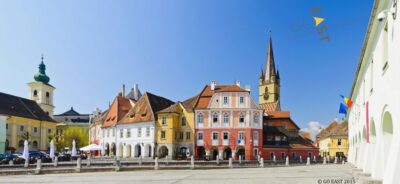
SB01 – City Tour Sibiu: Exploring the Heart of Transylvania
Read our review →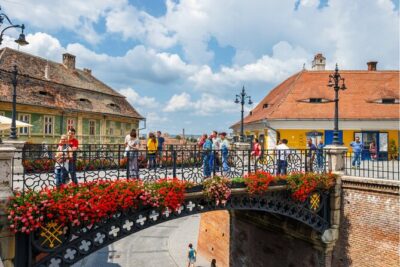
Sibiu Old Town Exploration Game and Self-Guided Tour
Read our review →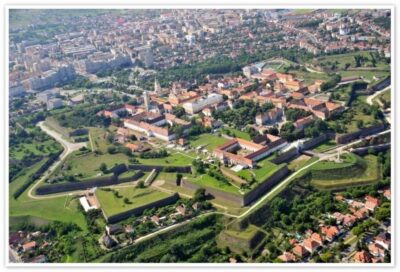
Exclusive Tour: Corvin Castle, Alba Iulia and traditional villages from Sibiu
Read our review →
SB09-Transfăgărășan Wonders:Journey through Bâlea Lake,Avrig
Read our review →
Browse the lists this tour appears in