
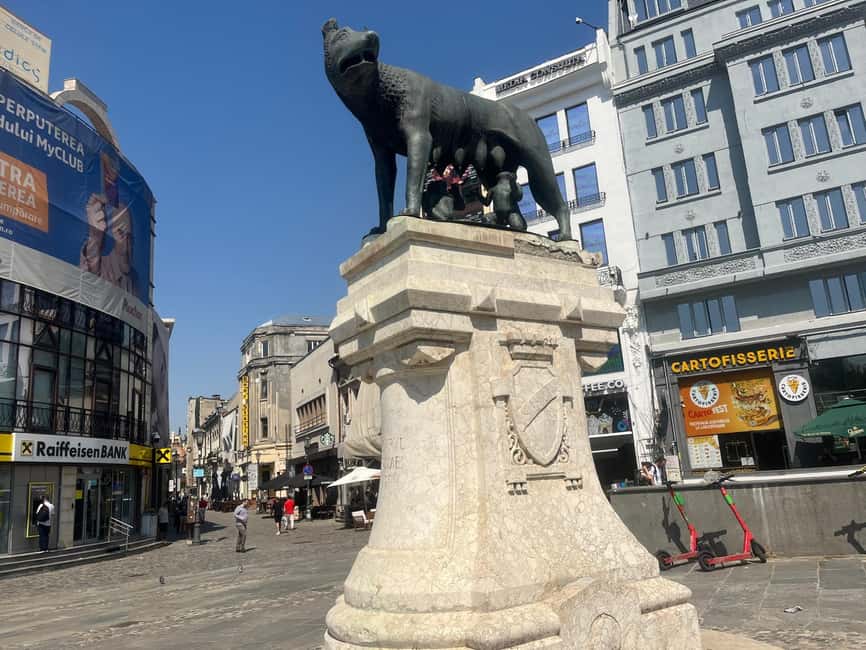
Reviewed · BUCHAREST TOURS
Bucharest: Walking tour with Italian speaking guide for small groups
Bucharest reveals itself best on foot, and this three-hour tour gives you a clear route through the city’s most important central sights. You move from the medieval-flavored Old Town to grand boulevards and the places tied to Romania’s 1989 revolution, with an Italian-speaking guide explaining how the pieces fit together.
I like the small-group format, which should make it easier to ask questions and keep the walk personal. I also like the mix of famous buildings and smaller details, from Stavropoleos Monastery and the Romanian Athenaeum to the Umbrellas Street and the elegant passages of central Bucharest.
The main consideration is that this is a walking tour with many stops, so comfortable shoes matter. The tour is wheelchair accessible, but the route includes historic streets and passages, and it is not suitable for people with hearing impairments.
Key points at a glance
- Italian-speaking guidance: Guides including Filippo Di Cataldo and Giuseppe bring history, culture, and friendly anecdotes to the walk.
- A well-chosen central route: Visit Old Town, Lipscani Street, Calea Victoriei, and Revolution Square without needing transport between sights.
- Strong architectural variety: See an Orthodox monastery, an old inn, bank buildings, royal landmarks, grand concert-hall architecture, and decorated passages.
- Useful first-day orientation: The route gives you a practical sense of Bucharest’s central core and its main historic areas.
- Three hours on foot: The length is enough for context without taking up a full day.
- Good booking flexibility: You can cancel up to 24 hours before the start for a full refund and reserve without paying immediately.
Why this walk is a smart introduction to Bucharest
Bucharest can be hard to read at first. Its center combines elegant nineteenth-century buildings, Orthodox churches, communist-era reminders, modern shops, nightlife, and neglected facades. A map shows where things are, but it does not explain why the city feels so layered.
That is where a walking guide helps. You get the basic geography of central Bucharest while hearing the stories behind the buildings. Instead of treating the city as a checklist of monuments, the tour links the Old Town with Calea Victoriei and Revolution Square, showing how Bucharest shifts from narrow historic lanes to broad ceremonial spaces.
This route is especially useful at the start of a stay. After three hours, you should know where Old Town begins, where Lipscani Street fits into the center, how Calea Victoriei runs through the city, and why Revolution Square matters to modern Romanian history.
The Italian language is a major reason to choose this experience. If you understand Italian more easily than English, you can follow dates, names, political events, and architectural terms without working through a language barrier. The guides named in the information provided, Filippo Di Cataldo and Giuseppe, are described as friendly, prepared, and easy to approach.
More Walking Tours in Bucharest
- Bucharest: City Highlights Guided Walking Tour
★ 4.9 · 1,482 reviews - Bucharest Highlights Walking Tour
★ 5.0 · 469 reviews - Bucharest: Ghost Stories & Romanian Mythology Walking Tour
★ 4.9 · 287 reviews
Meeting at Caru’ cu Bere in the Old Town
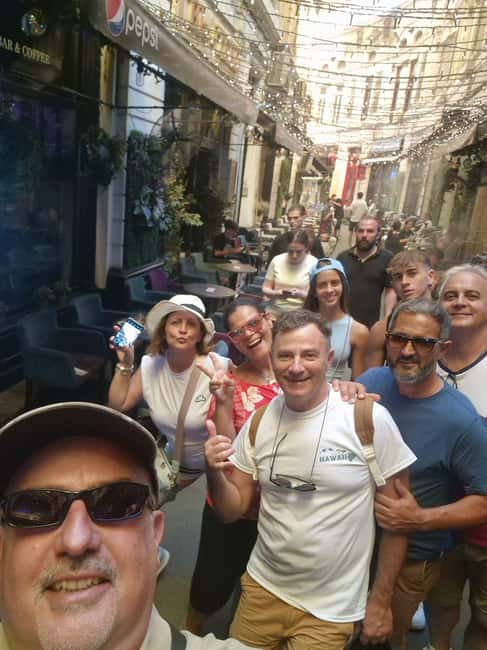
The walk begins in front of Caru’ cu Bere at Stavropoleos Street 5. This is a practical meeting point because the restaurant is one of the best-known places in central Bucharest, and the tour ends there as well.
Look for the guide outside with a professional identification card. Enter the exact location into your navigation app, since Bucharest’s Old Town has a tight network of pedestrian streets and historic buildings. Arriving with a little time to spare will help you avoid starting the tour flustered.
Caru’ cu Bere itself is part of the visual setting. The restaurant is famous for its ornate interior and long association with Bucharest’s dining culture. The tour does not include food or drinks, so plan a separate visit if you want to eat there.
Starting here also puts you directly into the oldest-feeling part of the route. You do not spend the first part of the experience waiting for a bus or walking from a distant hotel district.
Stavropoleos Monastery and Manuc’s Inn
The first important stop is Stavropoleos Monastery, where you have about ten minutes to visit. This small Orthodox complex offers a quieter counterpoint to the busy streets around it. Its architecture and religious setting introduce a side of Bucharest that can be easy to miss when you focus only on grand avenues.
Ten minutes is enough for an introduction, but not for a long, detailed visit. You should treat this as a focused stop where the guide explains the building and its place in Romanian culture. Keep your pace respectful, since this is a religious site rather than simply a photo backdrop.
From there, the tour continues to Manuc’s Inn for another visit of around ten minutes. The inn is tied to the old commercial life of Bucharest, when travelers, merchants, and goods moved through the city’s central roads. Its presence helps you picture the Old Town before it became known mainly for restaurants and nightlife.
I like these two early stops because they give the tour some texture. You see both spiritual and commercial Bucharest before moving on to the larger civic landmarks. The short timing also keeps the walk moving.
Lipscani Street and the Old Town lanes
The Old Town section includes Lipscani Street, the best-known address in Bucharest’s nightlife district. During the day, you can pay more attention to the buildings, side streets, cafes, and shops. At night, the same area takes on a louder and more social character.
The guide’s role here is important. Old Town is easy to walk through without learning much. A local explanation can point out the difference between a historic structure, a restored facade, and a place that has been adapted for modern business.
The itinerary includes several guided stops of about ten minutes each before and around the main Old Town visit. The exact names of two listed stops are not specified, so you should expect short explanations at selected locations rather than a detailed interior tour of every building.
This section suits people who like to connect architecture with daily life. You are not only looking at monuments. You are also seeing how Bucharest uses its historic center today, with restaurants, nightlife, shops, and pedestrian traffic filling streets that once served a very different purpose.
Same corner of the country, a completely different day out:
- Bucharest: Dracula’s Castle, Peles Castle, & Brasov Old Town
★ 4.5 · 17,858 reviews - Bucharest: Dracula Castle, Peles Castle & Brasov Old Town
★ 4.6 · 10,891 reviews - Bucharest: Dracula’s Castle, Peleș Castle & Brașov Day Trip
★ 4.5 · 5,919 reviews - Bucharest: Palace of Parliament Tickets and Guide
★ 4.3 · 3,182 reviews
Cărturești Carusel and the Umbrellas Street
Cărturești Carusel is scheduled as a ten-minute photo stop. The bookstore is known for its bright, sweeping interior, curved balconies, and carefully arranged bookshelves. Even if you do not shop, it is a useful place to see how a restored historic building has been given a modern public role.
The short stop tells you what to expect. You will have time for photographs and a quick look, not a long browsing session. If you want to buy books or gifts, you may need to return later on your own.
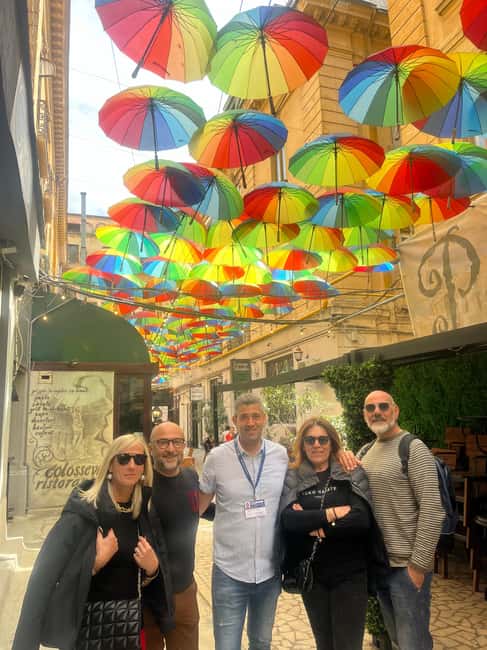
The Umbrellas Street is another brief photo stop, listed at about five minutes. It adds a playful visual note to a route otherwise filled with churches, banks, royal buildings, and political history. It is a small detail, but these details help the walk feel less formal.
I appreciate that the tour includes stops like these. They break up the heavier historical material and give you quick, memorable reference points for exploring the area afterward.
The National Bank and Pasajul Villacrosse
The National Bank of Romania receives about ten minutes of guided attention. The building adds a financial and institutional layer to the Old Town route. It also helps explain that central Bucharest was not only a place of inns and churches, but a center of national administration and commerce.
You should not expect a banking museum visit from the information provided. The stop is a guided look at the building and its setting from the walking route. That is still valuable, because large institutional buildings often make more sense when someone explains their role in the city.
Pasajul Villacrosse brings a different architectural mood. This covered passage is known for its decorative design and enclosed urban atmosphere. It shows how Bucharest once created elegant connections between streets, shops, and places to meet.
The contrast between the National Bank and Villacrosse is one of the better features of the route. Within a short walk, you move from official architecture to a more intimate passage. You get a sense of the city’s changing scale without needing a long transfer.
Calea Victoriei, Bucharest’s grand boulevard
The tour then leads you along Calea Victoriei, often considered Bucharest’s most elegant boulevard. This is where the city’s grand public face comes forward, with historic buildings, fashion shops, and fine bistros lining the route.
The boulevard gives you a useful change of pace after the Old Town lanes. Streets feel broader, buildings become more monumental, and the city’s connections to royal, cultural, and national life become clearer.
You will see the architecture from street level, with the guide explaining what you are looking at and why it matters. The route does not include food, drinks, or shopping, so consider the shops and bistros suggestions for later rather than part of the tour itself.
For me, Calea Victoriei is where the tour’s title idea of a city between past and future makes the most sense. Historic facades sit beside modern businesses, and the boulevard remains an active part of Bucharest rather than a preserved museum street.
Revolution Square and the events of December 1989
Revolution Square receives the longest stop, around 25 minutes, and that is appropriate. This is the key place on the route for understanding the end of Nicolae Ceaușescu’s dictatorship during the December 1989 revolution.
The square is not only a political site. Its surrounding buildings cover several periods of Romanian history. The Royal Palace, the Romanian Athenaeum, and the National Library help show how Bucharest’s civic center changed over time.
A guide can make this stop much more useful than a quick photograph. You need context to understand why the square became such a powerful symbol and how the buildings around it relate to Romania’s political past. The subject is serious, but the surrounding architecture gives the discussion a broader frame.
Expect this part of the tour to be more reflective than the Old Town section. If you are interested in twentieth-century European history, this may be the most valuable stop of the day. If you prefer only light sightseeing, the political background may feel more demanding, but the guide can help keep it clear and focused.
The Romanian Athenaeum and the walk back
The Romanian Athenaeum receives about 15 minutes of guided attention. Its elegant exterior and role as a major cultural landmark make it a fitting final sight before returning to Caru’ cu Bere.
The itinerary does not promise a concert or an interior performance, so think of this as an architectural and historical stop. You can admire the building, understand its cultural importance, and then use the location as a reference point for further independent exploring.
The walk ends back at the original meeting point. That is convenient if you want to continue with lunch, return to your accommodation, or stay in the Old Town for the evening.
Because the start and finish are the same, you do not need to work out a separate pickup or drop-off. The experience is a walking circuit through central Bucharest, not a sightseeing transfer.
What the $35 price really gives you
At $35 per person, this is a reasonable price for a private-language walking experience in a small group, especially if you want Italian rather than a more common tour language. The value comes mainly from the guide’s explanations and the carefully connected route, not from admission tickets or included meals.
Nothing is included beyond the Italian-speaking guide and the walking tour. You pay separately for food, drinks, shopping, and any personal expenses. The stops described are viewed from the route or visited briefly, so you should not book this expecting a package of paid museum entries.
The three-hour length is another part of the value. It is long enough to cover several districts and historical periods, but short enough to fit into a morning or afternoon. You can still reserve the rest of the day for museums, food, or independent walks.
You can also reserve now and pay later, which helps if your schedule is still changing. Cancellation is free up to 24 hours before the start time for a full refund.
Who should book this Italian walking tour?
I would choose this tour if you are visiting Bucharest for the first time and want a clear introduction without spending a full day on your feet. It is also a strong fit if Italian is your preferred language and you want historical explanations you can follow comfortably.
The experience suits couples, friends, and small family groups who enjoy architecture, local anecdotes, and city history. The route also works well for anyone who wants to understand Bucharest beyond nightlife in the Old Town.
It may be less suitable if you dislike walking, want extensive interior visits, or prefer a transport-based sightseeing tour. The itinerary includes several short stops, so the experience favors broad orientation over long time at one monument.
The tour is wheelchair accessible, but ask for any route details you need before booking because historic streets and passages can have practical limits. It is not suitable for babies under one year, children under two, or children under three according to the stated restrictions, and it is not suitable for people with hearing impairments.
Practical tips for a better walk
Wear comfortable walking shoes. Three hours, many stops, and Old Town surfaces can make poor footwear a needless problem.
Bring water, since food and drinks are not included. A small notebook can also be useful if you want to record restaurant names, buildings, or places to revisit.
Keep your camera ready for Cărturești Carusel, the Umbrellas Street, Pasajul Villacrosse, and the Romanian Athenaeum. At Stavropoleos Monastery, use a quieter approach and follow the guide’s instructions.
Alcohol, drugs, littering, explosives, and audio recording are not allowed. The tour is led live in Italian, so it is best suited to people who can comfortably follow spoken Italian for three hours.
Should you book it?
Book this tour if you want a compact, history-focused introduction to Bucharest in Italian, especially if you value a friendly small-group setting. The route covers the city’s essential central contrasts: old inns and Orthodox architecture, elegant boulevards, cultural landmarks, and the political drama of Revolution Square.
Skip it if you want a food tour, extensive monument interiors, or a ride between distant sights. For most first-time visitors who enjoy walking and want Bucharest explained rather than simply photographed, the $35 price is fair and the three-hour format is practical.
FAQ
How long does the Bucharest walking tour last?
The tour lasts three hours. Starting times vary, so you need to check availability when booking.
What language is the tour conducted in?
The live tour guide speaks Italian.
Where does the tour begin?
The guide meets you in front of Caru’ cu Bere at Stavropoleos Street 5, Bucharest. The guide will have a professional identification card.
Where does the tour end?
The walk ends back at Caru’ cu Bere, the same place where it begins.
What sights are included?
The route includes Stavropoleos Monastery, Manuc’s Inn, Bucharest Old Town, Lipscani Street, Cărturești Carusel, the National Bank of Romania, Pasajul Villacrosse, the Umbrellas Street, Revolution Square, Calea Victoriei, and the Romanian Athenaeum.
Are food and drinks included?
No. Food, drinks, and personal expenses are not included.
Is the tour wheelchair accessible?
Yes, the activity is listed as wheelchair accessible. It is not suitable for people with hearing impairments.
Can I cancel the booking?
Yes. You can cancel up to 24 hours in advance for a full refund. You can also reserve now and pay later.
Just added around Bucharest
- Private Full Day Tour of Bucharest★ 5.0 · 3 reviews
- Veliko Tarnovo and Medieval Bulgaria Private Day Trip from Bucharest★ 5.0 · 3 reviews
- Bucharest VIP Bar Crawl in Lipscani ‘Old Town’★ 5.0 · 3 reviews
- Muddy Volcanoes and Salt Mine Private Tour★ 5.0 · 3 reviews
- Bucharest Private City Tour★ 5.0 · 3 reviews
- Legends & Stories from Transylvania -2 Castles & Brasov Old Town★ 5.0 · 3 reviews
- Transfagarasan Private Tour from Bucharest – 2 Days★ 5.0 · 3 reviews
- 7-Day Dracula Tour in Romania from Bucharest including ‘The Ritual of Killing of a Living Dead’★ 5.0 · 3 reviews
Bucharest Tours, compared.
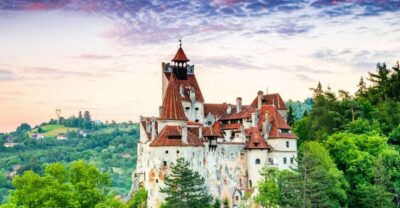
Dracula’s Castle, Peles Castle, & Brasov Old Town
Read our review →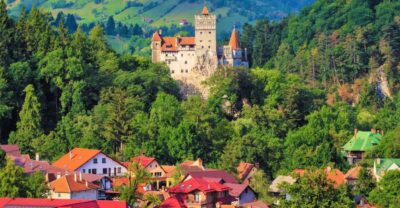
Dracula Castle, Peles Castle & Brasov Old Town
Read our review →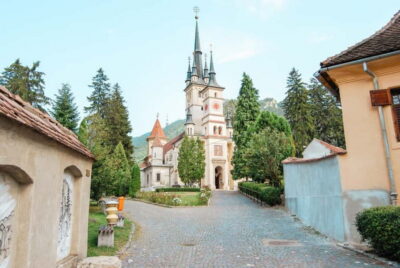
Dracula’s Castle, Peleș Castle & Brașov Day Trip
Read our review →
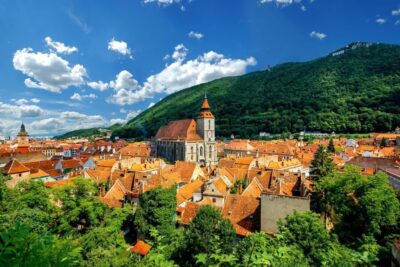
Day Trip to Dracula Castle, Peles Castle & Brașov
Read our review →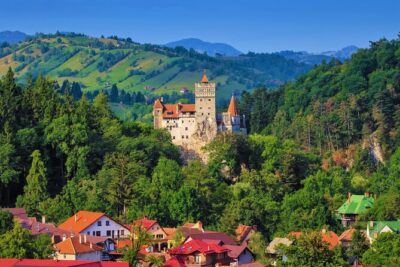
Bucharest to Dracula Castle, Peles Castle and Brasov Guided Tour
Read our review →
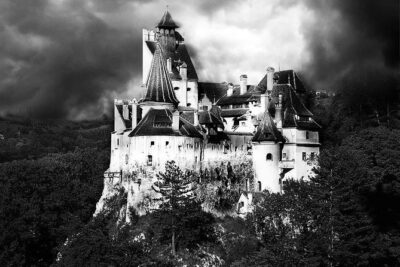
Dracula’s Castle, Peles Castle and Brasov Day Trip from Bucharest
Read our review →Browse the lists this tour appears in