
Reviewed · SALT MINE TOURS
Cluj-Napoca: Turda Salt Mine & Alba Carolina Fortress Tour
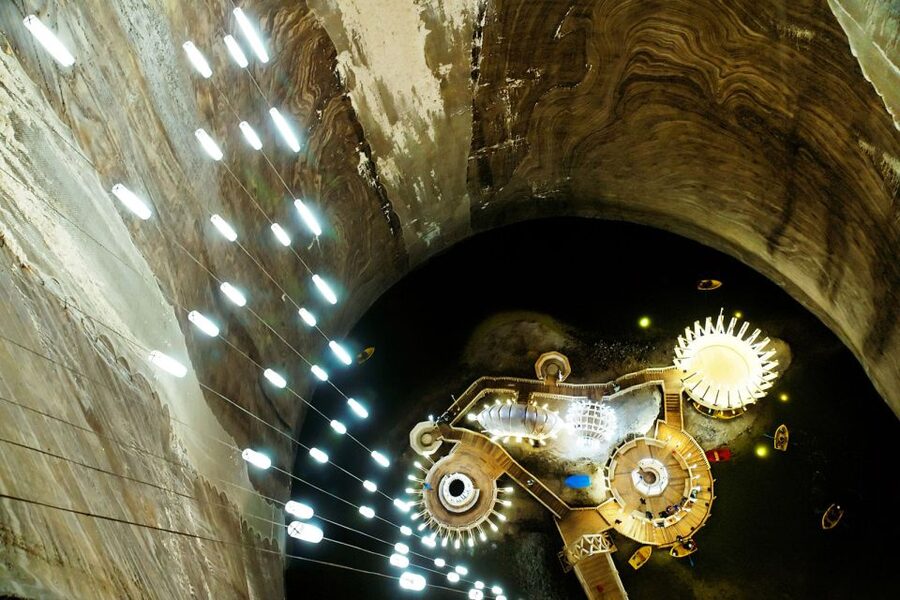
Turda Salt Mine is the surprise star of this full-day outing. You walk through long underground galleries into enormous chambers cut from ancient salt, then look down from a glass elevator or take a boat ride on the salt lake. I also like the contrast with Alba Iulia, where Roman, medieval, Hungarian, German, and Austrian influences meet inside a grand fortress.
I like having a private guide for a day that covers two very different places, and I like the steady, useful commentary. Guides identified as Joseph or Josif have been especially attentive, answering questions about Romania as well as the sights. The main drawback is the length: ten hours is a lot of time on the road and on your feet, and the tour is not suitable for wheelchair users or people with mobility impairments.
Key points to know before booking
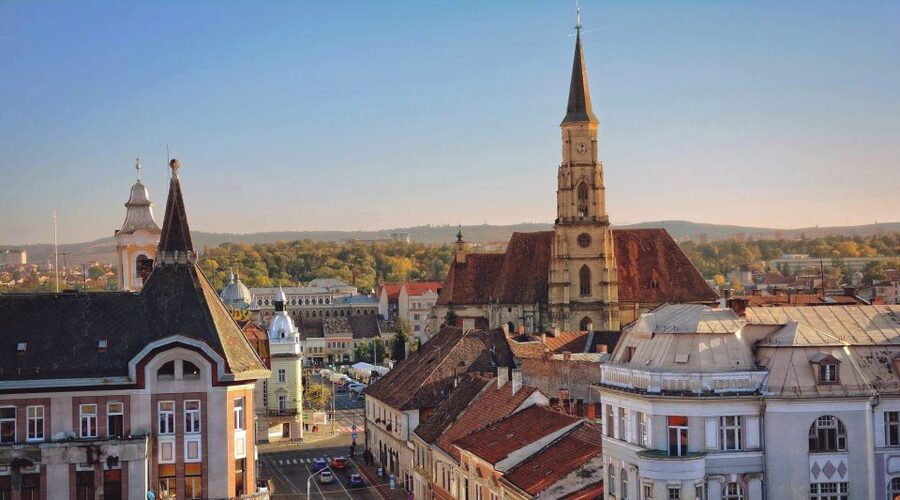
- Two major sights in one day: Pair Alba Iulia’s historic fortress with the remarkable underground chambers at Turda Salt Mine.
- A private-group experience: You can ask questions freely and shape the conversation around Romanian history, customs, and everyday life.
- A 90-meter salt chamber: Turda’s huge excavated room gives the visit a scale that ordinary museum displays cannot match.
- A cool underground climate: The mine stays between 10 and 12 degrees Celsius all year, so bring a light layer.
- Lunch costs extra: Plan on about 12 euros per person for the medieval-style meal.
- A long, active day: Comfortable shoes matter, and the tour is not designed for wheelchair users or people with limited mobility.
Why this Cluj-Napoca day trip works
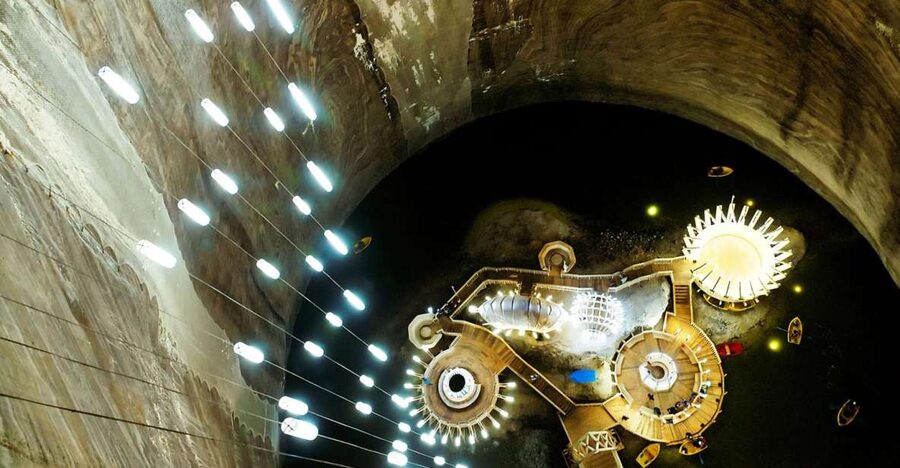
This tour gives you two strong reasons to leave Cluj-Napoca for the day. Alba Iulia offers open-air history, monumental gates, and a sense of how power moved through Transylvania. Turda Salt Mine is more unusual: it takes you below ground into a working site transformed by centuries of salt extraction.
I like that the two stops do not feel repetitive. Alba Iulia is about fortifications, rulers, churches, and public spaces. Turda is about geology, labor, engineering, and the strange beauty of a place shaped by human hands and natural deposits.
The private format matters here. You are not simply being moved from one photo stop to another. You can ask why the fortress has six points, how Roman Apulum fits into the story, or why salt formed in this part of Transylvania. The guide can also answer broader questions about Romanian people, customs, and life today, a detail that several visitors found useful.
The price is $274 per person, so this is not a budget day trip. Still, you receive a private group, an English-speaking guide, water, and the entrance fee to Turda Salt Mine. German and French-speaking guides can be requested. The value is strongest if you want personal attention and a full historical explanation rather than a simple transfer between attractions.
More Romanian salt mine trips:
- Cluj: Turda Salt Mine, Corvin Castle, Alba Carolina Tour
★ 4.8 · 184 reviews - Turda salt mine 4h tour from Cluj
★ 5.0 · 73 reviews - Turda Salt Mine, Corvin Castle and Alba Fortress from Cluj
★ 5.0 · 65 reviews
Alba Iulia, where Roman Apulum meets a star-shaped fortress
Your morning begins with the journey to Alba Iulia, a town in the heart of Transylvania. Its story reaches back to Roman Apulum, once the largest Roman castrum in the area because of the site’s strategic importance.
That Roman foundation is only the first layer. Over the centuries, German and Hungarian influences shaped the town, alongside Romanian traditions. You can see this mixture in the architecture, where Roman remains, Romanesque and Baroque churches, and later military buildings share the same setting.
The description of Alba Iulia also points to a Babylonian-style building, another reminder that the town’s appearance is not limited to one period or one architectural language. You should expect a place where the details reward attention. A guide helps you connect buildings that might otherwise look like a collection of unrelated façades.
Alba Iulia is a good first stop because it gives you the historical framework for the day. You begin above ground, among streets and fortifications, then later go below ground at Turda. The change in setting is dramatic and keeps the itinerary from becoming a string of similar monuments.
Walking through Alba Carolina’s six points and twelve kilometers of walls
The main attraction is Alba Carolina, an 18th-century fortress and Romania’s largest fortification. Its plan follows a six-pointed star, surrounded by about 12 kilometers of walls. That shape is not just decorative. It reflects the Vauban style of military design, built around bastions and overlapping defensive positions.
The fortress also carries several earlier versions of the site within its walls. It began as a Roman fort, became a medieval fortress, and was later rebuilt as a Vauban-type citadel. You are therefore seeing layers of military history rather than one isolated monument.
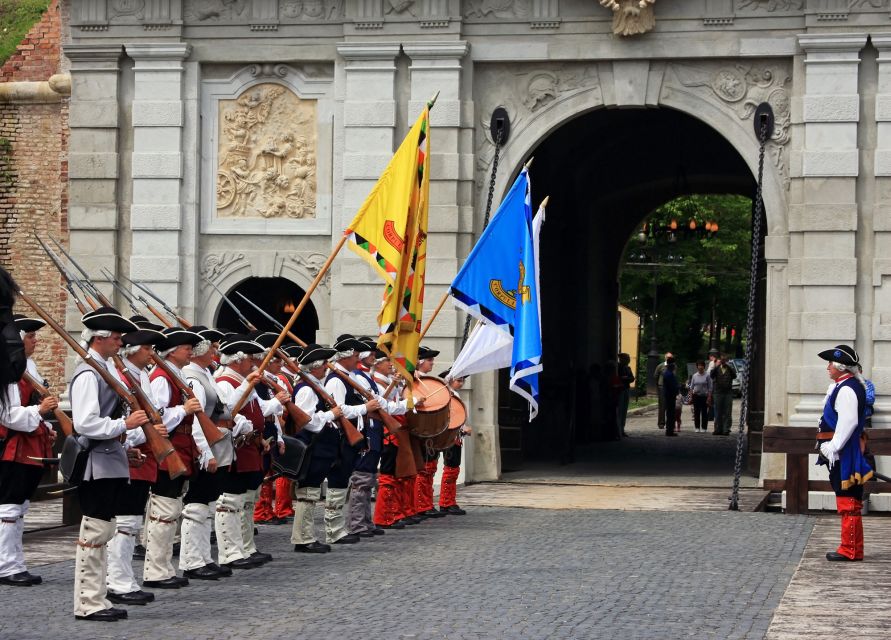
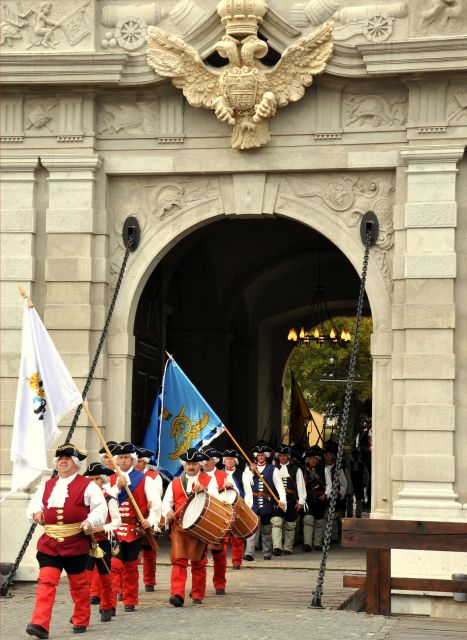
The six entrances are a highlight. Each has Baroque decorative work typical of European military architecture, so the gates are not plain openings in a wall. Take time to look at the carved details and the way ceremonial design was added to a place built for defense.
Alba Carolina also has symbolic importance in Romania. It lies near the center of the country, with the Carpathian Mountains around the wider region, and it is associated with the place where Romanian kings were crowned. That gives the fortress a national role beyond its military purpose.
You should not expect a single enclosed attraction that can be finished in an hour. The appeal is in moving through a broad fortified area and letting the guide explain how the site changed over time. The amount of walking can be tiring, particularly after the journey from Cluj-Napoca, so wear shoes with solid support.
A medieval-style lunch break, with the bill kept separate
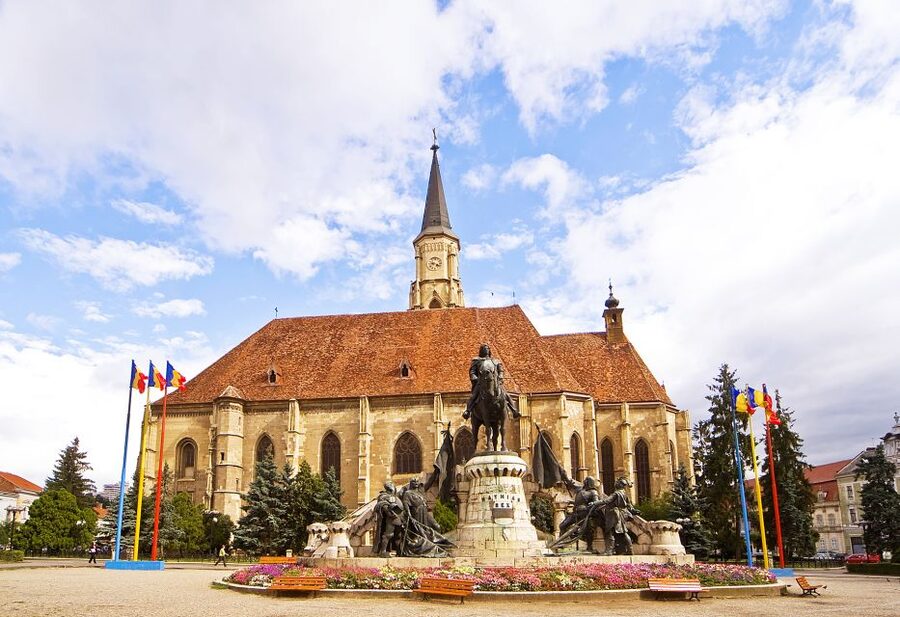
After the fortress visit, lunch is served in a medieval atmosphere. Lunch is not included, and the estimated cost is about 12 euros per person. That is a useful figure for budgeting, though personal expenses are also separate.
The setting fits the Alba Iulia stop and gives you a pause before the underground portion of the day. I would treat the meal as part of the rhythm of the tour rather than a reason to book it. The main value here is the fortress and the guide’s interpretation.
Because the day lasts ten hours, a proper meal matters. You will have a chance to sit down, recharge, and ask further questions before moving on. The guide also provides a bottle of water, but you should still arrive ready for a long day.
A few more Cluj Napoca day trips to weigh up
- Curly Tour – Day trip from Cluj 🙂
★ 5.0 · 330 reviews - Cluj-Napoca: 2.5-Hour Guided Walking Tour
★ 4.8 · 104 reviews - Turda Salt Mine 4h guided tour from Cluj
★ 4.9 · 45 reviews - Night Tour in Hoia Baciu Forest
★ 5.0 · 40 reviews
Turda Salt Mine, a working site turned into an astonishing interior
Turda’s salt deposits formed about 13 million years ago. Human extraction took place here for roughly two thousand years, leaving behind galleries and chambers with a scale that is difficult to grasp from photographs.
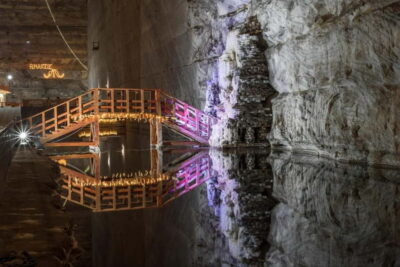
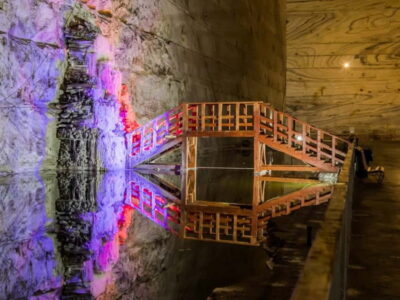
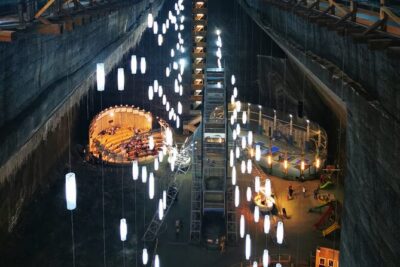
The mine is not simply a narrow tunnel. Long galleries open into a huge room carved from salt, with a height of about 90 meters. That sudden change from passageway to vast chamber is the moment that makes the visit special.
The underground setting also changes the way you experience time. You are looking at the results of repeated work over many centuries, then standing in a space shaped by that labor. The salt walls and ceiling give the rooms a muted, unusual appearance, while the size of the chamber makes the engineering feel almost theatrical.
A glass elevator provides a striking view over the mine. If you are interested in photography, this is likely to be one of the strongest parts of the day. The elevator lets you see the chamber from above rather than only from the floor, giving you a better sense of its height and layout.
There is also a boat ride on the salt lake in the middle of the mine. The information provided for the tour identifies this as an available highlight, but it does not specify whether the boat ride has a separate fee or how long the ride lasts. Ask your guide about the current arrangements when you arrive.
What the constant 10 to 12 degree temperature means
Turda Salt Mine stays between 10 and 12 degrees Celsius throughout the year. That is a major practical detail. Even if Cluj-Napoca or Alba Iulia feels warm, the mine will feel cool, especially after several minutes underground.
Bring a light jacket or sweater and wear comfortable shoes. The tour specifically advises comfortable footwear, and that advice is worth taking seriously because the day includes the fortress and the mine.
The salty air is also described as having therapeutic properties, particularly for people with respiratory problems. I would regard this as an interesting feature of the mine, not a medical promise. The tour is primarily a cultural and historical visit, and you should not treat the underground air as a substitute for medical care.
The cool temperature may be welcome during hot weather, but it can feel chilly if you arrive in summer clothing. In winter, you may already be dressed for it, though the contrast between outdoor conditions and the mine can still be noticeable.
The guide can make or break a history-heavy day
A ten-hour tour needs more than a driver and a list of dates. The guide is the person who connects Roman Apulum, medieval Transylvania, the Vauban fortress, Romanian royal history, and the salt mine into one understandable story.
The strongest praise attached to this experience concerns the guides’ preparation, clear explanations, and attention to questions. Joseph and Josif are names associated with the tour, and feedback describes them as people who kept the conversation going even on a tiring day. One guide had studied history and could answer detailed questions, while also discussing the country and its population in broader terms.
That matters because the itinerary contains many names and periods. Without context, Roman, Hungarian, German, medieval, and Austrian influences can blur together. A good guide helps you see how the pieces relate without turning the day into a lecture.
You also have the advantage of a private group. You can ask for more detail when a subject catches your interest, or move on when you have had enough. The guide can provide personal time at the sights rather than filling every minute with commentary. This balance was important to people who had already been on holiday for two weeks and were beginning to tire.
English is the standard guiding language. German and French guides are available on request, according to the tour information. Confirm that request before booking if language is important to you.
Timing, physical demands, and what to pack
The stated duration is ten hours, with a morning start. The schedule combines travel, the Alba Iulia visit, lunch, the fortress, and Turda Salt Mine, so you should think of this as a full day rather than a short excursion.
You will likely spend much of the day moving between outdoor and indoor areas. Alba Carolina requires walking around a large fortified site, while Turda includes underground routes and viewpoints. The tour is specifically not suitable for people with mobility impairments or wheelchair users.
Bring:
- Passport or ID card
- Comfortable shoes
- A light warm layer for the mine
- Extra money for lunch and personal expenses
Pets are not allowed. The tour includes a bottle of water, and the guide can help manage the day’s pace within the private format, but you should still be realistic about your energy.
The activity offers free cancellation up to 24 hours in advance for a full refund, and you can reserve now and pay later. Those terms are useful if your Cluj-Napoca plans are not fixed, but the practical question is still whether you want to spend a full day away from the city.
Who will get the most from the $274 price
I think the price makes the most sense for couples, families, or small groups who value privacy and guide attention. If you want to ask many questions, explore Romanian history at your own pace, or request a German or French-speaking guide, the private format gives you something a large group tour cannot.
The cost is harder to justify if you mainly want transportation and quick photographs. In that case, the ten-hour duration and private-tour price may feel high. You are paying for a complete day with a live guide, not just admission to two sights.
Turda Salt Mine admission is included. Lunch is not, and the tour information does not list an entrance fee for Alba Carolina, so you should confirm any current local charges before departure. Personal expenses are also your responsibility.
The tour is especially appealing if you have already seen Cluj-Napoca’s main sights and want a broader view of Transylvania. Alba Iulia gives you a major political and military center, while Turda offers a rare underground attraction with genuine historical and geological interest.
Should you book this Alba Iulia and Turda tour?
Book it if you want a long but varied day, especially if the idea of a 90-meter salt chamber appeals to you as much as fortress walls and Baroque gates. The combination is stronger than either stop alone because you get Roman and medieval history, 18th-century military design, royal symbolism, and a dramatic industrial site in one outing.
I would skip it if you dislike full-day excursions, have difficulty walking, or prefer to explore each sight at a slow pace. The schedule covers a lot, and the mine’s cool temperature and fortress walking require sensible clothing and footwear.
For most visitors based in Cluj-Napoca, this is a worthwhile splurge when you want a private guide who can explain the places and the country around them. Rolandia’s tour is at its best when you use that access: ask questions, take your time at the fortress gates, look down from the glass elevator, and leave room in your budget for lunch.
FAQ
How long does the Alba Iulia and Turda Salt Mine tour last?
The tour lasts 10 hours and begins in the morning. Starting times vary, so you should check availability when booking.
What language is the tour guided in?
The live tour guide speaks English. German and French-speaking guides are available on request.
Is this a private tour?
Yes. The group type is private, allowing you to ask questions directly and receive commentary suited to your interests.
Is lunch included in the price?
No. Lunch is separate and costs approximately 12 euros per person. Personal expenses are also not included.
What is included in the tour?
The tour includes an English-speaking guide, entrance fees to Turda Salt Mine, and a bottle of water. It also lists one FOC for the tour leader for groups of at least 20 people.
What should I bring?
Bring a passport or ID card and comfortable shoes. A light layer is also sensible because Turda Salt Mine remains between 10 and 12 degrees Celsius all year.
Can wheelchair users join the tour?
No. The activity is not suitable for wheelchair users or people with mobility impairments. Pets are also not allowed.
Just added around Cluj Napoca
- Castle Tour of Transylvania★ 4.5 · 7 reviews
- Turda salt mine and Corvin Castle day tour from Cluj★ 5.0 · 9 reviews
- Two days tour to Maramures: local experiences and culture★ 5.0 · 9 reviews
- Buggy and ATV Ride on The Hills of Cluj Napoca★ 4.5 · 10 reviews
- Clasic Tour of Cluj Napoca★ 5.0 · 10 reviews
- Turda salt mine, Rimetea village and Alba Iulia, from Cluj★ 5.0 · 11 reviews
- Turda Salt Mine and Hunedoara Corvin Castle from Cluj★ 5.0 · 12 reviews
- Turda Gorge, salt mine and Rimetea village private tour★ 5.0 · 12 reviews
Salt Mine Tours, compared.
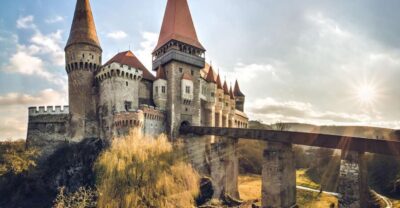
Turda Salt Mine, Corvin Castle, Alba Carolina Tour
Read our review →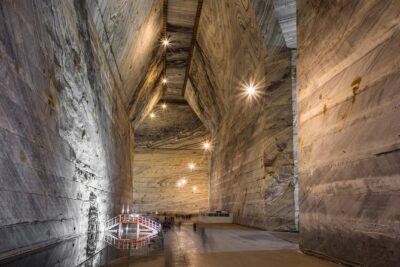
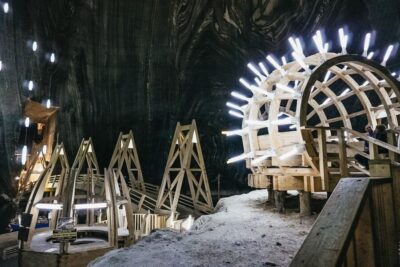
Turda Salt Mine, Gorge, and Remetea Full-Day Trip
Read our review →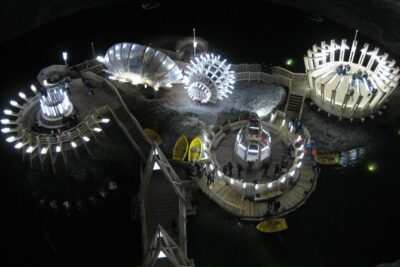
Turda Salt Mine, Corvin Castle and Alba Fortress from Cluj
Read our review →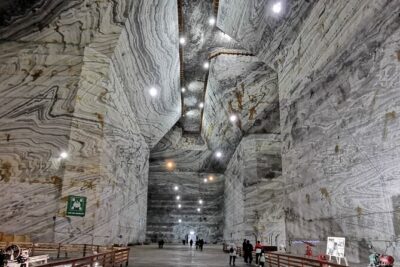
Private Tour to Salt Mine, Lunch at Winery and Dracula Grave
Read our review →Browse the lists this tour appears in