
Reviewed · BRAN CASTLE & DRACULA TOURS
7-Day Dracula Tour in Romania from Bucharest including ‘The Ritual of Killing of a Living Dead’
The most unusual part of this seven-day trip is not Bran Castle. It is the chance to connect Dracula’s fictional world with real places tied to Vlad Tepes, including Snagov Monastery, Poienari Fortress, and his former court at Targoviste. In Turda, you also attend The Ritual of Killing of a Living Dead, a staged folkloric event that gives the trip its theatrical edge.
I like the wide sweep of the route and the fact that hotels, transport, entry fees, six breakfasts, and two dinners are bundled into one price. I also like the historical range: you move from royal Peles Palace to Gothic Corvin Castle, medieval Sighisoara, a salt mine, and Saxon Brasov. The main drawback is the price, $1,685.87 per person, plus the fixed schedule and non-refundable booking terms.
Key points to know before booking
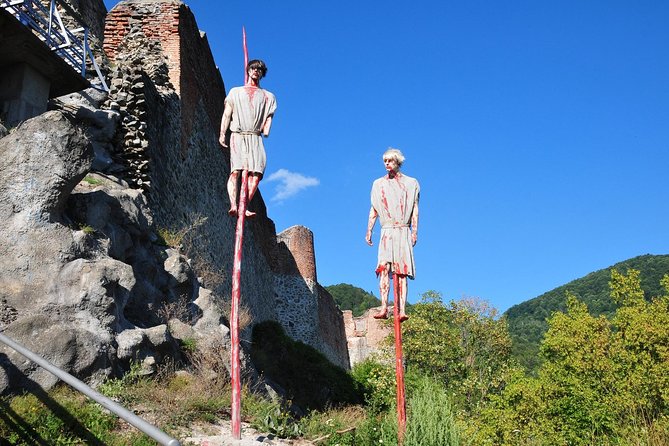
- The Dracula story is tied to real places: Snagov, Poienari, Targoviste, and Bran each connect to a different part of the legend.
- Turda adds something completely different: You descend into a salt mine before attending the special living-dead ritual and vampire-themed dinner.
- The route covers much of central Romania: Expect Bucharest, Sibiu, Hunedoara, Turda, Cluj-Napoca, Bistrita, Sighisoara, Brasov, Sinaia, and Targoviste.
- Hotels and most major costs are included: You receive six nights of accommodation, six breakfasts, two dinners, transport, guides, and listed admission fees.
- The group can reach 50 people: Transport may be by coach, minibus, or car, depending on group size.
- The ritual needs at least four participants: If fewer than four people join, that special event may not take place.
Why this Dracula tour works for history fans
This is not simply a castle-hopping holiday. It uses Dracula as a doorway into Romanian history, medieval towns, royal architecture, Saxon settlements, and local folklore.
You will hear two stories at once. One concerns Vlad Tepes, the 15th-century ruler who became known for harsh punishments. The other concerns Count Dracula, the fictional vampire created by Bram Stoker. The best part of the trip is seeing where those stories overlap and where they clearly do not.
Snagov Monastery starts the journey with a legend. Vlad is said to have been buried there after his assassination, though the connection remains part of the story rather than a simple historical fact. That makes the monastery a fitting first stop. You are introduced to the difference between evidence, tradition, and later myth right away.
The tour also helps you avoid one common mistake: assuming every Dracula-related place is connected directly to Vlad. Bran Castle is famous because of its appearance and its link to Stoker’s fictional world, but the association with Vlad is much looser. Poienari and Targoviste provide stronger links to Vlad himself.
More Bran Castle and Dracula trips:
- Bucharest: Dracula’s Castle, Peles Castle, & Brasov Old Town
★ 4.5 · 17,858 reviews - Bucharest: Dracula Castle, Peles Castle & Brasov Old Town
★ 4.6 · 10,891 reviews - Bucharest: Dracula’s Castle, Peleș Castle & Brașov Day Trip
★ 4.5 · 5,919 reviews
Day 1: Snagov Monastery and a Bucharest welcome
The tour begins at 10:00 a.m. from Moxa Bucharest Boutique Hotel on Calea Victoriei. Pickup is offered from this meeting point, and the trip ends back there on the final day.
The drive to Snagov Monastery takes about an hour at the stop itself. The visit is short, but its role in the story is important. This is where the legend of Vlad’s burial enters the tour, setting a serious historical tone before the more theatrical Dracula material appears later.
Your first night is in a centrally located four-star hotel. A welcome dinner is included, which is useful after a morning departure and helps make the first evening feel like the start of a group journey rather than just a transfer out of Bucharest.
The itinerary says three nights are in four-star hotels and three nights in three-star hotels. All are described as centrally located. You should expect the accommodation standard to vary during the week, particularly when the route reaches smaller towns and the Borgo Pass area.
Day 2: Poienari Fortress and Sibiu after dark
Poienari is one of the most meaningful stops for anyone interested in Vlad Tepes. You visit the ruins of his old fortress, often described as his faithful mountain stronghold.
The stop is listed as about one hour. Since this is a ruined fortress rather than a polished palace, do not expect grand rooms or furnished interiors. The appeal is the setting and the connection to Vlad’s actual rule. The mountain location also gives the stop a tougher, more remote feeling than Bran Castle.
Later, the route continues to Sibiu for a tour of the fortified town. The city adds an important change of mood. Instead of focusing on vampire lore, you see a medieval urban center shaped by defense, trade, and Saxon settlement.
The schedule combines a mountain ruin with a historic city in one day. That is a good example of the tour’s rhythm: most days give you one main Dracula-related site and another stop that explains Romania beyond the legend.
Day 3: Gothic Corvin Castle and Turda’s salt chambers
Day 3 is one of the busiest and most varied sections of the trip. In Hunedoara, you visit Corvin Castle, also called Corvinesti or Castelul Corvinilor.
The castle is known for its Gothic style and dramatic appearance. It offers the sort of towers, courtyards, and medieval atmosphere that fits a Dracula itinerary, even though its place in the tour is more architectural and historical than directly connected to Vlad. Admission is included.
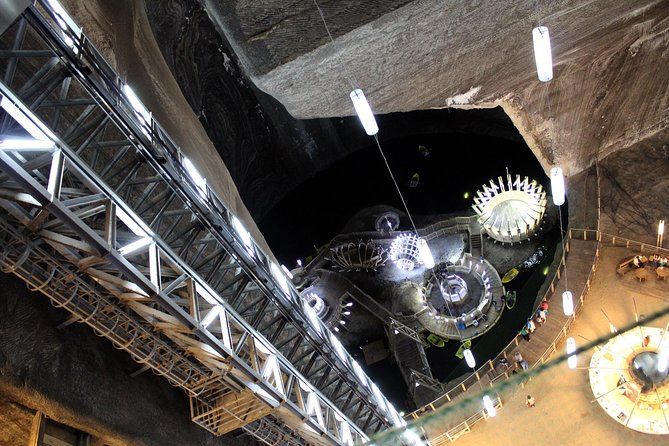
Next comes Turda, a small town with a medieval feel and one of Romania’s oldest salt mines. The visit takes you below ground into Salina Turda. This is a sharp contrast to the castles above it. Instead of stone battlements and royal rooms, you see the scale and strange beauty of an old industrial site carved into salt.
The day also includes dinner with a vampire menu. This is one of the trip’s playful elements, so you should approach it as themed entertainment rather than a serious lesson in Romanian food.
Turda is also where the special event takes place: The Ritual of Killing of a Living Dead. The wording sounds grisly, but the event belongs to the tour’s folklore and theatrical side. It requires a minimum group of four people. If you are booking as a couple or solo visitor, confirm that the event will run before you commit to the non-refundable fare.
That evening brings another Dracula touch: accommodation in a three-star hotel at Borgo Pass, built in accordance with Bram Stoker’s imagination. This setting is aimed squarely at readers and fans of the novel. It is also one of the places where the tour leans hardest into atmosphere rather than documented history.
A few more Bucharest day trips to weigh up
- 4×4 Driving Experience at Flying Altitudes – 7 Days
★ 5.0 · 13 reviews - 7-Day Private Tour of Transylvania from Bucharest
★ 5.0 · 13 reviews - 7-Day Romania Tour -Transylvania and Painted Churches
★ 5.0 · 7 reviews - Amazing Romania – Seven day private tour from Bucharest
★ 5.0 · 7 reviews
Day 4: Cluj-Napoca, Bistrita, and the road to Borgo Pass
Cluj-Napoca gives you a city break from castles and legends. The tour includes a look at its medieval buildings, including Saint Andrews Cathedral.
The stop is listed at about one hour, so this is an overview rather than a long city visit. If you want to explore Cluj-Napoca in depth, you will need extra time before or after the tour. Within the seven-day route, its purpose is to show you another side of Transylvania.
The road then follows the steps of Jonathan Harker, Bram Stoker’s character, toward Bistrita and Borgo Pass. This is literary geography: you are tracing the route created in the novel, not following a documented journey by a real historical Dracula.
That distinction is one of the tour’s strengths. You get both versions of Transylvania without needing to pretend they are the same. The guide’s role matters here, since the best explanations will tell you where the historical record ends and the novel begins.
The tour uses an air-conditioned coach, minibus, or car depending on the number of people. Because the route covers several towns and mountain areas, the vehicle transfer is a major part of the experience. A larger group may mean a coach and less flexibility, while a smaller group may use a minibus or car.
Day 5: Three hours inside medieval Sighisoara
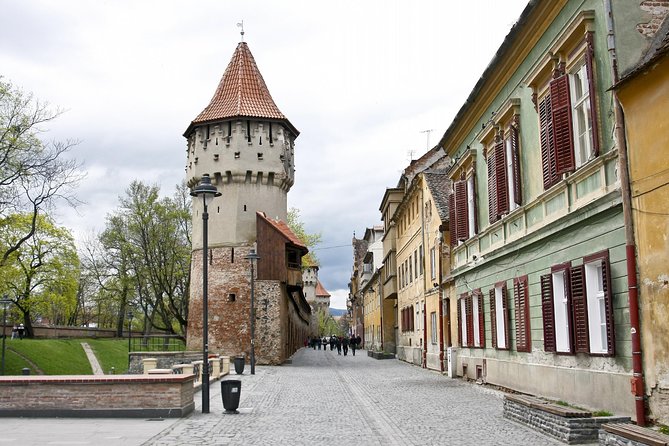
Sighisoara is one of the strongest stops on the route. The medieval citadel is a UNESCO World Heritage Site, and the schedule allows about three hours there.
That extra time matters. You are not just stepping off a bus for a photograph. You have room to walk through the historic center, study its towers, and absorb the town’s old defensive layout.
The Clock Tower, or Turnul cu Ceas, is included and gets about an hour. It was once used for council meetings and for storing the town’s archive and treasury. That detail gives the tower a practical purpose beyond its appearance. It was part of how the town governed and protected itself.
Sighisoara also has a strong Dracula connection through Vlad’s name and birthplace traditions, but the town is worth visiting even if you are not interested in vampires. Its medieval streets and citadel are among the clearest examples of the fortified urban world that shaped Transylvania.
I would use this day to slow down. The tour has several one-hour stops, but Sighisoara gives you the best chance to walk, look up, and enjoy the town instead of rushing through another attraction.
Day 6: Bran Castle and Saxon Brasov
Bran Castle is the tour’s headline attraction. It is Transylvania’s best-known Dracula symbol, thanks to its distinctive appearance and the connection Bram Stoker’s novel created in popular culture.
The visit lasts about two hours, and admission is included. You should expect a castle visit built around atmosphere, architecture, and the Dracula association. The direct historical link to Vlad Tepes is limited, so the guide’s explanation is especially useful. You will get more from Bran if you treat it as the home of a powerful legend rather than proof that Count Dracula lived there.
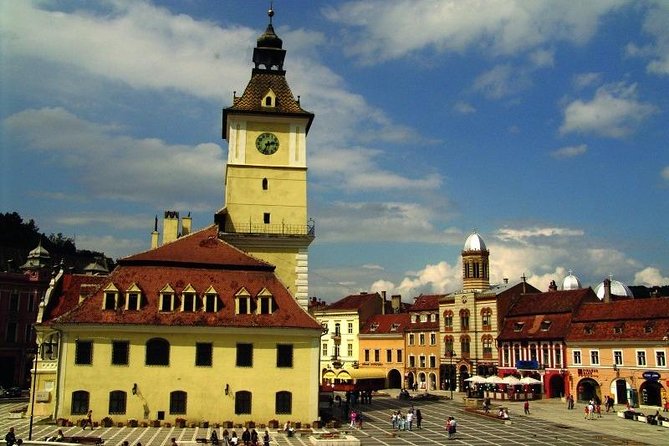
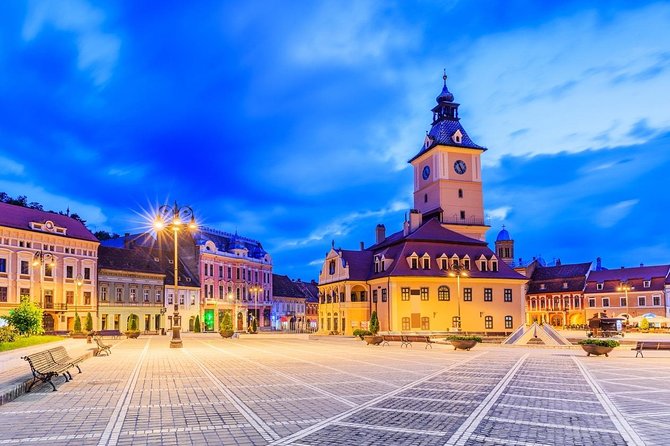
The day continues to Brasov, a medieval Saxon city with a troubled past and substantial defensive fortifications built between the 15th and 17th centuries. The historic center gets about two hours.
Brasov helps balance Bran. After the theatrical castle, you return to a real city shaped by repeated invasions, trade, walls, and civic life. The stop also gives you a chance to see how Transylvania’s medieval towns functioned beyond the stories told to modern visitors.
The combination works well: Bran supplies the famous image, while Brasov gives it context. You are not left with only a fantasy version of the region.
Day 7: Peles Palace, Targoviste, and the return to Bucharest
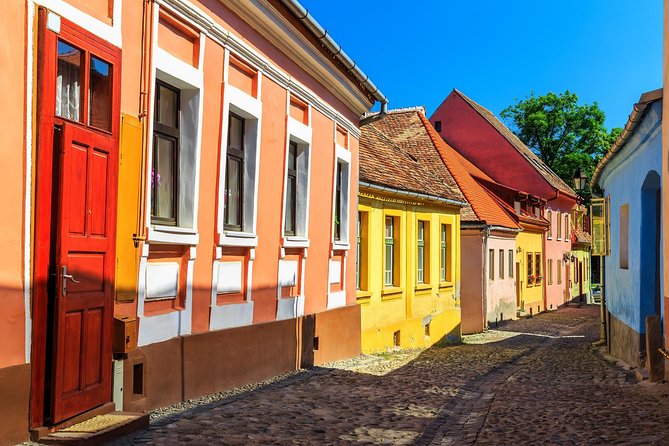
The final morning takes you to Sinaia and Peles Castle, one of Romania’s royal highlights. The palace is a very different kind of grand building from the medieval fortresses earlier in the week.
Peles provides a look at royal Romania and gives the itinerary a visual change before the final Vlad-related stop. Admission is included, and the listed visit lasts about an hour. If you prefer polished interiors and royal design to ruins, this may be one of your favorite stops.
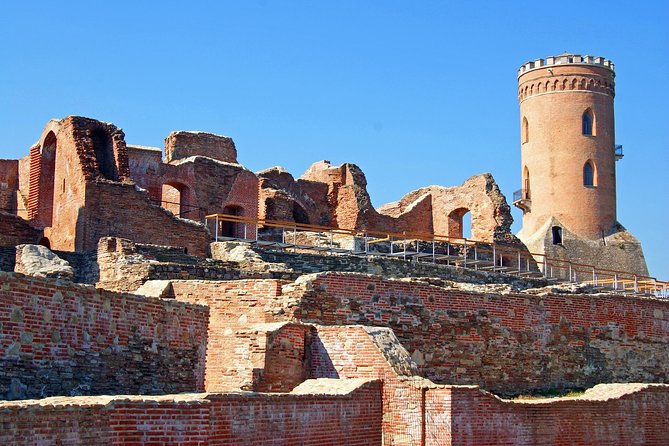
The route then continues to Targoviste, the former capital of Wallachia. You visit the ruins of Vlad Tepes’ old court. The stop is listed at about an hour and gives the historical figure a final, concrete setting.
Targoviste is a fitting ending because it brings the story back from fiction to politics and power. After Bran, the Borgo Pass hotel, and the living-dead ritual, you finish with the remains of a real ruler’s court.
Arrival back in Bucharest is expected after 7:00 p.m., with hotel drop-off around 5:00 to 7:00 p.m. depending on the day’s timing. Do not schedule a flight or an important evening appointment too close to the expected return. The tour does not include accommodation on the final night.
What the $1,685.87 price really covers
The fare is high compared with a simple day trip, but it covers much more than transport and sightseeing. You receive:
- Six nights of centrally located hotels
- Three nights in four-star hotels and three nights in three-star hotels
- Six breakfasts
- Two dinners, including the welcome dinner and Turda’s vampire menu
- An English-speaking guide
- Air-conditioned transport throughout the route
- Listed admission fees
- Hotel drop-off in Bucharest on the final day
The inclusions remove many small costs that can make a long guided trip harder to budget. Entry to Snagov Monastery, Targoviste Citadel, Peles Palace, Bran Castle, Turda Salt Mine, Poienari Citadel, and Corvin Castle is included.
Still, the package does not cover everything. Plane tickets, airport fees, photo and video charges, meals beyond the two included dinners, and other unlisted expenses are extra. You also need to arrange your own accommodation for the last night if you are staying in Bucharest.
The value depends on your travel style. If you would otherwise need to arrange several hotels, long transfers, admission tickets, and a guide, the bundled price can make sense. If you prefer independent travel, long free periods, or low-cost guesthouses, the fixed package may feel expensive.
Guide quality, group size, and the pace
The tour includes an English-speaking guide, and guide quality will shape the experience. Names connected with praised departures include Robert, a guide noted for giving substantial historical information, and Andrei, a driver with a history degree. You may not have either of them on your departure, but their example shows the kind of background that suits this route.
The maximum group size is 50 people. That is a significant detail. A group of that size can make departures efficient, but visits may feel less personal and boarding can take longer. The vehicle may be a coach, minibus, or car according to the number of participants.
The schedule is active. You change towns often and spend much of the week moving between major sites. I would recommend packing light enough to manage several hotel changes and bringing comfortable shoes for citadels, castle grounds, and the salt mine visit.
The tour is designed for most people, and children must be accompanied by an adult. Service animals are allowed, and a vegetarian meal can be arranged if requested when booking.
The biggest strengths and the fair warnings
The strongest part is the range. In one week, you see royal architecture, Gothic castles, fortified towns, underground salt chambers, mountain ruins, and literary landmarks.
The second strength is the balance between Vlad and Dracula. Poienari and Targoviste help ground the trip in history, while Bran and Borgo Pass cater to the supernatural story. The guide can make those contrasts clear instead of allowing the mythology to swallow the real country.
The main weakness is that several stops are short. Snagov, Poienari, Cluj-Napoca, Peles, and Targoviste each have about an hour listed. That is enough for an introduction, not a full independent visit.
You should also understand the meal plan. Six breakfasts and two dinners are included, but most lunches and several evening meals are not. The package reduces planning, but it does not mean every meal is covered.
Finally, the booking is non-refundable and cannot be changed for any reason. The operator requires a minimum number of participants. If that minimum is not reached and the tour is canceled, you are offered another date or experience, or a full refund. This is worth considering before paying the full fare.
Who should book this seven-day route
I would recommend it to you if you enjoy Dracula literature, medieval history, castles, and guided travel with a full schedule. It is particularly useful if you want to see several parts of Romania without arranging intercity transport and hotels yourself.
It also suits visitors who want more than Bran Castle. The strongest historical stops are Poienari, Targoviste, Sighisoara, Brasov, and Corvin Castle. The unusual Turda ritual and vampire menu make it a good match for someone who wants a playful theme alongside serious sightseeing.
I would be more cautious if you dislike group tours, prefer long stays in each town, or want complete control over meals and hotel choices. The maximum group size of 50 and the fixed route will not suit every independent-minded visitor.
Should you book it?
Book this tour if the Dracula story is a major reason you want to visit Romania and you value having the route, hotels, transport, guide, and admissions arranged in one package.
Think twice if you want a slow trip or if the non-refundable $1,685.87 price puts pressure on your budget. Before booking, confirm the hotel standards for your dates and ask whether at least four people are registered for the Turda ritual. For the right audience, this is a lively and unusually broad introduction to Transylvania, with enough real history to keep the vampire fiction in its proper place.
FAQ
Where does the tour start?
The tour starts at Moxa Bucharest Boutique Hotel, at 129 Calea Victoriei, Corner 2-4 Mihail Moxa Street, Bucharest.
What time does the tour begin?
The stated start time is 10:00 a.m.
How long does the tour last?
The experience lasts approximately seven days.
Is hotel pickup offered?
The listed pickup point is Moxa Bucharest Boutique Hotel. Hotel drop-off is included in Bucharest on the final day.
What accommodation is included?
The package includes six nights: three nights in centrally located four-star hotels and three nights in centrally located three-star hotels.
Are meals included?
Six breakfasts and two dinners are included. The dinners are a welcome dinner and a dinner with a vampire menu in Turda.
Which entrance fees are included?
Admission is included for Snagov Monastery, Targoviste Citadel, Peles Palace, Bran Castle, Turda Salt Mine, Poienari Citadel, and Corvin Castle in Hunedoara.
Will the Ritual of Killing of a Living Dead take place on every departure?
The ritual requires a minimum of four participants. Confirm this point if the event is central to your decision.
Can I cancel or change the booking?
The experience is non-refundable and cannot be changed for any reason. If the operator cancels because the minimum number of participants is not reached, you are offered a different date or experience, or a full refund.
Just added around Bucharest
- Private Full Day Tour of Bucharest★ 5.0 · 3 reviews
- Veliko Tarnovo and Medieval Bulgaria Private Day Trip from Bucharest★ 5.0 · 3 reviews
- Bucharest VIP Bar Crawl in Lipscani ‘Old Town’★ 5.0 · 3 reviews
- Muddy Volcanoes and Salt Mine Private Tour★ 5.0 · 3 reviews
- Bucharest Private City Tour★ 5.0 · 3 reviews
- Legends & Stories from Transylvania -2 Castles & Brasov Old Town★ 5.0 · 3 reviews
- Transfagarasan Private Tour from Bucharest – 2 Days★ 5.0 · 3 reviews
- 6h Bucharest Communism Private Tour – Ceausescu Mainson★ 5.0 · 3 reviews
Bran Castle & Dracula Tours, compared.
Dracula’s Castle, Peles Castle, & Brasov Old Town
Read our review →
Dracula Castle, Peles Castle & Brasov Old Town
Read our review →
Dracula’s Castle, Peleș Castle & Brașov Day Trip
Read our review →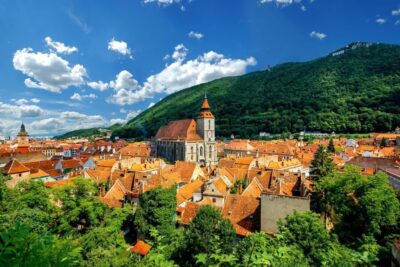
Day Trip to Dracula Castle, Peles Castle & Brașov
Read our review →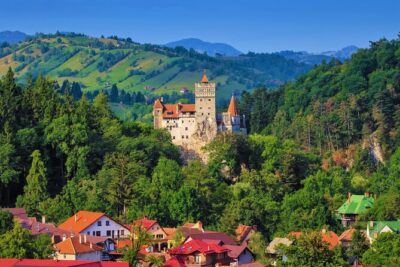
Bucharest to Dracula Castle, Peles Castle and Brasov Guided Tour
Read our review →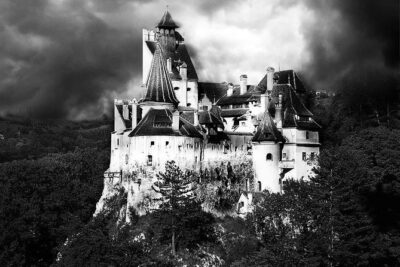
Dracula’s Castle, Peles Castle and Brasov Day Trip from Bucharest
Read our review →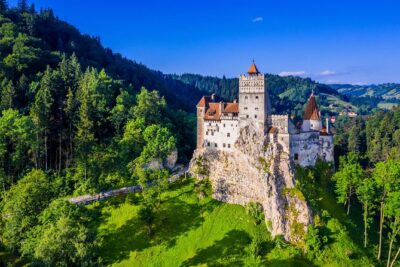
Transylvania and Dracula Castle Full Day Tour from Bucharest
Read our review →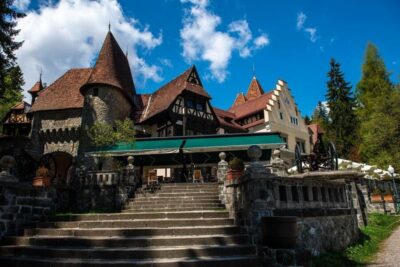
Browse the lists this tour appears in