
Reviewed · BUCHAREST TOURS
Bucharest 3-hours Walking Tour (Small Groups)
Bucharest’s story comes into focus on foot, especially where French-style boulevards meet medieval churches and communist-era scars. This three-hour walk links the Palace of Parliament, Old Town, Revolution Square, and the Romanian Athenaeum, giving you a useful first map of the city as well as its past.
I like the small maximum of 10 people, which leaves room for questions and personal stories. I also like the way the route joins architecture with politics, from Manuc’s Inn and Stavropoleos Monastery to the collapse of Nicolae Ceausescu’s regime. The main consideration is that the Romanian Athenaeum’s interior costs an extra 15 lei, cash only, and the walk is best suited to anyone comfortable on foot.
Key points to know before you book
- A compact route through several eras: See medieval Bucharest, French-inspired streets, royal-era buildings, and communist landmarks in one outing.
- A genuinely small group: The maximum is 10 people, with group discounts available.
- Strong guides make the difference: Mara and Elena are praised for clear English, humor, personal Romanian stories, and an easy walking pace. Christian is also listed as a guide.
- A useful first-day orientation: The route covers much of central Bucharest and ends at the Romanian Athenaeum.
- One local snack is included: You receive a traditional Romanian snack during the walk.
- Budget a little extra for the Athenaeum: Entry is 15 lei, about 3 EUR, and cash is required.
Why this walk works for a short Bucharest visit
Bucharest can feel confusing at first. Its center mixes ornate nineteenth-century buildings, Orthodox churches, broad communist avenues, damaged facades, lively cafes, and scraps of medieval history. A self-guided walk can show you the sights, but it may not explain why they sit so close together.
This tour gives you that framework in three hours. You begin at Unirii Square, pass through the Old Town, follow Lipscani and Calea Victoriei, discuss the 1989 revolution at Revolution Square, and finish near the Romanian Athenaeum. That sequence is useful because it moves through the city’s main political and cultural chapters rather than presenting a random collection of buildings.
I especially like the mix of public landmarks and smaller places. The Palace of Parliament gives you the huge scale of the communist period. St. Anthony’s Church and Stavropoleos Monastery bring you into a quieter, older Bucharest. The walk then shifts toward the nineteenth-century city, when French influence shaped buildings, streets, food, and parts of everyday language.
The guides are central to the experience. Mara and Elena receive repeated praise for their English, humor, warmth, and command of Romanian history. Their personal connections to Bucharest can add something a guidebook cannot, particularly when explaining what communist rule meant for ordinary people and how Romania changed after 1989.
More Walking Tours in Bucharest
- Bucharest: City Highlights Guided Walking Tour
★ 4.9 · 1,482 reviews - Bucharest Highlights Walking Tour
★ 5.0 · 469 reviews - Bucharest: Ghost Stories & Romanian Mythology Walking Tour
★ 4.9 · 287 reviews
Unirii Square and the Palace of Parliament
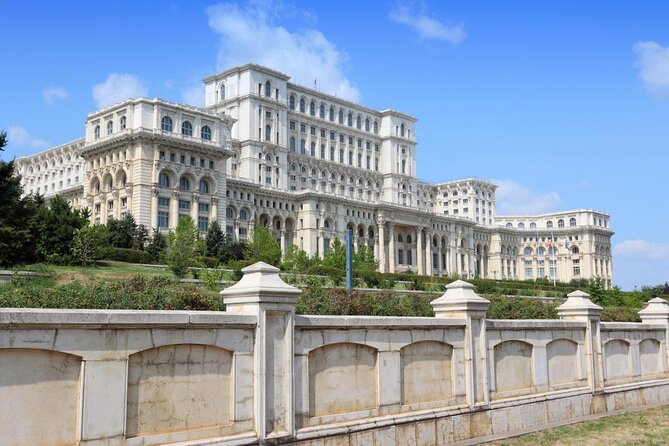
The walk begins at Unirii Square, with a panoramic view toward Unirii Boulevard and the Palace of Parliament. The boulevard is often compared with the Champs-Elysees, though Bucharest’s version carries a much heavier political story.
The Palace of Parliament is the world’s second-largest administrative building. You do not enter it on this tour, and admission is not included, but the exterior view gives you a clear sense of the scale chosen for Ceausescu’s state project. The 15-minute stop is short, so expect an introduction rather than a full architectural study.
This is a good opening point because it immediately shows the tension at the heart of Bucharest. The city is not simply old or new. It is a place where grand plans, royal ambitions, religious traditions, and the damage caused by dictatorship all overlap.
If you are interested in entering the Palace of Parliament, this walk does not cover that visit. Treat the stop as an exterior orientation and decide later if you want to arrange a separate admission.
Manuc’s Inn and the medieval Old Town
From Unirii Square, you head toward the medieval Old Town, now the city center for restaurants, bars, shops, and evening activity. The pace includes a 15-minute visit to Manuc’s Inn, or Hanul lui Manuc.
Manuc’s Inn was a caravanserai, a stopping place for merchants and their goods, and it became Bucharest’s largest inn. That detail helps you picture the city before modern hotels, broad boulevards, and grand concert halls reshaped the center.
The building offers a useful contrast with the Palace of Parliament. One is vast, formal, and tied to a modern dictatorship. The other recalls a trading city where movement, commerce, and travelers from different regions shaped daily life.
The Old Town can be lively, and the route may feel busier here than at the churches or squares. That is part of the point, but it can also make conversation harder at certain moments. Stay close to the guide, especially if the group is moving through crowded streets.
St. Anthony’s Church and Curtea Veche
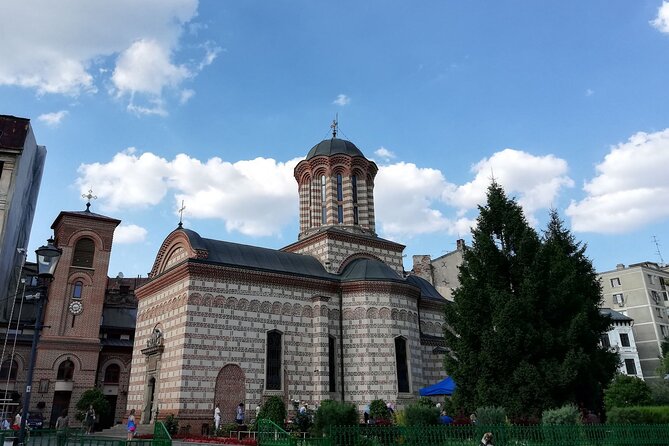
The next stop takes you to St. Anthony’s Church, described as the oldest church in Bucharest, and then to the ruins of Curtea Veche, the former Royal Court. Together, these sites give the walk its strongest medieval layer.
The church visit is brief, about 15 minutes, but it adds a sense of scale to the city’s past. Rather than hearing only about rulers and dates, you get a place of worship that has survived amid major changes around it.
Curtea Veche brings in the connection with Vlad the Impaler, the historical figure linked with the Dracula legend. The stop is not a theatrical vampire show. It is a chance to separate the real prince and his political world from the later stories that turned him into a Gothic character.
That distinction is valuable. Bucharest’s past is often marketed through Dracula and Transylvania, but this walk keeps the focus on Bucharest itself. You get the local connection without letting the legend swallow the rest of the city’s story.
Same corner of the country, a completely different day out:
- Bucharest: Dracula’s Castle, Peles Castle, & Brasov Old Town
★ 4.5 · 17,858 reviews - Bucharest: Dracula Castle, Peles Castle & Brasov Old Town
★ 4.6 · 10,891 reviews - Bucharest: Dracula’s Castle, Peleș Castle & Brașov Day Trip
★ 4.5 · 5,919 reviews - Bucharest: Palace of Parliament Tickets and Guide
★ 4.3 · 3,182 reviews
Stavropoleos Monastery and Orthodox detail
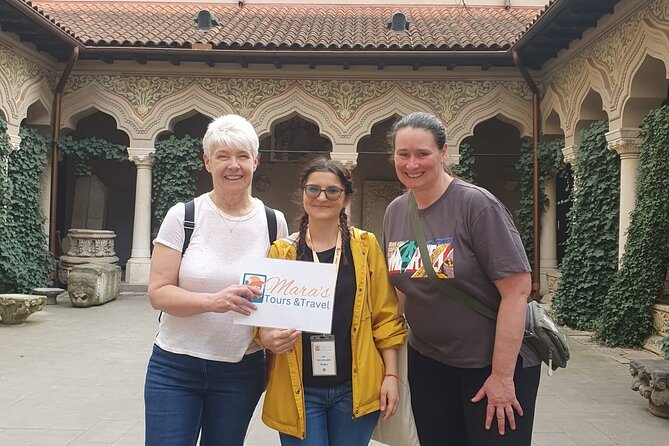
Stavropoleos Monastery is one of the most attractive Orthodox monuments in the Old Town. The stop lasts about 15 minutes, enough to see the building and hear why it matters.
This is one of the places where a guide adds real value. The decoration, proportions, and religious traditions are easier to appreciate when someone explains what you are looking at. You can pause, ask questions, and compare the monastery’s intimate scale with the city’s larger secular buildings.
The stop also breaks up the walking with a quieter setting. Bucharest’s center can be noisy and visually crowded, so a small religious courtyard or church interior can reset the pace.
You should dress and behave respectfully at religious sites. The available information does not specify a formal dress code, so follow the guide’s instructions and local signs. The tour includes visits to several churches and historic buildings, but it does not promise long interior visits at every stop.
Lipscani and the making of Little Paris
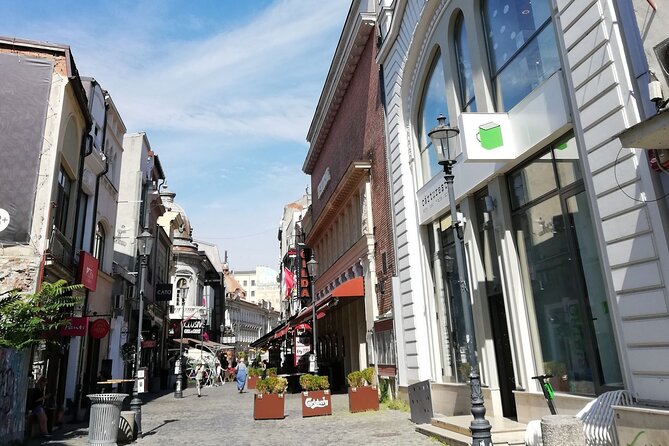
The route then moves into the eighteenth- and nineteenth-century city along Lipscani and Calea Victoriei. Here the guide explains why Bucharest was once called Little Paris.
The French connection reaches beyond grand facades. The tour is designed to cover French influence on architecture, food, and even language, so you are encouraged to look at the city as a cultural exchange rather than a simple copy of Paris.
You will see French-style buildings and narrow passageways that can be easy to miss if you only follow the main streets. This is where the walking format earns its keep. You can move close to the buildings, notice details from street level, and pass through parts of the center that a vehicle tour would skip.
The 30-minute allocation makes this one of the longer stops. Still, do not expect an exhaustive tour of every building on Lipscani or Calea Victoriei. The aim is to explain the period and show representative streets while keeping the larger route moving.
I would pay attention to the contrasts here. Elegant architecture sits beside worn surfaces and modern businesses. That unevenness is not a flaw to edit out. It is part of Bucharest’s character, and the guide can help you read the layers instead of seeing only decay or only decoration.
Revolution Square and the fall of Ceausescu
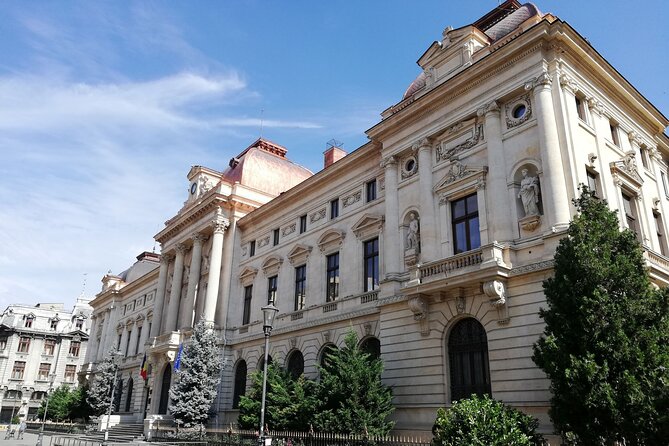
Revolution Square is the political heart of the walk. You spend about 30 minutes discussing communist rule, the collapse of Ceausescu’s regime, the 1989 revolution, and Romania’s changes afterward.
This is likely the most important stop for understanding modern Bucharest. The Palace of Parliament shows the physical ambition of the communist government. Revolution Square helps explain how that system ended.
The guides Mara and Elena are particularly suited to this part of the route because they bring Romanian perspective to the subject. Personal family experiences can make the period easier to grasp, while a clear guide keeps the discussion grounded in events rather than vague political slogans.
The topic can be serious, and the walk does not treat it as a quick photo stop. That is a strength. You have time to ask how communist rule affected the city and what changed after democracy returned.
If you want only pretty buildings and light sightseeing, this section may feel heavy. If you want to understand Bucharest beyond its cafes and decorated facades, it is essential.
The Romanian Athenaeum finale
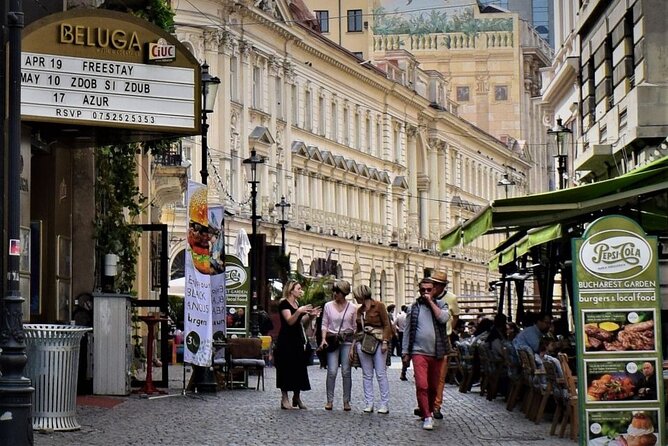
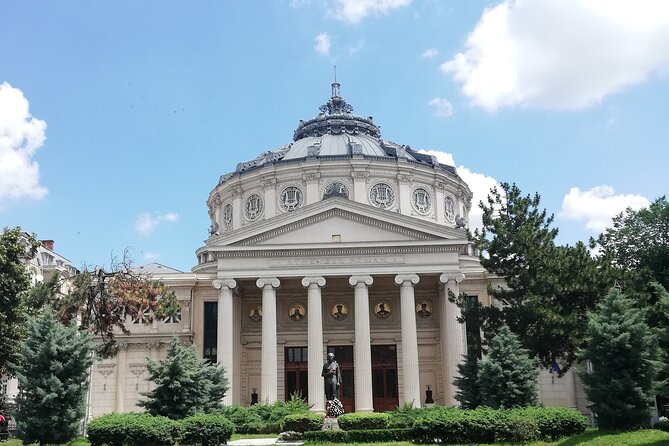
The walk ends in front of the Romanian Athenaeum on Strada Benjamin Franklin. The concert hall is one of Bucharest’s best-known buildings and represents the country’s cultural development during the monarchy.
The final 15-minute stop gives the tour a fitting close. You move from medieval trade and royal power through French-inspired modernization and communist dictatorship to a building linked with Romania’s cultural and royal-era ambitions.
Entry is not included. You can enter for 15 lei, about 3 EUR, but the fee is cash only. Bring a small amount of Romanian currency if you want to see the interior. Several guides specifically point out the practical value of doing this, and it is an easy extra to miss if you arrive without local cash.
The official end point is in front of the Athenaeum, not inside it. That means you can continue exploring afterward, but the tour does not include onward transport or a meal.
Guides, group size, and walking pace
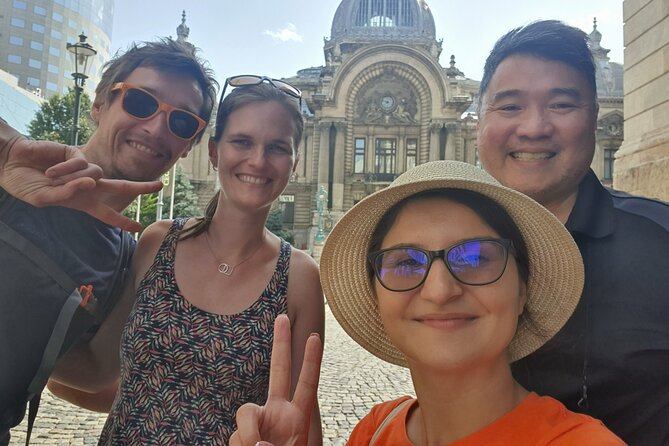
The group maximum is 10 people, a useful limit in narrow Old Town lanes and small religious sites. A smaller group also makes it easier to hear the guide and ask about family stories, politics, architecture, or practical ideas for the rest of your stay.
Mara and Elena are the names to request if either is available. Their strengths are clear English, a lively delivery, humor, and a personal connection to Romania. Christian is also listed as a guide and is described as well informed about the city and its past.
The walking pace is generally easy. Guides have adjusted for restroom needs and kept the route comfortable, but you are still on foot for around three hours. Wear practical shoes, and remember that the tour requires decent weather. If poor weather cancels the outing, you are offered another date or a full refund.
A traditional Romanian snack is included. The details of the snack are not specified, so do not book this expecting a full tasting session or lunch. Think of it as a small local touch during a history-focused walk.
Is $54.31 a fair price?
At $54.31 per person, this is not the cheapest way to see Bucharest. You can walk through the Old Town on your own for far less, and most stops on this route have no admission charge.
The value comes from the structure and the guide. In three hours, you cover several districts and periods that can otherwise seem disconnected. You also get explanations of French influence, medieval Bucharest, the Dracula connection, Orthodox architecture, communism, and the 1989 revolution.
The small group matters here. A maximum of 10 is much more useful than a large group when visiting a compact church or discussing a complicated political past. The included snack adds a modest extra, but it is not the reason to book.
The Athenaeum fee is small, yet you should include it in your budget if you want to go inside. Tips are also not included. Group discounts may improve the price for families or parties booking together.
The experience is often booked about 54 days ahead, so I would reserve early for a particular date or guide, especially during busy periods. Confirmation arrives at booking, and free cancellation is available up to 24 hours before the start time.
Who should choose this Bucharest walk?
I would choose this tour if you have only a day or two in Bucharest and want an organized introduction. It is also a good first-day activity because the route gives you bearings for later visits and points you toward areas worth revisiting.
It suits active visitors who enjoy history, architecture, religion, and modern politics in equal measure. The guide’s explanations are as important as the buildings, so it works best if you want context rather than a quick checklist of photo stops.
It may be less suitable if you have mobility limits, dislike walking, or want extensive interior visits. Most people can participate, and service animals are allowed, but the experience remains a three-hour walk through city streets.
English is the only stated language. If you need another language, this is not the right choice based on the available details.
Should you book it?
Book this walk if you want Bucharest explained through its contradictions: medieval ruins beside modern nightlife, French-inspired avenues beside communist monuments, and royal culture beside the memory of dictatorship.
I would especially recommend it for a first visit, a short stay, or anyone who wants a strong historical base before exploring alone. Request Mara or Elena if possible, carry cash for the Athenaeum, and leave room for the discussion at Revolution Square.
Skip it if you want a Palace of Parliament interior visit, a full food tour, or a relaxed sightseeing ride. For a compact, serious, and personable introduction to central Bucharest, the small group and strong guiding make the $54.31 price reasonable.
FAQ
How long does the Bucharest walking tour last?
The tour lasts approximately three hours.
Where does the tour begin?
It begins at Unirii Square in Bucharest. The supplied meeting-point information gives the location as One sip, C4G3+HQ, Bucharest, Romania.
Where does the tour end?
The tour ends in front of the Romanian Athenaeum at Strada Benjamin Franklin 1-3, București 010287, Romania.
What language is the tour offered in?
The tour is offered in English.
How large is the group?
The maximum group size is 10 people.
Is the Palace of Parliament entrance included?
No. The tour includes a panoramic exterior view, but admission to the Palace of Parliament is not included.
Is entrance to the Romanian Athenaeum included?
No. Entrance costs 15 lei, about 3 EUR, and payment is cash only.
Is food included?
One traditional Romanian snack is included. Tips, gratuities, and other food are not included.
Can service animals join the tour?
Yes. Service animals are allowed.
Can I cancel for a full refund?
Yes, if you cancel at least 24 hours before the experience start time. Cancellations or changes made less than 24 hours before the start time are not refunded or accepted. Poor weather or failure to meet the minimum group size may lead to a different date, another experience, or a full refund.
Just added around Bucharest
- Private Full Day Tour of Bucharest★ 5.0 · 3 reviews
- Veliko Tarnovo and Medieval Bulgaria Private Day Trip from Bucharest★ 5.0 · 3 reviews
- Bucharest VIP Bar Crawl in Lipscani ‘Old Town’★ 5.0 · 3 reviews
- Muddy Volcanoes and Salt Mine Private Tour★ 5.0 · 3 reviews
- Bucharest Private City Tour★ 5.0 · 3 reviews
- Legends & Stories from Transylvania -2 Castles & Brasov Old Town★ 5.0 · 3 reviews
- 7-Day Dracula Tour in Romania from Bucharest including ‘The Ritual of Killing of a Living Dead’★ 5.0 · 3 reviews
- Transfagarasan Private Tour from Bucharest – 2 Days★ 5.0 · 3 reviews
Bucharest Tours, compared.
Dracula’s Castle, Peles Castle, & Brasov Old Town
Read our review →
Dracula Castle, Peles Castle & Brasov Old Town
Read our review →
Dracula’s Castle, Peleș Castle & Brașov Day Trip
Read our review →
Day Trip to Dracula Castle, Peles Castle & Brașov
Read our review →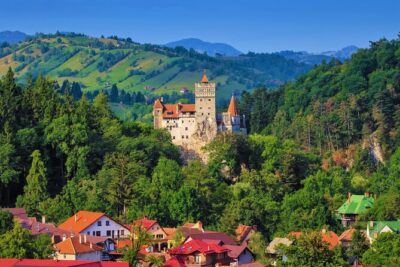
Bucharest to Dracula Castle, Peles Castle and Brasov Guided Tour
Read our review →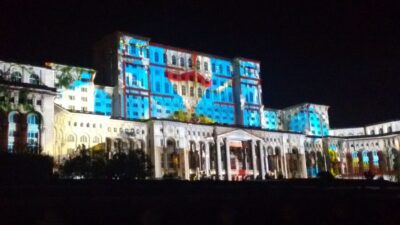
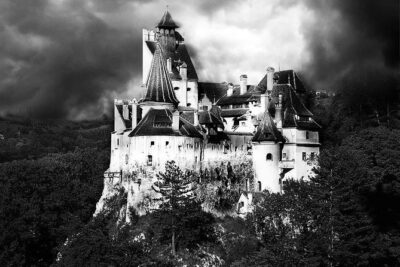
Dracula’s Castle, Peles Castle and Brasov Day Trip from Bucharest
Read our review →Browse the lists this tour appears in