
Reviewed · SIGHIȘOARA DAY TRIPS
City Tour Sighisoara Legends & Landmarks A Walk Through Time
Sighișoara’s medieval citadel is compact, colorful, and packed with stories. This two-hour walking tour takes you from the market square to the Clock Tower, up the covered staircase, and on to the hilltop church, turning a pretty old town into a place you can understand. The Dracula connection gets attention, but the best parts are the town’s guilds, families, churches, and daily life.
I like the local, story-led approach. Guides such as Peter, Charles, Carol, Andrea, and Jacob have been praised for explaining not just Sighișoara, but also Transylvanian and Romanian history. I also like the route’s variety: towers, a cemetery, a Gothic church, unusual houses, and grand views all fit into one walk.
The main consideration is physical effort. The route includes cobbled streets, the 164-step Covered Staircase, and the climb to the Church on the Hill. Entrance fees are not included, and the tour is not suitable for people with mobility impairments.
Key points to know before booking
- The Clock Tower anchors the walk: Learn how Sighișoara’s main landmark worked and see the city from its 64-meter height if you choose to pay the separate entrance fee.
- The Covered Staircase is more than a photo stop: Its 164 wooden steps show how the town protected schoolchildren from winter weather.
- The Dracula story gets proper context: Vlad the Impaler was born here, but the tour places his story within Sighișoara’s wider past.
- The Church on the Hill adds the biggest climb: This Gothic church and its German cemetery reward you with a quieter, more reflective part of the citadel.
- Guild towers explain the fortifications: Butchers, tailors, furriers, and tin moulders each had a role in defending the town.
- The value is strongest for first-time visitors: At $45 per person, you pay for a focused introduction that helps you make sense of the citadel before exploring alone.
Starting at the Monastery Church
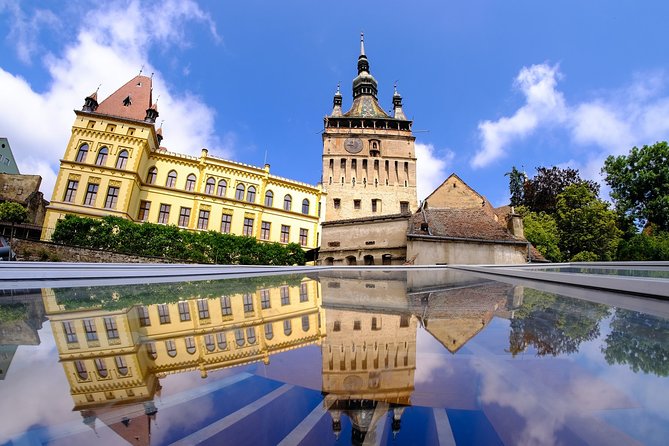
The meeting point is in front of the Monastery Church at Piața Muzeului 5. Another listed starting point is Piața Muzeului 6, so check your booking details carefully before setting off. The walk finishes at one of the same two points, keeping the experience simple if you are staying in or near the citadel.
The 11:00 departure works well for a morning arrival or for your first full day in Sighișoara. You begin in the heart of the old town, where the medieval setting is immediately visible. From here, the guide can explain how the citadel fits together before leading you into its smaller lanes and defensive corners.
I recommend arriving with comfortable shoes and only a small bag. Large luggage and oversize bags are not allowed. Bring a passport or identity card, as requested in the tour information.
More Sighisoara day trips:
- Small Group Tour to Viscri Church Sighisoara Town Rupea Fortress
★ 5.0 · 225 reviews - 2-Day Medieval Transylvania with Brasov,Sibiu and Sighisoara Tour from Bucharest
★ 4.5 · 145 reviews - From Brasov: Sighisoara and Viscri UNESCO Day Tour
★ 4.8 · 86 reviews
The Market Place and Sighișoara’s colorful houses
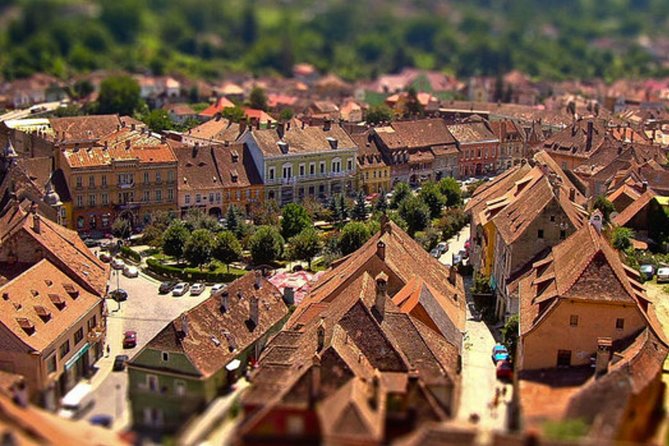
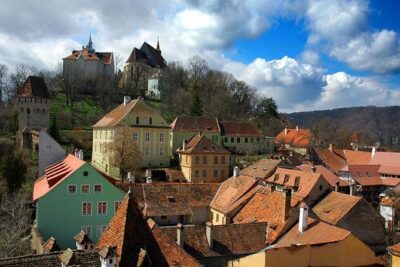
The Citadel’s Market Place is a natural opening scene. Colorful burgher houses frame the square, and the guide uses this area to introduce the town’s German-speaking Saxon heritage, trade, and urban life.
This is where a guide adds real value. On your own, you see attractive facades. With an explanation, you begin to notice how the houses reflect the wealth and status of the people who lived and worked there. The square also gives you a useful sense of scale: Sighișoara’s historic center is small enough to cover on foot, but full of details that are easy to miss.
The tour is not only about dates and rulers. Several guides have been praised for discussing everyday life, local traditions, architecture, and the wider story of Romania. That wider context matters because Sighișoara can otherwise feel like an isolated medieval postcard rather than part of Transylvania’s changing political and cultural world.
Dracula’s birthplace, with the legend kept in perspective
The House where Vlad the Impaler was born is one of the citadel’s most famous stops. It now operates as a restaurant and museum connected with Sighișoara’s past.
The Dracula angle is useful as an introduction, but it should not swallow the whole tour. Vlad the Impaler was the historical figure who helped inspire Dracula, yet the real story is more complicated than the fictional vampire. The walk gives you a chance to understand Vlad in relation to Romanian history rather than treating the birthplace as a theatrical prop.
This is one of the best reasons to take the tour instead of simply photographing the yellow building. You can ask questions and get a clearer sense of what is documented, what became legend, and why the Dracula name remains so powerful in Transylvania.
Admission to attractions is not included in the $45 price. If you want to enter museums or the Clock Tower, budget separately. The tour still works if you remain outside, but the interior visits may matter to you if you want a fuller look at the town.
The Clock Tower and the 64-meter view
The Clock Tower is Sighișoara’s main landmark and one of the most useful stops for understanding the citadel. Its height, position, and clock mechanism make it more than a pretty tower in the skyline.
Inside, you can see the clock mechanism and historical artifacts. From the top, the 64-meter height gives you a broad view over the town. This is likely the most rewarding optional entrance on the route if you enjoy city views and old mechanical systems.
The practical catch is time. A two-hour tour has to keep moving, and an interior visit may add pressure to the schedule, especially if the group is larger or the tower is busy. Ask the guide how the stop will fit into the walk. Since entrance fees are extra, you can also return later if you want to explore the tower at your own pace.
More walking tours in Romania:
- Bucharest: City Highlights Guided Walking Tour
★ 4.9 · 1,482 reviews - Bucharest Highlights Walking Tour
★ 5.0 · 469 reviews - Free walking tour of Brasov in English
★ 4.9 · 302 reviews - Bucharest: Ghost Stories & Romanian Mythology Walking Tour
★ 4.9 · 287 reviews
The Covered Staircase and the climb to School Hill
The Covered Staircase is one of Sighișoara’s most memorable features. Built in the 17th century, its 164 wooden steps protected schoolchildren from bad weather on their way to classes on School Hill.
The staircase gives the tour a physical rhythm. You leave the busy lower citadel and climb through a passage that feels enclosed and old-fashioned. Its purpose also makes the past feel practical: this was not built as a tourist attraction, but as a response to everyday weather and the needs of local families.
The climb is manageable for many people, but it is still a climb. The steps can be tiring, and the surrounding route includes uneven cobbles. One guide adapted the route for visitors who had already climbed the hill and needed to catch a train, showing that the walk can sometimes be adjusted. Still, you should not book this experience expecting a flat stroll.
The Church on the Hill and the German cemetery
At the top of School Hill, the Church on the Hill provides a change of mood. This Gothic church has a significant interior and medieval frescoes, giving the tour a more serious cultural focus after the colorful streets and Dracula stories.
The church is also valuable because it shows the religious and artistic life of the historic community. If the building is open and you choose to pay the entrance fee, you can spend more time with its interior details. Since admissions are not included, confirm current costs and opening conditions locally.
Nearby, the German Cemetery adds another layer. This is not simply a scenic stop. Tombstones and family names help explain the people who shaped Sighișoara and the town’s German-Saxon past. A guide can connect the cemetery to the demographics and social structure of the citadel, something that is difficult to grasp from buildings alone.
I especially like this part of the route for visitors who want more than architecture. The cemetery encourages you to slow down and think about continuity, migration, religion, and family. It is also a quieter break from the narrow streets below.
Guild towers and the logic of medieval defense
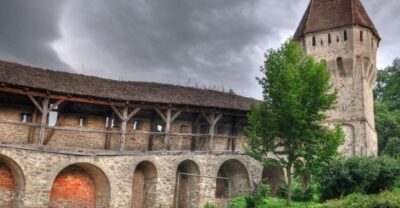
Sighișoara’s towers were tied to craft guilds, and the tour visits several of them. The Butchers’ Bastion and Tower introduce the defensive system and the role of guild members in protecting the citadel.
The Tailors’ Tower and Furriers’ Tower continue the story. Each name points to a trade, and each stop helps you see how economic life and military duty were connected. In a medieval town, the people who made clothing, processed meat, or worked with hides were also part of the system that guarded the walls.
The Tin Moulders’ Tower adds another trade to the picture. These stops may not be as instantly famous as the Clock Tower, but they give the citadel its character. I would rather spend time understanding why several smaller towers exist than rush from one major photo spot to the next.
The fortifications also reward close attention. Look for changes in stonework, narrow openings, and the relationship between towers and streets. The guide can explain details that are easy to overlook when you are focused on taking photographs.
Venetian House, deer antlers, and unusual facades
The Venetian House brings a different architectural note. Its Renaissance-style appearance reflects the town’s links with wider European design and trade. It is a good reminder that Sighișoara was not sealed off from the rest of Europe.
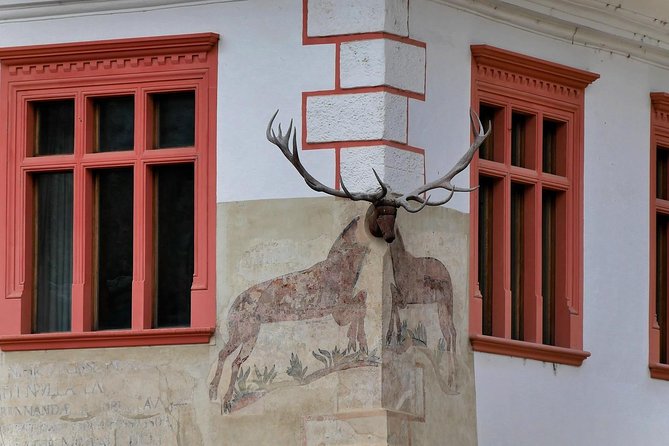
The House with the Deer Antler makes a memorable final stop. Antlers mounted on the facade give the medieval building a visual detail you are unlikely to forget. This is the sort of small feature that makes a walking tour worthwhile: you learn where to look, then can return later for a better photograph.
These buildings also show why a guide’s pace matters. Sighișoara rewards wandering, but first-time visitors can easily miss a facade or pass through a lane without knowing its importance. A well-paced guide leaves room for questions and photographs without letting the walk lose its shape.
What makes the guiding valuable
The strongest part of this experience is the guide. The English-language guides named in feedback include Peter, Charles, Carol, Andrea, and Jacob, although you should not assume a particular person will lead your departure.
Peter is repeatedly described as warm, patient, and able to connect Sighișoara with Romanian history and culture. Charles is praised for his clear English, humor, and ability to explain architecture as well as historical events. Carol and Andrea are also described as engaging guides who add local stories and detail.
One guide brought old photographs to show how the town looked and how people lived in earlier periods. Another adjusted the route for visitors with a train to catch. Several guides stayed beyond the scheduled two hours when questions and explanations needed more time.
That flexibility is useful, but do not count on the tour running long. If you have a train, timed reservation, or other appointment, tell the guide at the start. The route can sometimes be adapted, but the full hilltop section cannot be both rushed and properly explained.
Price, inclusions, and overall value
The price is $45 per person for two hours with an English-speaking specialized guide. That is not the cheapest way to see a small citadel, but the value depends on how much context you want.
You are paying for a concentrated introduction to Sighișoara’s main sights, legends, defensive system, religious buildings, and social history. The route covers enough ground to give you a strong first orientation without taking half a day. For a first visit, that can save time and help you choose which places deserve a return visit.
Food, drinks, entrance fees, and souvenir photos are not included. The separate admissions are the main extra cost to watch. If you want to enter the Clock Tower, the Church on the Hill, or other attractions, carry a little extra money and allow enough time.
A private tour costs an additional EUR 20 per person. That may suit families, couples, or small groups who want a slower pace and more control over the route. For most visitors, the standard tour is the better value, especially if you are happy to follow a set walking route.
Free cancellation is available up to 24 hours before departure, and you can reserve now and pay later. Those terms are useful if your Romanian itinerary is still changing.
Who should take this walking tour
I would choose this tour on my first day in Sighișoara. It gives you the basic map, explains the major buildings, and leaves you better prepared to explore independently afterward.
It suits:
- First-time visitors who want historical context
- History and architecture fans
- People curious about Vlad the Impaler beyond the Dracula story
- Families who prefer a guided walk to reading signs
- Visitors who want to ask questions about Romanian culture and local life
- Photographers looking for unusual facades, towers, stairways, and views
It is less suitable if you have difficulty with stairs, cobbled streets, or uphill walking. It is also not the best match if you want a slow museum visit, since the tour covers many places in two hours and optional admissions are separate.
Practical advice for the two-hour route
Wear shoes with good grip. The 164-step Covered Staircase and hilltop section are the clearest physical challenges, but cobbled streets can also make the walk tiring.
Bring water, especially in warm weather, even though drinks are not included. A small day bag is fine, but leave large luggage elsewhere because oversize bags and large luggage are not allowed.
Keep some flexibility in your schedule. The guide may spend extra time answering questions, and the experience can run longer when the group is engaged. If you need to catch a train or meet a reservation, say so before the route begins.
I would also treat the tour as an introduction rather than a complete visit to every interior. The guide can explain the Clock Tower and Church on the Hill, but entrance fees remain your responsibility and available visiting time may vary.
Should you book City Tour Sighișoara?
Book it if you want Sighișoara to feel like a living town rather than a collection of colorful buildings. The guide-led route connects the Clock Tower, Vlad’s birthplace, the Covered Staircase, Church on the Hill, cemetery, guild towers, and unusual houses in a way that makes the citadel easier to read.
The tour offers especially good value for first-time visitors who enjoy history and questions. Skip it if you need a flat route, dislike group schedules, or plan to spend your entire visit inside museums. For most visitors with two hours and sturdy shoes, it is a sensible way to get your bearings and see the town’s most meaningful landmarks.
FAQ
Where does the Sighișoara walking tour start?
The main meeting point is Piața Muzeului 5, in front of the Monastery Church. Piața Muzeului 6 is also listed as a possible starting point, so check your booking information.
What time does the tour depart?
The listed departure time is 11:00. Availability should be checked when booking.
How long does the tour last?
The scheduled duration is two hours. Guides may sometimes spend extra time with the group, but you should allow only the scheduled duration when planning onward transport.
Is the tour conducted in English?
Yes. The experience includes a live English-speaking guide.
Are entrance fees included?
No. Entrance fees for attractions such as the Clock Tower or Church on the Hill are not included. Food, drinks, and souvenir photos are also extra.
Is the tour suitable for people with mobility impairments?
No. The tour is not suitable for people with mobility impairments because it includes cobbled streets, stairs, and the uphill route to the Church on the Hill.
Just added around Romania
- Private Full Day Tour of Bucharest★ 5.0 · 3 reviews
- Bear Sanctuary Zarnesti,Bran Castle,Rasnov Fortres w/Hotel pickup★ 5.0 · 3 reviews
- Count Dracula & Peles Castle in One Day from Bucharest★ 5.0 · 3 reviews
- Veliko Tarnovo and Medieval Bulgaria Private Day Trip from Bucharest★ 5.0 · 3 reviews
- Bucharest VIP Bar Crawl in Lipscani ‘Old Town’★ 5.0 · 3 reviews
- Private Transfagarasan&Balea Lake★ 5.0 · 3 reviews
- Muddy Volcanoes and Salt Mine Private Tour★ 5.0 · 3 reviews
- Bucharest Private City Tour★ 5.0 · 3 reviews
Sighișoara Day Trips, compared.
Small Group Tour to Viscri Church Sighisoara Town Rupea Fortress
Read our review →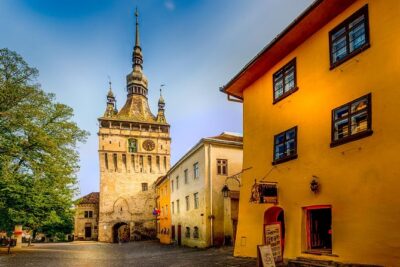
2-Day Medieval Transylvania with Brasov,Sibiu and Sighisoara Tour from Bucharest
Read our review →
2-Day Transylvania from Bucharest: Brasov, Bran, Sighisoara
Read our review →
Secrets of the Citadels: Brașov, Viscri, Sighișoara and Sibiu
Read our review →
Sighisoara and Viscri Private Full-Day Tour from Brasov
Read our review →
Browse the lists this tour appears in