
Reviewed · BRAN CASTLE & DRACULA TOURS
Dracula beyond the legend: 8-day private tour in Transilvania
Dracula is fiction. Vlad the Impaler was not. This eight-day route helps you sort the two apart as you follow Vlad’s story from Bucharest and Târgoviște into Transylvania, then back toward Bran Castle and Snagov Monastery. Along the way, you get Gothic castles, medieval fortresses, and old Saxon towns, not just vampire-themed souvenirs.
I like the way the tour mixes famous stops with less expected places, especially Densuș Church and the ASTRA open-air museum. I also like having transport, hotels, breakfasts, guiding, and entrance fees bundled together, which takes much of the daily planning off your plate.
The main drawback is pace. Eight days cover a large part of Romania, with several long road days and many one-hour visits. You should also confirm the hotel category before paying, since the tour information describes the accommodation as both 3-star and 4-star.
Key Points Before You Book
- Vlad the Impaler’s real locations: Visit the Old Court in Bucharest, Târgoviște, Sighișoara, Bran Castle, and Snagov Monastery.
- More than Dracula: The route includes Sibiu, Alba Iulia, Turda Salt Mine, Curtea de Argeș, and the Transfăgărășan Highway.
- A small-group format: The activity is limited to eight people, with a maximum booking size also listed as 14.
- Practical inclusions: Seven nights, breakfast, an English-speaking guide, transport, airport transfers, entrance fees, and a carriage ride in Sibiu are included.
- A physically active road trip: Expect walking on cobblestones, castle stairs, fortress paths, and full touring days.
- Best for history-minded visitors: The tour suits you if you want Vlad’s story placed in Romanian history, not just a theatrical Dracula theme.
Bucharest: Parliament, Old Court, and the Real Starting Point
The tour begins in Bucharest, where Vlad Tepes, or Vlad the Impaler, lived and ruled in the historical record long before Bram Stoker turned the Dracula name into a Gothic legend. That distinction matters. You will hear about a hard ruler whose reputation grew from warfare, punishment, and political conflict, rather than meet a supernatural count in a black cape.
The first stop is the Palace of the Parliament, also called the People’s House. Built between 1984 and 1997, it is the world’s largest administrative building. The one-hour visit gives you a sharp change of subject: from medieval Wallachia to the vast, imposing architecture of Romania’s communist era.
I find this pairing useful. The palace shows modern political power on an almost absurd scale, while the Old Court connects you to the earlier city. In Bucharest’s Old Town, you walk through Centrul Vechi, the city center filled with cafés, restaurants, and historic sights. Curtea Veche, or the Old Court, was once inhabited by Vlad Tepes.
The first day is fairly gentle, with about an hour at each main stop. Still, do not mistake the short scheduled visits for a slow city break. The Old Town has enough atmosphere to make you wish for more unscheduled time, so ask your guide how much independent walking is possible.
More Bran Castle and Dracula trips:
- Bucharest: Dracula’s Castle, Peles Castle, & Brasov Old Town
★ 4.5 · 17,858 reviews - Bucharest: Dracula Castle, Peles Castle & Brasov Old Town
★ 4.6 · 10,891 reviews - Bucharest: Dracula’s Castle, Peleș Castle & Brașov Day Trip
★ 4.5 · 5,919 reviews
Târgoviște and Curtea de Argeș: Setting Up Vlad’s Story
Day two moves west toward Târgoviște, a former capital of Wallachia during the Middle Ages. The city became a secondary residence for Wallachian princes in the fourteenth century, and the royal court moved there from Curtea de Argeș in 1431.
The Princely Court visit focuses on the Princely Church and Chindia Tower. This is one of the better places to begin understanding Vlad as a medieval ruler. Târgoviște was attacked more than once, including a siege and fire by Bayezid I in 1395. In 1462, Vlad’s famous Night Attack helped stop an Ottoman advance.
The tour then continues to Curtea de Argeș Monastery, built between 1512 and 1517. The church is linked to the Romanian legend of Manole, built around the idea that lasting work requires sacrifice. The monastery is also a burial place for members of Romania’s royal family.
These two stops complement each other well. Târgoviște is about power and defense. Curtea de Argeș brings in religion, royal memory, and folklore. You get a more rounded picture of Romania than a castle-only tour could offer.
The day ends near the Transfăgărășan Highway at the Valea cu Pești hotel. The road itself becomes one of the trip’s main subjects on day three, so this overnight stop helps break up the long route.
The Transfăgărășan Highway and Sibiu’s Saxon Traditions
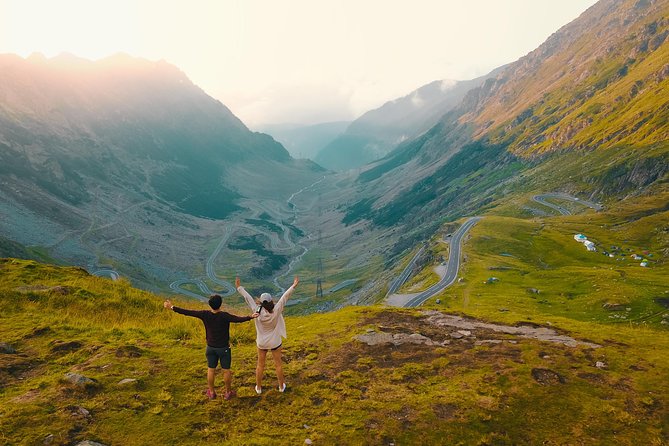
The Transfăgărășan crosses the Southern Carpathians through the Făgăraș Mountains, reaching 2,042 meters. The scheduled stop is short, but the road provides some of the trip’s best chances for mountain photographs.
Road conditions and weather can affect how much you see, and the route is not simply a quick transfer between towns. You spend a good part of the tour in the vehicle, moving between distant sites. That is the price of covering so much of Romania in one circuit. Bring water, keep your camera handy, and use the driving time to rest.
In Sibiu, you visit the ASTRA Museum, an open-air collection with more than 300 traditional buildings and thousands of household objects. A wooden carriage ride is included. This stop gives you a look at village life and building traditions that castles alone cannot provide.
Sibiu’s center is one of the tour’s most appealing city visits. You begin in Big Square, then see the Brukenthal Museum, the Holy Trinity Roman Catholic Cathedral, and Huet Square with its Evangelical Church. You also have several hours to explore the center.
I would use that free time well. Sibiu is a place where simply walking and looking matters as much as ticking off monuments. The tour description allows time at your disposal, but the exact amount can depend on the day’s driving and site visits.
Corvin Castle and the Strange Church at Densuș
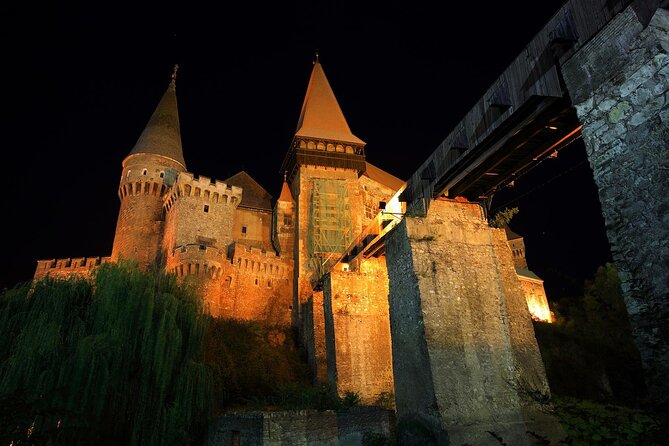
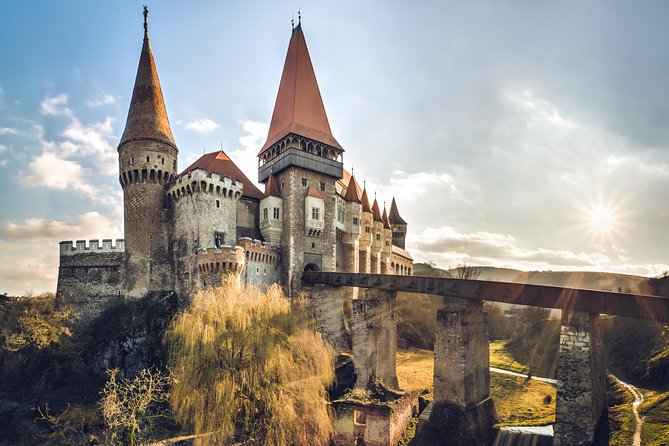
Corvin Castle, also called Hunyadi Castle, is one of Europe’s largest medieval castles. Its Renaissance-Gothic design includes towers, bastions, a moat, and an inner courtyard. The setting has the theatrical look you expect from a Dracula trip, but the castle’s own identity is separate from Bram Stoker’s fictional creation.
A local legend says Vlad the Impaler was imprisoned here for seven years. Treat that as a legend, not settled fact. That is part of the fun of the route: you repeatedly see how Romanian places, historical figures, and later stories have been layered together.
The visit lasts about an hour. You will likely encounter stairs and uneven surfaces, so sensible shoes matter. The stop is short for such a large complex, but the guided visit gives you a focused introduction.
The Densuș Church offers a sharp contrast. It is in a village in Hunedoara County and is described as one of the oldest Romanian churches still standing. Its construction is dated to the seventh century, with fifteenth-century murals showing Jesus in traditional Romanian clothing.
Its origins remain part of the mystery. One theory says it began as a pagan temple, based on features such as the altar’s unusual southern position, its roof shape, and lion statues joined by their tails. Another theory connects it to a mausoleum for the Roman general Longinus Maximus.
This is exactly the sort of stop I appreciate on a themed tour. It is not a headline attraction for first-time visitors, yet it gives you a strange, memorable piece of Romanian religious and ancient history.
More Transylvania day trips:
- Transylvania and Dracula Castle Full Day Tour from Bucharest
★ 4.5 · 1,589 reviews - Castles of Transylvania: Private Day Trip from Bucharest
★ 4.5 · 248 reviews - 2-Day Medieval Transylvania with Brasov,Sibiu and Sighisoara Tour from Bucharest
★ 4.5 · 145 reviews - 2-Day Transylvania from Bucharest: Brasov, Bran, Sighisoara
★ 5.0 · 60 reviews
Alba Iulia and Turda: Fortifications Above, Salt Below
Alba Iulia’s Alba Carolina Citadel is the largest medieval citadel in Romania, although the fortress you see today was built between 1715 and 1738. Earlier Roman and medieval fortifications occupied the site.
The citadel formed part of a Habsburg defensive system designed by Prince Eugene of Savoy. Its bastion layout reflects the Vauban style of fortress design. The stop shifts the historical focus again, from Wallachian princes to Roman power and Habsburg military planning.
You then go underground at Turda Salt Mine. Salt mining here goes back hundreds of years, with a written reference dating to 1075. The modern attraction includes an underground lake, a Ferris wheel, mini-golf, table tennis, bowling, and boat rides.
Turda is a welcome change of mood. After several churches and fortresses, you get an unusual family-friendly stop with plenty to see below ground. The one-hour schedule may not allow time for every activity, so think of the mine as an atmospheric visit rather than a full day at an underground amusement center.
This day also shows the tour’s broad reach. You are not only following Dracula. You are tracing Roman, medieval, religious, Habsburg, and industrial chapters of Romanian history.
Biertan and Sighișoara: The Saxon Heart of Transylvania
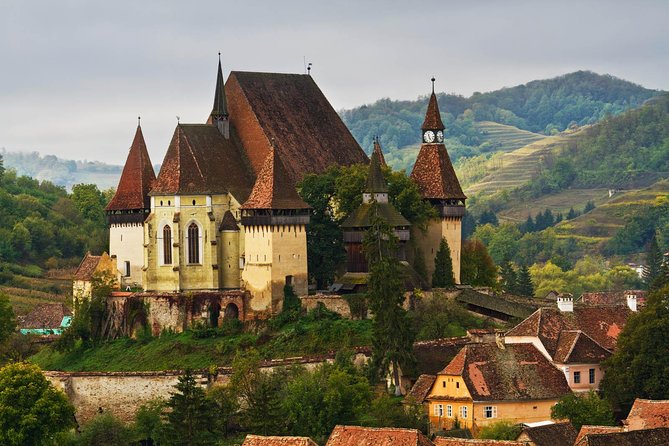
Biertan Fortified Church is surrounded by three sets of walls. Its Gothic design and defensive structure reflect the needs of Transylvania’s Saxon communities, who built fortified religious centers for protection.
The visit is scheduled for about an hour, which is enough to grasp the layout and see the church, but not enough for a slow study of every detail. If this type of architecture interests you, pay attention to how the walls shape the whole site rather than focusing only on the church interior.
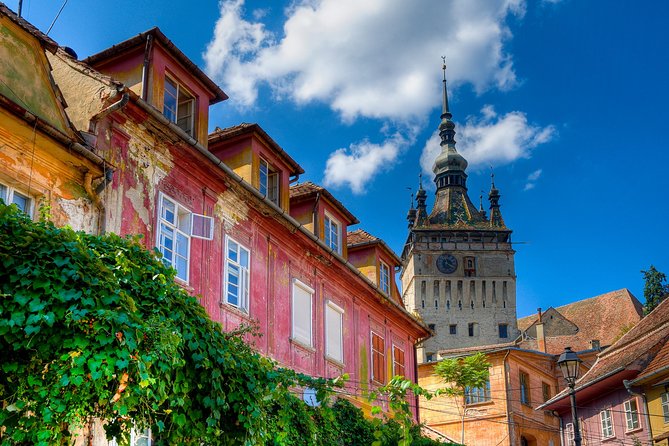
Sighișoara is one of the strongest stops on the tour. Its inhabited medieval citadel is a UNESCO World Heritage Site, with winding cobbled streets, historic buildings, and the Clock Tower. Inside the tower, you find a museum of medieval weapons and a torture chamber.
Sighișoara is also identified as Vlad the Impaler’s birthplace. You visit the building associated with the first years of his life. Here, the Dracula connection feels more direct than at Bran Castle, although the town itself is much more than a vampire footnote.
Allow for uneven walking in the citadel. Cobblestones and narrow streets are part of the charm, but they can be tiring. The tour’s moderate fitness requirement is worth taking seriously, especially after several consecutive touring days.
Brașov and Bran Castle: The Famous Pair
Brașov brings another attractive medieval center. You walk through Council Square, see the Black Church, and pass along one of the world’s narrowest streets. The city visit is a compact introduction rather than a full exploration.
The Black Church is a major Gothic cathedral, and the old center is easy to enjoy on foot. This is a good place to slow down if the schedule allows, since the previous days have involved long drives and several formal visits.
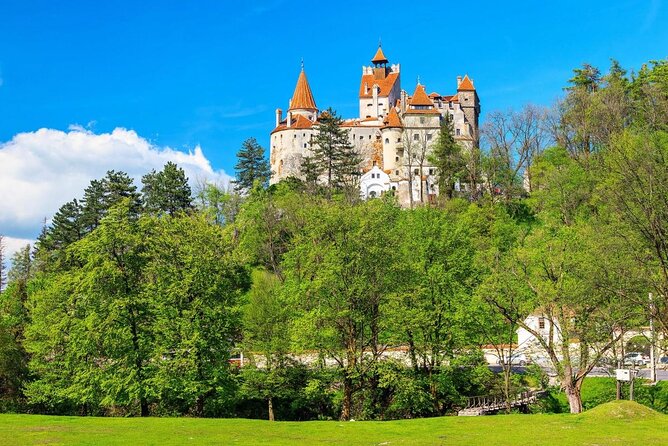
Then comes Bran Castle, marketed worldwide as Dracula’s Castle. The castle was built in the thirteenth century on a 60-meter cliff, guarding an important route into Transylvania. Its location and medieval appearance explain why it became linked so strongly to the Dracula story.
The connection to Vlad is not as direct as the popular name suggests. The castle is still worth seeing for its position, architecture, and place in modern Dracula culture. Go expecting a famous Romanian castle with a powerful legend attached, not proof that Bram Stoker’s count lived there.
Bran is likely to be the most crowded and commercial stop on the route. That does not make it a bad visit, but it helps to set your expectations. The tour is at its best when it places Bran alongside more historically grounded sites such as Târgoviște, Sighișoara, and Snagov.
Snagov Monastery and the Final Question About Vlad’s Burial
After Bran, the route returns toward Wallachia and ends at Snagov Monastery, traditionally identified as Vlad Tepes’s burial place. The account is surrounded by competing stories. Some legends say he was taken to Italy. Another says monks secretly recovered his body after rival aristocrats prevented a proper Christian burial.
You should approach Snagov as a place of historical uncertainty and local tradition. The absence of absolute proof does not make the stop pointless. It shows how Vlad’s reputation continued to grow after his death, with stories spreading far beyond the places where he actually ruled.
The final morning is reserved for transfer to the airport according to your flight time. Since the tour begins and ends in Bucharest, the route works well if you want a single organized circuit rather than separate hotel and transport arrangements.
Hotels, Transport, Group Size, and Price
The price is $3,113.31 per person, based on two people sharing a double room. That is a serious amount, but it covers seven nights, breakfasts, modern vehicle transport, an English-speaking professional guide, airport pickup and drop-off, entrance fees, and the carriage ride in Sibiu.
I see the value mainly in the geography. Bucharest, Târgoviște, Curtea de Argeș, the Transfăgărășan, Sibiu, Hunedoara, Alba Iulia, Turda, Biertan, Sighișoara, Brașov, Bran, and Snagov form a demanding route to arrange on your own. The included driver and guide save you from navigating long distances and coordinating tickets at every stop.
The tour is described as private, but the information also gives a maximum of eight participants and a maximum booking size of 14. Confirm the exact group arrangement before booking if a truly private vehicle is essential.
Accommodation is described in one place as centrally located 4-star hotels and elsewhere as hand-picked 3-star hotels. That difference affects the value, so ask Rolandia to confirm the actual standard, hotel names, and room setup.
An English-speaking guide is included. One guide identified by name is Florin, who handled hotel check-ins and helped keep the trip running smoothly. That practical support matters on a multi-hotel journey, especially when you are moving almost every day.
Meals beyond breakfast are not included. Budget separately for lunches, dinners, drinks, and any attraction not covered by the stated entrance fees. Airfare and health insurance are also your responsibility.
Who Should Book This Route?
I would choose this tour if you want a strong first look at Romania and prefer a guide to handle the roads, entries, and hotel transitions. It suits couples and small groups who enjoy history, castles, religious sites, unusual museums, and long scenic drives.
It is also a good fit if Dracula is your starting point but not your only interest. The route gives you far more than vampire folklore, including Romanian royal history, Saxon towns, Roman remains, Habsburg fortifications, mountain roads, and traditional village buildings.
I would hesitate if you want relaxed mornings, long stays in each town, or extensive independent time. Several stops last about an hour, and the route covers a lot of ground. The moderate fitness requirement means you should be comfortable walking on cobblestones and handling stairs.
Free cancellation is available until 24 hours before the start time. After that point, cancellation or changes are not accepted for a refund.
Should You Book Dracula Beyond the Legend?
Book it if you want a guided historical circuit with Dracula as the thread, not the whole fabric. The best parts are the range of places, the small-group format, the practical inclusions, and the chance to see Romania beyond its two famous castles.
Before committing, confirm the hotel category, the final group size, and how much free time you will have in Sibiu, Sighișoara, and Brașov. If you are happy with long drives and a full schedule, this tour offers a useful and memorable way to connect Vlad the Impaler’s real world with Romania’s castles, churches, and medieval towns.
FAQ
Where does the tour begin and end?
The tour begins in Bucharest with pickup from any hotel in the city. On the final day, you are transferred to the airport according to your flight time.
How long is the experience?
The tour lasts approximately eight days and includes seven nights of accommodation.
Is an English-speaking guide included?
Yes. A professional English-speaking guide is included. Florin is one guide associated with this experience.
What is included in the price?
The price includes seven nights of accommodation, breakfast, modern vehicle transport, airport pickup and drop-off, entrance fees for included sights, professional guiding, and a carriage ride in Sibiu.
Are meals included?
Breakfast is included. Other meals are not included.
Does the tour visit Bran Castle?
Yes. Bran Castle, commonly called Dracula’s Castle, is visited on day seven.
Is the tour suitable for children?
Children must be accompanied by an adult. The activity also recommends a moderate level of physical fitness.
How many people can join the tour?
The activity information lists a maximum of eight travelers, while the booking details give a maximum of 14 people per booking. Confirm the exact arrangement when booking.
Can I cancel for a full refund?
Yes, if you cancel at least 24 hours before the experience start time. Cancellations or changes made less than 24 hours before the start are not accepted for a refund.
Just added around Bucharest
- 2 days Transylvania Tour with Brasov, Sibiu and Sighisoara★ 5.0 · 6 reviews
- Bucharest Rooftop Tour★ 5.0 · 6 reviews
- Day Trip to Transfagarasan★ 4.6 · 6 reviews
- Bucharest City Tour 2 hours – by Car with a Private Guide★ 5.0 · 6 reviews
- 7 days Private Romania Grand Tour from Bucharest★ 5.0 · 6 reviews
- Explore Transylvania Tour 4 days★ 5.0 · 7 reviews
- Day Trip to Bulgaria and Veliko Tarnovo from Bucharest★ 5.0 · 7 reviews
- Private Day-Trip to Medieval Bulgaria from Bucharest★ 4.5 · 7 reviews
Bran Castle & Dracula Tours, compared.
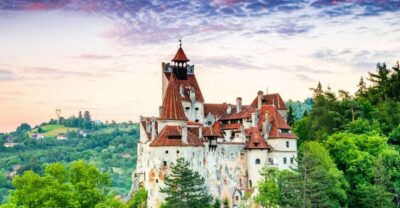
Dracula’s Castle, Peles Castle, & Brasov Old Town
Read our review →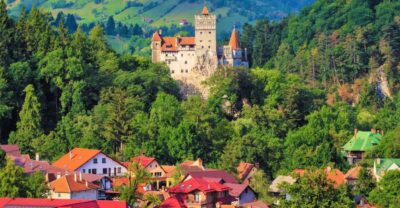
Dracula Castle, Peles Castle & Brasov Old Town
Read our review →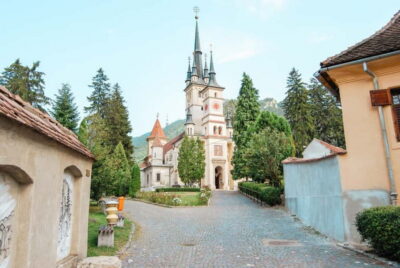
Dracula’s Castle, Peleș Castle & Brașov Day Trip
Read our review →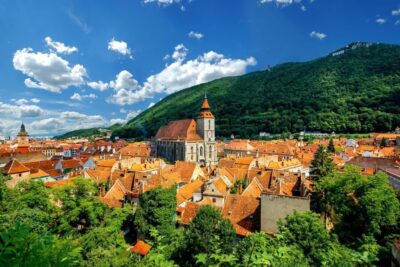
Day Trip to Dracula Castle, Peles Castle & Brașov
Read our review →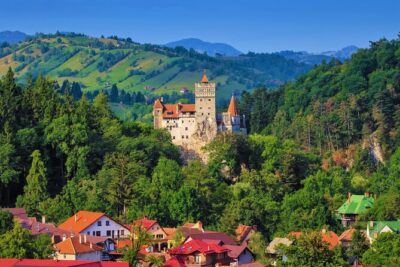
Bucharest to Dracula Castle, Peles Castle and Brasov Guided Tour
Read our review →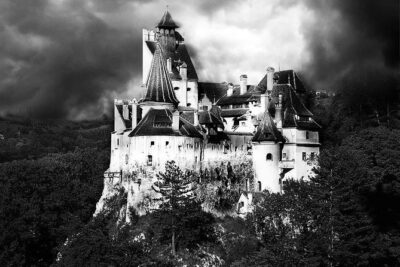
Dracula’s Castle, Peles Castle and Brasov Day Trip from Bucharest
Read our review →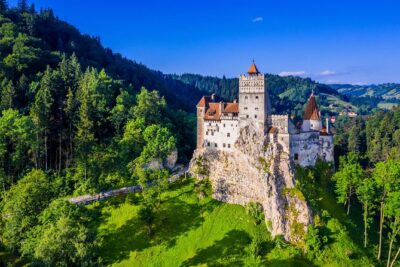
Transylvania and Dracula Castle Full Day Tour from Bucharest
Read our review →
Browse the lists this tour appears in