Reviewed · BUCHAREST TOURS
The Real Story of Gypsies – Slavery in Romania
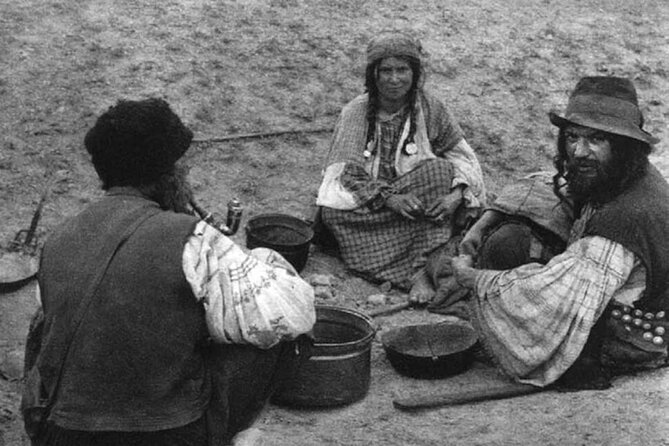
Bucharest’s Roma story is not a side note. It reaches from a former slave market to the Holocaust Memorial, then into the living work of Roma craftspeople. This three-hour walk gives you a serious look at a part of Romanian history that many city tours skip.
I like the route for two reasons: it connects major central sights with a clear historical thread, and it ends at Mesteshukar ButiQ, a small shop selling work made by Roma craftsmen. I also like the small group limit of 15, which should make it easier to ask questions. The main drawback is its difficult subject matter, plus only about 15 minutes at each stop, so you should not expect long museum visits or a relaxed sightseeing tour.
Key points to know before you go
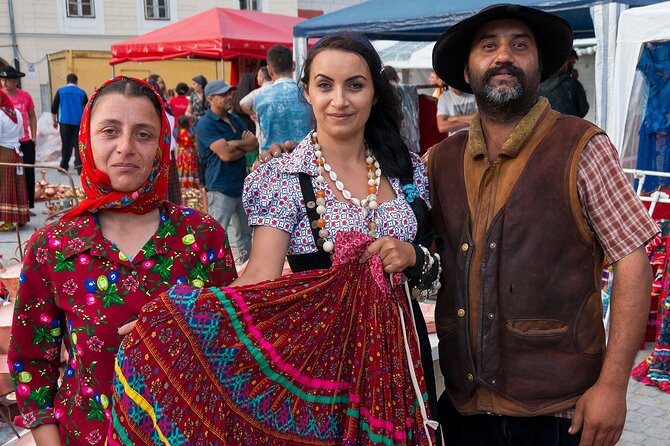
- The tour begins with Roma slavery: At Piata Amzei, you discuss the old slave market and how that past shaped Roma identity.
- The route uses familiar Bucharest sights: Stirbei Palace, the Romanian Athenaeum, and Cismigiu Park become settings for lesser-known history.
- The Holocaust Memorial adds a solemn focus: You learn about the persecution and murder of Roma people in Romania.
- The walk ends with living craftsmanship: Mesteshukar ButiQ sells copper work made by Roma artisans.
- Mihai is a named guide: He has been praised for clear English, useful Bucharest context, and taking time with questions.
- The $30.04 price buys a focused history walk: You get roughly three hours, free admission at the stops, and a group capped at 15 people.
Why this Bucharest walk matters
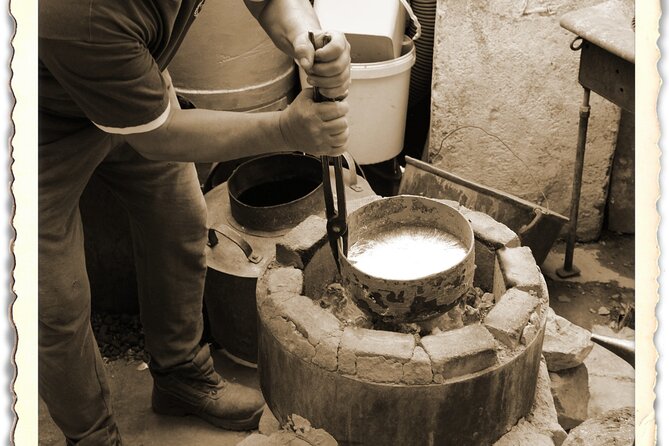
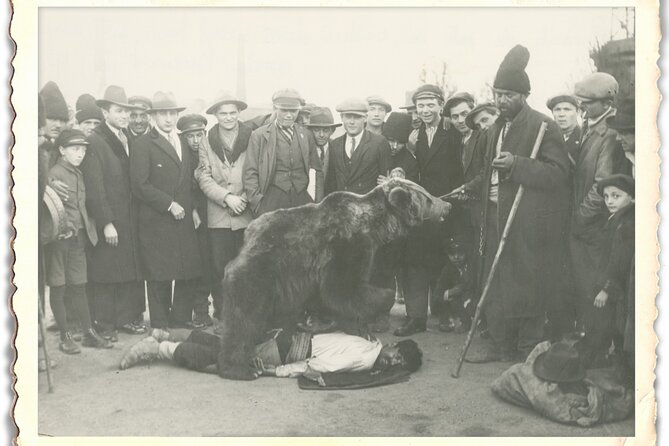
The word Gypsy appears in the tour title because it is part of the historical language used in Romania and Europe. Roma is the preferred modern term for the people and culture discussed here, although the tour also examines times when the older label was used.
That distinction matters. This is not a folklore walk built around costumes, music, or easy stereotypes. It looks at forced labor, discrimination, genocide, public memory, and the way Roma identity has been described by others. You will also see Roma creativity and trade as living parts of the present, not only as subjects from the past.
I find that approach valuable because Bucharest can be easy to read as a city of grand buildings and political history. This walk asks you to look again at the same streets and consider who was controlled, excluded, remembered, or ignored there.
The tour costs $30.04 per person. For that price, you are paying for an English-speaking guide, about three hours of guided time, and a small-group format rather than entry to a major attraction. Since each stop is free, the value rests almost entirely on the guide’s explanation and the quality of the conversation.
That makes the guide especially important. Mihai is one named guide connected with the experience, and the feedback about him points to clear English, strong answers, and useful Bucharest background. You should book this for interpretation, not for ticketed sights.
A few more Bucharest day trips to weigh up
- Bucharest: Dracula’s Castle, Peles Castle, & Brasov Old Town
★ 4.5 · 17,858 reviews - Bucharest: Dracula Castle, Peles Castle & Brasov Old Town
★ 4.6 · 10,891 reviews - Bucharest: Dracula’s Castle, Peleș Castle & Brașov Day Trip
★ 4.5 · 5,919 reviews
Starting at Piata Amzei and the old slave market
Meet at Teatrul Ion Creanga, Sala Mare, at Strada Piata Amzei 13. The walk starts at 10:00 in the morning, near Romana Square and public transportation.
The first stop, Platoul Piata Amzei, introduces the hardest subject on the route: Roma slavery in Romania. The site is associated with an old slave market, and the guide explains the historical setting around the buying and selling of human beings.
You spend about 15 minutes here. That is enough for a focused introduction, but not enough for a long seminar. I suggest listening closely to the terms and dates your guide uses, then asking questions while the subject is fresh.
This opening gives the rest of the walk its shape. You are not simply hearing a list of facts about Roma life. You are tracing how enslavement affected families, social status, public attitudes, and later ideas about who belonged in Romanian society.
The setting also makes the past feel less remote. You are standing in a central Bucharest area, not reading about events in an isolated museum display. The tour does not promise a preserved slave market or a large memorial at this stop, so you should come ready to use the guide’s explanation to picture what is no longer visible.
Stirbei Palace and power in 1835
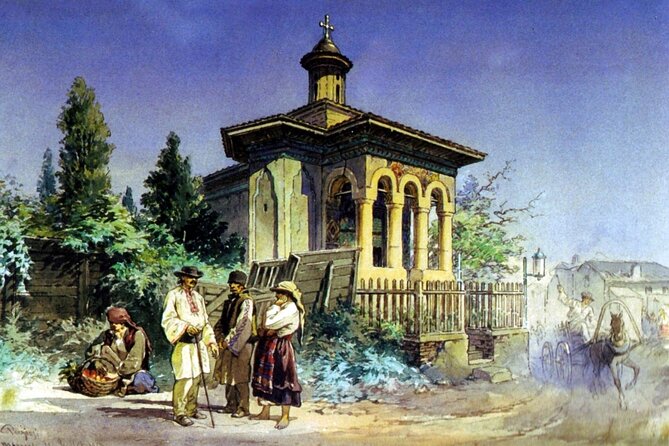
The next stop is Stirbei Palace, a Bucharest palace built in 1835. You spend about 10 minutes here, looking at the building and learning about its owner’s connection to an important period in Roma history.
This is a good example of how the walk uses architecture as a doorway into politics. A palace can look like a beautiful old building until you learn how the people who owned such places were involved in systems that affected the lives of others.
The stop is brief, so do not expect a full palace tour or interior visit. Admission is free, and the value comes from hearing the connection between the building, its owner, and Roma history.
I like this kind of stop because it keeps the discussion grounded. Instead of treating slavery as an abstract national issue, you connect it with people and institutions that shaped Bucharest.
The Romanian Athenaeum and public ideas about Roma people
The Romanian Athenaeum is one of Bucharest’s best-known cultural buildings. Its grand exterior represents national pride, music, and the arts, but on this tour it also becomes a place to discuss how culture has shaped public images of the Roma community.
The stop lasts around 15 minutes. You admire the building from the route while considering a less obvious question: who gets represented in a country’s official culture, and how are minority groups shown, overlooked, or reduced to stereotypes?
This section should appeal to you if you enjoy tours that connect art and architecture with social history. It is not a concert visit or a detailed architectural lecture. Instead, the Athenaeum provides a contrast between the polished symbols of national identity and the difficult story of a community that has often been pushed outside that identity.
Because the route moves through central Bucharest, you get a useful orientation lesson at the same time. The guide also adds general information about the city, which makes this more than a narrowly focused history lecture.
Same corner of the country, a completely different day out:
- Bucharest: Palace of Parliament Tickets and Guide
★ 4.3 · 3,182 reviews - Bucharest: Day Trip to Dracula Castle, Peles Castle & Brașov
★ 4.4 · 3,049 reviews - Bucharest to Dracula Castle, Peles Castle and Brasov Guided Tour
★ 4.5 · 2,933 reviews - Bucharest: Palace of Parliament Tickets and Guided Tour
★ 4.4 · 1,877 reviews
Cismigiu Park and the difference between truth and myth
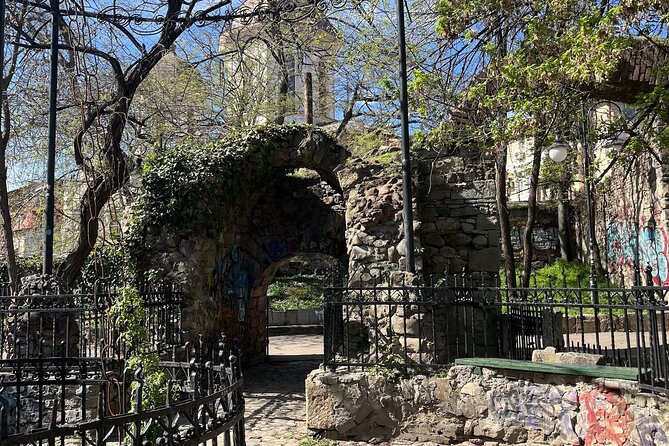
Cismigiu Park is the oldest and largest garden in Bucharest, and it offers the walk a change of pace. After the discussion of slavery and public culture, you stroll through a green urban setting while the guide examines more truths and myths about Roma history.
The planned stop lasts about 15 minutes. You should see it as a conversation in a public park, not as a long nature break. The tour does not list special activities or a separate park admission, so the important part is the discussion.
This is one of the route’s useful features. Prejudice often survives through stories repeated without much thought. A park setting gives the guide room to separate popular ideas from historical evidence and to explain how the word Gypsy has been used over time.
You may also appreciate the emotional breathing space. The subject remains serious, but the walk does not keep you inside one heavy memorial site for three hours. The changing surroundings help the route feel like a walk through a real city rather than a sequence of lectures.
The Holocaust Memorial and Roma victims of genocide
The tour then reaches the Holocaust Memorial, where the tone becomes more solemn. Here, you remember victims of the Holocaust in Romania, including the thousands of Roma people killed through persecution and genocide.
The stop is planned for about 15 minutes. That may feel short for such a serious subject, but a guide can use the time to provide a clear framework and point out why the memorial matters.
I would treat this as a moment for attention rather than photography or casual sightseeing. The memorial is not included as decorative background. It is the point where the earlier discussion of exclusion and persecution reaches its most devastating result.
The route’s inclusion of Roma victims is especially important. Holocaust memory is often taught mainly through the experience of Jewish communities, while Roma suffering receives less attention. This stop broadens the picture without turning the two histories into the same story.
If you want a long, detailed study of the Holocaust in Romania, this walk cannot provide it in 15 minutes. If you want the subject included in a wider account of Roma history, the memorial gives the tour a necessary moral center.
Iuliu Maniu and changing names for an old prejudice
At the Iuliu Maniu Statue, the guide explains another period in Roma history, including a time when Roma people were still widely called Gypsies.
The stop lasts roughly 15 minutes. Its purpose is not simply to identify a statue or recount the life of Iuliu Maniu. It helps show how language reflects political and social attitudes.
Names matter because they can describe identity, impose an outside label, or carry old prejudice. The tour uses this point to show that the terms applied to Roma people have changed, while many attitudes have been harder to change.
This is another stop where your questions can improve the experience. The route description gives the broad subject but not every detail of the story, so an interactive guide is useful. One reason I would favor a small group here is that you have a better chance to ask what the statue, the period, and the terminology reveal about Romania.
Mesteshukar ButiQ and Roma craftsmanship today
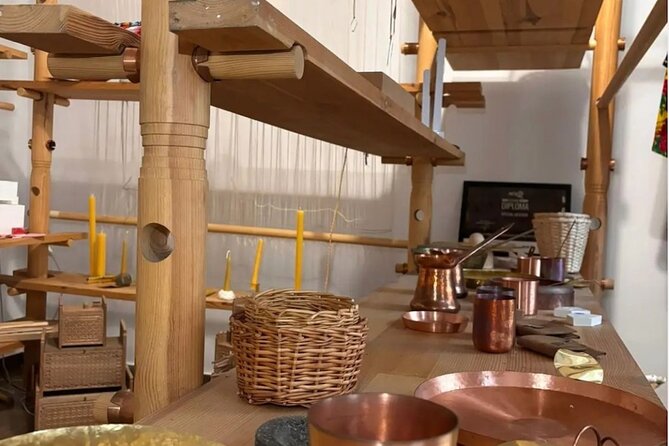
The final stop brings the tour into the present. Mesteshukar ButiQ, at Bulevardul Mihail Kogalniceanu 12, is a small shop selling products made only by Roma craftsmen.
You have about 15 minutes here to see copper work and learn about the craft traditions that continue today. This ending changes the emphasis from what was done to Roma people to what Roma artisans make, preserve, and sell on their own terms.
That matters. A tour about slavery and genocide can leave you with a picture of Roma life defined only by suffering. The shop offers a more complete ending, showing skill, work, design, and economic activity.
The stop does not promise a workshop or a hands-on lesson. You are there to see authentic artisan products and understand their place in Roma culture. If something catches your eye, the shop also gives you a chance to support the makers directly, although the tour details do not include product prices.
The end point is practical too. You finish in central Bucharest rather than returning to the morning meeting point. Check the map before booking so you know where the walk ends and can plan your next stop.
Timing, walking, and group size
The experience lasts about three hours. The listed stops add up to roughly one hour and 40 minutes, with the remaining one hour and 20 minutes used for walking between locations.
That balance is worth understanding. You are not spending three hours at seven fixed monuments. Much of the experience happens while moving through central Bucharest, so comfortable shoes are sensible even though the route is not described as strenuous.
Each stop lasts between 10 and 15 minutes. The shorter palace visit gives context, while the park, memorial, and major cultural sights allow a little more time for discussion. You will need to stay with the group and manage your attention as the subject changes from place to place.
The group is limited to 15 people. That is a useful middle ground. It is small enough for questions but large enough that the walk does not feel like a private tour. The experience is offered in English, and it is near public transportation.
Most people can take part, according to the stated participation information. No separate accessibility details are provided, so contact the provider if you need specific information about surfaces, walking distance, or mobility support.
Who will get the most from this $30.04 experience
I would choose this tour if you want to understand Bucharest through a minority history that is usually absent from standard city sightseeing. It suits people who prefer social history, memorials, and thoughtful discussion over a checklist of famous buildings.
It is also a good fit if you have already seen central Bucharest’s main sights and want a new way to read them. The Athenaeum, Cismigiu Park, Stirbei Palace, and the statue are not isolated attractions here. They become evidence in a wider story.
Families with older children and teenagers may find the route useful, but the slavery and genocide sections require mature attention. The tour is not designed as light entertainment, and you should explain the subject matter before booking for young children.
I would not pick it if you want extensive time inside buildings, a food stop, or a broad overview of all Bucharest history. The tour is focused, the stops are short, and its central purpose is to examine Roma history and present-day craftsmanship.
The small group and English format help justify the price. At $30.04, you are paying about $10 per hour for a guided route with no extra admission charges. That is fair if the guide gives you clear context and answers questions well. It is less attractive if you prefer to wander at your own speed or read plaques independently.
Booking details that affect your decision
Your confirmation arrives at booking, and the experience is booked on average about 10 days ahead. If your Bucharest schedule is fixed, reserving early is sensible, especially because the group limit is 15 people.
The meeting point is Teatrul Ion Creanga, Sala Mare, at Piata Amzei 13. Start time is 10:00 am. The end point is Mesteshukar ButiQ at Bulevardul Mihail Kogalniceanu 12.
You receive a mobile ticket, and the tour is offered in English. All listed stops have free admission, so there should be no separate entry fees for the scheduled route.
Free cancellation is available if you cancel at least 24 hours before the local start time. Cancellations or changes made inside that window are not accepted for a refund.
Should you book this Roma history walk?
Book it if you want a serious, focused look at Roma life in Romania, with slavery, public memory, Holocaust history, language, and craftsmanship all tied to central Bucharest. The route is carefully varied, and the final stop at Mesteshukar ButiQ keeps the experience from ending only in sorrow.
Skip it if you want a conventional city tour, long visits inside monuments, or a gentle morning without difficult subjects. At $30.04, it offers good value for an informed guide-led walk, especially if Mihai leads and you want time for questions.
My practical advice is to book this early in your Bucharest stay. It will give you historical context for places you may pass again, and the 10:00 am start leaves much of the day free afterward.
FAQ
Where does the tour start?
It starts at Teatrul Ion Creanga, Sala Mare, at Strada Piata Amzei 13, Bucharest.
What time does the tour begin?
The start time is 10:00 am.
Where does the tour end?
The tour ends at Mesteshukar ButiQ, Bulevardul Mihail Kogalniceanu 12, Bucharest.
How long does the experience last?
It lasts approximately three hours, including about one hour and 20 minutes of walking between stops.
Is the tour offered in English?
Yes. The experience is offered in English and includes a mobile ticket.
How many people can join the tour?
The maximum group size is 15 people.
Can I cancel for a full refund?
Yes, if you cancel at least 24 hours before the local start time. Cancellations or changes made less than 24 hours before the start are not accepted for a refund.
Just added around Bucharest
- 2 days Transylvania Tour with Brasov, Sibiu and Sighisoara★ 5.0 · 6 reviews
- Bucharest Rooftop Tour★ 5.0 · 6 reviews
- Bucharest City Tour 2 hours – by Car with a Private Guide★ 5.0 · 6 reviews
- 7 days Private Romania Grand Tour from Bucharest★ 5.0 · 6 reviews
- Day Trip to Transfagarasan★ 4.6 · 6 reviews
- Explore Transylvania Tour 4 days★ 5.0 · 7 reviews
- Private Day-Trip to Medieval Bulgaria from Bucharest★ 4.5 · 7 reviews
- Bucharest Discovery morning tour★ 5.0 · 7 reviews
Bucharest Tours, compared.
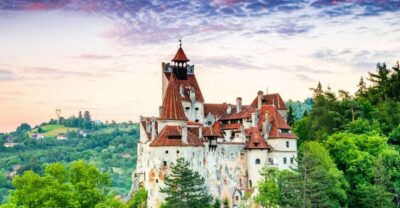
Dracula’s Castle, Peles Castle, & Brasov Old Town
Read our review →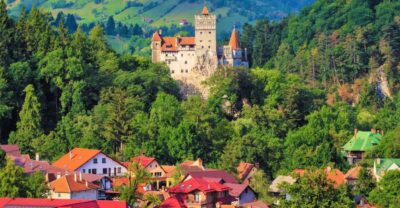
Dracula Castle, Peles Castle & Brasov Old Town
Read our review →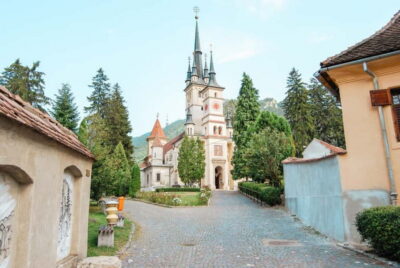
Dracula’s Castle, Peleș Castle & Brașov Day Trip
Read our review →
Day Trip to Dracula Castle, Peles Castle & Brașov
Read our review →
Bucharest to Dracula Castle, Peles Castle and Brasov Guided Tour
Read our review →