
Reviewed · BUCHAREST TOURS
Traditions in Bucharest: Village Museum and Wine Tasting
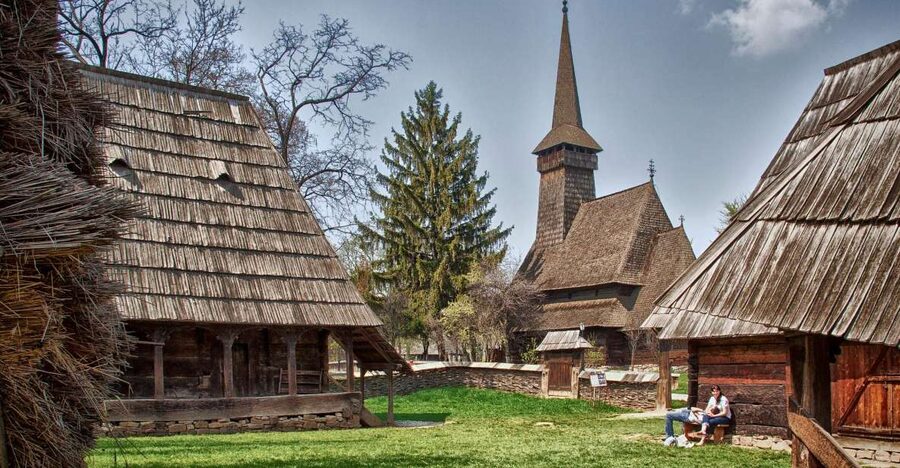
Bucharest can feel thoroughly urban until you enter the Dimitrie Gusti National Village Museum, where wooden churches, thatched barns, steep-roofed houses, and old farm buildings recreate rural Romania beside the city. I like the clear link between architecture and food here: you see how people lived, then taste what Romanian vineyards produce today.
I especially like the private pickup and guide-led museum visit, which saves you from sorting out transport and helps make sense of buildings gathered from many regions. The three-wine tasting is another strong point, particularly if Feteasca Neagra or Negru de Dragasani is new to you. The main caution is walking: the museum is outdoors, and the tour is not suitable for wheelchair users or children under three.
Key points to know before booking
- Over 300 original buildings: Houses, churches, mills, barns, and other structures were moved from across Romania and rebuilt in King Michael Park.
- A useful three-part story: The tour moves from rural architecture to handmade crafts, then to Romanian wine and regional food.
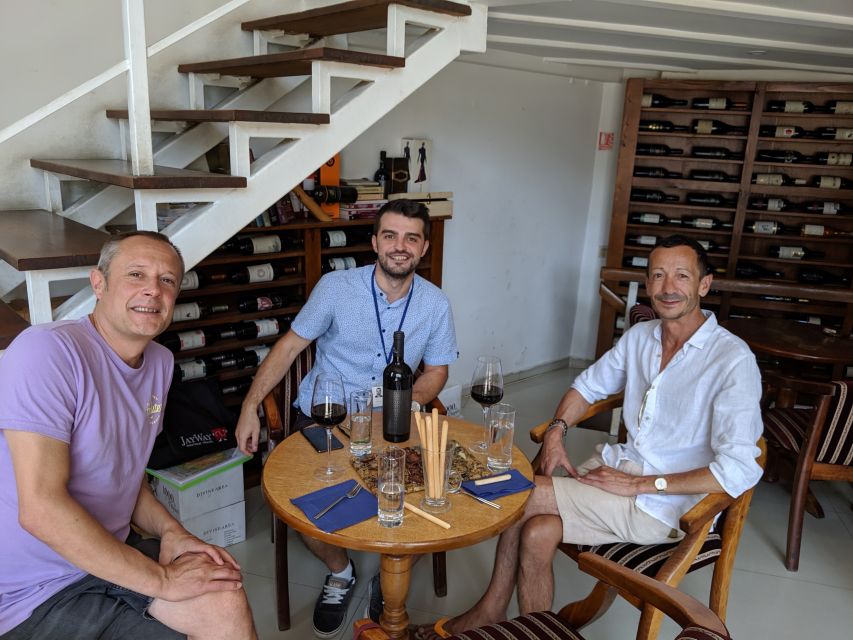
- Three local wines included: You taste Romanian bottles with water, cheese, and charcuterie.
- Private and flexible: Pickup is included, and the guide can give directions toward your accommodation or Bucharest Old Town afterward.
- Guides add the value: Mihai has led this experience, offering strong local context and adjusting the pace during very hot weather.
- A half-day cultural choice: At $153 per person, the price makes the most sense for visitors who want private transport, museum entry, guiding, and a focused tasting in one outing.
Why the Village Museum is the heart of the tour
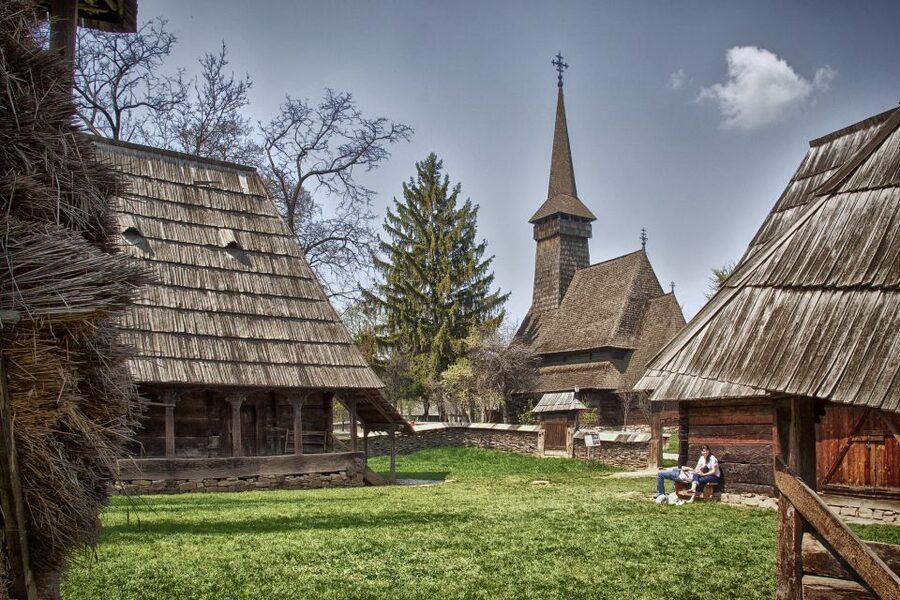
The museum is not a display of one standard Romanian village. It is a large outdoor collection of buildings brought from different parts of the country, then reconstructed in Bucharest. That matters because Romania has several distinct regional building traditions, and you can compare them without spending days crossing the country.
The museum was created in 1936 inside King Michael Park. With more than 300 preserved buildings, it gives you a practical look at rural life in the 18th and 19th centuries. You are not simply looking at pretty old houses. The shape of a roof, the materials used, and the presence of a church, inn, or mill all point to local climate, work, and custom.
Your guide spends about 90 minutes walking with you through the grounds. That is enough time for a useful introduction without turning the entire outing into a museum marathon. I would expect the route to include examples from Transylvania, Wallachia, Moldavia, the Danube Delta, and areas near the Black Sea coast.
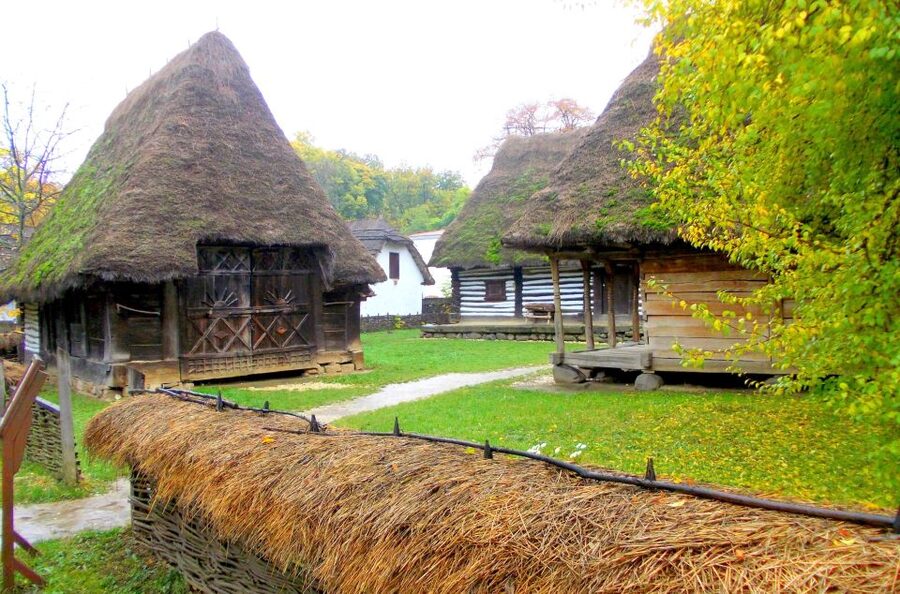
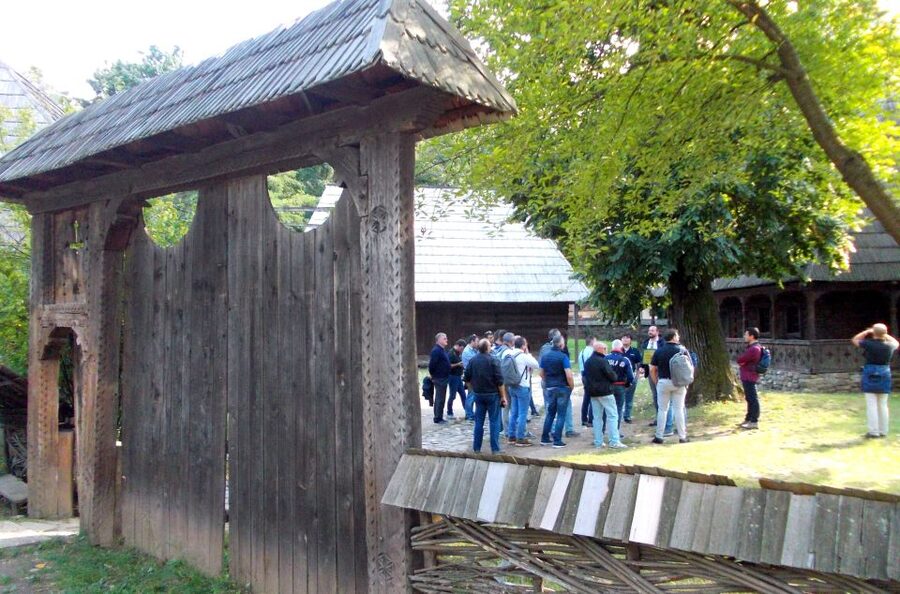
The regional range is the museum’s best feature. In mountain areas, you might see sturdy wooden homes and churches suited to colder conditions. Wallachia and Moldavia are represented by larger inns and mansions, while the Danube Delta and Black Sea region contribute windmills and houses with thatched roofs.
The buildings were not made as modern replicas for tourists. They were transferred to the museum and carefully rebuilt there. That gives the visit a sense of place that a typical city museum cannot provide, even though you are still in Bucharest.
More Wine Tastings in Bucharest
- Wine Tasting in Bucharest
★ 5.0 · 183 reviews - Bucharest: Private Wine Tasting Experience
★ 5.0 · 44 reviews - From Bucharest: Romanian Wine Tasting Tour
★ 4.7 · 32 reviews
Reading Romania through roofs, wood, and churches
A guide is especially useful here because the buildings can otherwise blur together. The tour is designed to explain how architecture reflects regional life, rather than leaving you to admire a series of old structures with no connection between them.
Look closely at the roofs. A steep roof can help shed snow and rain in mountain areas, while a thatched roof belongs to a different building tradition and local supply of materials. Wooden construction, painted details, and the size of a house or barn also give clues about the household’s work and standing.
The wooden churches are among the most memorable sights. They connect religious life with local carpentry, and they look quite different from the larger churches and mansions found elsewhere on the grounds. You will also see barns and working structures that help explain how village life was organized around farming, storage, and seasonal labor.
This is a good stop for anyone who wants more than Bucharest’s grand boulevards and 20th-century landmarks. It brings rural Romania into the city without requiring a long day trip. The trade-off is that the experience depends on walking outside, and weather can affect comfort. A previous tour pace was adjusted because of extreme heat, so tell your guide early if you need a slower route or more shade breaks.
The Romanian Athenaeum gives the tour a city-center frame
The tour includes a brief pass by and photo stop at the Romanian Athenaeum, scheduled for about 10 minutes. It is not a full interior visit, so keep your expectations clear. This is a quick city sight rather than a second major attraction.
The Athenaeum helps balance the rural focus of the museum. You begin with Bucharest pickup, spend the main part of the day among village buildings, and then return to the city center for crafts and wine. The tour finishes at the Athenaeum, with the Old Town area within walking distance.
This end point is useful if you want to continue exploring on foot. You can also ask your guide for directions back to your accommodation. One nice practical detail is the ability to choose your onward plan after the tasting instead of being automatically returned to the starting point.
Handmade blouses, painted eggs, and Horezu pottery
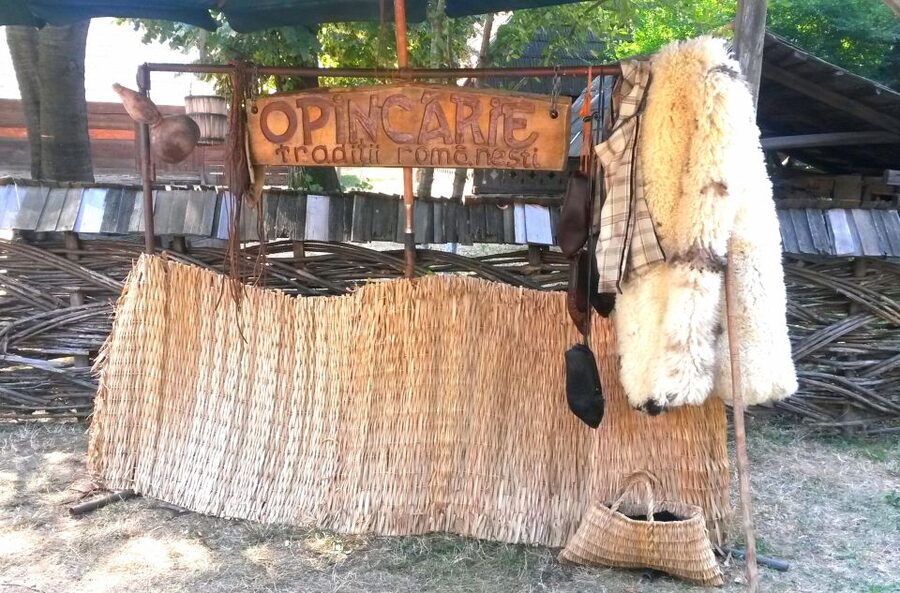
The second main stop is Art&Craft Victoriei, a local art and craft shop where the goods are handmade. You have about 30 minutes to look around, which is enough for browsing and perhaps choosing one meaningful souvenir.
The craft selection gives you a second way to understand regional culture. Traditional Romanian blouses, known as ie, are among the most recognizable items. You may also see glass-painted icons, painted Easter eggs from Moldavia, Horezu pottery from Wallachia, wooden masks, and small carved objects connected with Transylvania.
These pieces are not just decorative filler between the museum and wine bar. They show how local identity appears in cloth, clay, wood, and religious art. The painted eggs are especially useful for connecting Romanian folk customs with careful handwork, while Horezu pottery represents a well-known Wallachian ceramic tradition.
The shop also carries books, traditional sweets, and Dracula-themed souvenirs. That mix is practical rather than purely artistic. You can choose something tied to Romanian culture, pick up a book for context, or settle for a playful Dracula item if that is what suits your suitcase.
The short visit may feel rushed if you want to shop carefully. It is best approached as a focused stop, not a long market session. If you are interested in buying a blouse, pottery, or painted egg, use the time to ask about the item and then decide without trying to inspect every shelf.
More Romanian wine to taste:
- Traditions in Bucharest: Village Museum and Wine Tasting Tour
★ 5.0 · 27 reviews - Wine Tasting in Bucharest long version
★ 5.0 · 22 reviews - Salt Mine, the Muddy Volcanoes and Wine Tasting Private Day Tour from Bucharest!
★ 5.0 · 16 reviews - From Bucharest: Exclusive Dealu Mare Wine Tasting Tour
★ 5.0 · 13 reviews
Three Romanian wines and a small local plate
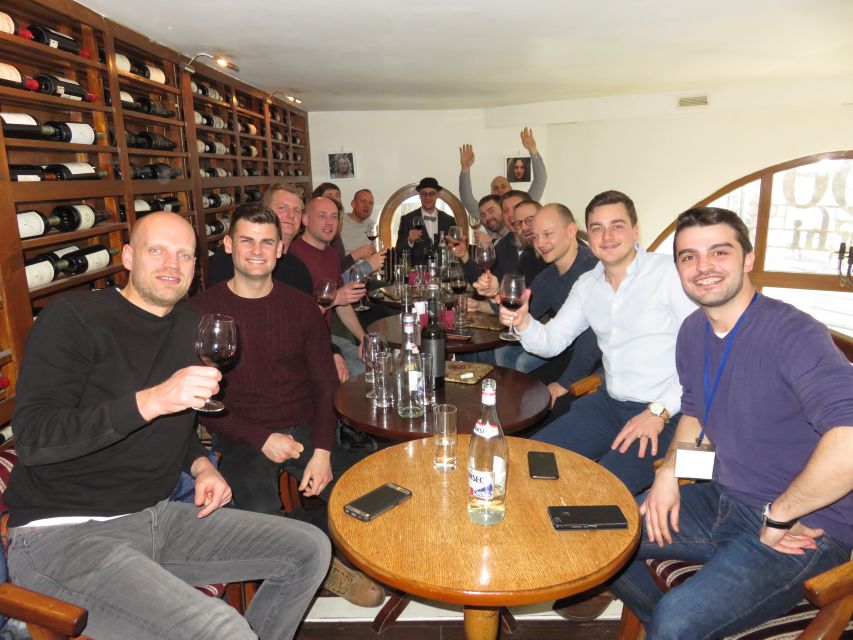
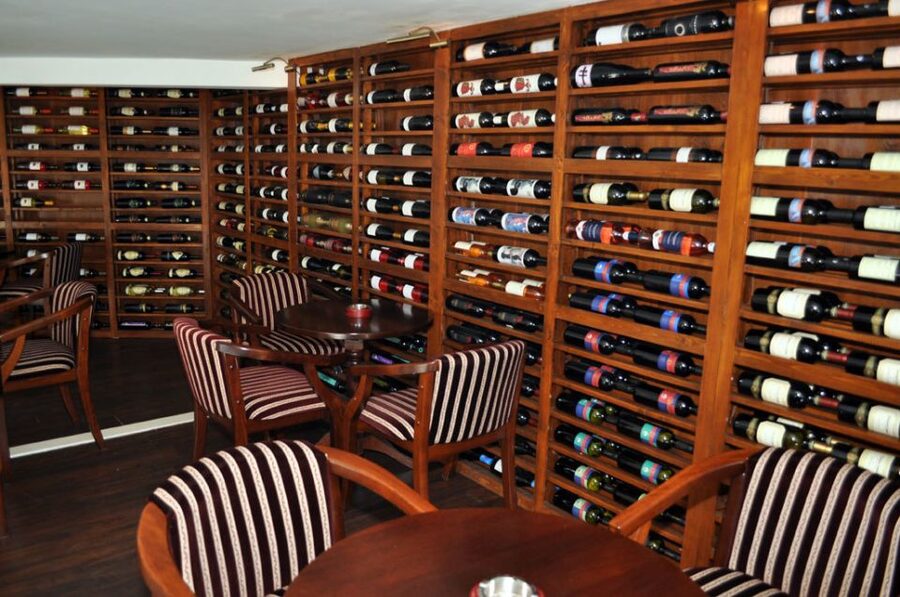
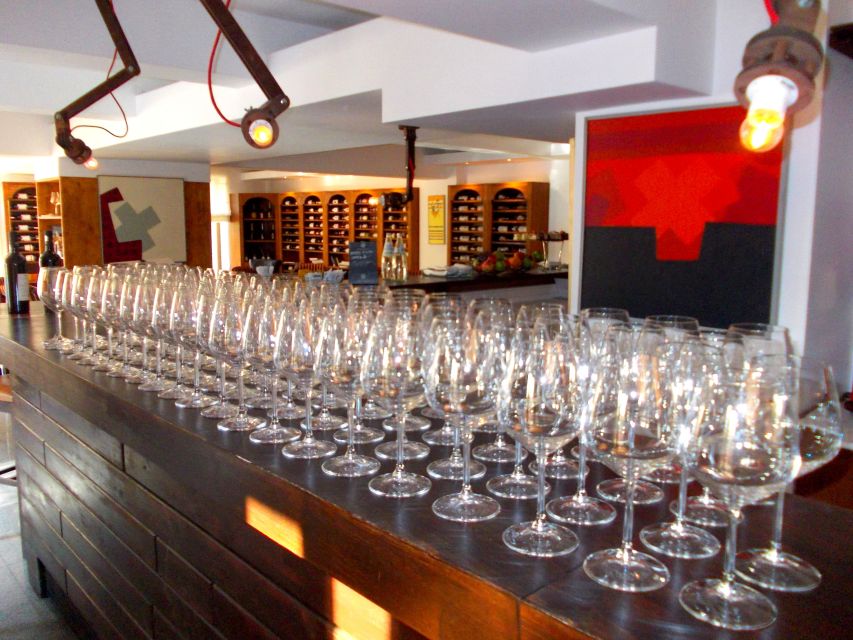
The final stop is a local wine bar, where you spend about 90 minutes. The tasting includes three glasses of Romanian wine, water, and a small plate of local cheese and charcuterie. Additional food and drinks cost extra.
This is where the tour’s theme comes together. Romania is a major wine-producing country, and the tasting introduces both familiar regional styles and grapes that may not appear often on standard international wine lists. Your guide explains the country’s wine-making tradition, its difficult periods, and the revival of the industry in recent decades.
You may taste wines connected with Dealu Mare, one of Romania’s notable wine regions. The tasting also highlights local varieties such as Feteasca Neagra, Tamaioasa Romaneasca, and Negru de Dragasani.
Feteasca Neagra is particularly useful to seek out if you like red wine and want a grape strongly linked with Romania. Tamaioasa Romaneasca offers a different direction, while Negru de Dragasani gives you another native variety to compare. The point is not to become a wine expert in one sitting. It is to leave knowing that Romanian wine is not limited to generic international grapes.
The cheese and charcuterie plate keeps the tasting grounded in local eating habits. It is described as small, so do not book this as a full dinner. You can stay longer at the bar on your own after the formal tasting if you want another drink or more food.
I like this part because it is more than a token glass at the end of a sightseeing tour. The guide explains the connection between soil, regions, grapes, and national identity. One visitor described the combination of Romanian history and wine as especially effective, and that makes sense: the tasting gives the earlier museum visit a modern continuation.
What the private format changes
Private transport is included by car, van, or taxi, along with hotel pickup and a licensed English or Romanian-speaking guide. The guide waits in your hotel lobby beside reception. If your accommodation has no lobby, pickup takes place downstairs at the entrance, in front of the building.
This arrangement is valuable in Bucharest because the day includes several stops with different settings. You do not need to arrange separate transport to the Village Museum, then find your way to Victoriei, then locate the wine bar.
A private group also lets you ask questions and control the conversation. If architecture interests you most, you can spend more time on building details. If wine is your priority, you can ask for more explanation about grapes and regions. Guides such as Mihai have also shown flexibility when weather made a normal pace uncomfortable.
The tour takes 4.5 hours from pickup to finish. The museum gets 1.5 hours, the craft shop 30 minutes, and the wine bar another 1.5 hours, with short driving and walking connections around those stops. That makes it a tidy half-day plan rather than an outing that consumes your whole day.
Is $153 per person a fair price?
At $153 per person, this is not a bargain-priced museum visit. You are paying for a private experience, hotel pickup, transport, a licensed guide, entrance fees, and the wine tasting with food.
The value depends on how you normally travel. If you would otherwise pay separately for a taxi to the museum, entry, a private guide, and a central wine tasting, the bundled price can be reasonable. It also saves planning time and joins three related activities into one smooth half-day.
The price is harder to justify if you mainly want to see the museum on your own or if you already have a wine bar booked. The craft shop is pleasant, but it is a short browsing stop rather than a major attraction. You are paying for the guide’s interpretation and the private transport as much as for the individual stops.
For a couple or small private group that wants cultural context without a full-day excursion, the package has a clear purpose. For solo visitors, the per-person cost deserves closer thought, although a past solo booking still received a full private experience at the museum and wine bar.
Who should book this Bucharest experience?
I would recommend it to first-time visitors who want a compact introduction to Romanian culture beyond the city center. It suits people who like architecture, folk art, local food, and wine, especially when they prefer an informed guide over independent research.
It is also a good choice for anyone with only a few days in Bucharest. The museum gives you a look at several Romanian regions in one place, while the tasting introduces native grapes you may not encounter elsewhere.
You should think twice if you dislike outdoor walking, want a long shopping session, or need a wheelchair-accessible route. Children under three cannot join, and the wine-centered final stop will appeal more to adults than to families seeking a child-focused activity.
The tour has earned a perfect rating across eight listed bookings, with repeated praise for the guides, the museum, and the wine tasting. The most useful pattern is not the score itself but the consistency of the experience: guides such as Mihai have been punctual, flexible, enthusiastic, and strong at explaining Romanian culture.
Should you book it?
Book this tour if you want one private half-day that links village life, folk craft, and wine. The Village Museum is the main reason to go, and the tasting gives the visit a satisfying finish rather than feeling tacked on.
Skip it if you want maximum free time, a cheaper self-guided museum visit, or a full meal instead of a small cheese and charcuterie plate. For most visitors seeking a well-organized cultural introduction to Bucharest, the combination is focused, useful, and easy to fit into a busy trip.
FAQ
How long does the tour last?
The experience lasts 4.5 hours, including pickup, the museum visit, the craft stop, the wine tasting, and transport between locations.
Where does pickup take place?
Pickup is available from your accommodation in Bucharest. The guide waits in the hotel lobby beside reception. If there is no lobby, the guide waits downstairs at the entrance in front of the building.
Where does the tour finish?
The tour finishes at the Romanian Athenaeum. From there, you can walk toward the Old Town area or ask the guide for directions back to your accommodation.
Is the Romanian Athenaeum an interior visit?
No. The Athenaeum is listed as a pass-by and photo stop lasting about 10 minutes.
How much time is spent at the Village Museum?
The guided museum visit lasts about 1.5 hours.
What is included in the wine tasting?
You receive three glasses of Romanian wine, one serving of water, and a local cheese and charcuterie platter.
Which Romanian wines might I taste?
The experience introduces varieties such as Feteasca Neagra, Tamaioasa Romaneasca, and Negru de Dragasani. Wines from regions such as Dealu Mare may also be discussed.
Are museum entrance fees included?
Yes. Entrance to the National Village Museum is included.
Is the tour private?
Yes. This is a private group experience with a live guide in English or Romanian.
Is the tour suitable for young children or wheelchair users?
Children under three are not permitted, and the experience is not suitable for wheelchair users.
More Food Tours in Bucharest
- Taste Bucharest: A Food Lover’s Tour of Markets & Neighbourhoods
★ 5.0 · 689 reviews - Street Food’n’Culture Tour
★ 5.0 · 209 reviews - Discover Bucharest: Private Highlights and Traditional Food Tour
★ 5.0 · 86 reviews - Bucharest Beer and Culture Tour with a Local
★ 5.0 · 47 reviews
More Wine Tours in Bucharest
- Peles & Cantacuzino Castles: Gourmet Wine & Cultural Day trip
★ 4.5 · 67 reviews - Private Tour to Salt Mine, Lunch at Winery and Dracula Grave
★ 5.0 · 60 reviews - Small-group max 7, Salt Mine, Lunch at Winery & Dracula Grave
★ 5.0 · 25 reviews - Bucharest: Romanian Wine and Food Pairing Experience
★ 4.0 · 23 reviews
Just added around Bucharest
- Airport Henri Coanda (Otopeni) to Bucharest – Private Transfer – Driver★ 5.0 · 5 reviews
- Bucharest Chronicles★ 5.0 · 5 reviews
- 4-Day Private Tour: Bucharest to Budapest via Transylvania★ 5.0 · 5 reviews
- Peles Castle, Bran Castle and Brasov from Bucharest★ 5.0 · 5 reviews
- The Real Dracula’s Castle in Targoviste, Winery and Dracula’ Tomb★ 5.0 · 5 reviews
- From Bucharest: Brasov & Dracula’s Castle Transylvania★ 5.0 · 5 reviews
- Bucharest one day tour with Parliament Palace and Village Museum★ 4.0 · 5 reviews
- Private Wine Tasting in Cellar and the Winemaking process★ 5.0 · 5 reviews
Bucharest Tours, compared.
Dracula’s Castle, Peles Castle, & Brasov Old Town
Read our review →
Dracula Castle, Peles Castle & Brasov Old Town
Read our review →
Dracula’s Castle, Peleș Castle & Brașov Day Trip
Read our review →
Day Trip to Dracula Castle, Peles Castle & Brașov
Read our review →
Bucharest to Dracula Castle, Peles Castle and Brasov Guided Tour
Read our review →
Dracula’s Castle, Peles Castle and Brasov Day Trip from Bucharest
Read our review →Browse the lists this tour appears in