
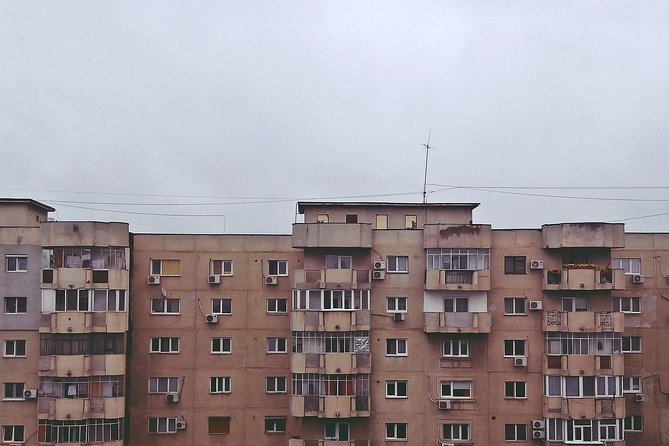
Reviewed · COMMUNIST BUCHAREST TOURS
Private Bucharest Communist Tour with the People’s House and Ceausescu Residence
Bucharest’s communist past is impossible to understand from a quick city stroll. This private tour takes you inside the Palace of Parliament, through the former dictator’s private home, and into neighborhoods once closed to ordinary people. It turns grand buildings and family luxury into a human story about power, fear, and the fall of Nicolae Ceausescu.
I like the hotel pickup and private vehicle, which save you from piecing together distant sights by taxi or public transport. I also like the personal side of the guiding. Guides such as Mihai, Marcel, Nicole, and Alexandra have brought old photographs, family memories, and clear explanations to the day.
The main drawback is the price: $261.65 per person is a serious outlay, especially before lunch and the Palace photography fee. The tour also lasts 6 to 8 hours, so it suits a full day devoted to modern Romanian history rather than a quick introduction to Bucharest.
Key points before you book
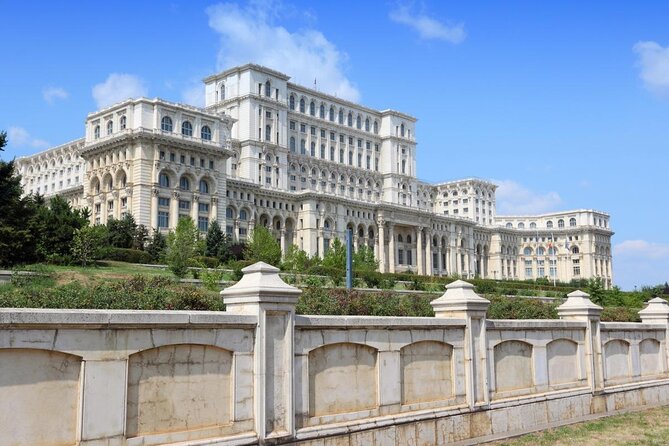
- The Palace of Parliament is the day’s big visual shock: You spend about an hour inside one of the world’s largest administrative buildings.
- Spring Palace shows the private side of dictatorship: The former Ceausescu residence reveals luxury far removed from ordinary Romanian life.
- A private guide adds vital context: Mihai, Marcel, Nicole, and other guides have explained the era through stories, old photographs, and personal family memories.
- The day reaches beyond famous buildings: The route can include the former Communist Press headquarters, a memorial to political victims, and areas once reserved for the ruling family.
- Lunch is separate: Plan on about €13 per person, plus any personal spending and the Palace photography charge.
- The format is easy and flexible: Hotel pickup and drop-off, private transport, and an English-speaking guide keep the day simple.
Why Bucharest needs a communist history tour
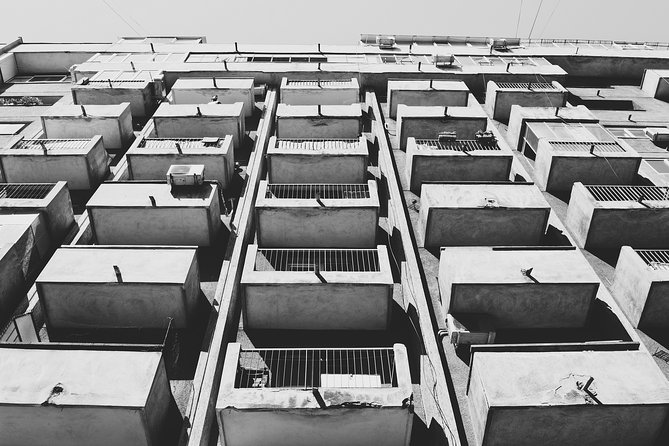
Communist Bucharest can be hard to read on your own. The grand avenues and oversized government buildings tell only part of the story. You also need someone to explain what disappeared to make room for them, who paid the cost, and how daily life changed under the regime.
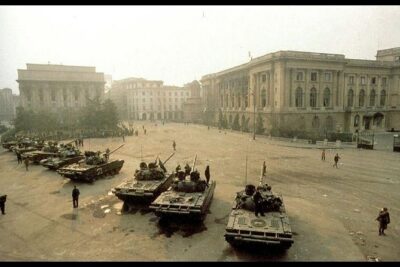
Nicolae Ceausescu ruled Romania from 1965 until his execution in 1989. His government mixed strict political control with an intense cult of personality. The city became a stage for official power, with enormous avenues, carefully controlled neighborhoods, and buildings designed to project strength.
A guide gives those places meaning. You may hear about food shortages, surveillance, political prisoners, propaganda, and the 1989 collapse of the regime. The strongest guides keep the subject grounded in ordinary life instead of treating communism as a collection of dates and slogans.
Nicole, for example, has used old photographs of buildings and places along the route, then connected them with family experiences from the communist period. That approach can make the city easier to understand. You are not simply looking at a building. You are comparing the official image with the memories of people who lived through it.
More communist-era Bucharest walks:
- The Real tour of Communism
★ 5.0 · 666 reviews - Life under Communism
★ 5.0 · 358 reviews - 3-Hour Guided Tour of Communist Bucharest
★ 4.9 · 303 reviews
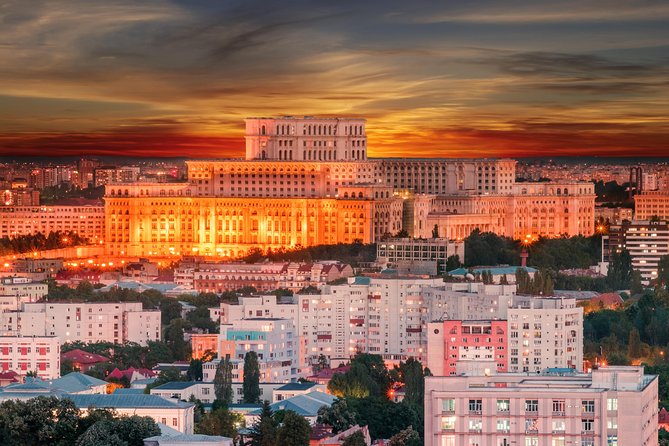
The Palace of Parliament: power in stone and marble
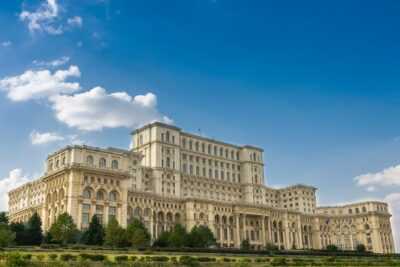
The Palace of Parliament is the tour’s central sight. Construction began in 1984 under Ceausescu and continued until 1997, eight years after the regime fell. It was first called the House of the Republic and later became known as the House of the People.
The numbers are hard to picture. The building measures about 240 meters long, 270 meters wide, and 84 meters high. It holds a Guinness World Record as the largest administrative building in the world.
Inside, you can expect grand rooms, long corridors, lavish materials, and a scale that feels almost theatrical. The building was meant to express national power, but its size also reveals the regime’s priorities. Huge public works continued while ordinary people faced shortages and tight restrictions.
Your visit lasts about one hour, and admission is included. That is enough time to see the major interior spaces and hear the basic story, though it is not a full architectural study. If you care about design, ask your guide to explain how the building’s scale and decoration served propaganda.
The photography fee is not included. Bring this extra charge into your budget if you want to take pictures inside. Rules can apply to where and how you photograph, so follow the instructions given at the site.
The Palace is impressive, but it is not cheerful. Its grandeur sits beside the human cost of its construction and the destruction of older parts of Bucharest. That tension is exactly why it works well on a communist history tour.
The former headquarters of the Communist Press
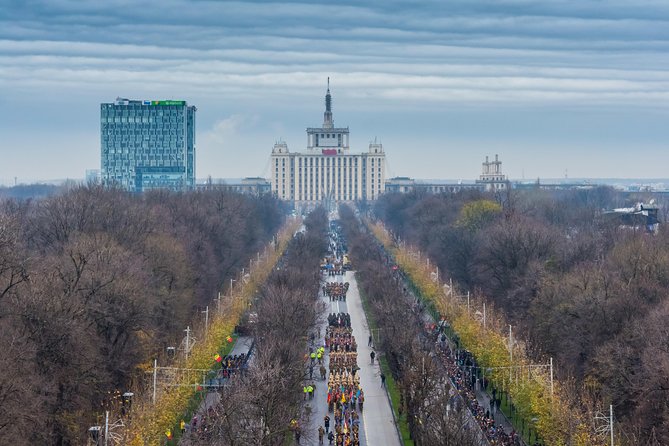
The imposing Spark House, formally the headquarters of the Central Communist Press, adds another piece to the political picture. It was linked to the official flow of information, where newspapers and state messaging helped shape what people were allowed to read and believe.
The building matters less for its interior than for what it represents. A dictatorship needs more than police and prisons. It also needs control over public language. A stop here helps explain how propaganda worked alongside monumental architecture and political ceremony.
This is the kind of sight you might pass without noticing if you explore Bucharest alone. Your guide can point out the connection between the building, the press, and the wider system of control.
Spring Palace and the Ceausescu family home
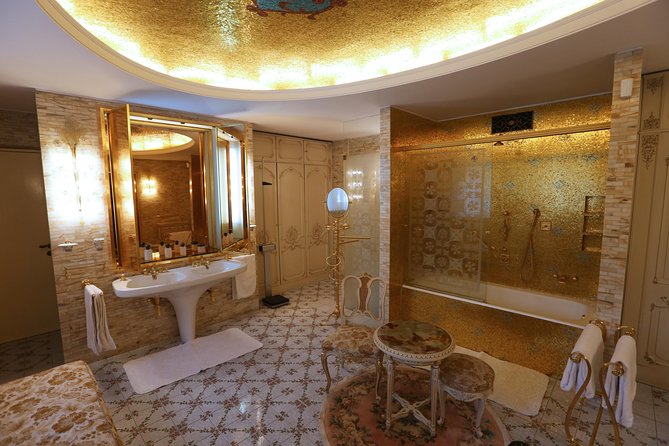
Spring Palace, also called the Ceausescu Residential Palace, offers the sharpest contrast of the day. The estate was built between 1964 and 1965 and served as the home of Nicolae and Elena Ceausescu from 1965 until their deaths in 1989.
You see a private world of comfort and display. The house helps put a face on the gap between the ruling family and the population they governed. Grand public slogans spoke of equality, while the presidential family lived behind guarded walls with access to luxuries unavailable to most Romanians.
The residence became a museum in 2016. Before that, after the fall of communism, it was used as a VIP residence for official delegations and foreign presidents.
Plan about one hour here. The visit is especially useful after the Palace of Parliament. The government building shows the public image of power. Spring Palace shows the private reality behind it.
Marcel, one of the guides used on this experience, has been praised for detailed explanations of the Ceausescu era and the 1989 collapse. That kind of narration matters inside the house, where the objects alone cannot explain the political setting.
You may find the mansion fascinating, uncomfortable, or both. It is not simply a grand home tour. Its value comes from the questions it raises about privilege, propaganda, and self-indulgence.
A few more Bucharest day trips to weigh up
- Bucharest: Dracula’s Castle, Peles Castle, & Brasov Old Town
★ 4.5 · 17,858 reviews - Bucharest: Dracula Castle, Peles Castle & Brasov Old Town
★ 4.6 · 10,891 reviews - Bucharest: Dracula’s Castle, Peleș Castle & Brașov Day Trip
★ 4.5 · 5,919 reviews - Bucharest: Palace of Parliament Tickets and Guide
★ 4.3 · 3,182 reviews
A lunch stop with an old Bucharest atmosphere
Lunch is not included, and the expected cost is about €13 per person. That keeps the listed tour price from covering a meal you may not want, but you should plan for the extra expense.
The intended restaurant stop retains an atmosphere associated with Soviet-era Bucharest. It gives you a pause between the major sights and a chance to discuss the morning with your guide.
Food is part of the setting here, not just fuel. A local meal can help you picture ordinary city life, though the atmosphere should not be mistaken for a perfectly preserved time capsule. The tour information does not specify a fixed menu, so ask your guide about the day’s choices.
Alexandra has guided groups to lunch in the old city, where the meal was paired with a relaxed walk and discussion of communist Romania. The exact stop may depend on the schedule, but the general idea is useful: you get time to step away from formal monuments and experience the city as a living place.
The neighborhood once closed to ordinary people
The tour also takes you through the former residential area associated with Ceausescu and his family. For years, this was not an ordinary Bucharest neighborhood. Access was restricted, and the area reflected the separation between the ruling family and the wider population.
This part of the route can be more revealing than another grand building. Streets, walls, security arrangements, and the relationship between private homes and public institutions help you understand how political power shaped daily geography.
Do not expect every detail to be visible from the vehicle. The value comes from your guide’s explanation of who lived there, why access was limited, and how the neighborhood functioned during the dictatorship.
The private format helps here. You can ask about details that interest you instead of waiting for a large group to move on. If the subject feels personal or politically charged, a quiet conversation with your guide can be more useful than a rehearsed lecture.
Memorials to prisoners and victims
The tour includes a stop connected with political prisoners and others who suffered under the communist regime. This changes the tone of the day. The Palace and Spring Palace show power from above. A memorial museum brings the cost of that power into view.
You may encounter accounts of imprisonment, repression, and lives damaged by the state. The supplied details do not identify the exact museum or specify how long you spend there, so ask for the day’s schedule when you book.
This stop is important for keeping the tour balanced. A focus on buildings and the Ceausescu family could turn the day into a story about unusual architecture and personal luxury. Remembering victims brings attention back to the people who had little control over the system.
What private transport changes
Pickup is offered from any hotel in Bucharest at 10:00 a.m., with drop-off at your hotel at the end. Your English-speaking guide travels with you in private transportation, and only your group participates.
That arrangement is a real convenience. The main sights are spread across the city, and you do not need to work out connections between them. Your guide can also wait while you complete visits, then keep the day moving.
The private format does not mean every minute is custom-built. The Palace and Spring Palace each require about an hour, and reservations need to be made at least 48 hours ahead. Still, you have room to ask questions and request small adjustments when timing allows.
Past guides have added city context beyond the formal communist sights. Mihai has taken groups through the historic center and into several monasteries. Another day included a subway ride with a local guide, followed by help at a market and pharmacy when a participant felt unwell. These additions should not be treated as guaranteed parts of every booking, but they show how a private guide may respond to your needs.
Is $261.65 per person good value?
At $261.65 per person, this is not a budget tour. The price includes hotel pickup and drop-off, private transport, an English-speaking guide, and admission to both the Palace of Parliament and Spring Palace.
For a solo visitor or couple, the cost may feel high. For a small private group, the price can make more sense because the vehicle and guide serve your party alone. You also avoid arranging separate taxis, buying admission tickets, and finding your way between sites.
The value depends on your interest in modern Romanian history. If you mainly want a quick look at Bucharest’s old town, you can spend less elsewhere. If you want the city’s communist story explained clearly and efficiently in one day, the private setup saves effort and adds context.
Remember the extras: lunch costs about €13 per person, and Palace photography is separate. Personal expenses are also not covered.
Who will enjoy this Bucharest tour most?
You are a good match if you enjoy political history, architecture, or first-person accounts of recent events. The tour is also useful if you have limited time and want several major communist-era sights covered without managing transport.
It suits adults and older teenagers particularly well. The minimum age is 12, and children must be accompanied by an adult. The subject includes dictatorship, imprisonment, and political suffering, so parents should decide if that tone is right for their children.
You should also be comfortable with a long day. The published duration is approximately 6 to 8 hours, and the exact length can depend on traffic, site timing, lunch, and any extra city stops.
The tour may be less suitable if you want a casual sightseeing day with only light commentary. Communism is the focus from start to finish.
Practical booking advice
Reserve at least 48 hours in advance. Confirmation is provided at booking, and the tour can be canceled for a full refund up to 24 hours before the start time. Changes or cancellations within 24 hours are not accepted for a refund.
Pick-up is in front of your hotel at 10:00 a.m. Make sure the operator has the correct hotel details and keep your morning free for the full 6 to 8 hours.
The tour may be operated by a multilingual guide, even though English is offered. If clear English explanations are especially important to you, confirm this when booking.
Guides named Mihai, Claudia, Marcel, Ciprian, Bogdan, Nicole, and Alexandra have all brought different strengths to the experience. You may receive one of them or another guide from Rolandia, so treat the names as examples of the style and depth available, not a promise of assignment.
Should you book it?
Book this tour if you want a serious, well-organized look at communist Bucharest and value having a local guide connect buildings with lived experience. The Palace of Parliament and Spring Palace make a strong pair, and private transport removes much of the day’s friction.
Think twice if the price is beyond your budget or if you prefer to explore independently. You will also need to add lunch and the photography fee.
For history fans, architecture enthusiasts, and anyone curious about the 1989 fall of communism, this is one of the more useful full-day ways to approach Bucharest. The best part is not simply entering famous buildings. It is learning how those buildings fit into the lives of ordinary Romanians.
FAQ
How long does the Bucharest Communist Tour last?
The tour lasts approximately 6 to 8 hours.
What time does the tour begin?
Pickup and departure are scheduled for 10:00 a.m.
Can I be picked up from my hotel?
Yes. Pickup is offered from any hotel in Bucharest, with drop-off at your hotel at the end.
Is this a private tour?
Yes. Only your group participates in the activity.
Is lunch included in the price?
No. Lunch is separate and costs approximately €13 per person.
Are admission fees included?
Admission to the Palace of Parliament and Ceausescu Residence is included. The photography fee at the Palace of Parliament is not included.
What is the cancellation policy?
You can cancel at least 24 hours before the start time for a full refund. Cancellations or changes made less than 24 hours before the start time are not accepted for a refund.
Just added around Bucharest
- Private Full Day Tour of Bucharest★ 5.0 · 3 reviews
- Veliko Tarnovo and Medieval Bulgaria Private Day Trip from Bucharest★ 5.0 · 3 reviews
- Bucharest VIP Bar Crawl in Lipscani ‘Old Town’★ 5.0 · 3 reviews
- Muddy Volcanoes and Salt Mine Private Tour★ 5.0 · 3 reviews
- Bucharest Private City Tour★ 5.0 · 3 reviews
- Legends & Stories from Transylvania -2 Castles & Brasov Old Town★ 5.0 · 3 reviews
- Transfagarasan Private Tour from Bucharest – 2 Days★ 5.0 · 3 reviews
- 7-Day Dracula Tour in Romania from Bucharest including ‘The Ritual of Killing of a Living Dead’★ 5.0 · 3 reviews
Communist Bucharest Tours, compared.
Bucharest Essential Tour: Old Town, Calea Victoriei & Communism
Read our review →
Communism in Bucharest – Landmarks, Museum & Communist Appetizers
Read our review →
Browse the lists this tour appears in