
Reviewed · COMMUNIST BUCHAREST TOURS
Bucharest: Relics of Communism 3-Hour Walking Tour
Bucharest’s communist past is easiest to grasp on foot, where grand old buildings, concrete apartment blocks, hidden churches, and the enormous Palace of the Parliament appear in the same three-hour story. I like the tour’s clear focus on ordinary life, from ration cards and black-market shopping to propaganda and the secret police. I also like that it begins where Ceausescu gave his final speech, then follows the city’s physical changes toward the Civic Centre.
The main consideration is pace. You cover a lot of ground and spend much of the time outdoors, while the tour only visits one church. If you want to go inside the Palace of the Parliament, that requires a separate visit and ticket. Guides such as Elena, Stefan, and Tudor have led this experience at different times, so the exact style may vary.
Key points at a glance
- Start at the Memorial of Rebirth: Meet at Revolution Square, the place tied directly to the end of Ceausescu’s rule.
- Follow the 1989 Revolution: Spend time at Revolution Square and Piața 21 Decembrie 1989, where the guide explains how Romania moved toward democracy.
- See a church spared from demolition: Visit Michael the Voivode Church and hear how religious buildings survived the communist rebuilding plans.
- Read the city through its buildings: Compare older Bucharest architecture with the concrete districts of Ceausescu’s Civic Centre.
- Finish beside the Palace of the Parliament: End in Constitution Square with the vast government complex in view.
- Keep the group personal: The tour is limited to 10 people, with an English-speaking guide and a Romanian snack souvenir included.
Why this walk matters in Bucharest
Bucharest can feel like several cities laid on top of one another. Elegant pre-communist buildings sit near stark blocks, broad ceremonial roads, and huge government structures built to project state power. This tour gives you a way to connect those sights instead of treating them as unrelated photo stops.
The subject is not only architecture. You hear how political control affected shopping, work, education, media, religion, and private conversation. Ration cards and shortages made ordinary errands difficult. Black-market trading filled some gaps, while propaganda shaped what people saw and heard. The secret police added a layer of fear that is hard to read from a building alone.
I especially value this human scale. You are not simply told that Ceausescu ruled Romania for more than 40 years. You are encouraged to think about what that meant at home, in shops, in schools, and on the street. Guides have used old schoolbooks, photographs, communist-era objects, and images of Bucharest before and after the regime, although the materials shown can depend on the person leading your walk.
More Walking Tours in Bucharest
- Bucharest: City Highlights Guided Walking Tour
★ 4.9 · 1,482 reviews - Bucharest Highlights Walking Tour
★ 5.0 · 469 reviews - Bucharest: Ghost Stories & Romanian Mythology Walking Tour
★ 4.9 · 287 reviews
Revolution Square and the final speech
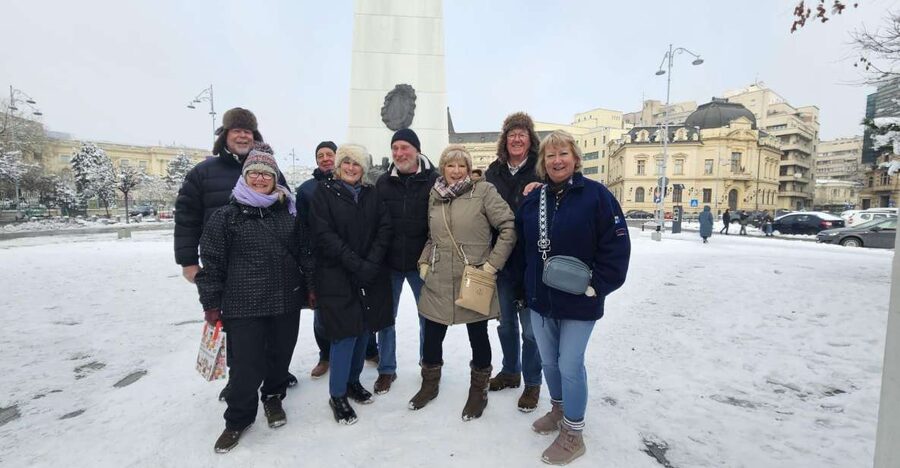
The meeting point is the Memorial of Rebirth in Revolution Square. It is an unusual monument, and its form gives the guide a natural opening to discuss the difficult memory of December 1989.
From here, you look toward the balcony where Nicolae Ceausescu delivered his last public speech. That setting gives the first part of the walk real force. You are not hearing about the revolution in a distant museum room. You are standing in the place where the regime’s authority began to crack in public.
The stop at Revolution Square lasts about 20 minutes. Expect explanation rather than a long museum visit. The guide sets out the political background, describes the crowd and the turning point in Ceausescu’s speech, and explains Romania’s shift toward democracy.
This is one of the strongest parts for anyone interested in modern European history. It also helps if you know little about Romania before arriving. The story provides a useful frame for everything that follows.
Piața 21 Decembrie 1989 and Romania’s turning point
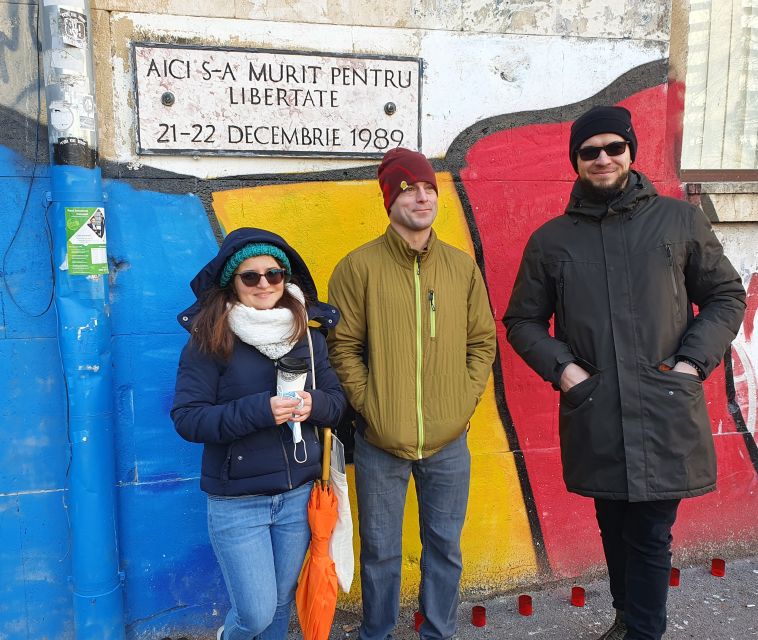
The next stop is Piața 21 Decembrie 1989, with roughly 15 minutes of guided discussion. The square’s name itself commemorates the revolution, so the stop continues the story rather than changing subjects.
Here, the tour connects the public drama of the uprising with the wider change in Romanian society. You learn how the events of 1989 affected the capital and how the country began moving away from one-party rule.
The guide’s role matters most here. A good explanation can distinguish between official accounts, public memory, and the experiences of people who lived through the period. Past guides have been praised for making room for questions and presenting more than one angle on the communist era and its aftermath.
If you are mainly interested in monuments, this stop may feel less dramatic than the Palace of the Parliament. Its value is in the explanation. Give the guide your attention, since the meaning is easy to miss if you only take a quick photograph and move on.
Michael the Voivode Church and the buildings that survived
The walk then turns to Michael the Voivode Church, where you spend about 15 minutes. This is a useful change of mood after the revolution sites and political discussion.
The church represents the older Bucharest that survived the communist rebuilding program. Ceausescu’s Civic Centre required the demolition of large parts of the historic city, including homes, churches, and other older structures. A church tucked among newer construction makes that loss easier to picture.
The visit also introduces the religious side of communist rule. The tour explains how some churches were threatened, obscured, or treated as obstacles to the state’s vision of a modern socialist capital. The point is not simply that one building survived. It is that the city’s older identity was repeatedly pushed aside.
The stop is relatively short, so do not expect a long religious-history visit. You will get more from it if you pay attention to the contrast between the church and the surrounding streets. This is one of the places non-locals could easily pass without understanding its importance.
More communist-era Bucharest walks:
- The Real tour of Communism
★ 5.0 · 666 reviews - Life under Communism
★ 5.0 · 358 reviews - 3-Hour Guided Tour of Communist Bucharest
★ 4.9 · 303 reviews - Bucharest Essential Tour: Old Town, Calea Victoriei & Communism
★ 5.0 · 142 reviews
Piața Unirii and the changing face of Bucharest
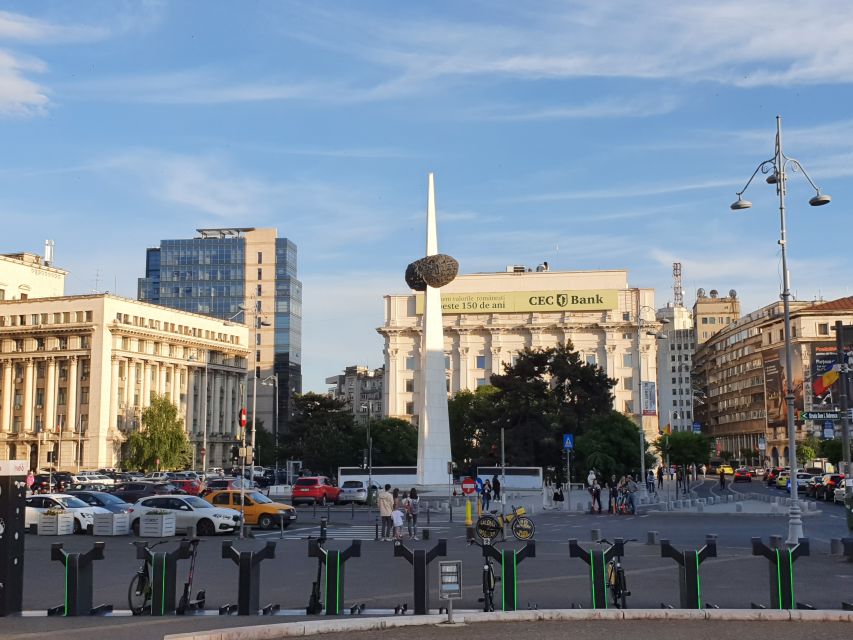
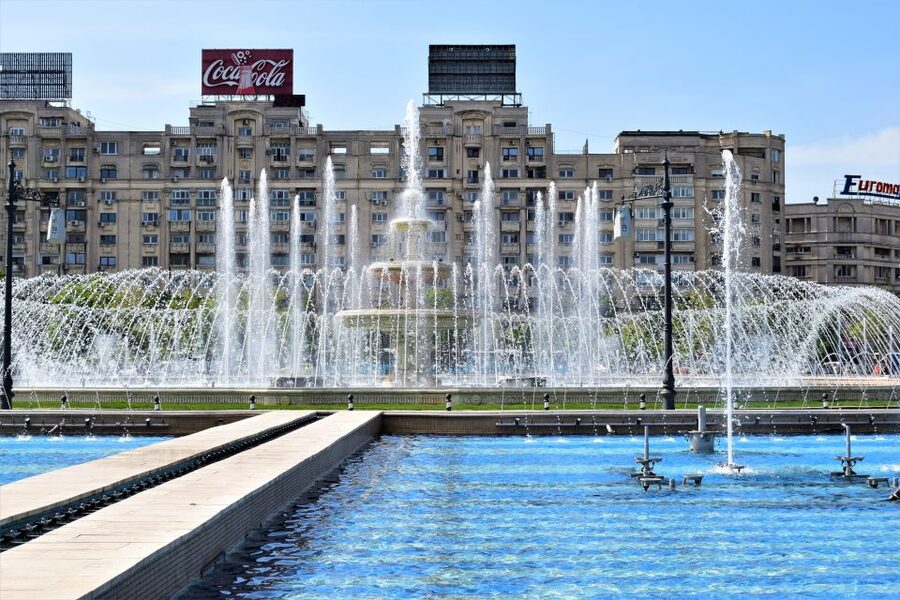
At Piața Unirii, another 15-minute stop continues the comparison between old Bucharest and the communist city. The square helps show how roads, blocks, and public spaces were reshaped for a new political purpose.
The tour’s architectural theme becomes clearer here. Socialist realism favored imposing buildings, repeated forms, broad spaces, and an image of order directed from above. These places were built to serve the state’s message as much as they were built for practical use.
You will see how the elegant city architecture relates to the concrete apartment blocks and large-scale projects of the communist period. That contrast is one of the best reasons to take this tour early in your Bucharest stay. Once you have the framework, you will notice the same tensions elsewhere in the city.
Piața Unirii is also a useful point for understanding scale. Ceausescu’s rebuilding did not create a small collection of government offices. It changed how people moved through central Bucharest and how the capital presented itself.
The Palace of the Parliament from the outside
The route continues toward the Palace of the Parliament, with about 20 minutes of guided discussion. This is the visual climax of the walk and the clearest expression of Ceausescu’s desire to place political power at the center of the capital.
The building was designed as the absolute center of power. Its size can be difficult to absorb from photographs, and seeing it from Constitution Square gives you a sense of its relationship to the broad roads and surrounding Civic Centre buildings.
Your guide explains the building as part of a larger project, not as an isolated attraction. The Civic Centre required sweeping changes to central Bucharest. The result was a district of grand proportions, planned to express state authority and control.
It is important to know what this tour does not include. The Palace of the Parliament stop is a guided outdoor visit as part of the walking route. An interior tour is not included, and admission is not listed in the price. If you want to see the famous interiors, plan a separate Parliament visit and check its own arrangements.
For many people, this is the moment when the earlier discussion of propaganda becomes physical. The wide spaces and oversized architecture show how a political system tried to make itself look permanent.
The everyday side of Ceausescu’s Romania
The tour earns its $44 price mainly through the explanation between the landmarks. A self-guided walk can show you Revolution Square, a church, and the Palace of the Parliament. It is much harder to reconstruct how people actually lived under Ceausescu without a guide who can connect the sites to daily routines.
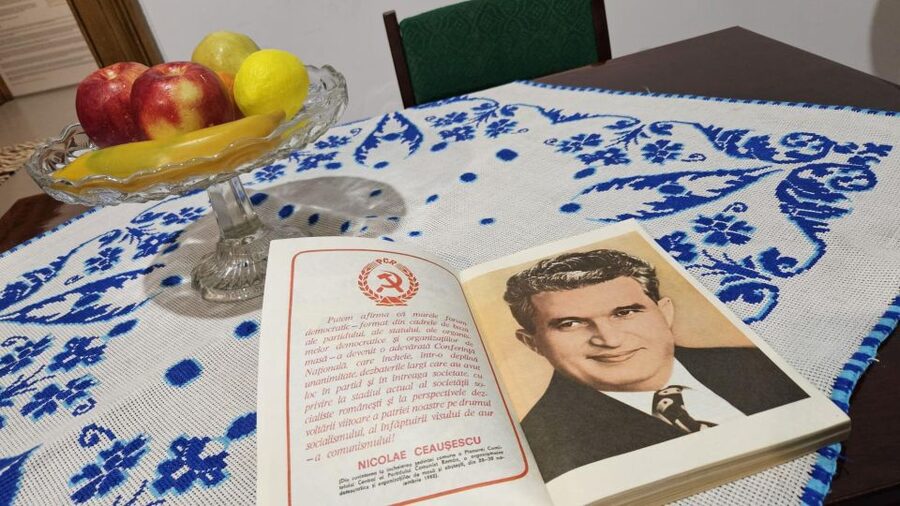
The discussion includes ration cards, black-market activity, propaganda, and the secret police. These details give you a more useful picture than a simple list of dates and leaders.
You can expect the guide to explain how shortages shaped shopping and how official messages differed from private life. The tour also deals with the emotional side of the period, including fear, frustration, and the experience of living under close political control.
Past guides have brought personal material into the discussion. Elena, for example, has used family or period photographs, old schoolbooks, a mandatory school scarf, and a photographic record of the revolution. The guide for your departure may be different, so treat these items as possible additions rather than guaranteed inclusions.
This part suits curious first-time visitors best. You do not need a strong background in Romanian history, and you can ask questions as the walk develops. People with a particular interest in World War II or the years after 1989 may also find room to widen the conversation, depending on the guide and group.
The guide makes the difference
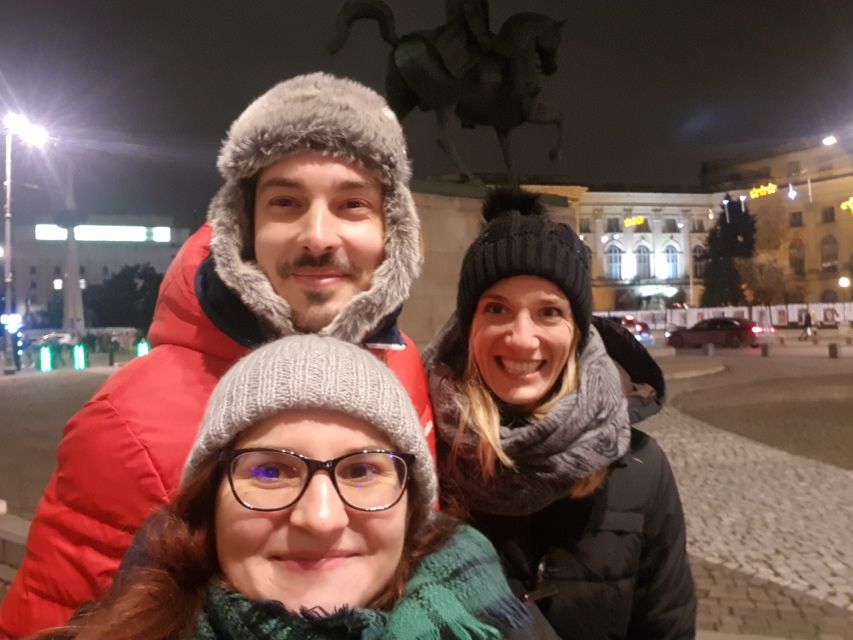
The experience is limited to 10 people, which is a real advantage for a subject that works best as a conversation. A small group makes it easier to ask about family memories, architecture, politics, or the revolution without holding up a large crowd.
English is the stated tour language. Several guides have led the walk over time. Elena has been described as warm, thorough, and able to give a balanced account without drowning the group in facts. Stefan has been praised for light, witty explanations, while Tudor has been noted for using photographs and answering questions at length.
Those details point to the tour’s strongest feature: the guide is not simply reciting dates. You are likely to get a personal, discussion-based walk, though the exact tone depends on who leads your group.
The tour may also run longer than the stated three hours if the guide spends extra time on questions. That can be welcome, but keep it in mind if you have a firm dinner booking or another timed activity afterward.
Pace, comfort, and practical planning
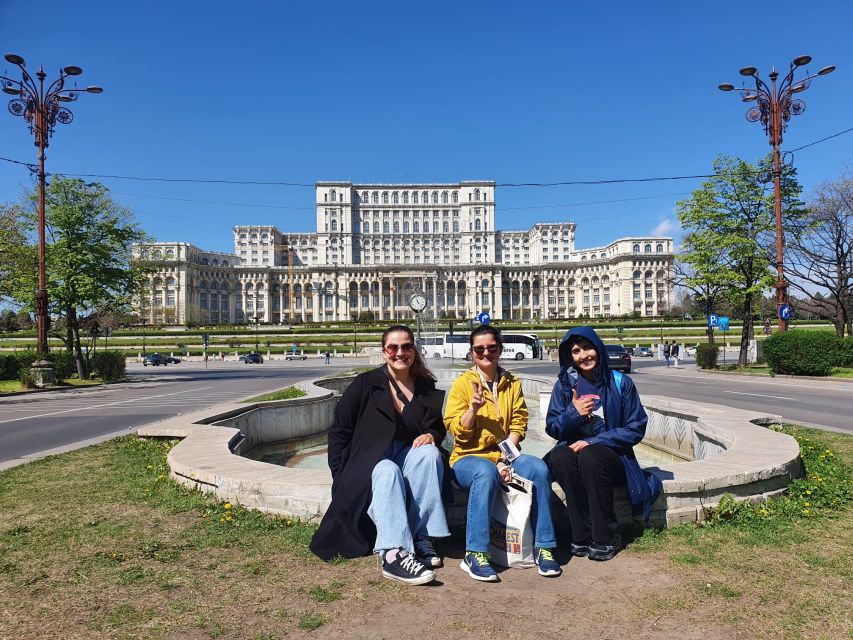
Three hours on foot is long enough to cover major ground but short enough to fit into a busy Bucharest schedule. The stops themselves are timed at about 20 minutes or 15 minutes, with walking between them.
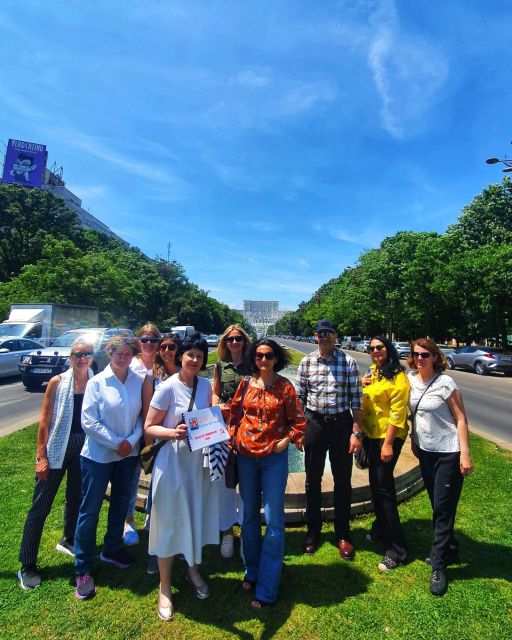
Meet at the Memorial of Rebirth in Revolution Square. Hotel pickup and drop-off are not included, so you need to reach the starting point yourself and arrange your own return from Constitution Square.
Wear comfortable shoes and plan for outdoor conditions. The tour involves streets, squares, and large open spaces, and there is no promise of indoor shelter throughout the route. A small group helps with questions, but it does not remove the need to keep moving with the guide.
A Romanian snack souvenir is included. It is a small touch rather than a meal, so do not book this as a food tour or as a substitute for lunch.
The $44 price is fair if you want context and conversation. It is less appealing if you only want quick photographs of the main buildings or plan to visit the Palace of the Parliament inside anyway and prefer to explore independently. The small group and possible extra time with the guide make the cost easier to justify for history-focused visitors.
You can cancel up to 24 hours before the tour for a full refund, and the reserve-now, pay-later option gives you some flexibility when arranging your Bucharest schedule. Starting times vary, so check availability for your date.
Who should book this Bucharest walk
I would recommend it to first-time visitors who want to understand why central Bucharest looks the way it does. It is also a good fit for anyone drawn to the 1989 Revolution, communist-era daily life, political architecture, or the survival of older churches.
It works well for solo visitors because the small group and question-friendly format can make the walk feel more personal. It also suits a pair of friends or a family with older children who can follow a serious historical discussion.
You may want to skip it if you dislike long walking tours, want a tour conducted in a language other than English, or mainly care about entering the Palace of the Parliament. The building is part of the route, but its interior is not included.
Should you book the Relics of Communism tour?
Book it if you want Bucharest’s major communist sights explained through both architecture and ordinary life. The route is well chosen: Revolution Square gives you the political beginning, the church shows what the rebuilding threatened, Piața Unirii reveals the city’s altered scale, and the Palace of the Parliament delivers the imposing finish.
I particularly like the balance between public events and private experience. You hear about the 1989 Revolution, but also about ration cards, shortages, propaganda, and the secret police. That combination gives you more than a collection of monumental buildings.
At $44, it is best value for visitors who will ask questions and listen closely. Give yourself a little spare time afterward in case the conversation runs long, and arrange a separate Parliament interior visit if that is important to you. For a grounded introduction to Bucharest’s recent past, this is a worthwhile three hours.
FAQ
How long is the Bucharest communist history tour?
The tour lasts three hours, though the walk may occasionally run longer if the guide spends extra time answering questions.
Where does the tour start?
You meet your guide at the Memorial of Rebirth in Revolution Square.
Where does the tour finish?
The tour finishes at Piața Constituției, beside the Palace of the Parliament area.
Is the Palace of the Parliament interior included?
No. The tour includes a guided stop at the Palace of the Parliament, but admission and an interior visit are not included.
What language is the tour conducted in?
The live tour guide speaks English.
How large is the group?
The tour is limited to 10 participants.
Is hotel pickup included?
No. You must make your own way to the Memorial of Rebirth, and hotel drop-off is not included.
What is included in the price?
The price includes the English-language walking tour and a Romanian snack souvenir.
More 3-Hour Experiences in Bucharest
- Bucharest: 3-Hour Dark History Tour with a Local
★ 4.9 · 301 reviews - Bucharest: Alternative Sightseeing 2.5-3h-Hour Guided Tour
★ 4.9 · 80 reviews - Bucharest: 3-Hour Walking Tour
★ 4.9 · 77 reviews - Alternative Bucharest: 2.5-3 Hours Walking tour (Small groups)
★ 5.0 · 32 reviews
Just added around Bucharest
- Private Full Day Tour of Bucharest★ 5.0 · 3 reviews
- Veliko Tarnovo and Medieval Bulgaria Private Day Trip from Bucharest★ 5.0 · 3 reviews
- Bucharest VIP Bar Crawl in Lipscani ‘Old Town’★ 5.0 · 3 reviews
- Bucharest Private City Tour★ 5.0 · 3 reviews
- Muddy Volcanoes and Salt Mine Private Tour★ 5.0 · 3 reviews
- Legends & Stories from Transylvania -2 Castles & Brasov Old Town★ 5.0 · 3 reviews
- Transfagarasan Private Tour from Bucharest – 2 Days★ 5.0 · 3 reviews
- 7-Day Dracula Tour in Romania from Bucharest including ‘The Ritual of Killing of a Living Dead’★ 5.0 · 3 reviews
Communist Bucharest Tours, compared.
Bucharest Essential Tour: Old Town, Calea Victoriei & Communism
Read our review →
Communism in Bucharest – Landmarks, Museum & Communist Appetizers
Read our review →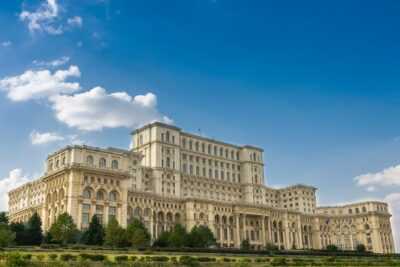

Museum of Communism Ticket with Communist Coffee
Read our review →Browse the lists this tour appears in