
Reviewed · COMMUNIST BUCHAREST TOURS
Communism in Bucharest – Landmarks, Museum & Communist Appetizers
The most revealing part of this Bucharest walking tour comes at the end, inside a small communist-era museum where you can handle exhibits, try on period clothing, and eat a sweet or salty snack in a recreated living room. I like that the tour links ordinary life to huge political events, and I like the walk from the Palace of Parliament to Revolution Square, where the story unfolds street by street.
The main drawback is that you see the Palace of Parliament only from outside. The three-hour route also involves steady walking and outdoor stops, so poor weather can affect the experience. Still, with a small group, English-speaking guides such as Ali, Maria, Gabriela, and Gabi, and a museum visit included, this is a strong introduction to communist Bucharest.
Key points about the Bucharest communist walking tour
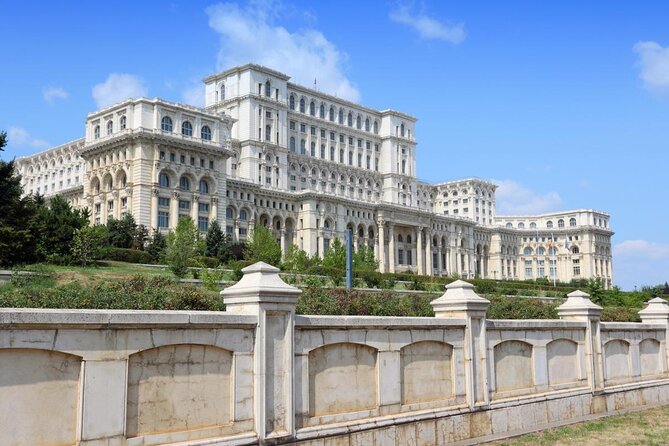
- The Palace of Parliament is an exterior stop: You learn how Ceaușescu’s grand project reshaped Bucharest, but there is no interior visit.
- The route connects buildings with the 1989 revolution: Revolution Square and the University of Bucharest help explain how Ceaușescu’s rule ended.
- Antim Monastery adds an unexpected human detail: Part of the area was moved to make room for the dictator’s building plans.
- The museum is hands-on: You can try on clothing, interact with displays, and sit down for a communist snack and coffee.
- The group is intended to be small: The information gives a maximum of 15 people, with another note listing a maximum of eight, so confirm the exact group size when booking.
- The price includes more than a basic city walk: At $48.37 per person, you get a guide, museum admission, coffee, a snack, taxes, and skip-the-line entry.
Why this tour makes communist Bucharest easier to understand
Bucharest can feel like a jumble of grand avenues, Orthodox churches, concrete apartment blocks, and oversized government buildings. This tour gives those sights a clear thread: the years of Nicolae Ceaușescu’s communist rule, the forced rebuilding of central Bucharest, and the events that brought his government down in December 1989.
I like the way the route moves through real locations instead of treating communism as a museum subject only. You begin at the Palace of Parliament, walk past the boulevard built to frame it, visit a monastery that survived the demolition program, and finish near the places where the revolution unfolded.
That order matters. The Palace shows the scale of Ceaușescu’s ambitions. The smaller streets and religious buildings show what was pushed aside. Revolution Square and the University of Bucharest then bring the story back to people, protest, fear, and the difficult years after communism.
The tour lasts about three hours and is offered in English. It starts at 10:00 a.m. on Bulevardul Unirii, near the Palace of Parliament, and finishes at Revolution Square. Because you end in a central part of Bucharest rather than returning to the starting point, the route can also help you continue sightseeing on your own.
More communist-era Bucharest walks:
- The Real tour of Communism
★ 5.0 · 666 reviews - Life under Communism
★ 5.0 · 358 reviews - 3-Hour Guided Tour of Communist Bucharest
★ 4.9 · 303 reviews
The Palace of Parliament and Ceaușescu’s oversized plan
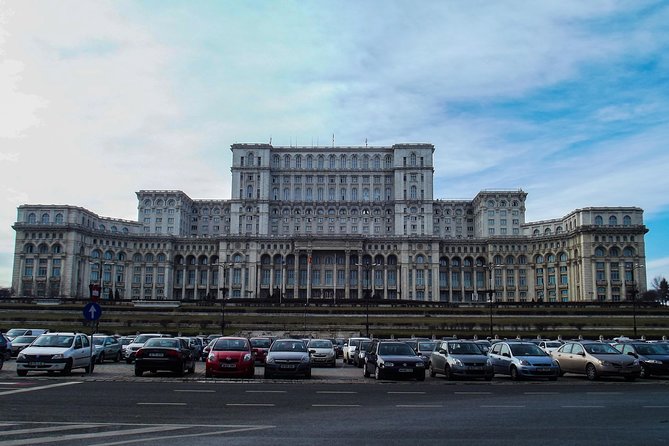
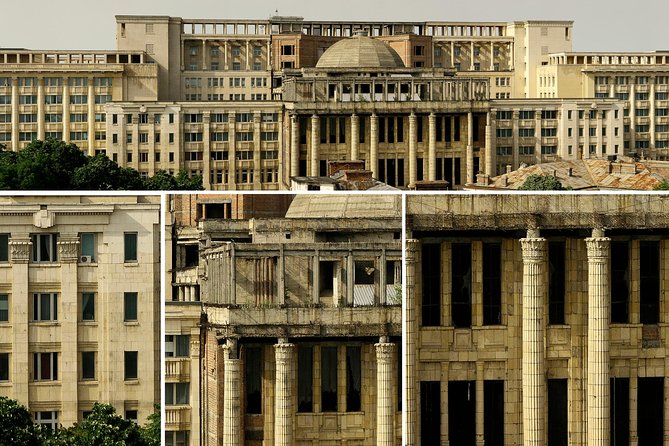
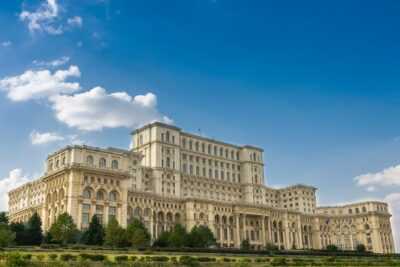
The first stop is the Palace of Parliament, one of Bucharest’s most striking and controversial buildings. Your guide explains why it was built, how it was built, and how it fitted into Ceaușescu’s vision for the capital.
You do not go inside. That is important to know before booking. The visit is an exterior explanation lasting about 20 minutes, so the value comes from the guide’s account of the building and the urban changes around it, not from rooms, halls, or interior architecture.
The building is tied to Ceaușescu’s plan to create a monumental political center. To make space for it and the broad avenues around it, large parts of the old city were demolished or altered. The tour uses this first stop to explain the human and financial cost behind the grand design.
This is also a good place to ask questions. The facts can be hard to absorb when you see only an enormous government building. A guide can connect its size to the system that produced it, including the dictator’s desire for control, spectacle, and a capital arranged around state power.
If entering the Palace is your main goal, this is not the right tour by itself. You would need a separate interior visit. If you want the building placed in its political setting, the exterior stop works well as the starting point.
Antim Monastery and the buildings that were pushed aside
About 15 minutes at Antim Monastery gives the walk a welcome change of scale. The monastery dates from the 18th century and survived the demolition carried out under communism.
The most unusual detail is that part of the area was moved entirely to make room for Ceaușescu’s plans. That detail makes the redevelopment easier to picture. The policy was not only about tearing down old buildings. Some structures were shifted, hidden, or repositioned so the new political center could go ahead.
Antim is valuable because it shows that communist Bucharest was not built on empty ground. Older religious and civic places already formed part of the city. The new boulevards and official buildings changed the relationship between those places and the people who used them.
You should expect a short stop rather than a long architectural visit. The tour does not list admission inside the monastery, and the main purpose here is to hear how it escaped the wider demolition program.
For me, this is one of the route’s most useful contrasts. The Palace represents power at its largest. Antim Monastery is smaller, older, and tied to a different idea of Bucharest. Seeing both helps you understand what was lost, what survived, and what was physically moved to suit a political plan.
Bloc 6 and the boulevard built for display
The stop at Bloc 6 lasts about 10 minutes and focuses on the boulevard built in front of the Palace of Parliament. The apartment block and the avenue help explain how the city was arranged to present the Palace in the best possible way.
This is a quick stop, but it fills an important gap. It is easy to look at the Palace as a single structure and miss the surrounding city planning. The boulevard, apartment buildings, and open views were part of the same project.
Your guide also covers the secrets connected with the boulevard. The supplied details do not spell out every story, so the exact explanation will depend on the guide and the questions you ask. Guides Ali, Maria, Gabriela, and Gabi are named in the tour information, and the personal stories shared by Gabi are especially useful for connecting official plans with lived experience.
Do not expect a long architectural lecture here. Think of Bloc 6 as a short roadside lesson that makes the next part of the route more meaningful. It shows how ordinary housing and public space were drawn into the dictator’s image of the capital.
More museums in Bucharest:
- Bucharest: Museum of Senses Entry Ticket
★ 4.2 · 364 reviews - Bucharest: Entry ticket at the Museum of Communism
★ 4.6 · 57 reviews - Bucharest: Museum of Communism Ticket with Communist Coffee
★ 4.6 · 52 reviews - Bucharest: Dinner+Tour at Museum of Communism after closing
★ 4.9 · 46 reviews
Revolution Square and the last speech
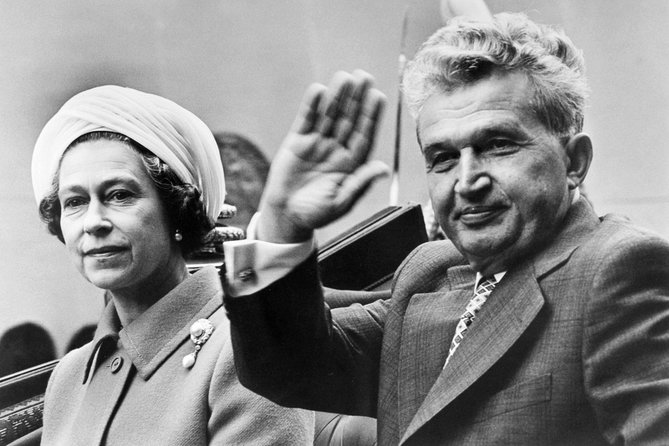
At Revolution Square, the focus shifts from construction to collapse. This is where Ceaușescu gave his last speech, and where the revolution in Bucharest began on December 21, 1989.
The stop lasts about 20 minutes. Your guide explains what happened at the square and why the speech became such a critical moment. This is one of the places where location adds force to the story. You are not simply hearing about the final days of the regime in an abstract way. You are standing where the public relationship between Ceaușescu and the crowd broke down.
The tour is especially useful for people who know the broad outline of the Romanian revolution but want to understand the Bucharest setting. The square helps organize the events in time and place.
You may find the stop more serious than the museum portion that follows. That is appropriate. The route deals with fear, protest, and political violence, even though the supplied information does not provide a full account of every event. A good guide will explain the sequence without turning the location into a theatrical performance.
This is also the endpoint of the tour, but the itinerary first continues to the University of Bucharest before finishing. Keep that in mind if you are arranging transport or another timed activity.
University of Bucharest and the long road after 1989
The small square beside the University of Bucharest is named for December 21, 1989, because much of the Romanian revolution took place there. The stop lasts about 15 minutes and looks beyond the fall of Ceaușescu.
That wider view is one of the tour’s best features. The story does not end when communism ends. Your guide discusses post-communist Romania and the mistakes made on the way toward democracy.
This helps you avoid a simple before-and-after story. The end of dictatorship brought freedom, but it did not instantly solve every political, economic, or social problem. The tour gives you room to think about that transition while standing at one of the places where people demanded change.
The exact level of detail can depend on the guide. Maria is specifically described as explaining communist history clearly to families and children, while Gabi is noted for sharing personal stories. If you are booking with children, you may want to ask which guide is leading the walk, though the provider does not guarantee a particular person.
Because the tour ends at Revolution Square, this final portion keeps you in central Bucharest. You can continue exploring from there, but hotel return is not included unless you select a pickup option.
A museum where you can touch the past
The final major stop is the Museum of Communism Bucharest, also called Undeva in Comunism. You spend around 40 minutes inside, and admission is included with skip-the-line entry.
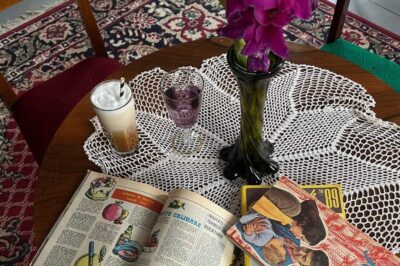
This is not presented as a large national museum. It is a smaller, interactive place centered on daily life under communism. You can interact with exhibits, try on clothes, and sit in the museum living room for a communist snack.
That ordinary setting is what makes the visit useful. Large political events can feel remote, especially if you did not grow up in Romania. A living room, clothing, coffee, and familiar food offer a more direct way to picture daily routines and material limits.
The snack is sweet or salty, depending on availability. Communist coffee is included, but other drinks are not. The snack is a modest part of the price, not a full meal, so eat beforehand if you need lunch after the tour.
I would give the museum time to breathe. Forty minutes is long enough to look around and ask questions, but not so long that it becomes an all-day museum visit. The guide can explain what the objects meant and how they fit into life under the system.
The museum also suits families. Maria is specifically described as explaining the subject well for children, and the option to try on clothes gives younger participants something active to do. Parents should still remember that the subject includes dictatorship and revolution, so the experience is educational rather than light entertainment.
What the guide adds to the walk
This tour depends heavily on the guide. The route is made up of familiar public places, and the difference between a useful walk and a string of landmarks is the explanation between stops.
Ali is described as friendly, professional, and strong on detail, with a pace that works well for the route. Maria is noted for making the subject clear to children. Gabriela and Gabi are also named, with Gabi adding personal stories to the political account.
That personal element matters in a subject such as communism. Dates and buildings explain the structure of the regime, but personal memories can help you understand how the system affected food, clothing, housing, work, and family life.
The provider offers the tour in English, and the small-group format should make it easier to ask questions. The listed group information is inconsistent: one detail says 15 people or fewer, while another says the maximum is eight. Either figure suggests a more manageable walk than a large coach group, but confirm the expected size when booking.
The tour requires at least two people to operate. You must book at least 12 hours ahead, and confirmation is sent at booking.
Is $48.37 a fair price?
At $48.37 per person, this is not the cheapest way to see Bucharest’s central landmarks. You could walk past the Palace of Parliament, Revolution Square, and the University of Bucharest without paying for admission.
The price makes more sense when you count what is included. You get an English-speaking guide for about three hours, admission to the communist museum, skip-the-line entry, a snack, communist coffee, taxes, and a money-back guarantee. You are paying mainly for the interpretation and the museum experience, not for access to the Palace interior.
I consider it good value if you want context and prefer a guide to explain what you are seeing. It is less compelling if you already know Romanian communist history, plan to visit the Palace inside separately, or mainly want a quick orientation walk.
A group discount may be available. Hotel pickup and drop-off are not included unless you choose that option, and gratuities are separate. The meeting point is Bulevardul Unirii 1-3 at 10:00 a.m., and the walk finishes at Revolution Square.
Walking conditions, weather, and who should book
Most people can take part, and the route is near public transportation. Service animals are allowed. The practical issue is weather, since several stops take place outdoors and the experience requires good conditions.
Wear comfortable shoes and bring weather protection. The tour is not described as strenuous, but three hours on foot with several stops can feel long if you are not prepared. Since you finish in a different place from where you begin, plan your day around the endpoint.
I would recommend this experience to:
- First-time visitors who want Bucharest’s communist landmarks explained in context
- People interested in the 1989 revolution
- Families looking for a history walk with an interactive museum stop
- Visitors who prefer small groups and questions over a large guided crowd
- Anyone curious about ordinary life, not only political leaders and monuments
I would choose something else if your priority is entering the Palace of Parliament, spending a full day in museums, or avoiding outdoor walking. This tour gives you a focused introduction, not a complete account of Romania’s modern history.
The cancellation policy is forgiving: you can cancel at least 24 hours before the start for a full refund. Changes made inside that period are not accepted, and a weather or minimum-participant cancellation brings an alternative date or a full refund.
Should you book Communism in Bucharest?
Book this tour if you want the Palace of Parliament, the 1989 revolution, and everyday communist life tied together in one compact route. The strongest part is the combination of outdoor landmarks with the small museum, where clothing, coffee, and a simple snack make the subject more tangible.
The absence of a Palace interior visit is the one major limitation. If you accept that and confirm the group size, this is a well-priced, thoughtful choice for a first look at communist Bucharest. Ask about the guide when possible, especially if you are traveling with children or want more personal stories. The high satisfaction rate, 5.0 rating from 111 reviews, and 99 percent recommendation support the tour’s appeal, but the real reason to book is its clear route from dictatorship’s grandest building to the streets where people demanded change.
FAQ
How long is the Communism in Bucharest tour?
The tour lasts approximately three hours.
What time and where does the tour start?
It starts at 10:00 a.m. at Bulevardul Unirii 1-3, Bucharest.
Where does the tour finish?
The tour finishes at Revolution Square, Piața Revoluției, in Bucharest.
Does the tour enter the Palace of Parliament?
No. The Palace of Parliament is viewed from outside, and the guide explains its construction and Ceaușescu’s plans.
Is museum admission included?
Yes. Admission to the Museum of Communism Bucharest, also called Undeva in Comunism, is included, with skip-the-line entry.
Is food or coffee included?
A communist snack, either sweet or salty depending on availability, and communist coffee are included. Other drinks are not included.
How many people can join the group?
The tour information lists a maximum of 15 people and also gives a maximum of eight in another section. Confirm the expected group size when booking.
Can I cancel for a full refund?
Yes. You can cancel at least 24 hours before the start time for a full refund. If the tour is canceled because of bad weather or too few participants, you will be offered another date or a full refund.
Just added around Bucharest
- Private Full Day Tour of Bucharest★ 5.0 · 3 reviews
- Veliko Tarnovo and Medieval Bulgaria Private Day Trip from Bucharest★ 5.0 · 3 reviews
- Bucharest VIP Bar Crawl in Lipscani ‘Old Town’★ 5.0 · 3 reviews
- Bucharest Private City Tour★ 5.0 · 3 reviews
- Muddy Volcanoes and Salt Mine Private Tour★ 5.0 · 3 reviews
- Legends & Stories from Transylvania -2 Castles & Brasov Old Town★ 5.0 · 3 reviews
- Transfagarasan Private Tour from Bucharest – 2 Days★ 5.0 · 3 reviews
- 7-Day Dracula Tour in Romania from Bucharest including ‘The Ritual of Killing of a Living Dead’★ 5.0 · 3 reviews
Communist Bucharest Tours, compared.
Bucharest Essential Tour: Old Town, Calea Victoriei & Communism
Read our review →

Museum of Communism Ticket with Communist Coffee
Read our review →Browse the lists this tour appears in