
Reviewed · COMMUNIST BUCHAREST TOURS
Bucharest Communism: From Lenin to Ceausescu
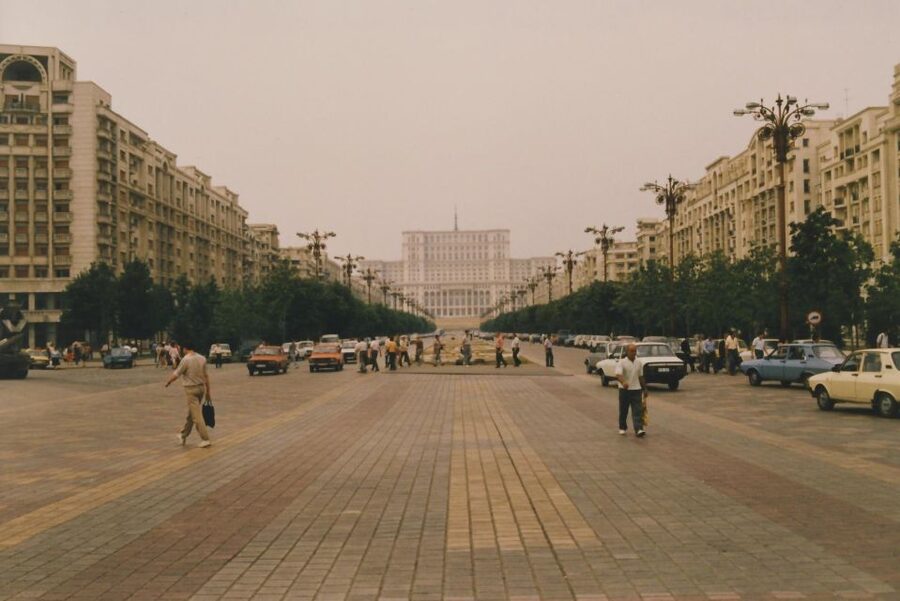
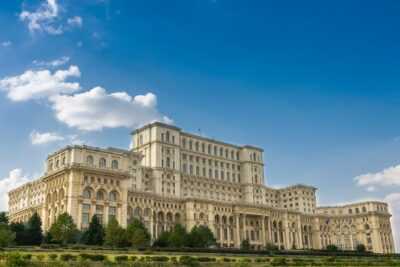
The most striking part of this Bucharest walking tour is its route through the grand Socialist Victory Boulevard, a project built to frame Nicolae Ceaușescu’s enormous Palace of the Parliament. You’ll connect that display of power with the human cost behind it: three demolished neighborhoods, about 40,000 households uprooted, and a city remade to suit one ruler.
I like the way the tour links big buildings to daily life, including food rationing, secret police control, and the strange political path that carried Ceaușescu from a poor background to absolute power. I also like the final stop at Revolution Square, where the story moves from theory and architecture to protest, trial, and execution.
The main consideration is pace. In 2.5 hours, you cover many important places, but most stops are outdoor explanations rather than long visits inside buildings. Entrance tickets are not included, and the route is best for someone who wants a clear political story while walking, not a leisurely museum tour.
Key points about Bucharest Communism: From Lenin to Ceausescu
- The Palace of the Parliament: See the exterior of the world’s second-largest administrative building and learn why its construction changed Bucharest.
- A walk through forced redevelopment: Understand how three neighborhoods and roughly 40,000 households disappeared for Ceaușescu’s grand urban plan.
- Communism explained from the beginning: The story starts with Hegel, Marx, Engels, feudal Eastern Europe, and the Bolshevik Revolution.
- Daily life under dictatorship: Food quotas, rationing, fear of the secret police, and the monthly allowance of basic foods put politics into ordinary terms.
- The 1989 revolution: Finish at Revolution Square, where Ceaușescu’s final public appearance gave way to revolt, trial, and execution.
- Guides who make the history approachable: Alex and Horia have led highly praised versions of the tour, using humor, personal detail, and clear answers to questions.
Starting beside Unirii and the Palace of Parliament
Meet next to The Coffee Shop Constitutiei on Bulevardul Unirii. Arrive 10 minutes early, since the tour begins at a busy central part of Bucharest and the group sets off on foot.
The opening view is the right one for this subject. The Palace of the Parliament, also called the Chamber of Deputies Palace, is not simply a large government building. It is the physical statement of a dictator who wanted Bucharest to reflect his power. You’ll spend about 20 minutes here, mainly walking and listening to the guide explain the building, the boulevard, and the redevelopment that made them possible.
The scale is hard to ignore. The tour uses the building to explain the demolition of three neighborhoods and the removal of around 40,000 households. That fact gives the architecture a different meaning. You are not just looking at an oversized palace. You are looking at the result of a political system that could erase homes, streets, churches, and established communities by decree.
The building is also described as the second-largest administrative building in the world. That helps explain why this is an especially useful starting point: the architecture gives you an immediate picture of Ceaușescu’s ambition before the guide turns to the cost paid by ordinary people.
There is no entrance ticket included, so expect to see the palace from the route rather than automatically touring its interior. If going inside matters to you, ask about ticket arrangements before booking. This experience is designed around the political story and the city walk.
More communist-era Bucharest walks:
- The Real tour of Communism
★ 5.0 · 666 reviews - Life under Communism
★ 5.0 · 358 reviews - 3-Hour Guided Tour of Communist Bucharest
★ 4.9 · 303 reviews
Antim Monastery and the city before communism
The next stop is Antim Monastery, with about 10 minutes for a guided visit. Its presence is important because the tour does not treat communism as a story that began out of nowhere. The guide sets the political period against earlier Romanian society, including the feudal system in Eastern Europe.
That wider framing is one of the tour’s strengths. You first hear about the ideas of Hegel, Marx, and Engels, then the Bolshevik Revolution and the spread of communist rule. This can sound like a lot for a walking tour, but it gives you a basic map of the forces that shaped Romania.
The monastery also reminds you that Bucharest was not created by the communist government. Religious buildings, older neighborhoods, royal institutions, and ordinary streets existed long before the Socialist Victory Boulevard. That contrast helps you see how forcefully the later regime tried to replace the old city with its own version.
Your time here is short, so do not expect a full architectural or religious tour. The stop works best as historical context rather than as a stand-alone monastery visit.
Patriarchal Cathedral and the reach of the state
At the Patriarchal Cathedral, the guide continues the short visits and explains how Romanian society was shaped before communist rule. You’ll have about 20 minutes for sightseeing and walking.
This part of the route adds a useful complication. Communist governments often presented themselves as modern, rational, and hostile to older institutions, yet they still had to deal with religion, tradition, and national identity. A stop at the cathedral helps you think about what the new state tried to control, what it tolerated, and how public life changed.
The tour’s focus remains political rather than theological. You will not spend the afternoon studying every feature of the cathedral. Instead, the building forms part of a sequence: old religious Bucharest, the new planned boulevard, and the political center that Ceaușescu tried to build between them.
Fountains, Unirii, and the boulevard of power
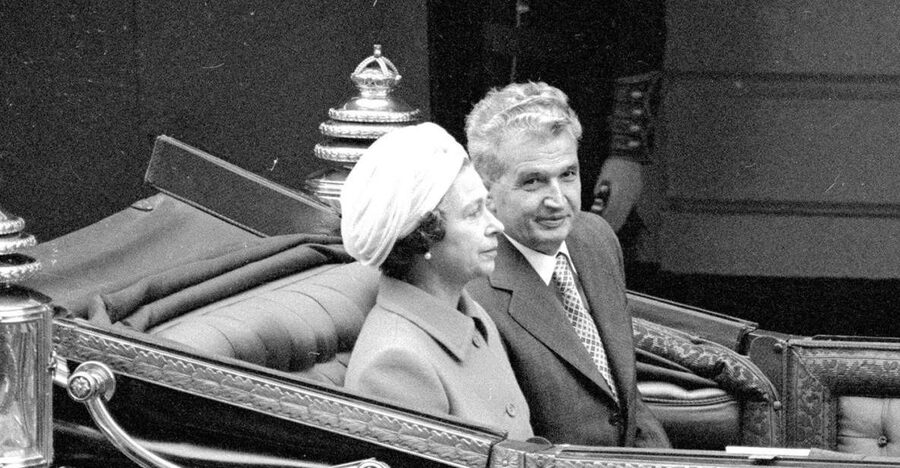
The Bucharest Fountains receive a brief five-minute stop, followed by Piața Unirii. These are quick points on the route, but they help you read the open spaces around the boulevard.
Socialist Victory Boulevard was the last great megalomaniac communist project in Bucharest. Its broad scale was meant to create a ceremonial approach to the Palace of Parliament. The fountains and open areas are part of that grand composition.
I find this section useful because the guide turns city planning into political evidence. Instead of hearing only that Ceaușescu was authoritarian, you see how authority was built into the streets. Wide avenues, huge public spaces, and carefully framed monuments can project control even when no official is speaking.
The short stops also keep the tour moving. If you prefer long pauses for photographs, you may find the schedule brisk. If you want to cover a lot of central Bucharest without spending half a day at one building, the rhythm works well.
A few more Bucharest day trips to weigh up
- Bucharest: Dracula’s Castle, Peles Castle, & Brasov Old Town
★ 4.5 · 17,858 reviews - Bucharest: Dracula Castle, Peles Castle & Brasov Old Town
★ 4.6 · 10,891 reviews - Bucharest: Dracula’s Castle, Peleș Castle & Brașov Day Trip
★ 4.5 · 5,919 reviews - Bucharest: Palace of Parliament Tickets and Guide
★ 4.3 · 3,182 reviews
Old Town and the contrast Ceaușescu could not erase
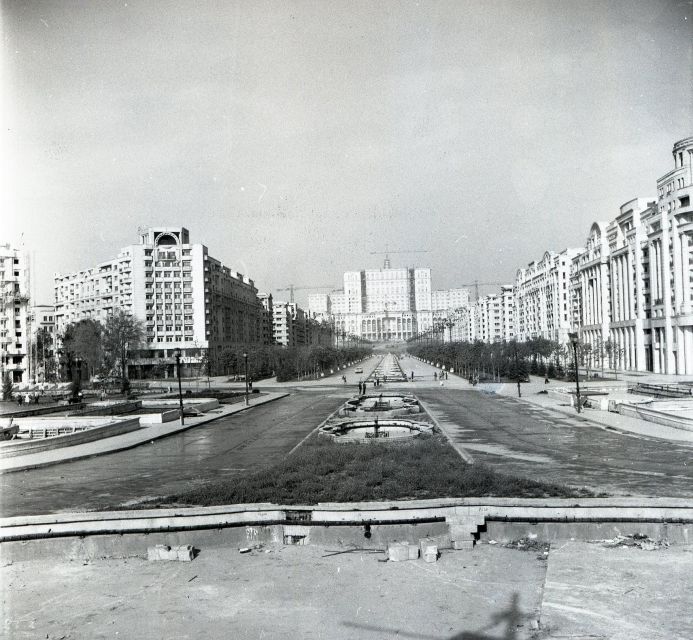
The walk continues into Bucharest Old Town for roughly 15 minutes. This change of setting is valuable. Older streets and buildings offer a sharp contrast to the planned grandeur of the communist boulevard.
The guide uses this part of the route to explain Bucharest’s political and urban past rather than treating Old Town as a separate sightseeing stop. You’ll see how the city’s earlier identity sat beside the regime’s attempt to rebuild it around a single monumental axis.
Do not book this tour expecting a full Old Town introduction focused on restaurants, nightlife, or architecture. You get a short, history-centered visit. That is enough to place the communist rebuilding in context, but not enough to replace a separate Old Town walk.
University Square and the pressure of public space
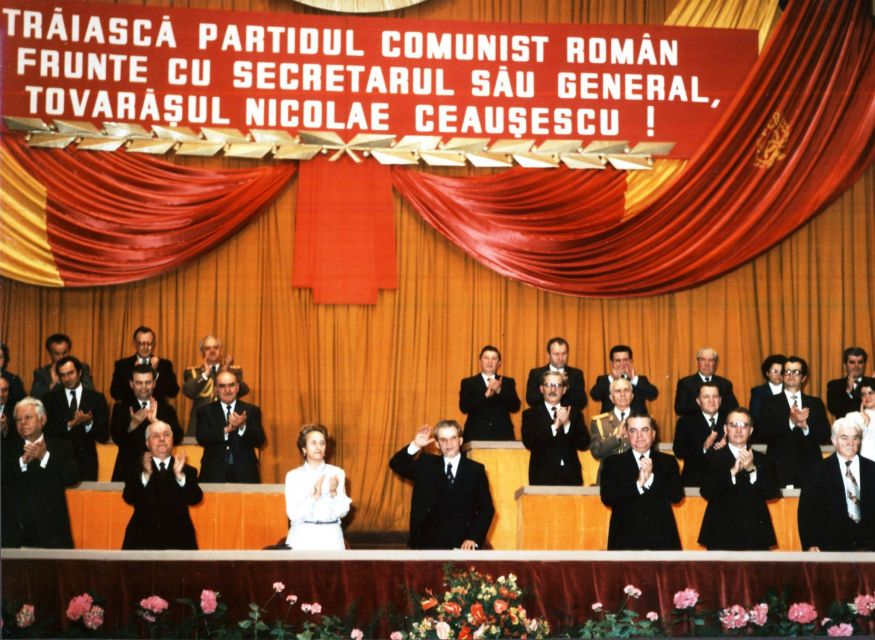
University Square takes about five minutes. Its importance comes from the relationship between public space and political opposition.
A dictatorship can control newspapers, television, food supplies, workplaces, and the police, but squares still matter. They allow people to gather, watch, react, and sometimes challenge official power. The stop prepares you for the final account of the revolution by showing how central Bucharest’s public places became part of the political story.
The guide also explains the effect of secret police surveillance and the wider system of control. The tour does not reduce communism to empty shelves or huge buildings. It shows how fear and monitoring shaped conversations, choices, and daily behavior.
The Royal Palace and Romanian political change
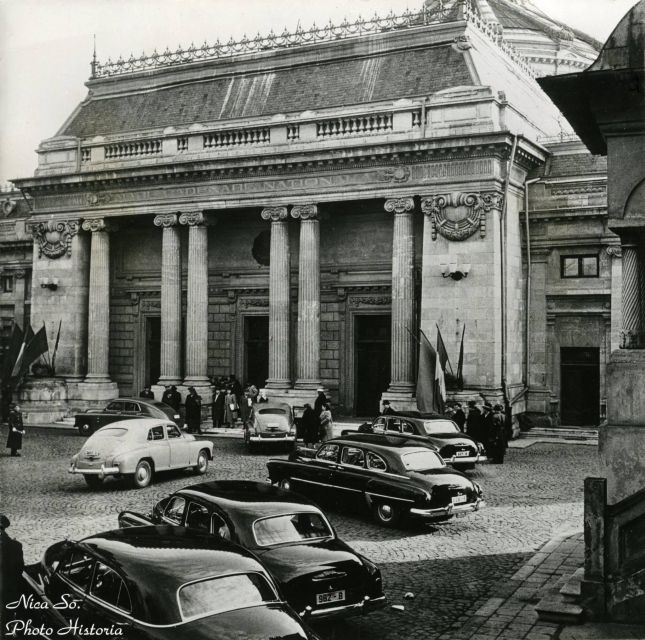
At the Royal Palace of Bucharest, you’ll spend around 10 minutes with the guide. This stop helps connect the communist period to the monarchy and to the political changes that came before and after it.
The palace gives you another visual contrast with the Palace of Parliament. One belongs to a royal chapter of Romanian history, while the other expresses Ceaușescu’s personal version of socialism. Moving between them makes the succession of political systems easier to follow.
This is also where the tour can answer questions about Bucharest beyond communism. Several guides, including Alex and Horia, are praised for explaining the city in a wider historical setting and for recommending books to people who want to continue reading.
The Romanian Athenaeum and the public image of Romania
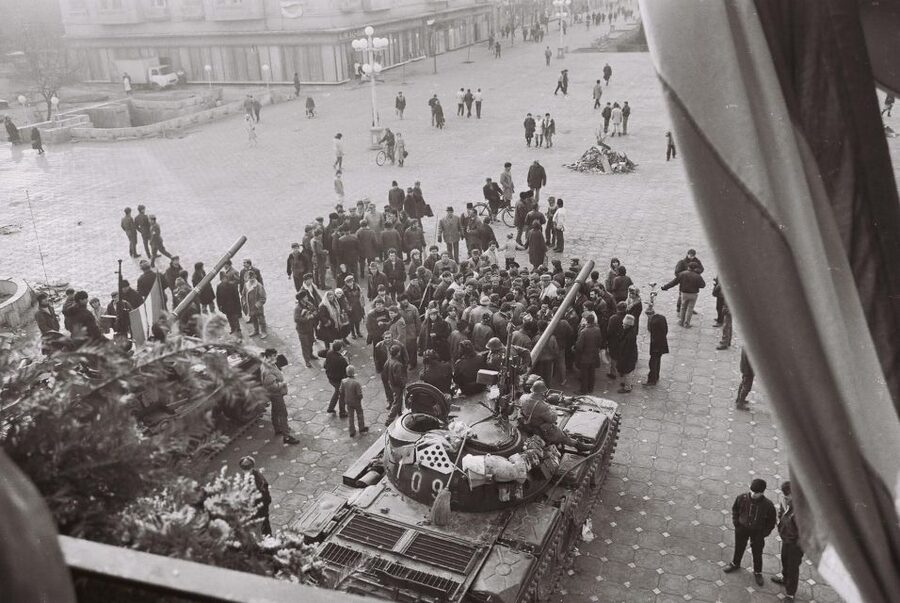
The Romanian Athenaeum is another 10-minute stop. Its elegant cultural identity adds a different note after the severe geometry of the communist center.
The point is not that every stop is a communist monument. The route shows the city that existed before Ceaușescu and the cultural institutions that survived the dictatorship. That makes the subject less flat. Romania’s story includes political ideas, monarchy, religion, culture, dictatorship, and popular revolt.
You’ll have time to see the building and hear its place in the city’s story, but not to explore it at length. If you want detailed interior architecture, arrange a separate visit.
Revolution Square and Ceaușescu’s final days
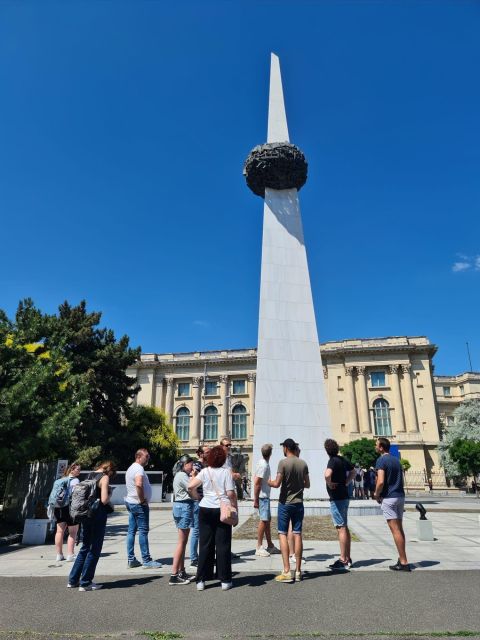
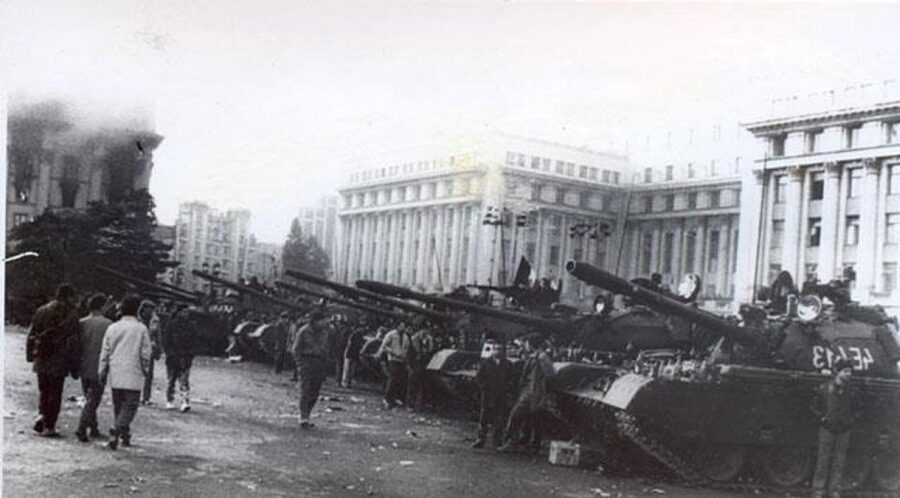
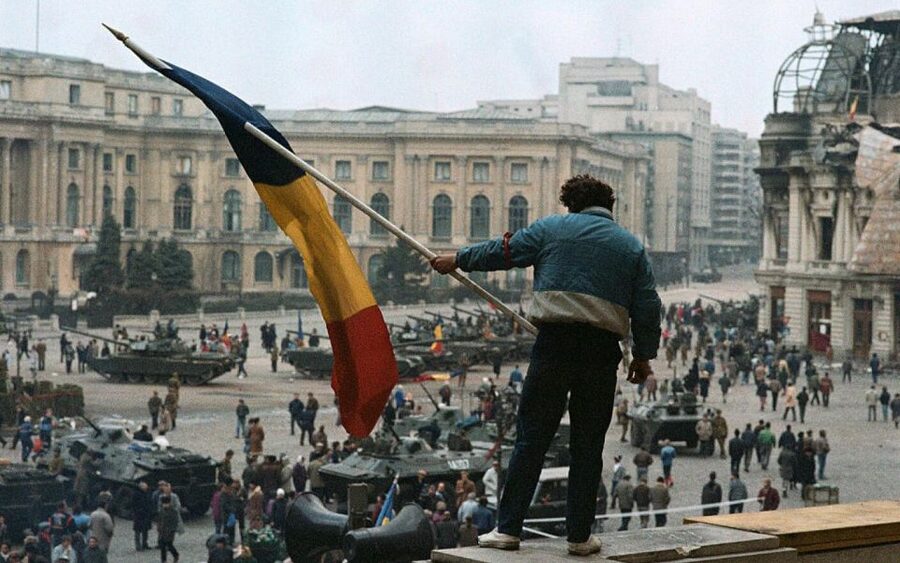
The tour ends at Revolution Square, with about 20 minutes devoted to the revolution. This is the emotional and political payoff of the walk.
The guide explains how a group of agitators helped plot the end of Ceaușescu’s regime and how events moved toward his final days, trial, and execution. The stop gives the earlier subjects a clear endpoint. The Palace of Parliament shows the regime’s power. Revolution Square shows that power breaking apart.
The discussion also covers Ceaușescu’s last public appearance and the revolution itself. You’ll hear how a system that had lasted for about 25 years reached its end, rather than simply receiving a date and a label in a textbook.
This section may be the most useful part for you if you know little about the 1989 events. The guide can explain the political background in plain terms and answer questions as the story develops. Alex is especially noted for making the revolution understandable, passionate, and occasionally funny without turning the subject into a joke.
Food rationing, fear, and ordinary life
One of the tour’s most memorable details is the food allowance: about 2,000 calories a day, with monthly figures of 500 grams of cheese, 10 eggs, and 1.5 kilograms of meat. These numbers make the period easier to picture.
A political system is not only its leaders and monuments. You need to know what it meant when food was rationed, supplies were limited, and households had to plan around shortages. The tour uses these details to explain how ideology entered kitchens, shopping lines, and family life.
The guide also discusses the secret police. That subject can be difficult, especially for Romanian participants who have family memories of the period, but it is essential to understanding why Ceaușescu’s regime was considered the most oppressive communist government in the Eastern Bloc.
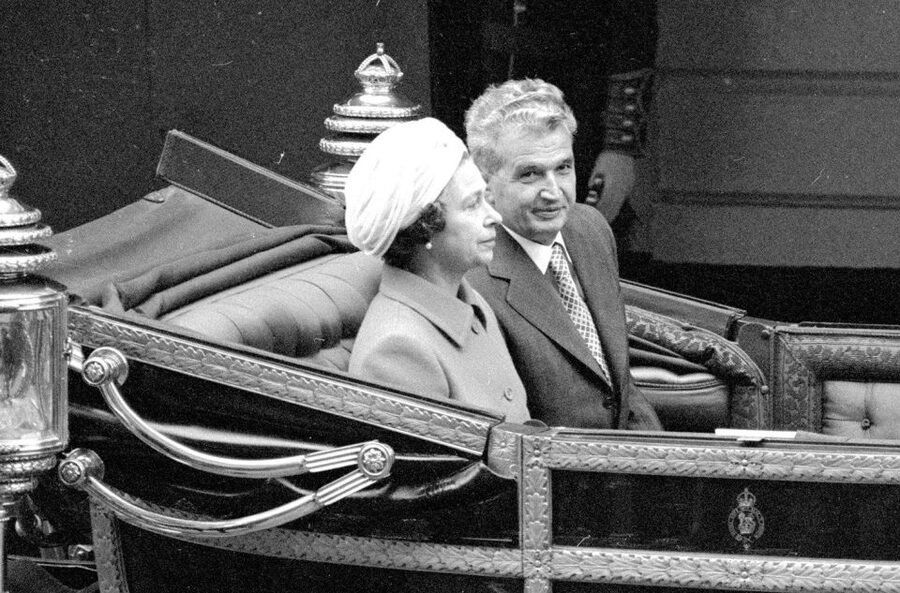
The comparison with the Kim dynasty in North Korea is used to describe the unusual level of personal rule around Ceaușescu. You’ll hear about his modest background, his climb through the political system, and the way power gathered around him and his family.
The opening background can be fairly dense. The guide may move from political philosophy to Eastern European history, then into Romanian communism. I like that approach because it avoids presenting the dictatorship as a random accident, but you should be ready to listen closely.
What the guides add to the walk
The guide is the main value of this experience. The tour is not built around entry tickets, special interiors, or transport. It depends on someone who can make a complicated political story clear while keeping you moving through the city.
Alex is repeatedly praised for being friendly, funny, and able to answer detailed questions. Horia is also described as professional and easy to spend an afternoon with. You cannot guarantee which guide will lead your departure, but both names appear in the guide team associated with this experience.
The strongest guide style here seems to be conversational. You can ask about Romania, Bucharest, totalitarian systems, or the revolution, and the explanations can go beyond a fixed speech. One guide even recommends books for people who want to read more after the walk.
Humor is used carefully to keep the material approachable. That matters because two and a half hours on dictatorship, food shortages, police surveillance, and execution could become heavy. The best version of this tour gives you facts without making the walk feel like a lecture.
Is $23 good value?
At $23 per person, this is a good-value introduction to Bucharest’s political past. You receive 2.5 hours with a local guide and cover a long central route with major buildings, churches, squares, and revolution sites.
The price is especially fair if you are new to Romanian history. A guide can connect places that might otherwise seem unrelated: the Palace of Parliament, Antim Monastery, the cathedral, Old Town, the Royal Palace, the Athenaeum, and Revolution Square.
The limitations are clear. Food and drinks are not included, and entrance tickets are extra. You are paying for the guided walk, the interpretation, and the route, not for admission to the Palace of Parliament or another interior.
The tour is available in English or Romanian. Free cancellation is offered up to 24 hours before the start, and you can reserve without paying immediately. Check the available starting times before booking, since the exact schedule is not fixed in the basic description.
Who should book this Bucharest history walk?
I would choose this tour if you want to understand why Bucharest looks the way it does and how Ceaușescu shaped the city. It suits first-time visitors, people interested in political history, and anyone who wants more than a list of monuments.
It is also a strong choice if you have a personal connection to communist history. The guide’s explanations of shortages, ideology, surveillance, and dictatorship can help place family memories or earlier education into a Romanian setting.
You may prefer another activity if your priority is interior sightseeing, food, nightlife, or a slow architectural tour. The route is broad and the explanations are the main attraction. You walk between many stops, with short visits at several of them.
Wear practical walking shoes and arrive early. The meeting point is next to The Coffee Shop Constitutiei, and arriving 10 minutes ahead gives you time to find the group without cutting into the opening explanation.
Should you book Bucharest Communism: From Lenin to Ceausescu?
Book it if you want a clear, human account of Romanian communism, from political theory and social conditions to Ceaușescu’s final hours. The Palace of Parliament gives you the dramatic opening, while Revolution Square supplies the hard-hitting finish.
The best reason to go is the connection between places and people. You learn not only why the boulevard is so large, but what vanished to make it possible. You hear not only that food was rationed, but how specific limits affected daily life.
Skip it only if you dislike guided walking tours or want long interior visits. For $23, the mix of city sights, political context, and a guide such as Alex or Horia offers a strong introduction to the forces that shaped modern Bucharest.
FAQ
How long does the Bucharest Communism tour last?
The tour lasts 2.5 hours.
What is the price?
The price is $23 per person.
Where does the tour begin?
The meeting point is next to The Coffee Shop Constitutiei at Bulevardul Unirii 5.
Where does the tour finish?
The tour finishes at Revolution Square in Bucharest.
Which languages are available?
The live guide speaks English or Romanian.
Is the Palace of the Parliament entrance included?
No. Entrance tickets are not included.
Are food and drinks included?
No. Food and drinks are not included.
How early should I arrive?
You should arrive 10 minutes before the activity starts.
Can I cancel for a full refund?
Yes. You can cancel up to 24 hours in advance for a full refund. You can also reserve now and pay later.
Just added around Bucharest
- Private Full Day Tour of Bucharest★ 5.0 · 3 reviews
- Veliko Tarnovo and Medieval Bulgaria Private Day Trip from Bucharest★ 5.0 · 3 reviews
- Bucharest VIP Bar Crawl in Lipscani ‘Old Town’★ 5.0 · 3 reviews
- Muddy Volcanoes and Salt Mine Private Tour★ 5.0 · 3 reviews
- Bucharest Private City Tour★ 5.0 · 3 reviews
- Legends & Stories from Transylvania -2 Castles & Brasov Old Town★ 5.0 · 3 reviews
- Transfagarasan Private Tour from Bucharest – 2 Days★ 5.0 · 3 reviews
- 7-Day Dracula Tour in Romania from Bucharest including ‘The Ritual of Killing of a Living Dead’★ 5.0 · 3 reviews
Communist Bucharest Tours, compared.
Bucharest Essential Tour: Old Town, Calea Victoriei & Communism
Read our review →
Communism in Bucharest – Landmarks, Museum & Communist Appetizers
Read our review →
Browse the lists this tour appears in