
Reviewed · COMMUNIST BUCHAREST TOURS
Exploring a Former Communist Prison
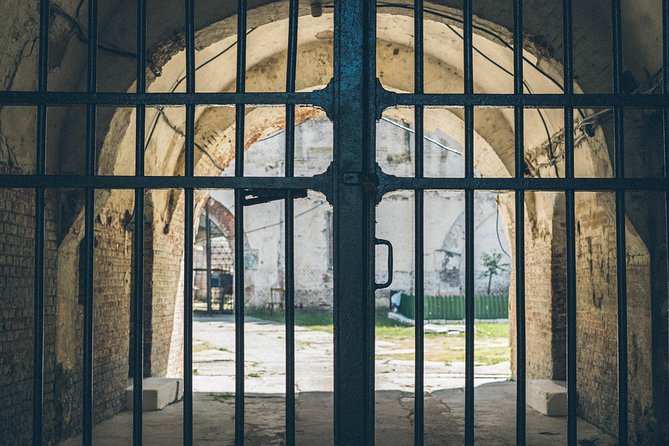
Fort 13 Jilava is the heart of this experience: a cold, sobering military fort that became a communist prison and execution camp. You also get a useful look at Bucharest beyond the postcard center, from Revolution Square to the apartment blocks and streets of Ferentari. Guide Mircea adds a personal link to December 1989, having been at Revolution Square when communism fell.
I like the small maximum group of eight, which gives the day a more personal feel during difficult conversations. I also like the mix of city history, a drive through communist neighborhoods, local snacks, and the prison visit. The main drawback is the subject matter: Fort 13 Jilava is grim, and the two-hour visit may feel heavy if you prefer light sightseeing. Phones stay outside the prison, and only camera photography is allowed.
Key details before you book
- Fort 13 Jilava is the main event: Plan on two hours inside a former military fort used as a communist prison.
- Mircea brings firsthand context: He was present at Revolution Square in December 1989 when the communist regime fell.
- The tour leaves central Bucharest: You travel by air-conditioned vehicle through Ferentari and beyond the city center.
- The group stays small: No more than eight people can join, useful for discussion and questions.
- Food and drinks are part of the day: You receive a covrig pretzel, local bites, bottled water, coffee or tea, and one beer or equivalent.
- Pack a camera, not just a phone: Mobile phones are not allowed inside Fort 13 Jilava, while camera photography is permitted.
Why Fort 13 Jilava gives this tour its weight
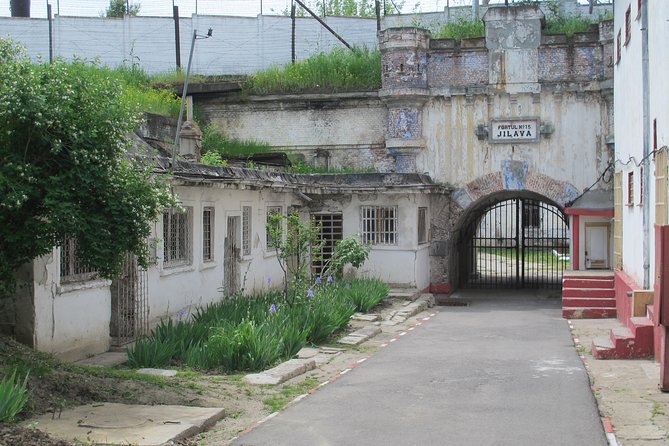
Many Bucharest history tours stay among grand buildings, old churches, and handsome squares. This one takes you to the machinery of repression. Fort 13 Jilava began as a 19th-century military fort, then served as a communist detention and execution camp. Today, it is a memorial inside Bucharest’s largest prison.
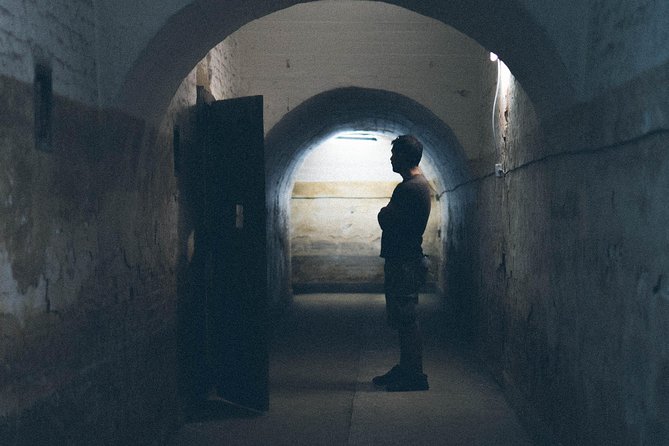
That setting matters. You are not simply looking at a plaque or hearing a short explanation outside a monument. You enter the former prison itself, where the architecture and purpose of the place carry much of the story. The visit is likely to feel stark rather than polished. That is part of its value, but it also means you should arrive ready for serious material.
The tour places the prison within a larger story. You begin with Bucharest’s development over roughly 500 years, including the city’s military fortification system. From there, the route moves into the communist period, showing how the city changed physically and socially during the regime’s last 50 years.
I like that progression. It helps you understand communism as more than a political chapter. You see how it shaped homes, neighborhoods, public spaces, monuments, prisons, and personal memory.
More communist-era Bucharest walks:
- The Real tour of Communism
★ 5.0 · 666 reviews - Life under Communism
★ 5.0 · 358 reviews - 3-Hour Guided Tour of Communist Bucharest
★ 4.9 · 303 reviews
Revolution Square and the memory of 1989
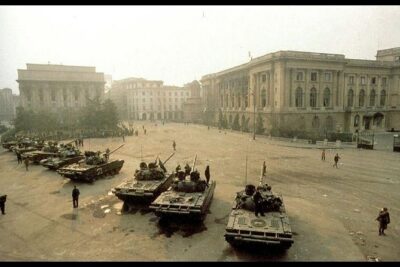
The morning begins at the Memorial of Rebirth in Piața Revoluției at 9:30 a.m. This is a strong starting point because the square connects Bucharest’s older political center with the collapse of communism.
You spend about an hour exploring this part of the city by car and on foot as appropriate, while learning how Bucharest developed and what remains from the communist period. The tour also covers the aftermath of the regime, a useful distinction because the end of communism did not erase its physical or emotional mark.
Guide Mircea’s presence adds something special here. He was in Revolution Square in December 1989, when communism fell. That does not turn the tour into a staged personal story. It gives you a direct connection to one of Romania’s defining moments, and you can ask questions about what the square means to someone who was there.
This stop is also a good reminder to listen for local detail. A general history lesson can explain dates and leaders, but personal memory helps show how political change felt on the ground. If you are interested in modern European history, this may be one of the most useful parts of the day.
The Palace of Parliament from the outside
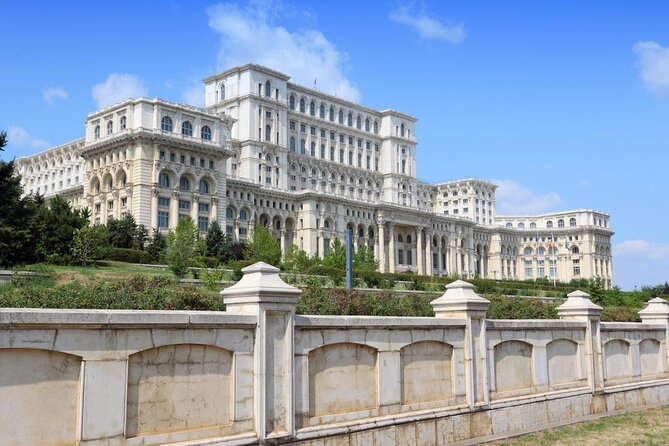
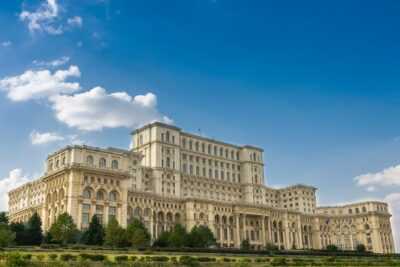
The next stop is a quick 20-minute circuit around the Palace of Parliament. You do not enter the building on this experience, and admission is not included. Instead, you get time for photographs and hear about the building’s darker stories and its effect on the surrounding community.
The building is often presented as a symbol of scale. This tour asks you to look past the photo opportunity and consider what such a massive administrative project meant for local people. The stop is short, so do not expect a full architectural tour or a long interior visit.
I see this as a context stop rather than a main attraction. It works because you have already begun discussing communist power and urban change at Revolution Square. The palace then gives that discussion a huge physical form.
Keep your expectations in check. If your main goal is to tour the Palace of Parliament inside, you will need a different arrangement. Here, the value comes from the outside view, the stories, and the contrast between state power and the neighborhoods you see later.
Ferentari and Bucharest beyond the postcard
The drive through Ferentari is one of the most unusual parts of the day. The route is described as the Bronx of Bucharest, a blunt comparison meant to signal that this is far outside the standard tourist circuit.
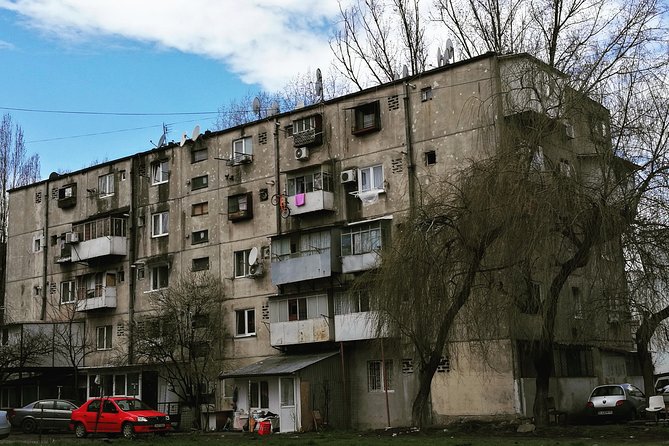
You pass communist bedroom dormitories and housing areas that shaped the final 50 years of Romanian social history. The point is not simply to look at apartment blocks through a vehicle window. You get a reality check about how the regime organized urban life and how those choices still affect the city.
This is where the air-conditioned vehicle earns its keep. The route covers several parts of Bucharest and continues outside the center, so you are not spending the full day walking between stops. You can watch the city change from historic areas to communist neighborhoods, then toward the prison complex at Jilava.
The stop is not designed as a polished neighborhood stroll. You may find the setting confronting, and the tour’s description makes clear that it is outside the usual tourist path. That is useful if you want a broader view of Bucharest, but it may not suit you if you want only grand facades and photogenic streets.
The value here comes from comparison. After seeing Revolution Square and the Palace of Parliament, you see the housing and streets connected to everyday life under the regime. Those contrasts make the later prison visit easier to place in context.
A few more Bucharest day trips to weigh up
- Bucharest: Dracula’s Castle, Peles Castle, & Brasov Old Town
★ 4.5 · 17,858 reviews - Bucharest: Dracula Castle, Peles Castle & Brasov Old Town
★ 4.6 · 10,891 reviews - Bucharest: Dracula’s Castle, Peleș Castle & Brașov Day Trip
★ 4.5 · 5,919 reviews - Bucharest: Palace of Parliament Tickets and Guide
★ 4.3 · 3,182 reviews
Carol Park, a mausoleum, and a food stop
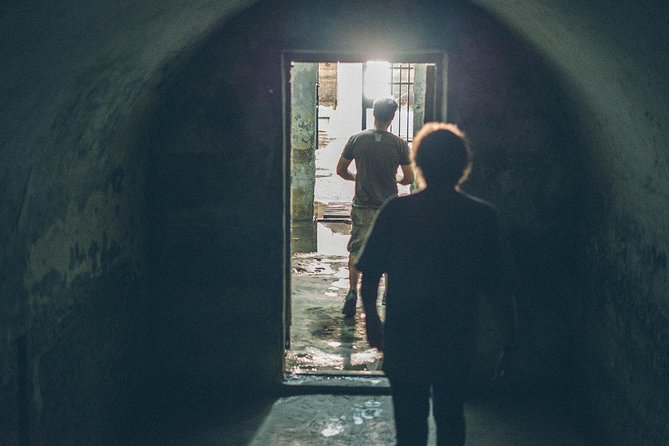
Carol Park provides a pause between the city drive and Fort 13 Jilava. You stop for about 30 minutes to see the mausoleum associated with communist leaders and to enjoy a traditional communist meal.
Food details are worth clarifying. The included refreshments list a street snack called a covrig, local traditional bites, one 500-milliliter bottle of water, coffee or tea, and one 400-milliliter beer or equivalent. Additional food and drinks are not included, so you should not assume that every extra item at the stop is covered.
This break gives the day a human rhythm. The subject is difficult, and a snack, drink, and short rest help you reset before entering the prison. It also gives you a chance to ask Mircea about the material covered so far.
Carol Park is not a long sightseeing stop. You have about half an hour, so treat it as a focused visit and refreshment break rather than a full tour of the park. The combination of a communist memorial and a traditional meal keeps the stop tied to the theme instead of feeling like an unrelated pause.
Inside Fort 13 Jilava
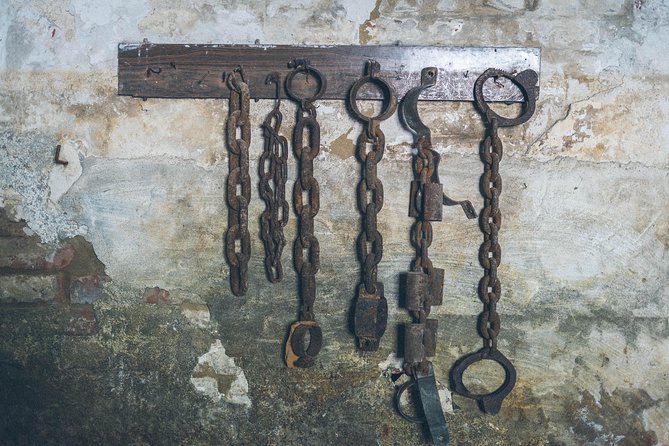
The visit to Fort 13 lasts about two hours, making it the longest stop of the experience. The fort was built as a military defense structure in the 19th century and later transformed into a communist prison. It now functions as a memorial within an active prison.
That last detail matters for practical planning. You are not visiting a museum designed for comfort and convenience. The setting retains its institutional purpose, and the visit can be emotionally demanding. Wear clothing and shoes that allow you to focus on the place rather than on comfort problems, although the provided information does not specify ground conditions or temperature.
Mobile phones are not allowed inside the prison. You may take photographs only with a camera, so decide in advance if photography matters to you. Do not count on using your phone for pictures, notes, or quick messages during the visit.
The restriction may feel inconvenient, especially if your phone is your main camera. Still, it reinforces the character of the site. You are entering a memorial space with rules, not a casual attraction where you can move in and out while checking notifications.
The prison’s history is the reason to book this experience, but it is also the reason to think carefully before booking. The fort was used to detain and execute people who opposed the regime. You should expect a serious visit, not a theatrical haunted-prison attraction.
I would give this stop your full attention. Listen closely to how the military fort was reused, how it fitted into the communist prison system, and what its preservation means now. The earlier stops provide the political and urban background; Fort 13 gives that background a physical setting.
What the six-hour schedule feels like
The full experience lasts about six hours, beginning at 9:30 a.m. and ending back at the starting point. The schedule includes substantial driving, short city stops, a food break, and a long prison visit.
That mix makes the day feel more like a guided field trip than a standard walking tour. You will not spend six hours inside central Bucharest. Instead, the vehicle links places that would be difficult to combine efficiently on your own.
The maximum group size is eight. For this subject, that is a real advantage. A small group makes it easier to hear the guide in the vehicle, ask questions at Revolution Square, and discuss the prison visit without the feel of a large bus excursion.
The experience includes an air-conditioned vehicle, which is especially useful on the longer drives. It begins and ends at the Memorial of Rebirth in Piața Revoluției, and the meeting point is near public transportation.
The tour requires good weather, and it can be canceled if conditions are poor or if the minimum number of people is not reached. If that happens, you are offered another date or experience, or a full refund. You can also cancel for a full refund up to 24 hours before the start time. Those terms give you some flexibility, but pay attention to the local-time cutoff.
Is $173.47 a fair price?
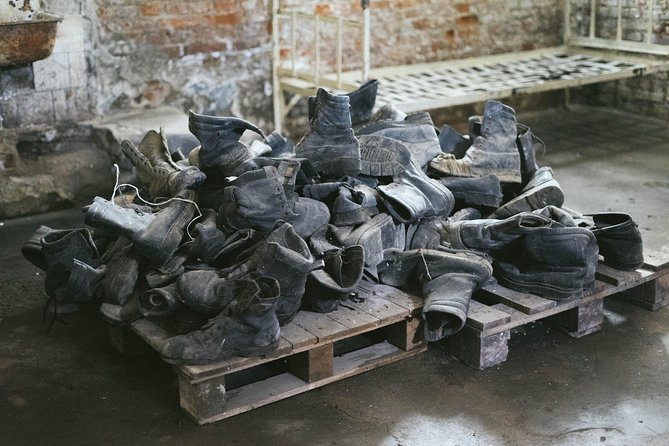
At $173.47 per person, this is not a budget city tour. The price needs to be judged against what you are actually getting.
You are paying for roughly six hours, a small group capped at eight, private vehicle transport, a local guide, access to Fort 13 Jilava, and several connected stops around Bucharest. You also receive snacks, water, coffee or tea, and one beer or equivalent.
The strongest value comes from access and logistics. Reaching a former prison inside an active prison complex is not the same as visiting a central museum. The vehicle lets you connect Revolution Square, the Palace of Parliament, Ferentari, Carol Park, and Jilava without building several separate transport plans.
The price is harder to justify if you mainly want a cheap overview of communist Bucharest. In that case, a central walking tour may cover the basics for less. It is easier to make the cost worthwhile if Fort 13 is a priority and you value a personal guide, small group, and transport beyond the center.
The included food is helpful but should not be the reason you book. Think of it as a practical addition to a long day, not a major part of the price. The main purchase is the access, interpretation, and route.
Who will appreciate this experience most?
I would recommend this tour to you if you have a serious interest in Romania’s communist period, political repression, urban change, or the events of December 1989. It is also a good fit if you have already seen Bucharest’s central sights and want to understand the city beyond the main monuments.
The tour suits curious, open-minded visitors who are comfortable with difficult history. Mircea’s firsthand connection to Revolution Square can be especially meaningful if you want to hear how the fall of communism is remembered locally.
You may want to skip it if you are looking for a relaxed day of architecture, shopping, or cheerful sightseeing. The Ferentari drive may feel stark, the prison visit is heavy, and the phone restriction requires some preparation.
I would also think twice if you need a highly flexible schedule. The day has several fixed stops, a long drive, and a set return to the meeting point. Most people can participate, but the available information does not give detailed accessibility specifications for the fort, vehicle, or individual stops, so ask the provider before booking if you have mobility concerns.
Simple tips for a better day
Bring a camera if you want photographs inside Fort 13. Your phone cannot be used there, and the rules allow photos only with a camera.
Wear practical clothing for a six-hour outing and bring any personal items you need before entering the prison. Mobile phones are not allowed inside, so finish messages and organize your belongings ahead of time.
Use the drive as part of the tour rather than dead time. The movement from historic Bucharest to communist housing and then to Jilava is central to the experience.
Leave room for questions. The tour is built around interpretation, and Mircea’s connection to the 1989 events gives you an unusual chance to ask about memory as well as dates and buildings.
Should you book Exploring a Former Communist Prison?
Book it if you want a serious, unusual look at Bucharest’s communist past and are willing to spend much of a day on the subject. Fort 13 Jilava is the deciding factor. Its former prison setting, execution-camp history, and location inside an active prison complex make this far more distinctive than a standard city tour.
The small group, air-conditioned vehicle, included refreshments, and guide Mircea’s personal connection to Revolution Square strengthen the package. The price is high, but the route and access are difficult to reproduce on your own.
Skip it if you want an inexpensive introduction to Bucharest, an interior tour of the Palace of Parliament, or a light sightseeing day. For the right visitor, though, this is a thoughtful way to see the city’s scars as well as its grand buildings.
FAQ
Where does the tour start?
It starts at the Memorial of Rebirth in Piața Revoluției, Bucharest, at 9:30 a.m.
Where does the tour end?
The activity ends back at the meeting point at the Memorial of Rebirth.
How long does the experience last?
The tour lasts approximately six hours.
How large is the group?
The experience has a maximum of eight people.
Is transportation included?
Yes. An air-conditioned vehicle is included, and the route connects central Bucharest, communist neighborhoods, Carol Park, and Fort 13 Jilava.
Can I use my mobile phone inside Fort 13 Jilava?
No. Mobile phones are not allowed inside the prison.
Can I take photographs inside the prison?
Yes, but photographs are allowed only with a camera.
What food and drinks are included?
You receive a covrig pretzel, local traditional bites, one 500-milliliter bottle of water, coffee or tea, and one 400-milliliter beer or equivalent. Additional food and drinks are not included.
Just added around Bucharest
- Private Full Day Tour of Bucharest★ 5.0 · 3 reviews
- Veliko Tarnovo and Medieval Bulgaria Private Day Trip from Bucharest★ 5.0 · 3 reviews
- Bucharest VIP Bar Crawl in Lipscani ‘Old Town’★ 5.0 · 3 reviews
- Muddy Volcanoes and Salt Mine Private Tour★ 5.0 · 3 reviews
- Bucharest Private City Tour★ 5.0 · 3 reviews
- Legends & Stories from Transylvania -2 Castles & Brasov Old Town★ 5.0 · 3 reviews
- Transfagarasan Private Tour from Bucharest – 2 Days★ 5.0 · 3 reviews
- 7-Day Dracula Tour in Romania from Bucharest including ‘The Ritual of Killing of a Living Dead’★ 5.0 · 3 reviews
Communist Bucharest Tours, compared.

Bucharest Essential Tour: Old Town, Calea Victoriei & Communism
Read our review →
Communism in Bucharest – Landmarks, Museum & Communist Appetizers
Read our review →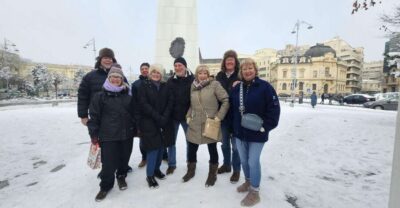

Browse the lists this tour appears in