
Reviewed · BUCHAREST TOURS
Guided Walking Tour of Historical Bucharest
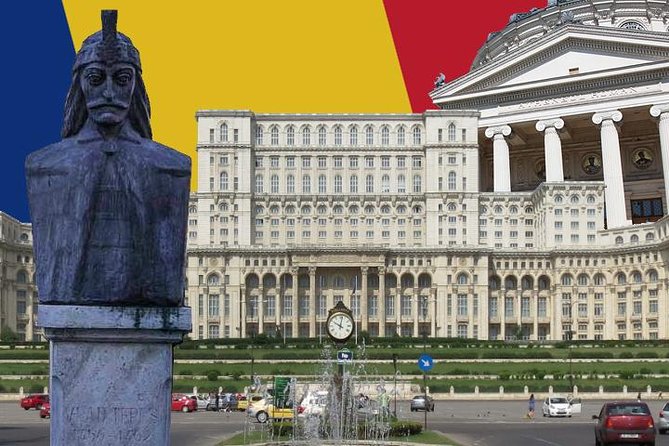
Bucharest’s story is written across a surprisingly compact part of the city. In three hours, this private walk links Vlad the Impaler’s former court, grand nineteenth-century buildings, Ceaușescu’s vast urban works, and the sites of the 1989 Revolution. It is less a gentle stroll than a brisk lesson in how power reshaped Romania’s capital.
I like the local perspective, especially when the guide explains how communist rule affected daily life and adds memories from growing up in Romania. I also like the route’s range: you move from old inns and Orthodox churches to the Palace of Parliament and the elegant streets of the Old Centre. The main drawback is the pace. You may cover 17,000 steps, and some visitors find the long explanations or political discussion repetitive.
Key points about this Bucharest walk
- Start at Manuc’s Inn: Begin outside one of Bucharest’s oldest and best-known inns in the Old Centre.
- See the city’s sharp contrasts: Medieval ruins, royal churches, French-inspired buildings, socialist boulevards, and modern memorials all appear on one route.
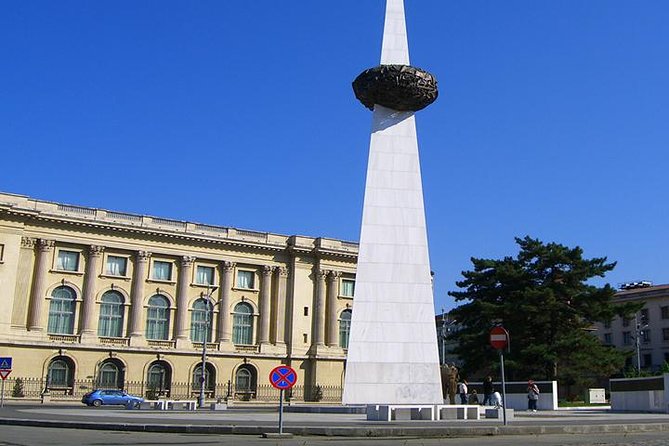
- Follow the 1989 Revolution: Visit the former Communist Party headquarters, Ceaușescu’s final-speech balcony, and the Memorial of Rebirth.
- Expect a history-first tour: The guide focuses more on events, rulers, religion, architecture, and society than on quick photo stops.
- Private group format: Only your party takes part, allowing questions and some flexibility in the conversation.
- Plan for serious walking: Wear good shoes, carry water, and be ready for hot or cold weather.
Starting at Manuc’s Inn and the Old Princely Court
The meeting point is outside the main entrance of Manuc’s Inn, at 62 Strada Franceză. This location puts you in the Old Centre from the first minute, rather than wasting the opening part of the tour on a transfer from a modern hotel district.
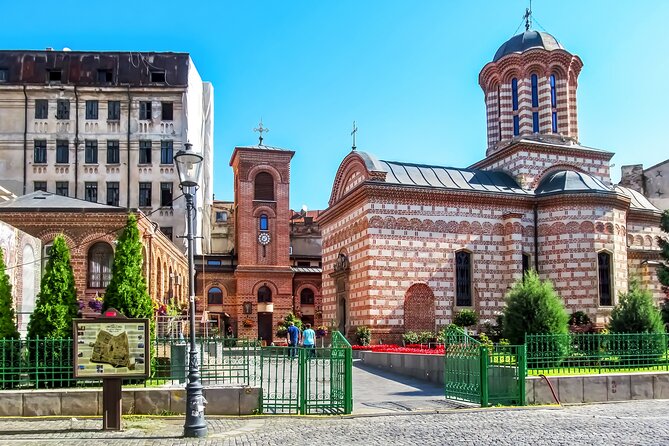
Manuc’s Inn is an apt place to begin. The tour introduces the history of Bucharest’s oldest and most famous inn before moving toward the Old Princely Court. You also hear about St. Anton Orthodox Church, once the coronation church of Wallachian rulers. These early stops give you a useful frame for understanding Bucharest as a former princely seat, a trading town, a royal capital, and later a communist state capital.
At the Old Princely Court, you see the remains of the palace used by Wallachian rulers. Vlad the Impaler, the historical figure behind the Dracula legend, once lived here. The ruins are not a grand palace complex, so do not arrive expecting a complete medieval castle. Their value comes from what they represent: Bucharest’s early political center, now surrounded by busy streets, restaurants, and newer buildings.
The stop itself is brief, with free admission. The guide’s explanation does much of the work, connecting the stones in front of you with the rulers and rivalries that shaped Wallachia.
More History Tours in Bucharest
- Bucharest: 3-Hour Dark History Tour with a Local
★ 4.9 · 301 reviews - Bucharest: Small Group History, Art & Secrets Tour
★ 4.7 · 152 reviews - Bucharest Jewish Heritage | Holocaust Memorial | Private Car Tour
★ 5.0 · 38 reviews
Unirii Square and the boulevard built for power
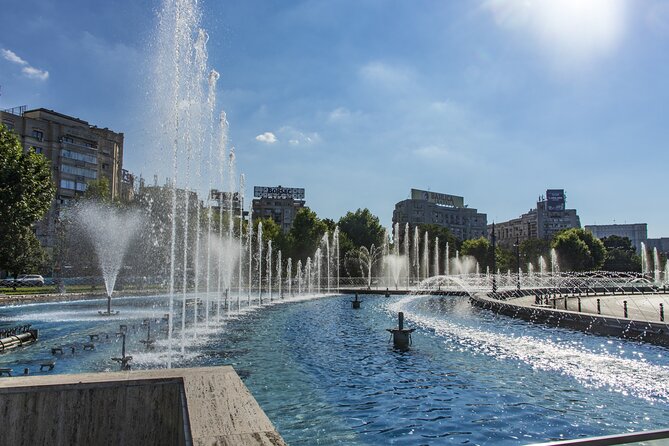
From the Old Princely Court, the route heads to Piata Unirii, the broad center of modern Bucharest. The refurbished fountains provide a good photo stop, but the more important point is the scale of the place. This is where the city begins to feel shaped by twentieth-century planning rather than medieval streets.
You then walk along Bulevardul Unirii, once called the Boulevard of Socialist Victory. Its comparison with the Champs-Élysées is revealing, though the mood is very different. The boulevard was planned to display the authority of Nicolae Ceaușescu’s regime and to create a ceremonial approach to the Palace of Parliament.
Here, I find the guide’s historical commentary especially useful. A wide boulevard can look like a simple urban improvement until you learn what was removed to create it. The story of Ceaușescu’s dictatorship, forced redevelopment, and the Cold War gives the grand scale a human meaning.
The Palace of Parliament is the visual high point of this section. You do not enter the building on this walk, but you get strong views from Piata Constitutiei, directly in front of it. The enormous structure looks across the boulevard toward the center of Bucharest, and the open square gives you room to take in its size.
This is one of the clearest examples of the tour’s approach. You are not only shown a famous building. You are asked to consider why it was built, what it cost, and how it changed the city around it.
Churches, CEC Palace, and the old center
The route then turns back toward the historic core, passing another church built in 1724 and hearing the story of the CEC Palace. The church stop adds another layer to the city’s religious and architectural past, while the CEC building introduces the grand banking architecture of modernizing Bucharest.
You also walk along part of Calea Victoriei, one of the city’s notable central avenues. It is lined with shops and important buildings, and it offers a change from the open socialist boulevard. This part of the walk is good for seeing how Bucharest shifted toward a more European urban style in the nineteenth and early twentieth centuries.
The Old Centre itself covers streets with more than 500 years of history. Today, it is one of the easiest areas in Bucharest to explore on foot, but the tour helps you look beyond restaurants and nightlife. You enter the Macca-Villacrosse Passage, a covered passage with a distinctive curved form and a past tied to the city’s commercial life.
The passage is a small but worthwhile stop. It shows the intimate scale of old Bucharest after the huge spaces around Parliament Square. I like this change of rhythm, though the route can feel crowded and confusing in the narrow lanes. One useful improvement would be for the guide to keep pointing out how each alley connects with the last place you saw.
Banking, University Square, and the city’s institutions
The National Bank of Romania is another important stop. Its grand exterior reflects the growing financial power of the capital and gives the guide a chance to explain how money, government, and urban development worked together.
Next comes University Square, home to the oldest and largest university in Bucharest, founded in 1864 by Alexandru Ioan Cuza. This is more than a pretty open space. It has long been tied to education, public debate, protests, and political change.
The nearby Suțu Palace now houses the Bucharest History Museum and was once the residence of Costache Suțu. You see it from the outside on this walk, along with Colțea Hospital and Church, an important central complex built in 1888. These stops help you read Bucharest as a city of institutions, not just palaces and churches.
The National Theatre of Bucharest appears along the way as well. Its design has changed several times during its relatively short history, making it a useful example of how buildings can reflect changing tastes and political eras.
This section has plenty of material, and the guide may speak at length. If you prefer a light introduction with only a few dates, the amount of information may feel heavy. If you enjoy understanding why a city looks the way it does, the detail is the point.
More Walking Tours in Bucharest
- Bucharest: City Highlights Guided Walking Tour
★ 4.9 · 1,482 reviews - Bucharest Highlights Walking Tour
★ 5.0 · 469 reviews - Bucharest: Ghost Stories & Romanian Mythology Walking Tour
★ 4.9 · 287 reviews - Bucharest: Guided Walking Tour with Romanian Snack
★ 4.9 · 228 reviews
Kretzulescu Church and the 1989 Revolution
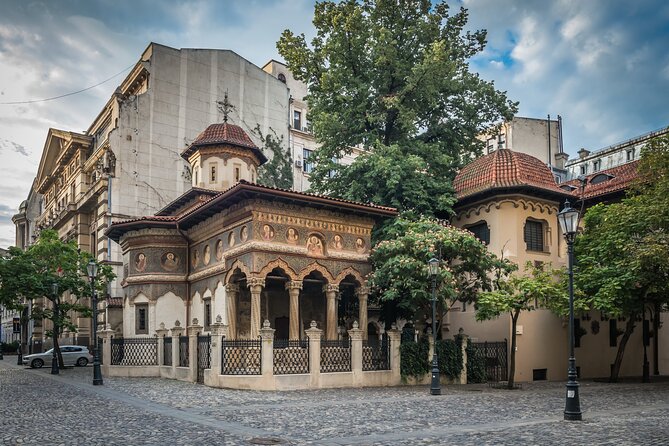
Biserica Kretzulescu is one of the route’s most attractive churches. Its appearance and history offer a reminder that Bucharest’s central streets contain important religious buildings even when they are surrounded by government offices, traffic, and modern shops.
The most powerful portion of the walk comes at Revolution Square. This is where you learn how the December 1989 uprising began and see memorials connected with the people who died during the fall of communism.
The route includes the balcony where Ceaușescu delivered his final speech, the former Communist Party headquarters, the University Library, King Carol I’s equestrian statue, and the Monument of Rebirth. These are not distant historical abstractions. They are physical places linked to the end of a dictatorship and the uncertain birth of a new political era.
The Memorial of Rebirth rises 25 meters and commemorates the struggle and victims of the Christmas 1989 Revolution. Its unusual design can prompt strong reactions, but that is part of its interest. The guide explains its meaning and the debates around how national memory is represented.
I would allow extra attention here. The stop can be moving, especially when the guide connects public events with personal or family memories of communist Romania. At the same time, political subjects require some care. Most of the material is directly tied to the city’s past, but the discussion can become personal or opinionated. If you want a strictly neutral account, say so at the start.
Military Circle and a final look at central Bucharest
The walk continues to the Military Circle and the Sărindar Fountains. The Military Circle is a grand historic building, and the fountains create another useful photo stop.
The final part includes a historic building and gardens built for the people of Bucharest by local citizens more than 100 years ago. The information provided for this stop is brief, so the guide’s explanation will shape how much you get from it. It provides a calmer finish after the heavier political material and returns the focus to the city’s civic life.
The advertised tour ends back at the meeting point. Because pickup and drop-off are also offered, confirm the exact arrangement when you book. One party found it confusing to locate a bus after finishing away from the starting point, so do not assume that hotel transport is automatic unless it is clearly confirmed for your booking.
What the guide adds to the route
The strongest part of this experience is the guide’s storytelling. Alina is frequently named as the guide, and Elena is also mentioned in connection with an excellent historical tour. The guide style is energetic, personal, and heavy on context.
You may hear about Romanian history from the fourteenth century to the present, along with religion, architecture, the Balkans, Eastern Europe, Russia, and the relationship with Western Europe and the United States. That wider frame can help you understand why Bucharest looks so different from one block to the next.
Personal memories are another important feature. A guide who grew up in Romania can explain what the communist period meant in ordinary life, not just in official slogans and dates. You should also expect strongly held views at times, particularly on the communist and monarchist periods. One or two people found political commentary distracting, while another objected strongly to conspiracy-based claims. This is the main reason I would recommend asking early for a history-focused approach if that is what you want.
English is offered, but one participant found some explanations difficult to follow. Alina’s enthusiasm and command of the subject were praised repeatedly, yet strong accents, fast speech, or long political explanations may challenge an English-only visitor. Ask the guide to slow down or repeat a point. A private tour makes that easier than a large group walk.
Price, pace, and practical value
At $30.77 per person, the price is fair for a private three-hour tour, especially if two people share the booking. You are paying for a guide rather than admission tickets, and the listed stops are free. The real value comes from the connections between them.
On your own, you could photograph the Palace of Parliament, University Square, and the Old Centre. It would be much harder to understand why the boulevard is so wide, how the Revolution unfolded around specific buildings, or what role the churches and old courts played in the city’s growth.
The route is not physically extreme, but it is long. One person recorded more than 17,000 steps, even without a fast pace. Bring water, particularly in hot weather, and wear supportive shoes. The tour requires a moderate level of fitness and depends on good weather, so cold, heat, or rain can change the experience.
The private format is valuable if you want to ask questions about Romanian politics, architecture, or daily life. It is less ideal if you want a quiet walk with short commentary. The tour can also run longer than the advertised three hours when the guide follows questions or adds extra sights. That may be a bonus, but plan your next appointment with breathing room.
Who should book this Bucharest tour?
I would choose this walk early in a Bucharest stay. It gives you a working map of the Old Centre, Calea Victoriei, Unirii, University Square, and Revolution Square. Afterward, you can return to the buildings that interested you most, including the museums and historic churches that deserve more time.
This tour suits you if:
- You want a broad introduction to Bucharest’s history.
- You care more about stories and political context than restaurant recommendations.
- You enjoy architecture but want to know what shaped it.
- You can manage several hours on foot.
- You prefer a private guide and the chance to ask questions.
- You are comfortable hearing personal opinions about Romania’s past.
I would choose another activity if you want to enter the Palace of Parliament, visit several museums, or avoid political discussion. This is an exterior-focused walking tour, and its greatest strength is the guide’s narrative rather than indoor access.
The experience has a 4.8 rating from 84 reviews, with 94 percent recommending it. That matches the pattern of feedback: very strong marks for enthusiasm, historical detail, personal stories, and the number of sights covered, with reservations about pace, English clarity, repetition, and occasional political opinions.
Should you book it?
Book this tour if you want Bucharest explained as a city shaped by rulers, religion, royal ambition, dictatorship, revolution, and ordinary people. The route covers a remarkable amount of ground for about $31, and a strong guide can make the contrasts between the Old Centre and Ceaușescu’s monumental avenues much easier to understand.
Go prepared for a long walk and a lot of talking. Bring water, wear good shoes, and tell the guide what kind of history interests you. If you do that, this is a useful first-day orientation and one of the better ways to see how Bucharest’s past remains visible in its streets.
FAQ
Where does the Bucharest walking tour start?
The tour starts outside the main entrance of Manuc’s Inn, Hanul lui Manuc, at 62 Strada Franceză in Bucharest’s Old Centre.
Where does the tour finish?
The activity is scheduled to finish back at the meeting point.
Is hotel pickup available?
Yes. Pickup and drop-off are offered, but you should confirm the exact pickup arrangement when booking.
How long does the tour last?
The advertised duration is approximately three hours. It may run longer if the guide continues explaining sites or answering questions.
What language is the tour offered in?
The tour is offered in English.
Is this a private tour?
Yes. Only your group participates in the private activity.
What sights are included?
The route includes Manuc’s Inn, St. Anton Orthodox Church, the Old Princely Court, Piata Unirii, Bulevardul Unirii, Palace of Parliament viewpoints, Piata Constitutiei, Calea Victoriei, the Old Centre, Macca-Villacrosse Passage, the National Bank, University Square, Suțu Palace, Colțea Hospital and Church, the National Theatre, Kretzulescu Church, Revolution Square, the Memorial of Rebirth, the Military Circle, and Sărindar Fountains.
Do I need to be physically fit?
You should have a moderate level of fitness. The walk covers substantial ground, and one account recorded more than 17,000 steps. Water and comfortable shoes are sensible.
What happens if the weather is bad?
The experience requires good weather. If it is canceled because of poor weather, you will be offered another date or a full refund. You can cancel for a full refund up to 24 hours before the start time.
Just added around Bucharest
- Private Full Day Tour of Bucharest★ 5.0 · 3 reviews
- Veliko Tarnovo and Medieval Bulgaria Private Day Trip from Bucharest★ 5.0 · 3 reviews
- Bucharest VIP Bar Crawl in Lipscani ‘Old Town’★ 5.0 · 3 reviews
- Muddy Volcanoes and Salt Mine Private Tour★ 5.0 · 3 reviews
- Bucharest Private City Tour★ 5.0 · 3 reviews
- Legends & Stories from Transylvania -2 Castles & Brasov Old Town★ 5.0 · 3 reviews
- Transfagarasan Private Tour from Bucharest – 2 Days★ 5.0 · 3 reviews
- 7-Day Dracula Tour in Romania from Bucharest including ‘The Ritual of Killing of a Living Dead’★ 5.0 · 3 reviews
Bucharest Tours, compared.
Dracula’s Castle, Peles Castle, & Brasov Old Town
Read our review →
Dracula Castle, Peles Castle & Brasov Old Town
Read our review →
Dracula’s Castle, Peleș Castle & Brașov Day Trip
Read our review →
Day Trip to Dracula Castle, Peles Castle & Brașov
Read our review →
Bucharest to Dracula Castle, Peles Castle and Brasov Guided Tour
Read our review →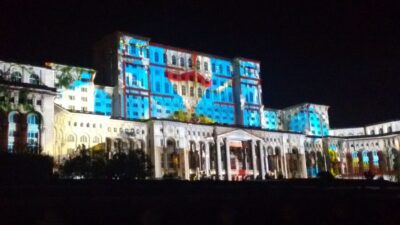
Dracula’s Castle, Peles Castle and Brasov Day Trip from Bucharest
Read our review →Browse the lists this tour appears in