
Reviewed · COMMUNIST BUCHAREST TOURS
Life in Communism
Bucharest’s communist past is easiest to grasp on foot, where grand avenues, rebuilt districts, and famous buildings reveal how power reshaped the city. This three-hour walk links about 15 locations to the regime’s major changes, from nationalization and surveillance to demolitions and the lasting effect on daily life.
I like the small maximum group of 15, which gives you a fair chance to ask questions. I also like the human side of the tour, especially when guides such as Daniela, Andreea, Augustin, or John connect the political story with personal memories and ordinary routines. The main drawback is simple: three hours on city streets can feel long in cold, wet, or hot weather, and drinks during the break cost extra.
Key points to know before you book
- About 15 communist-era stops: You see more than one famous building, with each location tied to a particular change or moment.
- Starts at the Patriarchal Cathedral: Meet at Aleea Dealul Mitropoliei 25, then finish back at the same point.
- Three hours on foot: Expect a history lesson with steady walking, so moderate fitness helps.
- A small English-speaking group: The tour is offered in English and capped at 15 people.
- Period-style snacks included: You get communist-type snacks, while drinks at the mid-tour break are self-paid.
- Strong guide-led storytelling: Daniela, Andreea, Augustin, and John have all been praised for clear explanations, personal stories, and an easy-to-follow style.
Why Bucharest’s communist past works best as a walking tour
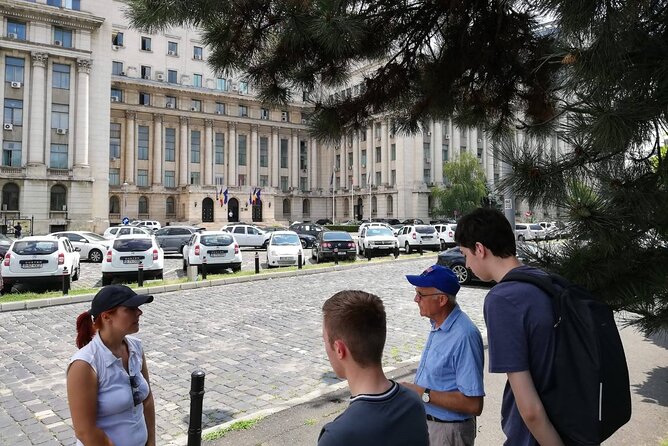
Communism in Romania was not only a political system discussed in books. It changed where people lived, how the city looked, what could be bought, and how much people trusted one another. A walking route makes those changes visible.
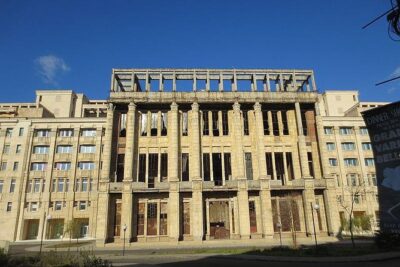
You move between monumental government buildings, older streets, public squares, and areas reshaped by demolition. That physical contrast matters. It helps you see how the regime used architecture and urban planning to project power, while also clearing away parts of the city that did not fit its plans.
The tour covers the period through themes such as nationalization, the Secret Police, forced change, and demolition. You are not just handed a list of dates. The goal is to understand how major decisions reached into ordinary homes and daily routines.
I would take this tour near the start of a Bucharest visit. It gives you a framework for the city before you explore on your own. Later, when you pass a broad avenue or an imposing state building, you will have a better idea of what you are looking at and why it is there.
More communist-era Bucharest walks:
- The Real tour of Communism
★ 5.0 · 666 reviews - Life under Communism
★ 5.0 · 358 reviews - 3-Hour Guided Tour of Communist Bucharest
★ 4.9 · 303 reviews
Starting at the Patriarchal Cathedral
The meeting point is the Patriarchal Cathedral at Aleea Dealul Mitropoliei 25. This is a useful place to begin because the tour does not open in an anonymous street. You start from a major Bucharest landmark, then move into the political and urban story of the communist period.
The cathedral also gives you a clear fixed point for the day. The walk ends back at the same meeting place, which is handy if you are still learning your way around the city. You do not need to work out a separate finish location or arrange transport back from the final stop.
Bring shoes suited to several hours of city walking. The physical requirement is listed as moderate, and the experience is outdoors on Bucharest streets. The route may feel easy for confident walkers, but it is still worth allowing for a full three hours on your feet.
The group limit of 15 is one of the practical strengths here. A very large group can turn a city walk into a lecture heard from the back. With a smaller party, you should have more room to hear the guide and raise a question about a detail that catches your attention.
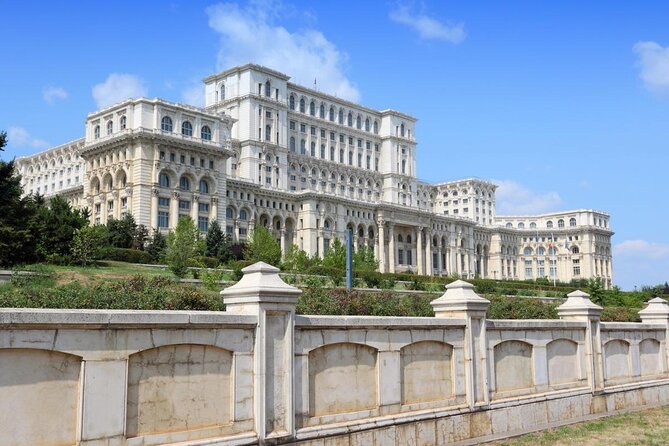
Palace of Parliament: the clearest symbol of state power
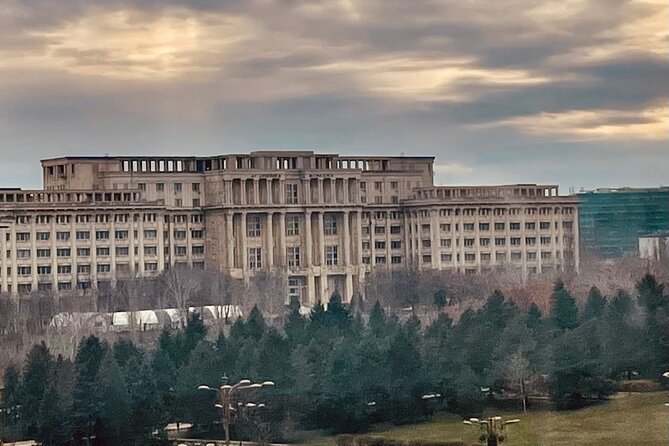
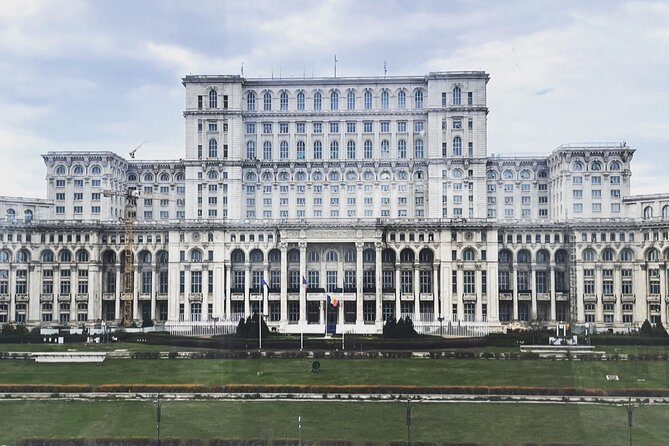
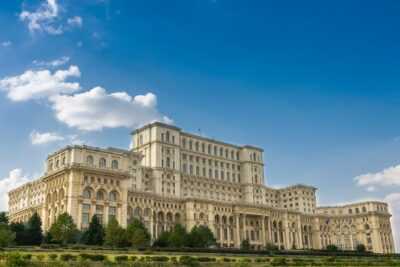
The Palace of Parliament is the most obvious major stop. Its scale gives the guide a strong visual way to explain the ambition of Romania’s communist leadership and the cost of reshaping central Bucharest.
The building is not presented as an isolated architectural curiosity. It belongs to a wider story of demolition and forced urban change. To create monumental government space, large sections of the old city were removed or altered. That makes the palace important not only for its size, but also for what disappeared around it.
Expect the guide to use this stop to explain how architecture served politics. Monumental buildings can send a message about authority, permanence, and control. At the same time, the clearance needed to make room for them affected residents and changed the character of the city.
A useful point to keep in mind is that seeing the palace from outside is not the same as taking an interior tour. The supplied details identify it as a stop on the walking route, but they do not promise entry. Book this experience for the historical explanation and city walk, not as a substitute for a dedicated Palace of Parliament visit.
This is also where a good guide can keep the story from becoming too simple. The subject is not just grand buildings versus old houses. It is about how a government made decisions, who paid the price, and how those choices still shape Bucharest.
Calea Victoriei: reading change along a major avenue
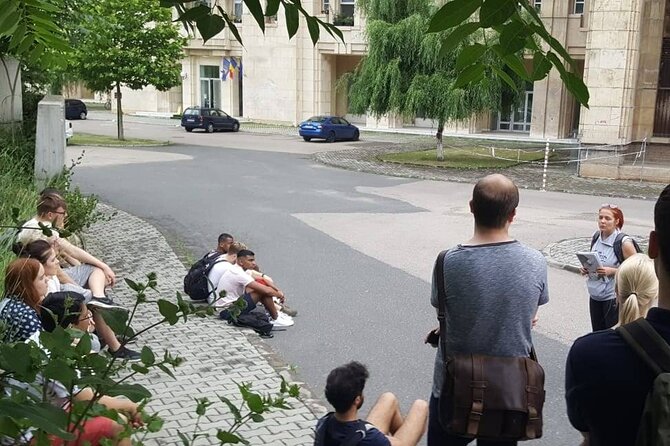
Calea Victoriei gives the tour a different kind of setting. Instead of one monumental destination, you walk along a major city route where the past and present sit close together.
The guide uses the avenue to place communist changes within the larger story of Bucharest. You can expect discussion of architecture, public life, and the way the regime affected the city beyond its best-known government projects.
This stop is valuable because it helps you connect the political story to the street itself. A city can carry its past in grand structures, but also in altered facades, road layouts, public spaces, and the mix of older and newer buildings around you.
I would pay close attention to the guide’s explanations here rather than rushing ahead to photograph buildings. The tour’s strength is interpretation. The same street can look like a pleasant city center when you first arrive, then take on a sharper meaning once you understand what changed and why.
Calea Victoriei is also a good place to ask questions about daily life. The tour is designed to cover how communism changed people as well as buildings. Personal accounts from guides can make that part less abstract, particularly when they describe experiences from their own lives or family background.
A few more Bucharest day trips to weigh up
- Bucharest: Dracula’s Castle, Peles Castle, & Brasov Old Town
★ 4.5 · 17,858 reviews - Bucharest: Dracula Castle, Peles Castle & Brasov Old Town
★ 4.6 · 10,891 reviews - Bucharest: Dracula’s Castle, Peleș Castle & Brașov Day Trip
★ 4.5 · 5,919 reviews - Bucharest: Palace of Parliament Tickets and Guide
★ 4.3 · 3,182 reviews
Piata Revolutiei and the story of political rupture
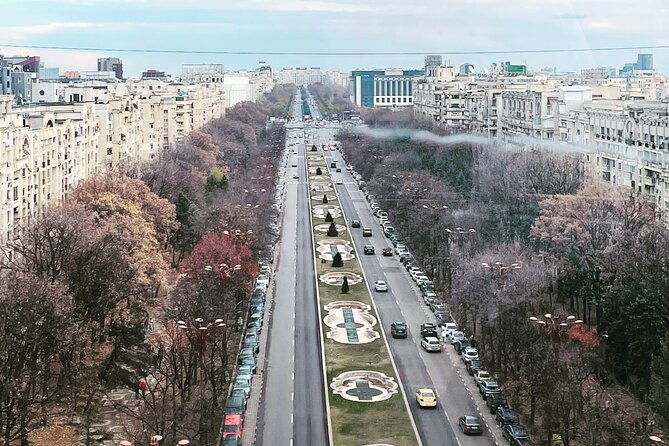
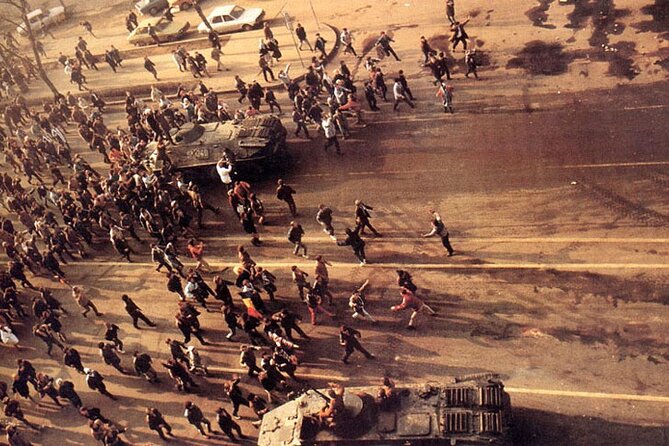
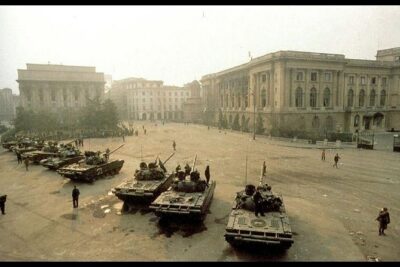
Piata Revolutiei, or Revolution Square, adds the political turning point to the route. Its name points to the end of communist rule and the events that changed Romania’s direction.
By this stage of the walk, the square can bring earlier themes together. The tour has already considered state power, surveillance, urban change, and daily life. Here, you can place those pressures beside the moment when the system began to break apart.
The value of this stop is not simply that it is associated with a major event. It helps you understand that the communist period had a beginning, a long middle, and an ending that left a mark on the city. The guide can connect buildings and public space with the country’s political shift.
This is another stop where a clear narrator matters. Augustin has been praised for presenting a careful, balanced account of Romania’s complicated past. Andreea has been noted for an easy-to-follow English delivery and personal stories. If your scheduled guide is Daniela or John, the available feedback also points to detailed explanations and firsthand recollections.
Guide assignments can vary, so you should not book on the assumption that one particular person will lead every departure. Still, the range of positive comments about named guides suggests that the human delivery is a central part of the experience.
Fifteen stops, not just three landmarks

The headline locations are the Palace of Parliament, Calea Victoriei, and Piata Revolutiei. The route, however, covers roughly 15 objectives. That wider selection is important because communist Bucharest cannot be explained by three buildings alone.
Each stop marks a specific moment or change in the communist timeline. Some may help explain government policy. Others may show what happened to the city’s architecture or residents. Together, they create a sequence rather than a collection of disconnected sights.
This is the right format if you want context while standing in the places where events unfolded. It is also useful if you have limited time in Bucharest and want one organized introduction before visiting museums or exploring neighborhoods independently.
The tradeoff is pace. Fifteen stops in three hours means some locations will receive a shorter explanation than the main landmarks. You will not get an hour-long treatment of every site. The reward is breadth, with enough movement to show how widespread the changes were.
The personal side of communist life
Political history can become dry when it stays at the level of institutions. This tour tries to bring the subject down to ordinary life, covering how nationalization, state control, secret policing, and demolition affected people.
That personal angle is one of the most praised parts of the experience. Guides have shared stories from their own lives, and those memories give the tour a direct human quality. You may hear not only what the government did, but what it felt like to live with those decisions.
Daniela has been described as friendly and clear. Andreea has been praised for combining facts with personal experiences and for speaking English that is easy to follow. John has brought his own stories into the walk, while Augustin has been singled out for a carefully researched and nuanced account.
Those details matter when you are choosing a history tour. A guide who simply recites information can leave you with dates but little understanding. A guide who explains cause, effect, and personal impact can help you see why the past still matters in present-day Romania.
The tour is not presented as a comedy walk or a light sightseeing activity. Communism, state surveillance, and forced demolition are serious subjects. Still, the personal stories and period snacks give the experience some texture and keep it from feeling like a classroom lecture.
What the communist-type snacks add
Communist-style snacks are included. The details do not specify exactly what you will receive, so do not book this as a food tour. Think of the snacks as a small period detail that supports the historical theme.
Food can make an era easier to picture. A discussion of shortages, limited choice, or daily routines becomes more concrete when paired with something associated with that period. The snacks will not replace the main content, but they add a sensory touch to a subject that is otherwise built around buildings and political events.
There is also a short break in the middle of the walk. Alcoholic drinks are not included, and any drinks you choose are self-paid. Carry cash if possible, since that is the practical advice given for the break.
One past participant used the pause to warm up during cold weather. That makes the break useful beyond refreshments. On a chilly day, it gives you a chance to recover before continuing through the second half of the route.
Is $31.24 a fair price?
At $31.24 per person, this sits in a reasonable range for a three-hour guided city walk, especially with a small group and about 15 stops. You are paying for the guide’s research, storytelling, route planning, and ability to explain what you are seeing in real time.
The value is strongest if you want an organized introduction to Bucharest’s communist period. You could walk past the same buildings alone, but you would miss much of the connection between nationalization, surveillance, demolition, architecture, and political change.
The included snacks add a little value, though they should not be the reason you book. Drinks are extra, so budget for that if you want something during the break. Group discounts may also make the price more attractive if you are booking with friends or family.
The tour has an average booking lead time of 22 days. That suggests planning ahead is sensible, particularly if your dates are fixed. Free cancellation is available up to 24 hours before the start time, with a full refund. Changes or cancellations made inside that window are not accepted for a refund.
Who should book this walk?
I would recommend it most strongly if you are interested in recent European history, urban change, architecture, or the personal side of political systems. It suits first-time visitors who want a firm sense of Bucharest before setting out alone.
It also works well for visitors who prefer a small group to a private tour. A maximum of 15 people keeps the price below many private options while still allowing conversation with the guide.
You should think twice if you dislike walking, want a tour focused only on beautiful sights, or expect entry into the Palace of Parliament. The subject includes difficult material, and the route is built around explanation rather than quick photo stops.
The tour is offered in English. Service animals are allowed, and the meeting point is near public transportation. Confirmation is provided when you book, but you should still arrive prepared for an outdoor walk and a moderate level of physical activity.
Should you book Life in Communism?
Book it if you want to understand why Bucharest looks the way it does and how the communist years continue to shape Romanian life. The combination of 15 stops, a small group, personal stories, and clear English explanations gives you more than a quick look at one famous building.
I especially like it as an early-trip activity. It can sharpen everything else you see in the city, from Calea Victoriei to the Palace of Parliament and Revolution Square.
Skip it if you want a relaxed sightseeing stroll with little political discussion. But if you are willing to spend three hours walking through a complicated and sometimes painful chapter of Romania’s past, this is a well-priced way to get your bearings and ask informed questions afterward.
FAQ
How long is the Life in Communism tour?
The walking tour lasts approximately three hours.
Where does the tour start?
The tour starts at the Patriarchal Cathedral, Aleea Dealul Mitropoliei 25, Bucharest, Romania.
Where does the tour finish?
The activity ends back at the meeting point at the Patriarchal Cathedral.
How many places does the tour visit?
You will see roughly 15 objectives connected with Romania’s communist period. The named stops include the Palace of Parliament, Calea Victoriei, and Piata Revolutiei.
What language is the tour offered in?
The tour is offered in English.
How large is the group?
The tour has a maximum of 15 participants. Group discounts are available.
Are snacks and drinks included?
Communist-type snacks are included. Alcoholic beverages are not included, and drinks during the short break are self-paid. Cash is recommended for that break.
Can I cancel for a full refund?
Yes. You can cancel at least 24 hours before the experience start time for a full refund. Cancellations or changes made less than 24 hours before the start time are not accepted for a refund.
Just added around Bucharest
- Private Full Day Tour of Bucharest★ 5.0 · 3 reviews
- Veliko Tarnovo and Medieval Bulgaria Private Day Trip from Bucharest★ 5.0 · 3 reviews
- Bucharest VIP Bar Crawl in Lipscani ‘Old Town’★ 5.0 · 3 reviews
- Muddy Volcanoes and Salt Mine Private Tour★ 5.0 · 3 reviews
- Bucharest Private City Tour★ 5.0 · 3 reviews
- Legends & Stories from Transylvania -2 Castles & Brasov Old Town★ 5.0 · 3 reviews
- 7-Day Dracula Tour in Romania from Bucharest including ‘The Ritual of Killing of a Living Dead’★ 5.0 · 3 reviews
- Transfagarasan Private Tour from Bucharest – 2 Days★ 5.0 · 3 reviews
Communist Bucharest Tours, compared.

Bucharest Essential Tour: Old Town, Calea Victoriei & Communism
Read our review →
Communism in Bucharest – Landmarks, Museum & Communist Appetizers
Read our review →

Browse the lists this tour appears in