
Reviewed · COMMUNIST BUCHAREST TOURS
Bucharest: Private Last Days of Ceausescu Tour in a Dacia
The most unusual part of this Bucharest tour is the car itself. You follow Nicolae and Elena Ceausescu’s last day in a restored classic Dacia, the humble Romanian car that carries you from Revolution Square toward Targoviste and back. The route links the drama of the 22nd of December 1989 with the actual places where the couple tried to regain control.
I like the clear physical route and the personal guiding, especially with Serban, whose explanations are tailored to what interests you. I also like the access to the Palace Primaverii, the Ceausescus’ private home, with admission included. The main drawback is the long road portion and the tour’s physical restrictions: it is not suitable for children under 10, pregnant women, people with back or heart problems, or people over 70.
Key points to know before booking
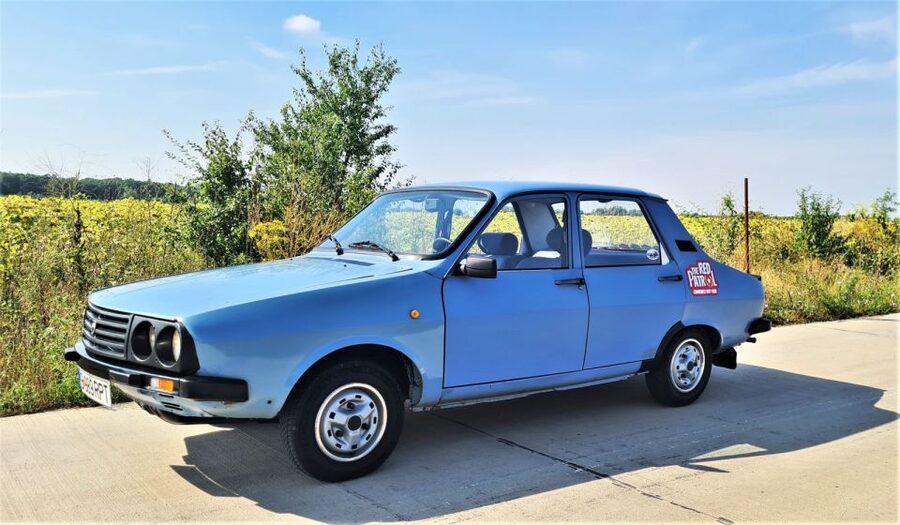
- You follow about 180 kilometers by classic Dacia, linking Bucharest with the places tied to Ceausescu’s capture.
- Revolution Square gives the story its starting point, where the Communist regime began to collapse in public view.
- The tour recreates the helicopter escape, then traces the failed attempt to find help from workers and police.
- Targoviste adds the starkest stop, including the building where the Ceausescus were detained, tried, and executed.
- Palace Primaverii shows their private life, with a guided visit and museum ticket included.
- This is a private experience, with hotel pickup, an English-speaking guide, water, a tour newspaper, and a small tour gift.
Why the last day of Ceausescu matters
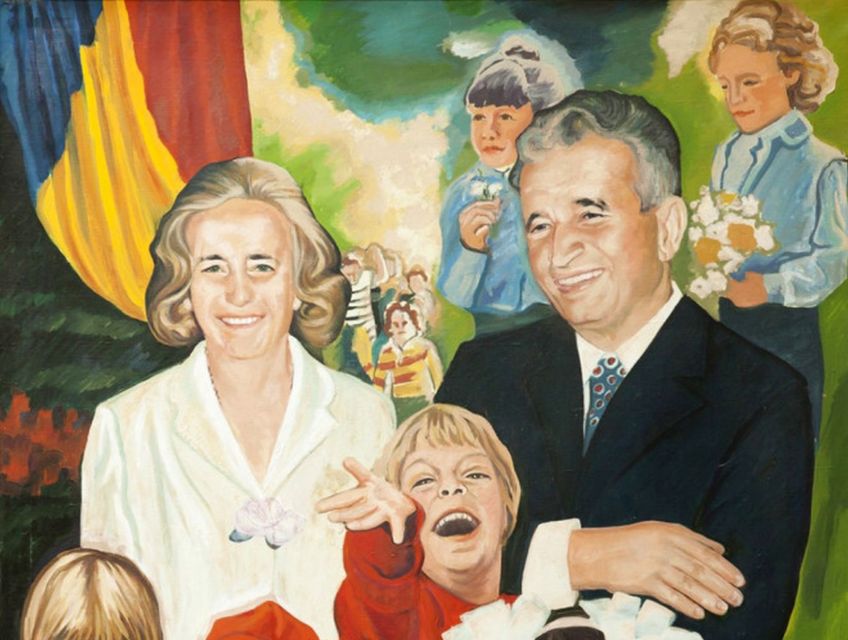
Nicolae Ceausescu ruled Romania for nearly 24 years. His final day compressed the collapse of a dictatorship into a frantic series of movements across the country.
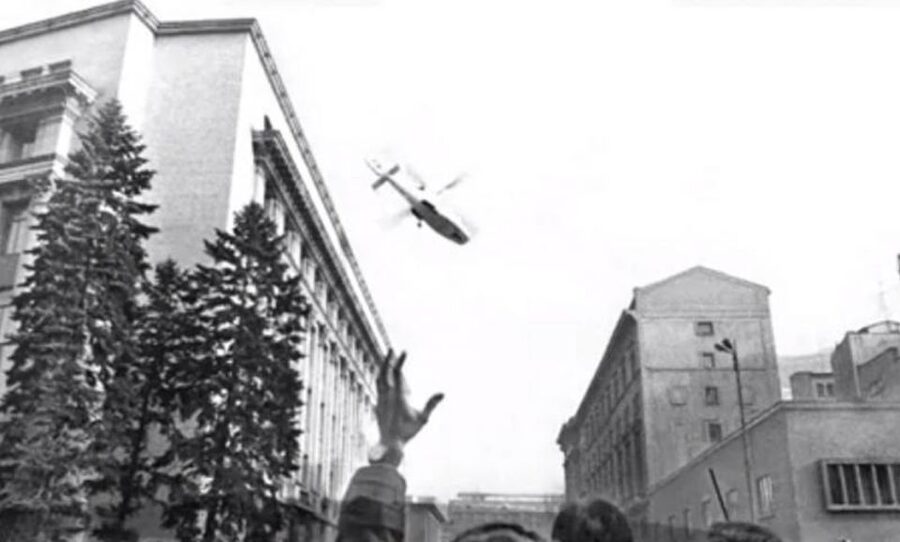
At 12:07 on December 22, 1989, Ceausescu and his wife Elena left the roof of the Communist Party headquarters by helicopter. A crowd of about 100,000 people had gathered around the building, demanding his resignation. The helicopter escape was not a planned retirement. It was an attempt to leave the center of Bucharest, regroup, and find enough support to keep power.
That is what gives this trip its shape. You are not simply visiting a memorial, a museum, and a former residence as separate sights. You are following a chain of decisions made under pressure: flight, confusion, attempted support, arrest, detention, trial, and execution.
I find this approach more useful than a standard city tour because the geography helps you understand the panic. Bucharest was no longer under firm control. Ceausescu moved toward Pitesti and then Targoviste, hoping that workers, soldiers, or police would support him. Instead, he was captured near Targoviste later that day.
The tour also looks at the emotional side of the story, including the fear that followed the sudden loss of power. The focus remains on specific places and events, not on abstract political labels. For anyone interested in Romania’s communist period, that makes the history easier to follow.
More communist-era Bucharest walks:
- The Real tour of Communism
★ 5.0 · 666 reviews - Life under Communism
★ 5.0 · 358 reviews - 3-Hour Guided Tour of Communist Bucharest
★ 4.9 · 303 reviews
Revolution Square: where the story breaks open
The tour begins in Bucharest, with a stop at Revolution Square. Plan on about 40 minutes here for photographs, explanations, and a closer look at the setting where the final public act of Ceausescu’s rule unfolded.
This is the right starting point because it connects the end of the regime with the center of its power. The Communist Party headquarters was the place from which Ceausescu addressed the crowd. Soon after, he was leaving by helicopter from the roof.
Your guide will help place the square within the events of December 1989. The value of the stop is not just the view or the photograph. It is the moment when a leader who had controlled public life for decades suddenly lost the crowd in front of him.
The car also adds a small but worthwhile layer to the visit. A restored Dacia is tied to everyday Romanian life in a way a modern tour vehicle is not. You are riding in a piece of the country’s recent past while hearing about the collapse of its ruling system.
Expect to get out of the car at the main stops. That gives you time for photographs and keeps the trip from becoming six hours of sitting and listening through a window.
Leaving Bucharest in a restored Dacia
After Revolution Square, the route heads out toward Targoviste. The full transport distance is listed as about 180 kilometers, so this is a real road trip rather than a short Bucharest sightseeing loop.
The Dacia is fully restored, and the vehicle is one of the main reasons to choose this tour over a regular minibus excursion. It creates a stronger connection to Romania’s recent past, though you should not expect the ride to feel like a modern luxury car. One person who took the tour found the Dacia more comfortable than expected, but the age and style of the car remain part of the experience.
If more than two people book, the operator uses a convoy of two or three cars, with up to three people in each car. That preserves the classic-car format, though it may mean the group is spread across several vehicles for parts of the drive.
The tour includes water in the car. Toilet and lunch breaks are made during the day, but lunch itself is not listed as included, so budget for your own meal. You should also arrive ready for the 10-minute pickup window and bring a passport or identity card.
The helicopter escape and the unknown stops
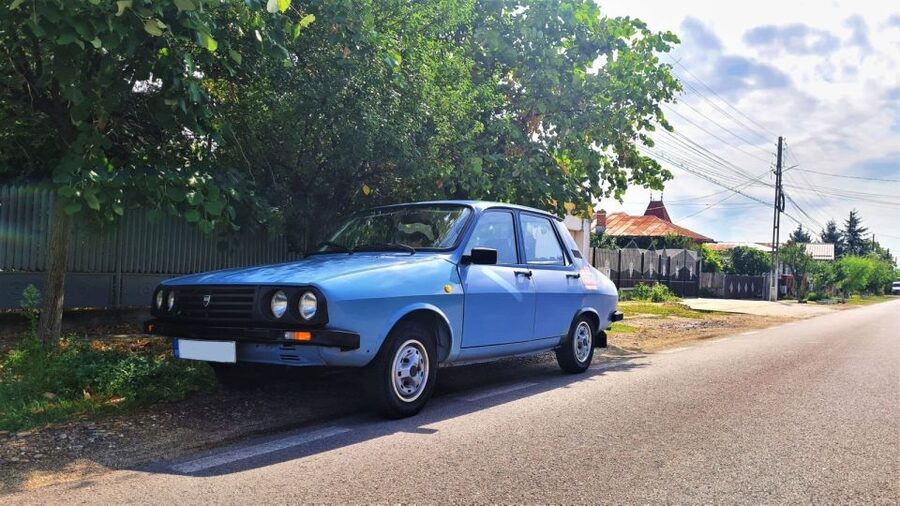
The route includes two less-publicized stops described as secret stops. One is a 15-minute photo and guide stop. The other lasts about 10 minutes and focuses on the next stage of the escape.
These stops matter because they fill in the gap between the famous helicopter departure and the final arrest. The story did not end when the helicopter lifted off. Ceausescu abandoned the helicopter and continued by Dacia, trying to move through the country without knowing who still supported him.
Your guide explains how he sought help from the working class and the army. The stops are meant to show the places connected with that search, rather than simply rushing to the execution site.
The precise details of the secret stops are not provided in advance, which can be part of the appeal. You may prefer this if you enjoy a tour that reveals the route as it goes. If you want a fully fixed list of landmarks before booking, ask the operator for the exact names and locations.
A few more Bucharest day trips to weigh up
- Bucharest: Dracula’s Castle, Peles Castle, & Brasov Old Town
★ 4.5 · 17,858 reviews - Bucharest: Dracula Castle, Peles Castle & Brasov Old Town
★ 4.6 · 10,891 reviews - Bucharest: Dracula’s Castle, Peleș Castle & Brașov Day Trip
★ 4.5 · 5,919 reviews - Bucharest: Palace of Parliament Tickets and Guide
★ 4.3 · 3,182 reviews
The steel factory and militia station
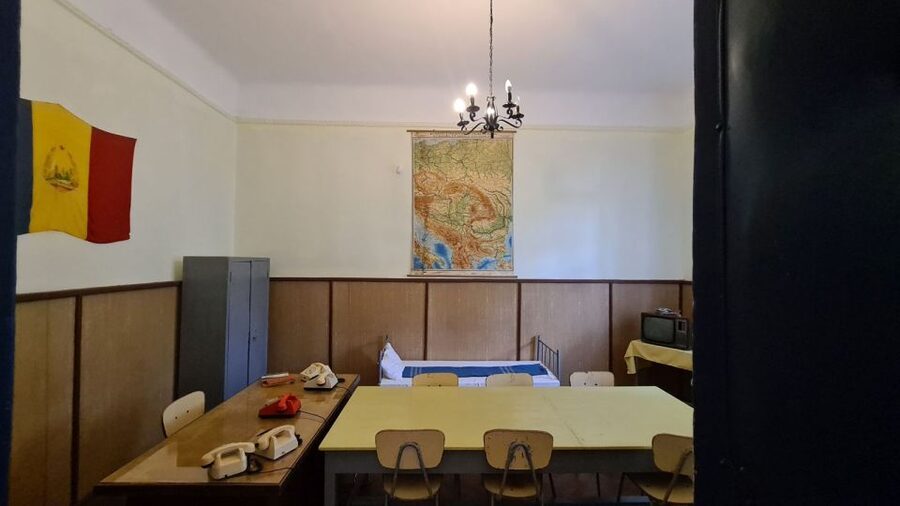
The route includes a stop at a steel factory and a militia station, locations tied to Ceausescu’s attempt to organize support. He was trying to find people who would help him regain control. Instead, the effort failed and he was arrested.
This section gives you a more grounded view of the collapse. Revolution Square shows the public revolt in Bucharest. The factory and militia station show what happened when Ceausescu tried to turn his authority into practical support outside the capital.
The stop also helps explain why the final day moved so quickly. Once the party center in Bucharest was lost, Ceausescu could no longer rely on a single command point. He had to depend on personal appeals and uncertain local contacts.
Expect around 25 minutes at the Ceausescu Last Hours Museum, with a visit, sightseeing, and guiding. The museum is the most direct stop for the final phase of the story before the detention building.
Targoviste and the final detention site
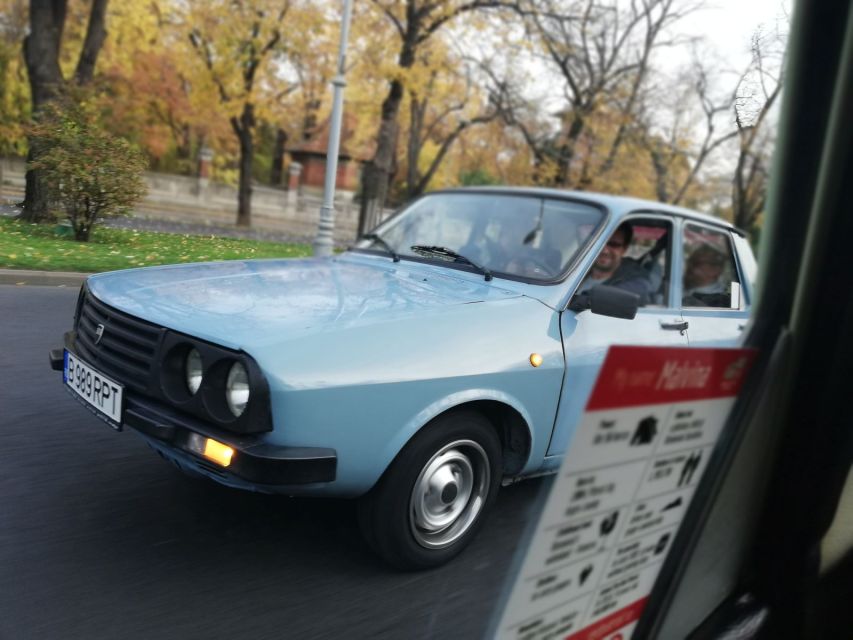
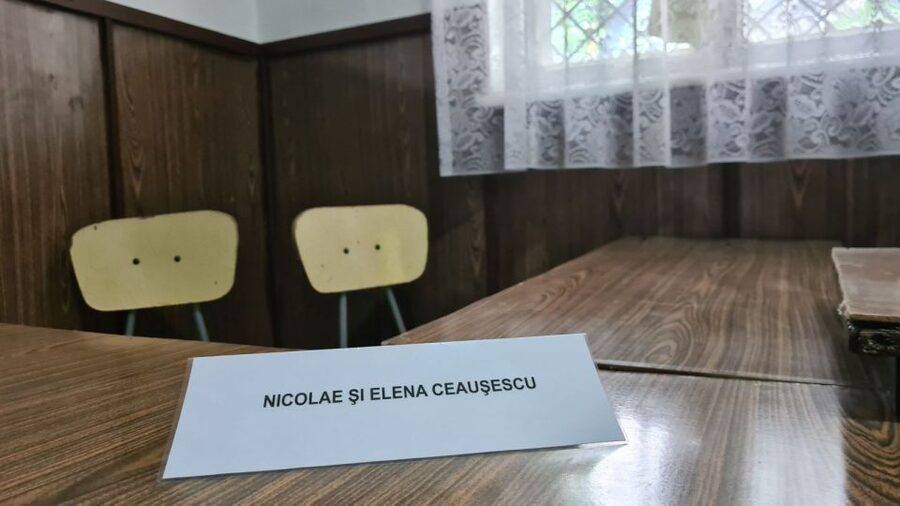
The most serious part of the tour is the building where Nicolae and Elena Ceausescu were detained, judged, and executed on December 25, 1989.
The interior of the execution building is not accessible because of renovation. That is important to know before you pay for the trip. You will still visit the site and hear the story, but you should not expect to enter the room or see the complete interior setting.
Even from outside, the stop has weight because it completes the route that began in Revolution Square. The Ceausescus left Bucharest by helicopter on December 22 and were executed three days later, on Christmas Day.
I appreciate that the tour does not treat this only as a dramatic photo opportunity. The guide connects the detention, judgment, and execution to the failed escape route. You get the sequence in order, which makes the final stop more meaningful and less like an isolated dark-tour attraction.
The distance from Bucharest also matters. By the time you reach Targoviste, you have spent hours following the route of the escape. That travel time helps you understand how quickly the day became chaotic, but it also means the tour requires patience.
Back to Bucharest and inside Palace Primaverii

After the Targoviste portion, you return to Bucharest for a guided visit to Palace Primaverii, also called the House of Ceausescu. This was the private residence of Nicolae and Elena Ceausescu from 1965 to 1989.
The palace adds a needed contrast to the final-day route. Earlier stops show the collapse of public authority. Here, you see the private residence connected with the couple’s long rule.
The guided visit lasts about one hour, and the entrance ticket is included. That makes it more than a quick exterior photograph. You have time to look at the home and consider the gap between the life of Romania’s ruling couple and the daily reality of the country they governed.
I would save questions about domestic life and the Ceausescus’ personal routines for this part of the tour. Serban and the guiding team are described as friendly and willing to adapt explanations to personal interests, so tell your guide what you want to understand more clearly.
The palace is also a useful reason to take this tour even if you have already visited Revolution Square. The two stops serve different purposes: one shows power losing its grip, while the other shows how that power was lived behind closed doors.
How the guide shapes the experience
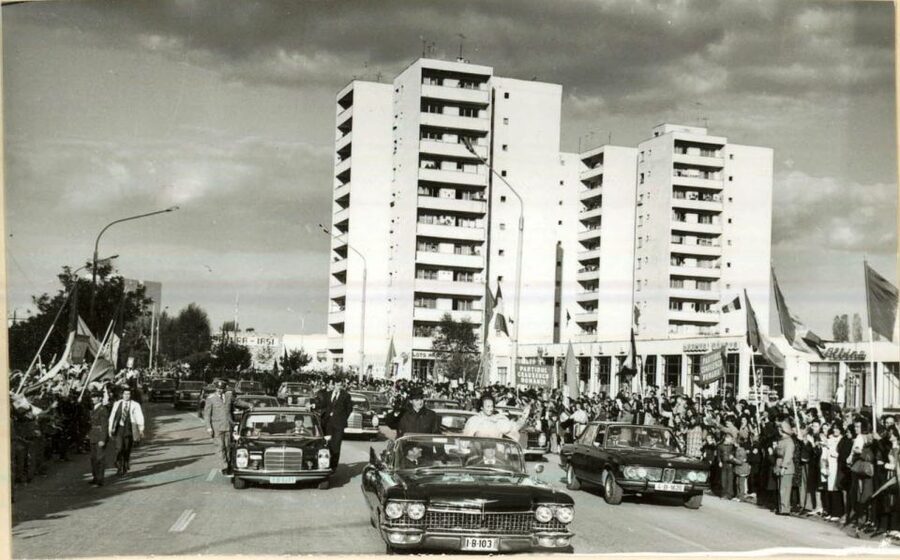
This tour depends heavily on the guide. The route covers a large distance and several lesser-known places, so a simple driver and a printed script would not be enough.
Serban is named as one of the guides, and the experience is conducted in English. His approach is described as personal and professional, with explanations adjusted to the interests of the people in the car. That is especially useful here because the subject can range from political history to local details about streets, factories, police stations, and the mechanics of the escape.
The included tour newspaper gives you something to read during the drive or keep afterward. A personalized tour gift is also included, along with bottled water. These are small extras, but they suit a private experience built around a specific story.
The private format is the bigger advantage. You can ask questions without waiting for a large group, and you can usually make better use of the photo stops. If you are traveling as a couple or a small family group that meets the age and health rules, the format should feel focused rather than crowded.
One useful extra mentioned by a participant is that Serban helped with booking a separate trip. I would not treat that as a formal guarantee of additional planning help, but it suggests that you can ask the guide for practical suggestions during the day.
Is $223 per person good value?
At $223 per person, this is not a budget sightseeing tour. The price makes more sense when you count what is bundled into the day: private hotel pickup and drop-off in Bucharest, an English-speaking local guide and driver, classic-car transport for about 180 kilometers, entrance to Palace Primaverii, water, a tour newspaper, and a small personalized gift.
You are also paying for the specialist route. A normal Bucharest city tour cannot take you to the steel factory, militia station, detention site, and Targoviste while still covering the Revolution Square and former residence.
The value is strongest for two people who care about the history and want a private guide. If you are mainly looking for a cheap overview of Bucharest, the price will feel high. If you would otherwise need to arrange transport to Targoviste, find the sites yourself, and piece together the timeline, the fee is easier to justify.
The classic Dacia is part of the price too. You could reach some places by ordinary car, but the vintage vehicle gives the day a clear character. It is not just transport from one attraction to the next.
Who should book this tour?
I would recommend it most to adults with a serious interest in Romania’s communist era, the 1989 revolution, political power, or unusual transport. It also suits couples who want a private day rather than a standard group excursion.
You should be comfortable with a six-hour outing and a long round trip by car. The experience includes getting in and out at several stops, so it is not a good fit for people with back or heart problems. The stated restrictions also exclude children under 10, pregnant women, and people over 70.
Bring a passport or identity card. Wear practical clothing and shoes for the outdoor stops, though the supplied information does not list a specific dress code. Since lunch and toilet breaks are made, you can manage the day comfortably, but lunch is not included in the stated package.
Free cancellation is available up to 24 hours before the tour for a full refund, and you can reserve now and pay later. Check the starting time when booking because availability controls the departure options.
Should you book the Last Days of Ceausescu Tour?
Book it if you want the story of Ceausescu’s downfall told through real places, not just through a museum display. The combination of Revolution Square, the helicopter escape route, Targoviste, and Palace Primaverii gives you a well-shaped day, and the restored Dacia makes the transport part of the subject.
Think twice if you dislike long drives, vintage-car comfort, or difficult political history. The execution building cannot be entered during renovation, and the tour is not suitable for several age and health groups.
For the right person, this is a distinctive Bucharest experience. Serban’s personal guiding style, the private format, and the chance to connect the capital with Targoviste make the $223 price easier to defend. You leave with more than a list of sights: you understand how one day carried Romania from dictatorship to collapse.
FAQ
Where does the tour begin?
The tour begins with pickup in Bucharest. Hotel pickup and drop-off from Bucharest are included.
How long does the experience last?
The tour lasts about six hours. Starting times depend on availability when you book.
What language is the tour conducted in?
The live tour guide language is English.
Is this a private tour?
Yes. It is offered as a private group experience.
How many people ride in each classic Dacia?
Each car carries up to three people. If more than two people book, the operator uses a convoy of two or three cars.
What places are visited?
The route includes Revolution Square, two additional stops connected with the escape, the Ceausescu Last Hours Museum, the detention and execution site near Targoviste, and Palace Primaverii in Bucharest.
Can you enter the building where Ceausescu was executed?
No. The interior is not accessible because the building is undergoing renovation.
Is admission to Palace Primaverii included?
Yes. Entrance to the Primaverii Palace Museum and a guided visit are included.
Who should not take this tour?
The experience is not suitable for children under 10, pregnant women, people with back or heart problems, or people over 70. Pets, baby strollers, alcohol, and drugs are not allowed.
Just added around Bucharest
- Private Full Day Tour of Bucharest★ 5.0 · 3 reviews
- Veliko Tarnovo and Medieval Bulgaria Private Day Trip from Bucharest★ 5.0 · 3 reviews
- Bucharest VIP Bar Crawl in Lipscani ‘Old Town’★ 5.0 · 3 reviews
- Muddy Volcanoes and Salt Mine Private Tour★ 5.0 · 3 reviews
- Bucharest Private City Tour★ 5.0 · 3 reviews
- Legends & Stories from Transylvania -2 Castles & Brasov Old Town★ 5.0 · 3 reviews
- Transfagarasan Private Tour from Bucharest – 2 Days★ 5.0 · 3 reviews
- 7-Day Dracula Tour in Romania from Bucharest including ‘The Ritual of Killing of a Living Dead’★ 5.0 · 3 reviews
Communist Bucharest Tours, compared.

Bucharest Essential Tour: Old Town, Calea Victoriei & Communism
Read our review →
Communism in Bucharest – Landmarks, Museum & Communist Appetizers
Read our review →
Browse the lists this tour appears in