
Reviewed · COMMUNIST BUCHAREST TOURS
Bucharest: Communism, Revolution & City Highlights Tour
Bucharest’s most striking story is written in its buildings. In four hours, this private tour takes you from Belle Époque palaces and the Romanian Athenaeum to the vast boulevards built by Nicolae Ceaușescu. I like the clear contrast between restored Old Town and the severe Communist Civic Center, and I like the way Revolution Square gives the 1989 uprising a real sense of place. The main drawback is simple: you cannot enter the Palace of Parliament on this tour.
The pace is gentle, with about 3 kilometers of walking and frequent photo stops. Guides such as Mihai are praised for making the subject accessible and answering questions at length. Still, you should book this for history and context, not for a long list of indoor attractions.
Key points at a glance
- See the site of Ceaușescu’s last speech: Revolution Square links the dictator’s final public appearance to Romania’s sudden break with communism.
- Compare two very different Bucharests: Old Town’s mansions and cobbles contrast sharply with the former Communist Civic Center.
- Understand the human cost of the Civic Center: The grand boulevards and Palace of Parliament displaced about 40,000 residents and erased entire neighborhoods.
- Get a private, adjustable experience: Your guide can change the pace, answer questions, and suggest other Bucharest activities.
- Walk only about 3 kilometers: The route is slow, with time for photos, rest, and refreshments along the way.
Why this four-hour tour makes Bucharest easier to understand
Bucharest can feel confusing at first. One block may show a handsome 19th-century façade, while the next reveals a concrete office block or an oversized boulevard designed for parades. This tour gives those changes a clear reason.
The central subject is Romania’s 42 years under communism, from the postwar takeover through the December 1989 revolution. You also hear how Ceaușescu first gained some independence from Moscow before imposing harsh austerity, censorship, surveillance, and political control at home.
I like that the tour does not treat communism as a set of dry dates. The guide connects food rationing, propaganda, student protests, and daily fear to the places around you. A square becomes more than a photo stop when you learn what happened there.
The format also works well for a first visit. You receive a broad introduction to Bucharest’s architecture, politics, and central districts without spending a full day on one museum. The tour ends in the Old Town area, close to restaurants, museums, shops, and many hotels, so you can continue exploring on your own.
More communist-era Bucharest walks:
- The Real tour of Communism
★ 5.0 · 666 reviews - Life under Communism
★ 5.0 · 358 reviews - 3-Hour Guided Tour of Communist Bucharest
★ 4.9 · 303 reviews
Starting with Bucharest’s Belle Époque face
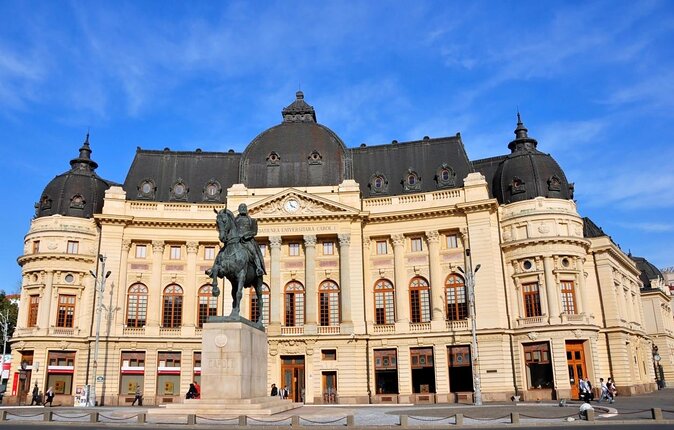
The route begins near Revolution Square and moves through some of the city’s grandest older buildings. The Romanian Athenaeum is an especially useful first stop because it represents the cultured, European Bucharest that earned the nickname Little Paris.
You have about 15 minutes there for walking, sightseeing, and photographs. That is enough to appreciate the exterior and hear how the city’s older identity differs from the communist one. Do not expect a concert or an interior visit. The value is in seeing the building as part of the wider story.
The former Royal Palace follows. Its location helps explain the importance of this part of town before the communist period. Again, the stop is exterior-only, but the guide can show how royal and state power once used this district.
These early stops are not filler. They give you the visual baseline needed for everything that follows. Without them, the later concrete boulevards would be impressive but harder to place in context.
Revolution Square and the end of Ceaușescu’s rule
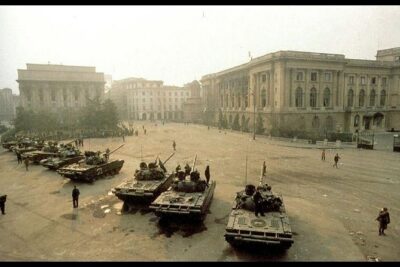
Revolution Square is the emotional center of the tour. Here, Ceaușescu delivered his final speech in December 1989. What began as a public appearance intended to reinforce his authority quickly turned into a public collapse, helping set the revolution in motion.
The tour gives the square around 15 minutes, but the guide’s explanation matters more than the clock. You can stand in the same broad setting where the regime’s control began to fail and hear how the events of 1989 changed Romania.
The Memorial of Rebirth is another photo stop in this area. Its unusual design has prompted plenty of discussion, and it gives the guide a chance to talk about how Romania remembers the revolution. The former Royal Palace and nearby buildings add more layers to the scene, placing royal, communist, and post-communist Romania within a few minutes of one another.
This is one of the strongest parts of the experience for anyone who wants political history tied to physical locations. You are not simply told that a dictatorship ended. You see the square where the final act unfolded.
Victory Avenue, the Military Circle, and changing power

The walk continues along Victory Avenue, once associated with aristocratic Bucharest and now lined with embassies, palaces, and later state buildings. This is where the city’s mixed architectural character becomes especially clear.
The route includes the National Military Circle, another exterior sightseeing stop. Its presence helps explain the role of official institutions in the capital. The guide also points out communist-era additions, so you can compare decorative older façades with the more imposing forms that came later.
The tour does not pretend Bucharest can be divided neatly into old and new. Instead, you see how different eras overlap. That is useful because the city is not a preserved historic center with modern development kept at a distance. Its past is visible in fragments, often right beside one another.
You should keep your camera ready, but listen as much as you photograph. The buildings are attractive, yet the point is how they were used and what they say about power.
A few more Bucharest day trips to weigh up
- Bucharest: Dracula’s Castle, Peles Castle, & Brasov Old Town
★ 4.5 · 17,858 reviews - Bucharest: Dracula Castle, Peles Castle & Brasov Old Town
★ 4.6 · 10,891 reviews - Bucharest: Dracula’s Castle, Peleș Castle & Brașov Day Trip
★ 4.5 · 5,919 reviews - Bucharest: Palace of Parliament Tickets and Guide
★ 4.3 · 3,182 reviews
University Square and the voice of student protest
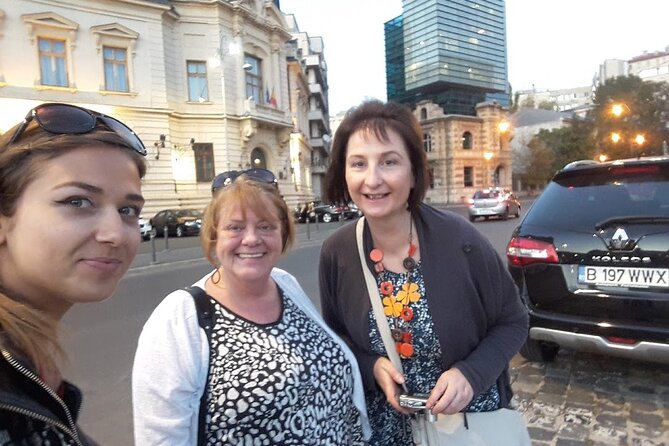
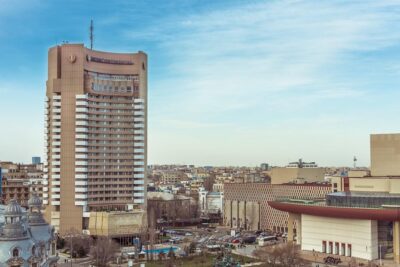
University Square receives a longer stop of about 30 minutes. That extra time makes sense. The site is linked to student uprisings, Cold War pressure, and the atmosphere of surveillance that shaped everyday life.
The guide can explain how public spaces became politically charged under communism. Even when people could not speak openly, squares, universities, and streets still carried the possibility of protest. The 1989 revolution did not appear from nowhere, and this stop helps connect long-term pressure with the events that finally broke the regime.
For you, University Square is also a good point to ask questions. A private tour is at its best here because you can pause over subjects that interest you, such as censorship, student life, or the difference between official propaganda and ordinary experience.
There is no university interior visit. That limitation is clear from the start, so consider the square a context stop rather than an architectural tour of the campus.
Old Town: pretty streets with a difficult story
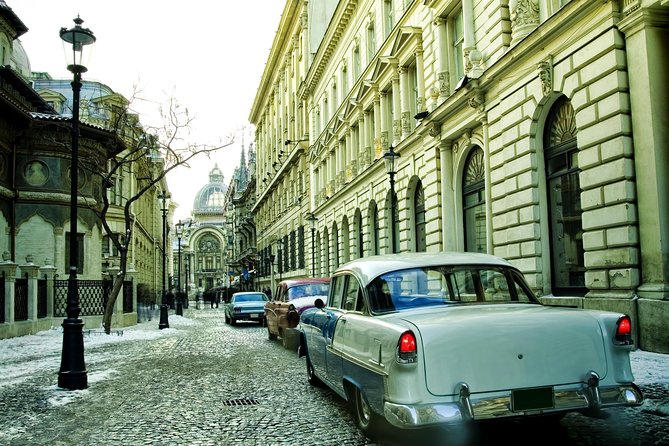
The Old Town section begins with a short break and photo opportunity, followed by roughly 75 minutes of guided walking. This is the longest part of the route, and it gives you time to look beyond the restored façades.
Old Town is attractive in the obvious ways: cobbled streets, historic mansions, and carefully repaired buildings. But the guide also uses it to explain what life under Ceaușescu meant. You hear about ration cards, empty shops, propaganda, surveillance, and the human rights abuses that helped turn discontent into open revolt.
I like this pairing because Old Town can otherwise feel like a separate entertainment district. Placing it between Revolution Square and the Civic Center gives it a more serious role. The restored streets show what Bucharest inherited, while the political story explains what was nearly lost.
The break is useful, particularly if you want a coffee or a quick refreshment. Meals and drinks are not included, so plan to buy anything you need during this pause. The relaxed walking pace makes the route manageable, but comfortable shoes remain a good idea.
The Civic Center and Ceaușescu’s oversized vision
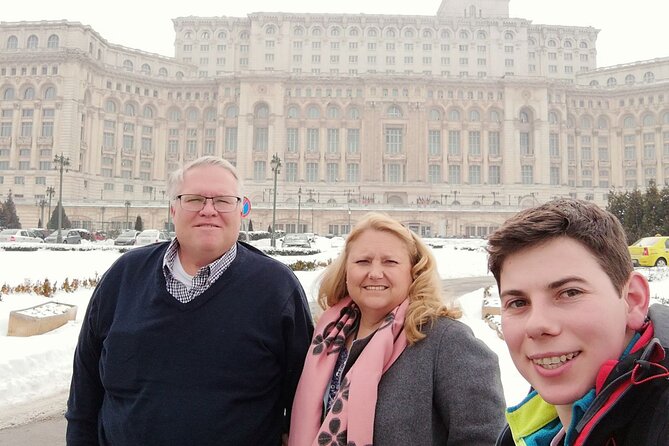
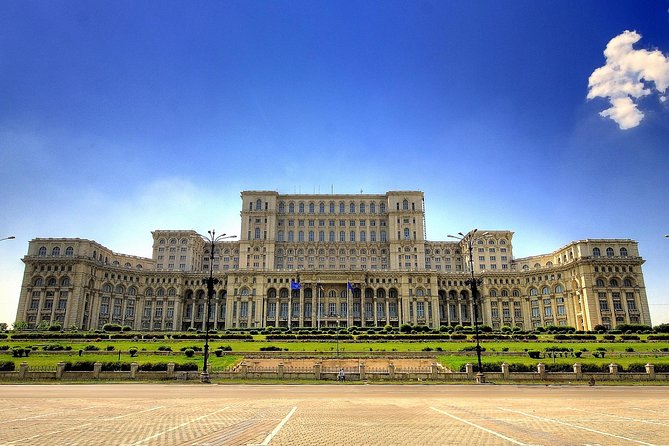
The final major section takes you toward the former Communist Civic Center. Here, the scale changes dramatically. Broad avenues and monumental structures replace the tighter streets and ornate façades of the older center.
This was Ceaușescu’s grand plan for a socialist capital. The design was meant to project order, strength, and a new national identity. The human cost was severe: about 40,000 residents were displaced, neighborhoods were demolished, and older parts of Bucharest were erased.
That contrast is the tour’s most powerful visual lesson. In Old Town, you read the city through street-level details. In the Civic Center, you confront a project designed to overwhelm you with distance, scale, and state power.
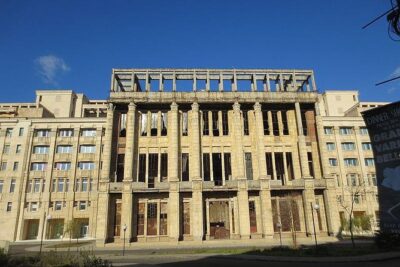
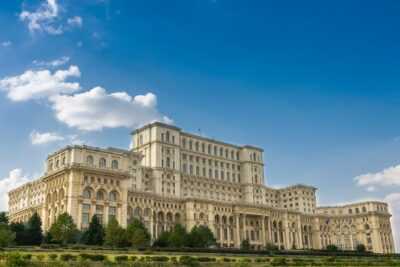
The Palace of Parliament is the centerpiece. It is the world’s heaviest building, and its size is difficult to grasp from photographs alone. You view the exterior and learn how its construction shaped the surrounding district. The tour does not include entry, and that is the clearest weakness for anyone hoping to see the famous interiors.
If you want to go inside, admission is not part of this experience and access requires a phone reservation one day before your visit. Availability is limited, and the building can close for conferences. The tour provider can assist with a reservation if you ask, but you should treat that as a separate arrangement.
What the private format adds
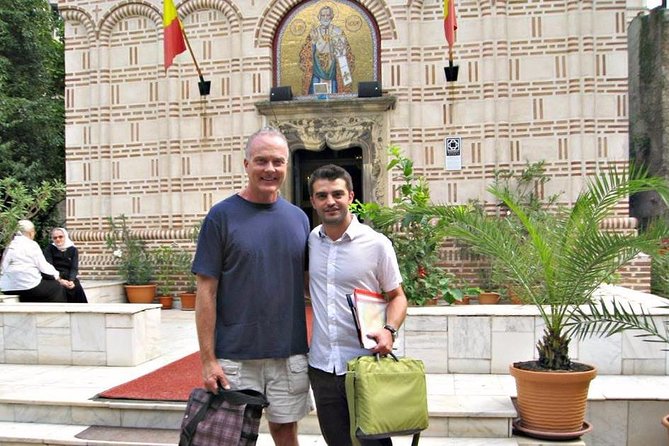
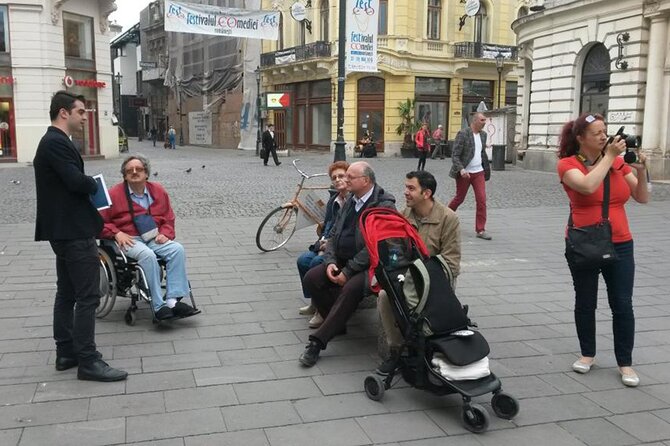
The $90 price is easier to justify if you value personal attention. You are not joining a large group moving at one fixed speed. The guide can slow down, answer follow-up questions, and adjust the walk to your needs.
That matters with a subject as broad as Romanian communism. You may want a simple introduction, or you may already know the basic political story and want to ask about Ceaușescu’s relationship with the Soviet Union, the 1989 revolution, or daily life during austerity. A private guide can respond instead of delivering the same script to everyone.
Hotel pickup is included. The guide waits in your hotel lobby beside reception, or downstairs in front of the building if there is no lobby. The tour then finishes near the Palace of the Deposits and Consignments in the central Old Town area.
Although this is described as a walking tour, one booking account recorded a guide driving the group to the Parliament building before continuing on foot during heavy snowfall. Do not assume private transport is standard, but this suggests the guide may use practical judgment in difficult conditions. Ask ahead if weather or mobility is a concern.
The activity is wheelchair accessible, and the stated walking distance is under 3 kilometers. Frequent stops make it less tiring than a continuous city march, though cobbled streets and outdoor sightseeing can still affect comfort.
The guides and the tone of the experience
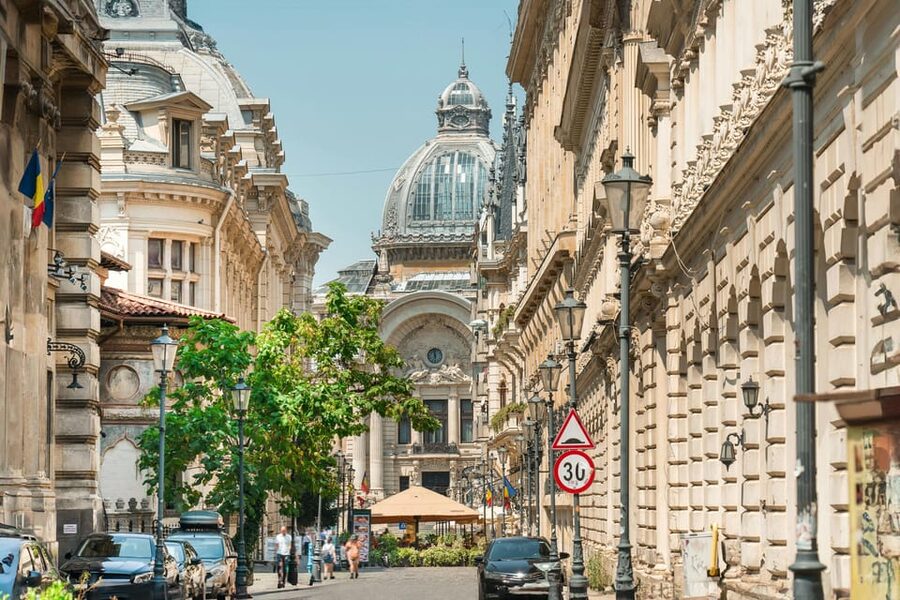
Mihai is the named guide most often associated with this experience. He is praised for keeping the subject interesting for more than four hours, explaining Bucharest as well as the communist period, and responding carefully to questions. The company owner has also led the tour and is described as deeply passionate about the subject.
That enthusiasm is important here. Communism in Romania can become either a lecture full of dates or a series of dramatic claims. The strongest version of this tour appears to aim for a middle path: personal stories and political events tied to buildings you can see.
The tour is available in English or Romanian. Since it is private, you can ask the guide to focus more on architecture, the revolution, daily life, or the city’s post-communist changes. I would tell the guide your priorities at pickup rather than waiting until the final stop.
Who should book this experience
I would choose this tour if you want a strong first orientation to Bucharest and care about why the city looks the way it does. It suits history-minded visitors, first-time visitors, and anyone curious about life behind the former Iron Curtain.
It is also a good choice for couples, families with older children, or small private groups who prefer questions and conversation over a fixed large-group script. The slow pace helps if you do not want an exhausting half-day walk.
You may want something else if your main goal is interior access. The tour visits the outside of the Palace of Parliament, the Athenaeum, the Royal Palace, the Military Circle, and the university area. It does not take you into government buildings, museums, universities, or the Parliament.
Winter visitors should also think about clothing. A February booking continued through heavy snowfall, but most of the experience takes place outdoors. Comfortable shoes, a warm coat, and flexibility will help.
Practical value at $90 per person
At $90 per person, this is not the cheapest way to stroll around Bucharest. You are paying for a private English or Romanian-speaking guide, hotel pickup, a tailored pace, and a focused explanation of a difficult period.
The value is strongest when two or more people can share the private experience and make use of the guide’s flexibility. It is less compelling if you only want exterior photographs, since you could visit many of these places independently.
The four-hour length is well judged. It gives enough time for Revolution Square, University Square, Old Town, and the Civic Center without turning the subject into a full-day endurance test. The route also leaves you in the center, where you can eat, visit a museum, or continue walking.
Free cancellation up to 24 hours before the start and the option to reserve now and pay later make planning less rigid. Those policies are useful, but the real question is what kind of sightseeing you want. This is a story-led city walk, not an entry-ticket package.
Should you book it?
Book this tour if you want Bucharest to make sense. The best parts are the direct link between Revolution Square and the 1989 uprising, the sharp Old Town to Civic Center contrast, and the guide’s ability to explain how grand construction affected ordinary people.
Skip it if you need to enter the Palace of Parliament or prefer a tour built mainly around museums and interiors. For everyone else, especially on a first Bucharest visit, the private format and carefully connected route make $90 a reasonable price for a thoughtful introduction to the capital.
FAQ
How long is the Bucharest communism tour?
The tour lasts four hours, including sightseeing, walking, photo stops, and a short break in Old Town.
How far do you walk?
The total walking distance is less than 2 miles, or about 3 kilometers. The pace is slow, with several stops to rest, take photographs, or buy refreshments.
Does the tour go inside the Palace of Parliament?
No. You view the exterior and learn about the building’s history. Interior access requires a separate phone reservation one day before your visit, is limited, and can be affected by conferences.
Is hotel pickup included?
Yes. The guide waits in your hotel lobby beside the reception desk. If your accommodation has no lobby, the guide waits downstairs in front of the building.
What languages are available?
The tour is available with a live guide in English or Romanian.
Is the tour wheelchair accessible?
Yes. The activity is listed as wheelchair accessible, and the private guide can adapt the walking pace to suit your needs.
Just added around Bucharest
- Private Full Day Tour of Bucharest★ 5.0 · 3 reviews
- Veliko Tarnovo and Medieval Bulgaria Private Day Trip from Bucharest★ 5.0 · 3 reviews
- Bucharest VIP Bar Crawl in Lipscani ‘Old Town’★ 5.0 · 3 reviews
- Muddy Volcanoes and Salt Mine Private Tour★ 5.0 · 3 reviews
- Bucharest Private City Tour★ 5.0 · 3 reviews
- Legends & Stories from Transylvania -2 Castles & Brasov Old Town★ 5.0 · 3 reviews
- Transfagarasan Private Tour from Bucharest – 2 Days★ 5.0 · 3 reviews
- 7-Day Dracula Tour in Romania from Bucharest including ‘The Ritual of Killing of a Living Dead’★ 5.0 · 3 reviews
Communist Bucharest Tours, compared.
Bucharest Essential Tour: Old Town, Calea Victoriei & Communism
Read our review →
Communism in Bucharest – Landmarks, Museum & Communist Appetizers
Read our review →
Browse the lists this tour appears in