
Reviewed · COMMUNIST BUCHAREST TOURS
Bucharest: Communism, Revolution & City Highlights Tour
Bucharest’s communist past is written into its streets. On this private tour, you move from the graceful Romanian Athenaeum to Revolution Square, then on to the huge Palace of Parliament, seeing how one political era reshaped an entire city. Personal stories from guides such as Andra, Mihai, and Bogdan help turn a difficult subject into something human.
I like two things here: the route tells a clear story, and the private format gives you room to ask blunt questions. I also like the hotel pickup, especially if you are new to Bucharest and do not yet know the city center.
The main drawback is simple: this is a history-heavy walking tour, not a general sightseeing sampler. It covers about 3 kilometers in four hours, and the Palace of Parliament is viewed from outside rather than entered, so you should book it for context and conversation, not a grand interior visit.
Key points at a glance
- Follow the story in sequence: Begin with pre-communist Bucharest, then trace Soviet control, Ceaușescu’s dictatorship, the 1989 Revolution, and the city’s post-communist repairs.
- Private means personal: Only your group joins the tour, so you can ask about family life, daily shortages, repression, or the revolution.
- See the scars of 1989: Revolution Square and University Square are not just photo stops. They are places where speeches, protests, gunfire, and political collapse came together.
- Walk between two Bucharests: The route links Belle Époque buildings and restored Old Town streets with the severe scale of the former Communist Civic Center.
- Hotel pickup saves time: Your English-speaking guide meets you at your Bucharest hotel, Airbnb, or rental accommodation.
- Plan for a slow four hours: There are regular stops for photos, rest, or refreshments, but drinks and food are not included.
Why Bucharest’s communist story belongs on a first visit
Bucharest is often introduced through its old churches, cafés, grand avenues, and nineteenth-century architecture. That gives you only half the picture. The city was badly altered during 45 years of communist rule, and the changes were not limited to politics. Neighborhoods disappeared, private property was taken, churches and historic buildings were threatened, and the city center was reshaped around power.
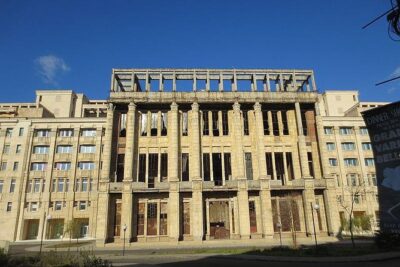
I find this tour useful because it connects those large events to places you can actually see. The Romanian Athenaeum represents the cultured city that existed before communism. Revolution Square brings you to the final public speech of Nicolae Ceaușescu. University Square recalls the violent end of the regime. Old Town shows what survived and what has been repaired. Constitution Square reveals the scale of Ceaușescu’s civic project.
That order matters. You are not simply checking off monuments. You are watching Bucharest change from a European capital into a tightly controlled communist city, then struggle to recover its older identity.
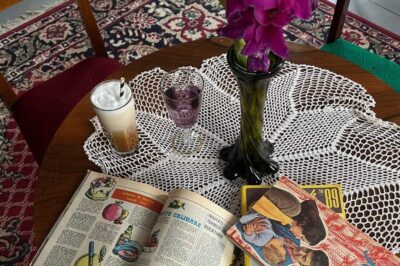
The subject can be grim, particularly when the guide explains secret police activity, deportations, censorship, and the suppression of private life. Still, the tour has room for questions and personal detail. Guides have used old photographs, magazines, and family memories to explain what daily life looked like in the 1980s. That sort of material can make an abstract political story easier to understand.
More communist-era Bucharest walks:
- The Real tour of Communism
★ 5.0 · 666 reviews - Life under Communism
★ 5.0 · 358 reviews - 3-Hour Guided Tour of Communist Bucharest
★ 4.9 · 303 reviews
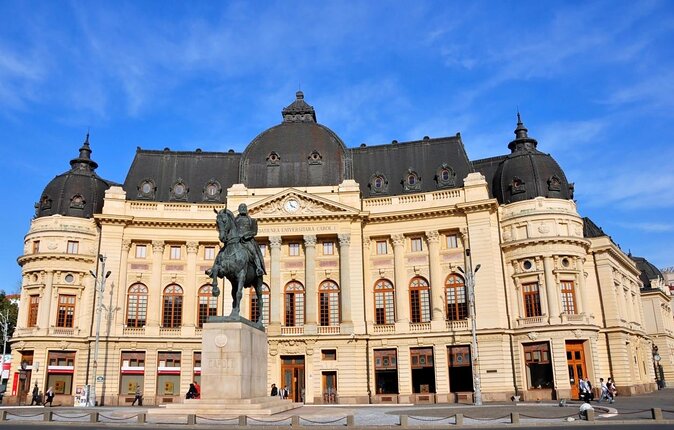
Starting at the Romanian Athenaeum
The meeting point is in front of the Romanian Athenaeum on Strada Benjamin Franklin. If you arrange pickup, your guide meets you at your accommodation, then brings you to the starting point. At a hotel, the guide meets you in the lobby beside reception. Pickup is also offered from an Airbnb or rental address anywhere in Bucharest.
The Athenaeum is an excellent place to begin because its architecture points to a different Bucharest. Before the communist period, the capital was shaped by European cultural influences, elaborate public buildings, private wealth, and a strong urban elite. You do not need to enter the building for the stop to work. The exterior provides the visual introduction.
From here, your guide explains how communism was imposed after the Second World War. The discussion includes Soviet influence in Eastern Europe, the rise of secret police control, mass deportations to Siberia, and the destruction of free press, private property, and cultural independence.
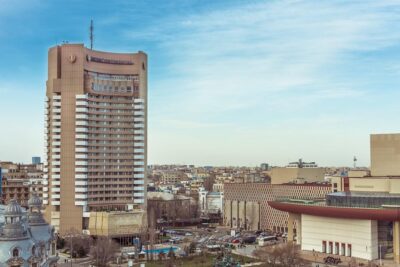
This opening may feel dense if you prefer a quick photo tour. I would give it your full attention. Without this background, the later stops at Revolution Square and the Palace of Parliament can seem like isolated sights. With it, you begin to understand why Bucharest looks so uneven, with ornate buildings beside massive concrete structures and wide avenues.
Revolution Square and Ceaușescu’s final speech
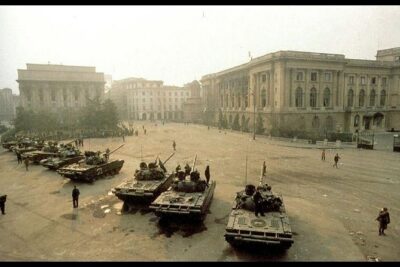
Revolution Square is the emotional center of the first half of the walk. This is where Ceaușescu delivered his last speech to the public in 1989. The square had been used for official display and propaganda, but its meaning changed when the crowd turned against the regime.
Your guide places Ceaușescu’s rise within Romania’s postwar story. The early communist leadership, Soviet occupation, and the first years of his rule all come into play. Ceaușescu was once viewed as a promising young leader, but his government became more controlling and more isolated. The stop helps explain how a leader who once enjoyed public support ended up facing open revolt.
I like this part because the physical setting makes the political story easier to follow. You are standing in a place where a carefully managed public event broke apart in real time. The guide can explain what happened without reducing the moment to a simple good-versus-bad story.
The square also works well for questions. Ask about propaganda, censorship, the role of the secret police, or what changed for ordinary families. Guides including Andra and Mihai have brought personal family experiences into this section, giving the history a local voice rather than presenting it as a list of dates.
University Square and the violence of 1989
At University Square, the focus shifts from the dictator’s last speech to the public resistance that followed. This was a key place in the 1989 uprising, with protesters facing gunfire as the regime began to collapse.
The guide explains the final years of Ceaușescu’s rule, including his growing suspicion, harsh policies, and the hardship felt across the country. This is where the tour moves beyond grand political events and asks what those policies meant on the ground. Daily life under a government determined to control nearly every part of society is an important part of the story.
The stop may also raise difficult questions about how the revolution unfolded. The guide discusses the idea that the uprising was not only a spontaneous public revolt, but that other forces may have been active behind the scenes. That makes the conversation more complex. You are encouraged to think about who gained power after Ceaușescu fell, not only about the dramatic end of his rule.
This is one of the places where guide quality matters most. Bogdan has been praised for explaining complicated events in a clear, engaging way, while Tudor has been noted for patience and careful answers. Your guide may be different, but the private setting gives you a chance to slow down when the story becomes hard to absorb.
A few more Bucharest day trips to weigh up
- Bucharest: Dracula’s Castle, Peles Castle, & Brasov Old Town
★ 4.5 · 17,858 reviews - Bucharest: Dracula Castle, Peles Castle & Brasov Old Town
★ 4.6 · 10,891 reviews - Bucharest: Dracula’s Castle, Peleș Castle & Brașov Day Trip
★ 4.5 · 5,919 reviews - Bucharest: Palace of Parliament Tickets and Guide
★ 4.3 · 3,182 reviews
Old Town, restored streets and missing neighborhoods

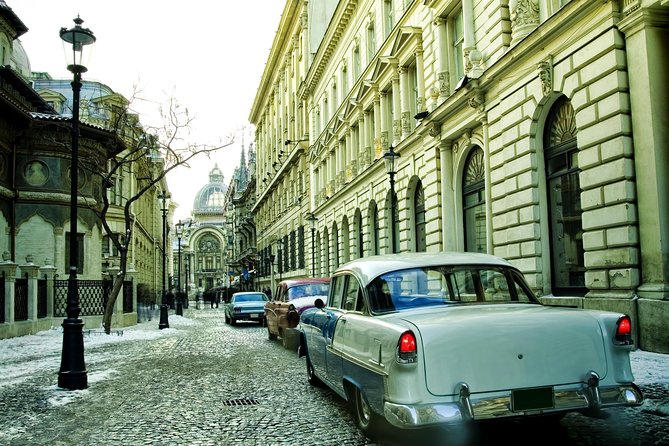
The Old Town section lasts about an hour, making it the longest stop. That extra time is welcome. After the heavy political discussion, you get to walk through streets filled with nineteenth-century palaces, Byzantine churches, cafés, shops, and restaurants.
Do not mistake the restored Old Town for a complete picture of historic Bucharest. Only part of the pre-communist center remains. The guide points out how much was demolished or altered, and how some surviving buildings were repaired after the 1989 fighting. Bullet holes and other physical damage have been addressed, but the social scars are harder to remove.
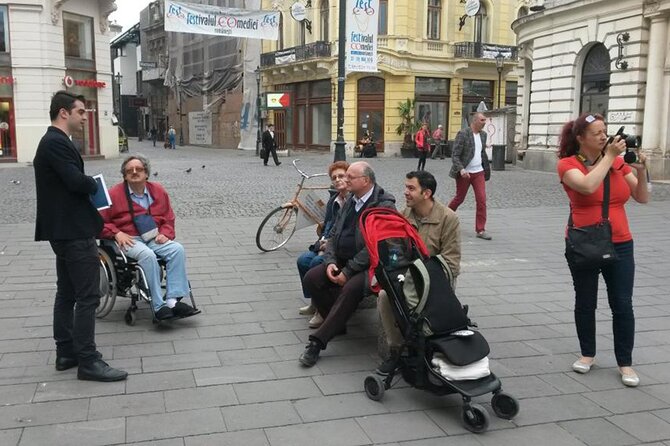
This is also the most flexible part of the tour. You can stop for photographs, take a short rest, or pause for a coffee. Refreshments are not included, so bring money if you want a drink during the walk. One account of the experience describes a pleasant coffee break near a well-known restaurant, but the exact stop can depend on your guide and the pace of your group.
I particularly like the contrast here. One moment you are looking at a church or ornate façade, and the next you are hearing how communist planning reduced the old city to a fraction of its former size. The Old Town is not just the pretty section of the tour. It is evidence of what survived, what was rebuilt, and what cannot be brought back.
Constitution Square and the Palace of Parliament
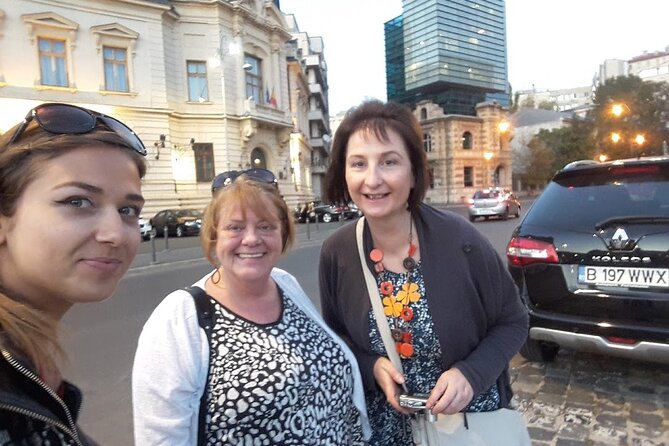
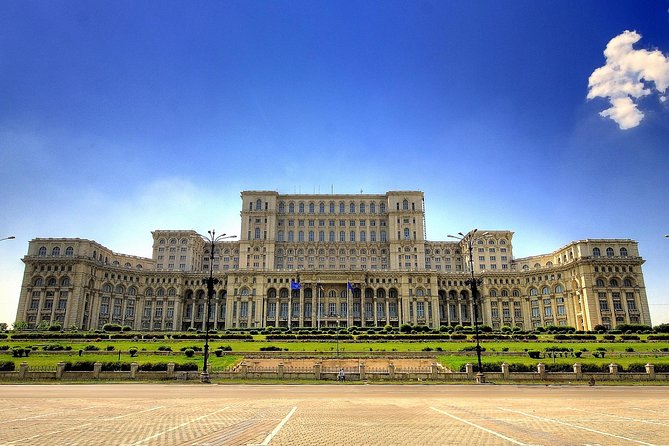
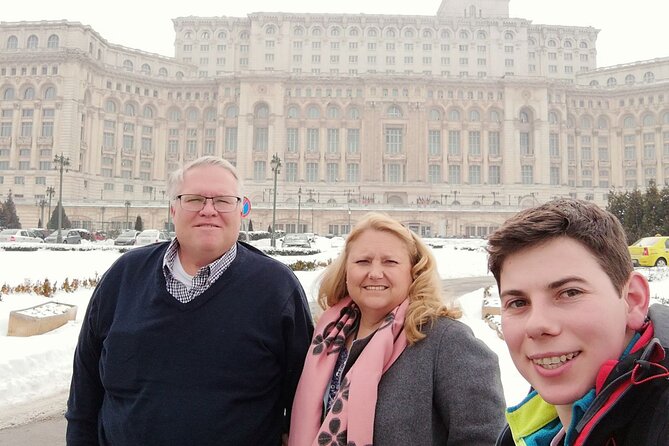
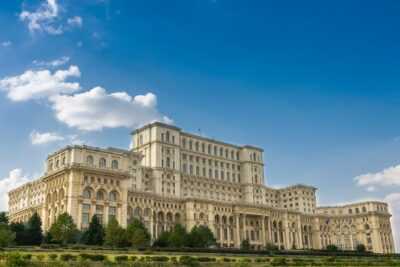
The final major stop is Constitution Square, at the heart of the former Communist Civic Center. Here the scale changes again. The Palace of Parliament dominates the view, an enormous building often described as the second-largest administrative building in the world after the Pentagon.
The point of the stop is not only size. The palace reflects Ceaușescu’s desire to remake Bucharest around the state and around himself. Whole areas were cleared to create the civic center, and the result is a powerful example of architecture used as political theater.
Your guide explains the building’s darker background and points out details that are easy to miss from a casual visit. The structure is associated with seven underground floors, atomic bunkers, and a network of secret tunnels. The tour does not include an interior visit, so you should be clear about what you are booking: an exterior explanation and a view of the civic center, not a palace tour.
After Constitution Square, the guide walks you back toward the Old Town. The tour ends in front of the Palace of the Deposits and Consignments, also called Palatul CEC, on Calea Victoriei 13. That puts you across from the Old Town, close to restaurants, bars, museums, and shops. It is a useful finish because you can continue exploring without arranging another ride.
How the private format changes the experience
A private tour is more expensive than joining a large group, but this price is not simply buying a longer commentary track. At $93.46 per person, the value depends on the size of your party and how much you care about discussion.
If you are traveling as a couple, family, or small group, you get a guide focused on your questions. You can ask for more detail about the revolution, spend longer on architecture, or move past a subject you already know. There is no need to wait for strangers or listen to a fixed script at every stop.
The format also helps with a sensitive subject. Communism in Romania is living memory for many families, and personal experiences can differ widely. Guides such as Michael, Mircea, Emma, and Mihai have been praised for explaining the period in a way that is clear without turning it into a lecture. Some guides have shared family stories or brought old photographs and magazines, which can help you picture life before and after 1989.
The tradeoff is that the quality of your experience depends heavily on the individual guide. The named guides associated with the tour include Andra, Bogdan, Michael, Mircea, Emma, Tudor, and Mihai Vataselu, but you may be assigned someone else. The private arrangement gives you flexibility, but it cannot guarantee a particular guide unless the provider confirms one.
Pace, walking, pickup and practical value
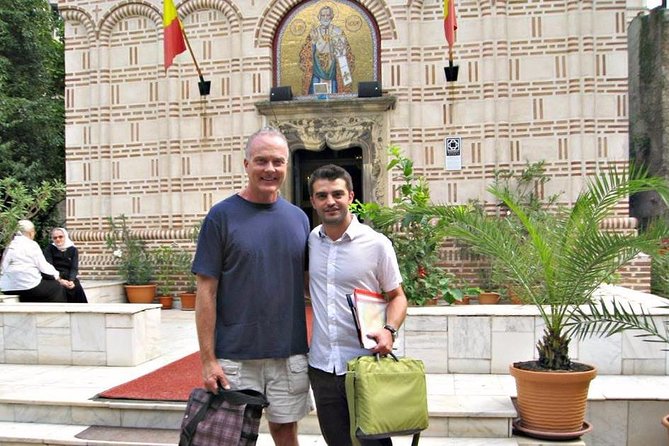
The tour lasts about four hours and covers up to 3 kilometers, or less than two miles. The pace is described as slow, with stops for photos, rest, and refreshments. That makes it manageable for most people who can take part in a moderate walking tour.
You should still wear comfortable shoes. The route links several central areas, and the value comes partly from seeing the spaces between the headline monuments. A car could take you from one square to another, but you would lose the sense of how the old center and Communist Civic Center relate to each other.
Hotel pickup is included, but the tour is still fundamentally a walking experience. Pickup removes the need to find the first meeting point, which is useful if you have just arrived or are staying outside the immediate center. At the end, you are left in central Old Town rather than returned to your hotel, so plan your next activity from there.
The tour is offered in English and includes a licensed English-speaking guide. Food and drinks are not included. Confirmation is provided at booking, and free cancellation is available if you cancel at least 24 hours before the local start time. Changes or cancellations inside that window are not refundable.
Who should book this Bucharest tour
I would choose this tour if you want Bucharest’s monuments to make sense, not simply appear in front of you as isolated photo stops. It suits first-time visitors who are curious about the 1989 Revolution, the Ceaușescu period, Cold War Europe, or the way political power changes a city.
It is also a strong choice for anyone who prefers conversation over a large group presentation. Couples, families, and small groups can make good use of the private format, especially if they have different levels of background knowledge.
I would not make it your only Bucharest activity if you want extensive interior sightseeing. The Athenaeum and Palace of Parliament are used as exterior reference points, and the tour does not include refreshments or a formal palace admission. You will also spend a fair amount of time on political history, so it may not suit someone looking only for food, shopping, or light architecture.
Should you book it?
Book it if you want a clear, human explanation of how communism changed Bucharest and how the 1989 Revolution unfolded. The strongest features are the ordered route, the private guide, the personal family context, and the chance to walk directly through places tied to Romania’s recent past.
Before booking, confirm your pickup address and understand that the Palace of Parliament is an exterior stop. If that suits you, $93.46 per person can be fair value, especially for a small group that will use the guide’s time well. For a more casual overview of Bucharest, choose a shorter city tour instead. For serious context and a memorable first look at the capital, this is a smart choice.
FAQ
How long does the Bucharest Communism, Revolution & City Highlights Tour last?
The tour lasts approximately four hours.
Is this a private tour?
Yes. Only your group participates in the private activity.
Is hotel pickup included?
Yes. Free pickup is offered anywhere in Bucharest, including hotels, Airbnbs, and rental accommodations.
Where does the guide meet me at a hotel?
The guide meets you in the hotel lobby, next to the reception desk.
What language is the tour offered in?
The tour is offered in English with a licensed English-speaking guide.
How much walking is involved?
The tour involves up to 3 kilometers of walking, or less than two miles. It is described as a slow-paced walk with stops for photos, rest, or refreshments.
Does the tour enter the Palace of Parliament?
The tour takes you to Constitution Square and explains the Palace of Parliament from the outside. Palace admission is not included in the supplied tour details.
Where does the tour begin?
The stated starting point is in front of the Romanian Athenaeum at Strada Benjamin Franklin 1, Bucharest.
Where does the tour end?
The tour ends in the Old Town in front of the Palace of the Deposits and Consignments, also known as Palatul CEC, at Calea Victoriei 13.
Are food and drinks included?
No. Refreshments are not included, although the slow pace allows stops for refreshments.
What is the cancellation policy?
You can cancel for a full refund up to 24 hours before the experience start time. Cancellations or changes made less than 24 hours in advance are not accepted for a refund.
Just added around Bucharest
- Private Full Day Tour of Bucharest★ 5.0 · 3 reviews
- Veliko Tarnovo and Medieval Bulgaria Private Day Trip from Bucharest★ 5.0 · 3 reviews
- Bucharest VIP Bar Crawl in Lipscani ‘Old Town’★ 5.0 · 3 reviews
- Muddy Volcanoes and Salt Mine Private Tour★ 5.0 · 3 reviews
- Bucharest Private City Tour★ 5.0 · 3 reviews
- Legends & Stories from Transylvania -2 Castles & Brasov Old Town★ 5.0 · 3 reviews
- Transfagarasan Private Tour from Bucharest – 2 Days★ 5.0 · 3 reviews
- 7-Day Dracula Tour in Romania from Bucharest including ‘The Ritual of Killing of a Living Dead’★ 5.0 · 3 reviews
Communist Bucharest Tours, compared.
Bucharest Essential Tour: Old Town, Calea Victoriei & Communism
Read our review →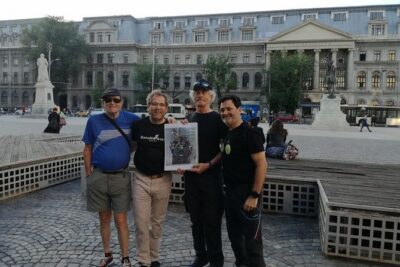
Communism in Bucharest – Landmarks, Museum & Communist Appetizers
Read our review →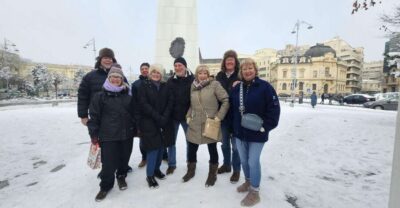
Browse the lists this tour appears in