
Reviewed · COMMUNIST BUCHAREST TOURS
Bucharest: Private Communist Tour in a Romanian Vintage Car
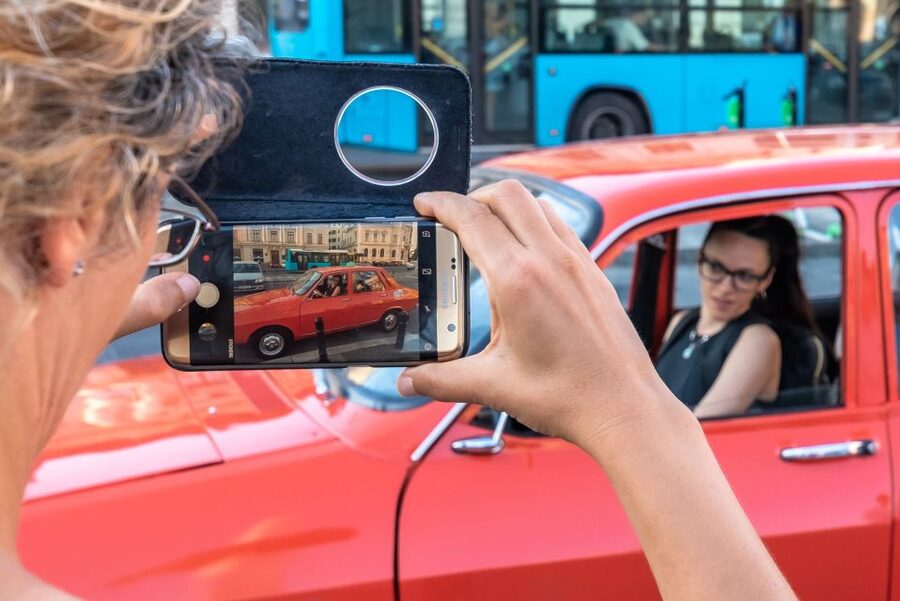
Bucharest’s communist past makes more sense from the seat of a Dacia 1310, the boxy Romanian car that once filled the country’s roads. This private circuit takes you past the grand avenues, political monuments, and unfinished projects of Nicolae Ceausescu’s era, with time to stop for photographs and short walks.
I like two things right away: you get a small private group rather than a crowded bus, and the guides connect the buildings to ordinary life. Guides including Dan, Serban, and Catalin have shared personal memories of the communist period, which gives the tour a human scale. The main drawback is the car itself: people with back problems, pregnant women, wheelchair users, and children under 10 should choose another way to see the city.
Key points to know before you book
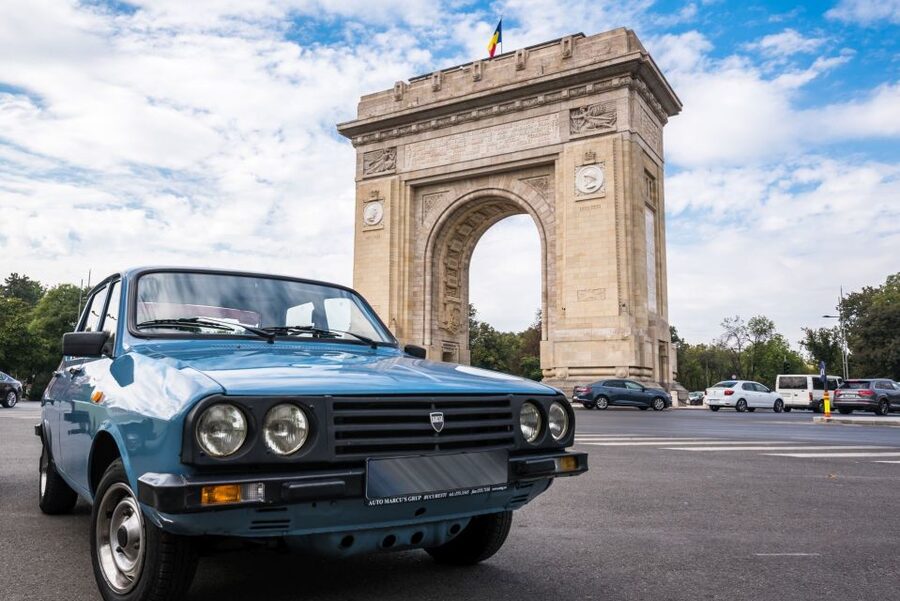
- A real Dacia 1310 puts you inside the story: This is not just a sightseeing vehicle. The restored Romanian car is part of the communist-era experience.
- The route covers about 30 kilometers: You see major landmarks and lesser-known places tied to Romania’s political past.
- You can drive or ride with a private driver: Self-driving requires a valid license on the day of the tour.
- The small format suits history-minded visitors: Up to three people share each car, with a private English-speaking guide.
- The stops balance famous sights with unusual ones: Revolution Square, the Palace of Parliament, Casa Ceausescu, Casa Radio, and Casa Presei all reveal different parts of Bucharest’s past.
- Hotel pickup and drop-off are included: The tour runs daily at 10:00 AM, 2:00 PM, and 8:00 PM, with booking at least 48 hours ahead.
Why a Dacia 1310 changes the Bucharest sightseeing tour
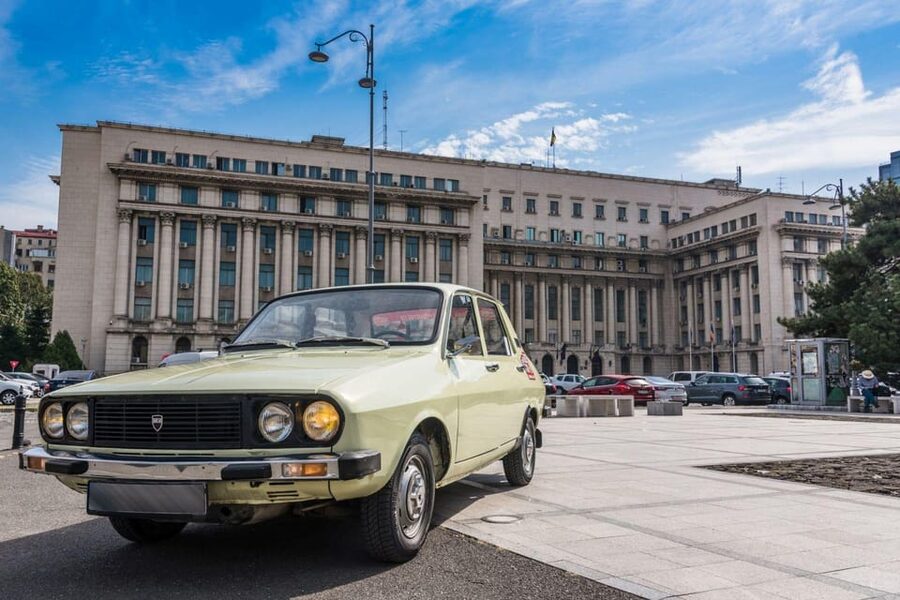
The Dacia 1310 was a familiar car in communist Romania, so riding in one gives the outing a sense of place that a modern minivan cannot match. One example used for the tours dates from 1977, and the cars have been fully restored. You will likely attract waves, smiles, and curious looks as you pass through town.
That attention is part of the fun, but the car also has a practical role. Bucharest’s communist architecture can feel oversized and abstract when you view it only from a pavement. From the Dacia, your guide can point out how broad boulevards, formal squares, and monumental government buildings were designed to project power.
The tour lasts 200 minutes, or roughly three and a half hours, and follows a circuit of about 30 kilometers. You are not simply driven past buildings without context. You stop at major sites, get out for photographs, and hear stories about both the political system and daily life under it.
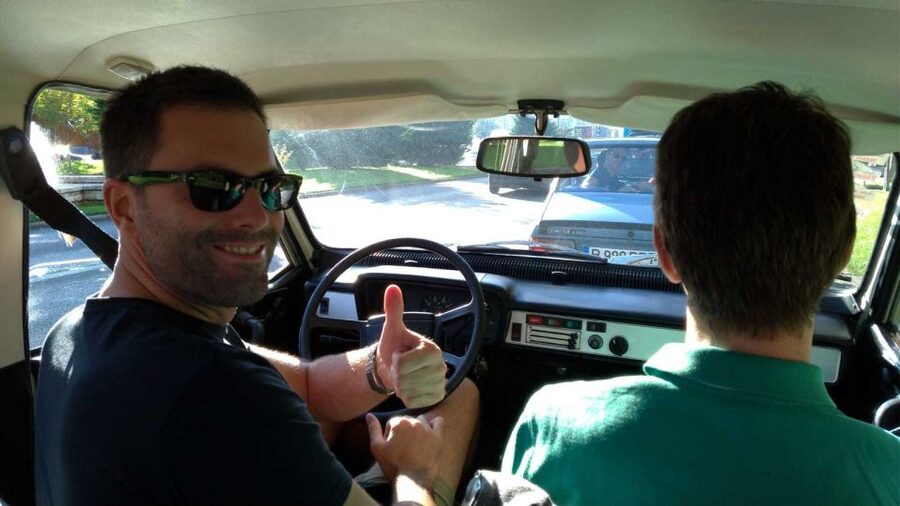
The private format matters. Each car holds up to three people, so you can ask questions and change the pace of a conversation more easily than on a large group outing. Hotel pickup and drop-off from Bucharest also save you from working out where to meet the vintage car.
More communist-era Bucharest walks:
- The Real tour of Communism
★ 5.0 · 666 reviews - Life under Communism
★ 5.0 · 358 reviews - 3-Hour Guided Tour of Communist Bucharest
★ 4.9 · 303 reviews
Revolution Square and the shock of December 1989
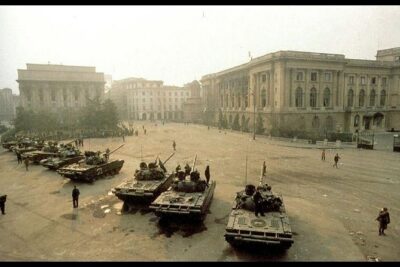
Revolution Square is the natural first major stop. It is tied to the final days of Ceausescu’s rule and the Romanian Revolution of December 1989. Your guide uses the square to explain how a place built for political display became linked with the collapse of the regime.
Plan on about 30 minutes here, including a guided visit, sightseeing, and photographs. That is enough time to take in the setting without turning the stop into a long lecture. Ask your guide to explain the buildings and public spaces around the square, since the meaning of this place comes from how they relate to one another.
This is also where the tour’s personal storytelling can make a difference. A guide who lived through the communist era can describe the atmosphere of the period in everyday terms, not only through dates and political names. That helps you understand why this square matters to modern Romania.
Casa Radio and the unfinished side of communism
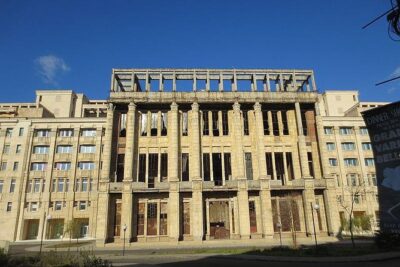
Casa Radio offers a different picture of the era. Unlike the polished government façades, this large unfinished project recalls the grand plans and disrupted construction associated with late communist Bucharest.
The stop is brief, around 10 minutes, so think of it as a focused photo and explanation stop rather than a full visit. The building helps balance the route. You see that Ceausescu-era architecture was not only about completed monuments. It also left behind projects that were altered, abandoned, or never used as first planned.
For photographers, Casa Radio provides a more stark subject than the ceremonial squares. For everyone else, it is a useful reminder that political ambition and practical results did not always match.
Fountains, grand avenues, and the city built for display
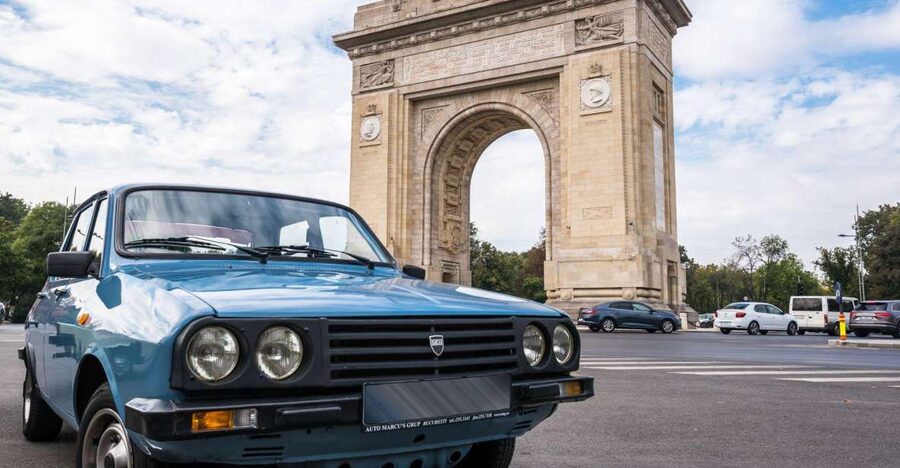
The fountain stop lasts about 10 minutes and adds another piece to the public image of communist Bucharest. Along with the wide boulevards, formal landscaping, and oversized civic spaces, the fountains were part of a city designed to impress from a distance.
The route includes Victoria Socialismului Boulevard, often described as Ceausescu’s Champs Elysees. The comparison tells you something about the scale of the project, but the important point is its political purpose. It was planned as a ceremonial approach toward the Palace of Parliament and the center of state power.
In a restored Dacia, you experience the boulevard at street level rather than as an isolated architectural sight. You can see how the long axis connects the city’s major symbols. Your guide can also explain what was removed or changed to create the avenue, giving the grand view a more difficult human context.
A few more Bucharest day trips to weigh up
- Bucharest: Dracula’s Castle, Peles Castle, & Brasov Old Town
★ 4.5 · 17,858 reviews - Bucharest: Dracula Castle, Peles Castle & Brasov Old Town
★ 4.6 · 10,891 reviews - Bucharest: Dracula’s Castle, Peleș Castle & Brașov Day Trip
★ 4.5 · 5,919 reviews - Bucharest: Palace of Parliament Tickets and Guide
★ 4.3 · 3,182 reviews
Academia Română and the contrast between old and new Romania
The stop at Academia Română lasts around 15 minutes. The Romanian Academy represents the country’s intellectual and cultural life, making it a useful contrast to the political monuments elsewhere on the route.
Here, I would pay attention to the guide’s explanation of how education, scholarship, and national identity fitted into the communist state. The stop is not as instantly recognizable as the Palace of Parliament, but it broadens the tour beyond Ceausescu’s personal story.
The route works best when you treat each stop as part of a larger picture. Revolution Square shows political change. Casa Radio shows unfinished ambition. The Academy points toward institutions and ideas that existed alongside the regime.
The Palace of Parliament, power in concrete
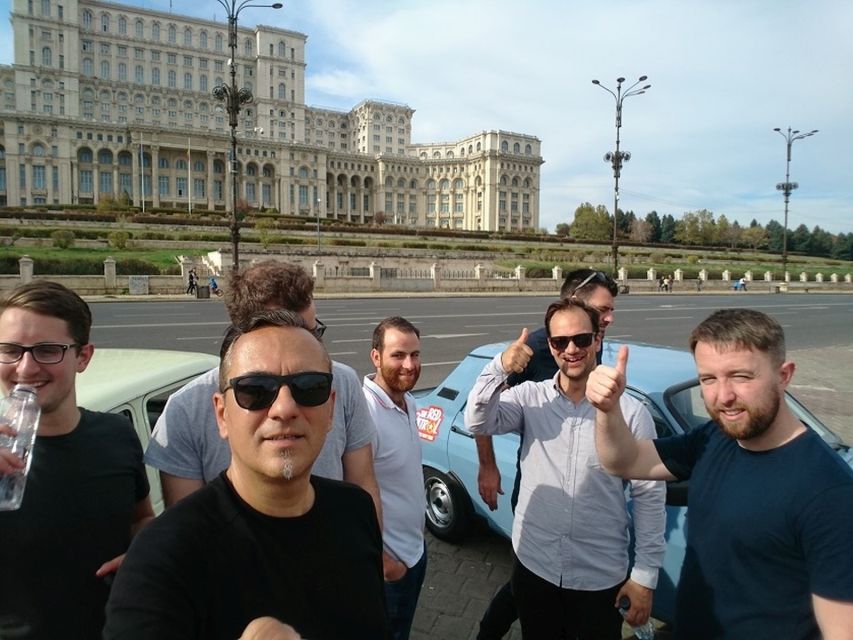
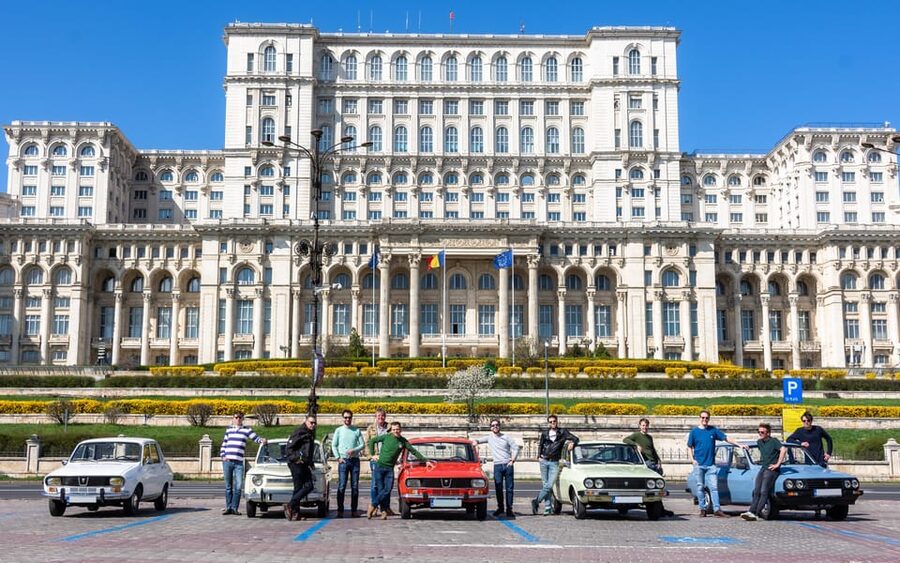
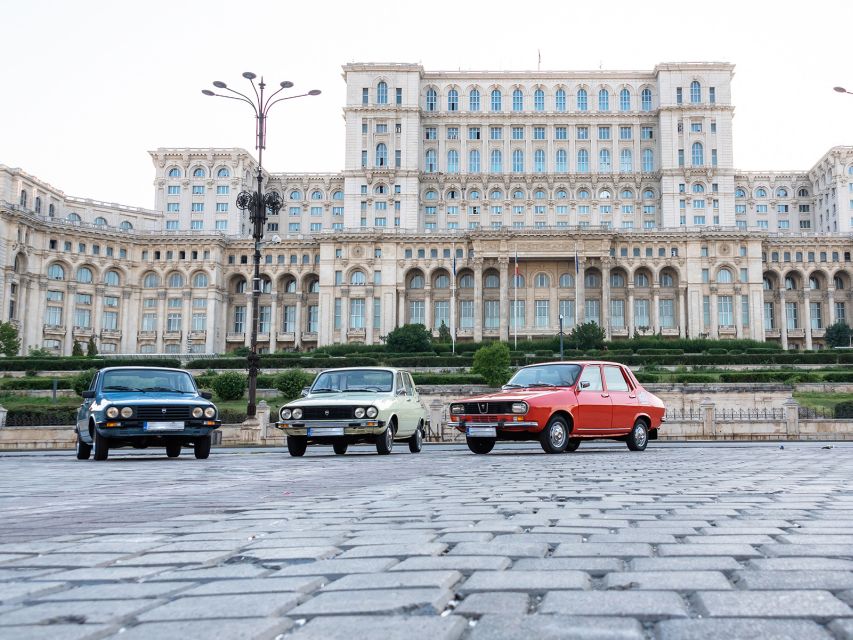
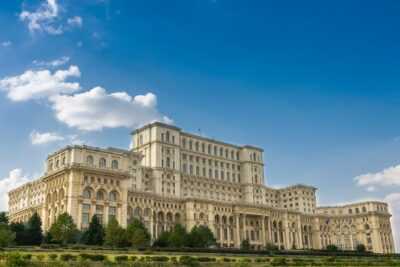
The Palace of Parliament, also called Casa Poporului, is the headline sight. You get about 20 minutes for a guided stop, photographs, and sightseeing outside.
The building is vast, imposing, and difficult to understand from a single viewpoint. The vintage car helps set up the approach because you see the surrounding boulevard and civic scale before focusing on the building itself. Your guide can place the palace within the wider reconstruction of Bucharest ordered during Ceausescu’s rule.
Do not expect this experience to be an interior tour of the palace. The information provided describes a photo stop and guided sightseeing, not entry inside. If you want to visit the interior, check separately for an admission option and schedule.
This is one of the places where the tour’s balance matters. The palace is visually striking, but the story is not simple triumphal architecture. It is tied to forced urban change, political control, and the sacrifices made by ordinary people. The guide’s job is to connect the huge building to the lives behind it.
Casa Ceausescu and the private world behind the regime
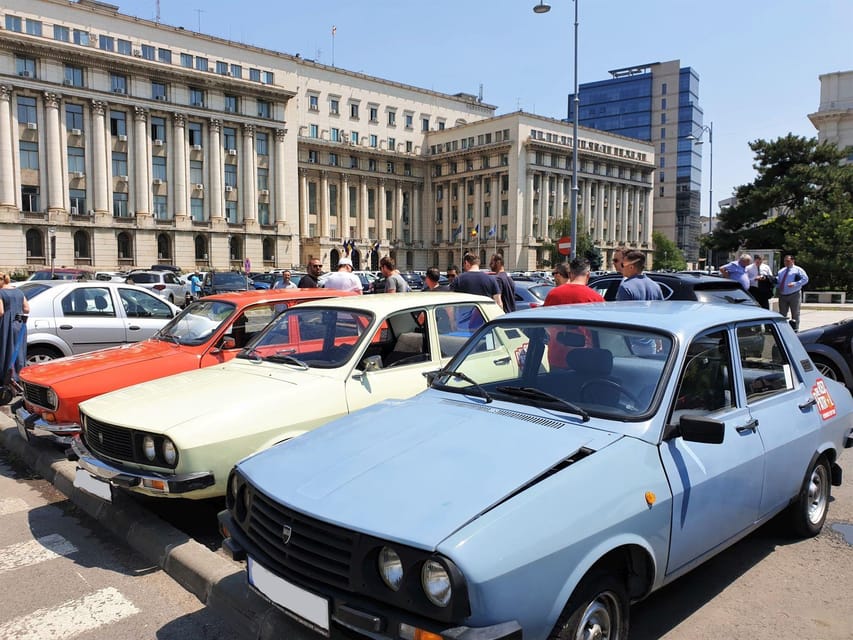
The House of Ceausescu is the longest stop after Revolution Square, with about 25 minutes for a break, photographs, and a guided visit. It provides a more personal angle on the ruling family than the public monuments do.
The contrast is clear: the palace and boulevard project state power, while Casa Ceausescu points toward the private surroundings of the country’s leaders. Your guide can help you compare the official image of austerity with the privileged world at the top of the system.
The stop also gives the tour a useful pause. Three and a half hours in a classic car is a pleasant novelty, but it is still a compact vehicle. A short break here helps break up the driving and lets you take stock of what you have seen.
House of the Free Press and the machinery of information
The House of the Free Press, known locally as Casa Presei, receives about 20 minutes. Its name now sounds ironic when placed in the context of communist Romania, when newspapers, publishing, and public information were tightly controlled by the state.
The building is a strong final landmark because it shifts the discussion from government power to the control of information. Your guide can explain its place in the communist system and point out the way architecture was used to give state institutions weight and authority.
This stop also shows why the route is more than a collection of famous photographs. Each building relates to a part of the regime: political authority, public ceremony, cultural institutions, elite privilege, and media control.
What the guide adds to the drive

The strongest part of this tour is the guide’s ability to connect city views with lived experience. Cătălin, Dan, and Serban are among the guides associated with the experience, and the personal accounts shared by guides who experienced communism can make an otherwise abstract period easier to picture.
You might hear about what it meant to live with shortages, official slogans, strict public control, and the gap between public appearances and private reality. The exact conversation will depend on your guide and questions, so ask about daily routines, housing, work, shopping, and the events of 1989 if those subjects interest you.
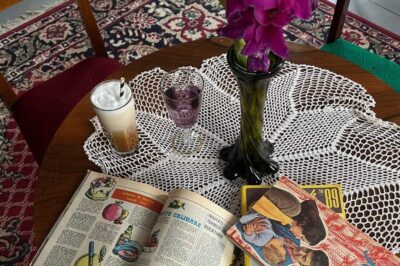
The tour is conducted in English. Some guide combinations have also supported German-speaking visitors, but the stated tour language is English. A tour newspaper and personalized gift are included, along with water in the car. Those are small extras, but they make the experience feel more considered than a basic car ride.
Driving yourself or riding with a driver
Self-driving gives the tour an extra layer of novelty. You need to bring a valid driver’s license, and the booking information asks you to provide a driver with a valid license on the day of the tour.
I would choose the private driver option if you want to focus on photographs and conversation. Bucharest traffic, unfamiliar streets, and the responsibility of handling a restored classic car can distract from the stories. If driving an old Romanian car is the main reason you are booking, self-driving may be worth it.
The tour allows up to three people per car. That works well for a couple, a family group with older children, or a few friends. It is less appealing if you want lots of room to stretch out, especially since the activity is not suitable for people with back problems.
Is $124 per person good value?
At $124 per person, this is not the cheapest way to see Bucharest’s landmarks. You are paying for a private experience, hotel pickup and drop-off, a restored vintage car, an English-speaking guide, a 30-kilometer circuit, and several hours of personal attention.
The value depends on what you want from the city. If you only need quick photographs of the Palace of Parliament and Revolution Square, a standard city tour will cost less. If you want a distinctive vehicle, a private group, and context about communist life, the price is easier to justify.
The inclusion of up to three people per car also matters. For three people sharing the experience, the private format can feel more reasonable than it first appears. You also receive water, a tour newspaper, and a personalized gift, though the main value remains the guide and access to the Dacia.
Food and drinks are not included. Bring your own expectations accordingly, and use the scheduled break as a chance to take care of anything you need before returning to the route.
Timing, comfort, and who should book
Tours run daily at 10:00 AM, 2:00 PM, and 8:00 PM, with at least 48 hours of advance booking. The evening departure could suit you if you prefer a different light for photographs, though the provided information does not promise a special night route or illuminated monument schedule.
Hotel pickup and drop-off are included at Bucharest hotels. The experience is a good fit for:
- First-time visitors who want a broad city orientation with a clear theme
- People interested in Romanian communism and the 1989 Revolution
- Couples and small groups who prefer a private guide
- Car enthusiasts who enjoy unusual local vehicles
- Visitors who want personal stories rather than only formal dates and names
It is not suitable for children under 10, pregnant women, wheelchair users, or people with back problems. The compact vintage car and the length of the ride are the key concerns.
You can cancel up to 24 hours before the tour for a full refund, and reserve now while paying later. Those terms are useful if your Bucharest plans are still changing, but you still need to book at least 48 hours ahead because of the tour schedule.
Should you book the Dacia communist tour?
Book it if you want Bucharest explained through both its buildings and its people. The route covers the major sights, but the real appeal is the combination of a restored Dacia 1310, a small private group, and guides who can describe communist life from personal experience.
Skip it if you prefer a fast, low-cost city loop, need generous legroom, or want an interior visit to the Palace of Parliament included. For everyone else, this is a distinctive way to see the capital, especially if you care more about context and character than ticking off landmarks.
FAQ
How long does the Bucharest communist tour last?
The activity lasts 200 minutes, or about three and a half hours.
What type of car is used?
The tour uses a fully restored Romanian Dacia 1310 classic car. One of the cars dates from 1977.
Can I drive the vintage car myself?
Yes. You can choose to drive yourself or travel with a private driver. If you self-drive, you must bring a valid driver’s license.
How many people can ride in one car?
Each car accommodates up to three people.
Is hotel pickup included?
Yes. Pickup and drop-off at your hotel in Bucharest are included.
What language is the tour conducted in?
The stated tour language is English, with a live English-speaking guide.
What landmarks does the route visit?
The route includes Revolution Square, Casa Radio, a fountain stop, Academia Română, the Palace of Parliament, the House of Ceausescu, and the House of the Free Press. It also passes along major communist-era boulevards and other city landmarks.
Is the tour suitable for children and wheelchair users?
The experience is not suitable for children under 10, pregnant women, people with back problems, or wheelchair users.
Just added around Bucharest
- Bucharest: Naughty Waffle Workshop in The Old Town★ 4.3 · 10 reviews
- Bears Sanctuary, Dracula’s Castle and Brașov City – Private Tour★ 5.0 · 10 reviews
- Bucuresti: Bucuresti Therme Transfer and Full-Day Access★ 4.5 · 10 reviews
- Bucharest Luxury Airport Transfer with Minivan and Business Cars★ 4.5 · 10 reviews
- 2h Bucharest Private Tour by Car★ 5.0 · 10 reviews
- Day Trip from Bucharest to Dracula Castle, Brasov and Peles Castle Sinaia★ 5.0 · 10 reviews
- Dracula’s Tomb and Mogosoaia Palace, Private Tour from Bucharest★ 5.0 · 10 reviews
- Instahood Stories★ 5.0 · 10 reviews
Communist Bucharest Tours, compared.
Bucharest Essential Tour: Old Town, Calea Victoriei & Communism
Read our review →
Communism in Bucharest – Landmarks, Museum & Communist Appetizers
Read our review →
Browse the lists this tour appears in