
Reviewed · COMMUNIST BUCHAREST TOURS
Footprints of Bucharest: History, Communism & Urban Tales
Bucharest makes the most sense when you connect its grand royal buildings with the scars of communism. This 2 to 3-hour evening tour does just that, moving from the glowing Romanian Athenaeum to Revolution Square, Old Town, and the huge exterior of the Palace of the Parliament. The personal stories matter most, especially when a guide explains small details of communist life, such as green bananas being a rare Christmas treat.
I like the maximum group size of eight, which gives you a better chance to ask questions and stop for photographs. I also like the practical local advice. Manuela has shared a favorite snack, and Marius has offered tea, coffee, and street food while showing Bucharest from a local point of view. The main consideration is pace: there are many stops, and most are short exterior visits rather than long museum entries.
Key points at a glance
- Communist-era insight: Revolution Square comes with photographs and video presentations about the 1989 uprising, plus personal stories from guides who grew up under the old regime.
- A night-time route: Lit monuments and quiet evening streets give the royal center and Old Town a different mood than a daytime visit.
- Small-group format: The tour is capped at eight people, with several start times available.
- A strong first-day introduction: You cover royal Bucharest, the Revolution, Old Town, major palaces, and local food suggestions in one outing.
- Mostly exterior sightseeing: Admission is generally free, but the tour does not include food, drinks, or entrance fees where applicable.
- English-speaking guides: Toni, Manuela, and Marius are among the guides associated with the experience.
Why Bucharest is best understood after dark
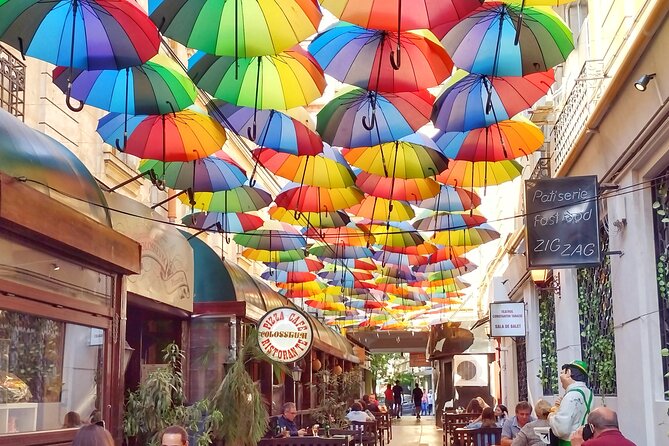
Bucharest can feel scattered at first. A grand concert hall sits near a former royal palace. A quiet Orthodox monastery appears between restaurants and shops. Then the Palace of the Parliament arrives like a political monument from another planet.
This tour gives those contrasts a clear order. You begin on Strada Benjamin Franklin, near the Romanian Athenaeum, and finish at Union Square, close to Old Town. That route works well if you are new to the city because it takes you through the central sights without asking you to solve Bucharest’s layout on your own.
The night setting is useful, not just pretty. Buildings such as the Athenaeum, the Central University Library, CEC Palace, and the former Royal Palace look especially striking under lights. You will also avoid spending the whole visit inside museums, which keeps the experience moving.
Still, evening light has a tradeoff. Some architectural details are easier to study during daylight, and photographs may be less clear. If you want a close look at carvings, facades, or inscriptions, plan a separate daytime walk.
More History Tours in Bucharest
- Bucharest: 3-Hour Dark History Tour with a Local
★ 4.9 · 301 reviews - Bucharest: Small Group History, Art & Secrets Tour
★ 4.7 · 152 reviews - Guided Walking Tour of Historical Bucharest
★ 5.0 · 84 reviews
The Athenaeum and the royal heart of the city
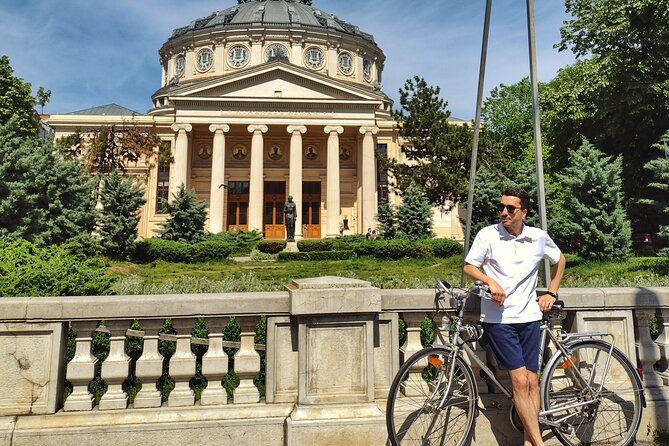
The Romanian Athenaeum is the natural opening sight. Its rounded facade and classical columns make it look like an ancient Greek temple, though you are seeing one of Bucharest’s most recognizable cultural buildings.
You get about 15 minutes here, enough for an explanation and photographs. I would use this first stop to ask your guide how the royal and cultural parts of the city fit together. The tour later returns to that theme at the library and former Royal Palace, so the Athenaeum helps set the tone.
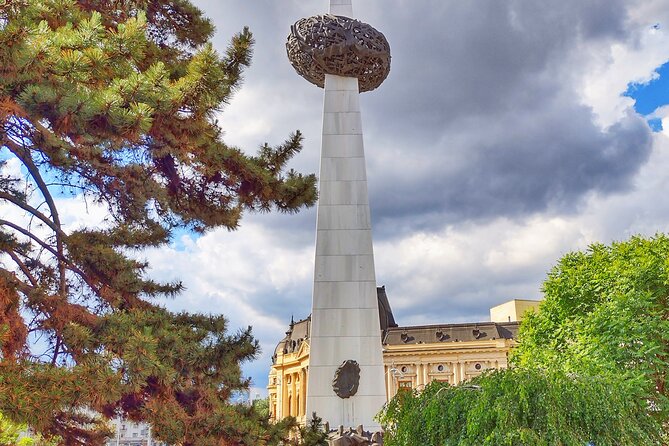
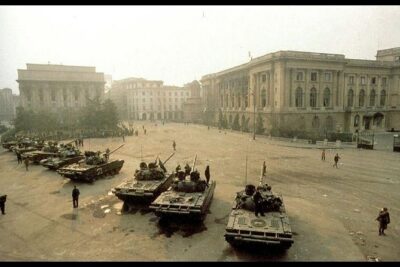
The next major point is Revolution Square, where Nicolae Ceausescu gave his last speech in 1989. This is the emotional center of the walk. Instead of treating the Revolution as a date in a textbook, the guide uses photographs and video presentations to show what happened in the square.
Allow about 45 minutes here. That is the longest scheduled stop, and it should be. The events of December 1989 shaped modern Romania, and the square carries several layers of memory. You can expect the guide to explain the final speech, the collapse of communist rule, and the visual evidence from those days.
A personal guide makes a real difference here. Toni has spoken about growing up under communism, while another guide, Maurice, has focused on the limits and hardships of daily life during that period. Details such as green bananas being saved for Christmas can tell you more about scarcity than a list of political slogans.
A grand avenue lined with power
The route includes a walk along the city’s most elegant avenue, lined with major buildings and monuments. The exact stop is not given a formal name, but its role in the tour is clear: this is where Bucharest’s royal ambition becomes visible in one long urban view.
You will not simply see isolated buildings. You will see how the central avenue gathered government, culture, wealth, and ceremony in one place. That makes the route especially useful for understanding why Bucharest was once called the Paris of the East, though the tour’s real strength is showing how that older city was later altered by communist planning.
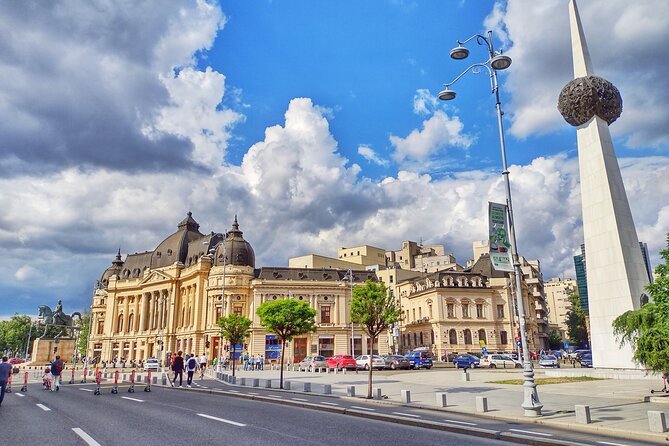
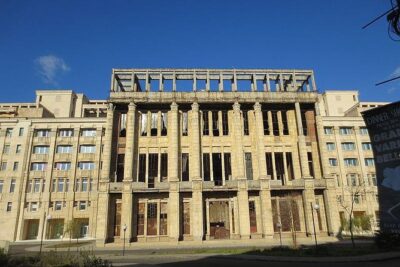
The Central University Library receives about 10 minutes. Designed in an eclectic style by French architect Paul Gottereau and sponsored by King Carol I, it is another reminder of the city’s late 19th-century and early 20th-century ambitions.
In front of the library is an equestrian statue of King Carol I. Your guide can connect the statue, the library, and the Athenaeum to the period when Romania’s monarchy was shaping a modern capital. Since this is an exterior visit, you should think of it as an architectural and political lesson, not a library tour.
The former Royal Palace follows. Built as the winter residence of Romania’s kings and dating from 1937, the palace was developed under Queen Maria and her son, King Carol II. You spend about 10 minutes here.
The palace is now linked with the National Museum of Art of Romania, another short exterior stop later in the route. If you are interested in royal history or Romanian art, note the building for a return visit. This tour gives you context, but not the time for a full museum visit.
Revolution Square needs time and attention
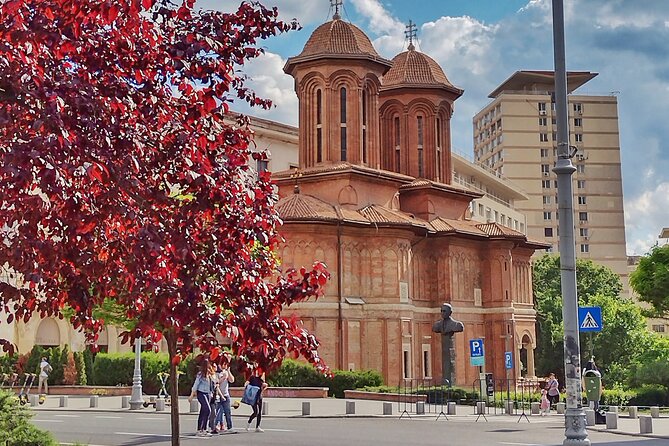
Many city walks hurry past Revolution Square. This one gives it 45 minutes, which is one of its best choices. The space is not just a place to take a quick photograph. It is where the old regime publicly lost control.
The printed materials included with the tour may help you follow the guide’s presentation, particularly if you do not already know the sequence of events. The combination of images, video, and spoken explanation should make the square easier to read.
You should also be ready for a serious tone. This is not only a sightseeing stop. The stories concern dictatorship, protest, violence, and a sudden political collapse. A guide who can explain personal experience without turning the subject into a performance is valuable here.
The tour’s strongest praise has gone to guides who explain history clearly, answer questions, and remain patient while you take photographs. Toni, Manuela, and Marius have each been singled out for those qualities. Guide assignments can vary, so you should book for the route and format rather than expect a particular person unless the provider confirms it.
More communist-era Bucharest walks:
- The Real tour of Communism
★ 5.0 · 666 reviews - Life under Communism
★ 5.0 · 358 reviews - 3-Hour Guided Tour of Communist Bucharest
★ 4.9 · 303 reviews - Bucharest Essential Tour: Old Town, Calea Victoriei & Communism
★ 5.0 · 142 reviews
Old Town, Stavropoleos, and the city’s social side
After the formal center, the walk shifts into Old Town. You have about 15 minutes for the area itself, followed by Stavropoleos Monastery and several lanes around Lipscani.
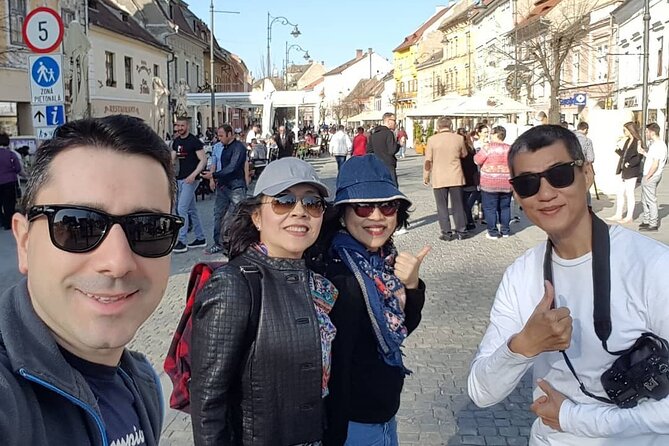
Old Town is a useful counterpoint to the royal avenue. Here, 19th-century buildings sit beside cafes, pubs, restaurants, souvenir shops, and restored commercial spaces. Some facades are handsome, while others show wear. That unevenness is part of Bucharest’s character, and you should not expect a polished historic quarter on every block.
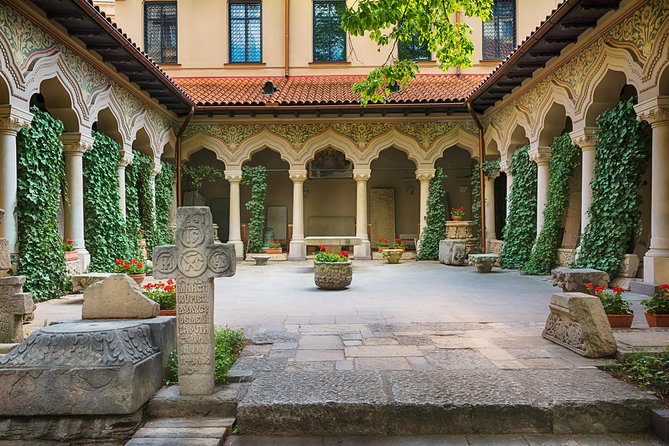
Stavropoleos Monastery is scheduled for about 10 minutes. Founded in 1724, it is one of the oldest churches in Bucharest and one of the quietest points on the route. Its presence in the middle of Old Town shows how close the city’s religious past remains to its modern nightlife.
The tour then takes you through Macca Villacrosse Passage, a glass-roofed arcade lined with hookah cafes. You have only five minutes here, so treat it as a quick look rather than time for a drink. Lipscani gets about 10 minutes for a stroll along one of the old quarter’s best-known streets.
Cărturești Carusel receives another 10 minutes. This restored bookshop is useful for browsing Romanian souvenirs and gifts, even if you are not planning to buy a book. It also gives the walk a lighter pause after the heavier political material.
Palaces, museums, and the scale of the state
The next group of stops shows how Bucharest’s institutions changed over time. CEC Palace, with its 19th-century architecture and elaborate statues, receives five minutes. It is a short stop, but the building rewards a look upward. This is a place where a quick explanation helps you notice details you might otherwise miss.
The National Museum of Art of Romania occupies the former Royal Palace. The tour allows about five minutes outside. That is enough to identify the building and understand its former royal role, but you will need a separate visit if you want to see the collections.
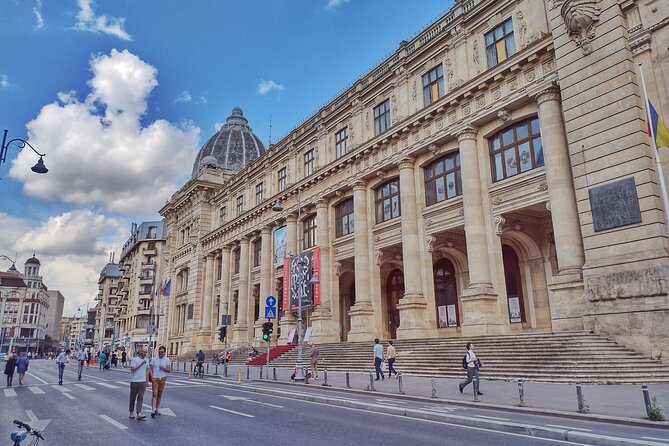
The National Museum of Romanian History is housed in the former 19th-century Post Office Palace. Again, the tour gives you an exterior introduction rather than a museum visit. An entrance fee is not included, and the schedule does not promise time inside.
The National Library of Romania is another short stop, listed at about five minutes. It is described as an iconic palace in the Old Town area. These brief visits are helpful for orientation, though they may feel rushed if you want detailed architectural commentary at every building.
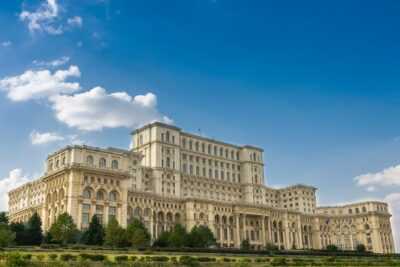
The largest visual surprise comes with the Palace of the Parliament. Construction began in 1984, and the building is described as the heaviest in the world and the third-largest administrative building. Its volume is said to exceed that of the Great Pyramid of Giza by 2 percent, which explains why it is often called a pharaonic construction.
The tour views the building from outside and tells its story. That distinction matters. You are not paying for an interior visit, and no entrance fee is included. The exterior alone is enough to show the scale of Ceausescu’s ambition, but the stop works best when the guide explains the human and urban cost behind the monument.
What the $72.25 price gets you
At $72.25 per person, this is not the cheapest way to walk around central Bucharest. The price makes more sense if you value a guide who can link architecture, monarchy, revolution, and communist life in one compact outing.
You receive a certified English-speaking guide, printed presentation materials, and a small group of no more than eight people. Those features matter more here than they would on a simple monument walk because Revolution Square and the Palace of the Parliament need explanation.
The price does not include food or drinks. It also does not cover entrance fees. Most listed stops are exterior visits with free admission, but the National Museum of Romanian History and National Library are marked as not included. Since the schedule only allows a few minutes at those places, you should not expect museum access to be part of the main experience.
The practical advice adds value. Manuela has shared restaurant suggestions and a local snack, while Marius has helped with tea, coffee, and street food during the walk. These extras are not guaranteed, so treat them as guide-dependent touches rather than promised inclusions. You can still ask for dining ideas before the tour ends.
Group discounts are available. The tour is often booked about a month ahead, with an average booking lead time of 31 days, so popular evening slots may be worth reserving early.
Pace, comfort, and planning your evening
The listed stop times add up to roughly two and a half hours, before allowing for walking between locations. That fits the advertised 2 to 3-hour duration. You will be on foot for much of the experience, so moderate physical fitness is required.
Wear shoes you can walk in and bring a light layer if you choose a night departure. The experience depends on good weather. If poor weather forces a cancellation, you are offered another date or a full refund.
The meeting point is Strada Benjamin Franklin 2, and the tour ends at Union Square, near Old Town. That ending is useful because you can continue into the central area for dinner or drinks. The route is near public transportation, and the mobile ticket makes it easy to keep the booking on your phone.
Service animals are allowed. The experience is offered in English, and confirmation arrives when you book.
One review described a rain-affected outing that became a private car tour when only two people were booked. That is not a standard feature to count on, but it shows that the format may sometimes adapt to small numbers and weather. Ask the provider directly if transport or a private arrangement matters to you.
Who will get the most from this walk
I would choose this tour for a first visit to Bucharest, especially if you have only a few days and want the city’s main stories before exploring alone. It gives you a useful mental map and ends in a good area for your own evening plans.
It also suits anyone curious about communist Europe. The Revolution Square presentation and personal memories from guides such as Toni provide more human detail than a standard architecture tour.
You may prefer another option if you want long museum visits, a slow photography walk, or a detailed interior tour of the Palace of the Parliament. This experience covers a lot of ground, but its strength is connection and explanation, not extended time at one site.
The guide is central to the quality. Marius has been praised for clear communication before meeting, Marius and Manuela for warm local touches, and Toni for patience, history, and an occasional flexible approach. All guides may not deliver the same style, but the format gives you a good chance to ask questions in a small group.
Should you book Footprints of Bucharest?
Book it if you want a compact, English-language introduction to Bucharest that mixes royal architecture, the 1989 Revolution, communist memories, and Old Town streets. The night setting, small group, and practical food advice make it more useful than a basic monument checklist.
Skip it if you mainly want interiors or museum time. At $72.25, the value rests on the guide’s storytelling and local perspective. For many first-time visitors, that is exactly what makes Bucharest click, but you should choose a daytime museum visit separately if close architectural study is your priority.
Free cancellation is available up to 24 hours before the start time for a full refund. Changes or cancellations inside that window are not accepted, and a minimum number of participants is required. Keep those rules in mind when planning an evening around the tour.
FAQ
How long does Footprints of Bucharest last?
The tour lasts approximately 2 to 3 hours. The scheduled stop times add up to about two and a half hours, with walking between locations.
Where does the tour begin and end?
It begins at Strada Benjamin Franklin 2 in Bucharest. It ends at Piața Unirii, also called Union Square, close to the Old Town area.
Is the tour offered in English?
Yes. The tour is offered in English and is led by a certified guide.
What is the maximum group size?
The tour accepts a maximum of eight travelers, making it a small-group experience.
Are entrance fees, food, or drinks included?
No. Food and drinks are not included, and entrance fees are separate. Most stops are exterior visits, with admission listed as free at many locations.
What happens if the weather is bad?
The tour requires good weather. If it is canceled because of poor weather, you will be offered another date or a full refund. You can also cancel up to 24 hours before the start time for a full refund.
Just added around Bucharest
- Private Full Day Tour of Bucharest★ 5.0 · 3 reviews
- Veliko Tarnovo and Medieval Bulgaria Private Day Trip from Bucharest★ 5.0 · 3 reviews
- Bucharest VIP Bar Crawl in Lipscani ‘Old Town’★ 5.0 · 3 reviews
- Bucharest Private City Tour★ 5.0 · 3 reviews
- Muddy Volcanoes and Salt Mine Private Tour★ 5.0 · 3 reviews
- Legends & Stories from Transylvania -2 Castles & Brasov Old Town★ 5.0 · 3 reviews
- Transfagarasan Private Tour from Bucharest – 2 Days★ 5.0 · 3 reviews
- 7-Day Dracula Tour in Romania from Bucharest including ‘The Ritual of Killing of a Living Dead’★ 5.0 · 3 reviews
Communist Bucharest Tours, compared.
Bucharest Essential Tour: Old Town, Calea Victoriei & Communism
Read our review →
Communism in Bucharest – Landmarks, Museum & Communist Appetizers
Read our review →

Browse the lists this tour appears in