
Reviewed · CITY TOURS
Oradea city tour
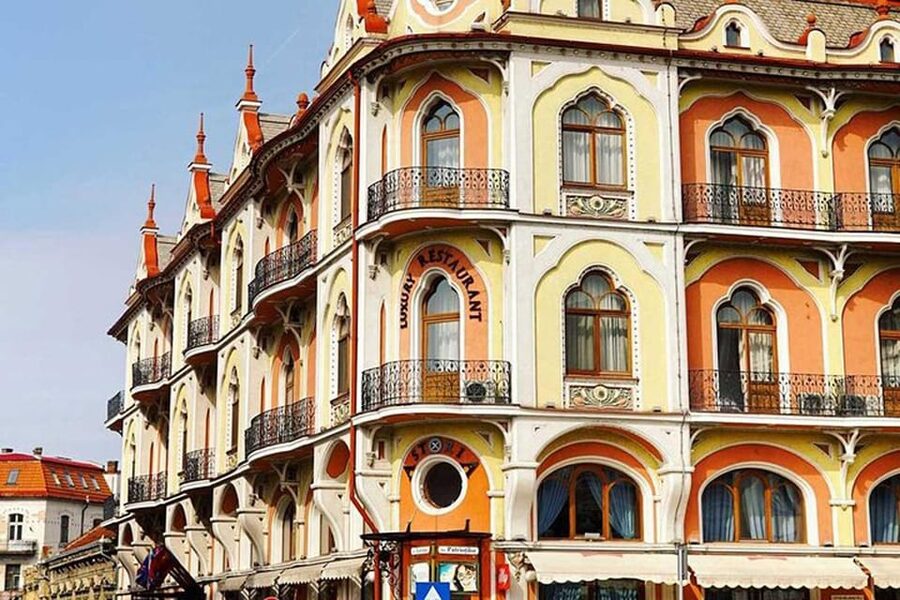
Oradea is a fine place to learn how buildings speak. In a short walk from Piața Unirii, you compare Gothic, Baroque, Rococo, Renaissance, Brâncovenesc, Eclectic, Neoclassical, and Secession design instead of simply collecting a string of building names. The guide explains each style, points to examples, then asks you to identify the clues yourself.
I like the hands-on architecture lesson, which gives you a skill you can use in other European cities. I also like the tour’s focus on local events and how they shaped Oradea’s buildings, plus the private format and hotel pickup in Oradea. The main caution is timing: the listed stop durations add up to about 2 hours and 20 minutes, even though the experience is advertised as two hours, so confirm the exact pace before booking.
Key points at a glance
- Architecture you can actually recognize: Learn the visual traits of eight major styles, then practice spotting them on real buildings.
- A useful route through central Oradea: The tour links Piața Unirii, Oradea Fortress, major palaces, the theater, cathedral, and synagogue.
- Private group format: Your group receives a dedicated guide in English or German, rather than joining a large shared walk.
- Hotel pickup and drop-off: Pickup and return to your Oradea hotel are included, which simplifies the start and finish.
- A strong local-history angle: Political and cultural events are tied directly to changes in the city’s architecture.
- A small extra cost: Entry to the Orthodox Synagogue is not included and costs 5 RON, about 1 euro.
Why Oradea works so well for an architecture walk
Many city tours point at handsome façades and name the architect. This one tries to give you a visual vocabulary. You first hear the main traits of each style, then see examples, and finally get invited to identify them yourself.
That structure is useful. Gothic is not just an old church style, Baroque is not simply decoration, and Secession is not just a colorful façade. You learn to compare shape, ornament, balance, and decorative mood. Once the guide has set out the clues, you can keep using them on your own in Romania and elsewhere in Europe.
The range is unusually broad for a two-hour introduction. The program includes Gothic, Baroque, Rococo, Renaissance, Brâncovenesc, Eclectic, Neoclassical, and Secession. You should not expect a university lecture on each one. The value is in the comparisons and the chance to connect them to actual buildings around Oradea.
The history section adds another useful layer. Oradea’s architecture did not appear by accident. The guide explains how important events in the area helped shape the city and its building styles. That keeps the walk from becoming a parade of façades without context.
A few more Romania day trips to weigh up
- Bucharest: City Highlights Guided Walking Tour
★ 4.9 · 1,482 reviews - Bucharest: 2-Hour City Highlights Bike Tour
★ 4.8 · 269 reviews - Bucharest Tuk Tuk city tour
★ 5.0 · 188 reviews
Starting in Piața Unirii
The meeting point is in Piața Unirii, in front of the statue of Ferdinand. This is a practical place to begin because it puts you in the city center and gives the guide a clear landmark for meeting your private group.
Arrive in comfortable shoes and clothes. The tour includes several stops and enough standing to make footwear more important than fashion. Bring some cash as well, since the Orthodox Synagogue entry fee is paid separately.
Piața Unirii also sets the tone for the tour. Rather than beginning with a distant attraction, you start in the middle of Oradea’s urban story. From here, the guide can introduce the way architecture changes from one period to another and prepare you for the examples ahead.
Hotel pickup and drop-off in Oradea are included. That is especially handy if you are staying outside the immediate center or do not want to work out local transport before an early start. The exact pickup arrangement should be confirmed when you book.
Oradea Fortress, 50 minutes of historical grounding
The longest stop is Oradea Fortress, with a listed guided visit of 50 minutes. That tells you something about the tour’s priorities. This is not only a façade-spotting walk. The fortress receives enough time to anchor the story of the city and the region.
Here, the guide connects historical events with the architectural changes you will see later. That link is one of the strongest reasons to choose this tour. Buildings make more sense when you know what pressures, rulers, cultures, or changes in civic life influenced them.
The fortress also gives the tour a change of rhythm. After beginning among central streets and façades, you spend a longer stretch with one major site. That can be helpful if you prefer context over a quick photo stop.
The drawback is that the fortress takes a large share of a short tour. If your only goal is to see as many central Secession buildings as possible, you may prefer a walk devoted almost entirely to the city center. If you want the architecture placed in a historical setting, the 50-minute stop earns its time.
Moskovits Palace and Oradea’s palace architecture
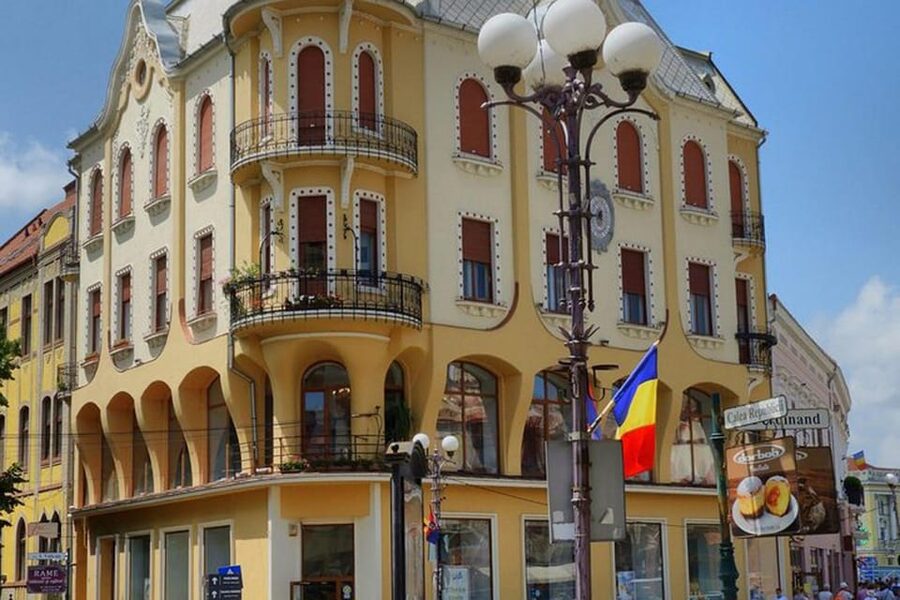
The next listed stop is Moskovits Palace, with about 10 minutes of guided explanation. This is the sort of stop where the guide’s teaching method matters more than the clock.
Ten minutes is enough to point out selected details and compare the building with what you saw earlier. It is not enough for a slow, room-by-room visit, so expect an exterior-focused explanation unless the guide tells you otherwise.
Use this stop as practice. Look for the details the guide has already explained, then compare them with the other buildings on the route. The tour is designed to train your eye, not just give you a list of names to remember.
Same corner of the country, a completely different day out:
- Bucharest: Dracula’s Castle, Peles Castle, & Brasov Old Town
★ 4.5 · 17,858 reviews - Bucharest: Dracula Castle, Peles Castle & Brasov Old Town
★ 4.6 · 10,891 reviews - Bucharest: Dracula’s Castle, Peleș Castle & Brașov Day Trip
★ 4.5 · 5,919 reviews - Bucharest: Palace of Parliament Tickets and Guide
★ 4.3 · 3,182 reviews
Regina Maria Theater and Poynar House
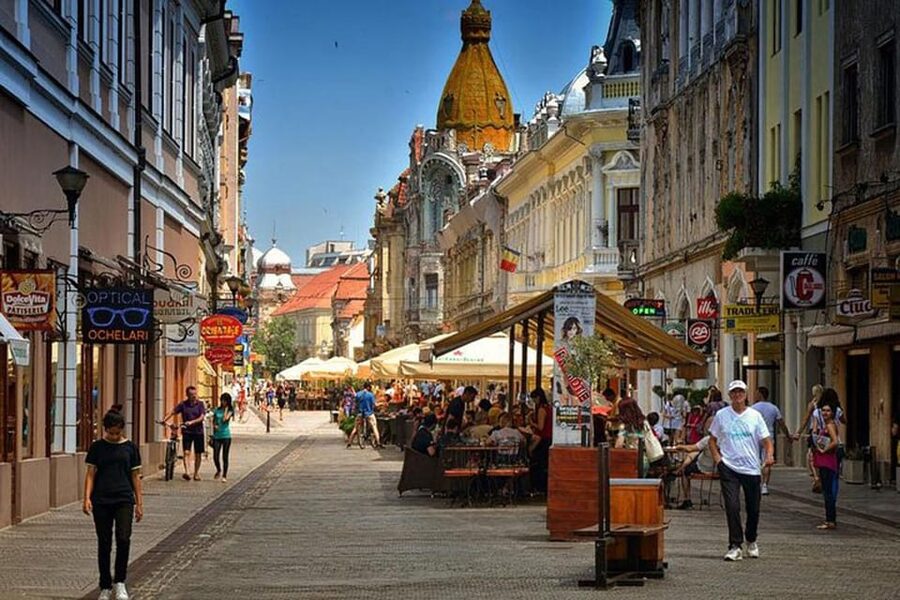
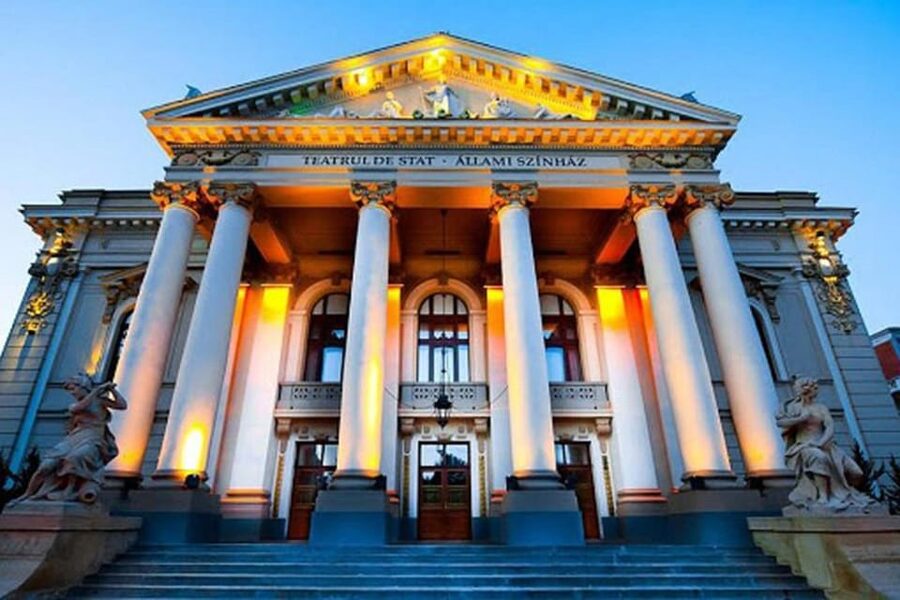
The tour then continues to Teatrul Regina Maria, associated with Trupa Iosif Vulcan, for another listed 10-minute guided stop. The theater brings a civic and cultural building into the lesson. It helps show how architectural styles appear not only in churches and palaces, but also in places built for public life and performance.
Poynar House follows, also with about 10 minutes of guided attention. This quick succession of stops is useful for comparison. You hear a style explained, see one example, then meet another building where the details may be more mixed or interpreted differently.
That comparison is important because real city streets do not always follow neat textbook categories. Buildings can combine influences, and the tour specifically includes Eclectic architecture among its subjects. You will get more from this section if you resist trying to label every façade instantly and instead listen for the features that support the guide’s explanation.
The cathedral and the Black Eagle Palace
Catedrala Adormirea Maicii Domnului, Oradea receives a listed 10-minute guided visit. A cathedral gives the guide a chance to discuss religious architecture and to set it against the civic buildings seen along the route.
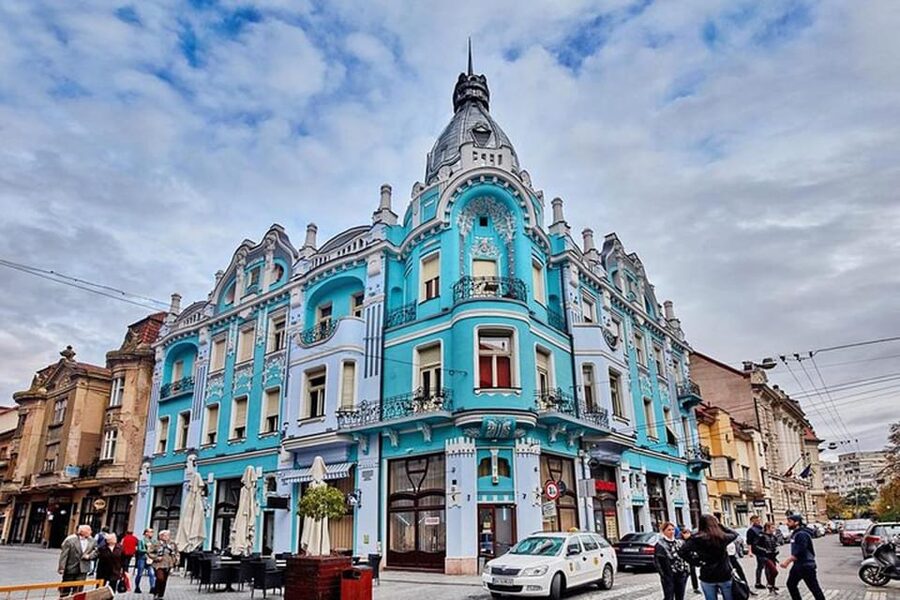
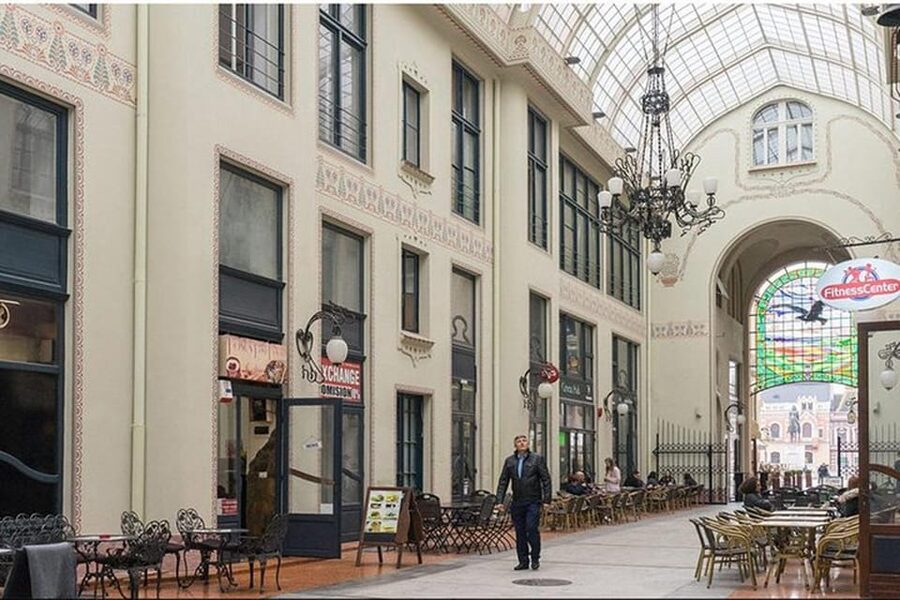
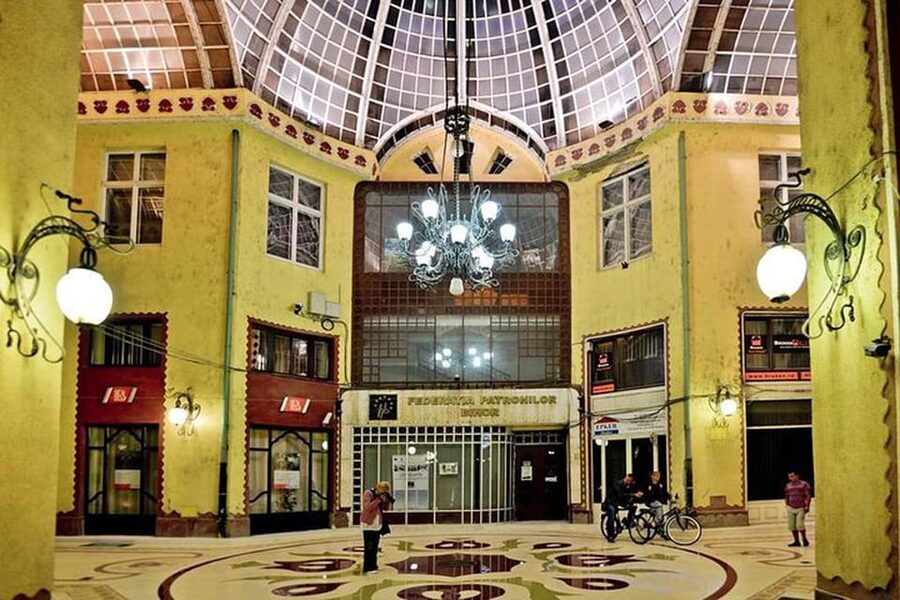
The itinerary then includes the Black Eagle Palace, with about 10 minutes for a visit. This is one of the places where the Secession theme becomes especially important. The stop helps show how a major urban building can combine function, decoration, and a strong visual identity.
The short time at each stop means you should treat this as an overview rather than a full interior tour. You may have time for the central points and photographs, but not a long independent exploration. The upside is variety. In one route, you move between fortress, palace, theater, house, cathedral, and synagogue, each helping explain a different part of Oradea’s built character.
The Orthodox Synagogue, the tour’s longest city-center stop
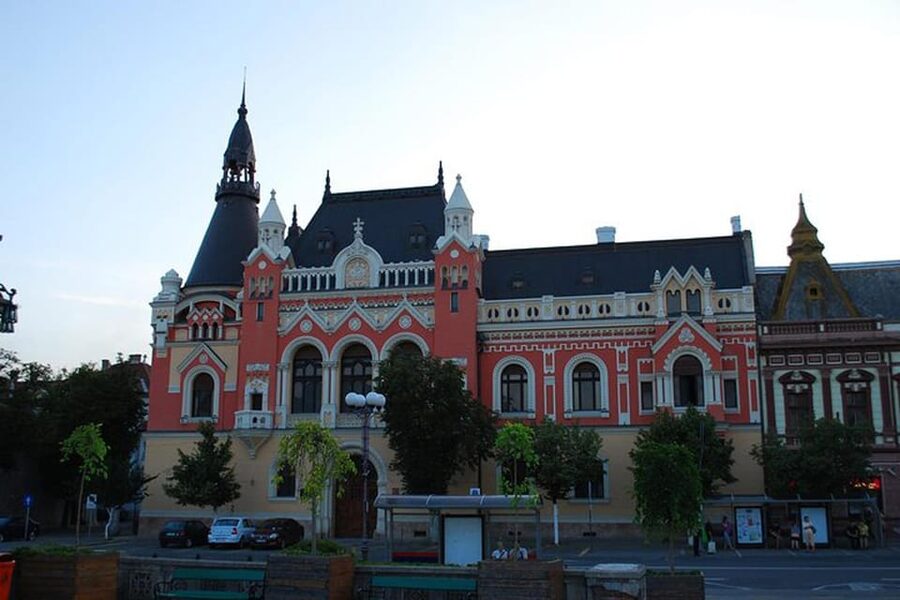
The Orthodox Synagogue receives a listed 40-minute guided visit, making it the longest stop after Oradea Fortress. That gives the guide room to discuss the building in more than passing terms and to connect it to the zone’s cultural and historical development.
This is also the only listed paid entrance. The fee is 5 RON, about 1 euro, and it is not included in the tour price. Keep cash with you so this small payment does not become an avoidable nuisance.
The synagogue is a meaningful final major stop because it broadens the tour beyond grand civic architecture. Oradea’s story is not only about styles copied from elsewhere. It is also about the communities, institutions, and historical forces that shaped the city.
After the synagogue, the route returns to Piața Unirii. If hotel pickup and drop-off are arranged, the provider can also return you to your Oradea hotel. Confirm the end-of-tour transport details in advance, particularly if you have a train, restaurant booking, or another timed activity.
Eight styles, and why the lesson matters
The tour covers a large list of styles for its length:
- Gothic
- Baroque
- Rococo
- Renaissance
- Brâncovenesc
- Eclectic
- Neoclassical
- Secession
The point is not to memorize all eight labels in one sitting. The useful result is learning how to ask better questions when you look at a building. Is the design restrained or theatrical? Are the lines pointed, curved, balanced, or deliberately irregular? Is the ornament concentrated around doors and windows, or spread across the whole façade?
The guide first explains the characteristics, then shows examples, and finally invites you to discover the styles yourself. That last step makes the tour more active than a standard walking commentary. You are not simply receiving facts. You are testing your new visual skills.
Brâncovenesc is especially helpful in this comparison because it brings a Romanian architectural tradition into a broader European lesson. The program does not treat Oradea as an isolated collection of imported styles. It asks you to see how local and European influences appear together.
Guide quality and private-group value
The experience is offered with a live guide in English or German. The available feedback highlights punctuality, clear delivery, humor, and strong knowledge of the city, with one Polish-language comment praising the guide’s easy manner and ability to cover the most interesting sights in two hours.
The specific guide’s name is not provided, so you should not book expecting a named specialist. What you can reasonably expect is a guide-led lesson rather than an audio tour or a self-guided route.
The private group format is a real advantage if you want to ask questions or slow down at a building that catches your eye. It also works well for couples, families, or a small group with different levels of interest in architecture. The tradeoff is that the experience may feel more like a focused class than a loose, spontaneous stroll.
The tour has a rating of 4.9 from eight reviews, a small sample but a very strong result. The most consistent praise centers on the guide’s punctuality, information, light touch, and clear way of explaining the city. That is exactly what you need on a style-heavy tour, since poor explanations would turn the long list of terms into a blur.
Price, pace, and practical value
The price is $94 per group of up to 60 people. That wording matters. For one person, the price is high. For a private group splitting the cost, it can be good value, especially because a guide and hotel pickup and drop-off are included.
A group of two pays the equivalent of $47 each. Four people pay about $23.50 each. The maximum group size is unusually large for a private booking, so ask how the group will be handled if you are booking for a big party. A lesson that works beautifully for four people may feel less personal with a crowd of 60.
The advertised duration is two hours, but the listed stop times total roughly 140 minutes. That does not necessarily mean the experience will run over. Some times may be approximate, or the route may move quickly between stops. Still, I would confirm the planned duration and starting time before booking, especially if you have a tight schedule.
Free cancellation up to 24 hours before the start gives you useful flexibility. You can also reserve now and pay later. Those terms help if your Oradea plans are still shifting, but they do not remove the need to check the actual meeting and hotel pickup details.
Who should book this Oradea tour?
I would choose this tour if you want more than a quick city orientation and enjoy understanding why buildings look the way they do. It suits first-time visitors who want a clear framework for exploring Oradea on their own afterward.
It is also a good choice for anyone interested in European architecture but not ready for a specialist lecture. The guide’s pattern of explanation, example, and identification keeps the subject practical.
You should think twice if you use a wheelchair or have a mobility impairment. The experience is specifically not suitable for wheelchair users or people with mobility impairments. Comfortable shoes are required, and cash is useful for the synagogue entry.
The pace may also be a concern if you prefer long, quiet visits inside each site. Several stops are listed at only 10 minutes. This is a broad survey, not a leisurely examination of every interior.
Should you book it?
Book this Oradea city tour if you want a private, guide-led introduction to the city’s architecture and history, with hotel transport included. The architecture lesson is its best feature, and the route gives you a useful mix of fortress, religious buildings, palaces, theater, and civic landmarks.
I would be cautious only about the timing discrepancy and the mobility limits. Confirm the two-hour schedule, ask how the route is paced, and bring about 5 RON for the Orthodox Synagogue. For a small group sharing the $94 price, this is a practical way to get your bearings and leave with a skill you can use across Europe.
FAQ
Where does the Oradea city tour begin?
The meeting point is in Piața Unirii, in front of the statue of Ferdinand.
Does the tour include hotel pickup?
Yes. Pickup from your tourist hotel in Oradea is included, along with drop-off at the hotel afterward.
How long does the tour last?
The advertised duration is two hours. The listed guided stop times add up to about 140 minutes, so confirm the exact schedule when booking.
What languages are available?
The live tour guide is available in English or German.
Is the tour private?
Yes. The experience is offered as a private group tour, with a listed capacity of up to 60 people for the group price.
Is the Orthodox Synagogue entrance included?
No. Entrance is separate and costs 5 RON, approximately 1 euro.
Is the tour suitable for wheelchair users?
No. The experience is not suitable for wheelchair users or people with mobility impairments.
Just added around Romania
- Private Full Day Tour of Bucharest★ 5.0 · 3 reviews
- Veliko Tarnovo and Medieval Bulgaria Private Day Trip from Bucharest★ 5.0 · 3 reviews
- Bear Sanctuary Zarnesti,Bran Castle,Rasnov Fortres w/Hotel pickup★ 5.0 · 3 reviews
- Count Dracula & Peles Castle in One Day from Bucharest★ 5.0 · 3 reviews
- Bucharest VIP Bar Crawl in Lipscani ‘Old Town’★ 5.0 · 3 reviews
- Private Transfagarasan&Balea Lake★ 5.0 · 3 reviews
- Muddy Volcanoes and Salt Mine Private Tour★ 5.0 · 3 reviews
- Bucharest Private City Tour★ 5.0 · 3 reviews
City Tours, compared.

Bucharest Panoramic Sightseeing – Private City Tour
Read our review →
SB01 – City Tour Sibiu: Exploring the Heart of Transylvania
Read our review →
City Tour Sighisoara Legends & Landmarks A Walk Through Time
Read our review →Browse the lists this tour appears in