
Reviewed · TIMIȘOARA TOURS
Timisoara: Guided Walking Tour
Timișoara’s story comes alive when you walk it in the right order. This two-hour tour links the Opera House, Ottoman-era history, the old city walls, Unirii Square, and the place where more than 150,000 people gathered during the 1989 Revolution. The route gives you a quick grip on the city’s past without burying you in dates.
I like the focus on real turning points, especially Ottoman rule and the revolution. I also like the chance to ask questions about Banat, since a local guide can explain how Timișoara fits into the wider region. The main drawback is that it is a walking tour over historic streets and is not suitable for people with mobility impairments.
Key points at a glance
- Victory Square start: Meet in front of the Opera House, the tour’s clear and central meeting point.
- Seven centuries in two hours: Move from medieval foundations and Ottoman times to modern Romanian history.
- The last piece of the old walls: See the only surviving section of Timișoara’s former fortifications.
- Unirii Square in context: Learn who created one of the city’s most attractive historic squares.
- The 1989 Revolution: Visit the area tied to a gathering of more than 150,000 people.
- Guides who welcome questions: Roberta, Sergio, and Dan have been praised for clear explanations, local advice, and an easy manner.
Starting beneath the Opera House in Victory Square
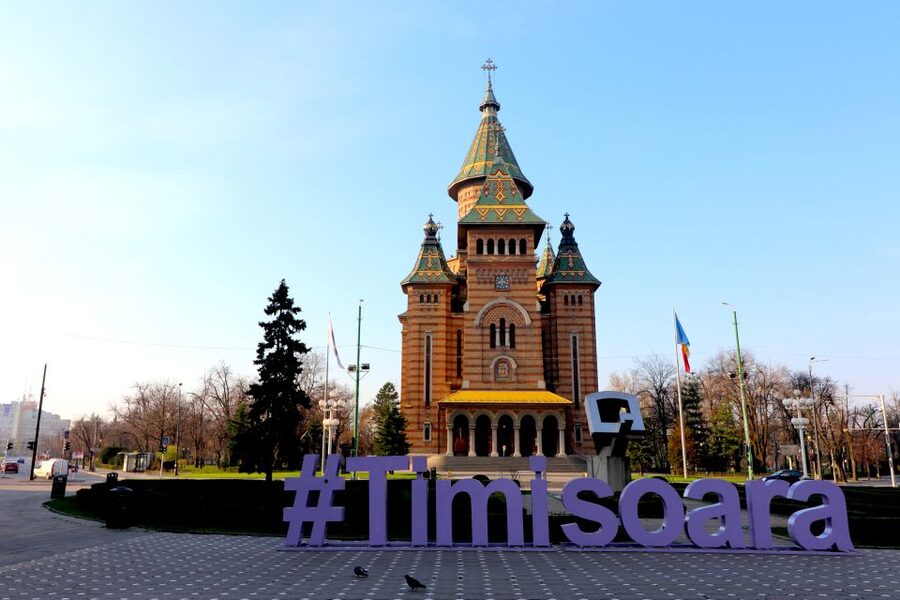
Your tour begins in Victory Square, right in front of the Opera House. This is a useful meeting point because you do not need to search through a side street or find a tucked-away café. Arrive in comfortable clothes and allow enough time to locate the Opera House before the start.
Victory Square gives the tour a fitting opening. It is tied to the modern life of Timișoara and helps place the city’s public spaces in a wider story. From here, your guide leads you into the historic center, where the layers become easier to read on foot.
I like this kind of beginning because it starts with a major civic space rather than a string of disconnected buildings. You get a sense of how Timișoara functions as a city before moving into its older quarters.
The tour is conducted in English, and the guide is available to answer questions. That matters if you want more than a memorized speech. You can ask about the city, its past, or the Banat region as the walk unfolds.
More walking tours in Timisoara:
- Timisoara All in One – Walking and Tram Tour
★ 5.0 · 72 reviews - Timișoara Highlights – Walking Tour
★ 5.0 · 28 reviews - Timisoara: Classic Walking Tour
★ 5.0 · 26 reviews
Ottoman Timișoara and the city’s changing rulers
One of the tour’s main subjects is Timișoara during Ottoman rule. The walk does not treat the city as a collection of pretty façades only. It explains how outside powers and changing rulers shaped the center you see today.
For you, this section adds useful context to the architecture. A square, street, or remaining wall makes more sense when you know that Timișoara has passed through major political and cultural changes over more than 700 years.
The Ottoman chapter is particularly valuable because it prevents a common mistake: assuming the historic center tells one single, tidy story. Instead, you hear about a city altered by different periods of rule, rebuilding, and public life.
The exact depth of the discussion will depend on your guide and the questions you ask. In two hours, you cannot get a full academic account of every era. You can expect a practical introduction that helps you notice the main clues around you.
Finding the final surviving piece of Timișoara’s walls
The tour takes you to the former walls of the city and points out the only piece still standing. That small remnant is easy to overlook if you explore alone, which makes it one of the walk’s most useful stops.
Do not expect a complete fortress circuit. The value is in seeing what remains and understanding how much of the old defensive system has disappeared. One surviving section can make the earlier shape of the city easier to imagine.
I find stops like this more rewarding than a long list of grand buildings. A fragment forces you to picture the missing parts. It also shows how modern Timișoara has grown around its older core.
Your guide can connect the wall to the city’s wider development, including the role of different rulers and the changing form of the center. This is another good moment to ask questions if you want more detail about the old fortifications.
Reading the architecture around Unirii Square
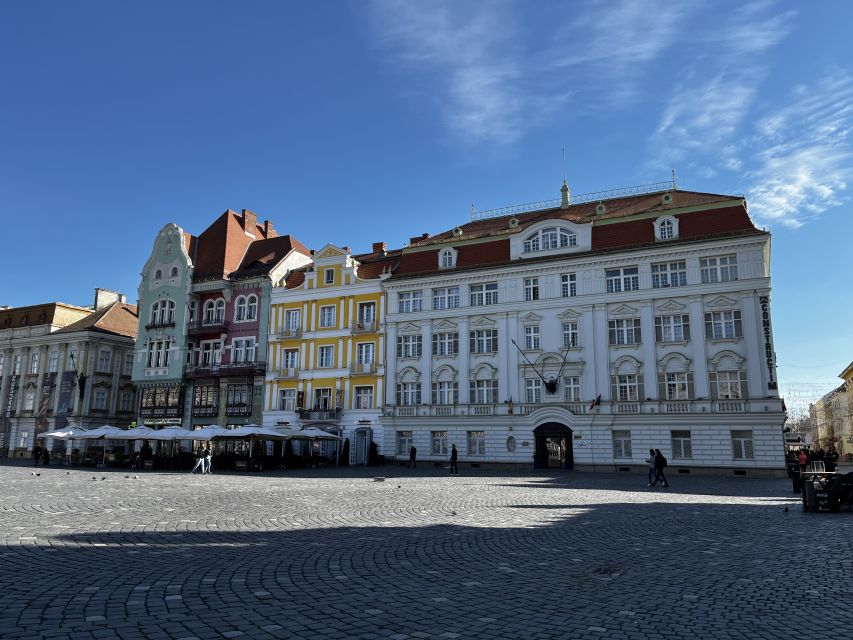
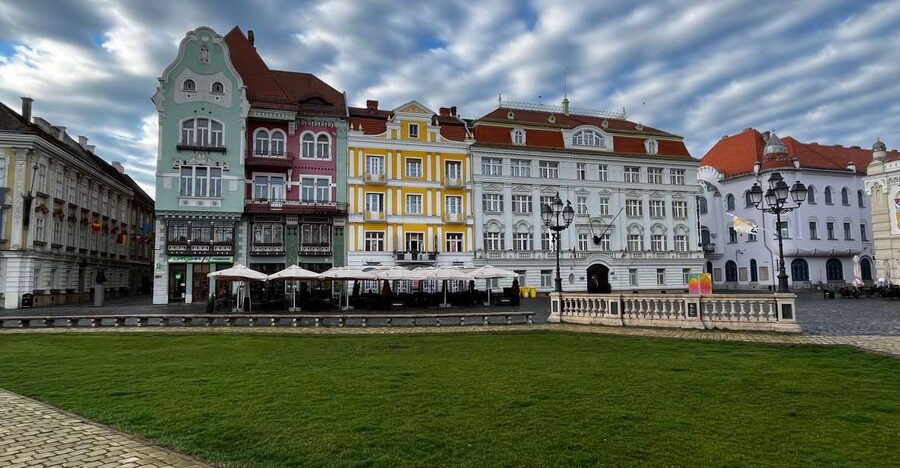
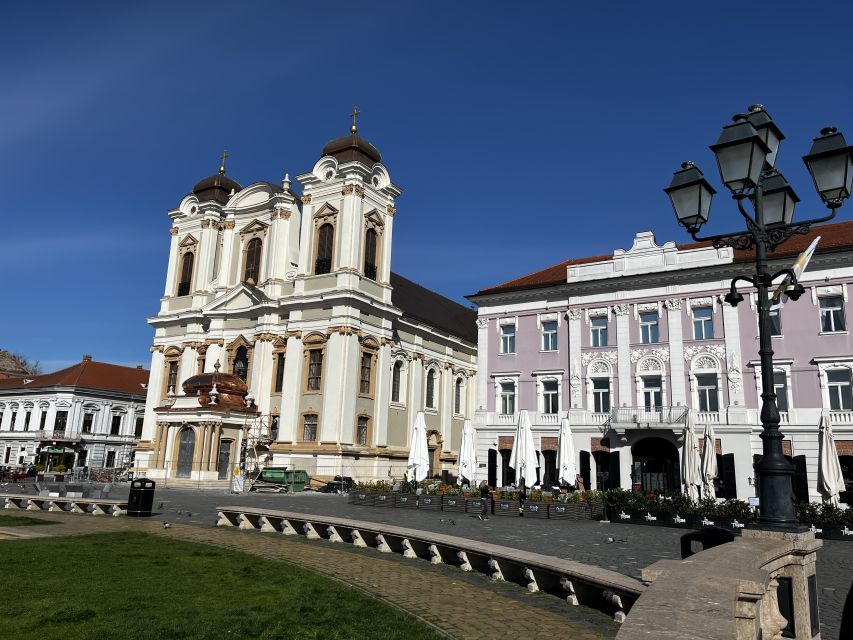
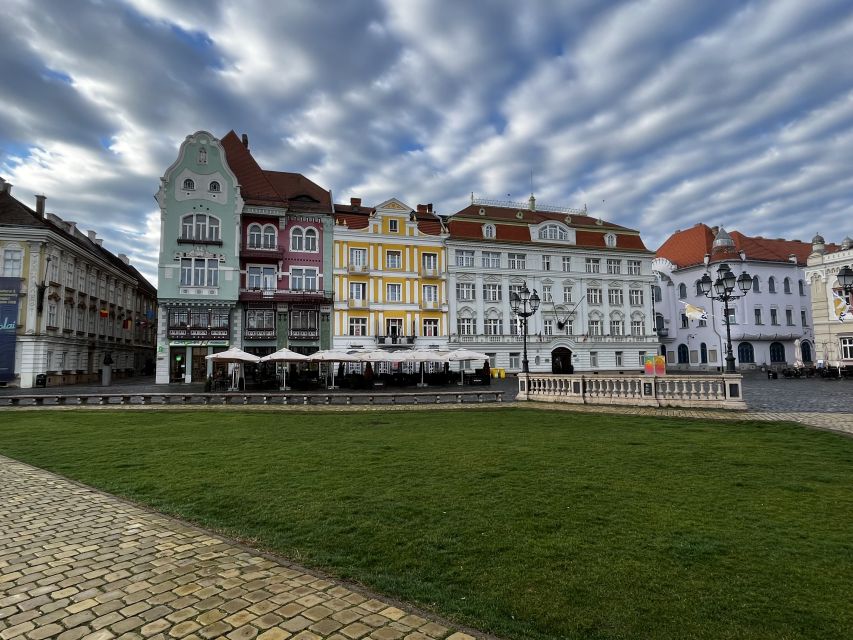
Unirii Square is one of the tour’s main visual rewards. Your guide explains who built the square and how it became part of Timișoara’s historic center. The point is not just to admire a handsome open space, but to understand why it looks the way it does.
The square works well as a group stop because it brings architecture and civic history together. You can look at the surrounding buildings while hearing about the people and periods that shaped them.
I like that the tour asks who created the square. That simple question turns a photo stop into a lesson in power, planning, and public life. It also gives you a better way to remember the center after the tour ends.
The city was European Capital of Culture in 2023, and that recent title adds another layer to the visit. It signals the importance of Timișoara’s cultural identity today, while the tour keeps its attention on the long story behind that identity.
You should have time to take in the square, listen, and ask questions, but this is still a guided walk rather than a long architectural study. If you want to enter individual buildings or examine every façade, plan extra time after the tour.
A few more Timisoara day trips to weigh up
- The Classic Tour of Timisoara
★ 5.0 · 154 reviews - Weekly Guided Tour in English – Tuesday, Thursday, Saturday
★ 5.0 · 84 reviews - Day trip to Corvin Castle and Sibiu (and back) from Timisoara
★ 5.0 · 30 reviews - Danube Gorge & Banat Waterfalls
★ 5.0 · 27 reviews
The 1989 Revolution and a city in motion
The most powerful part of the walk may be its treatment of the Romanian Revolution of 1989. You will see where more than 150,000 people gathered, then hear about the events and people connected with this turning point.
This gives the tour a strong modern finish. Timișoara is not presented as an old city preserved behind glass. Its streets also carry the memory of a public movement that helped change Romania.
For me, this is the kind of historical stop that makes a walking tour worthwhile. You are not only hearing about a national event in a textbook setting. You are standing in the city where a huge crowd gathered and learning how local events fit into Romania’s wider story.
The guide’s role matters here. Political history can become a blur of names and dates, so a clear explanation is important. Sergio has been praised for answering questions across subjects linked to Timișoara and the surrounding area. Dan has been described as an engaging guide who helped make the city a strong part of the experience. Those details suggest that asking questions is encouraged rather than treated as an interruption.
Do keep expectations sensible. This is a short introduction to the revolution, not a dedicated full-day history program. If 1989 is your main reason for coming to Timișoara, use the walk as a starting point and continue exploring on your own afterward.
Local stories, Banat context, and time for questions
The advertised focus includes stories about important people who influenced Timișoara. That personal angle can make the city easier to remember than a list of dates. You may hear about figures connected with the city’s political, cultural, or civic past, depending on the guide’s approach.
The opportunity to ask about Banat is another strong feature. Timișoara is the capital of Timiș County, but its story is also tied to the broader Banat region. A question about food, culture, nearby places, or local customs can help you plan the rest of your stay.
Roberta has been praised for explaining the city’s history and art, then offering practical suggestions about places to visit. She has also been credited with recommending a good restaurant. That kind of advice is useful early in a trip, when you are still deciding where to eat and what deserves more time.
You should not expect a formal restaurant tour or a long list of personal recommendations. The useful point is that the conversation can continue beyond the official stops. Bring one or two questions with you, especially if you want advice about the rest of Timișoara.
Two hours is a useful first look, not the whole city
The two-hour duration is well suited to a first orientation. It is long enough to connect several major subjects, yet short enough to fit around lunch, a museum visit, or onward plans.
I would schedule it near the beginning of your stay. Once you know the historic center’s main story, you can return to the places that caught your attention. You will also have a better sense of which buildings and public squares deserve a slower look.
The pace will involve standing and walking for most of the two hours. Comfortable clothes are specifically recommended, and that advice should be taken seriously. The tour runs rain or shine every Tuesday, Thursday, and Saturday, so check the forecast and bring suitable protection for the conditions.
The rain-or-shine policy is both practical and limiting. You do not have to worry that an ordinary wet day will cancel your plans, but you also need to be ready to walk in poor weather. Since no indoor alternative is promised, a rainy day may make the architecture and conversation harder to enjoy.
The tour ends back at the starting point in Victory Square. That makes it easy to continue sightseeing from the same central area and removes the need to arrange transport back from an unfamiliar neighborhood.
What the $23 price includes
At $23 per person, the main thing you are buying is a guided introduction to Timișoara’s historic center. The price includes a professional English-speaking guide, and the tour covers a wide span of subjects: Ottoman rule, the old walls, Unirii Square, the 2023 cultural title, and the 1989 Revolution.
I consider that fair value if you want historical context and the freedom to ask questions. Exploring the center alone costs less, but you may miss the surviving wall, misunderstand the timeline, or pass through the revolutionary sites without realizing their importance.
The value is strongest for a first visit. If you already know Timișoara well, a general introductory walk may repeat facts you have heard before. In that case, the tour’s worth will depend on the guide’s stories and your interest in filling gaps.
A 4.9 rating from 38 ratings points to a consistently well-received experience, but the number is not huge. I would treat it as a helpful sign rather than a guarantee that every guide and departure will feel identical. Guide style can shape a walking tour, and names associated with especially warm feedback include Roberta, Sergio, and Dan.
The reserve-now, pay-later option can help if your schedule is still changing. You can also cancel up to 24 hours in advance for a full refund, which gives you some protection when weather or plans become uncertain.
Who should choose this Timișoara walk?
I would recommend this tour to you if:
- You are visiting Timișoara for the first time.
- You want the main historical outline in two hours.
- You enjoy architecture but want the stories behind it.
- You are curious about the 1989 Revolution.
- You like asking a local guide for advice about food and other places to see.
- You want an English-language introduction to Banat and Timișoara.
It is also a good fit if you prefer a short activity over a long organized excursion. The route stays in the historic center and returns to Victory Square, so it does not take over your whole day.
I would hesitate to recommend it if you have a mobility impairment, since the experience is on foot and is explicitly not suitable for people with mobility impairments. I would also look elsewhere if you want museum entry, transportation, food tastings, or a specialist architecture lecture. None of those are included.
Practical advice before you book
Choose a Tuesday, Thursday, or Saturday when the two-hour time slot fits your plans. Starting in the morning can help you use the rest of the day for additional sightseeing, while a later departure may work well if you arrive in Timișoara that day.
Wear comfortable clothing and prepare for the weather. The activity runs rain or shine, and the information provided does not promise shelter or an indoor version.
Meet directly in front of the Opera House in Victory Square. Since the tour finishes at the same spot, you can arrange a meal, museum visit, or further walk from there.
Bring questions. Ask about the Ottoman period, the former fortifications, the people linked to the city, the revolution, or places to eat. The strongest part of this experience is not just following the route. It is getting a local explanation of what you are seeing.
Should you book this guided walk?
Book it if you want a well-priced first look at Timișoara that joins architecture with the city’s major political events. The surviving wall, Unirii Square, and the 1989 Revolution give the walk more substance than a simple photo tour, while the chance to speak with an English-speaking guide adds useful local context.
Skip it if you need step-free access, dislike walking in uncertain weather, or already know the historic center well. For most first-time visitors who want a clear two-hour introduction, this is a sensible way to begin, especially if you schedule it early and use the guide’s advice to shape the rest of your stay.
FAQ
How long does the Timișoara guided walking tour last?
The tour lasts two hours.
Where does the tour begin?
It begins directly in front of the Opera House in Victory Square.
Where does the tour end?
The tour ends back at the meeting point in Victory Square.
What language is the tour conducted in?
The live tour guide speaks English.
What parts of Timișoara does the walk cover?
The walk covers the historic city center, Ottoman-era history, the former city walls, Unirii Square, and places linked to the 1989 Romanian Revolution.
Does the tour discuss the 1989 Revolution?
Yes. You will hear about the revolution and see where more than 150,000 people gathered during the events of 1989.
Is the tour available every day?
No. It takes place every Tuesday, Thursday, and Saturday.
What should I wear?
Wear comfortable clothes suitable for a two-hour walk. The tour runs rain or shine.
Can people with mobility impairments join?
The activity is not suitable for people with mobility impairments.
Can I cancel the booking?
You can cancel up to 24 hours in advance for a full refund. You can also reserve now and pay later.
Just added around Timisoara
- Timisoara Dream Tour in Elisabetin Neighborhood★ 5.0 · 3 reviews
- Timisoara: Jewish Heritage Walking Tour★ 5.0 · 4 reviews
- Nera Gorge National Park – Private Day Tour from Timisoara★ 4.5 · 4 reviews
- Timisoara: Private Walking Tour with a Local Guide★ 4.5 · 5 reviews
- Timisoara Downtown Dream Tour★ 5.0 · 5 reviews
- The Jewish Heritage Tour of Timisoara★ 5.0 · 9 reviews
- Day Trip to Turda Salt Mine and Corvin Castle from Timisoara★ 5.0 · 10 reviews
- Timisoara Downtown Dream Tour★ 4.9 · 12 reviews
Timișoara Tours, compared.

Weekly Guided Tour in English – Tuesday, Thursday, Saturday
Read our review →
Day trip to Corvin Castle and Sibiu (and back) from Timisoara
Read our review →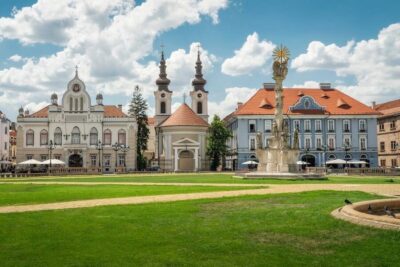

Browse the lists this tour appears in