
Reviewed · COMMUNIST BUCHAREST TOURS
The Grand Tour of Communist Ages at Timisoara
Timisoara’s Communist past is not kept behind museum glass. You’ll see it in a workers’ neighborhood, in a private collection of household objects, and in the bullet holes left around the city after the December 1989 uprising. The tour connects those ordinary details to the dramatic moment when Timisoara became Romania’s first city free of Communism.
I like the small group of no more than 10 people, which gives you room to ask questions. I also like the way a vehicle links several parts of town, saving your feet while covering more ground. The main consideration is the afternoon start at 3 p.m. and the subject matter, which includes people killed during the Revolution and the harsher side of life under Nicolae Ceausescu.
Key points to know before booking
- See Communist-era Timisoara beyond the historic center, including the Șagului neighborhood and its apartment-block setting.
- Connect daily life to the 1989 Revolution, rather than treating the uprising as an isolated event.
- Visit a private collection of Romanian Communist-era objects at the Muzeul Consumatorului Comunist.
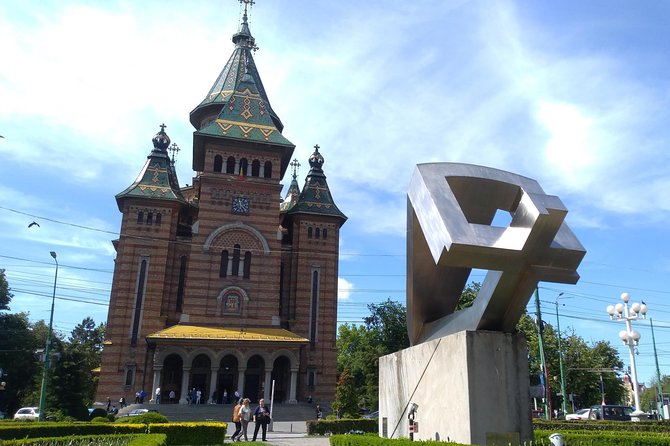
- Look for real bullet holes at the Orthodox Cathedral and around Piața Victoriei.
- Ride between locations in a comfortable vehicle, useful for a route lasting about 3 to 4 hours.
- Expect an English-language tour with a maximum of 10 people, led by guides such as Dan or Ludovic.
Why this Communist history tour matters in Timisoara
Many city tours show you Timisoara’s handsome squares, churches, and restored facades. This one asks a less polished question: what was life like here before the colorful cafes and renovated buildings?
That question matters because Romania’s Communist period was not ancient history. It ended in December 1989, and the revolution began in Timisoara. The tour helps you see how political control reached into homes, neighborhoods, shopping, religion, and public space.
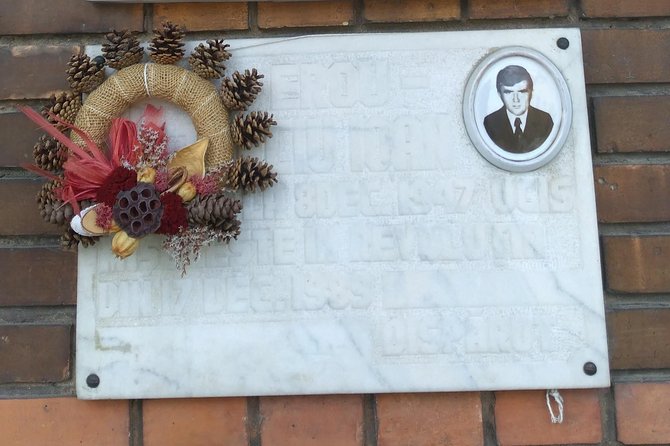
I especially like the link between small objects and large events. A private collection can show what Romanian-made goods looked like during the Communist years. A church wall can show where bullets struck. A square can carry the memory of tens of thousands of people who gathered to declare the city free.
The tour is led in English, and the guides who have been named include Dan and Ludovic. Both are described as strong historians who can handle detailed questions. That makes a difference here. The subject is not just a string of dates, and a good explanation helps you understand why people acted when they did.
The experience costs $66.08 per person. That is not the price of a short walking tour, but you are paying for several hours, transport between sites, a small group, and a guide who can provide political and social context. For someone interested in Romanian history, the price is easier to justify than it would be for a visitor who wants only a quick introduction to central Timisoara.
More communist-era Bucharest walks:
- The Real tour of Communism
★ 5.0 · 666 reviews - Life under Communism
★ 5.0 · 358 reviews - 3-Hour Guided Tour of Communist Bucharest
★ 4.9 · 303 reviews
Starting near the Three Holy Hierarchs Cathedral
The tour begins at the Three Holy Hierarchs Metropolitan Cathedral on Bulevardul Regele Ferdinand I at 3 p.m. Arrive with enough time to find the meeting point. The route ends in Piața Victoriei, also known as Victory Square, so you finish in a central part of Timisoara rather than returning to the starting point.
That one-way arrangement is useful. You can continue with dinner, sightseeing, or a walk through the city center after the tour. You should also plan your day around the afternoon departure, since this is not a morning activity.
The small group size is one of the practical strengths. With no more than 10 people, the guide can keep the discussion conversational instead of speaking to a large crowd. This is valuable when the topic turns to difficult questions about state control, protest, violence, and the way history was presented to Romanian citizens.
Șagului, where Communist life becomes ordinary
The longest section is in Șagului, a Timisoara neighborhood where you spend about two hours looking at how people lived during the Communist period. This is the part of the experience most likely to separate it from a standard sightseeing route.
You are not simply hearing about government policy. You are looking at the kind of neighborhood shaped by that policy. The focus on an urban residential area gives you a sense of the setting in which many people worked, raised families, waited for goods, and lived with the limits imposed by the regime.
The supplied details do not promise access to private homes or a particular apartment building, so you should think of this as an exterior neighborhood visit and guided discussion. Still, that can be valuable. Communist rule is easier to understand when you see the planned residential environment rather than only the grand civic buildings associated with power.
Two hours is a substantial portion of the tour. That tells you the guide is not rushing through a photo stop. If you prefer fast sightseeing, this may feel slow. If you want social and political context, it is likely the strongest part of the route.
The vehicle matters here. Șagului is not simply another stop a few steps from the central squares. Riding between locations lets you cover more of Timisoara without spending the whole afternoon walking from one site to the next.
The Muzeul Consumatorului Comunist and its household clues
The Muzeul Consumatorului Comunist, or Museum of the Communist Consumer, receives about 30 minutes. Here, the discussion turns to the beginnings of the Communist regime in Romania, how it was installed, and how it developed.
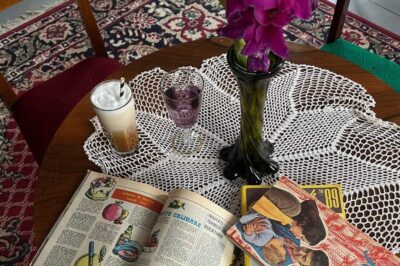
The museum’s private collection of objects made in Romania during the Communist era gives the history a physical shape. Everyday products can reveal a great deal about what people could buy, what was made locally, and how ordinary life differed from official political claims.
I like this stop because it can correct a common problem with political history. Speeches and institutions explain power, but objects explain habits. A collection of household and consumer goods can help you imagine the period without turning it into a list of leaders and policies.
Thirty minutes is enough for a focused visit, but not enough for a long museum examination. You should expect the guide to use selected objects as prompts for discussion rather than give you hours to study every item. Admission is included in the activity, with no separate ticket charge listed for this stop.
A few more Romania day trips to weigh up
- The Classic Tour of Timisoara
★ 5.0 · 154 reviews - Weekly Guided Tour in English – Tuesday, Thursday, Saturday
★ 5.0 · 84 reviews - Timisoara All in One – Walking and Tram Tour
★ 5.0 · 72 reviews - Timisoara: Guided Walking Tour
★ 4.9 · 38 reviews
The Reformed Church, where the uprising began
The Reformed Church, or Biserica Reformata, is presented as the place where the Timisoara uprising began. The visit focuses on December 15 and 16, 1989, when events moved from local tension to open resistance.
One detail makes this stop especially memorable. On the afternoon of December 16, a young man stopped a tram, and his friend climbed aboard and shouted for Ceausescu to leave power. That moment captures the improvised nature of the protest. The revolution did not begin as a tidy ceremony with a prepared stage. It grew through acts of courage in public places.
You spend about 15 minutes here. That sounds brief, but the location carries a great deal of meaning, and the guide’s explanation is the main point. This is a place where you listen, look, and connect the physical setting to the chain of events that followed.
The church also helps explain the role of religious and public spaces in a police state. Even when political expression was restricted, people still gathered around places that mattered to their communities. The stop is short, but it gives the rest of the route a clear starting point.
The Orthodox Cathedral and visible evidence of violence
The Timisoara Orthodox Cathedral brings the story into sharper focus. Several young people died while protesting on the cathedral steps after the Army opened fire without warning. You can see some of the bullet holes.
This is a quiet kind of evidence. A guide can explain the political setting, but marks in a building make the violence immediate. You are looking at a place that still carries physical traces of those days, not just a plaque or a date in a textbook.
The stop lasts about 10 minutes. That is enough time to see the damage and hear the explanation, though it is not a full cathedral visit. Keep your attention on the Revolution story rather than expecting a religious tour of the building.
This part may be difficult for some people, especially younger visitors. The experience is educational, but it does not soften the fact that people died in the streets. Families should decide in advance how much detail their children can handle.
Piața Victoriei and the city’s declaration of freedom
The final stop is Piața Victoriei, where the tour ends. On December 20, 1989, about 150,000 people gathered and shouted victory after Timisoara was proclaimed Romania’s first city free of Communism.
The square was previously called Opera Square. Its new name, Victory Square, preserves the memory of that moment. That change in name shows how public spaces can hold political meaning long after the crowds have gone.
You can also see bullet holes on buildings around the square. As at the cathedral, the marks connect the present city to the events of 1989. The square is not only a place to hear that the Revolution happened. It is where you can consider the scale of the gathering and the risks people took by appearing in public.
The stop lasts about 10 minutes, and the tour ends here. That is a sensible finish because Piața Victoriei is the emotional high point of the route. You leave with the city’s public declaration of freedom, rather than ending on a less meaningful transport stop.
The guide makes the difference
This tour depends heavily on the guide. The period is complicated, and a weak presentation could reduce it to a simple story of good people versus bad rulers. Dan and Ludovic are the named guides associated with the experience, and their strengths are described in terms of historical knowledge, clear explanation, and the ability to answer questions.
That is important for another reason. One person who grew up outside Romania joined partly to help a daughter understand the world that shaped the parent’s youth, but also learned new details about that past. The point is worth keeping in mind: personal memory is not always the same as a complete record. Political systems distort public information, and even people who lived through a period may have inherited partial or altered accounts.
You should use the small group setting to ask direct questions. Ask how the regime was installed, how people experienced daily shortages or restrictions, and why protests spread when they did. The tour is at its best when it gives you room to connect the guide’s explanation with what you see.
Who will get the most from this experience
I would choose this tour if you have a serious interest in Romanian history, the Eastern Bloc, political change, or the events of 1989. It also suits visitors who have already seen Timisoara’s main historic sights and want to understand the city’s recent past.
It works well for older children and teenagers who can follow a discussion about dictatorship and political violence. The private collection may give younger visitors a concrete way into the subject, but the cathedral stop requires some care because it deals with deaths during the protests.
The experience is also useful for Romanian families or people with family ties to the country. One of its strengths is the chance to question inherited memories instead of accepting a single version of the past.
I would not choose it if you want only architecture, shopping, or light sightseeing. Much of the route deals with oppression, public fear, protest, and death. The tone is serious, even though the vehicle and small group make the logistics comfortable.
Timing, transport, and overall value
The tour lasts roughly 3 to 4 hours and is offered in English. Its maximum of 10 people is a meaningful feature, not just a booking detail. You are more likely to hear the guide clearly, ask questions, and keep the discussion focused.
The transport between sites also improves the value. Timisoara’s central sights can be explored on foot, but this experience is built around places farther apart, including Șagului. A vehicle allows the guide to show you more of the city in one afternoon.
At $66.08 per person, the cost is best judged against the content. You receive a guided historical route, transportation, a museum stop, and access to a subject that is difficult to understand through casual sightseeing alone. Group discounts may make it a better deal for families or friends booking together.
The tour is confirmed within 48 hours, subject to availability. Service animals are allowed, and the activity is near public transportation. Most people can participate, though anyone needing a very specific mobility arrangement should confirm details before paying.
Free cancellation is available if you cancel at least 24 hours before the start time. Changes or cancellations made later are not accepted for a refund, and cut-off times follow local Timisoara time.
Should you book the Grand Tour of Communist Ages?
Book it if you want the Timisoara behind the restored center. The best parts are the Șagului neighborhood, the Communist-era objects, and the physical traces of the Revolution at the cathedral and Piața Victoriei.
The experience is especially worthwhile with Dan or Ludovic, guides who can handle detailed historical questions. The only real caution is the serious subject matter and the fact that two short stops depend on the guide’s explanation rather than extended sightseeing.
For an afternoon that gives you context, real locations, and a clearer understanding of why the Romanian Revolution began in Timisoara, this is a strong choice. If your interests stop at the city’s architecture and cafes, spend your $66.08 elsewhere.
FAQ
Where does the tour start?
It starts at the Three Holy Hierarchs Metropolitan Cathedral on Bulevardul Regele Ferdinand I in Timisoara.
What time does the tour begin?
The scheduled start time is 3 p.m.
Where does the tour end?
The tour ends at Piața Victoriei, also called Victory Square.
How long does the experience last?
It lasts approximately 3 to 4 hours.
What language is offered?
The tour is offered in English.
How many people can join?
The maximum group size is 10 people.
Is transportation included between the stops?
Yes. You travel between locations in a comfortable vehicle.
What is the price?
The listed price is $66.08 per person. Group discounts are available.
Is the museum admission included?
Admission is listed as free for the Muzeul Consumatorului Comunist stop.
Can I cancel for a full refund?
Yes, if you cancel at least 24 hours before the experience start time. Cancellations made less than 24 hours before the start are not refunded.
Just added around Romania
- CJ02 – Turda Salt Odyssey: Exploring Romania’s Hidden Gem★ 4.5 · 16 reviews
- Private Day Tour from Brasov to Rasnov Fortress★ 5.0 · 17 reviews
- Bran (Dracula) Castle, Peles Castle, Brasov City – Private Tour★ 5.0 · 17 reviews
- BV01 – City Tour Brasov in English: Secrets of Kronstadt★ 4.9 · 17 reviews
- Tour of the 3 Castles: Bran, Rasnov and Peles in Spanish (native Spanish guide).★ 5.0 · 17 reviews
- Cluj-Napoca: Weekend Pub Crawl★ 4.4 · 17 reviews
- Discover Apuseni Mountains – Scarita Summit,Sipote Waterfall and Dumesti Village★ 5.0 · 17 reviews
- 2-Hours Private Bucharest City Tour★ 5.0 · 17 reviews
Communist Bucharest Tours, compared.
Bucharest Essential Tour: Old Town, Calea Victoriei & Communism
Read our review →
Communism in Bucharest – Landmarks, Museum & Communist Appetizers
Read our review →
Browse the lists this tour appears in