
Reviewed · COMMUNIST BUCHAREST TOURS
Life under Communism
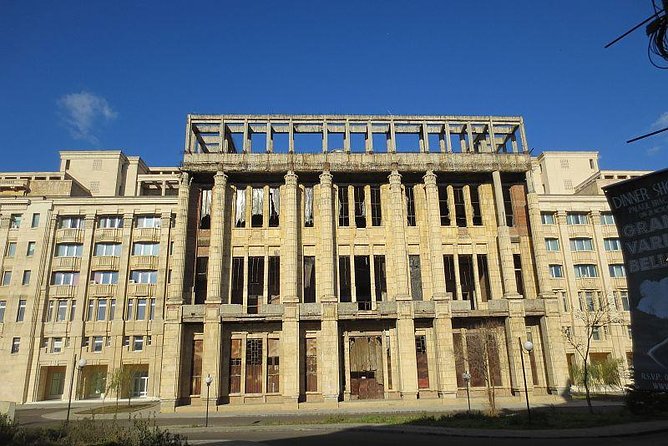
Bucharest’s communist past is written across its streets, from the grand scale of the Palace of Parliament to bullet-marked buildings around Revolution Square. This three-hour walk connects those places with the human story of Ceausescu’s rise, his harsh rule, and the bloody events that ended it in 1989.
I like the route for two clear reasons: it pairs famous landmarks with easy-to-miss details such as an old Alimentara food shop and a former Securitate office, and guides such as Cristina, Stefan, and Victor explain the period through family memories and everyday examples. The main drawback is the walking. You need comfortable shoes, and the tour continues outdoors in changing weather.
Key points to know before booking
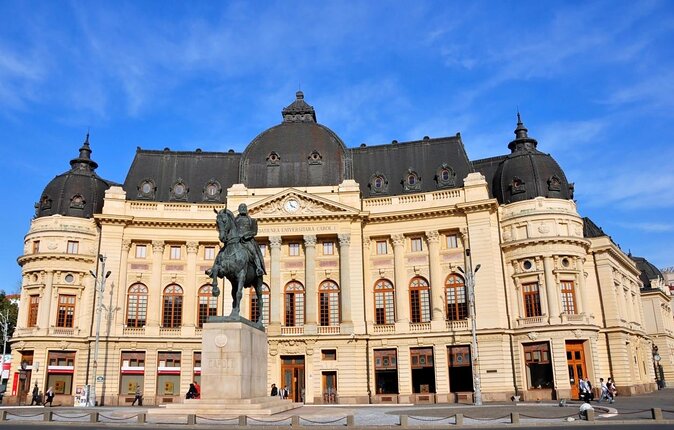
- Personal stories make the history easier to understand: Cristina and the other guides add family experiences to the political story, including different views across generations.
- The Palace of Parliament gets proper context: You hear why this huge building was created and what its construction meant for Bucharest’s people.
- The route links religion and dictatorship: Patriarchal Cathedral and Antim Monastery show how communist policy affected Romania’s churches.
- Small details matter as much as famous monuments: Old food shops, ordinary communist buildings, and former security offices help you picture daily life.
- Revolution Square gives the tour a powerful ending: The walk finishes where Ceausescu’s rule collapsed amid violence and confusion.
- The group can be small, but punctuality matters: The maximum is 20 people, and the guide cannot hold the group indefinitely for late arrivals.
Bucharest’s communist story begins at the Patriarchal Cathedral
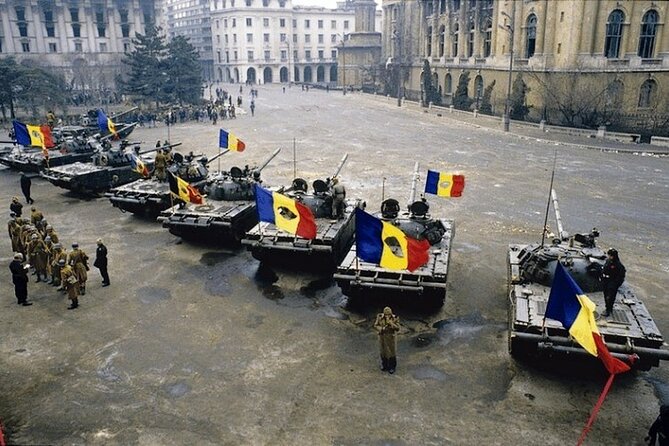
The walk starts at Aleea Dealul Mitropoliei 19, at the Patriarchal Cathedral. This is a fitting place to begin because the story does not start with Ceausescu alone. It starts with the violent arrival of communism and the way Romania was pulled into a new political order after the Second World War.
You spend about 10 minutes here, with no admission charge. The stop is short, but it gives the guide a chance to set the tone. This is not a simple tale of good people on one side and bad people on the other. You hear how power shifted, how the communist system took hold, and how ordinary Romanians had to adjust to a government that controlled public life.
That wider frame matters. If you arrive in Bucharest knowing only that Ceausescu was a dictator, you will miss the forces that helped him rise and the conditions that kept the system in place. The guide places his rule within the larger postwar story, then brings the subject down to the level of homes, workplaces, schools, churches, and shops.
The cathedral also gives the tour a visual contrast from the start. Religious buildings represent a long Romanian tradition, while communist rule sought to reshape society around party ideology and state control. The next religious stop, Antim Monastery, develops that contrast in more detail.
More communist-era Bucharest walks:
- The Real tour of Communism
★ 5.0 · 666 reviews - 3-Hour Guided Tour of Communist Bucharest
★ 4.9 · 303 reviews - Bucharest Essential Tour: Old Town, Calea Victoriei & Communism
★ 5.0 · 142 reviews
The Palace of Parliament and the price of Ceausescu’s ambition
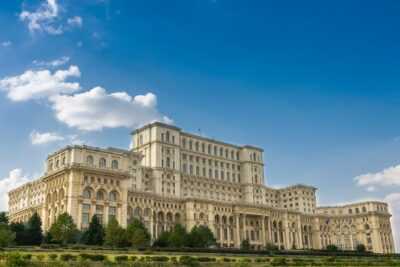
The Palace of Parliament is the tour’s largest and most dramatic landmark. You spend about 15 minutes hearing the story behind what is described as the world’s second-largest administrative building. Admission is not included, so this stop should be understood as an exterior visit and explanation rather than a promise of an interior tour.
The building’s scale is the point. Ceausescu wanted architecture that displayed the power of the state and his own rule. The result changed a large part of Bucharest and required enormous resources at a time when many people were dealing with shortages and strict limits on daily consumption.
A good guide helps you look past the stone and size. You learn what the building represented, how it fit Ceausescu’s plans for the capital, and why its construction remains tied to memories of sacrifice and control. The palace is not just a giant government office. It is a statement about a regime that wanted to be seen as permanent.
I find this one of the strongest stops for visitors who are new to Romanian history. The building is easy to photograph, but the explanation gives the image weight. You begin to understand why Bucharest contains such sharp contrasts: grand avenues and monumental government structures beside modest buildings and traces of a more restricted way of life.
Do not expect a long architectural visit here. Fifteen minutes passes quickly, and the palace itself can dominate the schedule if you stop to take photographs. The value comes from the guide’s context, not from a detailed building inspection.
Antim Monastery shows communism’s impact on religion
Antim Monastery brings the route back to a quieter scale. You spend about 10 minutes exploring this picturesque medieval monastery, with free admission. Its older architecture offers a useful counterpoint to the modern political monuments nearby.
The guide explains how religion was treated under communism. That story needs care. Religious life did not simply vanish, but it operated under pressure, supervision, and changing limits. A stop at Antim helps you consider how institutions with their own traditions were forced to function within a state system that did not welcome independent power.
This is one of the places where a personal guide adds real value. A textbook can describe official policy, but it is harder to picture what those policies meant for families, worshippers, and religious communities. Guides on this tour use stories and examples to make the subject less abstract.
The monastery stop is brief, so you should not expect a full religious or architectural tour. Think of it as a compact lesson placed inside the larger political story. If your main interest is churches, icons, or medieval design, the time here may feel limited. If you want to understand how communism affected Romanian society beyond politics, it earns its place on the route.
Old Town turns food and restaurants into political evidence
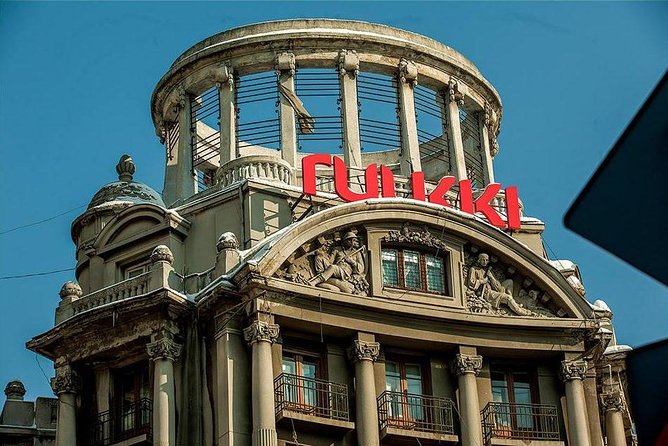
The Old Town stop adds an unexpected subject: the Caru’ cu bere restaurant and its role in foreign policy under communism. You spend around 10 minutes here, with no admission charge. The restaurant is not treated only as a place to eat. It becomes a way to understand how the regime presented Romania to outsiders.
This is a useful shift in focus. Political systems are not experienced only through speeches, prisons, or monuments. They also appear in restaurants, official dinners, shortages, queues, and the careful image a government wants foreign visitors to take home.
The guide may also point out smaller communist-era details in this part of the city. Past participants have learned about an old food line, an easy-to-miss Alimentara shop, and ordinary buildings connected to state security. These details are valuable because they show the period at street level. A huge palace tells you about state power. A food shop or queue helps you imagine what people needed to do to get basic goods.
One especially memorable touch can be a communist-era snack offered by the guide. It is a small detail, not a meal, and food and drinks are not included in the tour price unless specifically stated. Still, it helps turn a historical subject into something you can discuss with your senses as well as your eyes.
The Old Town itself can be busy, and the tour is not designed as a restaurant crawl. You will not spend time eating at Caru’ cu bere as part of the stated program. The focus is the building, its role, and the way public dining could serve political purposes.
A few more Bucharest day trips to weigh up
- Bucharest: Dracula’s Castle, Peles Castle, & Brasov Old Town
★ 4.5 · 17,858 reviews - Bucharest: Dracula Castle, Peles Castle & Brasov Old Town
★ 4.6 · 10,891 reviews - Bucharest: Dracula’s Castle, Peleș Castle & Brașov Day Trip
★ 4.5 · 5,919 reviews - Bucharest: Palace of Parliament Tickets and Guide
★ 4.3 · 3,182 reviews
Revolution Square gives the past a hard ending
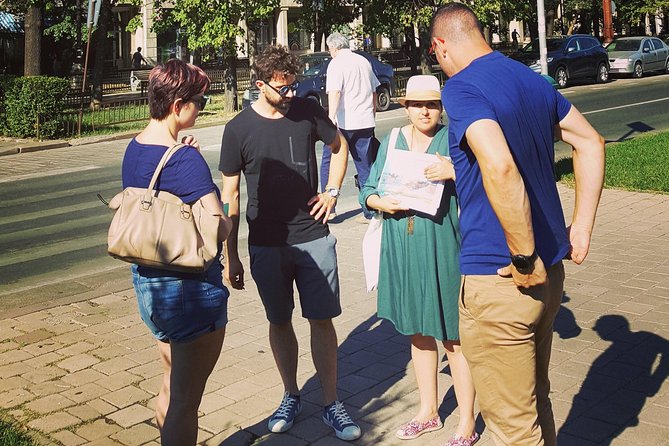
The walk finishes at Revolution Square, Piața Revoluției. This is where the story reaches Ceausescu’s downfall and the violent collapse of communism. You spend about 15 minutes here, with free admission.
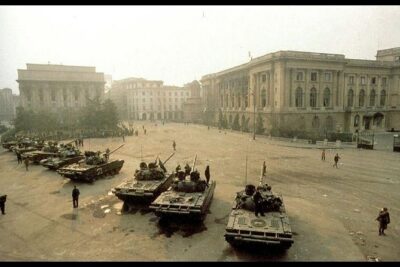
The square matters because the end of the regime was not neat or peaceful. In 1989, protests spread, the government lost control, and violence followed. The guide explains how Ceausescu’s final days unfolded and points out political memorials and places linked to the Revolution.
You may also see bullet holes in buildings around the area. Details like these prevent the Revolution from becoming a distant date in a history lesson. They show that the change happened in real streets, among real buildings, with ordinary people caught in events moving faster than anyone could control.
Finishing here gives the tour a clear shape. You start with the rise of communism, move through its institutions and social effects, and end at the moment the system broke. The endpoint is also practical. Revolution Square is near public transportation and gives you a useful base for continuing your Bucharest sightseeing.
The stop is short, and the square cannot answer every question about the Revolution. You may leave wanting more detail about the violence, the political aftermath, or Romania’s transition after 1990. That is a good reason to use this tour as an introduction, then continue learning through a museum or further independent visits.
Why the guides matter more than the monuments
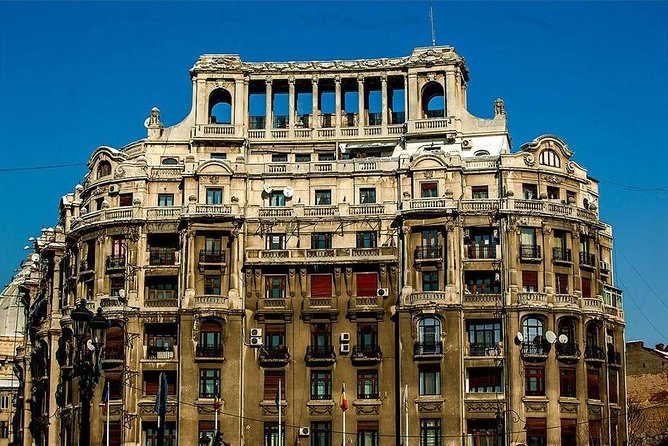
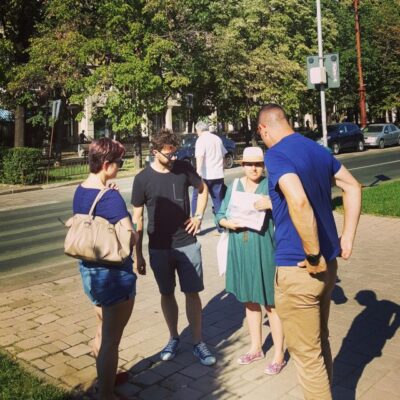
The route is worthwhile because the guides do more than point at buildings. Cristina is the name most often associated with the experience, and she is joined at times by Stefan or Victor. Their approach combines political facts with family stories and personal memories.
Cristina has explained the period through different generational viewpoints, including her own life and the experiences of her parents and grandparents. That can help you grasp why Romanians may hold mixed views about the communist years. One person may remember order, guaranteed work, or a sense of stability. Another may remember fear, shortages, censorship, surveillance, or the loss of personal choice.
That balance is important. The tour does not present communism as something to praise or simply condemn without explanation. It aims to describe the system, its promises, its failures, and its effects on people. You can ask questions, including questions about Romanian culture, the dictator’s rise, and the way people were treated.
English clarity is another practical strength. The guides are able to explain complicated political changes in accessible language, and the tour suits people who want discussion rather than a memorized speech. The tone is warm and conversational, but the subject remains serious.
There is also flexibility in pace when the group allows it. Cristina has accommodated people walking more slowly and has chosen places where someone could sit or lean during stops. That does not turn the tour into a fully accessible walking program, so anyone with mobility concerns should still judge the route carefully. It does show that the guide pays attention to the people in front of her.
Three hours on foot, with a few practical limits
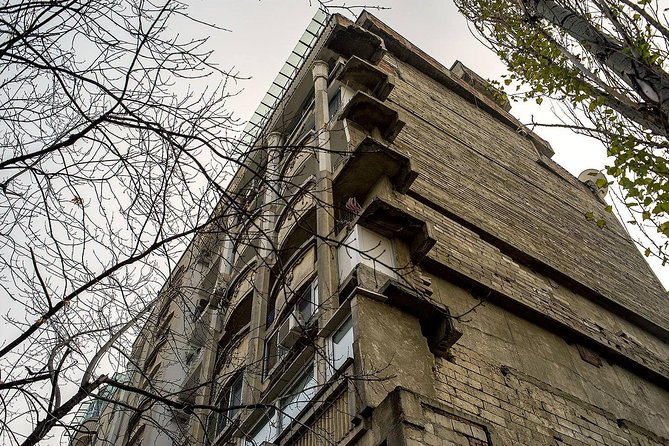
The advertised duration is about three hours. The five main stops are short, with walking and explanation connecting them. You should plan for an outdoor city walk, not a series of long indoor visits.
Wear comfortable shoes. This is the clearest practical point in the description, and it matters more than the modest length may suggest. Bucharest’s streets, pauses, crossings, and photo stops can make a three-hour walk feel substantial.
The tour operates in all weather conditions, and the stated cancellation terms also note that poor weather can lead to a different date or a full refund. Dress for the forecast and bring rain protection when needed. One group continued through rain and remained engaged because the guide kept the stories moving, but bad weather can still reduce your comfort and attention.
The maximum group size is 20. That is small enough for questions and conversation, though the actual group may be smaller. Some sessions have been intimate, with only two people, while other groups have included people moving at different speeds.
The meeting point is the Patriarchal Cathedral, not your hotel. Hotel pickup and drop-off are not included. The tour ends at Revolution Square, so you do not need to return to the starting point, which is handy if you plan to continue sightseeing from the center.
Mobile tickets make arrival simple, but allow time to identify the meeting spot and guide. One unhappy experience resulted from a missed connection at the start. The provider states that the guide waits 15 minutes and attempts to call or message, but the group must continue on schedule. Arrive early, keep your phone available, and do not assume the guide can wait after the start time.
Is $42.33 a fair price?
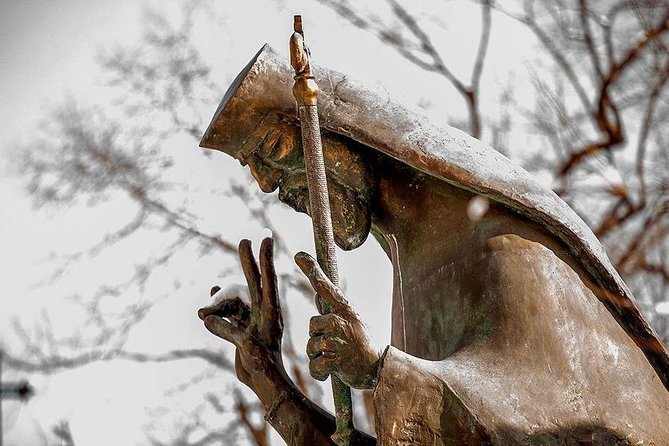
At $42.33 per person, this is not the cheapest way to walk around Bucharest. You can see several of the exterior sites on your own, and the city has free group walks. The question is what you want from the afternoon.
You are paying for a professional English-speaking guide, a focused route, and interpretation that ties separate places into one story. The Palace of Parliament, a monastery, a famous restaurant, and Revolution Square do not explain themselves. Without context, they can look like unrelated stops. The guide gives them a common thread.
The price is easier to justify if you care about modern European history or prefer asking questions as you go. It is also useful early in your Bucharest stay because the guide can offer restaurant and sightseeing suggestions. If you want a quiet stroll with little commentary, or if you already know Romania’s communist period well, a free walk may offer better value.
Admission is free at the Patriarchal Cathedral, Antim Monastery, Old Town, and Revolution Square. Palace of Parliament admission is not included, and food and drinks are also extra. The tour price therefore covers the guide and the experience of moving between sites, not a package of paid entries or refreshments.
A further point in its favor is the chance to see details you could easily pass without noticing. A former Securitate building in an unremarkable area, an old food shop, or a line associated with rationing may teach you more about daily life than another grand monument. That kind of observation is difficult to plan alone unless you already know what to look for.
Who should book this Bucharest walk?
I would choose this tour if you want Romania’s twentieth-century story explained by someone who can connect politics with family life. It suits first-time visitors, history fans, and anyone who wants more than a list of dates and names.
It is especially useful for people from Western Europe, North America, or other places where communism may be understood mainly through Cold War ideas. Romanian communism had its own path, and the guide helps you see both the local details and the wider context.
You should also book it if you like stopping often to ask questions. The strongest part of the experience is the conversation around the sites. The smaller the group, the more room you may have for personal questions, though the group can include up to 20 people.
I would skip it if you dislike walking, want extensive interior access to the Palace of Parliament, or expect a museum-style presentation with long visits at each location. The tour moves at a steady pace and keeps most stops compact.
FAQ
How long does the Life under Communism tour last?
The experience lasts approximately three hours.
Where does the tour start and finish?
It starts at Aleea Dealul Mitropoliei 19, near the Patriarchal Cathedral in Bucharest. It ends at Revolution Square, Piața Revoluției.
Is the Palace of Parliament admission included?
No. Admission to the Palace of Parliament is not included in the tour price.
Is hotel pickup and drop-off provided?
No. Hotel pickup and drop-off are not included.
Is the tour suitable for people with limited mobility?
Most people can participate, but this is a walking tour. Wear comfortable shoes, and note that the route may require walking between stops. Service animals are allowed.
What happens if I need to cancel?
You can receive a full refund if you cancel at least 24 hours before the experience start time. Cancellations or changes made within 24 hours are not accepted for a refund. If poor weather causes the provider to cancel, you are offered another date or a full refund.
Should you book it?
Book this walk if you want human-scale history: the dictator and the buildings matter, but so do food queues, family memories, religion, surveillance, and the ordinary streets where people lived through the system.
At $42.33, the experience is best value for curious visitors who want a clear introduction and a guide willing to answer questions. Arrive early, wear good shoes, prepare for weather, and expect the Palace of Parliament to be viewed mainly as a landmark rather than a full interior visit. For an informed, personal look at the communist years and the 1989 Revolution, it is a strong choice in Bucharest.
Just added around Bucharest
- Private Full Day Tour of Bucharest★ 5.0 · 3 reviews
- Veliko Tarnovo and Medieval Bulgaria Private Day Trip from Bucharest★ 5.0 · 3 reviews
- Bucharest VIP Bar Crawl in Lipscani ‘Old Town’★ 5.0 · 3 reviews
- Muddy Volcanoes and Salt Mine Private Tour★ 5.0 · 3 reviews
- Bucharest Private City Tour★ 5.0 · 3 reviews
- Legends & Stories from Transylvania -2 Castles & Brasov Old Town★ 5.0 · 3 reviews
- 7-Day Dracula Tour in Romania from Bucharest including ‘The Ritual of Killing of a Living Dead’★ 5.0 · 3 reviews
- Transfagarasan Private Tour from Bucharest – 2 Days★ 5.0 · 3 reviews
Communist Bucharest Tours, compared.
Bucharest Essential Tour: Old Town, Calea Victoriei & Communism
Read our review →
Communism in Bucharest – Landmarks, Museum & Communist Appetizers
Read our review →

Museum of Communism Ticket with Communist Coffee
Read our review →Browse the lists this tour appears in