
Reviewed · COMMUNIST BUCHAREST TOURS
Bucharest Under Communism: Life, Terror & Hope
The most striking part of this Bucharest walking tour is the contrast between grand state projects and the human cost behind them. You move from Unirii Square and the huge former Victory of Socialism Boulevard to the Palace of Parliament, hidden churches, and the streets where the 1989 Revolution ended Nicolae Ceaușescu’s rule.
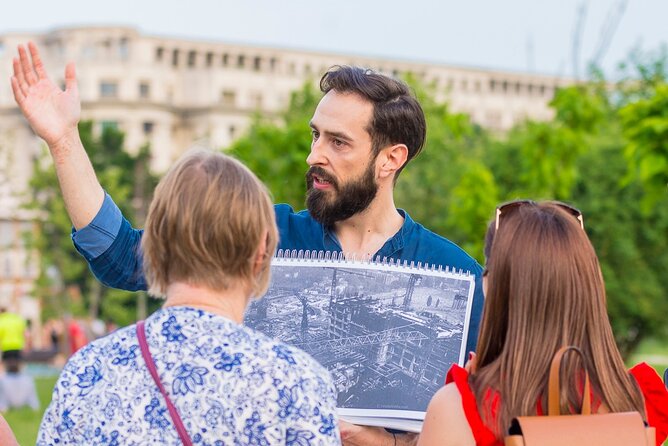
I like the clear route through major landmarks and the way the tour links buildings to daily life, shortages, religion, and political fear. I also like the personal touch: guides such as Laura and Tamar use old photographs, answer questions in detail, and explain the shift from monarchy to communism and then to democracy.
The main thing to consider is the walking time. The experience lasts about three and a half hours, and several stops involve standing outdoors. The Palace of Parliament is viewed from outside, with admission not included, so this is chiefly a history walk rather than an interior sightseeing tour.
Key points to know before booking
- See Ceaușescu’s grandest urban project: Unirii Square and the former Victory of Socialism Boulevard reveal the scale of his plans for Bucharest.
- Understand the price of the Palace of Parliament: Your guide explains how shortages of food, fuel, and other goods helped pay for the enormous building.
- Find a church hidden by communist planning: Mihai Voda Monastery shows how old religious buildings survived demolition.
- Stand where the dictatorship ended: Revolution Square brings the 1989 protests, Ceaușescu’s final speech, and the aftermath into focus.
- Expect a personal guide-led walk: The group can have up to 15 people, though some past departures were much smaller.
- Pay a modest price for a useful introduction: At $23.22 per person, the tour offers a strong history lesson without adding major entrance fees.
Why this tour helps explain Bucharest
Bucharest can be confusing at first glance. Grand nineteenth-century buildings, Orthodox churches, broad traffic arteries, apartment blocks, and huge government structures sit close together, but the reasons for that mix are not always clear.
This tour gives you a timeline. You learn about the monarchy, the rise of communism, Nicolae Ceaușescu’s increasingly personal dictatorship, the 1989 Revolution, and Romania’s move toward democracy. That wider frame matters because the tour is not only about concrete and architecture. It is about how political decisions changed the daily life of people in the capital.
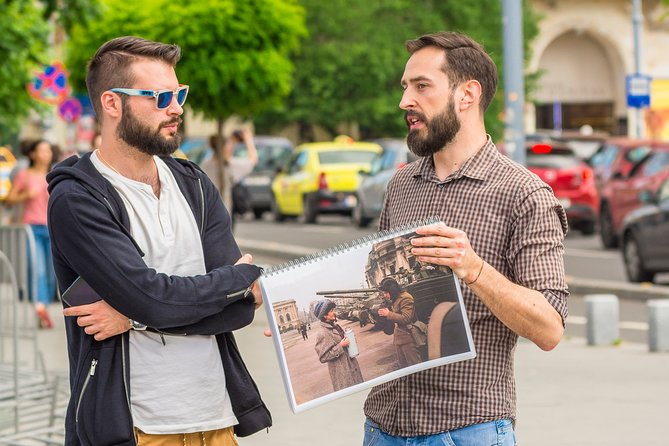
The route also avoids treating communism as a dry sequence of dates. You hear about shortages and forced labor, but also about how people adapted, how religion survived, and how public spaces became places of protest. Guides including Laura and Tamar have been singled out for making difficult material easy to follow, mixing factual explanation with anecdotes and old photographs.
I would use this as an early Bucharest activity if you want the city to make more sense during the rest of your stay. It is especially useful before visiting the Palace of Parliament on your own, since you will already understand why the building inspires both awe and discomfort.
More communist-era Bucharest walks:
- The Real tour of Communism
★ 5.0 · 666 reviews - Life under Communism
★ 5.0 · 358 reviews - 3-Hour Guided Tour of Communist Bucharest
★ 4.9 · 303 reviews
Starting at Unirii Square and the former Victory of Socialism Boulevard
The walk begins at Piața Sfântul Anton, in the central part of Bucharest, and soon reaches Unirii Square. This is a fitting opening because the square was designed during the final phase of communist rule. Its fountains and broad open space are not simply decorative. They form part of a large urban plan built to display state power.
From here, you look along the former Victory of Socialism Boulevard, now known as Unirii Boulevard. Its width was shaped by Ceaușescu’s desire for a monumental avenue leading toward the Palace of Parliament. The scale is the point. You can sense how the city was rearranged to create a stage for parades and official spectacle.
I like this first stop because it gives you a visual key for the rest of the walk. Instead of seeing a large square as just a place for fountains and traffic, you begin to read it as a political statement. You also get an early look at the gap between what the regime wanted Bucharest to represent and what ordinary people experienced.
The stop lasts about 30 minutes and is free. Bring water in warm weather, since this part of the route is open and exposed.
The Palace of Parliament and the bill paid by ordinary people
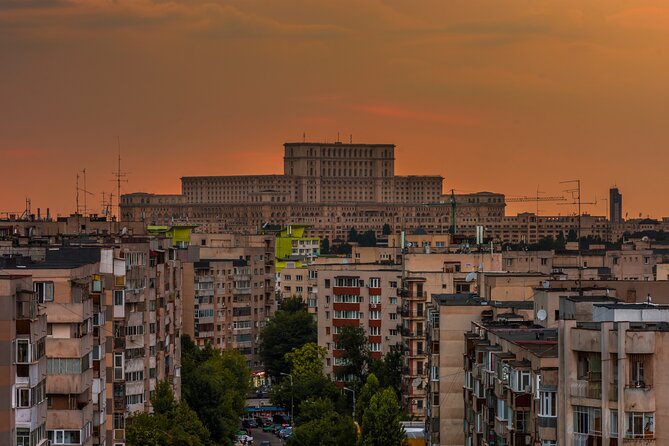
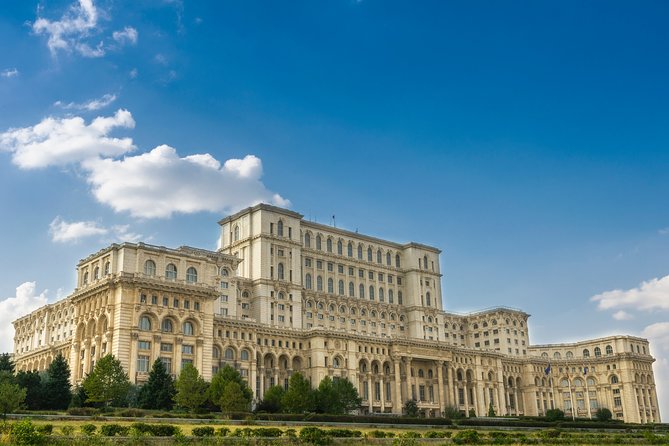
The Palace of Parliament is the tour’s largest physical subject. It is described as the second-largest building in the world after the Pentagon and the most expensive administrative building ever built. Even from outside, its size is difficult to take in.
Your guide explains how vast quantities of materials, labor, and money were directed into the project during the 1980s. The important point is not simply that the building is enormous. It is that the Romanian population faced severe shortages while resources went into Ceaușescu’s vision.
This is where the walk connects architecture with household experience. The building’s stone, halls, and monumental design become evidence of a system that placed the dictator’s image above basic comfort. You will also hear how local people view the structure today, a useful reminder that a landmark can be both an architectural attraction and a painful political symbol.
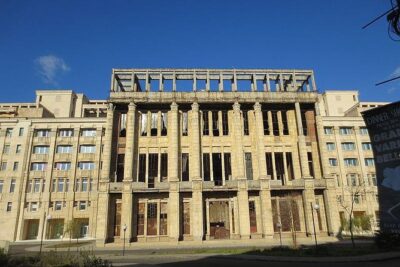
The hour scheduled here allows time to see the Palace from different angles. Across from it is the Academia Romana building, a large construction in a similar style that was intended for Elena Ceaușescu, the dictator’s wife. The plan was never completed as intended after the fall of the regime.
Admission to the Palace of Parliament is not included. The tour information describes an exterior visit, so you should not book this walk expecting an interior tour. If you want to see the lavish rooms inside, check separately for an official Palace visit and plan it around this walk.
Mihai Voda Monastery, a survivor of demolition
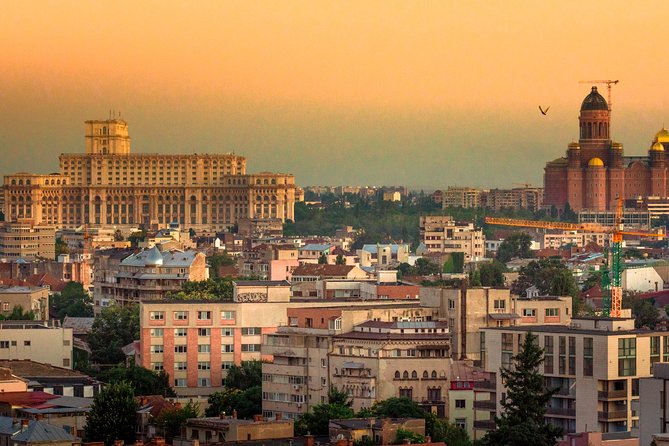
The shift from monumental government architecture to Mihai Voda Monastery is one of the route’s most interesting changes. The medieval church survived the communist period, even though many other churches and historic structures were destroyed or displaced.
You learn how the authorities dealt with religion. Some churches were demolished outright. Others were hidden behind utilitarian apartment blocks or moved out of direct view. Mihai Voda Church is valuable because it gives you a glimpse of the older Bucharest that existed before the major communist redevelopment schemes.
The setting also helps explain why Bucharest can feel layered rather than uniform. A religious building from the Middle Ages can appear close to structures designed to serve a modern authoritarian city. That physical contrast carries more weight once you know that the church’s survival was not guaranteed.
This stop is free and lasts around 30 minutes. It is a quieter pause after the Palace of Parliament, though the tour remains a walking experience with outdoor sections. If historic churches matter to you, this may be the moment when the route becomes more than a political tour.
A few more Bucharest day trips to weigh up
- Bucharest: Dracula’s Castle, Peles Castle, & Brasov Old Town
★ 4.5 · 17,858 reviews - Bucharest: Dracula Castle, Peles Castle & Brasov Old Town
★ 4.6 · 10,891 reviews - Bucharest: Dracula’s Castle, Peleș Castle & Brașov Day Trip
★ 4.5 · 5,919 reviews - Bucharest: Palace of Parliament Tickets and Guide
★ 4.3 · 3,182 reviews
Revolution Square and Ceaușescu’s last public speech
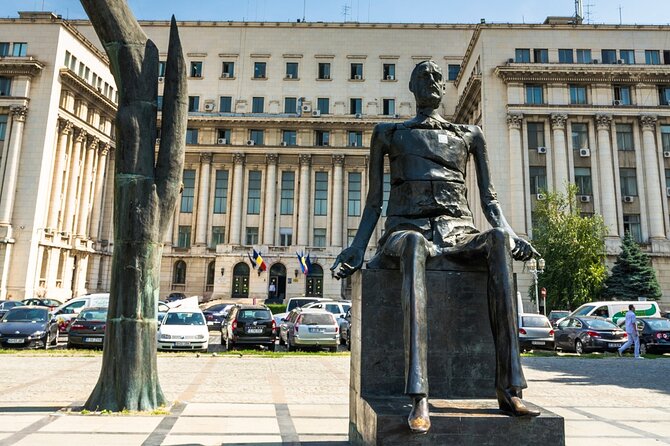
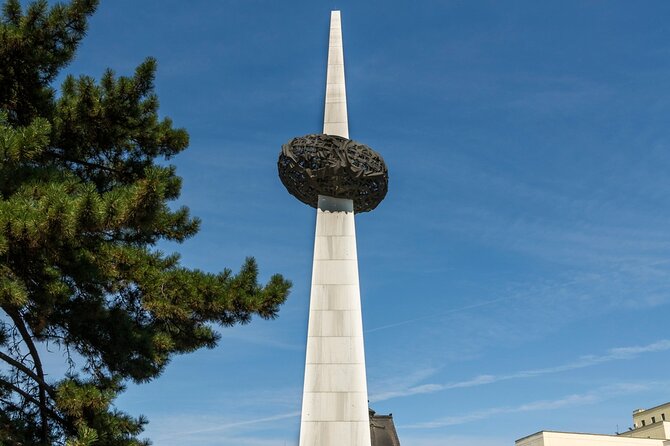
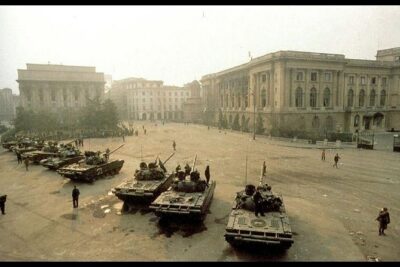
Revolution Square is the emotional center of the walk. This is where the communist regime’s final public crisis unfolded in December 1989. You see the former Communist Party Central Committee building, which housed Ceaușescu’s office, along with the balcony connected to his last speech.
The guide explains how the first mass demonstration in Bucharest grew, what happened to people who protested, and how the events moved from public speech to violent confrontation. You also learn about the monument dedicated to those who died and the difficult period that followed the fall of the dictatorship.
This history is not presented as a clean, tidy victory. The end of communism brought hope, but it also brought confusion, violence, and hard questions about what happened during and after the Revolution. That balance is important. It helps you understand why Revolution Square remains a place of memory rather than simply a photo stop.
The scheduled hour gives the guide room to explain the site rather than rush through it. Old photographs are particularly useful here. They let you compare the current square with scenes of crowds, soldiers, and public upheaval from 1989.
University’s Square and the demand for freedom
The final stop is University’s Square, another major protest site during the fall of communism. It became a center for demonstrations by people who wanted a free society, and hundreds were killed during the unrest.
Ending here keeps the focus on ordinary people rather than on Ceaușescu’s buildings. The Palace of Parliament shows the power of the regime. University’s Square shows the risk people took to oppose it.
The tour ends at Revolution Square according to the stated route, while University’s Square is listed as the final historical stop in the sequence. The supplied details place the end point at Piața Revoluției, about five minutes from Bucharest’s Old Town. Since the exact walking order can matter, confirm the day’s route with your guide at the start.
The guides are a major part of the experience
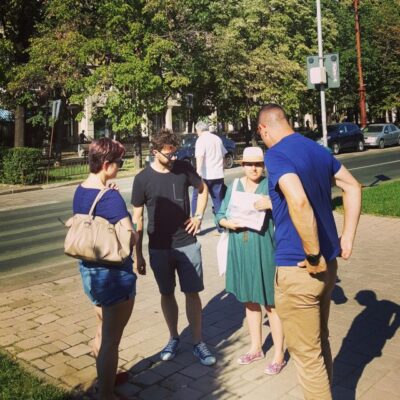
The strongest part of this tour is likely to be the guide rather than any single monument. Laura is described as a history graduate who uses photos, personal stories, and careful answers to build the story from monarchy through communism and into the post-1989 period.
Tamar has also led this experience, with a style that combines historical facts and anecdotes. The feedback describes her as attentive to questions and good at keeping the pace moving. Several departures were small, including one with only four people, which allowed for more conversation. The advertised maximum is 15 people, so the level of personal attention can depend on the group size and guide assigned.
You should expect the guide to explain both political history and architecture. Past departures have also included practical suggestions for local food and, on one occasion, a break at Bucharest’s oldest cake store. That stop is not guaranteed in the itinerary, so treat it as a possible extra rather than part of the promised route.
English ability has been praised in the supplied feedback, but no specific language choice is listed in the formal details. If language is important to you, confirm it when booking.
What the $23.22 price gets you
At $23.22 per person, this is a good-value introduction to communist Bucharest. You receive about three and a half hours with a guide, a route through several major sites, and context that would be hard to assemble from plaques or a guidebook alone.
The value is strongest if you are new to Bucharest or have limited time. Unirii Square, the Palace of Parliament, Mihai Voda Monastery, Revolution Square, and University’s Square cover a wide range of the city’s modern story. You are not paying extra admission for most of the stops, and the Palace entrance is not part of the price.
The cost does not cover a visit inside the Palace of Parliament. It also does not turn the walk into a luxury private car tour. You need to walk between locations and spend much of the time outdoors.
The word private appears in the description, while the additional information lists a maximum of 15 people. I would read that as a guide-led experience with a small group limit, but confirm the exact setup if you specifically want a one-party private tour.
Timing, meeting point, and practical advice
The meeting point is Piața Sfântul Anton 64, Bucharest, in the central area. The tour begins at 4:00 pm and ends at Revolution Square, close to the Old Town. That makes it convenient to continue with dinner or an evening walk after the tour.
Allow the full three and a half hours rather than assuming this is a short orientation walk. Some past comments refer to a two-hour experience, but the current stated duration is approximately three hours and 30 minutes. The exact length may depend on questions, group pace, and the day’s route.
Wear comfortable shoes. You will be walking through central Bucharest and standing at several sites. There is no need to prepare for strenuous hiking, but the route is not ideal if you want to avoid being on your feet.
The activity requires good weather. If poor weather forces cancellation, you are offered another date or a full refund. You can cancel for a full refund up to 24 hours before the start time, but changes or cancellations inside that window are not accepted.
Service animals are allowed, public transportation is nearby, and most people can take part. The mobile ticket makes the booking simple, but keep your phone charged and easy to access at the meeting point.
Who will get the most from this Bucharest walk
I would recommend this tour to first-time visitors who want the city’s twentieth-century story explained in plain language. It also suits anyone interested in political history, urban planning, architecture, religion under communism, or the 1989 Revolution.
It can work well for Romanian visitors too. The route covers familiar places, but the guide’s historical details and photographs may reveal parts of Bucharest you have not considered. The experience also suits curious teenagers and adults, though the themes include repression, shortages, protest, and deaths.
You may want something else if your main goal is to enter the Palace of Parliament, see a large number of interiors, or avoid a serious subject. You should also think twice if three and a half hours of walking feels too long. This is an explanatory history walk, not a quick list of city highlights.
Should you book Bucharest Under Communism?
Book it if you want Bucharest to feel less like a collection of oversized buildings and more like a city shaped by real choices and real consequences. The route is strong, the price is fair, and guides such as Laura and Tamar add the personal detail that makes the subject easier to grasp.
Do not book it solely for an interior Palace of Parliament visit, since admission is not included. But if you want a focused introduction to Ceaușescu, the communist years, religious survival, and the 1989 Revolution, this is one of the better ways to spend an afternoon in central Bucharest.
FAQ
How long does the Bucharest Under Communism tour last?
The experience lasts approximately three hours and 30 minutes.
What time does the tour begin?
The stated start time is 4:00 pm.
Where does the tour meet?
The meeting point is Piața Sfântul Anton 64, Bucharest, Romania.
Where does the tour finish?
The stated end point is Revolution Square, Piața Revoluției, Bucharest, about five minutes from the Old Town.
Is the Palace of Parliament entrance included?
No. Admission to the Palace of Parliament is not included. The tour information describes viewing the building from different angles.
Is this a private tour?
The experience is described as private, while the additional information gives a maximum group size of 15 people. Confirm the exact arrangement when booking if a one-party private tour is essential.
What places are included on the route?
The route includes Unirii Square, the Palace of Parliament, Mihai Voda Monastery, Revolution Square, and University’s Square.
Can I cancel for a full refund?
Yes. You can cancel at least 24 hours before the local start time for a full refund. Cancellations or changes made less than 24 hours before the start time are not accepted for a refund.
What happens if bad weather cancels the tour?
If the experience is canceled because of poor weather, you are offered a different date or a full refund.
Just added around Bucharest
- Private Full Day Tour of Bucharest★ 5.0 · 3 reviews
- Veliko Tarnovo and Medieval Bulgaria Private Day Trip from Bucharest★ 5.0 · 3 reviews
- Bucharest VIP Bar Crawl in Lipscani ‘Old Town’★ 5.0 · 3 reviews
- Muddy Volcanoes and Salt Mine Private Tour★ 5.0 · 3 reviews
- Bucharest Private City Tour★ 5.0 · 3 reviews
- Legends & Stories from Transylvania -2 Castles & Brasov Old Town★ 5.0 · 3 reviews
- Transfagarasan Private Tour from Bucharest – 2 Days★ 5.0 · 3 reviews
- 7-Day Dracula Tour in Romania from Bucharest including ‘The Ritual of Killing of a Living Dead’★ 5.0 · 3 reviews
Communist Bucharest Tours, compared.
Bucharest Essential Tour: Old Town, Calea Victoriei & Communism
Read our review →
Communism in Bucharest – Landmarks, Museum & Communist Appetizers
Read our review →
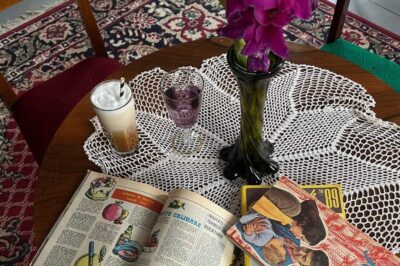

Museum of Communism Ticket with Communist Coffee
Read our review →Browse the lists this tour appears in